
Call Us
+86 136 6007 9809
Call Us
+86 136 6007 9809

Aug. 19, 2026
Rivet Nuts for Thin Sheet Metal and One-Sided Assembly
When a thin metal panel needs a reliable threaded connection, conventional fastening methods are not always practical.
The sheet may be too thin to tap conventionally. The reverse side may be inaccessible for installing a conventional nut.
Welding a nut may introduce heat, distortion or additional manufacturing operations.
Rivet nuts, also known as blind rivet nuts, threaded rivet nuts or rivet nut inserts, provide a practical solution.
A rivet nut creates a permanent internal thread in sheet metal or other suitable materials using a single-sided installation process.
Once installed, a bolt or screw can be repeatedly removed and installed through the resulting threaded connection.
This makes rivet nuts particularly useful for thin sheet metal, enclosed structures, hollow sections and assemblies where only one side of the workpiece is accessible.
Juxin Fasteners supplies standard and custom rivet nuts for OEM manufacturing, supporting applications across automotive,
EV, railway, electrical equipment, HVAC, telecom, machinery, furniture and other industrial sectors.
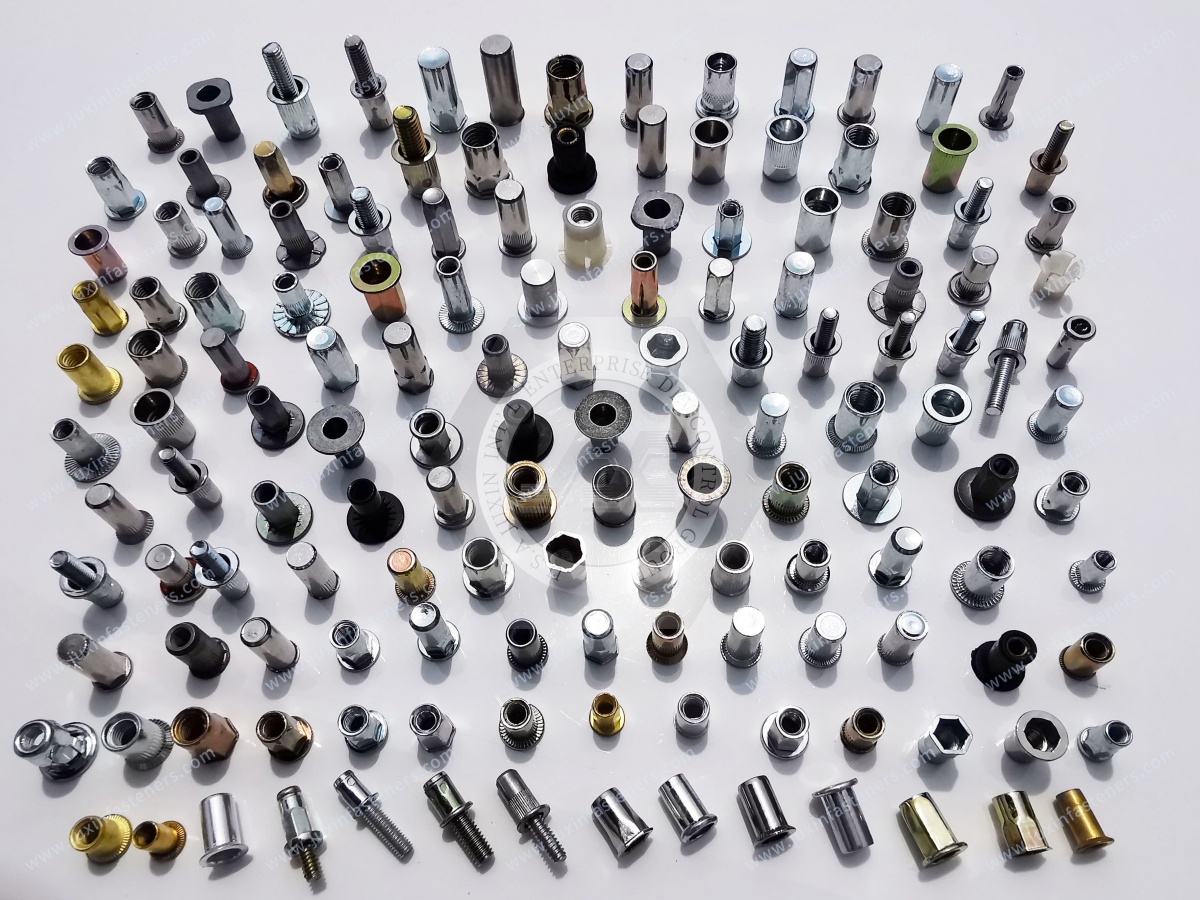
What Is a Rivet Nut?
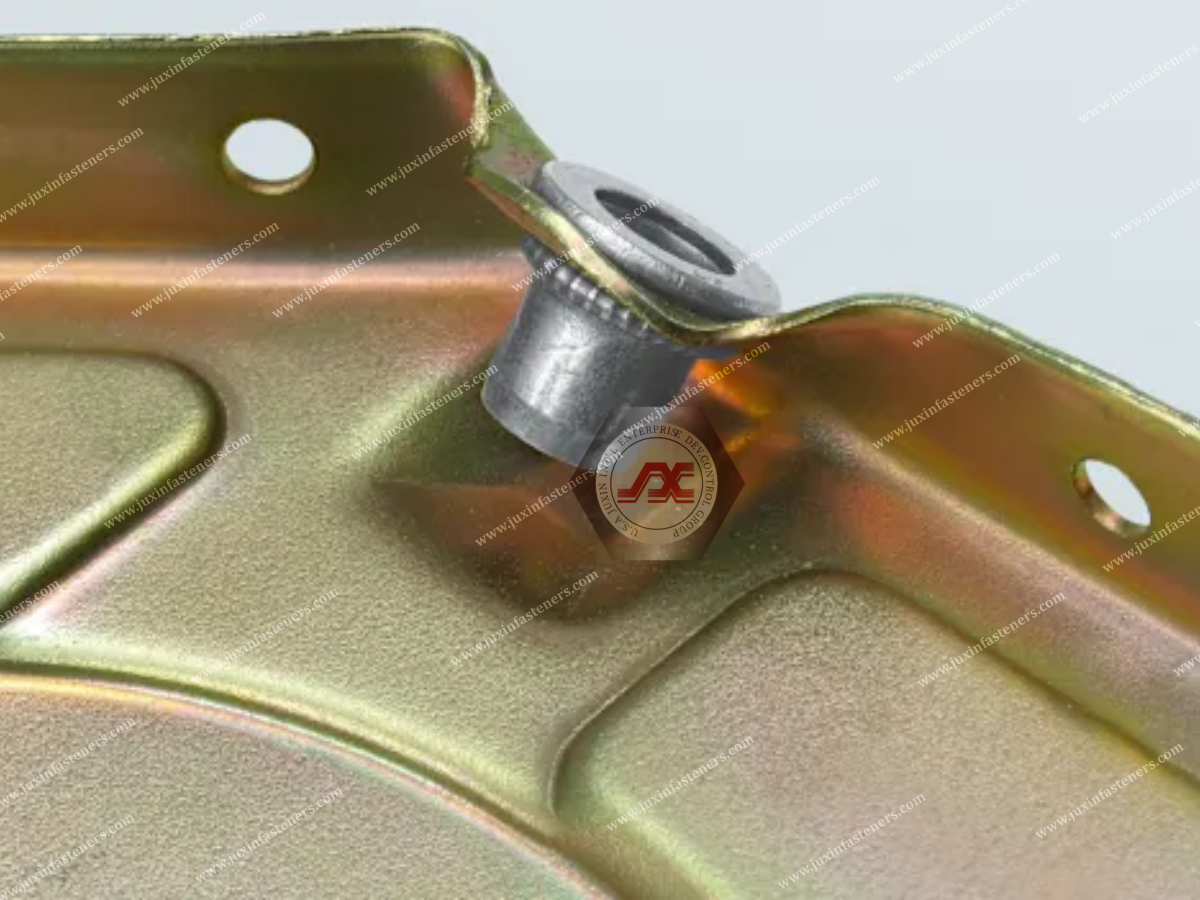
A rivet nut is a threaded fastener designed to be installed into a pre-drilled hole from one side of a panel.
During installation, the body of the rivet nut deforms behind the sheet and forms a mechanical lock.
This creates a fixed threaded connection without requiring access to the rear side of the workpiece.
Unlike a conventional welded nut, the installation process does not require welding.
Unlike a tapped hole, the threaded connection does not depend entirely on the thickness of the base material.
This makes rivet nuts an effective solution for creating reusable threads in relatively thin materials.
Typical Rivet Nut Installation
The general installation process includes:
1. Prepare the hole
A properly sized hole is created in the sheet or component.
2. Insert the rivet nut
The rivet nut is positioned through the hole from the accessible side.
3. Set the rivet nut
A manual, pneumatic, battery-powered or other suitable installation tool deforms the rivet nut body.
4. Form the mechanical lock
The deformed section grips the rear side of the sheet.
5. Install the mating screw or bolt
The resulting internal thread provides a secure fastening point.
This process allows manufacturers to add threaded attachment points without welding or tapping the sheet.
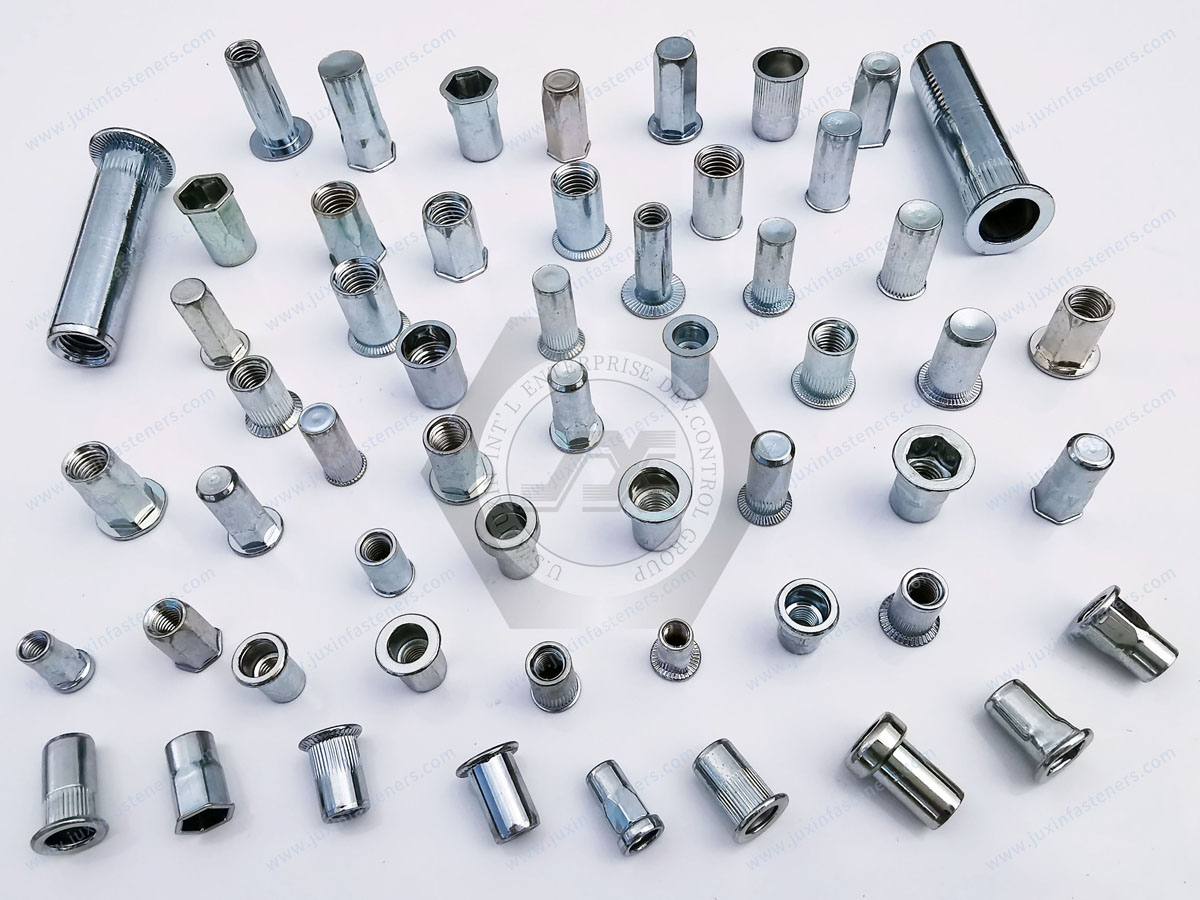
Why Use Rivet Nuts?
Rivet nuts solve several common engineering problems associated with thin-sheet assembly.
Single-Sided Installation
One of the most important advantages of a blind rivet nut is one-sided installation.
This is especially valuable when the back side of a panel cannot be reached.
Typical examples include:
Closed profiles
Tubes
Enclosures
Electrical cabinets
Automotive body structures
Equipment housings
HVAC assemblies
Machine frames
The installer only needs access to the visible side of the component.
No Welding Required
Rivet nuts eliminate the need to weld a separate nut onto the sheet.
This can help avoid:
Welding heat
Sheet deformation
Weld spatter
Heat-affected areas
Additional finishing operations
Welding equipment requirements
For coated or finished components, eliminating a welding operation can also simplify the manufacturing process.
No Internal Thread Tapping Required
Thin sheet metal often does not provide enough material thickness for a durable conventional tapped thread.
A rivet nut adds a dedicated threaded component to the panel.
This creates a more practical fastening point for applications requiring repeated screw installation and removal.
Suitable for Thin Materials
Depending on the specific rivet nut design and workpiece, rivet nuts can be used with relatively thin sheet materials.
Typical application ranges may be approximately 0.5–6 mm, although the actual usable range depends on:
Rivet nut type
Grip range
Material
Thread size
Hole diameter
Sheet material
Installation method
Required load
The correct rivet nut should always be selected according to the actual material thickness and application requirements.
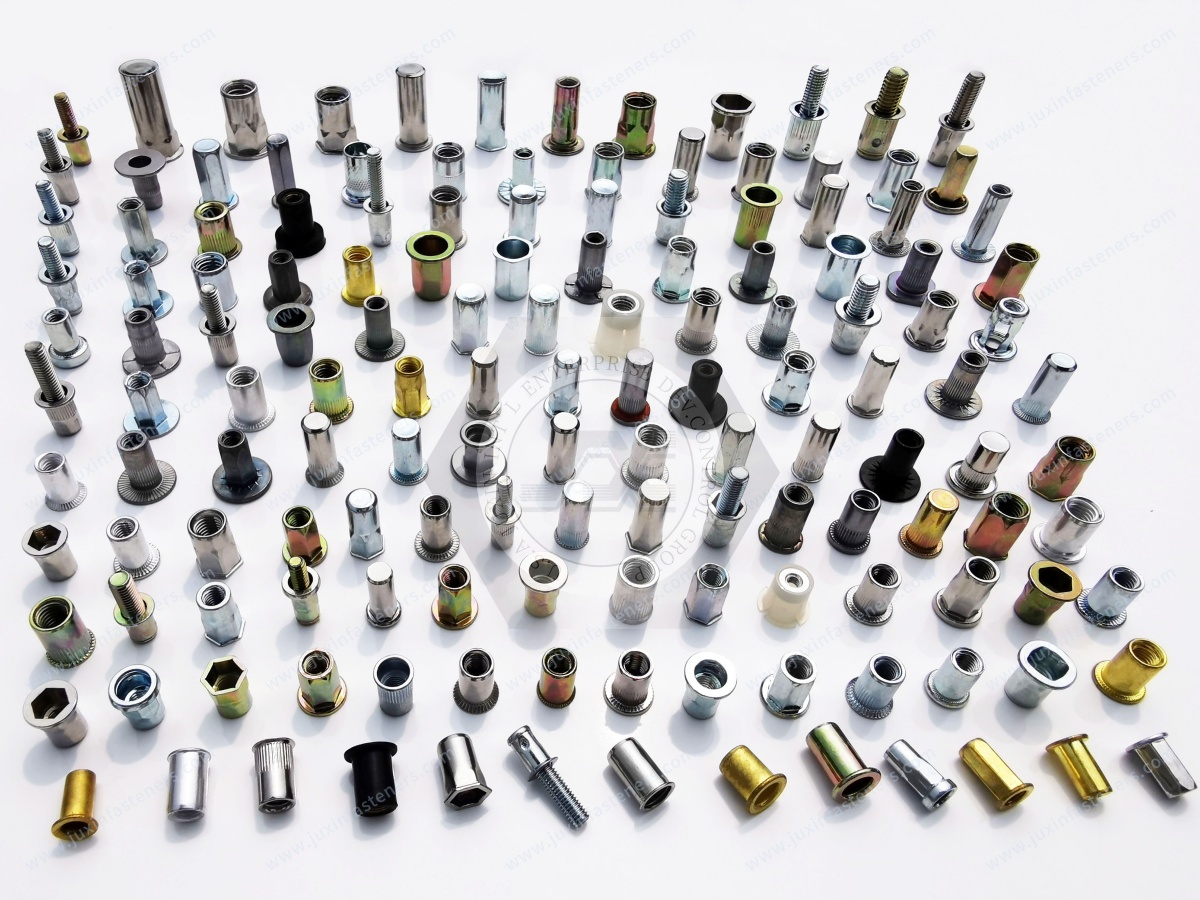
Rivet Nut Designs for Different Applications
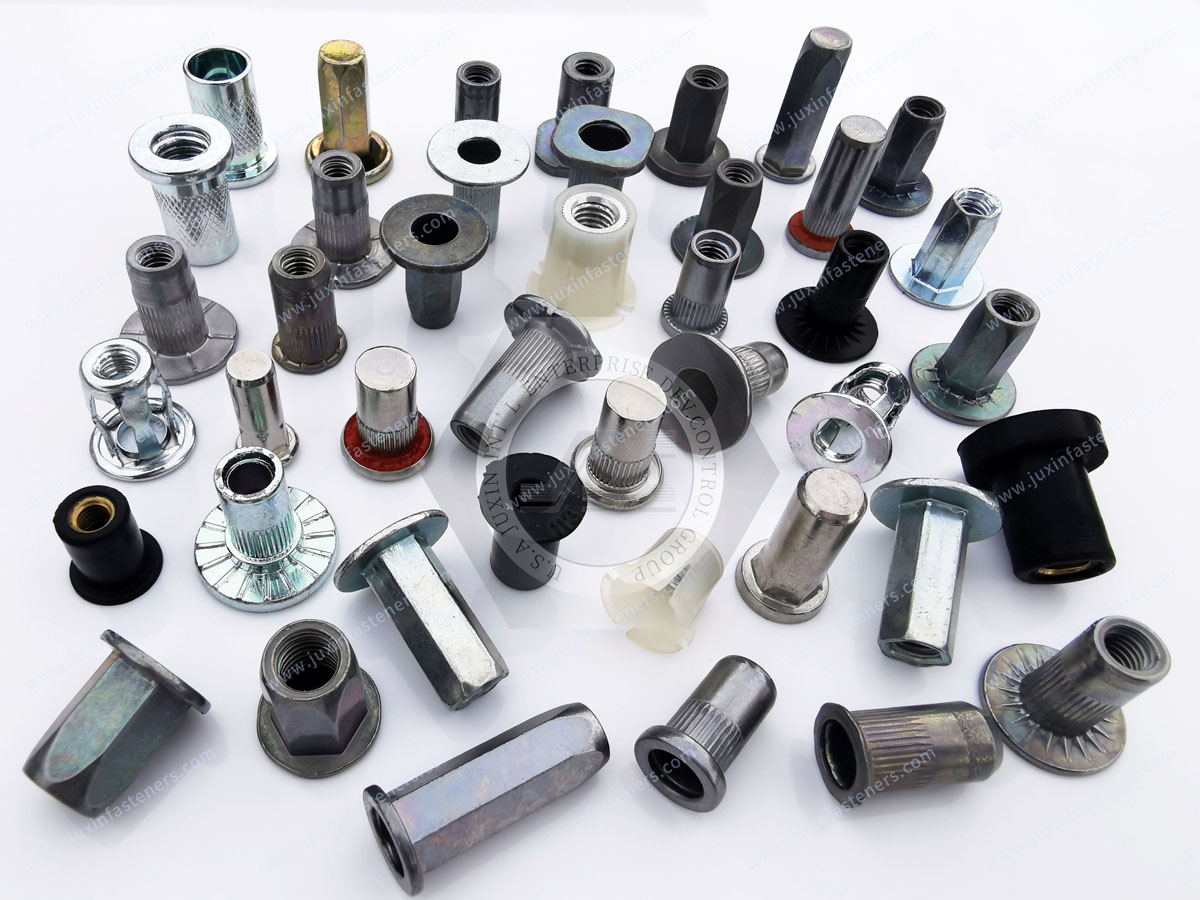
Rivet nuts are available in different configurations to address different installation and performance requirements.
Hex Rivet Nuts
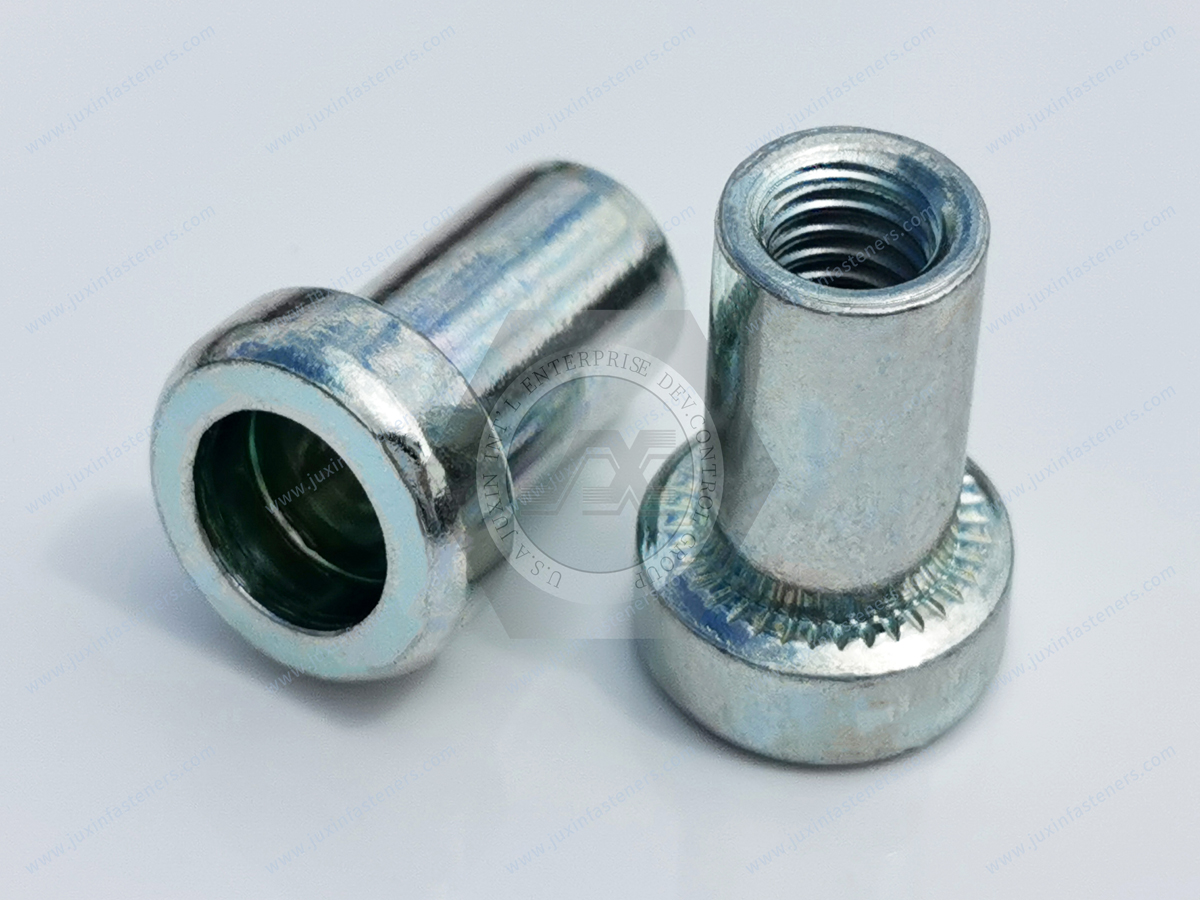
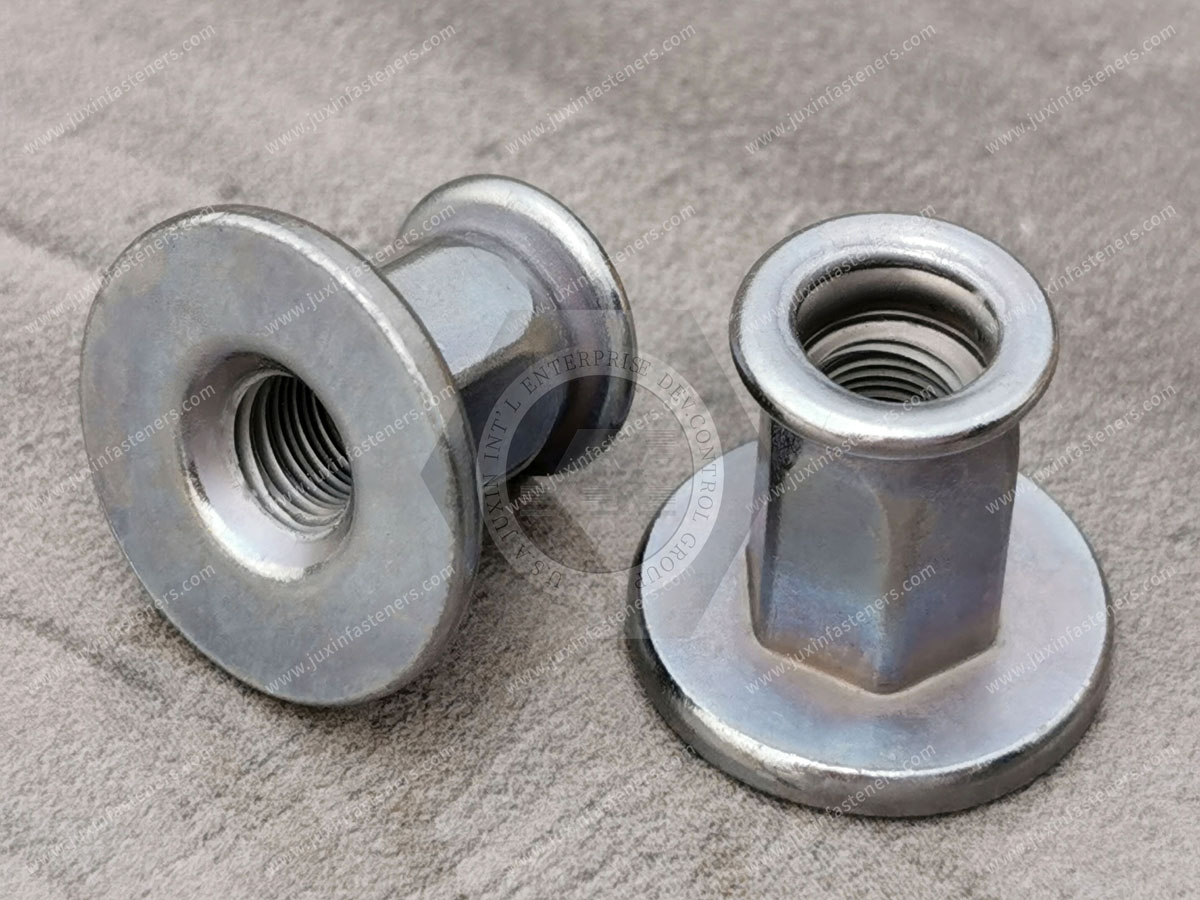
Hex rivet nuts incorporate an anti-rotation geometry that improves resistance to spinning after installation.
They are particularly useful where the joint is exposed to higher installation or service torque.
Common configurations include:
Full hex rivet nuts
Partial hex rivet nuts
Internal hex designs
External hex designs
Hexagonal geometry can provide stronger mechanical engagement with the surrounding sheet compared with a smooth cylindrical body.
Knurled Rivet Nuts
Knurled rivet nuts feature a textured external surface designed to improve grip in the parent material.
They can be considered for applications where additional resistance to rotation is required.
Typical applications include:
Sheet metal assemblies
Electrical enclosures
Equipment housings
Automotive components
Industrial equipment
Round Rivet Nuts
Round-body rivet nuts offer a simple cylindrical configuration and can be suitable for many general sheet-metal applications.
Selection depends on the required torque resistance, material and installation conditions.
Rivet Nut Head Styles
Different head configurations are available to accommodate panel design and assembly requirements.
Flat Head Rivet Nuts
Flat-head rivet nuts provide a bearing surface around the installation hole.
They are widely used for general sheet-metal fastening.
Countersunk Rivet Nuts
Countersunk rivet nuts are designed for applications where the installed fastener needs to sit close to or flush with the panel surface.
Common configurations include:
90° countersunk rivet nuts
Small-angle countersunk designs
Application-specific countersunk configurations
They are useful where surface appearance, clearance or adjacent component assembly is important.
Blind Rivet Nuts for Enclosed Assemblies
A blind rivet nut is particularly useful where only one side of the workpiece can be accessed.
This makes it suitable for:
Hollow tubes
Box sections
Enclosures
Automotive structures
Cabinets
Equipment frames
HVAC housings
Railway interiors
The nut is installed from the outside while the deformation occurs behind the sheet.
Once set, the threaded portion remains available for bolt or screw installation.
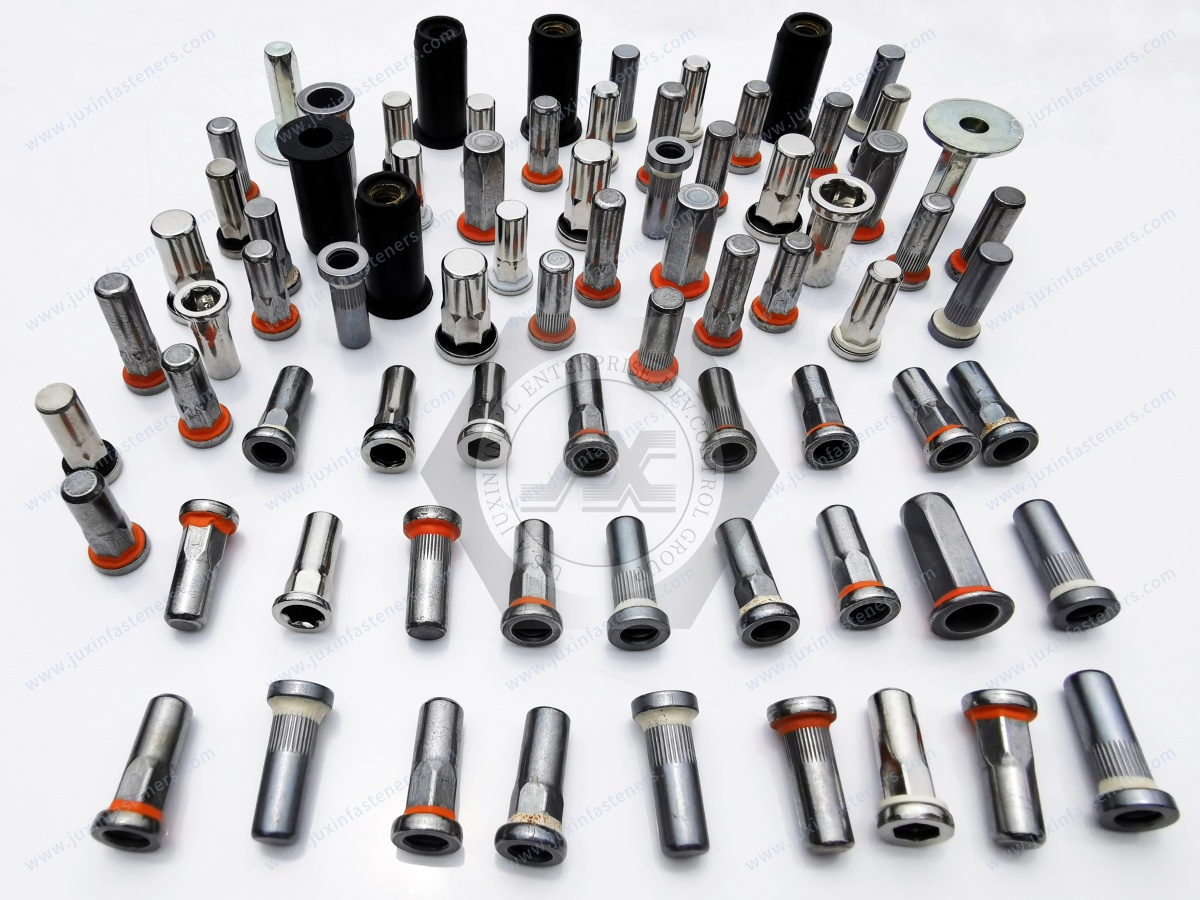
Waterproof Rivet Nuts
For applications where moisture resistance is required, waterproof rivet nuts or sealed blind rivet nut designs can be used.
These configurations can help limit the passage of water, dust or contaminants through the fastener installation point.
Potential applications include:
Outdoor electrical enclosures
Automotive components
Marine equipment
HVAC equipment
Refrigeration systems
Outdoor cabinets
Energy equipment
The actual sealing performance depends on the fastener design, sealing element, installation conditions and mating assembly.
Rivet Nut Materials
Material selection should be based on mechanical requirements, corrosion conditions and compatibility with the base material.
Carbon Steel Rivet Nuts
Carbon steel rivet nuts are widely used for general industrial applications.
They can be supplied with protective coatings such as zinc plating to improve corrosion resistance.
Typical applications include:
Automotive components
Machinery
Electrical cabinets
Sheet metal equipment
Industrial enclosures
Stainless Steel Rivet Nuts
Stainless steel rivet nuts are suitable for applications where corrosion resistance is a priority.
Common stainless steel options include:
Stainless steel 304
Stainless steel 316
Potential applications include:
Marine equipment
Food service equipment
Outdoor equipment
Medical equipment
Chemical environments
Stainless steel sheet assemblies
Material selection should consider the actual environment and base material.
Aluminum Rivet Nuts
Aluminum rivet nuts provide a lightweight fastening option for applications where weight reduction is important.
They can be considered for:
Automotive components
Transportation equipment
Lightweight structures
Electronics
Aluminum sheet metal
Industrial equipment
Rivet Nuts for Different Sheet Metal Materials
Rivet nuts can be used with various sheet and panel materials when the fastener design and installation parameters are correctly matched.
Applications may include:
Carbon steel sheet
Stainless steel sheet
Aluminum sheet
Galvanized sheet
Coated sheet metal
Certain composite materials
Tubular sections
Engineers should consider the relationship between the rivet nut material and the parent material, particularly where corrosion, galvanic interaction or mechanical compatibility may be concerns.
Rivet Nuts for Automotive Applications
The automotive industry is one of the major application areas for threaded rivet nuts.
Automotive manufacturers and Tier suppliers use rivet nuts to create threaded mounting points in thin sheet metal and enclosed structures.
Typical applications include:
Body panels
Chassis components
Interior trim
Instrument panels
Seat structures
Brackets
Underbody components
Battery-related structures
Electrical components
Cable management
Automotive rivet nuts are particularly useful where access to the rear side of the panel is limited.
For EV manufacturing, rivet nuts can also be considered for selected battery enclosure, electrical and thermal-management components where the design and material requirements are appropriate.
Rivet Nuts for EV and Battery Enclosures
Electric vehicle platforms contain numerous lightweight metal structures and enclosed assemblies.
Rivet nuts for EV applications may be used in:
Battery enclosures
Electrical housings
Cooling system components
Underbody structures
Cable brackets
Electronic equipment
Interior components
The fastener selection should consider vibration, corrosion, material compatibility, sheet thickness and the required mechanical performance.

Rivet Nuts for Electrical Enclosures and Switchgear
Electrical equipment manufacturers frequently need threaded mounting points inside sheet-metal cabinets.
Electrical enclosure rivet nuts can be installed from the outside of a panel and then used to attach:
Circuit protection components
Cable brackets
Control modules
Grounding-related hardware
Protective covers
Mounting rails
Electrical accessories
This makes rivet nuts particularly useful for cabinets where rear-side access is limited.
Rivet Nuts for HVAC and Refrigeration Equipment
HVAC and refrigeration equipment frequently uses thin formed sheet metal.
Rivet nuts can create threaded mounting points for:
Fans
Electrical components
Control panels
Covers
Brackets
Sensors
Pipe supports
Internal equipment
For outdoor HVAC systems, material and coating selection should account for humidity, condensation and corrosion exposure.

Rivet Nuts for Telecom Cabinets
Telecommunication cabinets and equipment enclosures often require many threaded attachment points within compact spaces.
Rivet nuts can be used for:
Telecom cabinets
Network equipment
Server housings
Cable management
Cooling components
Electronic modules
Equipment brackets
Their single-sided installation makes them particularly useful for enclosed sheet-metal cabinets.
Rivet Nuts for Railway Applications
Railway equipment requires reliable fastening solutions for interior panels, electrical systems and fabricated metal components.
Applications may include:
Passenger rail interiors
Electrical cabinets
Equipment housings
Interior panels
Cable management
Brackets
Railway equipment structures
For rail applications, engineers should consider vibration, fatigue, corrosion and applicable customer or industry specifications.
Rivet Nuts for Aerospace Equipment
Aerospace equipment frequently uses lightweight sheet materials and enclosed structures.
Rivet nuts can provide threaded attachment points for:
Equipment panels
Interior components
Brackets
Electronic equipment
Avionics-related housings
Cable management
Ground support equipment
For aerospace applications, material traceability, dimensional control and customer-specific specifications should be established before production.
Rivet Nuts for Refrigeration and Appliances
Rivet nuts are also widely applicable to equipment manufactured from formed sheet metal.
Potential applications include:
Refrigeration equipment
Commercial appliances
Air conditioning equipment
Kitchen equipment
Electrical appliances
Equipment cabinets
They provide an efficient alternative when welding or tapping is inconvenient.
Rivet Nuts for Elevators
Elevator equipment contains numerous sheet-metal panels, brackets and enclosed structures.
Rivet nuts may be used for:
Cabin components
Interior panels
Control equipment
Door components
Electrical cabinets
Equipment brackets
Cable management
Single-sided installation can simplify assembly where the rear side of a panel is inaccessible.
Rivet Nuts for Furniture and Metal Cabinets
Metal furniture and cabinet manufacturers can use rivet nuts to create reusable threaded mounting points.
Applications include:
Metal cabinets
Server racks
Office furniture
Storage systems
Display equipment
Decorative metalwork
Equipment enclosures
Countersunk and flush-head designs can be particularly useful where surface appearance and component clearance are important.
Rivet Nut Selection Guide
Choosing the correct rivet nut requires more than simply matching the thread size.
Engineers should evaluate:
1. Thread Size
Common thread options include:
M3
M4
M5
M6
M8
M10
M12
Imperial thread sizes can also be supplied for applications requiring UNC or UNF specifications.
2. Grip Range
The rivet nut must be compatible with the actual material thickness.
For example, a fastener designed for a specific grip range should not be used outside its specified installation range.
3. Head Style
Select:
Flat head
Countersunk head
Other application-specific configurations
4. Body Design
Depending on torque and anti-rotation requirements:
Round
Knurled
Hex
Serrated
5. Material
Select according to:
Strength
Weight
Corrosion
Temperature
Base-material compatibility
6. Blind or Through-Hole Design
Blind-end rivet nuts can be considered where sealing or preventing contamination through the fastener is important.
Rivet Nut vs Weld Nut vs Tapped Hole
Choosing the right threaded fastening method depends on the assembly design.
Feature | Rivet Nut | Weld Nut | Tapped Hole |
One-sided installation | Yes | Usually requires welding access | Yes |
Welding required | No | Yes | No |
Heat input | None | Yes | None |
Suitable for thin sheet | Excellent | Excellent | Limited by sheet thickness |
Installation after coating | Often possible | Usually before coating | Depends on process |
Enclosed structures | Excellent | Difficult in some cases | Possible |
Reusable thread | Yes | Yes | Yes |
Field installation | Possible with suitable tools | Not normally practical | Requires tapping |
Production efficiency | High | High in automated welding | High for suitable materials |
The best solution depends on material thickness, access, production process, mechanical requirements and total assembly cost.
Rivet Nut Installation Methods
Rivet nuts can be installed using different types of equipment.
Manual Rivet Nut Tools
Suitable for:
Prototype production
Maintenance
Small batches
Low-volume assembly
Pneumatic Rivet Nut Tools
Suitable for:
Production environments
Repetitive assembly
Medium and high-volume manufacturing
Battery-Powered Installation Tools
Portable powered tools can provide greater flexibility for production and service applications.
Press-Riveting Equipment
For suitable rivet nut designs and high-volume production, press installation can provide repeatable results.
The installation tool must be matched to the rivet nut specification and material thickness.
Engineering Considerations for Rivet Nut Applications
A reliable rivet nut connection depends on the complete assembly rather than the fastener alone.
Engineers should evaluate:
Base material
Sheet thickness
Hole diameter
Grip range
Thread size
Installation force
Setting stroke
Pull-out load
Torque resistance
Vibration
Corrosion
Temperature
Required service life
Incorrect hole dimensions or installation parameters can reduce the performance of the finished joint.
For production applications, installation parameters should be validated before mass production.
Custom Rivet Nut Manufacturing
Juxin Fasteners provides custom rivet nut manufacturing for OEM and industrial applications.
Customers can provide:
Engineering drawings
CAD files
Samples
Thread specifications
Material requirements
Surface treatment requirements
Grip range
Head configuration
Anti-rotation requirements
Packaging requirements
We can support customized configurations for applications that cannot be met by standard catalog components.
Quality Control for Rivet Nuts
Consistent quality is critical for threaded fastening components used in industrial production.
Depending on the project, inspection can include:
Dimensional inspection
Thread gauge inspection
Hole diameter verification
Material verification
Surface treatment inspection
Grip range verification
Torque testing
Pull-out testing
Installation testing
Appearance inspection
For OEM projects, inspection requirements can be defined according to customer drawings and technical specifications.
Why Choose Juxin Fasteners for Rivet Nuts?
Juxin Fasteners supplies industrial fastening components for OEM manufacturers and international distributors.
Our rivet nut capabilities include:
Blind rivet nuts
Threaded rivet nuts
Hex rivet nuts
Knurled rivet nuts
Flat-head rivet nuts
Countersunk rivet nuts
Waterproof rivet nuts
Stainless steel rivet nuts
Carbon steel rivet nuts
Aluminum rivet nuts
Custom rivet nuts
We can support customers from sample development and specification confirmation through production, inspection and packaging.
Frequently Asked Questions About Rivet Nuts
What is a rivet nut used for?
A rivet nut creates a permanent internal thread in thin sheet metal or other suitable materials, allowing a bolt or screw to be installed from one side.
What is the difference between a rivet nut and a blind rivet nut?
In many industrial applications, the terms are used interchangeably. A blind rivet nut is specifically designed for installation when only one side of the workpiece is accessible.
Can rivet nuts be installed without welding?
Yes. Rivet nuts are mechanically installed using suitable riveting or setting tools and do not require welding.
Are rivet nuts suitable for thin sheet metal?
Yes. They are specifically designed to provide threaded fastening points in relatively thin materials where conventional tapping may not provide sufficient thread engagement.
What materials are rivet nuts available in?
Common materials include carbon steel, stainless steel and aluminum. Other materials may be available according to application requirements.
Are stainless steel rivet nuts available?
Yes. Stainless steel 304 and 316 rivet nuts are commonly used where corrosion resistance is important.
Can rivet nuts be used in aluminum sheet?
Yes. Aluminum-compatible rivet nuts can be selected for aluminum sheet applications, with material compatibility and installation parameters considered during engineering.
What sheet thickness can rivet nuts be used with?
Many applications fall within approximately 0.5–6 mm, but the actual range depends on the rivet nut design, grip range, thread size and base material.
Can rivet nuts be waterproof?
Certain blind-end and sealed rivet nut designs can provide sealing performance. The actual water resistance depends on the complete fastener and assembly design.
Can you manufacture custom rivet nuts?
Yes. Juxin Fasteners can manufacture custom rivet nuts according to engineering drawings, samples and application requirements.
Related Rivet Nut Solutions
For engineers and purchasing teams evaluating threaded fastening options, related solutions include:
Blind Rivet Nuts
Hex Rivet Nuts
Knurled Rivet Nuts
Countersunk Rivet Nuts
Stainless Steel Rivet Nuts
Aluminum Rivet Nuts
Waterproof Rivet Nuts
Threaded Inserts
Weld Nuts
Weld Studs
CNC Machined Components
Request a Rivet Nut Quote
Whether you need standard blind rivet nuts or a custom threaded fastening solution, Juxin Fasteners can support OEM and industrial requirements.
Send us your drawing, sample, thread specification, material requirement or application details for evaluation.
Email: info@juxinfasteners.com
Juxin Fasteners — Threaded Fastening Solutions for Industrial Sheet Metal Applications.
 MORE NEWS

Oct. 13, 2026
Contact Us
Tel.:
+86 020 8621 0320
+86 020 3121 6067
E-mail:
Technical Support:
Navigation
SEND INQUIREY