
Call Us
+86 136 6007 9809
Call Us
+86 136 6007 9809

Sep. 09, 2023
Spring lock washers have been used in mechanical fastening systems for decades, and one of the most common assumptions about them is simple:
A spring washer prevents a bolt or nut from loosening.
For engineering applications, that statement is too broad.
A conventional split or helical spring lock washer can provide elastic behavior and can affect the bearing interface under a fastener,
but it should not automatically be treated as a reliable anti-loosening solution for joints exposed to significant transverse vibration, cyclic movement or safety-critical loading.
The more useful engineering question is:
What is causing the bolted joint to lose clamp force or rotate?
That question changes the entire fastener-selection process.
A better decision path is:
Joint Failure Mode → Joint Movement → Required Preload → Locking Requirement → Fastener Strategy → Validation
JUXIN FASTENERS supplies industrial washers, locking nuts, bolts, screws and custom fastening components for
OEM and drawing-controlled applications across machinery, automotive equipment, electrical systems, HVAC, industrial automation, power equipment and other engineered assemblies.
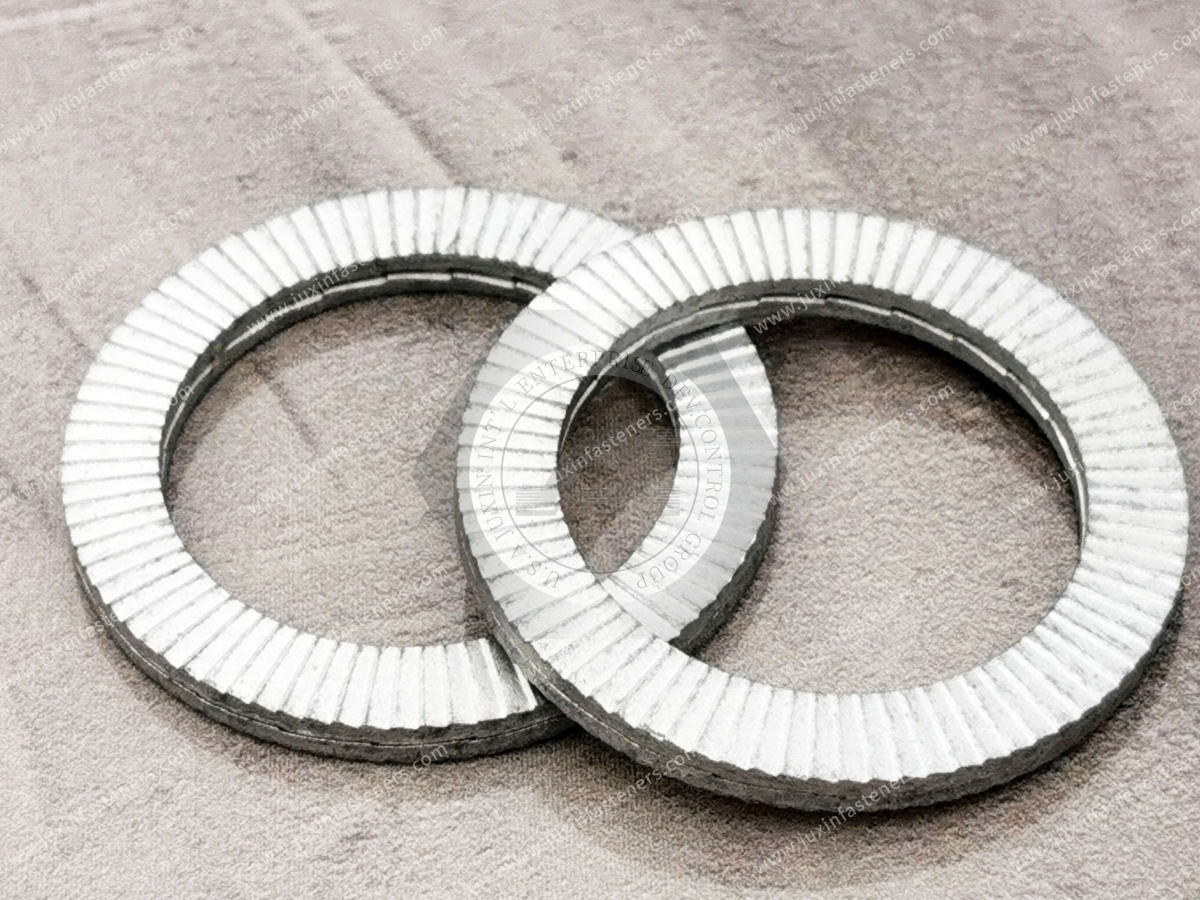
Not reliably in every application.
Conventional split spring lock washers should not be assumed to prevent rotational self-loosening under severe vibration or joint movement.
Their actual contribution depends on:
joint preload;
washer geometry;
bolt stiffness;
joint stiffness;
transverse movement;
bearing surfaces;
friction;
mating materials;
installation conditions.
In a properly engineered joint, the locking strategy should be selected according to the actual loosening mechanism.
Before choosing a spring washer or any other locking component, engineers need to distinguish several different failure mechanisms.
A fastened joint can experience:
rotational self-loosening;
preload loss;
embedment;
relaxation;
creep;
thermal effects;
local deformation;
joint slip;
fastener fracture.
These are not the same failure.
Therefore:
Loose Joint ≠ Always Rotationally Loose Fastener
A bolt can lose clamping force without visibly rotating.
Conversely, a threaded fastener can rotate because the joint has already lost sufficient clamp force to permit movement.
The correct anti-loosening solution depends on the cause.
One important loosening mechanism occurs when relative transverse movement develops between the clamped components.
If the joint slips sufficiently under cyclic loading, relative movement at the thread and bearing interfaces can reduce the frictional resistance that helps maintain the fastener's rotational position.
Repeated cycles can then allow progressive rotation.
This is why severe transverse vibration is particularly important in bolted-joint design.
The engineering objective is not merely to “add friction.”
It is to understand why the joint is moving.
When a bolt is tightened, it is stretched and develops tensile preload.
The clamped components are compressed.
That clamp force helps keep the joint interfaces in contact.
If sufficient preload is maintained relative to the applied service loads, unwanted joint separation or slip may be reduced.
Therefore, the anti-loosening problem often begins with:
bolt preload;
joint stiffness;
clamp length;
tightening method;
friction control;
external loading.
A washer cannot automatically compensate for a poorly designed or improperly tightened joint.
A split spring washer has a helical free shape.
As the fastener is tightened, the washer compresses toward a flatter installed condition.
This deformation produces an elastic reaction.
Historically, the washer has also been described as providing locking through a combination of:
spring force;
friction;
interaction between its split ends and the mating surfaces.
However, the presence of these mechanisms does not establish reliable locking under all service conditions.
This distinction is essential:
Spring Washer Force ≠ Bolt Preload
The preload generated in a properly tightened bolt can be much greater than the remaining spring reaction available from a small split washer.
As the washer becomes substantially flattened during tightening, its role in the complete load path changes.
The washer should therefore not be described as continuously replacing lost bolt preload simply because it has a spring shape.
During tightening, a split washer can flatten significantly.
Once substantially flattened, its available elastic travel is reduced.
This matters because the traditional explanation—
“The washer keeps pushing upward and therefore keeps the nut tight”
—can exaggerate the washer's contribution to the complete bolted joint.
The actual behavior must be considered relative to:
bolt tension;
joint compression;
washer stiffness;
external displacement;
surface settlement.
Not in the simple way frequently described.
The original article stated that spring-washer pressure directly increases friction between the nut threads and bolt threads.
That is an oversimplification.
Thread friction is influenced primarily by factors including:
thread geometry;
material;
surface finish;
coating;
lubrication;
normal force generated through tightening.
The washer is located at the bearing interface rather than inside the thread interface.
Its influence on the complete tightening system therefore needs to be analyzed as part of the entire joint.
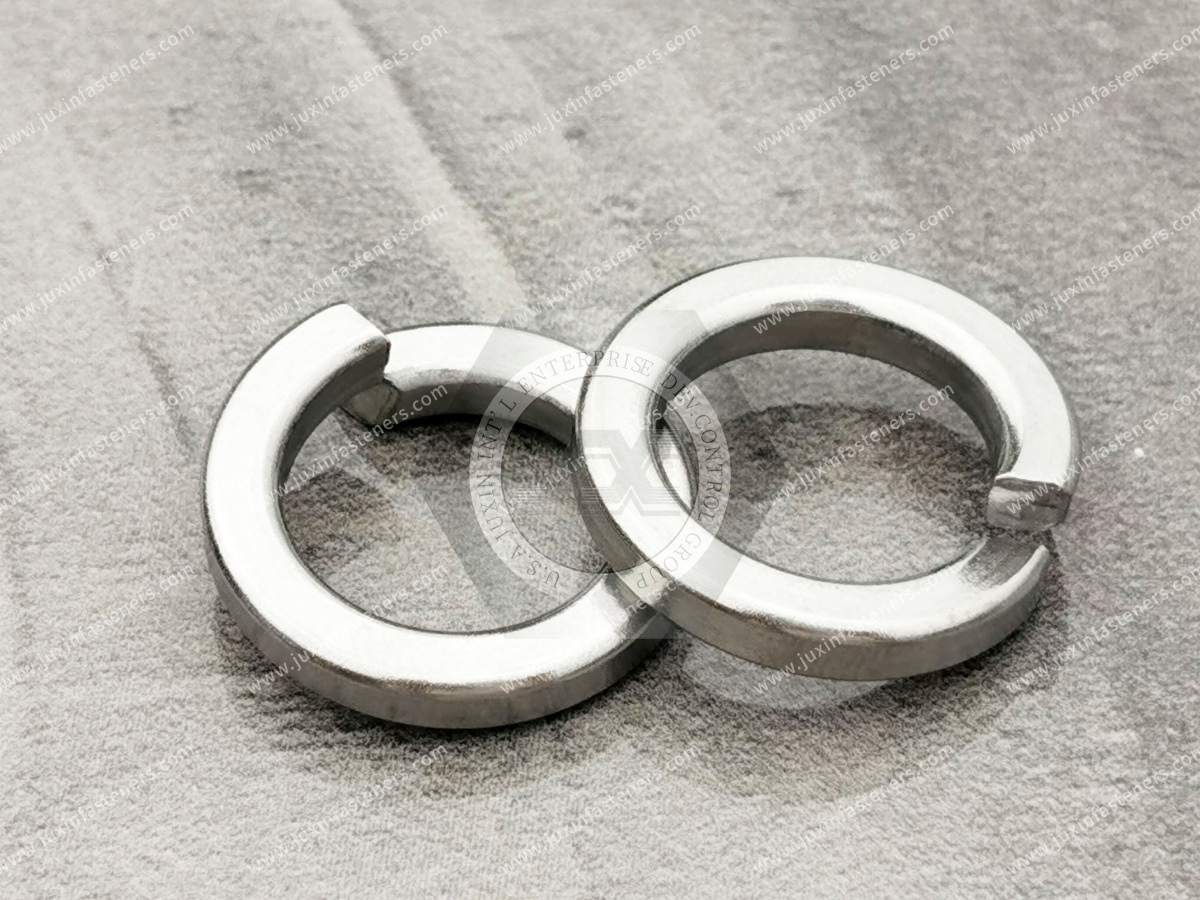
The split ends of some helical spring washers can interact with the adjacent bearing surfaces.
However, this should not be interpreted as a universal positive-locking mechanism.
Whether meaningful surface interaction occurs depends on:
washer hardness;
mating-surface hardness;
coating;
surface condition;
installation load;
washer geometry.
If reliable mechanical locking is required, it should come from a locking method specifically designed and validated for that requirement.
ASME B18.21.1 covers dimensional requirements, physical properties and related test methods for applicable inch-series helical spring-lock washers, tooth-lock washers and plain washers.
Importantly, the standard explains that the word “lock” in these product names is a generic term historically associated with their identification.
It should not be interpreted as a guarantee of indefinite locking in the assembled joint.
This distinction is important for engineers and procurement teams.
A product name is not a performance guarantee.
Published engineering guidance has questioned the effectiveness of conventional split lock washers as a primary locking method in demanding vibration applications.
NASA fastener guidance, for example, has described free-spinning split lock washers as providing minimal, if any, locking and restricts their use in safety-sensitive fastening strategies.
This does not mean every split washer should disappear from industrial equipment.
It means:
application requirements should determine the locking strategy.
This is one of the most important rules for procurement teams.
A drawing that includes a spring washer does not automatically create a vibration-resistant joint.
Vibration resistance depends on the complete system:
Bolt + Nut + Washer + Joint Geometry + Preload + Friction + External Loading + Locking Method
Changing only the washer may not solve the underlying problem.
Another common misconception is that spring washers absorb vibration.
A spring and a damper perform different physical functions.
A spring stores and returns mechanical energy.
A damper dissipates energy.
Therefore:
Elasticity ≠ Damping
A conventional spring washer should not automatically be promoted as a vibration-damping component.
This distinction creates substantial Information Gain for joint troubleshooting.
Clamp force may decrease because of:
surface embedment;
material creep;
relaxation;
thermal effects;
local deformation;
gasket behavior;
parent-material compression.
The fastener may not rotate.
The nut or bolt rotates relative to its mating thread.
This can occur when service loading allows sufficient relative movement at the joint interfaces.
These two problems can require different engineering solutions.
A buyer may receive a requirement such as:
“We need a washer because the bolts keep coming loose.”
That is not yet a complete purchasing specification.
Before sourcing parts, engineering should determine:
Is the bolt rotating?
Is clamp force decreasing without rotation?
Is the joint slipping?
Is the parent material deforming?
Is temperature changing preload?
Is installation torque inconsistent?
Otherwise, procurement may purchase a locking product that does not address the actual failure mode.
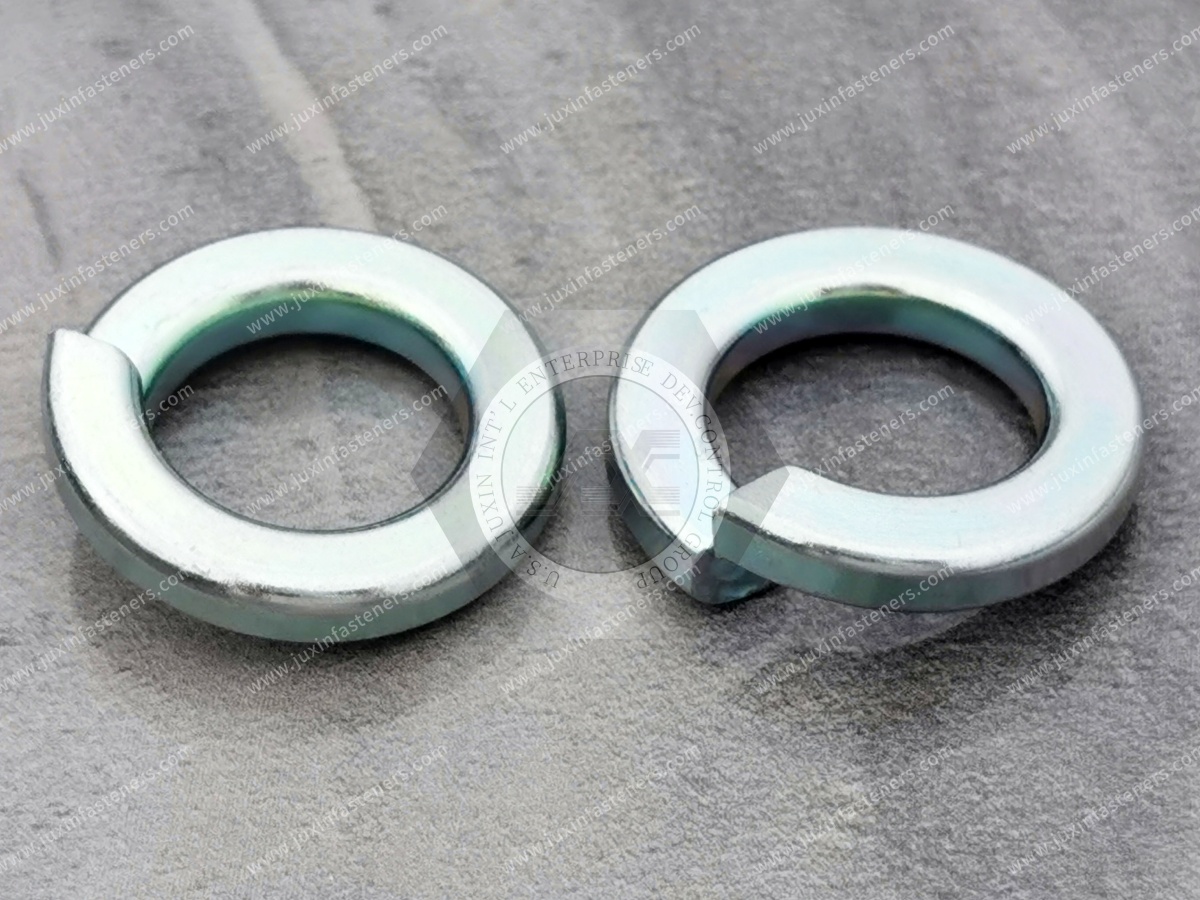
Split spring washers continue to appear in many industrial assemblies.
They may be appropriate where:
the existing approved drawing specifies them;
equipment uses them as part of an established design;
the application is not relying on the washer as the sole safety-critical locking feature;
the customer specification requires the component;
legacy replacement is required.
The key is not to assign performance claims that the washer has not been validated to provide.
Many older machines and equipment drawings specify spring lock washers.
In these situations, procurement may not be redesigning the joint.
It may simply need an exact replacement.
That creates two different sourcing tasks:
Legacy Replacement
and:
New Joint Design
They should not be confused.
DIN 127 is still encountered in legacy drawings and spare-parts requirements for spring lock washers.
However, DIN 127:1987-10 is withdrawn.
Therefore, a DIN 127 inquiry should first determine whether the customer requires:
an exact legacy replacement;
an existing drawing-controlled component;
or a redesigned current fastening solution.
A withdrawn standard can remain relevant to maintenance sourcing without being presented as a current universal design standard.
For applicable inch-series washer requirements, ASME B18.21.1 remains a relevant reference for helical spring-lock washers, tooth-lock washers and plain washers within its scope.
Procurement should still define:
nominal size;
washer type;
material;
finish;
customer requirements;
quantity.
The standard controls defined product requirements; it does not guarantee vibration-proof performance in every joint.
When a conventional split washer is not appropriate, engineers can evaluate alternative strategies.
These can include:
prevailing-torque nuts;
nylon-insert locknuts;
all-metal locknuts;
wedge-locking washer systems;
serrated flange fasteners;
thread-locking compounds;
tab washers or locking plates;
cotter-pin or castellated-nut systems;
safety wire in appropriate controlled applications;
other application-specific mechanical locking systems.
These alternatives do not all work through the same mechanism.
The correct choice depends on the joint.
Prevailing-torque nuts create resistance to relative thread rotation beyond the clamp load generated by tightening.
Two broad categories include:
nonmetallic-insert locknuts;
all-metal prevailing-torque locknuts.
These can be useful where rotational resistance is required, but selection must consider:
temperature;
reuse requirements;
mating bolt properties;
prevailing torque;
environment;
applicable standard.
Nylon-insert locknuts use a polymer insert to create prevailing torque against the mating thread.
Potential advantages can include a defined thread-locking mechanism independent of a split washer.
However, the polymer introduces additional considerations such as:
temperature;
chemicals;
reuse;
thread compatibility.
For more detail, see Nylon Insert Locknuts for Anti-Vibration Applications.
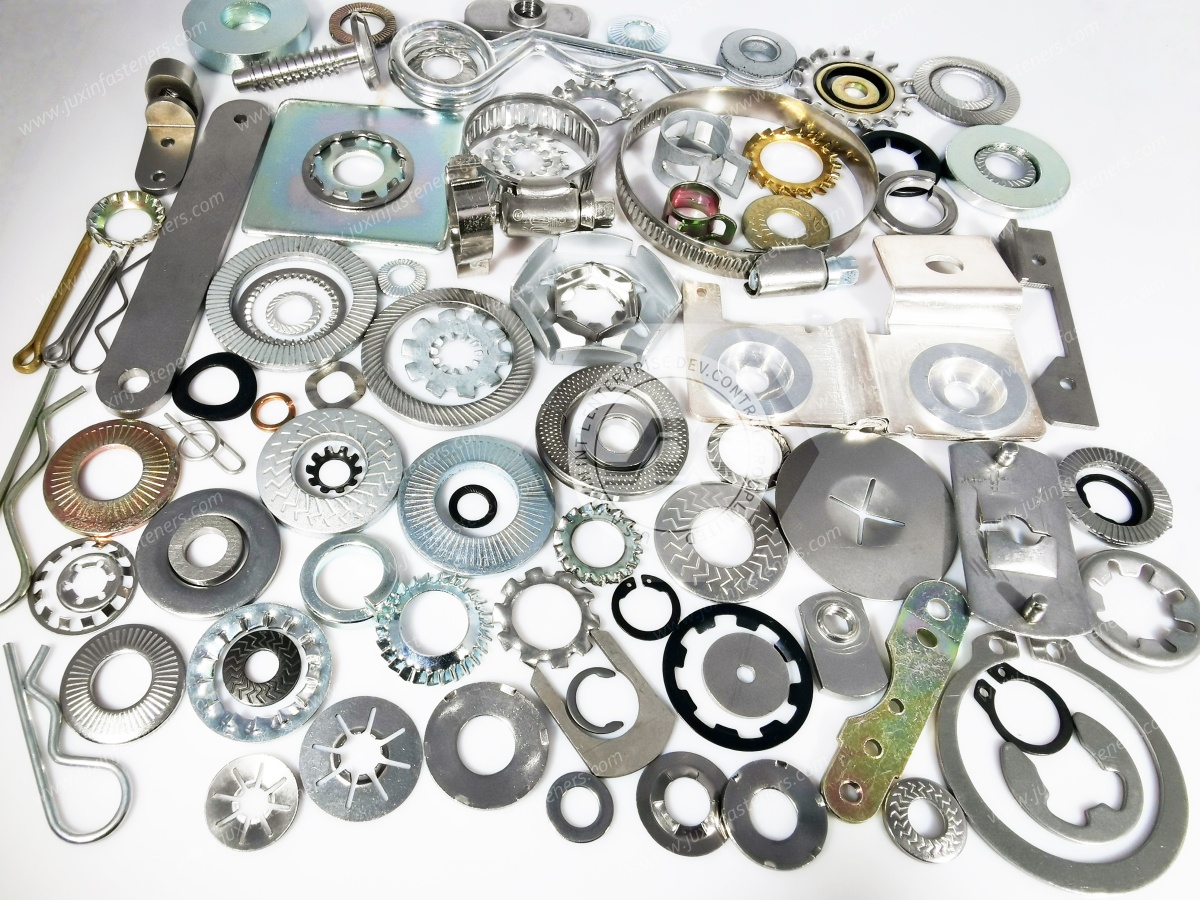
All-metal prevailing-torque nuts create locking action through controlled metallic thread deformation or another engineered metallic feature.
They can be considered where polymer inserts are unsuitable.
Selection should follow the applicable product specification and application requirements.
All-metal does not automatically mean suitable for every high-temperature or vibration environment.
Wedge-locking systems use engineered mating geometries to resist relative rotational movement.
Their mechanism is fundamentally different from a conventional split spring washer.
Where these systems are considered, engineers should evaluate:
joint geometry;
preload;
bearing surface;
available space;
installation method;
reuse policy;
supplier-specific technical requirements.
They should not be treated as interchangeable with generic spring washers.
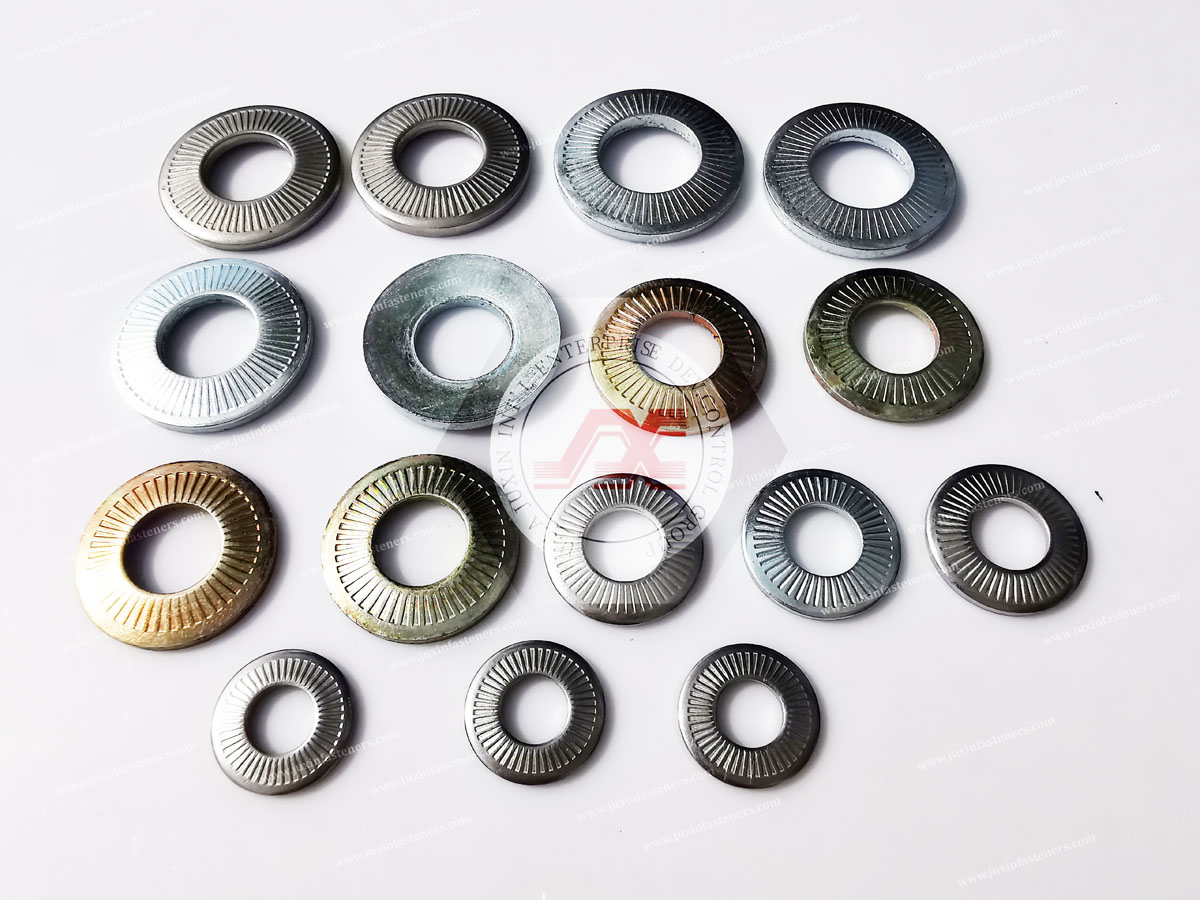
Serrated bearing surfaces can create additional resistance to rotation by interacting with the mating surface.
However, serrations may also affect or damage the bearing surface.
They may therefore be inappropriate where:
surface finish must remain intact;
coatings are functionally important;
repeated disassembly is expected;
the parent material is sensitive to indentation.
Locking performance and surface requirements must be considered together.
Thread-locking compounds use an adhesive mechanism between mating threads.
Selection can depend on:
fastener size;
required strength;
temperature;
fluid exposure;
surface condition;
disassembly requirements;
production process.
An adhesive is not automatically a direct replacement for a mechanical locking device.
Some applications use positive mechanical locking features such as:
cotter pins;
castellated nuts;
tab washers;
locking plates;
safety wire.
These systems physically restrict unwanted fastener rotation when properly designed and installed.
They can be relevant where the application requires a locking principle that does not depend solely on friction.
This distinction helps engineers organize locking methods.
These resist rotation through controlled friction or prevailing torque.
Examples can include:
nylon-insert locknuts;
all-metal prevailing-torque nuts;
certain thread-locking compounds.
These physically restrict rotation or disengagement.
Examples can include:
cotter pins with castellated nuts;
locking plates;
tab systems;
safety wire in appropriate applications.
The required reliability and failure consequences help determine which strategy is appropriate.
| Joint Condition | Engineering Direction |
|---|---|
| General legacy assembly | Follow approved drawing/specification |
| Mild service, existing spring washer design | Validate against actual application |
| Significant transverse vibration | Evaluate dedicated locking strategy |
| Elevated temperature | Evaluate temperature-compatible locking method |
| Frequent disassembly | Consider serviceability and reuse |
| Soft bearing surface | Evaluate surface damage and bearing pressure |
| Safety-critical joint | Use application-approved locking strategy and validation |
| Preload loss without rotation | Investigate joint relaxation/settlement rather than only locking |
| Corrosive environment | Evaluate material, coating and locking mechanism together |
When bolts loosen in machinery, immediately changing from one washer to another can hide the real issue.
Engineers should investigate:
bolt preload;
tightening consistency;
joint stiffness;
transverse load;
interface slip;
clamp length;
parent-material deformation;
temperature;
bearing surfaces;
thread condition.
The root cause may not be the absence of a lock washer.
If installation torque varies substantially, bolt preload may also vary.
Torque-preload relationships are influenced by friction at:
the threads;
the nut or bolt bearing surface;
the washer interface.
Changes in:
coating;
lubrication;
washer material;
surface finish
can therefore influence an established torque-controlled assembly.
Applied torque is not a direct measurement of bolt clamp force.
A significant portion of tightening torque is consumed by friction.
Therefore, specifying:
“Tighten to X N·m”
without understanding the fastener, lubrication and bearing conditions may not produce consistent preload.
For demanding joints, tightening strategy should be treated as part of the engineering design.
Automotive assemblies can experience vibration, thermal cycling and dynamic loads.
Potential locking-fastener applications can include:
brackets;
equipment mounts;
electrical assemblies;
auxiliary systems;
serviceable components.
However, safety-critical automotive joints require application-specific engineering.
A conventional spring washer should not automatically be promoted as sufficient for:
brake systems;
wheel joints;
suspension systems;
steering systems;
crash-critical structures.
For broader automotive fastening considerations, see Automotive High-Strength Fasteners: Bolts, Nuts & Clamps.
EV platforms include numerous bolted assemblies around:
electronics;
auxiliary brackets;
control equipment;
service panels;
power conversion systems;
thermal-management equipment.
Where vibration resistance is required, engineers should evaluate the actual joint rather than automatically specifying a split washer.
Spring washers do not automatically provide:
enclosure sealing;
IP performance;
electrical grounding;
EMI shielding.
Machinery is one of the most common environments for anti-loosening questions.
Applications can include:
motors;
pumps;
compressors;
gearboxes;
machine frames;
guards;
brackets.
Before changing the locking component, determine whether the problem is rotational loosening, settlement, inadequate preload or joint movement.
Construction, mining and agricultural equipment can expose fasteners to substantial vibration and shock.
These conditions make correct joint design particularly important.
The locking method should be selected according to:
joint load;
service environment;
maintenance requirements;
failure consequences;
approved equipment specification.
A generic split washer should not be assumed sufficient for high-consequence joints.
Railway systems contain both ordinary equipment fasteners and highly controlled safety-critical joints.
Spring washers may appear in legacy or equipment-level assemblies, but their use should follow the applicable drawing and railway project requirements.
No generic spring washer should be represented as automatically suitable for safety-critical rail applications.
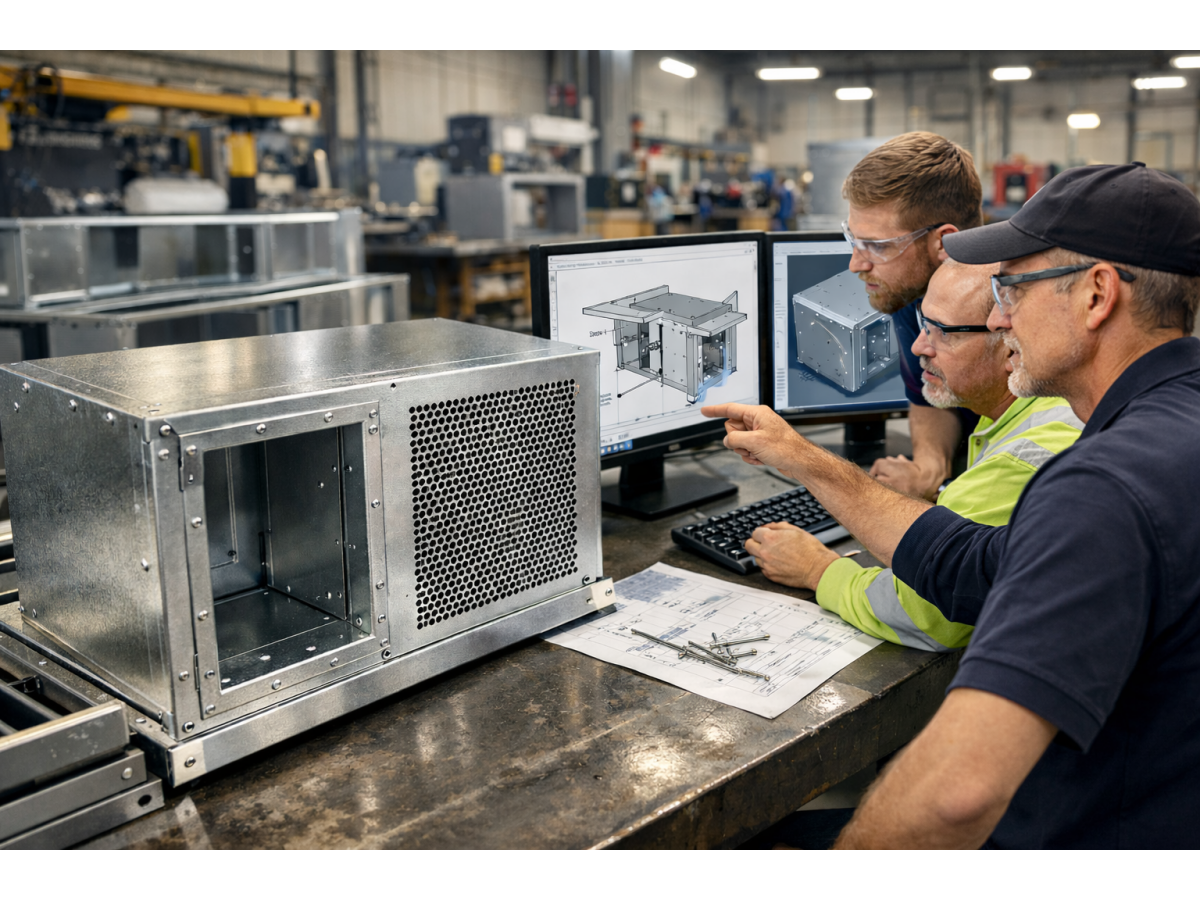
HVAC equipment can experience vibration from:
fans;
motors;
compressors;
pumps.
Fasteners may be used in:
equipment housings;
frames;
control enclosures;
service panels;
auxiliary brackets.
The locking strategy should match the actual vibration and maintenance requirement rather than simply adding a spring washer.
Automation systems may contain:
servo motors;
actuators;
machine frames;
sensor brackets;
equipment covers;
control cabinets.
Some assemblies require frequent servicing while others remain permanently installed.
This makes serviceability an important locking-method selection factor.
Electrical cabinets, UPS systems, power conversion equipment and industrial controls contain many mechanical fastening points.
A locking method can help maintain mechanical attachment where required.
However, a spring washer should not automatically be considered:
an electrical bonding device;
a grounding solution;
an EMI component.
Those functions require separate engineering requirements.
Aerospace fastening requires especially careful distinction between generic industrial hardware and qualified locking systems.
NASA's current threaded-fastening standard addresses locking requirements for spaceflight hardware,
illustrating how high-consequence applications treat fastener locking as a system-level engineering issue rather than relying on the historical name of a washer.
A generic commercial spring washer should never be represented as suitable for flight-critical locking without the required specification and qualification.
Engineers may search:
do spring washers prevent loosening;
do lock washers actually work;
spring washer vibration;
split lock washer effectiveness;
why bolts loosen under vibration;
spring washer vs locknut;
best method to prevent bolt loosening;
split washer alternatives.
These searches indicate a problem-solving intent rather than simple product discovery.
Purchasing and supplier-development teams may search:
spring washer manufacturer;
spring lock washer supplier;
locknut manufacturer;
anti-loosening fastener supplier;
OEM locking fasteners;
custom locking fastener manufacturer.
Procurement needs to know which locking technology engineering has approved before comparing suppliers.
The search journey should move from:
“Bolt keeps coming loose”
to:
Failure Diagnosis → Locking Principle → Component Selection → Validation → Approved Specification → Supplier RFQ
This prevents procurement from solving an engineering problem by purchasing the most familiar washer.
For efficient technical evaluation by JUXIN FASTENERS, provide where applicable:
2D drawing;
3D model where relevant;
physical sample;
customer part number;
existing/reference part number;
fastener type;
washer type if specified;
nut type if specified;
applicable ISO, DIN, ASME/ANSI, ASTM, SAE, EN, BS or customer specification;
metric or inch thread;
thread size;
thread pitch or TPI;
bolt/screw property class or specification;
nut specification;
washer dimensions;
washer material;
nut material;
bolt material;
surface treatment;
coating thickness where specified;
trivalent chromium zinc requirement where applicable;
RoHS/REACH requirement where applicable;
parent material;
parent-material thickness;
tightening requirement;
lubrication condition where controlled;
vibration environment;
expected joint movement;
operating temperature;
corrosion environment;
locking requirement;
disassembly requirement;
reuse requirement where applicable;
safety classification where applicable;
validation requirement;
sample quantity;
production quantity;
annual demand;
packaging requirements;
labeling requirements;
inspection requirements;
customer-specific requirements.
Conventional split spring lock washers should not be treated as universally reliable anti-loosening devices.
Their effectiveness depends on the joint, preload, movement and service conditions.
For demanding vibration applications, a dedicated locking strategy may be more appropriate.
The term has historical usage.
ASME B18.21.1 specifically notes that the word “lock” in washer product names does not imply indefinite permanency of the attachment.
Their helical geometry is compressed as the fastener is tightened.
Once substantially flattened, the washer has limited remaining elastic travel compared with its free shape.
Surface interaction can occur depending on washer and mating-surface conditions, but it should not be assumed to provide reliable positive locking in every joint.
No.
They remain specified in many established and legacy assemblies and can perform the function required by those designs.
The engineering issue is avoiding unsupported claims that they provide universal vibration locking.
There is no universal “best” locking device.
Possible approaches include prevailing-torque locknuts, wedge-locking systems, thread-locking compounds and positive mechanical locking methods.
Selection depends on the actual joint.
They use different mechanisms.
A nylon-insert locknut provides prevailing torque through a polymer insert, while a split spring washer is a separate elastic washer.
Suitability depends on temperature, environment, serviceability, mating threads and application requirements.
Adding more components does not automatically create a better joint.
The complete locking strategy should be engineered rather than stacking multiple devices without understanding their interaction.
Determine first whether the fastener is rotating or whether preload is being lost without rotation.
Then evaluate preload, joint movement, stiffness, tightening method, friction, temperature and the required locking mechanism.
A high-value industrial search often begins with a problem:
“Why does my bolt keep coming loose?”
The commercial conversion path should not immediately jump to:
“Buy a spring washer.”
The correct path is:
Failure Mode → Joint Analysis → Required Locking Principle → Fastener Selection → Material & Finish → Prototype
→ Vibration/Functional Validation Where Required → Approved Drawing → Supplier RFQ → Production Supply
That is the difference between selling a component and solving a fastening problem.
JUXIN FASTENERS supports OEM sourcing of washers, nylon-insert locknuts, all-metal locking nuts, screws,
bolts and custom fastening components for machinery, automotive equipment, electrical systems, HVAC, industrial automation, power equipment and other engineered assemblies.
For broader washer selection, see Industrial Washers: Types, Functions & Selection Guide.
For complete washer-and-bolt system engineering, see Washers and Bolts: Fastening Systems Selection Guide.
For nylon-insert locking solutions, see Nylon Insert Locknuts for Anti-Vibration Applications.
For anti-loosening fastener RFQs, send your drawing, existing part number, thread specification, application, vibration condition, material, surface treatment and estimated demand to:
The objective is not to add a component called a “lock washer.”
The objective is to select a locking strategy that matches the actual failure mechanism of the bolted joint.
 MORE NEWS
Sep. 25, 2026
Sep. 25, 2026
Sep. 25, 2026
Contact Us
Tel.:
+86 020 8621 0320
+86 020 3121 6067
E-mail:
Technical Support:
Navigation
SEND INQUIREY