Call Us
+86 136 6007 9809
Call Us
+86 136 6007 9809

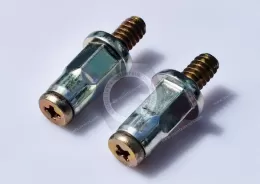
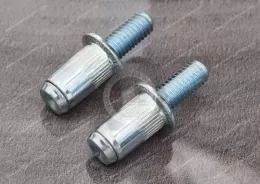
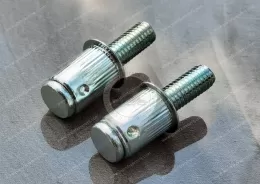
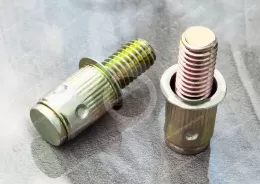
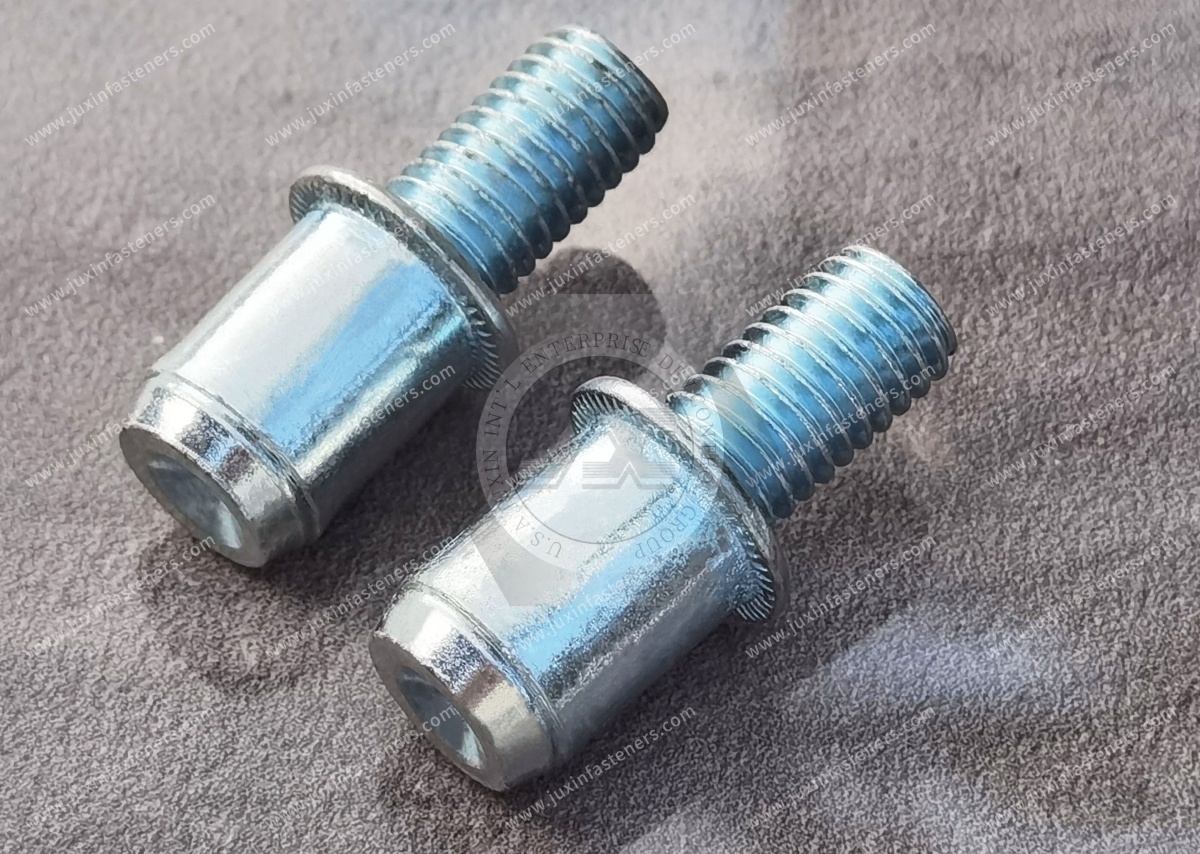
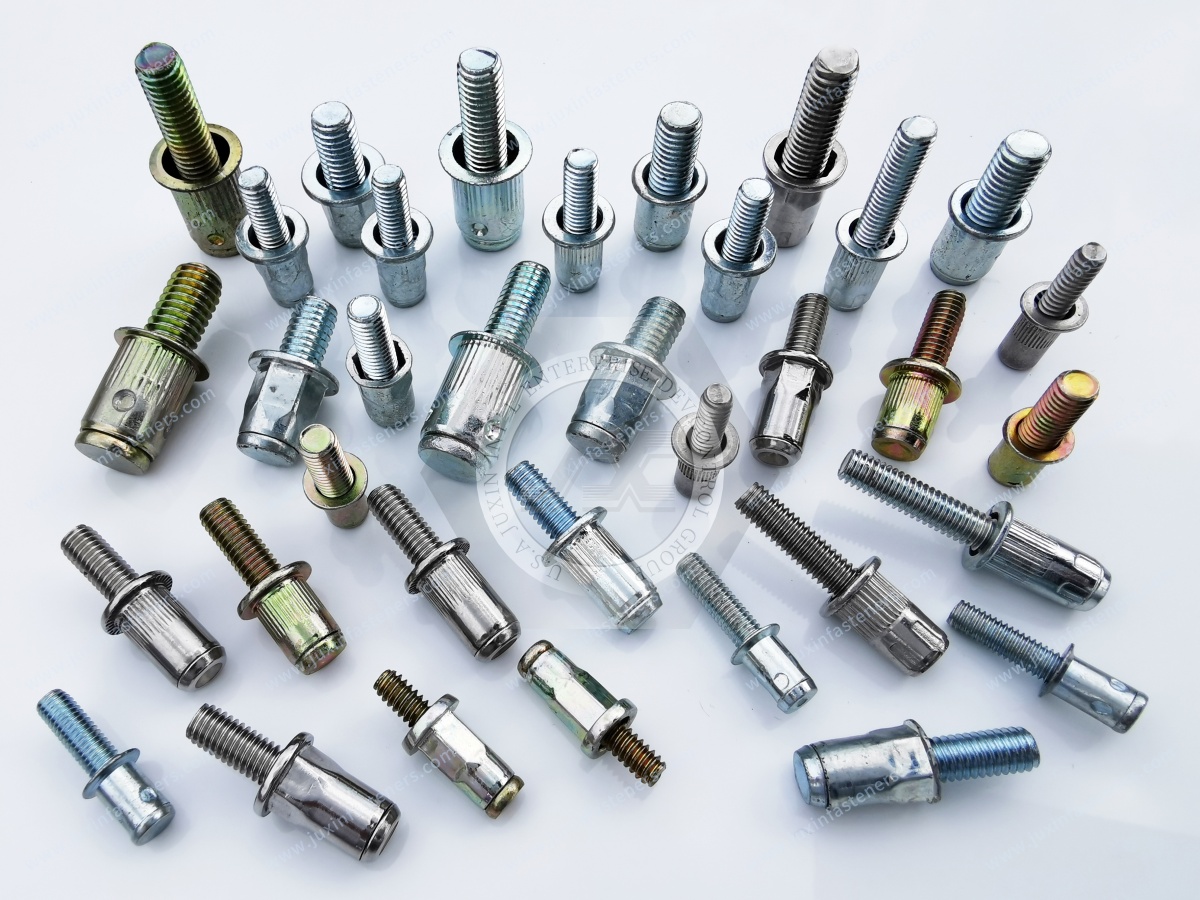
JUXIN FASTENERS supplies steel flat head open-end smooth round body blind rivet studs for creating external threaded mounting points in thin sheet-metal assemblies with one-sided access. Unlike knurled-body designs, these studs feature a plain cylindrical body, making mounting-hole fit and installed rotational resistance important selection factors. Available in M4, M5, M6 and M8 with a blue zinc finish, they can be evaluated for fabricated brackets, industrial equipment housings, electrical enclosures and OEM metal assemblies.
Thread Sizes: M4, M5, M6, M8
Material: Steel (grade to be confirmed)
Surface Finish: Blue Zinc (RoHS compliance subject to verification)
Grip Range: 0.5–3.0 mm (product family; verify by size)
Head Type: Flat Head
Body Type: Open-End, Smooth Round / Plain Body
Thread Type: External Male Metric Thread
Installation: One-Sided Mechanical Blind Riveting
Product Specification
Product Specifications — Steel Flat Head Open-End Smooth Round Body Blind Rivet Studs
JUXIN FASTENERS supplies steel flat head open-end smooth round body blind rivet studs for industrial assemblies requiring permanent external threaded mounting points in thin sheet metal and fabricated components accessible from only one side.
Unlike knurled-body blind rivet studs, this product features a plain, smooth cylindrical rivet body. The fastener is mechanically retained through controlled deformation of the rivet body behind the parent panel. Its external male thread remains available for attaching brackets, covers, supports and other mating components.
The smooth round body configuration makes mounting-hole compatibility, installation deformation and installed rotational resistance particularly important engineering considerations.
Technical Specification Summary
Product Type: Flat Head Open-End Smooth Round Body Blind Rivet Stud
Material: Steel
Material Grade: According to the approved product specification
Thread Sizes: M4, M5, M6, M8
Thread Type: External Male Metric Thread
Head Type: Flat Head
Body Type: Open-End, Smooth Round / Plain Body
Surface Finish: Blue Zinc
RoHS Compliance: Subject to product-specific verification
Grip Range: 0.5–3.0 mm across the product family
Installation: One-Sided Mechanical Blind Riveting
Mounting-Hole Dimensions: According to the approved drawing
External Stud Projection: According to the approved drawing and installed configuration
Additional Dimensions: Subject to part-number verification
Drawing-Based Requirements: Subject to technical review and feasibility confirmation
The stated grip range is product-family information. Individual M4, M5, M6 and M8 variants must be checked against their specific dimensional drawings.
1. Product Overview — Smooth Round Body Blind Rivet Studs
A smooth round body blind rivet stud is a mechanically installed fastener designed to provide an external male-thread mounting point in sheet material when rear-side installation access is unavailable.
The product consists of an externally threaded stud and a rivet body designed to deform during installation.
The flat head seats against the accessible panel surface while the rivet body forms a retaining feature behind the material.
Once correctly installed, the threaded stud can be used to secure compatible components with a mating nut.
The design is relevant to:
Thin sheet-metal panels
Fabricated steel enclosures
Industrial equipment housings
Hollow metal structures
Mounting brackets
Electrical cabinets
Selected automotive equipment components
The round body configuration is intended for a compatible circular mounting hole.
However, the suitability of the installed connection depends on the actual hole tolerance, parent material, installation conditions and required mechanical performance.
2. Smooth Round Body vs. Knurled Body — The Engineering Difference
The principal distinguishing characteristic of this product is its smooth cylindrical rivet body.
A knurled body incorporates raised or textured features that can engage the surrounding parent material and contribute to rotational resistance.
A smooth round body does not incorporate those knurled engagement features.
This difference can influence the mechanism by which the installed stud resists rotation.
Smooth Round Body
The installed fastener relies on its approved body geometry, deformation, contact conditions and mechanical retention to resist movement in the mounting panel.
Knurled Body
The knurled surface provides an additional geometric engagement mechanism that may contribute to rotational resistance.
Neither configuration should be assigned a universal rotational resistance value without testing.
A smooth round body should not automatically be described as having equivalent anti-rotation performance to a knurled design.
Engineering Comparison
| Selection Factor | Smooth Round Body | Knurled Body |
|---|---|---|
| Body Surface | Plain cylindrical | Textured or knurled |
| Mounting Hole | Compatible round hole | Compatible hole according to drawing |
| One-Sided Installation | Yes | Yes |
| Rotational Resistance | Installation-dependent | Knurl engagement contributes |
| Grip Compatibility | Part-specific | Part-specific |
| Installed Performance | Requires verification | Requires verification |
| Direct Substitution | Not assumed | Not assumed |
The correct choice depends on the required installation performance rather than appearance alone.
3. Mounting-Hole Design — A Critical Factor for Smooth Body Studs
The mounting hole is one of the most important design features for a smooth round body blind rivet stud.
Because the body does not include knurled engagement features, the interaction between the cylindrical body and the hole deserves particular attention.
The mounting-hole specification should address:
Nominal diameter
Diameter tolerance
Hole roundness
Burr condition
Local panel flatness
Hole position
Edge distance
Parent-material thickness
Surface coating condition
A hole that is too large may reduce the intended contact and installed rotational resistance.
A hole that is too small may prevent correct insertion or create unintended damage during installation.
No universal hole clearance should be assumed across all M4, M5, M6 and M8 products.
Drilled, Punched and Laser-Cut Holes
Different hole-manufacturing methods can produce different edge conditions.
Drilled holes may require deburring.
Punched holes may have rollover and fracture characteristics that influence local contact.
Laser-cut holes may have heat-affected edges or other surface conditions depending on the process.
The appropriate hole preparation should be established from the approved drawing and assembly validation.
A nominally correct hole diameter does not guarantee identical installation performance across different hole-production methods.
4. One-Sided Mechanical Blind Riveting
These studs are installed using a suitable mechanical blind riveting process.
A typical installation sequence includes:
Prepare the specified mounting hole.
Verify the actual parent-panel thickness.
Confirm that the selected stud's grip range is appropriate.
Engage the external thread with compatible installation tooling.
Insert the rivet body into the mounting hole.
Seat the flat head against the accessible panel surface.
Apply the approved setting action.
Allow the deformable body section to form the blind-side retaining feature.
Release the installation tool.
Inspect the installed stud before attaching the mating component.
The installation process must be compatible with the fastener geometry and tooling system.
Spin/spin or other threaded-mandrel installation methods may be used for compatible blind threaded stud designs, but the specific equipment and setting conditions require verification.
Installation force, stroke and tool settings are not provided and must not be assumed.
5. Open-End Body Construction
The product features an open-end rivet-body configuration.
This designation describes the construction of the deformable body portion.
It does not mean that the product provides an internal female-thread fastening interface.
The functional threaded connection is the external male stud.
The open-end geometry should be reviewed in relation to:
Internal body clearance
Installation-tool compatibility
Body deformation
Blind-side clearance
Installed stud projection
Parent-panel thickness
Open-end and closed-end rivet studs may perform the same general fastening function, but their body geometries are not automatically interchangeable.
Neither configuration should be assumed to provide a particular environmental sealing performance without testing.
6. Flat Head Design and Seating Geometry
The flat head provides the accessible-side bearing surface against the mounting panel.
Its dimensions can influence:
Contact area
Installed head projection
Local panel deformation
Assembly clearance
Mating component positioning
Installation consistency
A flat head is not necessarily a flush head.
The actual head thickness must be considered when the mating component is designed to rest directly against the panel.
For thin sheet-metal assemblies, local head seating should be inspected after installation.
If the head is tilted or does not seat correctly, the external stud may be misaligned with the mating component.
7. Grip Range — 0.5–3.0 mm Thin Sheet-Metal Applications
The supplied product-family grip range is 0.5–3.0 mm.
Approximate inch reference:
0.5 mm = 0.020 in
3.0 mm = 0.118 in
Grip range refers to the material thickness accommodated by the rivet body during installation.
It is not the external stud length or the usable thread engagement.
Each individual part number must be verified for its approved grip range.
Why Panel Thickness Matters
The blind-side retaining feature develops through controlled deformation of the rivet body.
If the panel thickness falls outside the selected fastener's approved range, the body may not deform as intended.
Possible consequences include:
Incomplete blind-side retention
Inconsistent head seating
Reduced installed stability
Excessive panel deformation
Unacceptable stud alignment
The correct grip range must therefore be selected before installation validation.
8. Installed Stud Projection — A Frequently Overlooked Dimension
For blind rivet studs, the installed position of the external thread is important to the mating assembly.
Engineers should distinguish:
Loose-fastener overall length
Rivet-body length
Nominal external threaded length
Installed projection above the panel
Available mating-nut engagement
The setting process can change the relative geometry of the rivet body and the panel.
Depending on the specific stud design, installed projection may also vary with the actual grip thickness.
Therefore, a loose-fastener drawing alone may not provide sufficient information to determine the final installed height.
Example: M6 Stud for a Mounting Bracket
Consider a fabricated equipment panel requiring an M6 threaded mounting point.
The designer should confirm:
Actual panel thickness
Selected stud grip range
Mounting-hole diameter
Installed stud projection
Bracket thickness
Washer thickness, if applicable
Required mating-nut engagement
Blind-side clearance
Installation tooling
Installed retention requirements
Even when the M6 thread is correct, insufficient installed projection may prevent the intended mating assembly.
Where projection is critical, the installed dimension should be specified and verified.
9. Metric Thread Sizes and Inch References
The confirmed thread sizes are M4, M5, M6 and M8.
| Metric Thread | Approximate Nominal Diameter |
|---|---|
| M4 | 0.157 in |
| M5 | 0.197 in |
| M6 | 0.236 in |
| M8 | 0.315 in |
These inch values are approximate diameter references only.
They are not equivalent UNC, UNF or BSW thread sizes.
Metric and Unified inch threads are not directly interchangeable.
ISO 261 and ISO 965 provide relevant references for ISO metric thread combinations and tolerances where specified.
The actual thread pitch and tolerance must be confirmed against the approved drawing.
10. Steel Material Selection
The confirmed base material is steel.
The exact steel grade and mechanical condition have not been specified.
For a mechanically installed blind rivet stud, material selection must consider both the deformation required during installation and the intended service conditions.
Relevant factors include:
Material grade
Formability
Hardness
Thread strength requirements
Rivet-body deformation
Parent-panel compatibility
Corrosion protection
Operating environment
A change in material grade or condition may affect installation behavior.
Therefore, steel material substitutions should be evaluated before approval for an existing OEM assembly.
11. Blue Zinc Surface Finish and Corrosion Protection
The specified surface finish is blue zinc, described in the supplied information as RoHS blue zinc.
Blue zinc is a commercial finish description rather than a complete coating specification.
For OEM procurement, the coating requirements should define the applicable zinc coating system, conversion coating and any required supplemental treatment.
Important considerations include:
Coating thickness
Thread dimensional compatibility
Surface appearance
Corrosion resistance requirements
Coating adhesion where specified
Applicable environmental restrictions
Process documentation
ISO 4042 provides a relevant international framework for electroplated coating systems on steel fasteners.
The applicable coating requirements should be established by the approved customer specification.
RoHS Compliance
A blue zinc appearance does not independently establish RoHS compliance.
Where compliance is required, the purchaser should request the applicable supplier declaration or supporting documentation.
Corrosion Testing
ISO 9227 and ASTM B117 provide relevant salt-spray test methods when specified.
No particular salt-spray duration or corrosion rating is claimed for this product.
Hydrogen Embrittlement Considerations
Electroplating may introduce hydrogen into susceptible steel components.
The relevance of hydrogen embrittlement depends on material strength, hardness, processing conditions and applied stress.
The specific material properties have not been supplied, so any product-specific risk assessment must be based on confirmed material and process information.
12. Coating and Mounting-Hole Interaction
For a smooth round body rivet stud, the final surface condition can influence the contact interface between the body and mounting hole.
Coating-related changes may affect:
Finished body diameter
Thread dimensions
Surface friction
Insertion behavior
Contact conditions
Installation consistency
For an already qualified OEM design, changing the coating specification may require review even when the base fastener geometry remains unchanged.
This is especially relevant when the installed rotational resistance depends on the interaction between the smooth body and parent material.
13. Installed Mechanical Performance
The installed fastener should be evaluated as part of the complete joint system.
Axial Retention
Axial retention concerns resistance to extraction from the mounting panel.
It depends on the deformed body geometry, panel material and installation quality.
Rotational Resistance
Rotational resistance concerns the ability of the installed stud to resist turning within the mounting hole.
For smooth body designs, this characteristic should be verified rather than inferred from nominal dimensions.
Thread Integrity
The external thread must remain suitable for mating hardware after installation.
Panel Deformation
Thin panels may deform locally during riveting or subsequent loading.
Assembly Torque
The torque applied to the mating nut creates a reaction at the installed stud.
The assembly process must not exceed the validated rotational resistance of the stud-to-panel connection.
No universal tightening torque, spin-out torque or pull-out load is claimed.
14. Engineering Information Gain — Why Smooth Round Studs Require a Different Qualification Approach
Smooth round body blind rivet studs should not be qualified using assumptions developed for knurled-body fasteners.
Several important differences should be considered.
A. Same Thread Size Does Not Mean Same Installed Stability
Two M6 studs may have identical external threads but different body diameters or deformation geometries.
Their installed rotational resistance may differ.
B. Hole Tolerance Can Be More Important Than Expected
A small change in mounting-hole diameter can alter the body-to-panel contact conditions.
The hole specification should therefore be treated as part of the fastening system.
C. Panel Material Changes the Result
A stud installed in steel sheet may behave differently when installed in aluminum sheet.
Material hardness, thickness and deformation characteristics affect installation performance.
D. Installation Tooling Matters
A dimensionally similar replacement stud may require different setting conditions.
Tool compatibility must be verified before supplier substitution.
E. Installed Projection Must Be Confirmed
The usable external threaded length after installation may not be identical to the nominal loose-fastener dimension.
F. Nut Tightening Can Cause Stud Rotation
If the applied assembly torque exceeds the installed stud's rotational resistance, the stud may rotate in the parent panel.
The mating nut and stud-to-panel interface must therefore be considered together.
These factors are particularly important for OEM production, where installation consistency and repeatable assembly are required.
15. Industrial Applications
Automotive Equipment and Tier 1 Components
Potential applications include selected non-safety-critical mounting brackets, sheet-metal equipment housings and accessory attachment points.
Automotive use requires project-specific mechanical and quality validation.
Electrical Enclosures
Smooth round body blind rivet studs may be considered for brackets, supports and equipment mounting points where access behind the panel is restricted.
Electrical continuity and enclosure sealing must be evaluated separately where relevant.
Industrial Machinery
Potential applications include fabricated covers, mounting panels, equipment brackets and removable components.
Repeated assembly requirements should be considered during selection.
HVAC Equipment
Possible uses include sheet-metal housings, equipment supports and selected mounting brackets.
Vibration and panel deformation must be evaluated.
Commercial Vehicle Equipment
The studs may be considered for selected non-critical accessory mounting points and fabricated metal components.
Dynamic loading requires application-specific validation.
Fabricated Metal Cabinets and Structures
Other potential applications include hollow metal sections, industrial cabinets and modular fabricated assemblies.
Selection should be based on the actual installation and service requirements.
16. Smooth Body vs. Knurled Body vs. Alternative Fasteners
| Fastener Type | Thread Interface | Key Engineering Consideration |
|---|---|---|
| Smooth Round Blind Rivet Stud | External male thread | Round-hole fit and installed retention |
| Knurled Blind Rivet Stud | External male thread | Knurl engagement and rotational resistance |
| Blind Rivet Nut | Internal female thread | Female-thread mounting interface |
| Self-Clinching Stud | External male thread | Press-in installation and panel compatibility |
| Weld Stud | External male thread | Welding process and substrate compatibility |
A blind rivet stud should not be selected solely because it has the required external thread.
The mounting process, panel geometry, installed performance and assembly access must also be compatible.
17. OEM and Tier 1 Engineering Qualification
For OEM programs, qualification should address the installed stud rather than only the loose fastener.
Depending on customer requirements, the evaluation may include:
Approved engineering drawings
Steel material identification
Dimensional inspection
External thread inspection
Surface finish verification
Mounting-hole tolerance review
Grip-range verification
Installation-tool compatibility
Installed head seating
Axial retention testing
Rotational resistance testing
Thread engagement verification
Corrosion testing where specified
Drawing revision control
Lot identification and traceability
Automotive projects may require additional customer-specific quality documentation and production validation.
Any PPAP or other approval requirements must be defined for the specific project.
No approval status is implied without supporting documentation.
18. Procurement and Supplier Development — Replacement Part Evaluation
Purchasing engineers and supplier development teams should avoid approving alternative blind rivet studs based only on photographs, nominal thread size or commercial product descriptions.
A replacement-part evaluation should compare:
Product Configuration
Confirm flat head, open-end body and smooth round exterior.
Dimensions
Compare body diameter, head dimensions, stud projection and grip range.
Material
Verify the required steel grade and material condition.
Surface Finish
Confirm the zinc coating system and applicable documentation.
Installation Compatibility
Review mounting-hole requirements and production tooling.
Installed Performance
Determine whether axial retention and rotational resistance testing are required.
Quality Requirements
Review inspection criteria, material documentation and traceability.
Commercial Supply
Confirm quotation quantity, annual demand, delivery schedule and packaging requirements.
A replacement that matches the thread size but requires different installation conditions may introduce additional assembly cost or quality risk.
19. Drawing-Based OEM Fastener Requirements
Some industrial projects require dimensions or performance characteristics outside standard product configurations.
Potential drawing-based requirements include:
Specific external stud projection
Customer-defined head dimensions
Modified body geometry
Particular grip requirements
Defined steel material grade
Specified zinc coating system
Controlled dimensional tolerances
Customer-specific inspection requirements
Packaging and traceability instructions
All nonstandard requirements are subject to engineering review and manufacturing feasibility confirmation.
20. Frequently Asked Questions
What is a smooth round body blind rivet stud?
It is a mechanically installed fastener with an external male thread and a plain cylindrical rivet body, designed for one-sided installation in compatible parent material.
How is it different from a knurled blind rivet stud?
A smooth body lacks the knurled engagement features used by certain other rivet studs to contribute to rotational resistance.
What thread sizes are available?
The confirmed sizes are M4, M5, M6 and M8.
What is the grip range?
The supplied product-family range is 0.5–3.0 mm. Individual part-number ranges require confirmation.
Can these studs be installed in aluminum sheet?
They may be considered where the panel thickness, hole geometry and installed performance are compatible. Application-specific validation is necessary.
Does a smooth body provide anti-rotation performance?
An installed smooth body stud may resist rotation through its approved mechanical retention and contact conditions, but the actual resistance must be verified.
Can the same installation hole be used for a knurled stud?
Not automatically. Body dimensions, hole tolerances and installation requirements may differ.
Is blue zinc automatically RoHS compliant?
No. Compliance requires appropriate documentation and verification.
Can a smooth round body stud replace a knurled stud?
Only after confirming dimensional compatibility, installation conditions and required installed performance.
21. Related Industrial Fastening Solutions
Engineers evaluating smooth round body blind rivet studs may also compare:
Knurled Body Blind Rivet Studs — for alternative body engagement geometry
Thin Head Blind Rivet Studs — for reduced head projection requirements
Closed-End Blind Rivet Studs — for different rivet-body construction
Blind Rivet Nuts — for applications requiring internal female threads
Self-Clinching Studs — for suitable press-installed sheet-metal applications
Weld Studs — for applications designed around a qualified welding process
Custom Industrial Fasteners — for drawing-based fastening requirements
Each fastening method should be selected according to installation access, parent material, dimensional requirements and validated joint performance.
22. OEM RFQ Requirements
For technical evaluation and quotation, please provide the following information where available:
Required thread size: M4, M5, M6 or M8
Product drawing or CAD file
External thread pitch and tolerance
Required steel grade
Flat-head diameter and thickness
Smooth body diameter and length
External stud projection
Parent-panel material
Panel thickness and required grip range
Mounting-hole diameter and tolerance
Installation equipment and setting requirements
Blue zinc coating specification
RoHS or corrosion documentation requirements
Required axial and rotational performance
Inspection and quality documentation
Product identification and packaging requirements
Initial order quantity
Estimated annual demand
Required delivery schedule and destination
Providing the approved drawing and intended installation conditions helps establish accurate product selection and quotation requirements.
23. JUXIN FASTENERS — Smooth Round Body Blind Rivet Stud Supply
JUXIN FASTENERS supplies industrial fastening products for international OEM engineering, purchasing and supplier development requirements.
Our steel flat head open-end smooth round body blind rivet studs are intended for applications requiring externally threaded mounting points and one-sided mechanical installation in compatible sheet-metal assemblies.
For M4, M5, M6 and M8 requirements, customers may submit engineering drawings, material specifications, installation conditions and purchasing quantities for technical review.
Request an OEM Technical Quotation
Email: info@juxinfasteners.com
Website: www.juxinfasteners.com
Please include your product drawing, required quantity, parent-panel material, grip thickness, coating specification and installation requirements.
JUXIN FASTENERS — Industrial Fastening Solutions for OEM Engineering and Global Procurement.
Product Packaging
Product Packaging — Steel Smooth Round Body Blind Rivet Studs
Packaging for M4, M5, M6 and M8 steel flat head open-end smooth round body blind rivet studs can be reviewed according to confirmed order specifications and customer supply-chain requirements.
Inner Packaging: Protective inner packaging may be specified to reduce thread damage, coating contact and contamination during handling.
Outer Cartons: Suitable export cartons may be arranged according to product quantity, shipment weight and agreed packaging requirements.
Pallet Packaging: Palletized arrangements may be considered for bulk industrial shipments, subject to confirmed shipping specifications.
Thread and Surface Protection: Packaging should consider protection of external male threads, smooth cylindrical bodies, flat-head seating surfaces and blue zinc finishes during storage and transportation.
Product Identification: Customer-specified labels may include thread size, material, finish, part number, quantity and drawing revision.
Batch Traceability: Lot identification and traceability requirements should be defined in the approved quality and purchasing documentation.
OEM Custom Packaging: Customer-specific pack quantities, labeling, component segregation and automotive supply-chain packaging instructions are subject to review and confirmation.
Final packing quantities, carton arrangements and shipment details will be confirmed against the approved order.
For OEM packaging requirements and quotation inquiries:
Email: info@juxinfasteners.com
Website: www.juxinfasteners.com
Product Pictures

Tags
Contact Us
Tel.:
+86 020 8621 0320
+86 020 3121 6067
E-mail:
Technical Support:
Navigation
SEND INQUIREY