Call Us
+86 136 6007 9809
Call Us
+86 136 6007 9809

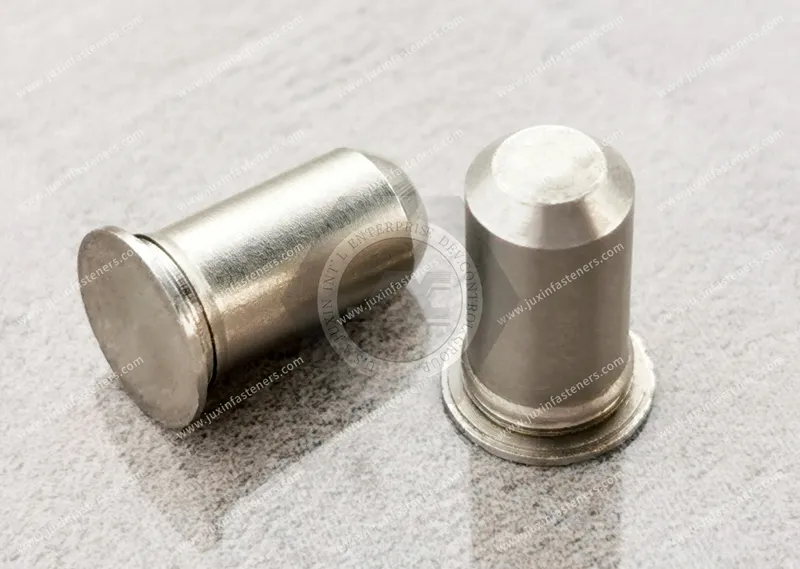
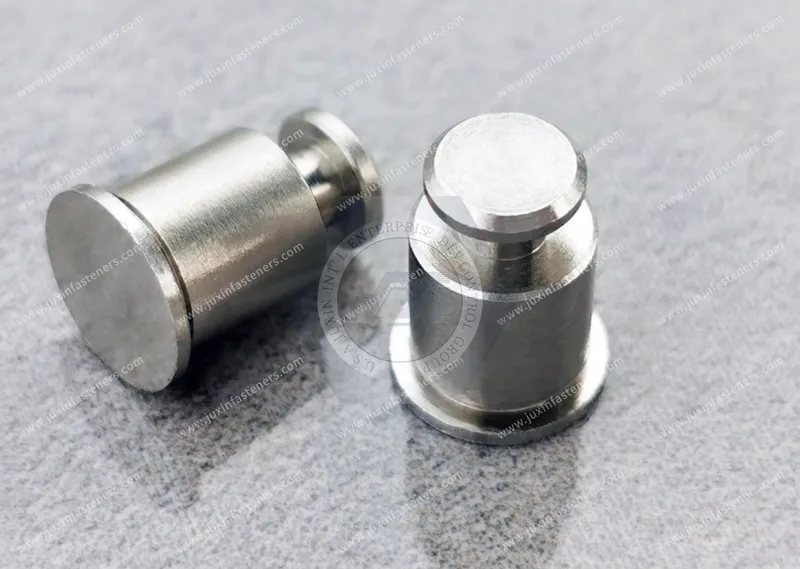
Self-clinching fasteners are designed to create permanent fastening points in suitable sheet-metal assemblies.
They can provide internal threads, external threads or fixed mounting points without requiring a conventional loose nut.
Product Specification
Self-clinching fasteners are designed to create permanent fastening points in suitable sheet-metal assemblies.
They can provide internal threads, external threads or fixed mounting points without requiring a conventional loose nut.
Understanding how self-clinching fasteners work helps engineers select the correct component and avoid common installation problems.
JUXIN manufactures self-clinching nuts, studs, screws and related sheet-metal fastening components for OEM applications.
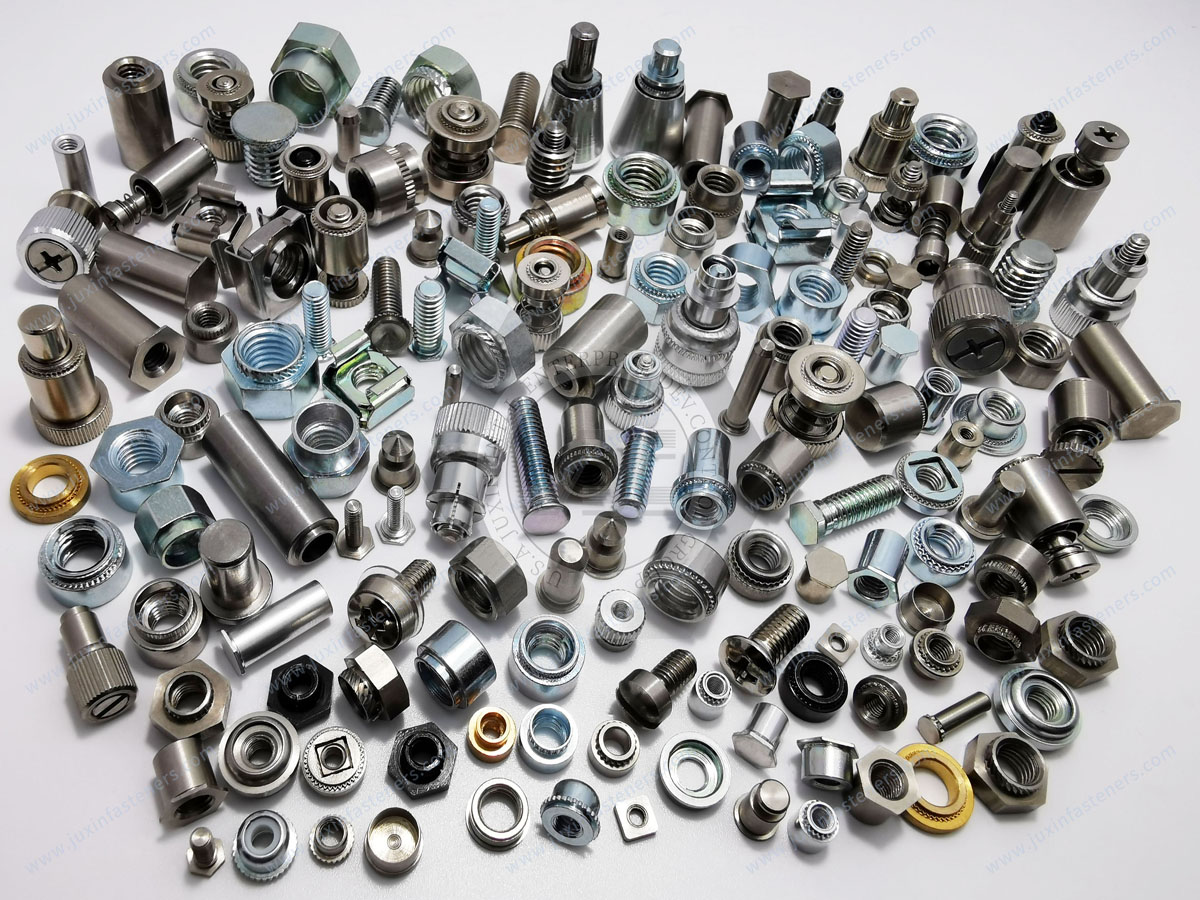
A self-clinching fastener is installed into a prepared hole in suitable sheet material.
During installation, controlled axial force presses the fastener into the panel.
The sheet material flows into the fastener's specially designed retention area.
This creates mechanical interlocking between the fastener and the panel.
The finished connection is intended to resist:
Rotation
Push-out
Pull-out
Assembly torque
The actual performance depends on fastener design, material, sheet thickness, hole condition and installation process.
The panel must have the correct hole size for the selected fastener.
Hole diameter is important because an incorrect hole can reduce retention performance.
The panel must also meet the specified thickness and material requirements.
The self-clinching fastener is positioned in the prepared hole.
The fastener must be correctly aligned before pressing.
A controlled press applies axial force to the fastener.
The fastener should be supported correctly during installation.
Excessive force or insufficient force can produce poor installation results.
The sheet material is displaced into the fastener's retention feature.
This creates the mechanical lock.
The sheet must be sufficiently ductile for the required material flow.
After installation, the fastener should be checked according to the application requirements.
Possible checks include:
Seating
Thread condition
Torque-out resistance
Push-out resistance
Pull-out performance
Panel deformation
Alignment
Provide permanent internal threads.
Provide permanently retained external threads.
Provide captive screw attachment.
Provide a fixed mounting distance together with a threaded or mounting feature.
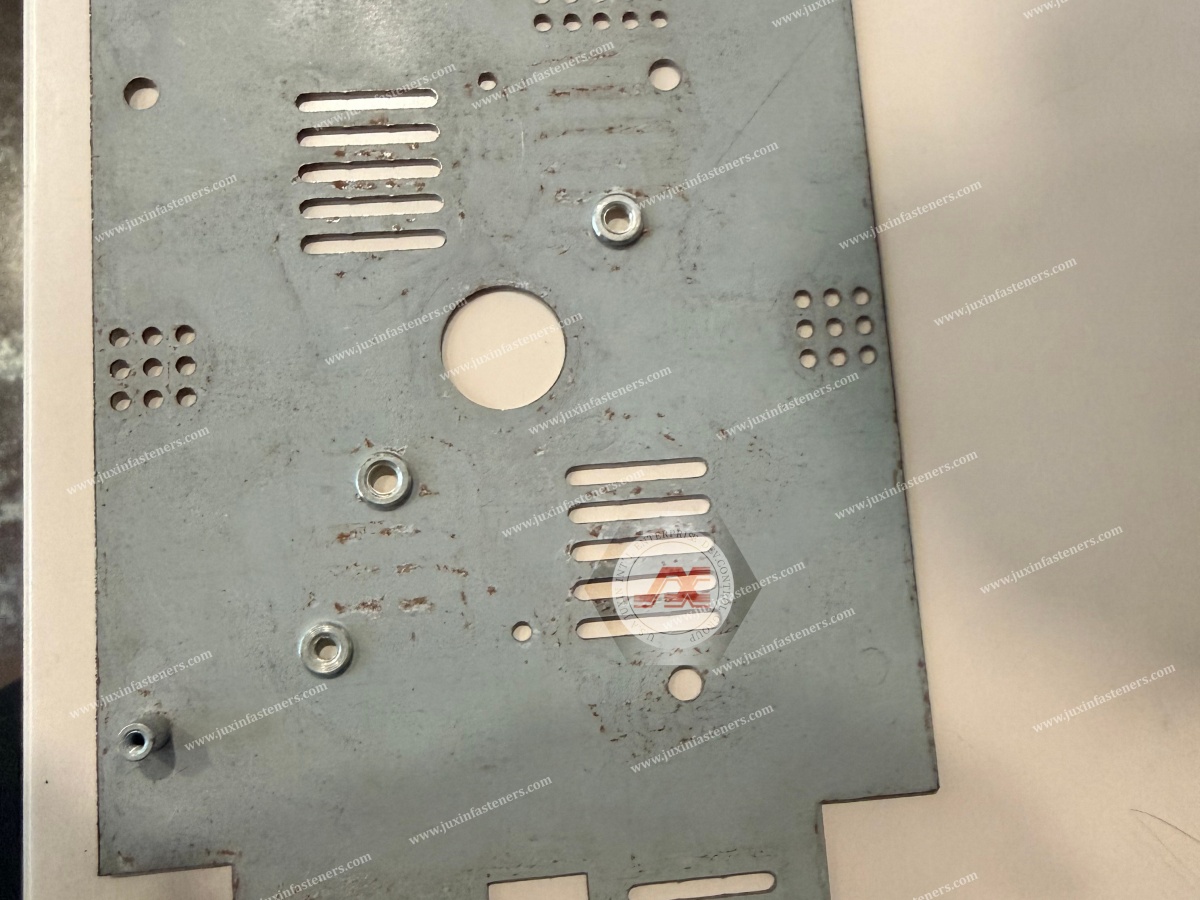
Self-clinching depends on the sheet material flowing into the fastener's retention feature.
If the sheet is too hard or brittle, proper installation may not occur.
Potential host materials include suitable grades of:
Carbon steel
Stainless steel
Aluminum
Other ductile sheet metals
The fastener and sheet material must be evaluated as a complete system.
An oversized hole may not provide sufficient material engagement.
An undersized hole may cause excessive installation force or damage the sheet.
The required hole diameter should therefore follow the selected fastener's technical specification.
Every self-clinching fastener has an appropriate sheet-thickness range.
If the panel is too thin, there may not be enough material to form the required mechanical retention.
If the panel is outside the recommended range, installation and performance may be affected.
Self-clinching fasteners are widely considered for:
Electrical cabinets
Telecom cabinets
Electronic enclosures
Server equipment
HVAC equipment
Industrial machinery
Automotive assemblies
Medical equipment
Railway electronics
Automation equipment
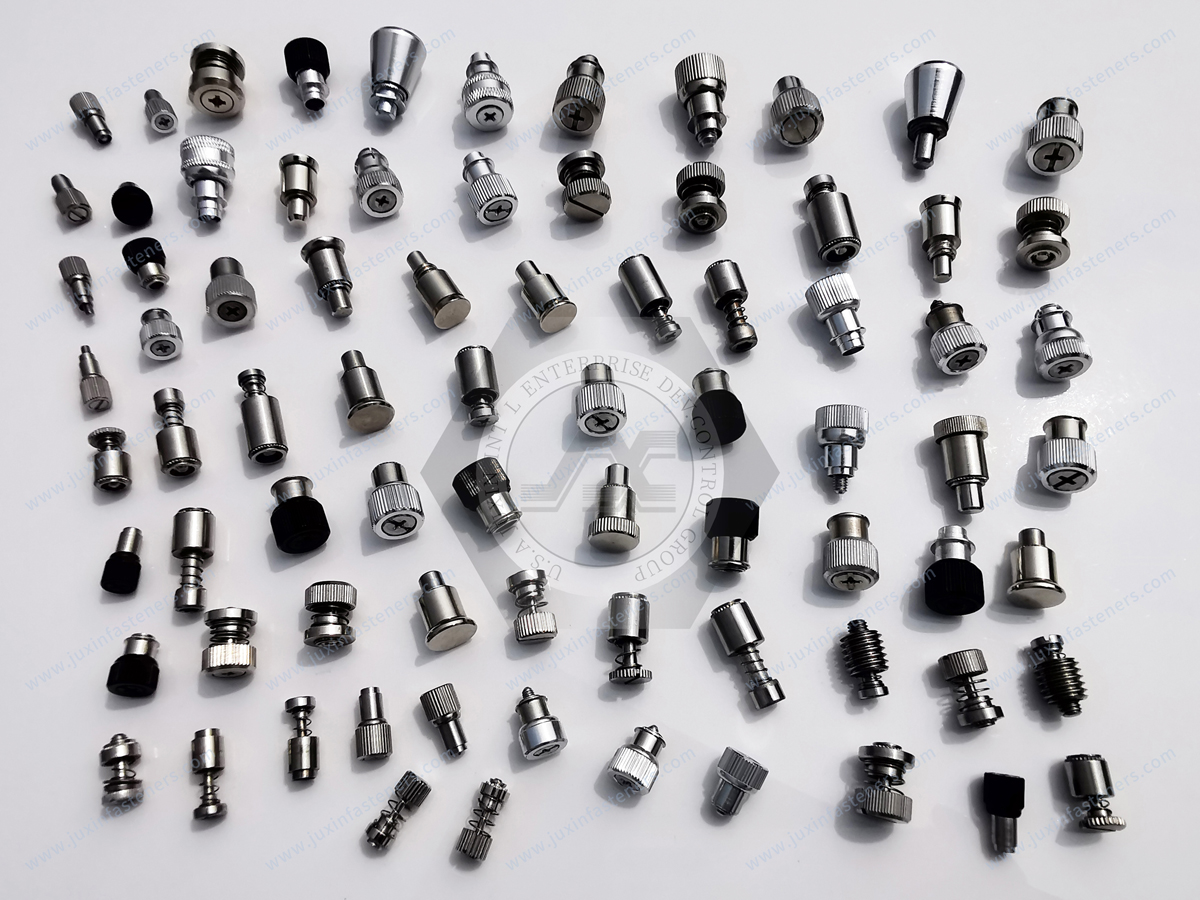
JUXIN can manufacture customized self-clinching fasteners based on:
Drawings
CAD files
Samples
Material specifications
Thread requirements
Panel thickness
Surface treatment
Production quantities
For complex applications, customers should provide as much technical information as possible so the fastener can be evaluated against the actual joint.
The principle behind self-clinching fastening is simple:
Prepare the correct hole → position the fastener → apply controlled press force → allow sheet material to flow → verify the finished connection.
However, reliable performance depends on correct engineering selection and installation.
JUXIN supports OEM customers with self-clinching fasteners and customized sheet-metal fastening solutions.
Email: info@juxinfasteners.com
Website: www.juxinfasteners.com
Product Packaging
Packaging Standard
At Juxin Fasteners, we apply standardized export packaging to ensure product protection, traceability, and compliance with international logistics requirements.
1. Standard Export Packaging
Unless otherwise specified, all products will be packed according to our factory standard export packaging, which includes:
Moisture-resistant inner protection
Poly bag or small box packing as required
Reinforced export cartons
Clear labeling with part number, specification, batch number, and quantity
Palletizing for sea or air shipment when necessary
Our standard packaging is designed to ensure safe transportation, efficient warehousing, and long-distance international shipping.
2. Customized Packaging Options
We also provide customized packaging solutions according to customer requirements, including but not limited to:
Private labeling
Customized barcodes
Specific carton dimensions
Retail packaging
Special pallet configuration
Customer-specific marking and identification
So that you know, customized packaging may involve additional costs and extended lead time depending on the complexity of the requirements.
3. Compliance & Quality Assurance
All packaging processes are controlled under our ISO 9001 quality management system to ensure consistency, traceability, and product integrity throughout the supply chain.
Product Pictures
Contact Us
Tel.:
+86 020 8621 0320
+86 020 3121 6067
E-mail:
Technical Support:
Navigation
SEND INQUIREY