Call Us
+86 136 6007 9809
Call Us
+86 136 6007 9809

A self-clinching nut that rotates during screw installation can stop an assembly process immediately.
The problem is often not the nut itself.
Self-clinching performance depends on the interaction between the fastener, sheet material, hole, installation force and production process.
Understanding the common failure causes can help engineers prevent problems before production.
Product Specification
A self-clinching nut that rotates during screw installation can stop an assembly process immediately.
The problem is often not the nut itself.
Self-clinching performance depends on the interaction between the fastener, sheet material, hole, installation force and production process.
Understanding the common failure causes can help engineers prevent problems before production.
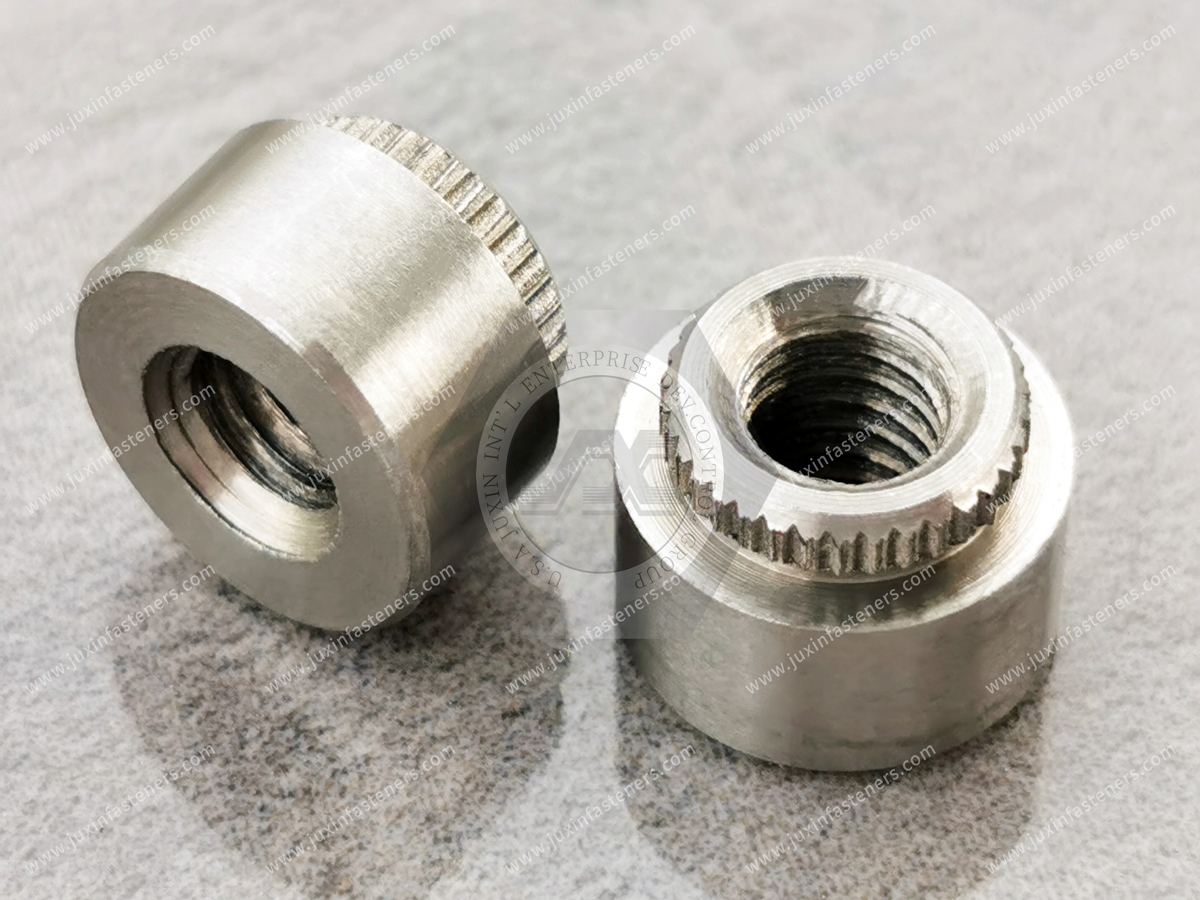
One of the most common causes is an incorrect mounting hole.
If the hole is too large, insufficient sheet material may engage with the fastener's retention feature.
If the hole is too small, excessive installation force may be required.
The hole specification should follow the selected fastener design.
Self-clinching requires the sheet material to deform into the fastener's retention feature.
If the panel is too hard, the required material flow may not occur.
This is particularly important for certain high-strength steels and stainless steel materials.
If there is insufficient sheet thickness, the fastener may not achieve the required engagement.
The minimum panel thickness must therefore be confirmed before selecting the fastener.
Insufficient press force can result in incomplete installation.
Excessive force can deform the panel.
The installation process should be controlled according to the fastener specification.
Press tooling should align correctly with the fastener.
Misalignment can cause:
Tilting
Uneven seating
Panel deformation
Fastener damage
A fastener designed for one sheet thickness or material may not be appropriate for another.
Always evaluate:
Material
Thickness
Hole
Thread
Loading
Even a correctly installed fastener can be overloaded if the mating screw is tightened beyond the joint's design requirements.
Assembly torque should therefore be defined according to the complete connection.
Thin sheet metal can deform during installation or assembly.
Panel deformation may affect fastener seating and joint performance.
Surface coatings can influence dimensions, friction and installation conditions.
For critical applications, surface treatment should be considered during the design stage.
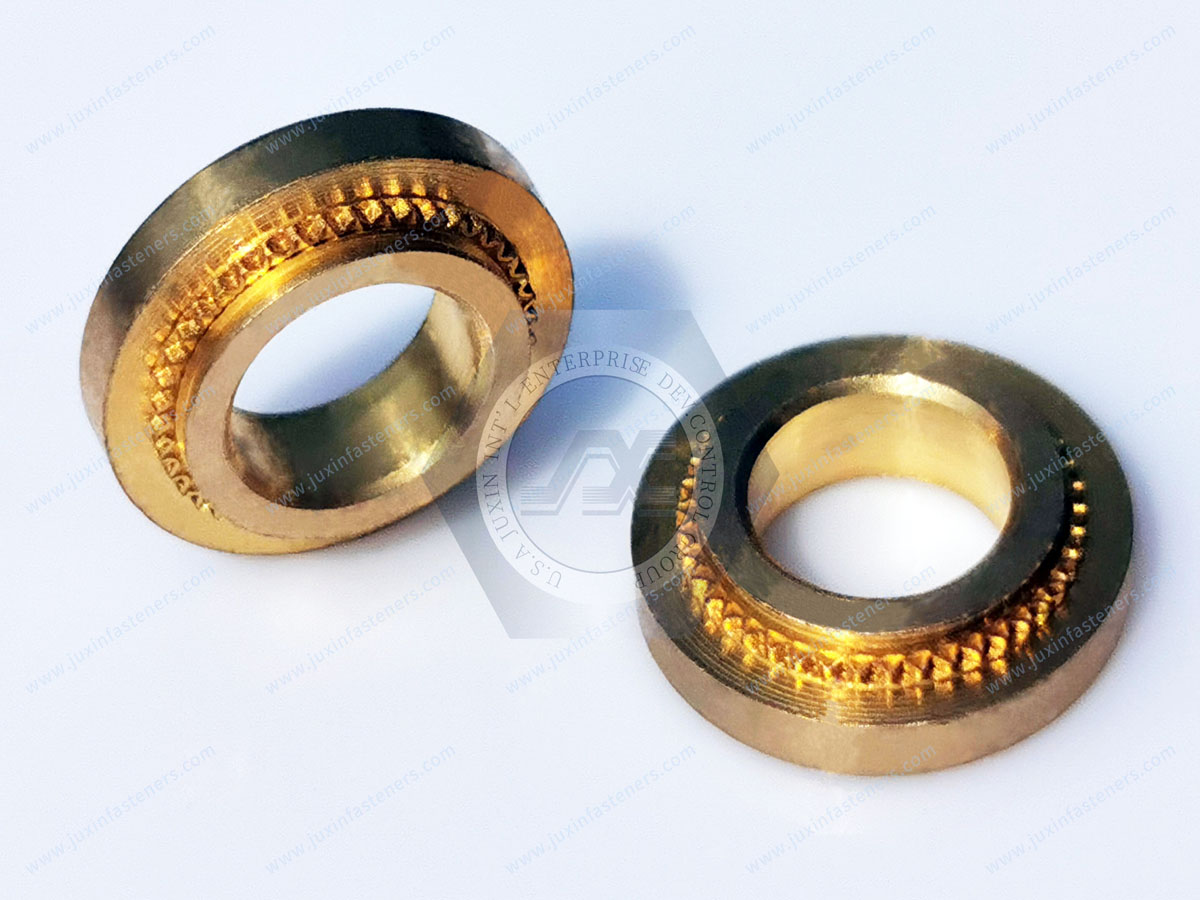
A practical prevention process is:
Confirm Sheet → Confirm Fastener → Confirm Hole → Control Installation → Inspect Seating → Validate Retention
Depending on the application, validation may include:
Thread gauge inspection
Torque-out testing
Push-out testing
Pull-out testing
Assembly testing
The appropriate validation method depends on the joint design.
When a customer reports spinning nuts, procurement teams should provide the supplier with:
Fastener part specification
Sheet material
Sheet thickness
Hole size
Installation method
Installation force
Assembly torque
Failure conditions
Application information
This allows the supplier to investigate the actual cause instead of simply replacing the fastener.
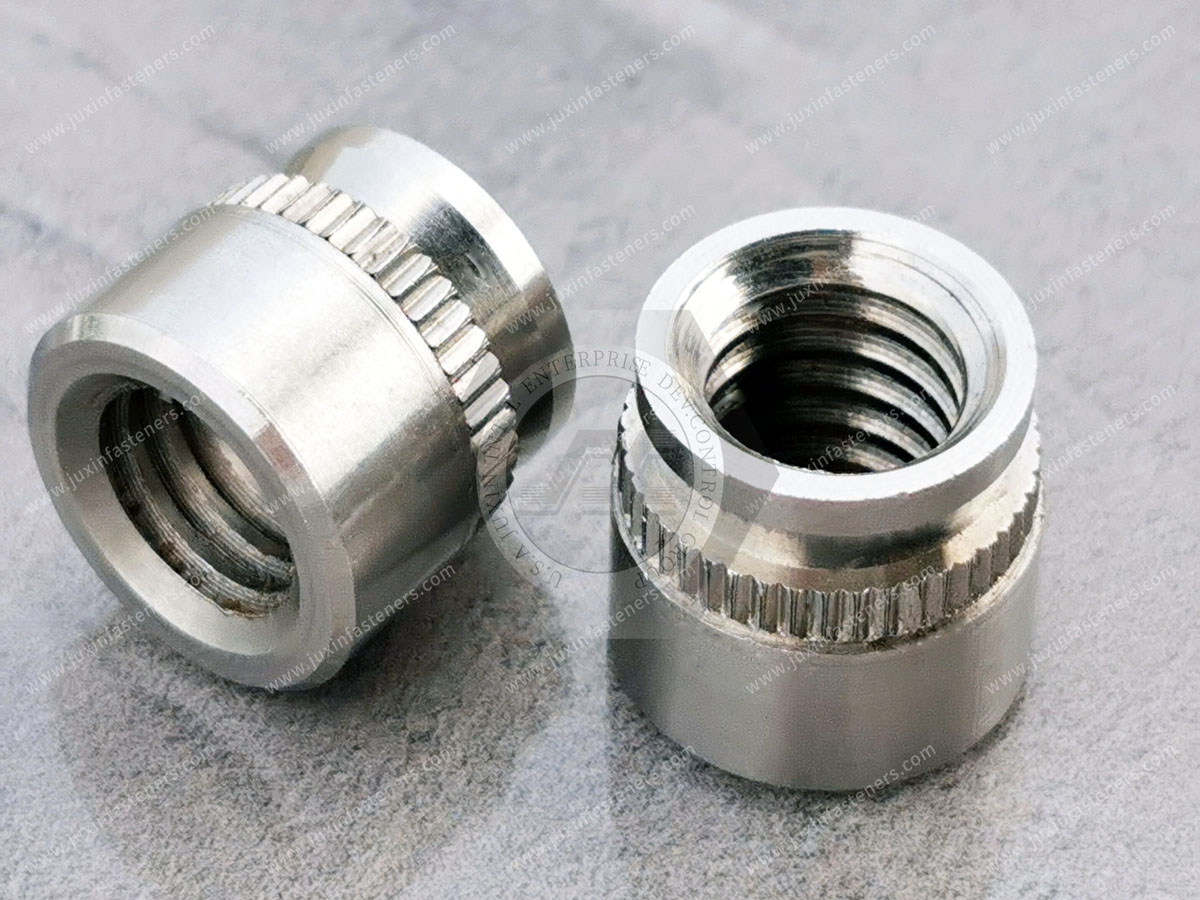
JUXIN manufactures custom self-clinching nuts and related sheet-metal fasteners.
Customers can provide samples, drawings and failure information for manufacturing evaluation.
We can review the component dimensions, material and production requirements.
Self-clinching nut failure is usually a system problem rather than a simple product problem.
The key factors are:
Fastener + Sheet + Hole + Installation + Loading + Environment
Controlling these factors during design and production can significantly improve fastening consistency.
Email: info@juxinfasteners.com
Website: www.juxinfasteners.com
Product Packaging
Packaging Standard
At Juxin Fasteners, we apply standardized export packaging to ensure product protection, traceability, and compliance with international logistics requirements.
1. Standard Export Packaging
Unless otherwise specified, all products will be packed according to our factory standard export packaging, which includes:
Moisture-resistant inner protection
Poly bag or small box packing as required
Reinforced export cartons
Clear labeling with part number, specification, batch number, and quantity
Palletizing for sea or air shipment when necessary
Our standard packaging is designed to ensure safe transportation, efficient warehousing, and long-distance international shipping.
2. Customized Packaging Options
We also provide customized packaging solutions according to customer requirements, including but not limited to:
Private labeling
Customized barcodes
Specific carton dimensions
Retail packaging
Special pallet configuration
Customer-specific marking and identification
So that you know, customized packaging may involve additional costs and extended lead time depending on the complexity of the requirements.
3. Compliance & Quality Assurance
All packaging processes are controlled under our ISO 9001 quality management system to ensure consistency, traceability, and product integrity throughout the supply chain.
Product Pictures
Contact Us
Tel.:
+86 020 8621 0320
+86 020 3121 6067
E-mail:
Technical Support:
Navigation
SEND INQUIREY