Call Us
+86 136 6007 9809
Call Us
+86 136 6007 9809

Correct installation is essential for achieving reliable performance from self-clinching fasteners.
A high-quality fastener can still fail if the hole size, panel thickness, sheet material, press force or tooling is incorrect.
This guide provides a practical framework for OEM engineers and production teams.
Product Specification
Correct installation is essential for achieving reliable performance from self-clinching fasteners.
A high-quality fastener can still fail if the hole size, panel thickness, sheet material, press force or tooling is incorrect.
This guide provides a practical framework for OEM engineers and production teams.
Before installation, verify:
Fastener type
Thread size
Material
Length
Head configuration
Surface treatment
Applicable sheet thickness
Check:
Sheet material
Thickness
Hardness
Hole diameter
Hole condition
Distance from edge
The hole should meet the specified diameter and dimensional tolerance.
Avoid uncontrolled hole enlargement.
Poor hole quality can affect fastener retention.
Place the fastener in the correct orientation.
Ensure the fastener and panel are aligned.
Use suitable pressing equipment.
The force should be applied in the intended direction and with adequate panel support.
The exact installation force should come from the selected fastener's technical requirements.
During installation, the sheet material moves into the fastener's retention feature.
This creates the mechanical interlock.
Do not substitute impact or uncontrolled hammering for the specified installation method.
The fastener should be properly seated against the panel.
Check for:
Tilting
Panel deformation
Incomplete seating
Surface damage
A suitable gauge or mating component can be used to confirm thread condition according to the inspection plan.
Depending on the application, production validation may include:
Torque-out testing
Push-out testing
Pull-out testing
Assembly testing
The appropriate test should be established according to the customer's requirements.
Can reduce mechanical engagement.
Can leave the fastener incompletely seated.
Can deform the panel or damage the fastener.
May prevent the required material flow.
Can make clinching difficult.
Can result in tilted or damaged fasteners.
OEM production may benefit from monitoring:
Hole dimensions
Press settings
Tool condition
Fastener orientation
Seating
Thread condition
Retention performance
Automated or controlled production processes can improve repeatability where production volume justifies them.
JUXIN can review customer drawings and application information to help establish the appropriate self-clinching fastener configuration.
Provide:
Drawing
Sheet material
Sheet thickness
Hole specification
Thread requirement
Quantity
Application
Reliable self-clinching installation depends on the entire process:
Correct Fastener + Correct Sheet + Correct Hole + Correct Tooling + Controlled Press Force + Inspection
For OEM production, these factors should be defined before mass production.
Email: info@juxinfasteners.com
Website: www.juxinfasteners.com
Product Packaging
Packaging Standard
At Juxin Fasteners, we apply standardized export packaging to ensure product protection, traceability, and compliance with international logistics requirements.
1. Standard Export Packaging
Unless otherwise specified, all products will be packed according to our factory standard export packaging, which includes:
Moisture-resistant inner protection
Poly bag or small box packing as required
Reinforced export cartons
Clear labeling with part number, specification, batch number, and quantity
Palletizing for sea or air shipment when necessary
Our standard packaging is designed to ensure safe transportation, efficient warehousing, and long-distance international shipping.
2. Customized Packaging Options
We also provide customized packaging solutions according to customer requirements, including but not limited to:
Private labeling
Customized barcodes
Specific carton dimensions
Retail packaging
Special pallet configuration
Customer-specific marking and identification
So that you know, customized packaging may involve additional costs and extended lead time depending on the complexity of the requirements.
3. Compliance & Quality Assurance
All packaging processes are controlled under our ISO 9001 quality management system to ensure consistency, traceability, and product integrity throughout the supply chain.
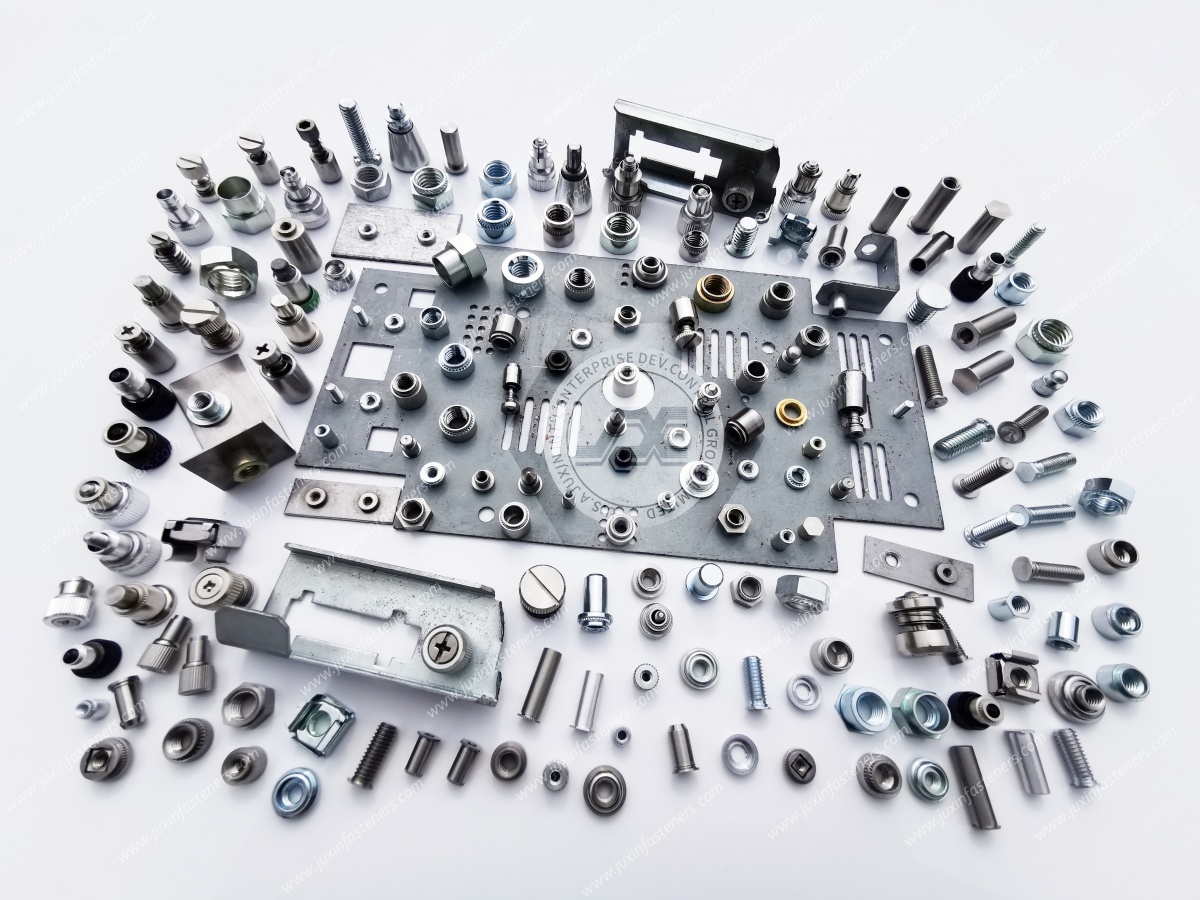
Product Pictures
Hot Products
Contact Us
Tel.:
+86 020 8621 0320
+86 020 3121 6067
E-mail:
Technical Support:
Navigation
SEND INQUIREY