Call Us
+86 136 6007 9809
Call Us
+86 136 6007 9809

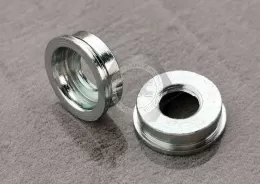
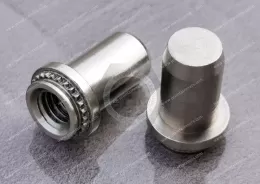
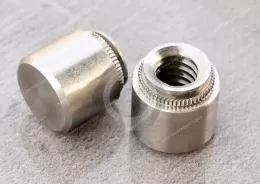
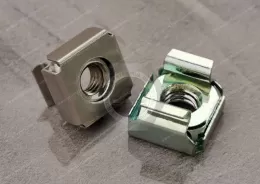
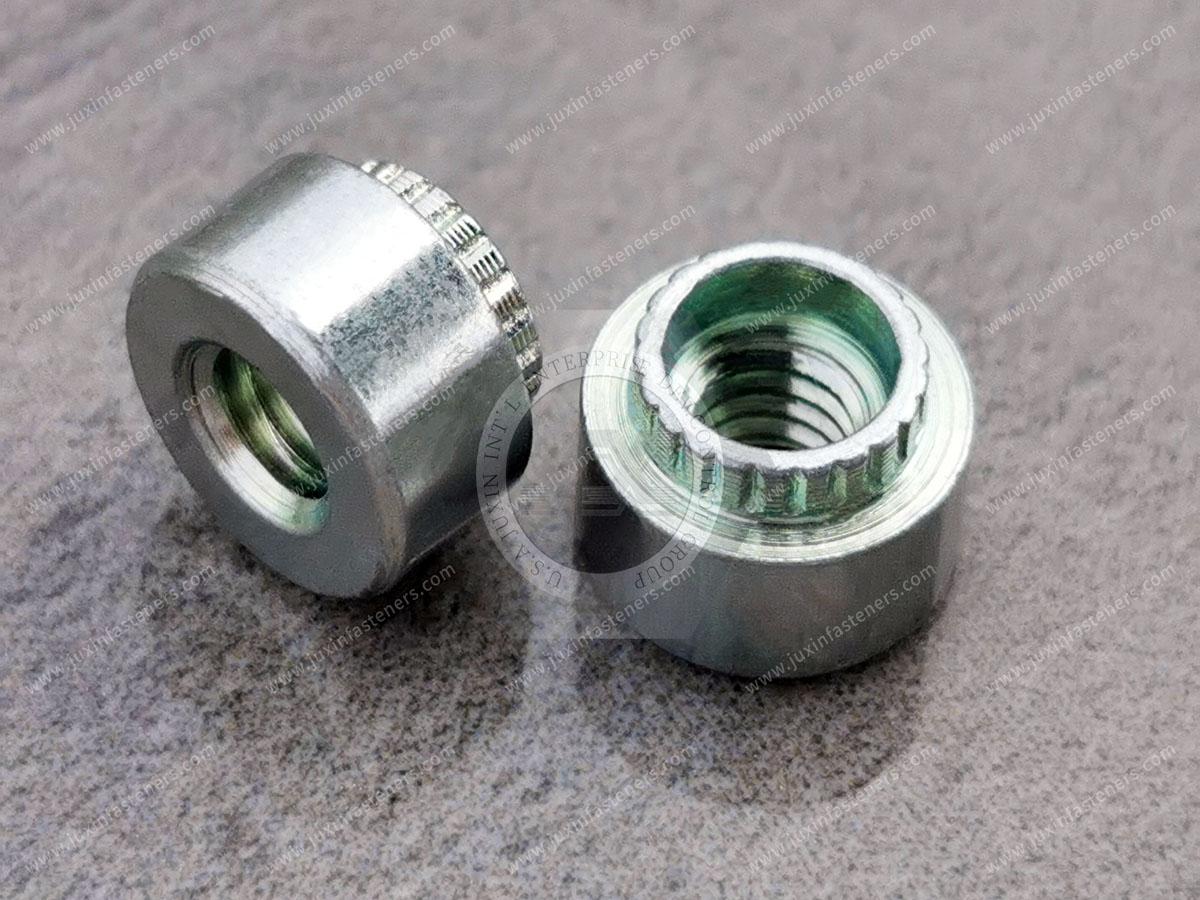
JUXIN FASTENERS supplies JX-KF2 and JX-KFS2 broaching nuts for PCB mounting, electronic assemblies, and precision component fastening. These internally threaded press-fit fasteners use a specially formed broaching shank to engage compatible board or component materials, creating a reusable threaded attachment point without loose nuts.
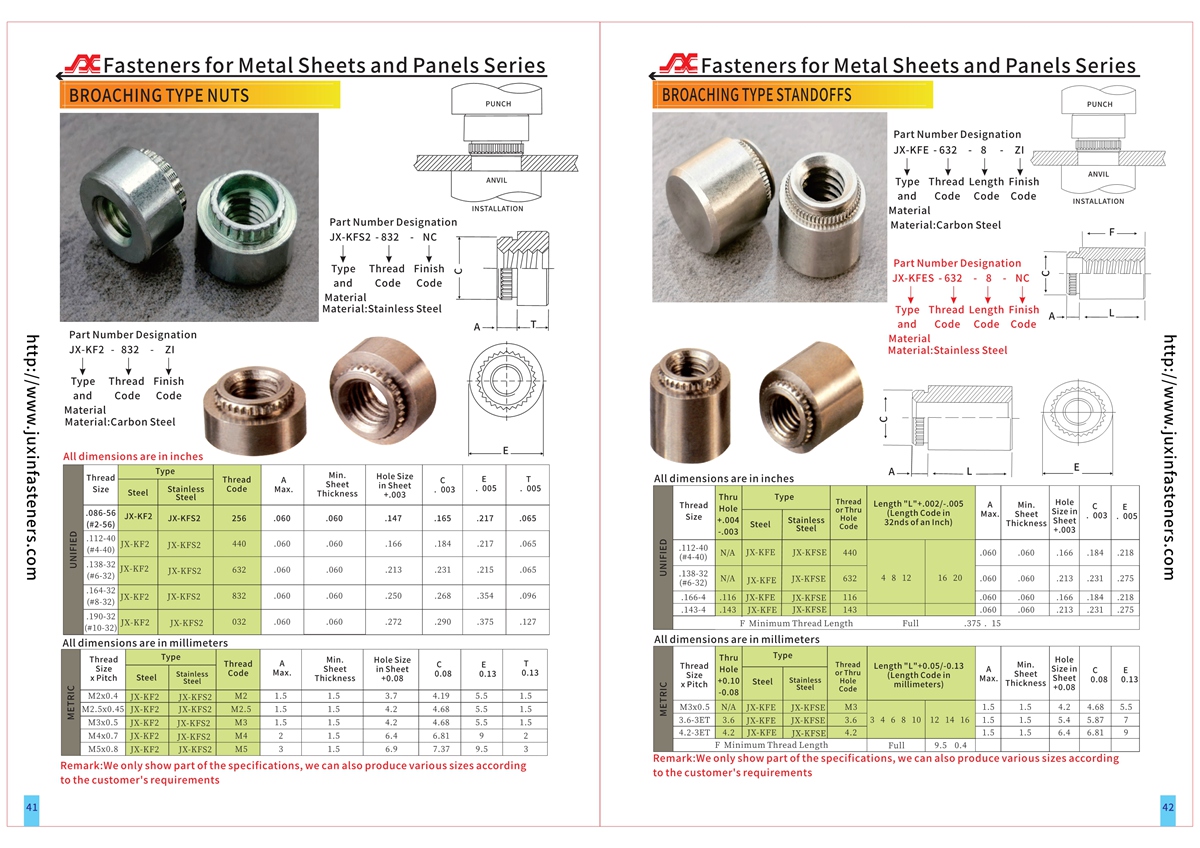
The JX-KF2 and JX-KFS2 series covers steel and stainless steel material options, with metric thread sizes from M2 to M5 and selected inch-series sizes from #2 to #10, subject to the approved specification.
Designed for PCB-to-component and PCB-to-chassis assemblies, these broaching nuts help engineers manage restricted installation space, component positioning, and assembly repeatability.
Custom dimensions, material selections, and surface finishes can be reviewed against customer drawings and application requirements.
Product Specification
PCB Broaching Nuts – JX-KF2 and JX-KFS2
Engineered Threaded Attachment Solutions for Printed Circuit Boards and Electronic Assemblies
JUXIN FASTENERS offers JX-KF2 and JX-KFS2 broaching nuts for applications requiring internally threaded fastening points in printed circuit boards and compatible engineering materials. These compact press-fit fasteners are designed for component-to-board, board-to-board, and board-to-chassis assemblies where loose hardware, limited installation space, or repeated screw assembly can create manufacturing difficulties.
Unlike conventional self-clinching nuts that rely on the controlled displacement of ductile sheet metal, broaching nuts use specially formed external shank features to engage the surrounding substrate. This distinction is important when selecting fastening technology for PCB laminates, plastics, and other materials that do not behave like cold-formable sheet metal.
The final installation design must account for substrate composition, board thickness, hole preparation, installation force, and the required mechanical performance.
Product Range and Material Options
Product series: JX-KF2 and JX-KFS2
Fastener category: PCB broaching nuts / press-fit threaded inserts
Thread configuration: Internal female thread
Installation principle: Press-in broaching engagement
Nominal metric thread range: M2 to M5
Nominal inch-series thread range: #2 to #10
Primary applications: PCB assemblies, electronic modules, control equipment, and precision mounting systems
Material options:
JX-KF2 – Steel construction, with material selection subject to the approved product specification. Candidate grades include C20, C45, C46, and selected free-machining steels such as 1213, 1214, or 1215 where appropriate.
JX-KFS2 – Stainless steel construction, with the exact grade determined by the approved drawing and operating environment.
Steel and stainless steel versions should not be treated as mechanically or environmentally interchangeable without evaluation.
Surface finishes may include electroplated tin, zinc, zinc-nickel alloy, or other approved protective treatments where technically suitable. Coating selection, dimensional allowance, and process compatibility require confirmation for the specific part.
Metric thread specifications can be evaluated with reference to ISO 261 and ISO 965. Unified inch-series threads can be specified using ASME B1.1.
Metric and inch-series threads are different thread systems and must not be interchanged solely because their nominal diameters are similar.
Detailed dimensions, thread availability, installation hole requirements, and product drawings should be confirmed using the JUXIN FASTENERS technical specification sheets and CAD information on pages 41–42.
How PCB Broaching Nuts Work
A broaching nut contains a threaded central body and a specially formed external shank with axial engagement features.
During installation, the nut is aligned with a prepared hole and pressed into the substrate using controlled axial force. The shank features engage the hole wall and develop mechanical resistance against rotation and removal.
The resulting connection provides an internally threaded fastening point for screws used to attach electronic components, brackets, spacers, and enclosure structures.
This engagement mechanism differs from conventional self-clinching technology.
A self-clinching nut normally requires a sufficiently ductile metal sheet so that displaced material flows into the fastener's retention features.
A PCB broaching nut instead depends on the interaction between its external geometry and the surrounding board or component material.
This difference affects hole design, substrate selection, installation force, and long-term retention.
Broaching nuts are not automatically suitable for every PCB laminate or engineering plastic. Compatibility must be verified for the actual material and installation geometry.
PCB Installation and Hole Design
Reliable installation begins with the mounting hole rather than the fastener alone.
For JX-KF2 and JX-KFS2 broaching nuts, engineers should establish the following design conditions before production:
Board or substrate material and thickness.
Finished mounting hole diameter and tolerance.
Fastener shank dimensions and installation orientation.
Distance from the hole to the nearest board edge or adjacent opening.
Required clearance for the installation punch and supporting anvil.
Available support beneath the installation area.
Expected assembly load, screw tightening torque, and service conditions.
The fastener should be installed with a controlled pressing operation that applies force along the fastener axis.
Installation tooling must support the surrounding substrate adequately to reduce bending, localized damage, and unintended board deflection.
A suitable installation process should produce consistent seating without visible substrate cracking, excessive deformation, or damage to adjacent electrical features.
The correct hole diameter is especially important.
An oversized hole may reduce engagement and rotational resistance. An undersized hole may increase insertion force and damage the PCB laminate or surrounding material.
For this reason, hole dimensions should follow the approved fastener drawing rather than a general-purpose drill-size recommendation.
PCB Design Considerations: What Engineers Should Check
PCB fastening performance depends on more than nominal thread size.
A small threaded insert can be mechanically suitable for the mating screw but still unsuitable for the circuit board if the surrounding laminate lacks sufficient support.
Engineers should evaluate the interaction between the fastener, the substrate, and the final assembly.
Board thickness and local support
A board must provide enough material around the broaching features to develop the required retention. Thin or locally weakened sections may require a different attachment method or additional structural support.
Hole-to-edge distance
Broaching engagement generates localized stresses around the mounting hole. Insufficient edge distance can increase the risk of cracking, breakout, or loss of retention.
Copper features and electrical clearance
Mounting holes should be reviewed against nearby traces, copper planes, plated features, and electrical clearance requirements.
A metallic broaching nut may create an unintended conductive path if the PCB layout does not account for its location and contact surfaces.
Insertion force and board damage
Higher installation force does not automatically produce better retention. Excessive force can damage the substrate or affect adjacent solder joints and components.
Assembly loading
The fastener should be evaluated for torque-out resistance, pushout resistance, and any additional axial or transverse loads expected during service.
The values depend on the selected fastener, hole geometry, substrate, and installation process. They should be established through applicable product data and representative assembly testing.
Thread engagement
The mating screw must have sufficient thread engagement without bottoming against surrounding components or creating unwanted loads.
Where repeated servicing is expected, screw material, thread quality, and tightening procedures should be reviewed together.
These checks are particularly valuable for OEM designs that must maintain consistent assembly performance across multiple production batches.
Typical Industrial Applications
Printed Circuit Board Assemblies
JX-KF2 and JX-KFS2 broaching nuts can provide reusable mounting threads for circuit board assemblies where loose nuts are difficult to position or retain during production.
They may be used to secure brackets, mechanical supports, and selected electronic modules when the PCB construction and loading conditions are compatible.
Industrial Control Equipment
Control modules, communication boards, instrumentation panels, and electronic subassemblies frequently require compact fastening points.
Broaching nuts can support repeatable screw assembly where the product design provides suitable substrate thickness, installation access, and mechanical support.
Electronic Enclosures and Chassis
In PCB-to-chassis applications, broaching nuts may help connect electronic assemblies to structural components through screws, spacers, or mounting brackets.
Designers should consider electrical grounding requirements, insulation, vibration exposure, and maintenance access before selecting the final fastening arrangement.
Telecommunications and Networking Equipment
Communication hardware often combines dense PCB layouts with serviceable mechanical components.
Compact internally threaded inserts can help reduce reliance on loose hardware, provided installation loads and surrounding board features are properly controlled.
Industrial Sensors and Measurement Devices
Precision electronic equipment may require small threaded attachment points for protective covers, mounting brackets, or internal supports.
Fastener selection should consider dimensional stability, corrosion exposure, and potential effects on sensitive electronic assemblies.
Automation and Embedded Electronics
Control boards used in industrial automation, robotics, and embedded systems may benefit from permanently installed threaded inserts where repeated assembly or replacement is expected.
Suitability must be assessed against vibration, shock, substrate integrity, and the final screw joint design.
Steel vs. Stainless Steel Broaching Nuts
Material selection should reflect the actual assembly environment rather than a general preference for one material.
Steel broaching nuts may be appropriate for controlled indoor electronic assemblies where the selected finish provides sufficient environmental protection.
Stainless steel broaching nuts may be considered where corrosion resistance or specific material requirements influence the design.
However, stainless steel is not a single performance category.
Different stainless grades vary in corrosion resistance, hardness, machinability, magnetic behavior, and their interaction with mating screws.
For example, an austenitic stainless steel and a martensitic stainless steel may behave differently during manufacturing and installation.
The selected material must also be compatible with the required broaching geometry and the intended substrate.
Material grade, surface condition, and performance requirements should therefore be identified on the approved engineering drawing.
Surface Finish and Environmental Protection
For steel broaching nuts, surface treatment may be required to reduce corrosion risk or meet customer-specific requirements.
Possible finishes include zinc plating, tin plating, zinc-nickel alloy coatings, and other technically suitable protective systems.
The finish must be selected with consideration for thread fit, installation dimensions, electrical characteristics, and the operating environment.
ISO 4042 may be relevant when specifying electroplated coating systems for threaded fasteners.
Where corrosion testing is required, ISO 9227 or ASTM B117 may be used as specified test methods.
A salt-spray test result should not be interpreted as a direct prediction of actual service life.
For higher-strength or hardness-sensitive steel grades, the potential for hydrogen embrittlement associated with certain manufacturing and plating processes should also be assessed.
No particular coating thickness, corrosion rating, or certification should be assumed without the corresponding approved specification and test evidence.
PCB Broaching Nuts vs. Alternative Fastening Methods
Choosing the right PCB fastening technology requires understanding how each attachment method interacts with the substrate.
Broaching nuts
These use a mechanically engaging shank to create a threaded attachment point in a compatible substrate.
They are relevant where a press-fit installation is practical and the board or component material can support the required engagement.
Conventional self-clinching nuts
These depend on displacement of ductile sheet metal and are generally better suited to compatible metal panels than to brittle PCB laminates.
SMT threaded nuts
Surface-mount fasteners are designed for attachment through an approved soldering process.
They may be useful when PCB assembly processes favor automated placement and reflow soldering, but their joint performance depends on solder attachment design and processing.
Loose nuts and screws
Loose hardware can provide flexibility for prototypes or low-volume assemblies, but it may require additional access, handling, or retention during production.
Threaded standoffs
Standoffs provide a defined separation between components or boards.
They are often preferable when spacing is a primary functional requirement rather than simply providing a threaded mounting point.
Broaching nuts and standoffs may also be used together in suitable mechanical designs.
Molded-in or heat-installed inserts
These may be appropriate for selected plastic components, but their installation mechanisms and material requirements differ from PCB broaching nuts.
The preferred solution depends on substrate material, assembly sequence, load requirements, serviceability, and production volume.
Engineering Example: PCB-to-Chassis Mounting
Consider an industrial controller with a circuit board mounted inside a metal enclosure.
The engineering team requires a reusable threaded attachment point for a mechanical bracket. The PCB layout offers limited space around the mounting position.
A broaching nut may appear suitable because it provides a compact internal thread and avoids handling a loose nut during final assembly.
Before approving the design, the team should evaluate whether the board material and thickness can withstand the installation process.
The mounting hole must also provide adequate clearance from copper traces and the board edge.
The required screw tightening torque should be compared with the installed fastener's rotational resistance.
If the bracket is exposed to vibration, the complete screw joint must be evaluated for loosening resistance.
The broaching nut itself does not automatically provide a prevailing-torque locking function.
Where installation force or PCB integrity becomes a concern, the design team may consider a chassis-mounted clinch nut, a suitable threaded standoff, or another attachment method.
This approach helps avoid selecting a fastener based only on thread size and external appearance.
OEM Fastener Selection and Procurement Considerations
For purchasing managers and supplier development teams, selecting JX-KF2 or JX-KFS2 broaching nuts involves both technical compatibility and production consistency.
A reliable sourcing decision should include review of the following information:
Approved fastener drawing and part number.
Required metric or inch-series thread.
Material grade and surface finish.
Mounting hole and substrate specifications.
Critical dimensions and tolerances.
Required mechanical retention performance.
Installation method and tooling requirements.
Inspection criteria and acceptance requirements.
Estimated annual demand and order quantities.
Packaging, labeling, and traceability expectations.
For OEM projects, a representative installation trial can be especially valuable before volume purchasing.
A fastener that meets its dimensional drawing may still produce unacceptable results when installed into a different PCB laminate, hole condition, or production process.
Engineering approval should therefore address the installed assembly, not only the loose fastener.
Quality and Application Validation
JUXIN FASTENERS can review customer requirements for JX-KF2 and JX-KFS2 broaching nuts against the relevant product drawings and proposed manufacturing specifications.
Depending on the project, important evaluation criteria may include dimensional inspection, thread fit, material identification, coating requirements, and installation performance.
Mechanical validation should be based on the actual substrate and installation conditions.
Applicable methods for hardness, materials, and corrosion evaluation may reference relevant ISO, ASTM, or other internationally recognized standards when specified by the customer.
Any special testing, documentation, inspection plan, or third-party certification requirement should be confirmed during the RFQ and technical review process.
Custom Broaching Nuts for OEM Projects
Standard JX-KF2 and JX-KFS2 configurations may not address every PCB mounting requirement.
Customer-specific requirements may involve thread dimensions, overall height, shank geometry, material selection, surface finish, or installation constraints.
JUXIN FASTENERS welcomes engineering drawings and technical inquiries for custom broaching nut evaluation.
Custom configurations are subject to feasibility review, material suitability, tooling requirements, and commercial confirmation.
For new designs, providing the PCB substrate specification and proposed installation hole geometry can help identify potential compatibility issues before production.
Frequently Asked Questions
What is a PCB broaching nut?
A PCB broaching nut is an internally threaded fastener with external engagement features designed to be pressed into a compatible board or component material. It provides a reusable screw attachment point without requiring a loose nut behind the assembly.
What is the difference between JX-KF2 and JX-KFS2?
The two series represent steel and stainless steel material options within the JUXIN FASTENERS broaching nut range. Exact material grades, dimensions, and finishes should be confirmed against the relevant specification.
Can broaching nuts be installed in any PCB?
No. PCB materials differ in thickness, laminate construction, mechanical properties, and sensitivity to localized installation stress. Suitability should be established using the actual substrate and approved mounting-hole design.
Are broaching nuts the same as self-clinching nuts?
Not exactly. Conventional self-clinching nuts typically rely on plastic deformation of ductile sheet metal. Broaching nuts use shank features that mechanically engage the surrounding material.
What thread sizes are available?
The stated product family covers metric M2–M5 and selected inch-series sizes from #2 to #10. Availability of individual combinations must be checked against the product drawing or quotation.
Can these nuts be used for repeated screw assembly?
They provide reusable internal threads, but the permissible assembly cycles depend on thread condition, mating hardware, tightening torque, and retention performance.
Can JUXIN FASTENERS review custom PCB mounting requirements?
Yes. Customers can submit drawings, material specifications, installation requirements, and purchasing information for technical and commercial evaluation.
Related Fastening Solutions
For projects involving multiple attachment methods, explore these related JUXIN FASTENERS product categories:
Self-Clinching Nuts – For permanent threaded attachment points in compatible ductile metal panels.
Self-Clinching Standoffs – For controlled spacing between circuit boards, components, and chassis structures.
Self-Clinching Studs – For permanent externally threaded attachment points in sheet metal.
Floating Self-Clinching Nuts – For assemblies requiring limited compensation for mating-hole misalignment.
Self-Clinching Blind Nuts – For applications requiring closed-end internal threads and controlled screw penetration.
These related product categories can be connected through internal links to their corresponding JUXIN FASTENERS pages.
Request a Quote – JX-KF2 / JX-KFS2 PCB Broaching Nuts
JUXIN FASTENERS supports industrial customers seeking PCB broaching nuts for electronic assemblies, equipment manufacturing, and OEM fastening projects.
For an accurate technical review and quotation, please provide:
Required product type: JX-KF2 or JX-KFS2.
Thread size and quantity.
Engineering drawing or approved specification.
PCB or component substrate material and thickness.
Mounting hole diameter and tolerance.
Required material and surface finish.
Installation and mechanical performance requirements.
Annual demand, target delivery schedule, and destination
Product Packaging
JX-KF2 and JX-KFS2 broaching nuts are packaged according to product size, material, order quantity, and customer handling requirements.
Protective inner packaging, cartons, and palletized shipments can be arranged as appropriate for the confirmed order.
Packaging configuration, quantities per carton, labeling, and pallet requirements are subject to order confirmation.
Custom packaging and OEM identification requirements can be reviewed during quotation.
For packaging specifications and bulk order inquiries, contact info@juxinfasteners.com.
Website: www.juxinfasteners.com
Product Pictures
Contact Us
Tel.:
+86 020 8621 0320
+86 020 3121 6067
E-mail:
Technical Support:
Navigation
SEND INQUIREY