Call Us
+86 136 6007 9809
Call Us
+86 136 6007 9809

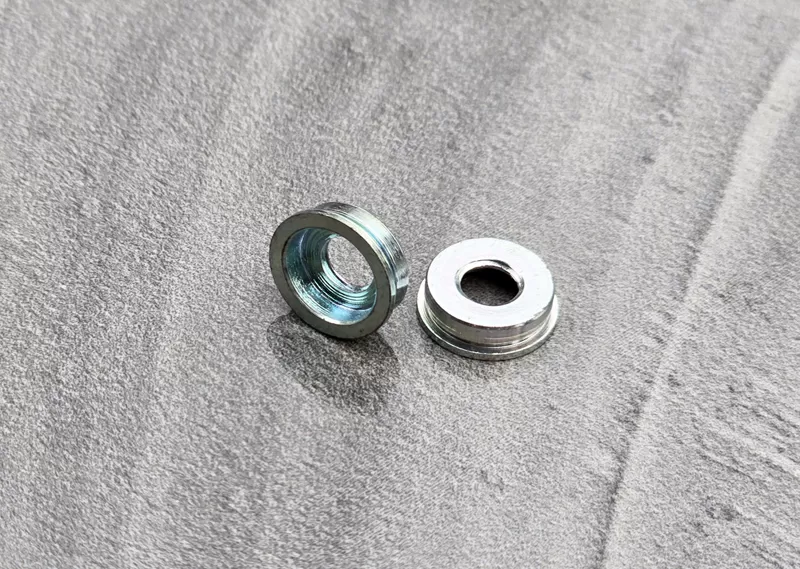
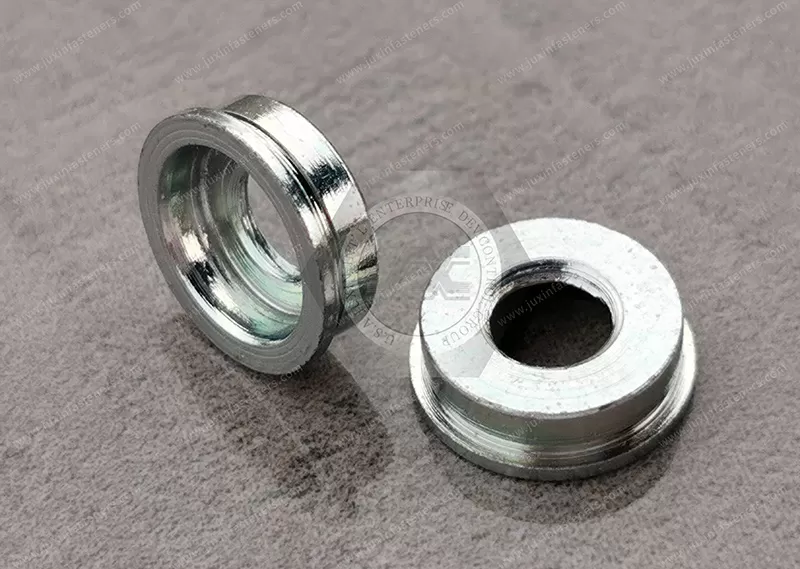
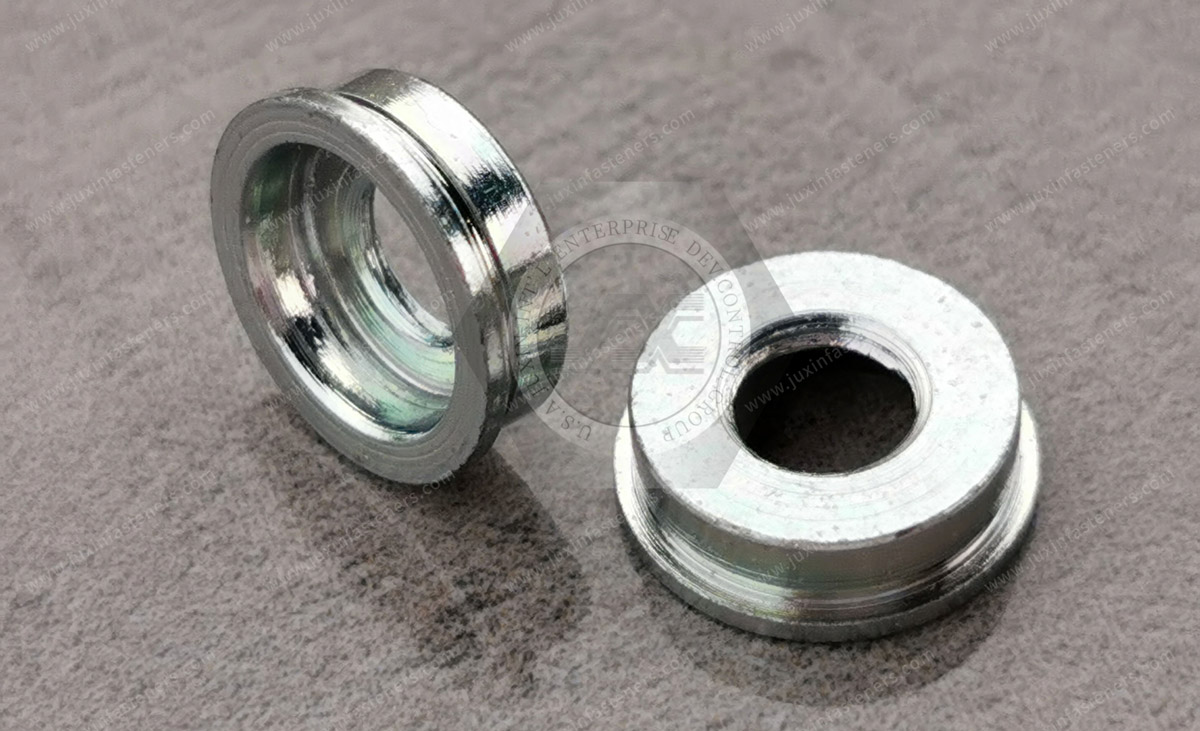
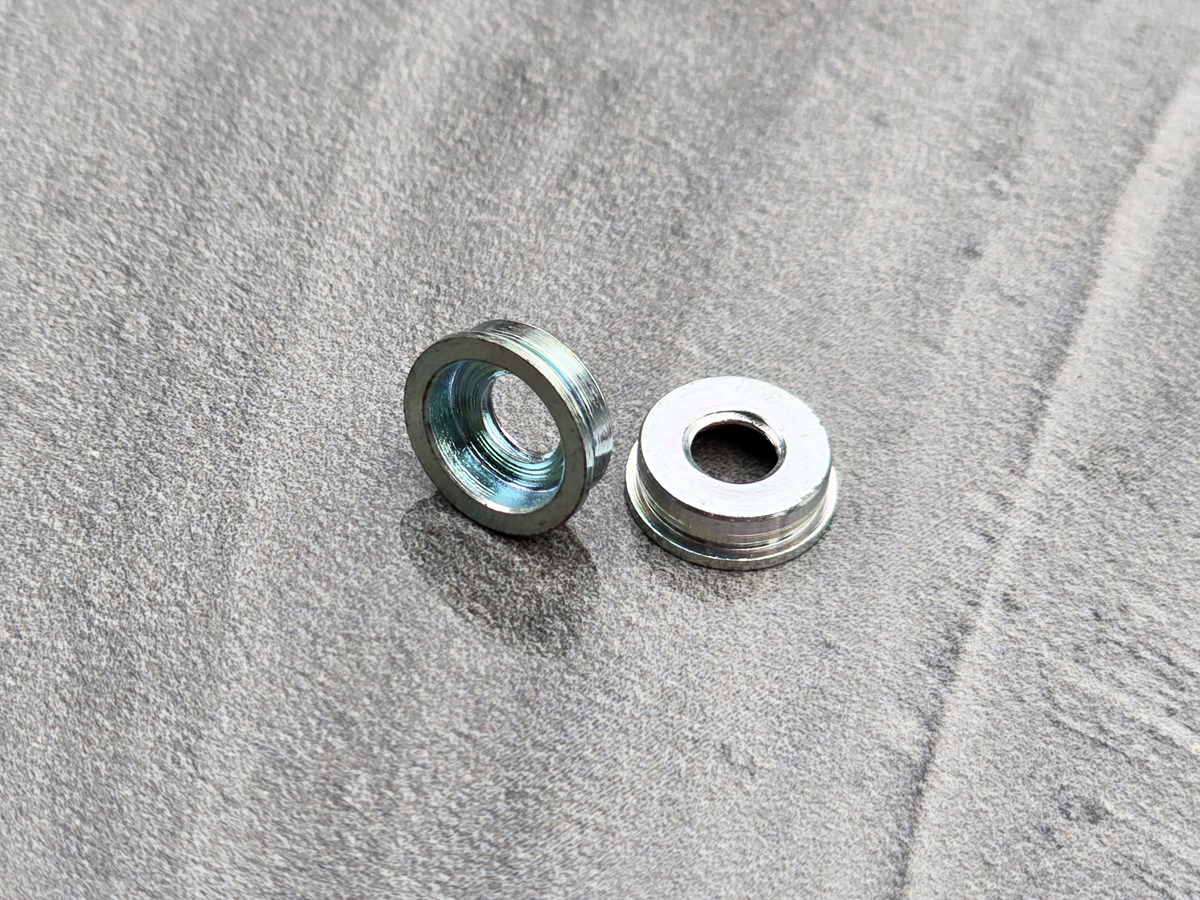
Self-Clinching Flush-Mounted Captive Screw Retainers – Type JX-PR10
JX-PR10 self-clinching flush-mounted retainers are designed to secure compatible captive screws in metal panels while maintaining a compact, flush-mounted installation.
The retainer is permanently installed into a properly prepared panel hole using controlled pressing force.
When assembled with a compatible captive screw, it helps prevent the screw from becoming a loose component during panel removal or equipment servicing.
Material: Carbon steel or stainless steel.
Designed for compatible metal sheets with a minimum thickness of 0.125 in. (approximately 3.2 mm), subject to the applicable dimensional and installation specifications.
Associated captive screw thread sizes range from #4 to #10 and M3 to M5.
Typical applications include electronic enclosures, industrial control cabinets, removable access panels, instrumentation, telecommunications equipment, and serviceable machinery covers.
Custom dimensions and OEM configurations may be reviewed according to approved technical drawings and application requirements.
Product Specification
JX-PR10 Self-Clinching Flush-Mounted Retainers for Captive Panel Screws
Juxin Fasteners supplies JX-PR10 self-clinching flush-mounted retainers for OEM manufacturers requiring secure captive screw retention, controlled panel installation, and improved service accessibility.
The JX-PR10 series is intended for applications where a screw must remain attached to a removable panel rather than becoming a loose component during maintenance or assembly.
By combining a self-clinching mounting feature with a captive screw retaining function, this fastening solution helps reduce loose hardware and supports more efficient equipment servicing.
Product Function and Retention Principle
A captive screw retainer is a mechanical component used to retain a compatible screw within a panel assembly.
The JX-PR10 retainer is designed to be installed permanently into a properly prepared metal panel.
After the retainer and compatible screw are assembled according to the approved design, the screw remains associated with the panel when disengaged from the mating threaded component.
This arrangement helps prevent screw loss during repeated opening and closing of equipment covers.
The retainer itself is not a conventional threaded nut and should not be selected as a substitute for a load-bearing threaded connection.
The final assembly requires a compatible captive screw and an appropriate mating thread or receiving component.
Flush-Mounted Design
The flush-mounted configuration helps reduce unwanted protrusion on the designated installation face.
This can be valuable in compact sheet metal assemblies where adjacent components, enclosure clearances, or cosmetic requirements restrict available space.
A flush-mounted retainer may also simplify panel stacking or help avoid interference with neighboring components.
Flush installation should be evaluated using the applicable drawing because the final assembled screw head, screw travel, and opposite-side projection may still extend beyond the panel surface.
Engineers should distinguish between a flush-mounted retainer and a fully flush captive screw assembly.
The complete assembly geometry must be checked before design approval.
Available Materials
Carbon steel and stainless steel are identified material options for the JX-PR10 series.
Carbon steel can provide an economical solution for controlled indoor industrial environments where an appropriate protective finish is specified.
Stainless steel may be considered where corrosion resistance or material compatibility is important.
The exact stainless steel grade, carbon steel grade, mechanical condition, and surface finish must be confirmed against the approved product specification.
Stainless steel does not automatically mean nonmagnetic, and corrosion performance varies significantly by grade and environment.
For procurement and engineering approval, material requirements may reference applicable ASTM, SAE, EN, or ISO specifications.
Material substitution should not occur without checking installation behavior, dimensional compatibility, and the intended operating conditions.
Thread Size Compatibility
The supplied product information identifies compatible captive screw thread sizes from #4 through #10 and M3 through M5.
These thread designations refer to the associated captive screw system, not necessarily to internal threads in the retainer itself.
The actual compatible screw dimensions must be verified using the applicable product drawing.
Inch-threaded screws should be specified using the relevant ASME B1.1 UNC or UNF thread designation where applicable.
Metric threaded screws should be specified using the relevant ISO metric thread requirements, such as ISO 261 and ISO 965, where applicable.
Metric and inch threads are not interchangeable merely because their nominal diameters are similar.
For example, M3 and #4 screws require separate dimensional and thread-compatibility checks.
Panel Thickness Requirements
The supplied technical information identifies installation into metal sheets as thin as 0.125 in., approximately 3.2 mm.
This is a stated minimum thickness reference for the product family, not a universal installation guarantee for every panel material or fastener variation.
The actual allowable panel thickness depends on the selected JX-PR10 dimensions, panel material, installation geometry, and approved technical data.
Design engineers should verify that the panel provides sufficient material for proper clinching and retention.
Excessively thin or unsuitable substrates may result in incomplete installation, panel distortion, or inadequate mechanical holding strength.
Self-Clinching Installation Method
Self-clinching installation relies on controlled displacement of suitable sheet metal around a specially designed fastener mounting feature.
A properly sized hole is prepared according to the JX-PR10 drawing.
The retainer is aligned with the mounting hole and installed using suitable press tooling.
The panel must be supported appropriately to avoid distortion during pressing.
Installation should use controlled force and correct tooling geometry rather than uncontrolled hammering or impact loading.
The fastener must be compatible with the hardness and ductility of the receiving sheet.
A reliable self-clinching joint generally requires suitable material flow around the retaining geometry.
Installation into hardened sheet metal or brittle materials may not produce the required mechanical engagement.
The approved drawing and installation instructions should define hole size, panel thickness, material hardness limits, installation tooling, and acceptance criteria.
Hole Preparation and Dimensional Control
Hole preparation is a critical factor in the performance of self-clinching retainers.
An oversized hole can reduce the material available for clinching and weaken retention.
An undersized hole may increase installation force, distort the panel, or damage the retainer.
Excessive burrs, poor perpendicularity, and improper hole location may also affect installation quality.
Hole dimensions should be inspected using the tolerances established in the approved engineering drawing.
Where applicable, ISO GPS practices or ASME Y14.5 dimensional and geometric tolerancing may be used for drawing control.
Engineers should avoid substituting general-purpose drilling tolerances for the specific hole requirements of the retainer.
Panel Edge Distance and Layout
The distance between the mounting hole and the nearest panel edge influences the amount of surrounding material available during installation.
Insufficient edge distance may cause local distortion, cracking, or reduced retention.
For closely spaced fasteners, designers should also consider the interaction between adjacent mounting features.
The minimum permissible edge distance must be established from the product drawing or verified through application testing.
The panel layout should provide sufficient clearance for installation tooling and subsequent captive screw operation.
Captive Screw Assembly Compatibility
The JX-PR10 retainer should be treated as one component of a complete captive fastening system.
A suitable captive screw must have the correct geometry to remain retained while still allowing the intended axial movement and thread engagement.
Engineers should check screw head dimensions, shank geometry, retention features, allowable travel, and mating thread position.
An incorrect screw-retainer combination may produce excessive friction, incomplete screw movement, or accidental release.
The complete assembly should be tested in both its engaged and disengaged positions.
When a panel uses several captive screws, tolerance accumulation between the panel holes and mating threaded locations must also be considered.
Serviceability and Loose-Hardware Prevention
Captive screw retainers are particularly useful for equipment that requires periodic opening for inspection, repair, calibration, or replacement of internal components.
When the screw remains associated with the removable panel, maintenance personnel have fewer loose components to manage.
This can reduce the risk of misplaced screws and accidental loose hardware entering electronic equipment.
However, captive screw retention does not by itself establish electrical safety compliance or guarantee prevention of all foreign-object damage.
The complete enclosure design and maintenance procedure must address the relevant safety requirements.
Industrial Applications
Industrial control cabinets use removable panels to provide access to electrical and automation components.
Electronic enclosures may require captive screw retention to support repeated maintenance while reducing loose hardware.
Telecommunications equipment can benefit from retained fastening components in compact, serviceable chassis assemblies.
Instrumentation manufacturers may use captive panel screws for inspection covers and calibration access points.
Medical and laboratory equipment may require controlled service access, subject to applicable product-specific regulatory and engineering requirements.
Industrial machinery covers can use captive fastening systems where service technicians frequently remove access panels.
For all these applications, the JX-PR10 retainer must be selected according to the actual panel construction and screw assembly requirements.
Comparison With Alternative Fastening Methods
Loose screws are generally straightforward to source and can simplify the initial component selection.
However, they can be misplaced during servicing and require separate handling during reassembly.
Captive screws installed using separate retaining washers or clips may be suitable where the panel design allows those components.
Self-clinching retainers offer a permanent mounting approach for compatible sheet metal panels and can simplify the handling of retained screw assemblies.
The most suitable design depends on panel thickness, material hardness, assembly access, installation equipment, expected service frequency, and total installed cost.
A low unit price does not necessarily produce the lowest assembly cost if additional handling or service time is required.
Common Engineering Failure Modes
Incomplete clinching can occur when installation force, tooling alignment, or substrate properties are unsuitable.
Retainer rotation or push-out may occur if the mounting hole or sheet material does not provide sufficient mechanical engagement.
Panel deformation may result from excessive force or inadequate backing support.
Screw binding may occur when the retainer and captive screw dimensions are incompatible.
Poor alignment between the captive screw and mating thread can increase cross-threading risk.
Corrosion may affect performance where material and finish selection are unsuitable for the service environment.
These risks should be addressed through drawing control, process validation, and assembly testing.
Technical Specifications
Product type: Self-clinching flush-mounted captive screw retainer.
Series: JX-PR10.
Material options: Carbon steel and stainless steel.
Installation method: Press installation into compatible metal panels.
Mounting configuration: Flush-mounted retainer.
Minimum stated sheet thickness: 0.125 in. / approximately 3.2 mm, subject to model-specific requirements.
Associated captive screw thread range: #4 to #10 and M3 to M5.
Primary applications: Captive panel screw retention, access panels, equipment enclosures, and removable covers.
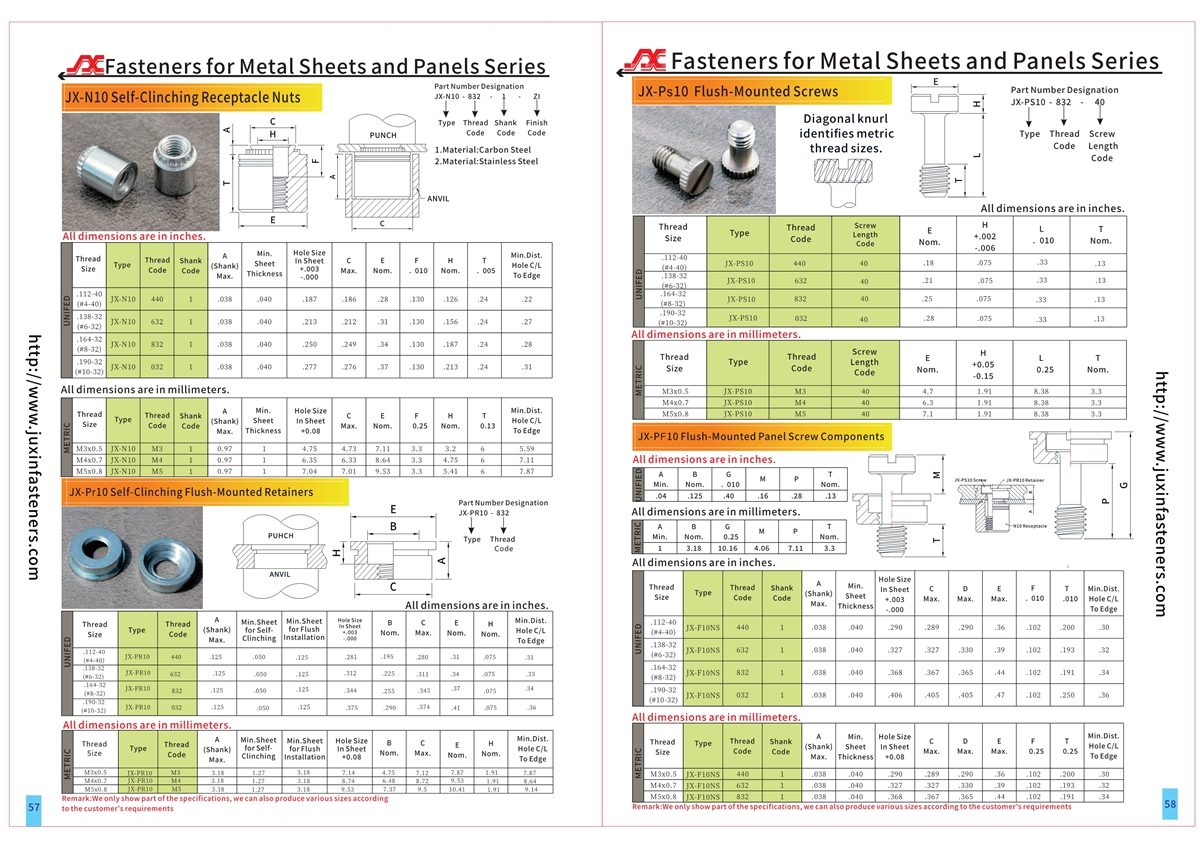
Dimensional information: Refer to the applicable specification PDF and CAD drawings, pages 57–58.
Custom configurations: Subject to drawing review, manufacturing feasibility, and technical approval.
The exact outside diameter, mounting-hole size, retainer height, screw compatibility dimensions, and installation tolerances must be taken from the approved product drawing.
OEM Quality and Validation Requirements
Before production release, manufacturers should validate the selected retainer with the actual panel material and captive screw assembly.
Recommended evaluation includes dimensional inspection, installation quality, retainer retention, screw movement, and complete panel assembly performance.
Where relevant, push-out resistance and torque-out resistance should be tested using agreed procedures.
Repeated service cycles may also be evaluated to determine whether the retainer and captive screw continue to function as intended.
Any corrosion testing, material certification, coating requirement, or traceability documentation should be defined in the purchase specification.
Compliance with ISO, ASTM, SAE, or other standards should only be claimed where the relevant product, material, or test requirements have been verified.
Frequently Asked Questions
What is a self-clinching flush-mounted retainer?
It is a fastening component designed to be permanently installed into compatible sheet metal and used to retain a captive screw within a panel assembly.
Does the JX-PR10 retainer contain a female thread?
It should not be assumed to function as a threaded nut. Its intended role is captive screw retention. The screw engages a separate compatible mating thread in the assembly.
What panel thickness is required?
The supplied product information identifies a minimum thickness of 0.125 in. / approximately 3.2 mm. The exact requirement must be confirmed for the selected size and material.
Can JX-PR10 retainers be installed into stainless steel panels?
Installation depends on the hardness and ductility of the panel and the selected fastener. Compatibility must be confirmed rather than assumed.
Are both inch and metric captive screws supported?
The stated range includes #4 to #10 and M3 to M5, subject to the actual retainer and screw dimensions.
Can custom retainer dimensions be supplied?
Custom dimensions may be reviewed against OEM drawings and production requirements.
Related Products and Internal Linking
For complete captive fastening assemblies, explore Captive Panel Screws and Spring-Loaded Captive Screws.
For low-profile captive fastening solutions, see Low-Profile Knob Captive Panel Screws – JX-PF50 / JX-PF60.
For tool-operated captive screw designs, see Tool-Only Spring-Loaded Captive Panel Screws – JX-PFC2P.
For alternative sheet metal fastening solutions, explore Self-Clinching Nuts and Self-Clinching Standoffs.
These references should link to the corresponding verified product pages on www.juxinfasteners.com.
OEM Procurement and RFQ Requirements
For an accurate quotation, please provide the JX-PR10 model or approved drawing, required material, compatible captive screw details, panel material, panel thickness, mounting-hole dimensions, surface finish, and expected operating conditions.
Procurement teams should also include order quantity, annual demand, inspection requirements, packaging instructions, and any customer-specific quality documentation.
For new assemblies, engineering samples and installation validation are recommended before production approval.
Juxin Fasteners can review standard and custom captive screw retainer requirements for OEM manufacturing and industrial equipment applications.
Request a Technical Quotation
Email: info@juxinfasteners.com
Website: www.juxinfasteners.com
Send your drawing or technical requirements for product selection, dimensional review, and OEM quotation.
Juxin Fasteners – Industrial Fastening Solutions for OEM Engineering and Global Supply Chains.
Product Packaging
Packaging and Export Protection
Juxin Fasteners provides protective export packaging for JX-PR10 self-clinching flush-mounted retainers.
Packaging is arranged to help protect the retainer geometry, mounting features, dimensional accuracy, and surface condition during handling, storage, and transportation.
Standard packaging may include protective inner materials, poly bags or small boxes, reinforced export cartons, and palletized shipment when required.
Product identification can include the model number, material, specification, quantity, and batch or lot information according to the agreed purchase requirements.
Customized packaging options include OEM labeling, barcode identification, specified packing quantities, protective separators, customer-designated carton sizes, and pallet configurations.
Final packaging specifications are confirmed according to product dimensions, order quantity, shipping method, and customer requirements.
Product Pictures
Contact Us
Tel.:
+86 020 8621 0320
+86 020 3121 6067
E-mail:
Technical Support:
Navigation
SEND INQUIREY