Call Us
+86 136 6007 9809
Call Us
+86 136 6007 9809

Thread Insert Nuts for Laptop Plastic Casings – High-Strength Internal Threads
Overview
Thread insert nuts, also known as knurled metal inserts, provide a reliable solution for creating durable internal threads in laptop plastic casings. Laptop housings are typically made from ABS, PC (polycarbonate), or blended plastics, which are lightweight but have limited thread strength. By embedding brass or copper knurled inserts, manufacturers can achieve reusable, high-strength internal threads, ensuring secure assembly of keyboards, motherboards, screens, and other internal components.
These inserts combine mechanical robustness, corrosion resistance, and thermal conductivity, enabling lightweight yet durable plastic assemblies suitable for high-volume production or retrofitting scenarios.
Product Specification
Thread Insert Nuts for Laptop Plastic Casings – High-Strength Internal Threads
Overview
Thread insert nuts, also known as knurled metal inserts, provide a reliable solution for creating durable internal threads in laptop plastic casings. Laptop housings are typically made from ABS, PC (polycarbonate), or blended plastics, which are lightweight but have limited thread strength. By embedding brass or copper knurled inserts, manufacturers can achieve reusable, high-strength internal threads, ensuring secure assembly of keyboards, motherboards, screens, and other internal components.
These inserts combine mechanical robustness, corrosion resistance, and thermal conductivity, enabling lightweight yet durable plastic assemblies suitable for high-volume production or retrofitting scenarios.
Core Application Principles
Functional Requirements
Plastic laptop housings require reinforced internal threads because:
Plastic alone cannot sustain repeated screw insertions without risk of stripping.
Critical components such as the motherboard, keyboard, and display assembly require secure fixation.
Embedded metal inserts provide long-term durability and reliability, maintaining structural integrity over time.
Connection Method
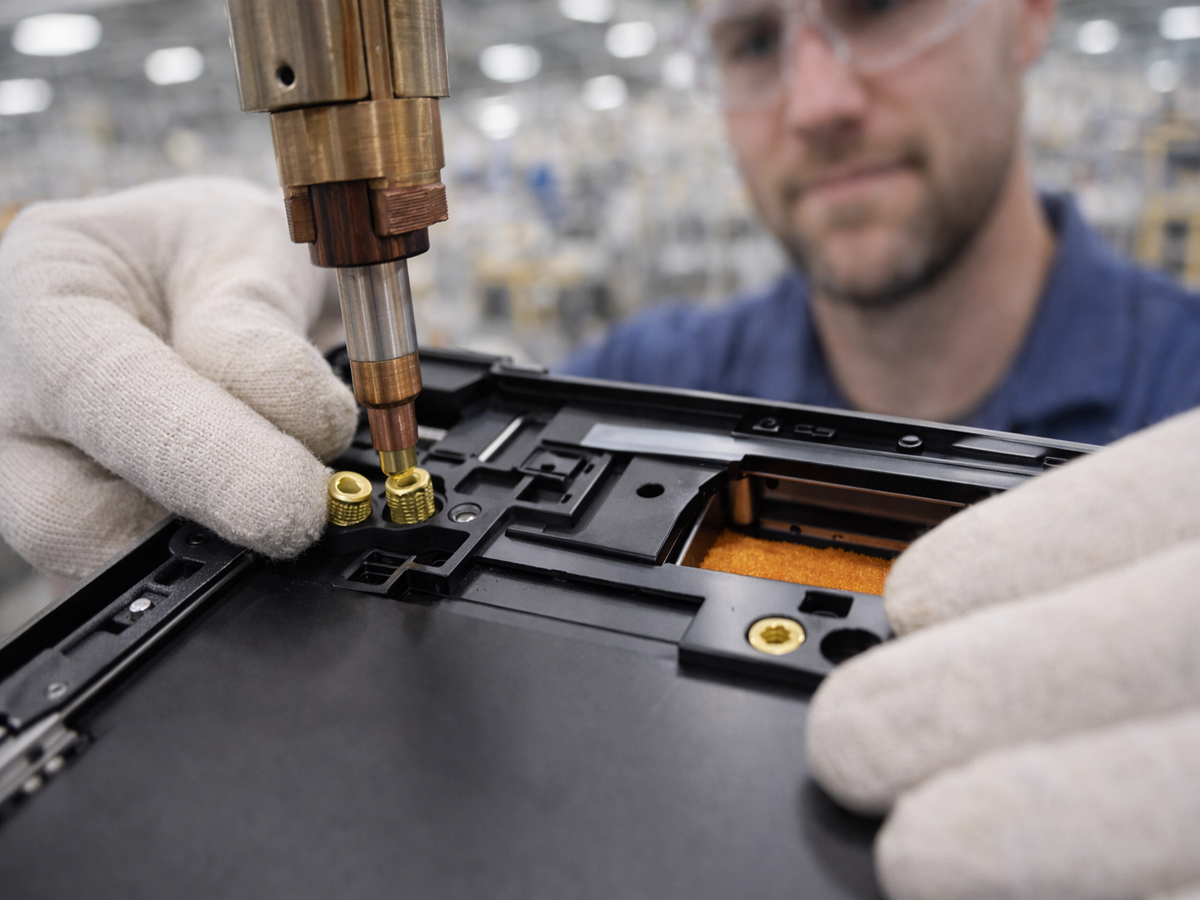
Thread insert nuts bond with plastic through a combination of:
Hot melt embedding – heating the insert and pressing it into a pre-drilled hole, allowing softened plastic to flow into the knurled surface.
Ultrasonic welding – high-frequency vibration generates heat, fusing the insert with the plastic.
Mold injection embedding – placing the insert in the mold prior to injection, creating a fully integrated threaded structure.
These methods prevent loosening, detachment, and thread stripping, ensuring stable performance under repeated use.
Recommended Nut Selection
Material: Brass (H59, H62, C3604) is preferred for its thermal conductivity, corrosion resistance, and machinability.
Structure: Blind hole type: prevents plastic from flowing into the threads during molding.
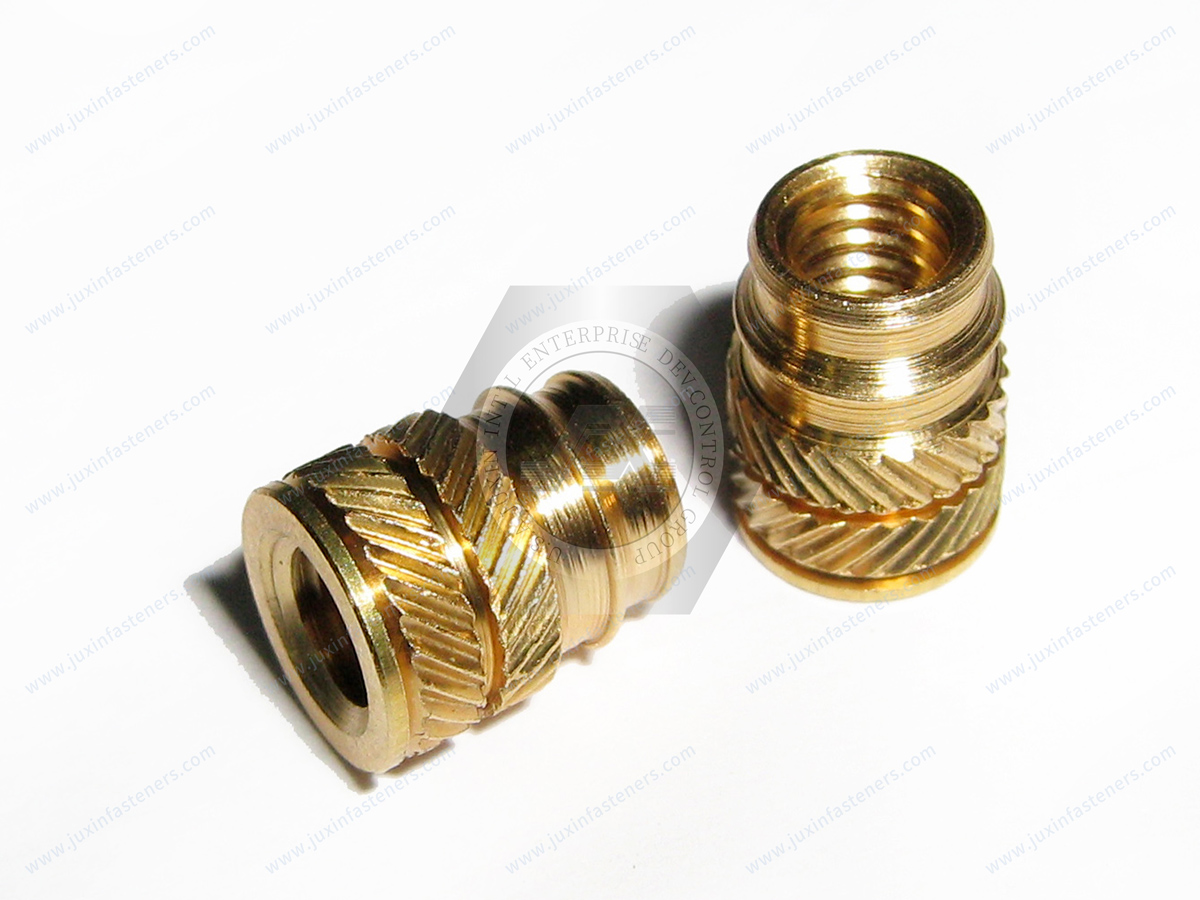
Double twill or three-segment conical knurling maximizes tensile strength and bonding with plastic.
Specifications: Common sizes include M2–M5, which cover most internal fastener requirements for laptops.
Implantation Processes – Heat-Set & Mold Embedding
Mold Injection Embedding (Recommended for Mass Production)
1. Place the knurled metal nut on the mold’s ejector pin.
2. Inject molten plastic into the mold.
3. Allow plastic to fuse with the knurled surface upon cooling, forming a high-strength integrated structure.
Hot Melt Embedding (For Retrofitting or Small-Batch Production)
1. Pre-drill holes in the plastic casing.
2. Heat the metal insert using a hot melt or ultrasonic machine.
3. Press the insert into the plastic hole, letting softened plastic flow into the knurl pattern.
Both methods create a mechanical interlock, achieving high pull-out strength and torque resistance while maintaining assembly efficiency.
Plastic Wall Thickness and Knurl Design
For optimal performance:
Minimum wall thickness: ≥2.5 mm to prevent cracking or insufficient strength.
Knurling depth: 0.3–0.6 mm with 1.0–1.5 mm spacing, balancing grip strength and plastic flowability.
Equipment support: Automatic nut embedding machines can be used for laptop or mobile device casing production lines, improving consistency and efficiency.
Benefits of Thread Insert Nuts in Laptops
High pull-out strength: Resists stripping under repeated assembly.
Vibration resistance: Maintains secure connections even in portable devices.
Corrosion resistance: Brass or copper inserts ensure long-term durability in various environments.
Reusability: Screws can be installed and removed multiple times without compromising plastic integrity.
Simplified assembly: Supports automated production, reducing labor and assembly time.
Typical Applications in Laptop Manufacturing
Motherboard fixation: Secure internal PCBs with reliable threads.
Keyboard and hinge attachment: Withstands repeated use without loosening.
Display panel and bezel assembly: Reinforces thin plastic housings.
Repair and retrofitting: Enables easy replacement of damaged components without damaging the casing.
These inserts support lightweight, durable, and high-performance laptop designs, meeting the demands of modern electronics manufacturing.
Conclusion and CTA
Thread insert nuts are an essential solution for high-strength internal threads in laptop plastic casings. Their knurled design, heat-set or ultrasonic embedding process, and brass material provide:
Durable, reusable metal threads in lightweight plastics
Excellent vibration and pull-out resistance
Streamlined assembly for automated production lines
For technical drawings, sample requests, or quotations, contact Juxin Fasteners, your trusted partner in industrial fastening solutions.
Visit: www.juxinfasteners.com
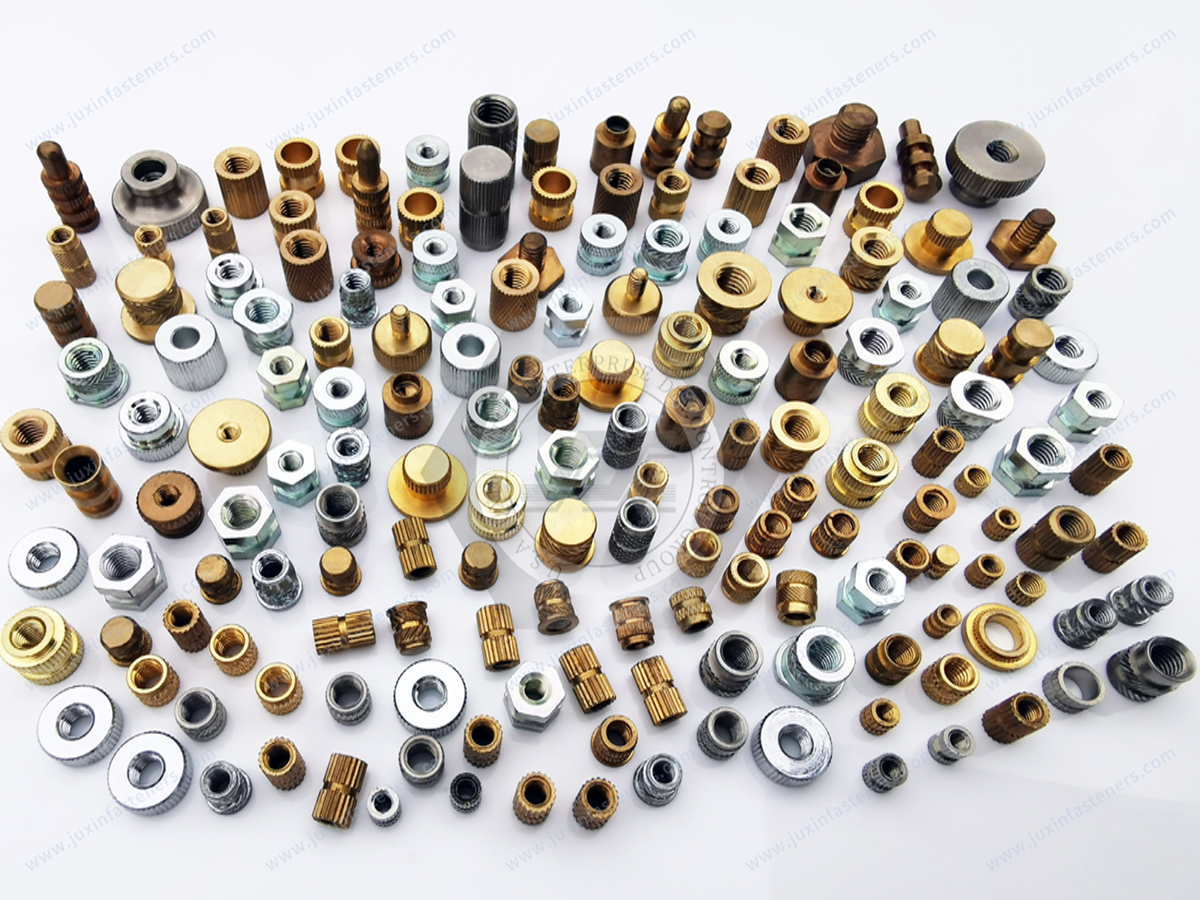
Product Pictures
Hot Products
Threaded Inserts for EV Battery Enclosures and Components | JUXIN Fasteners
Plastic Threaded Inserts: Types, Materials & Installation Methods for OEM Applications
Thread Insert Nuts for Plastics: Design, Installation, and Industrial Applications
EV Electronics Fasteners | Electric Vehicle OEM Fastening Solutions
Contact Us
Tel.:
+86 020 8621 0320
+86 020 3121 6067
E-mail:
Technical Support:
Navigation
SEND INQUIREY