Call Us
+86 136 6007 9809
Call Us
+86 136 6007 9809

For OEM procurement teams, sourcing managers, supply chain managers, structural engineers, and design engineers, specifying a threaded insert should never begin and end with the internal thread size.
A purchase request such as “M4 threaded insert” identifies only one part of the requirement.
It does not define the insert material, outside diameter, length, installation method, mating plastic, surface treatment, retention requirements, or production volume.
Product Specification
For OEM procurement teams, sourcing managers, supply chain managers, structural engineers, and design engineers, specifying a threaded insert should never begin and end with the internal thread size.
A purchase request such as “M4 threaded insert” identifies only one part of the requirement.
It does not define the insert material, outside diameter, length, installation method, mating plastic, surface treatment, retention requirements, or production volume.
Threaded inserts are precision mechanical components designed to create durable threaded connections inside plastic and other materials.
Their performance depends on the relationship between the insert and the component into which it is installed.
An incomplete specification can lead to:
Plastic boss cracking during installation
Thread stripping during assembly
Insert rotation or spin-out
Insufficient pull-out resistance
Poor torque-out performance
Problems during repeated assembly and disassembly
Corrosion or material compatibility issues
Difficulties with automated installation
Inconsistent supplier quotations
Longer engineering clarification cycles
Higher total sourcing costs
For OEM projects, the better approach is to specify the complete application requirement rather than simply requesting a particular thread size.
A qualified threaded insert supplier can then evaluate the drawing, plastic material, installation process, performance requirements, and production volume to recommend an appropriate standard or custom solution.
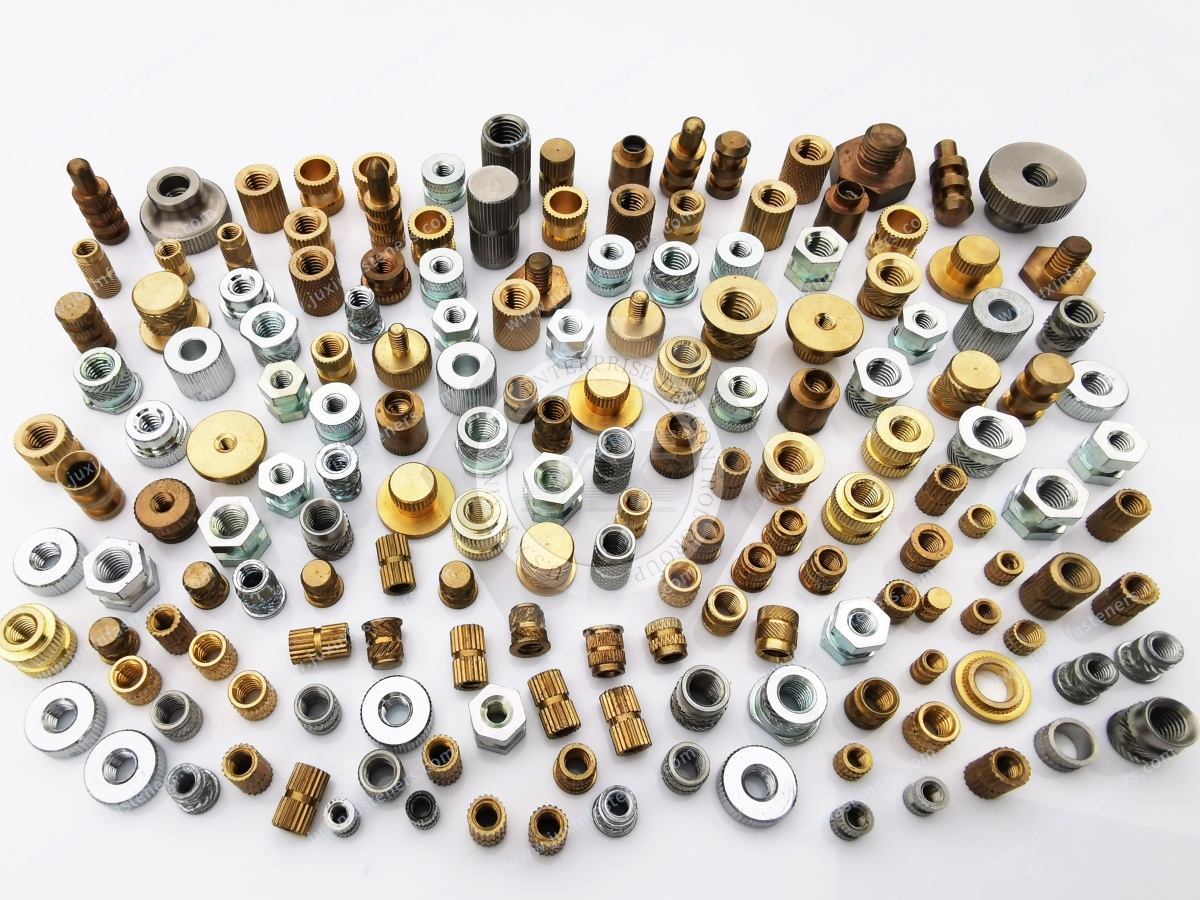
A complete RFQ should give the supplier enough technical information to quote the correct component without making assumptions.
The following eight specifications cover the most important requirements for sourcing threaded inserts.
The internal thread is the starting point for selecting a threaded insert, but the complete thread specification should include the size, pitch, thread standard, and tolerance where applicable.
Common metric thread sizes include:
M1.6
M2
M2.5
M3
M4
M5
M6
M8
M10
For example, an RFQ should identify whether the requirement is M4 × 0.7 rather than simply stating M4.
Where applicable, specify the required thread tolerance and whether the application requires a standard or fine pitch.
For North American OEM applications, common imperial thread sizes include:
#2-56
#4-40
#6-32
#8-32
#10-32
1/4-20
3/8-16
The RFQ should identify whether the required thread is UNC, UNF, or another applicable thread specification.
The internal configuration should also be defined.
A through-threaded insert allows the mating screw to pass through the insert.
A blind threaded insert has a closed end and can be useful when the screw must not penetrate the opposite side of the plastic component.
Blind threaded inserts may be considered for:
Electronic housings
Control panels
Industrial enclosures
Medical equipment
Telecommunications equipment
Components where contamination or material ingress must be minimized
Material selection should be based on the mechanical requirements, environmental exposure, weight, electrical conductivity, temperature, corrosion resistance, and manufacturing requirements of the final application.
Brass is one of the most widely used materials for plastic threaded inserts because of its excellent machinability, electrical conductivity, and suitability for heat and ultrasonic installation.
Brass threaded inserts are commonly used in:
Electronic housings
Electrical equipment
Consumer electronics
Plastic enclosures
Control systems
Communication equipment
Industrial products
For high-volume applications, brass can provide an effective balance between manufacturing efficiency, performance, and cost.
Stainless steel threaded inserts may be selected when higher corrosion resistance or mechanical performance is required.
Common grades include SS304 and SS316.
Typical applications include:
Medical equipment
Diagnostic equipment
Outdoor enclosures
Industrial machinery
Chemical-processing equipment
Marine-related applications
Harsh environmental equipment
Where stainless steel is required, the RFQ should identify the exact grade rather than simply specifying “stainless steel.”
Aluminum threaded inserts can provide a lightweight solution for applications where weight reduction is important.
Potential applications include:
Automotive components
EV electronics
Aerospace equipment
Portable electronic equipment
Lightweight industrial assemblies
The required aluminum alloy should be defined according to the application and engineering requirements.
Surface treatment can influence corrosion resistance, appearance, electrical characteristics, and compatibility with the operating environment.
Depending on the application, threaded inserts may use:
Plain finish
Nickel plating
Tin plating
Passivation
Electropolishing
Other customer-specific surface treatments
For outdoor telecommunications equipment, automotive electronics, industrial machinery, and other exposed applications, the surface treatment should be selected according to humidity, temperature, chemicals, salt exposure, and expected service conditions.
A complete RFQ should therefore specify both:
Base Material + Surface Finish
For example:
SS316 + Passivation
or
Brass + Nickel Plating
This is much more precise than simply requesting a “corrosion-resistant insert.”
The correct threaded insert for plastic depends heavily on how the insert will be installed.
Different polymers and production processes require different insert designs.
The main installation methods include heat staking, ultrasonic insertion, press-fit installation, molded-in installation, and screw-in or self-tapping installation.
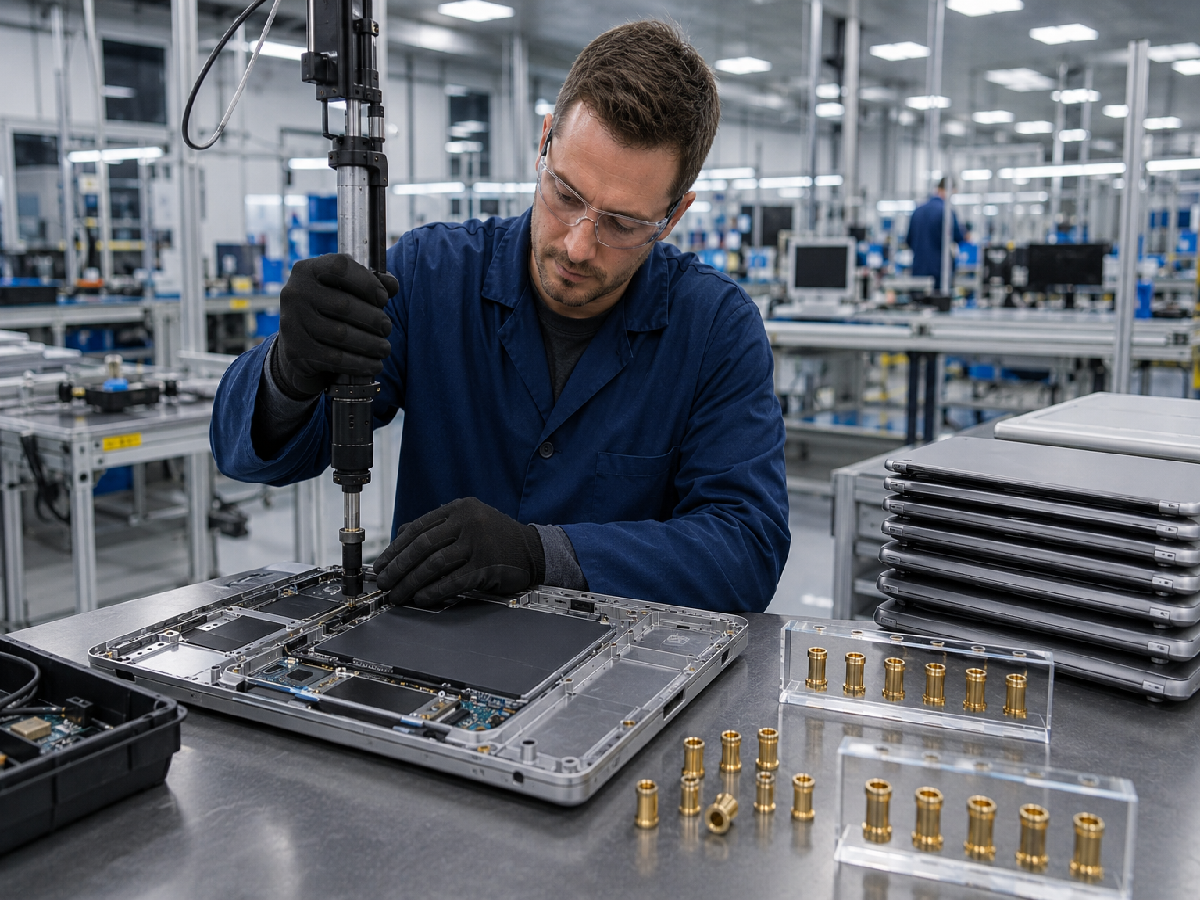
Heat-set inserts are installed into thermoplastic components using controlled heat.
As the surrounding polymer softens, the plastic flows around the external knurl or retention geometry of the insert.
Heat-set inserts are commonly used with materials such as:
ABS
Polycarbonate
Nylon
PBT
Other thermoplastics
Typical applications include:
Electronic housings
Plastic enclosures
Industrial controls
Automotive electronic components
Consumer electronics
Electrical assemblies
The insert geometry should be matched to the specific resin and installation process.
Ultrasonic insertion uses high-frequency vibration to generate localized heat at the insert-to-plastic interface.
The softened plastic flows around the external retention features of the insert, creating a mechanical connection after cooling.
Ultrasonic threaded inserts may be suitable for high-volume automated production where consistent installation is required.
Typical applications include:
Automotive electronics
Electronic housings
Electrical products
Consumer products
Industrial equipment
Press-fit threaded inserts are mechanically installed into a prepared hole.
They can be suitable for certain ductile plastics and thermoset materials where the component design provides sufficient interference and surrounding material support.
The hole diameter, insert outside diameter, plastic hardness, boss wall thickness, and required retention force should all be evaluated together.
Molded-in inserts are positioned inside the injection mold before the plastic is injected.
This approach integrates the insert directly into the molded component and can be considered for high-volume production and applications requiring precise insert positioning.
Molded-in threaded inserts may be used where the assembly requires:
High retention
Repeatable positioning
High production volumes
Heavy-duty threaded connections
Integration into complex molded components
Self-tapping or screw-in inserts create their external engagement during installation.
They may be used in selected soft materials, plastics, foamed materials, repair applications, or products requiring field installation.
The correct insert type depends on the base material and the required mechanical performance.
A complete threaded insert drawing should identify all dimensions that influence installation and final assembly performance.
Important dimensions may include:
Internal thread diameter
Thread pitch
Thread tolerance
Outside diameter
Overall length
Thread depth
Blind-hole depth
Chamfer
Lead-in geometry
Flange diameter
Flange thickness
External knurl geometry
Retention features
For flanged threaded inserts, the flange can provide additional bearing area and may also assist with positioning.
However, insert dimensions cannot be evaluated independently from the plastic component.
The mating component drawing should ideally provide:
Hole diameter
Hole depth
Boss outside diameter
Boss wall thickness
Draft angle
Distance to surrounding features
Component tolerances
This information allows the threaded insert manufacturer to determine whether the insert geometry is suitable for the actual plastic boss.
One of the most important requirements when sourcing plastic threaded inserts is the exact polymer used in the mating component.
Different plastics have different mechanical properties, melting temperatures, shrinkage characteristics, hardness, and behavior during insert installation.
Common plastic materials include:
ABS
Polycarbonate (PC)
Polypropylene (PP)
Polystyrene (PS)
PA6
PA66
PBT
PBT/PC
PEEK
PPS
The supplier should also know whether the plastic contains glass-fiber reinforcement.
For example:
15% glass-filled
30% glass-filled
50% glass-filled
Glass reinforcement can influence resin flow, boss strength, insert anchoring, and installation behavior.
Therefore, an RFQ stating:
“M4 brass threaded insert for plastic”
is not a complete engineering specification.
A stronger RFQ would identify:
M4 × 0.7 + Brass + Heat Set + 30% GF PA66 + Defined OD/Length + Required Pull-Out Force + Annual Volume
This gives the supplier a much clearer engineering target.
OEM procurement should evaluate the performance of the complete insert-and-plastic assembly rather than considering the metal insert in isolation.
Depending on the application, the RFQ may need to specify several mechanical requirements.
Pull-out force is the axial load required to remove the insert from the plastic component.
Typical units include:
N
lbf
The required value depends on the plastic material, insert geometry, boss dimensions, and application load.
Torque-out resistance is the rotational force required to cause the insert to rotate inside the plastic.
Typical units include:
Nm
in-lb
This is particularly important when the mating screw is tightened to a specified installation torque.
If the threaded connection is responsible for clamping components together, the required screw torque should be included in the engineering specification.
The insert must be capable of supporting the required assembly load without rotating, pulling out, cracking the plastic boss, or damaging the internal thread.
Some products are assembled once during manufacturing.
Others may be opened and serviced repeatedly.
For serviceable products, the expected number of assembly and disassembly cycles should be specified.
A threaded insert designed for a single assembly may require a different solution from an insert used in equipment that is routinely serviced.
Quantity has a direct influence on manufacturing economics and should be included in the RFQ.
Procurement teams should provide:
Sample quantity
Initial production quantity
Annual estimated usage
Forecast volume
Target production schedule
Required sample date
Required mass-production date
For high-volume OEM programs, a qualified threaded insert manufacturer can evaluate suitable production processes based on geometry, material, tolerances, and volume.
Possible manufacturing approaches may include precision CNC machining, automatic turning, cold forming, stamping, or other suitable processes.
The objective should not simply be the lowest unit price.
The better objective is:
Performance + Manufacturability + Quality + Production Stability + Total Cost
A product name or catalog description cannot communicate the complete requirements of an OEM threaded insert.
For custom threaded inserts, the RFQ package should ideally contain both the insert drawing and the mating component information.
A 2D PDF drawing should define:
Thread specification
Critical dimensions
Dimensional tolerances
Material
Surface finish
External knurl
Flange dimensions
Inspection requirements
Applicable standards
A STEP or IGES model can help the supplier understand the complete geometry and relationship between the insert and surrounding assembly.
3D data is particularly useful for custom OEM threaded inserts with complex geometry.
For threaded inserts for plastic, the mating component drawing can be just as important as the insert drawing.
The supplier should understand:
Boss diameter
Wall thickness
Hole diameter
Hole depth
Draft angle
Nearby components
Plastic resin
Glass-fiber reinforcement
A short application description can significantly improve engineering communication.
For example:
“The insert will be installed into a 30% glass-filled PA66 automotive electronics housing. The assembly is exposed to vibration and thermal cycling and will be serviced multiple times during its operating life.”
This provides much more useful information than simply specifying:
“M5 brass insert.”
The best threaded insert solution depends on the application environment, component material, assembly method, and mechanical requirements.
Telecommunications equipment and electronic enclosures often combine plastic housings, metal panels, circuit boards, connectors, and other internal components that require reliable threaded connections.
Threaded inserts can provide durable metal threads inside plastic components while supporting repeated assembly and maintenance.
Potential applications include:
Telecommunications equipment
Fiber optic enclosures
Network equipment
Outdoor electronic cabinets
Communication equipment housings
Cable management systems
Electronic control enclosures
Brass threaded inserts may be considered where electrical conductivity and machinability are important, while stainless steel threaded inserts can be suitable for applications requiring enhanced corrosion resistance.
For outdoor equipment, the insert material and surface finish should be selected according to humidity, temperature variation, UV exposure, salt spray, and other environmental conditions.
The insert design should also be matched to the plastic resin, boss geometry, installation method, and required mechanical retention.
Industrial machinery and automation equipment can expose threaded connections to vibration, repeated assembly, temperature changes, and mechanical loads.
Potential applications include:
Control cabinets
Sensor housings
Robotic covers
Automation equipment
Machine guards
Industrial control systems
For these applications, insert geometry should provide sufficient retention in the selected polymer while maintaining reliable internal threads.
Medical and diagnostic equipment may require careful consideration of corrosion resistance, material compatibility, surface condition, traceability, and cleaning or disinfection environments.
Potential applications include:
Diagnostic equipment
Laboratory instruments
Medical device housings
Monitoring equipment
Instrument panels
Laboratory equipment
Stainless steel threaded inserts such as SS304 or SS316 may be considered where enhanced corrosion resistance is required.
OEM procurement specifications may also need to address material certificates, batch traceability, surface treatment, dimensional inspection, and customer-specific quality documentation.
Automotive and EV electronics can expose fasteners and threaded inserts to vibration, temperature variation, thermal cycling, and demanding automated assembly processes.
Potential applications include:
Battery management systems
Electronic control units
Sensor housings
Interior components
Automotive electronic enclosures
EV electronic assemblies
Brass, stainless steel, or lightweight aluminum threaded inserts may be selected depending on the mechanical, electrical, weight, and environmental requirements.
For automotive OEM programs, procurement teams may also require specific quality documentation, production approval, traceability, and inspection requirements.
Compact electronic products often use plastic housings where conventional metal threads are not practical.
Threaded inserts can provide a stronger and more durable threaded connection than relying directly on molded plastic threads.
Potential applications include:
Consumer electronics
Power supplies
Electrical enclosures
Control devices
Smart devices
Electronic instruments
Heat-set and ultrasonic inserts are frequently considered for thermoplastic housings where automated or repeatable installation is required.
Not every project requires a completely custom component.
Standard threaded inserts can be an economical choice when the application matches an established size, geometry, material, and installation method.
Standard solutions can help reduce:
Tooling requirements
Development time
Engineering costs
Qualification time
Initial production lead time
However, custom threaded inserts may be justified when the application requires:
Non-standard thread sizes
Special outside diameters
Custom lengths
Special flange dimensions
Custom external knurling
Blind-end configurations
Special materials
Tight dimensional tolerances
Special installation requirements
Customer-specific performance requirements
A capable OEM threaded insert supplier should be able to review the engineering requirements and determine whether a standard insert can meet the application or whether a custom design is more appropriate.
Lowest unit price should not be the only criterion when selecting a threaded insert manufacturer.
OEM procurement teams should evaluate the supplier based on several factors.
Can the supplier review technical drawings and understand the relationship between the insert and plastic component?
Can the supplier manufacture the required material, geometry, thread, tolerances, and production volume?
Does the supplier have appropriate inspection processes for dimensions, threads, surface treatment, and mechanical performance?
Can the supplier maintain consistent insert geometry and performance across large production batches?
Can the supplier provide the required material, inspection, compliance, and production documentation?
Can engineering, procurement, and quality teams communicate directly with the supplier when technical questions arise?
For OEM programs, these factors can have a greater impact on total cost than a small difference in quoted unit price.
Before sending an RFQ to a threaded insert supplier, procurement and engineering teams should review the following checklist.
| Requirement | Information to Provide |
|---|---|
| Internal Thread | M3, M4, M5, 1/4-20, etc. |
| Thread Pitch | Standard or fine pitch |
| Thread Standard | Metric, UNC, UNF, etc. |
| Thread Tolerance | Required tolerance class |
| Insert Type | Heat set, ultrasonic, press fit, molded-in, screw-in |
| Material | Brass, SS304, SS316, aluminum, etc. |
| Surface Finish | Plain, nickel, tin, passivated, etc. |
| Outside Diameter | Exact OD |
| Overall Length | Exact length |
| Thread Depth | Through or blind |
| Flange | Required or not required |
| External Geometry | Knurl, ribs, thread-forming features, etc. |
| Plastic Resin | ABS, PC, PA66, PBT, PEEK, PPS, etc. |
| Glass Fill | 15%, 30%, 50%, etc. |
| Boss Diameter | Plastic boss OD |
| Boss Wall Thickness | Available surrounding material |
| Hole Diameter | Recommended or existing hole |
| Hole Depth | Required installation depth |
| Pull-Out Requirement | N / lbf |
| Torque-Out Requirement | Nm / in-lb |
| Assembly Torque | Required screw torque |
| Assembly Cycles | Expected service cycles |
| Annual Volume | Estimated annual usage |
| Initial Quantity | First production order |
| Drawing | 2D PDF |
| CAD | STEP / IGES |
| Quality Requirements | Inspection and documentation |
| Production Schedule | Sample and mass-production dates |
A complete RFQ package can significantly reduce quotation and engineering clarification time.
OEM buyers should ideally provide the following information.
Send a 2D engineering drawing showing dimensions, tolerances, material, finish, and thread requirements.
Provide a STEP or IGES file where available.
Include the plastic boss dimensions, hole size, wall thickness, and surrounding features.
Specify the exact resin and glass-fiber reinforcement percentage where applicable.
State whether the insert will be installed by heat staking, ultrasonic insertion, press fitting, molding, or another process.
Include temperature, vibration, chemical exposure, moisture, corrosion conditions, and other relevant operating conditions.
Provide pull-out force, torque-out resistance, assembly torque, and expected service cycles where applicable.
Include sample quantity, initial order quantity, annual estimated usage, and target production schedule.
The more complete the RFQ, the more accurately a supplier can evaluate the application and prepare a competitive quotation.
Juxin Fasteners works with OEM customers, procurement teams, sourcing managers, supply chain professionals, structural engineers, and design engineers seeking standard and custom threaded insert solutions.
Our approach is based on reviewing the complete application rather than treating a threaded insert as an isolated commodity component.
The engineering review can consider:
Thread specification
Insert material
Surface treatment
Outside diameter
Length
External knurl geometry
Installation method
Plastic resin
Glass-fiber reinforcement
Boss dimensions
Mechanical requirements
Production volume
Inspection requirements
This helps connect the requirements of:
Design Engineering → Product Development → Procurement → Manufacturing → Quality Control
For OEM projects, Juxin Fasteners can support quality and documentation requirements according to customer specifications, including ISO 9001-based quality management, inspection documentation,
and RoHS/REACH-related compliance requirements where applicable.
For automotive and other OEM programs requiring production approval documentation, PPAP and customer-specific quality requirements can be discussed according to the project specification.
If you are sourcing threaded inserts, plastic threaded inserts, heat-set inserts, ultrasonic inserts, press-fit threaded inserts, molded-in inserts, brass threaded inserts, stainless steel threaded inserts,
or custom OEM threaded inserts, providing your drawing and application information is the fastest way to begin a technical evaluation.
Please send your RFQ package, technical drawing, CAD file, plastic material information, annual volume, and performance requirements.
Email: info@juxinfasteners.com
Website: www.juxinfasteners.com
Juxin Fasteners can review your requirements and help determine a suitable threaded insert solution for your application.
Product Packaging
Packaging Standard
At Juxin Fasteners, we apply standardized export packaging to ensure product protection, traceability, and compliance with international logistics requirements.
1. Standard Export Packaging
Unless otherwise specified, all products will be packed according to our factory standard export packaging, which includes:
Moisture-resistant inner protection
Poly bag or small box packing as required
Reinforced export cartons
Clear labeling with part number, specification, batch number, and quantity
Palletizing for sea or air shipment when necessary
Our standard packaging is designed to ensure safe transportation, efficient warehousing, and long-distance international shipping.
2. Customized Packaging Options
We also provide customized packaging solutions according to customer requirements, including but not limited to:
Private labeling
Customized barcodes
Specific carton dimensions
Retail packaging
Special pallet configuration
Customer-specific marking and identification
So that you know, customized packaging may involve additional costs and extended lead time depending on the complexity of the requirements.
3. Compliance & Quality Assurance
All packaging processes are controlled under our ISO 9001 quality management system to ensure consistency, traceability, and product integrity throughout the supply chain.
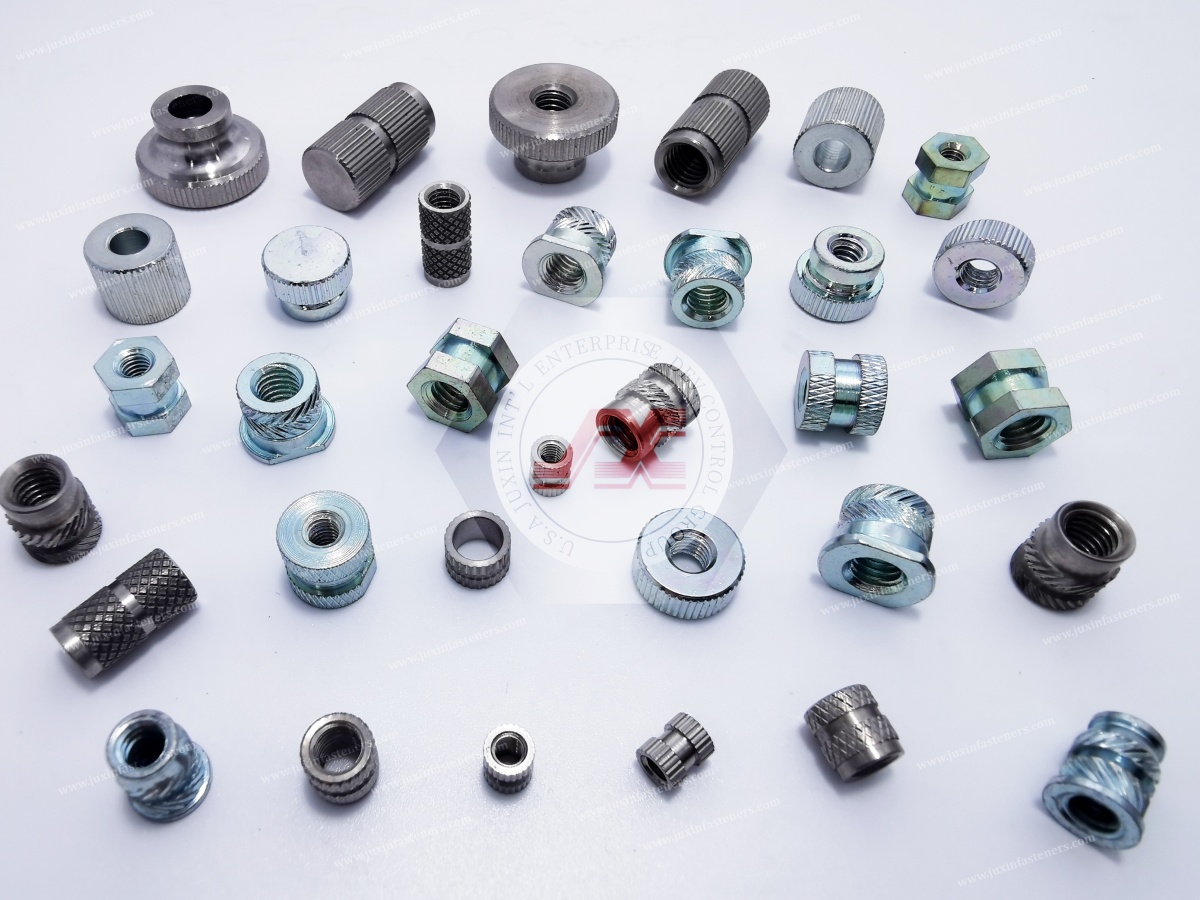
Product Pictures
Contact Us
Tel.:
+86 020 8621 0320
+86 020 3121 6067
E-mail:
Technical Support:
Navigation
SEND INQUIREY