Call Us
+86 136 6007 9809
Call Us
+86 136 6007 9809

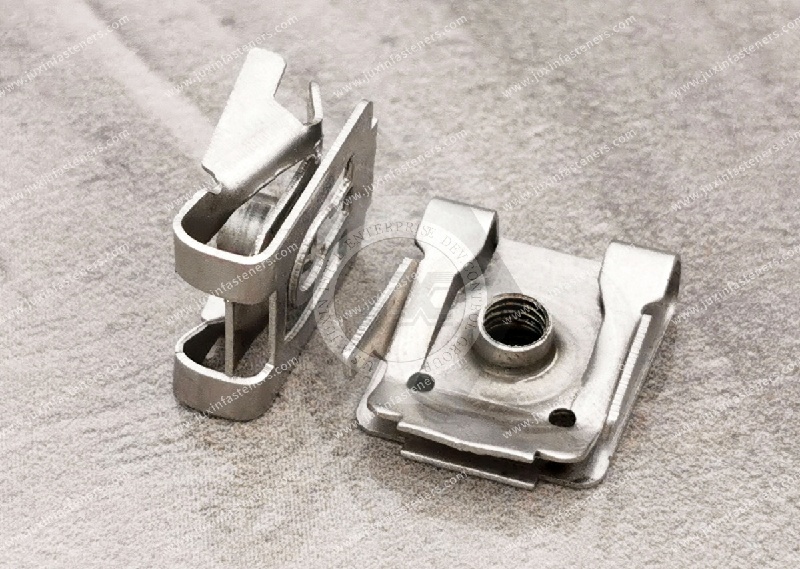
During the initial design phase of sheet-metal enclosures, industrial machinery chassis, electrical cabinets, automotive brackets and other fabricated assemblies,
engineering teams frequently need immediate access to multiple edge-mounted spring fastener configurations.
Product Specification
During the initial design phase of sheet-metal enclosures, industrial machinery chassis, electrical cabinets, automotive brackets and other fabricated assemblies,
engineering teams frequently need immediate access to multiple edge-mounted spring fastener configurations.
Waiting for a separate sample order every time a panel thickness, hole position, clip geometry or screw requirement changes can slow prototype evaluation.
Maintenance teams face a related problem: equipment in the same plant may use visually similar clip-on nuts that are not dimensionally interchangeable.
For these situations, clip-on nut assortments can provide design laboratories, prototyping shops, manufacturing engineering teams and maintenance,
repair and operations (MRO) departments with an organized inventory of U-nuts, J-nuts, spring nuts and related clip-on fasteners.
However, an industrial assortment should not be treated simply as a box containing several thread sizes.
For OEM and professional MRO use, the assortment architecture should reflect the actual fastening variables encountered in the equipment: clip geometry,
panel thickness, hole setback, throat depth, screw or thread interface, material, surface treatment and part identification.
That distinction separates an engineering assortment from a generic retail hardware kit.
JUXIN FASTENERS supplies clip-on nuts and related spring fasteners for OEM and industrial applications. For customized assortment requirements,
prototype programs and production replenishment projects, the contents should be defined from actual drawings, samples, existing part numbers or assembly requirements.
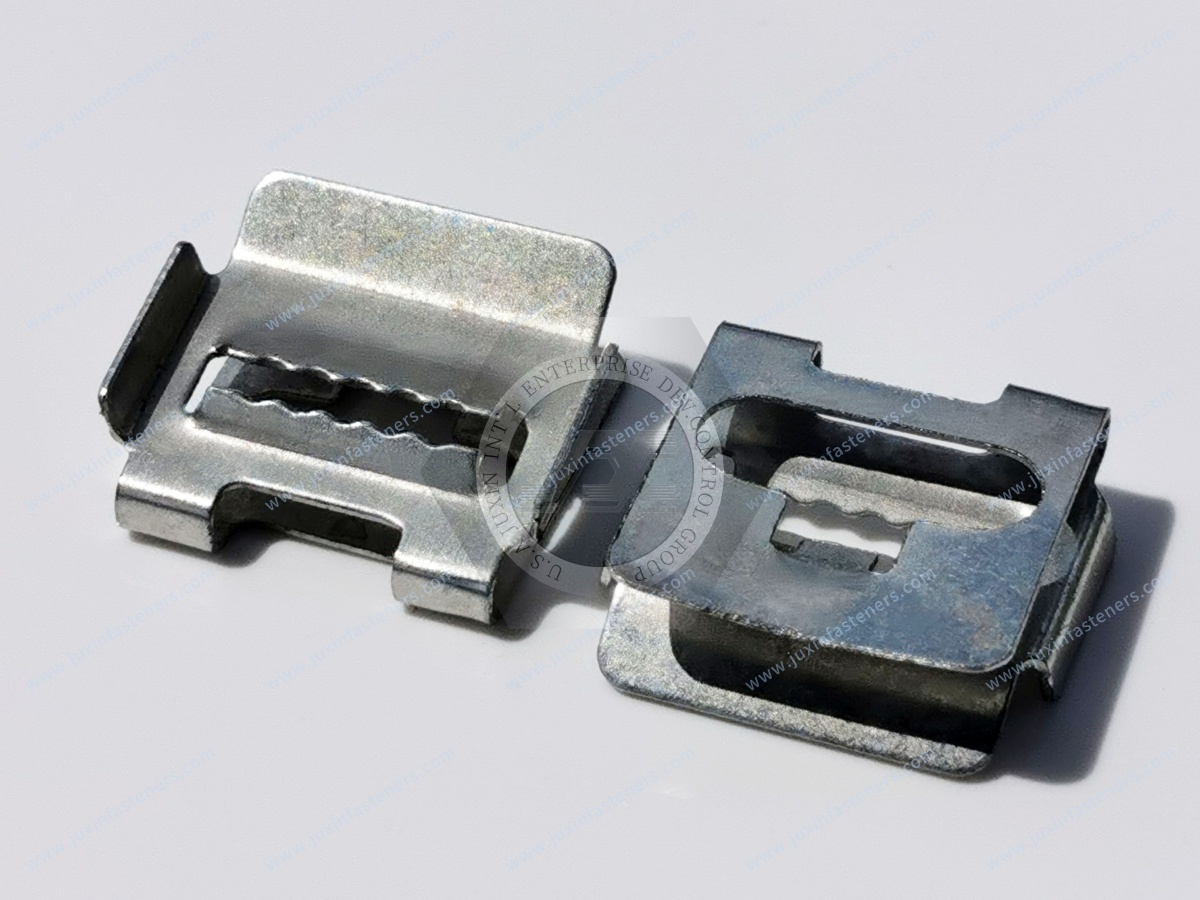
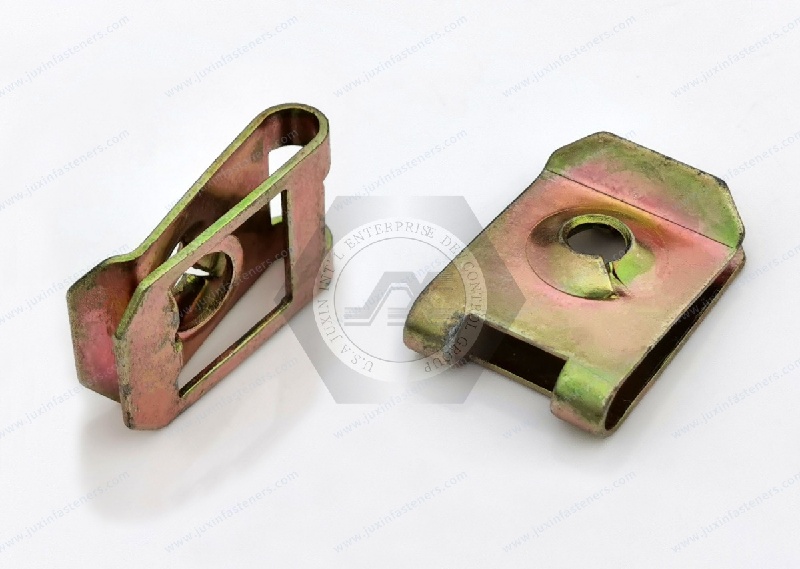
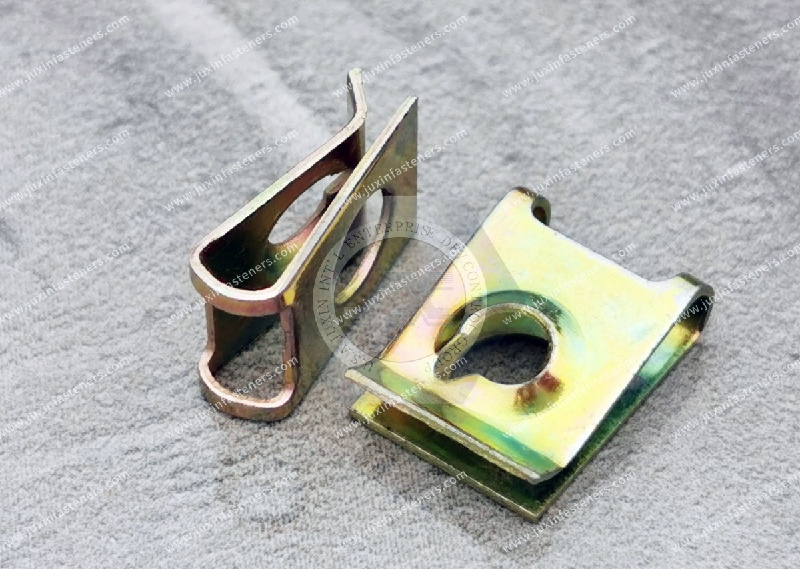
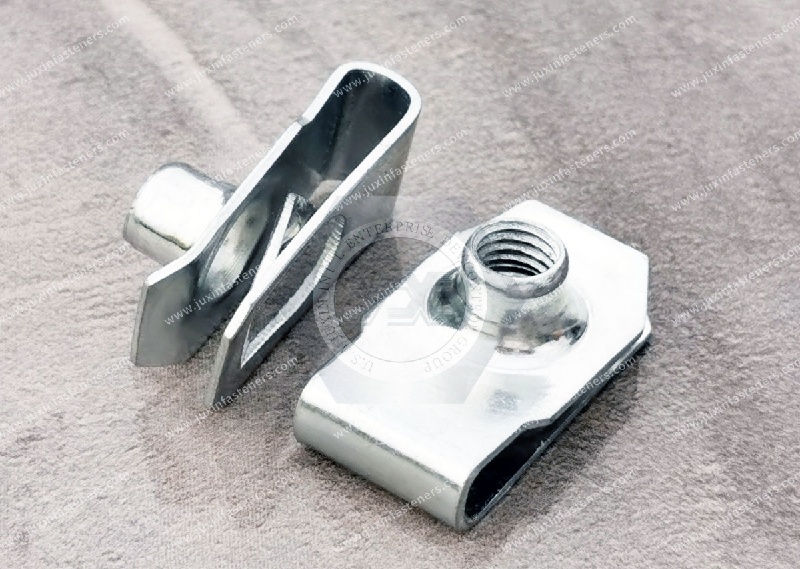
A clip-on nut assortment is an organized collection of edge-mounted spring fasteners selected to cover a defined group of engineering or maintenance requirements.
Depending on the project, the assortment may include different:
U-nut geometries;
J-nut geometries;
clip-on nut configurations;
spring nut types;
thread or screw interfaces;
panel thickness requirements;
throat or reach dimensions;
materials;
finishes;
application-specific part numbers.
The important point is that assorted does not mean random.
A useful industrial assortment should be designed around the equipment, prototype program or maintenance population it is intended to support.
During prototype development, engineers frequently modify sheet-metal components before the design reaches production release.
A bracket may become thicker.
A mounting hole may move farther from the edge.
A folded flange may replace a flat panel edge.
A screw specification may change.
A control enclosure may require additional internal clearance.
Each of these changes can affect the required clip-on nut.
An engineering assortment allows the team to compare candidate fasteners without assuming that one geometry will fit every iteration.
Design engineers can use organized spring nut assortments when evaluating alternative enclosure and bracket geometries.
Instead of evaluating only the thread designation, engineers can compare:
panel fit;
hole alignment;
throat depth;
clip reach;
installation direction;
backside clearance;
screw engagement;
surrounding component interference.
This can help identify which geometric variables should be frozen before the final production fastener is specified.
Sheet-metal fabricators building prototype chassis, cabinets, brackets and equipment covers often work with several panel configurations during a single development program.
An assortment can provide candidate clip-on fasteners for fit evaluation before the production drawing is finalized.
This does not mean that any fastener that physically fits should automatically be approved for production.
Prototype selection should be followed by confirmation of the final:
part geometry;
panel specification;
mating screw;
material;
finish;
assembly process;
service environment.
Maintenance departments may service machinery, HVAC equipment, electrical enclosures, automation equipment and other sheet-metal assemblies from different generations or suppliers.
An organized MRO clip nut kit can help maintenance personnel identify potential replacement configurations when an original clip is missing or damaged.
However, replacement selection should be controlled carefully.
Two clips that accept the same screw may have different panel gripping conditions, throat depths or installation geometries.
For maintenance applications, same thread does not necessarily mean same replacement part.
Engineering validation of sheet-metal assemblies can involve multiple combinations of panel thickness, hole setback, screw specification and clip geometry.
A well-designed assortment can support several operational roles across industrial departments.
For design teams, it provides physical components for checking whether the proposed fastening concept actually fits the available envelope.
For manufacturing engineers, it provides alternative configurations for evaluating installation sequence and assembly access.
For maintenance teams, it provides controlled replacement options for equipment using several related spring fastener configurations.
For procurement teams, it can also reveal which clip-on nut variants are repeatedly consumed and therefore deserve dedicated production part numbers rather than remaining permanently inside a mixed assortment.
This creates a useful transition:
Assortment → Evaluation → Approved Part Number → Production Supply
The assortment is therefore not the end of the sourcing process. In an OEM environment, it can be the beginning of part standardization.
Commercial assortment boxes are often organized primarily by nominal screw size.
That may be convenient for general hardware storage, but it is incomplete for professional sheet-metal fastening.
An industrial clip-on nut assortment should consider several dimensions simultaneously.
U-nuts, J-nuts and other clip-on configurations should not be mixed under a single generic label if their installation geometries differ.
The compartment or part identification system should make it clear which geometry is being selected.
For a detailed geometry comparison, engineers can refer to the JUXIN FASTENERS guide on U-Nuts vs J-Nuts: Geometric Selection for Edge-Mounted Sheet Metal at /solutions/u-nuts-vs-j-nuts-geometry.
Panel thickness is one of the most important selection variables for an edge-mounted spring fastener.
A clip intended for one panel condition should not automatically be assumed suitable for another.
An assortment intended for prototype or maintenance work should therefore identify the panel condition associated with each part rather than leaving technicians to judge compatibility visually.
The distance from the panel edge to the fastening location determines the reach required from the clip.
Two clip-on nuts can use the same mating screw but position their fastening features at different distances from the panel edge.
For this reason, assortment labeling should not stop at thread size.
Where relevant, the identification system should distinguish throat or reach geometry.
The mating screw must be compatible with the fastener.
Depending on the clip-on nut design, the interface may involve a formed threaded feature, a captive nut feature or a design intended for a particular screw type.
This distinction is especially important when clip-on nuts for machine screws and clip-on nuts for tapping screws are stored in the same facility.
They should not be treated as automatically interchangeable.
JUXIN FASTENERS also provides dedicated engineering content for Strong-Grip Clip-On Nuts for Tapping Screws at /solutions/strong-grip-clip-on-nuts-tapping-screws.
Commercial-grade assortment kits intended for OEM engineering and industrial maintenance should be organized for identification and control rather than merely maximizing the number of pieces in a box.
Several design principles are useful.
Separate compartments can reduce accidental mixing of visually similar fasteners.
The packaging format should suit the actual operating environment, whether the assortment is used at:
an engineering bench;
a prototype workshop;
a maintenance crib;
an assembly station;
a field service location.
The specific case, tray, compartment or refill packaging should be defined according to the customer's requirement rather than assumed as a standard JUXIN FASTENERS configuration.
Parts can be grouped by relevant characteristics such as:
product family;
geometry;
thread system;
screw interface;
panel fit;
reach;
material;
finish;
application.
Grouping only by thread diameter can create substitution risk because different clips may share a mating screw while fitting different panel conditions.
For professional OEM use, each assortment position should ideally correspond to an identifiable part or specification.
Useful identification can include:
customer part number;
supplier part number;
thread designation;
panel requirement;
geometry reference;
material;
finish;
drawing revision where applicable.
This helps connect physical samples with engineering documentation.
Assortment packaging is not merely a cosmetic purchasing decision.
When many similar spring clips are stored together, mixing can create a quality-control problem.
Imagine two clip-on nuts that:
accept the same screw;
have similar overall appearance;
use similar finishes;
differ only in panel fit or throat depth.
If these components are mixed, an operator may not recognize the difference until the part reaches assembly.
The result can be:
poor hole alignment;
loose pre-assembly positioning;
difficult screw starting;
clip interference;
incorrect installation;
unnecessary rework.
For this reason, compartment architecture should follow part differentiation risk, not simply equal compartment sizes.
Fasteners that are easy to confuse but functionally different deserve particularly clear separation and labeling.
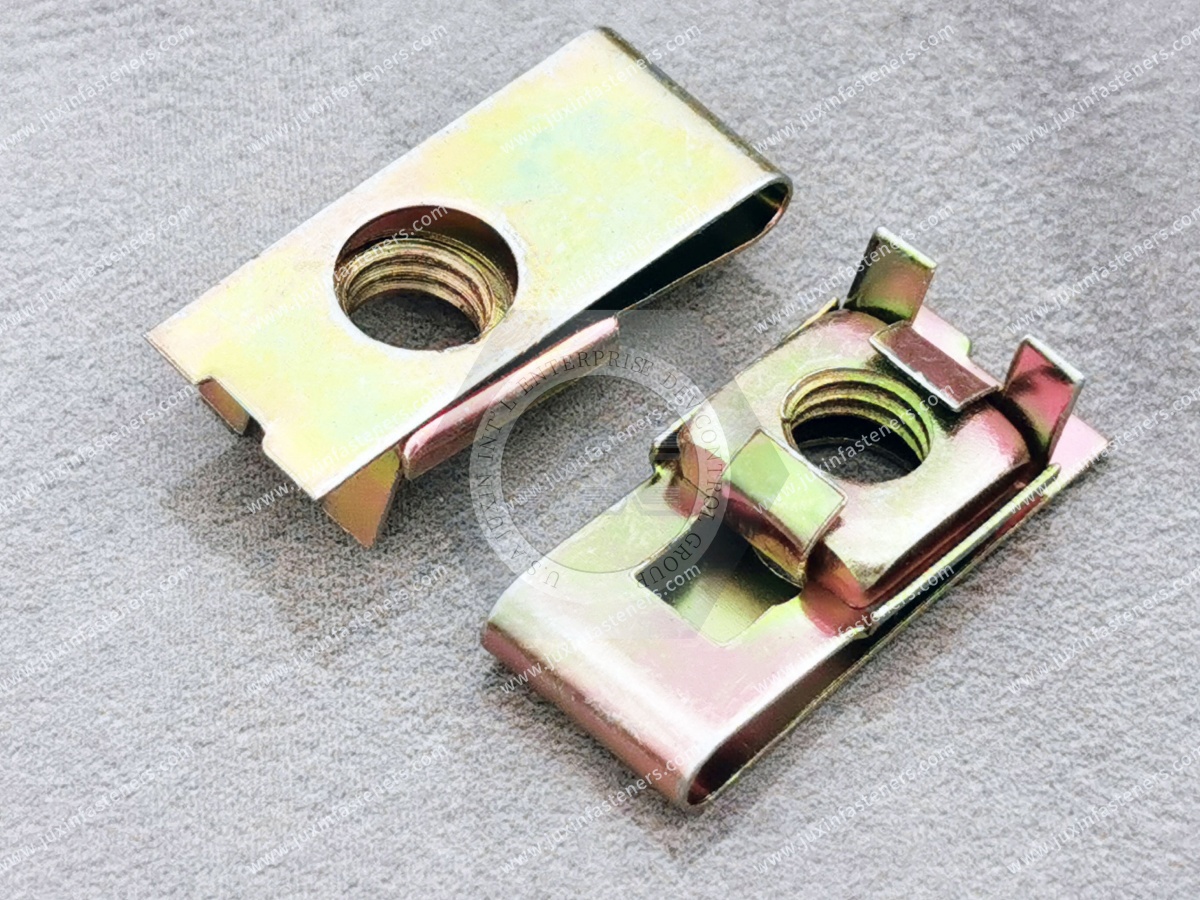
A common risk in multi-part fastener assortments is the assumption that all visually similar clips have the same material and surface treatment.
That should not be assumed.
Carbon-steel and spring-steel materials may be used for clip-on fastener applications depending on product design and specification.
However, material designation alone does not establish:
clip retention;
joint strength;
fatigue life;
vibration resistance;
hardness;
heat-treatment condition;
corrosion performance.
Those characteristics depend on the specific product, manufacturing condition and complete assembly.
If a customer requires a particular material grade, it should be defined in the RFQ or drawing.
Where corrosion exposure makes stainless steel relevant, the required stainless grade should be specified for the particular product and project.
JUXIN FASTENERS product information includes stainless clip-on nut options, including SUS304 and SUS316 in relevant product families, but buyers should confirm grade and dimensional availability for the required part rather than assuming every geometry is available in every stainless grade.
Industrial clip-on nuts may use zinc-based coatings, phosphate-based finishes or other project-specific surface treatments.
The correct finish should be selected according to:
storage conditions;
assembly environment;
service exposure;
corrosion requirements;
mating materials;
customer specification.
A generic coating description should not be treated as proof of a specific corrosion life or salt-spray performance.
Where corrosion testing is required, the test method and acceptance criteria should be stated explicitly.
Global OEMs may operate equipment platforms using both metric and inch fasteners.
This creates a particular risk in shared engineering and maintenance inventories.
Metric and inch clip-on nuts should be clearly identified and separated where confusion is possible.
Procurement should specify the actual required:
thread system;
thread designation;
pitch where applicable;
mating screw;
clip geometry;
panel fit;
reach;
material;
finish.
JUXIN FASTENERS should confirm individual size availability against the requested geometry.
A supplier should not assume that every clip-on nut family is available across every metric and inch thread combination.
One useful procurement insight is that a professional assortment does not necessarily need equal quantities of every fastener.
A prototype laboratory may initially require broad variety with relatively small quantities per configuration.
An MRO facility may discover that a few specific clip nuts account for most replacement demand.
An assembly-support kit may require quantities based directly on workstation consumption.
This means assortment design can evolve from:
broad exploratory coverage
to
usage-based replenishment.
Procurement teams can review consumption history and adjust quantity ratios accordingly.
This reduces the risk of repeatedly purchasing low-use parts while frequently running out of the most important configurations.
A prototype assortment provides flexibility.
Production sourcing requires control.
This distinction should remain clear.
During prototype work, an engineer may test several candidate fasteners.
Once the design is released, the selected production component should normally be controlled by a defined:
drawing;
part number;
revision;
material;
finish;
dimensional requirement;
inspection requirement.
The production line should not depend on an operator choosing a “similar-looking” clip from an assortment.
A mature sourcing path therefore looks like:
Prototype assortment → Engineering evaluation → Selected geometry → Drawing confirmation → Sample validation → Approved production part → Volume supply
This creates a stronger bridge between engineering experimentation and procurement standardization.
Clip-on nut assortments can support multiple manufacturing environments, but the kit architecture should reflect the actual equipment population.
Sheet-metal fabrication shops may work with changing customer drawings, panel gauges, folded edges and enclosure geometries.
An engineering assortment can support:
prototype chassis;
fabricated housings;
brackets;
service covers;
folded panels;
flanged structures.
For fabricators, the assortment is most useful when it provides reference components for geometry evaluation rather than being treated as a universal substitute inventory.
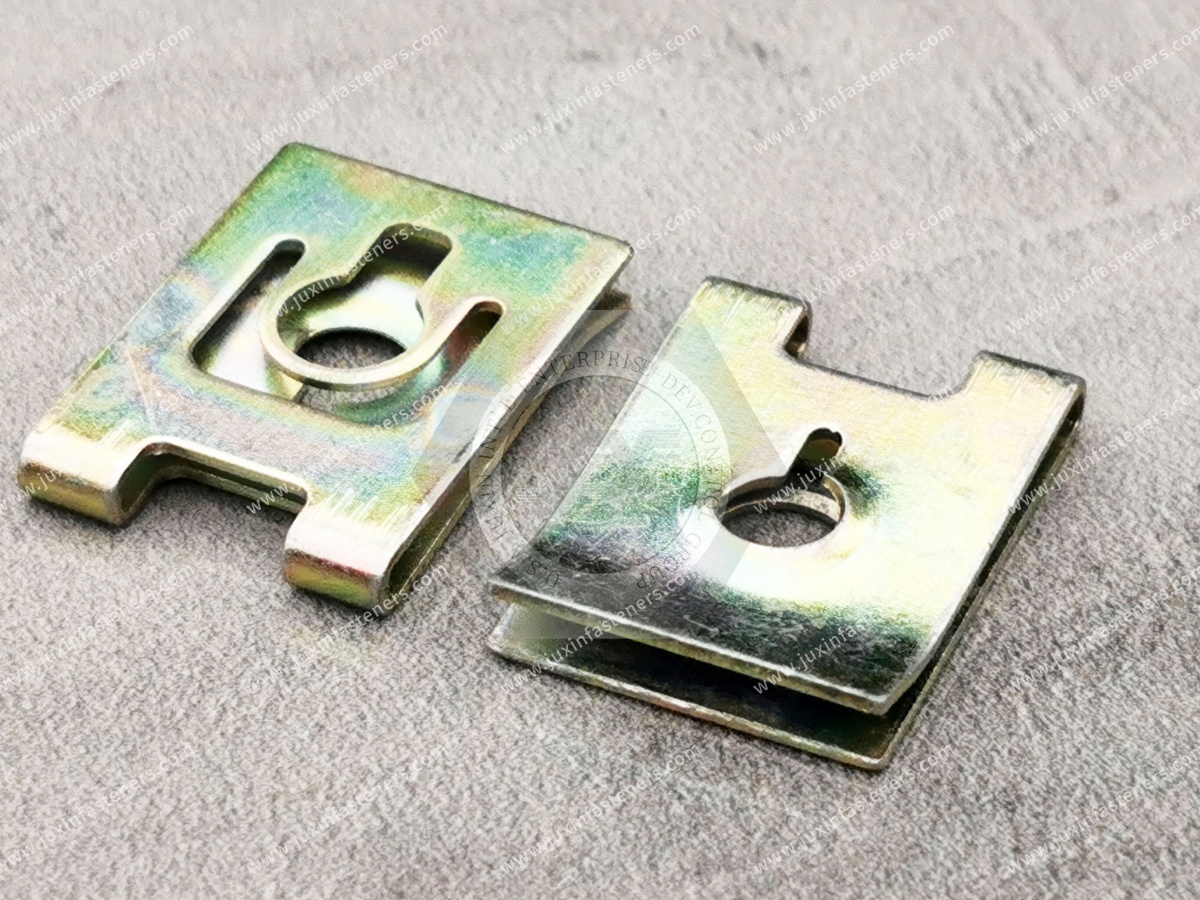
Electrical enclosure manufacturers frequently work with folded panel edges, cabinet doors, internal mounting brackets, service covers and access panels.
An assortment used in this environment can help engineers evaluate:
edge clearance;
flange geometry;
hole setback;
installation access;
panel thickness;
screw compatibility.
Where painted sheet metal is involved, coating condition should also be considered when evaluating fit.
Clip-on nuts should not automatically be treated as grounding or bonding devices unless the complete electrical joint has been designed and validated for that purpose.
Machinery manufacturers and maintenance teams may encounter clip-on nuts on:
equipment covers;
access panels;
machine guards;
control housings;
maintenance doors;
removable brackets.
An MRO assortment can help identify candidate replacement fasteners when equipment contains multiple panel configurations.
For safety-related guards or other demanding joints, the final replacement must still satisfy the equipment manufacturer's engineering requirements.
A generic assortment should not be treated as evidence of structural or safety-critical suitability.
HVAC equipment can include many removable sheet-metal panels and folded housing structures.
Potential assortment applications include maintenance support for:
air-handling equipment;
blower housings;
control covers;
service panels;
equipment enclosures.
The selection should focus on geometry, panel thickness, screw interface, service access and corrosion environment.
The clip-on nut itself should not be assumed to provide air sealing, waterproofing or vibration isolation.
Automotive prototype and selected service environments may require multiple spring fastener geometries for suitable non-structural applications.
Examples can include:
service covers;
trim-supporting brackets;
interior mounting structures;
equipment covers;
selected sheet-metal attachment points.
An assortment can be useful during prototype fit evaluation or controlled service support.
However, an automotive application does not automatically establish vibration, fatigue, crash, structural or automotive qualification for the fastener.
The complete assembly requirements must be defined separately.
Robotics and automation equipment often combines compact sheet-metal housings with limited internal clearance.
Prototype assortments can help design engineers compare clip geometries for:
controller cabinets;
sensor housings;
equipment covers;
compact enclosures;
serviceable panels.
Here, physical envelope and installation access can be more important than simply choosing the smallest-looking clip.
When industrial procurement managers source clip-on nut assortments for engineering, maintenance or multi-plant operations,
supplier evaluation should focus on whether the individual fasteners can be identified and transitioned into controlled production sourcing.
A useful supplier should be able to work from relevant customer information such as:
drawings;
samples;
part references;
thread requirements;
panel conditions;
material specifications;
finish requirements;
packaging requirements;
demand quantities.
The critical question is not whether a supplier can fill a box with many clips.
It is whether the selected components can be traced back to defined product requirements when the customer decides to move from evaluation to repeat purchasing.
Assortments are useful for exploration, but uncontrolled assortments can also encourage part proliferation.
If engineers repeatedly select slightly different fasteners for similar assemblies, the OEM may eventually accumulate many low-volume part numbers.
Procurement and engineering can periodically review assortment usage to identify:
duplicate or near-duplicate geometries;
rarely used parts;
frequently consumed parts;
parts that could potentially be standardized;
configurations requiring separate control because panel conditions differ.
Any consolidation should be engineering-approved.
A common mistake is consolidating two fasteners simply because they share the same thread.
Panel fit, reach and geometry must also be checked.
A mixed kit is not always the most efficient solution.
Dedicated production packaging may be more appropriate when:
one part number dominates consumption;
the assembly is already design-released;
automated or repetitive production requires controlled part presentation;
traceability by part number is important;
mixed components create substitution risk;
annual demand justifies dedicated replenishment.
In these cases, the assortment may remain useful for engineering or maintenance while production moves to dedicated part-number supply.
This distinction helps prevent a prototype sourcing tool from becoming an inefficient production purchasing method.
A practical assortment-development process begins with the customer's actual equipment and usage requirements.
Determine whether the assortment is intended for:
R&D;
prototype fabrication;
maintenance;
field service;
assembly support;
supplier evaluation.
Determine which clip-on fastener geometries are actually used or need evaluation.
Record:
panel material;
panel thickness;
folded or flat edge;
hole setback;
flange geometry;
installation access.
Specify the mating screws or thread requirements.
Separate components where environmental or corrosion requirements differ.
Base quantities on expected prototype demand, maintenance history or workstation consumption rather than automatically using equal quantities.
Once consumption patterns become clear, high-use parts can transition to dedicated refill or production supply.
When requesting a customized clip-on nut assortment from JUXIN FASTENERS, engineering and procurement teams should provide enough information to define both the individual fasteners and the purpose of the kit.
A useful RFQ can include:
2D drawings where available;
3D models where relevant;
reference photos;
existing samples;
customer part numbers;
required clip-on nut families;
U-nut or J-nut geometry where known;
metric or inch requirements;
thread sizes and pitches where applicable;
mating screw specifications;
panel materials;
panel thicknesses and tolerances;
hole diameters;
hole setbacks;
flange or edge geometry;
material requirements;
surface treatment requirements;
application environments;
required quantity of each configuration;
total number of kits;
packaging or compartment requirements;
labeling requirements;
refill or replenishment requirements;
prototype quantities;
estimated annual demand;
inspection requirements;
customer-specific specifications.
For existing parts, sending a drawing or physical sample can be particularly valuable because commercial names such as “U-nut,” “J-nut,” “spring nut” and “clip nut” do not by themselves define every critical dimension.
The greatest commercial value of an industrial clip-on nut assortment is not simply having many fasteners available.
It is creating a controlled path from engineering exploration to production specification.
A well-managed program can progress through:
Assortment Selection → Prototype Fit Check → Engineering Evaluation → Final Part Selection → Drawing Confirmation → Sample Validation → Production RFQ → Repeat Supply
This gives design engineers flexibility during development while giving purchasing and supply-chain teams a clear route toward controlled production sourcing.
For OEM clip-on nut assortments, prototype evaluation packs, maintenance replacement requirements and subsequent production quantities, contact JUXIN FASTENERS at info@juxinfasteners.com.
When submitting an inquiry, include the actual panel conditions and fastener requirements wherever possible.
A well-defined assortment should help engineers identify the correct production fastener—not replace the engineering specification itself.
Product Packaging
Packaging Standard
At Juxin Fasteners, we apply standardized export packaging to ensure product protection, traceability, and compliance with international logistics requirements.
1. Standard Export Packaging
Unless otherwise specified, all products will be packed according to our factory standard export packaging, which includes:
Moisture-resistant inner protection
Poly bag or small box packing as required
Reinforced export cartons
Clear labeling with part number, specification, batch number, and quantity
Palletizing for sea or air shipment when necessary
Our standard packaging is designed to ensure safe transportation, efficient warehousing, and long-distance international shipping.
2. Customized Packaging Options
We also provide customized packaging solutions according to customer requirements, including but not limited to:
Private labeling
Customized barcodes
Specific carton dimensions
Retail packaging
Special pallet configuration
Customer-specific marking and identification
So that you know, customized packaging may involve additional costs and extended lead time depending on the complexity of the requirements.
3. Compliance & Quality Assurance
All packaging processes are controlled under our ISO 9001 quality management system to ensure consistency, traceability, and product integrity throughout the supply chain.
Product Pictures

Contact Us
Tel.:
+86 020 8621 0320
+86 020 3121 6067
E-mail:
Technical Support:
Navigation
SEND INQUIREY