Call Us
+86 136 6007 9809
Call Us
+86 136 6007 9809

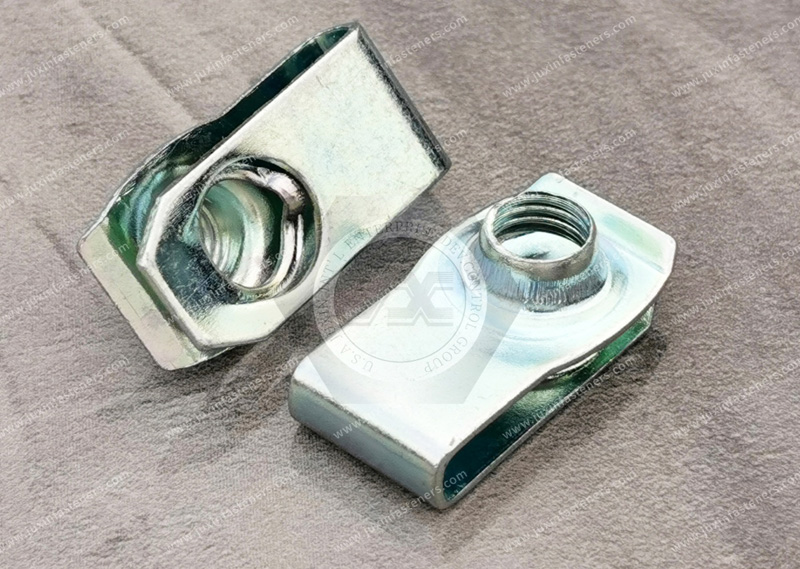
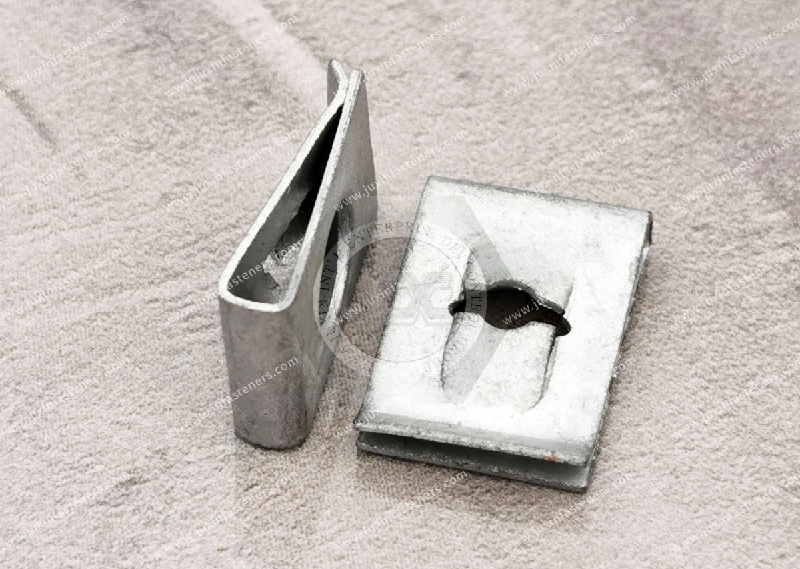
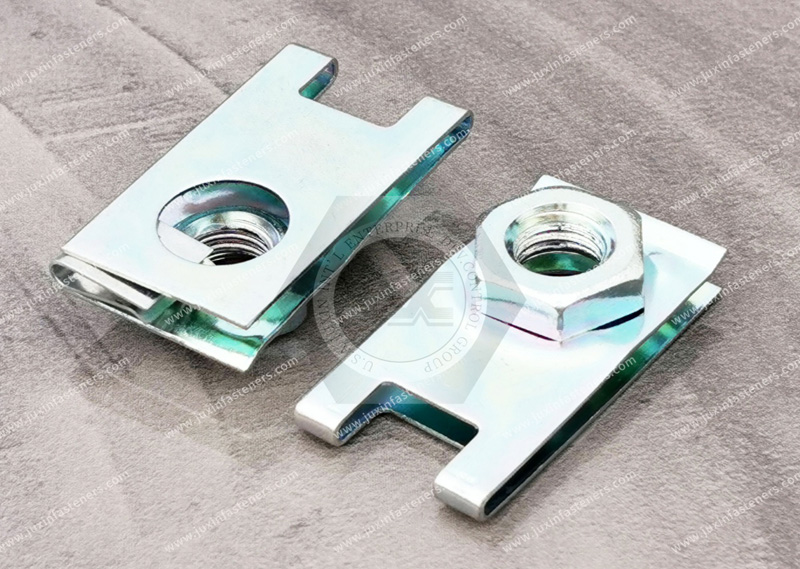
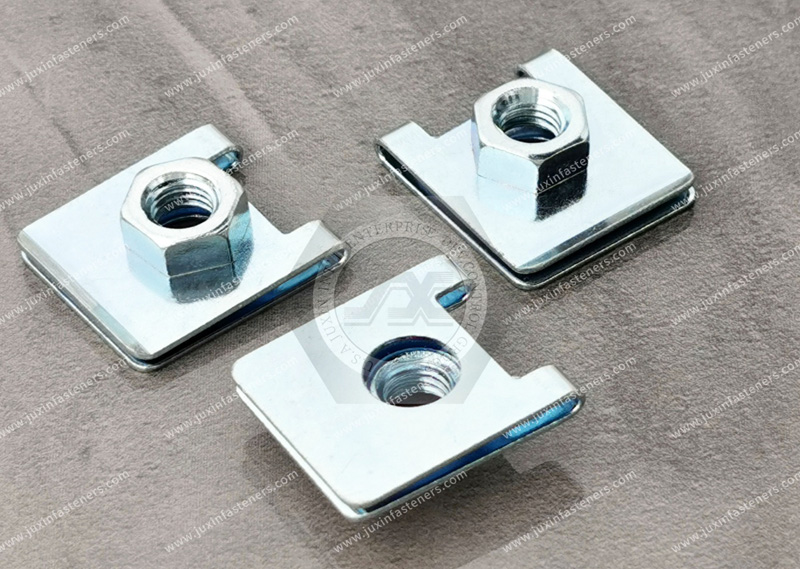
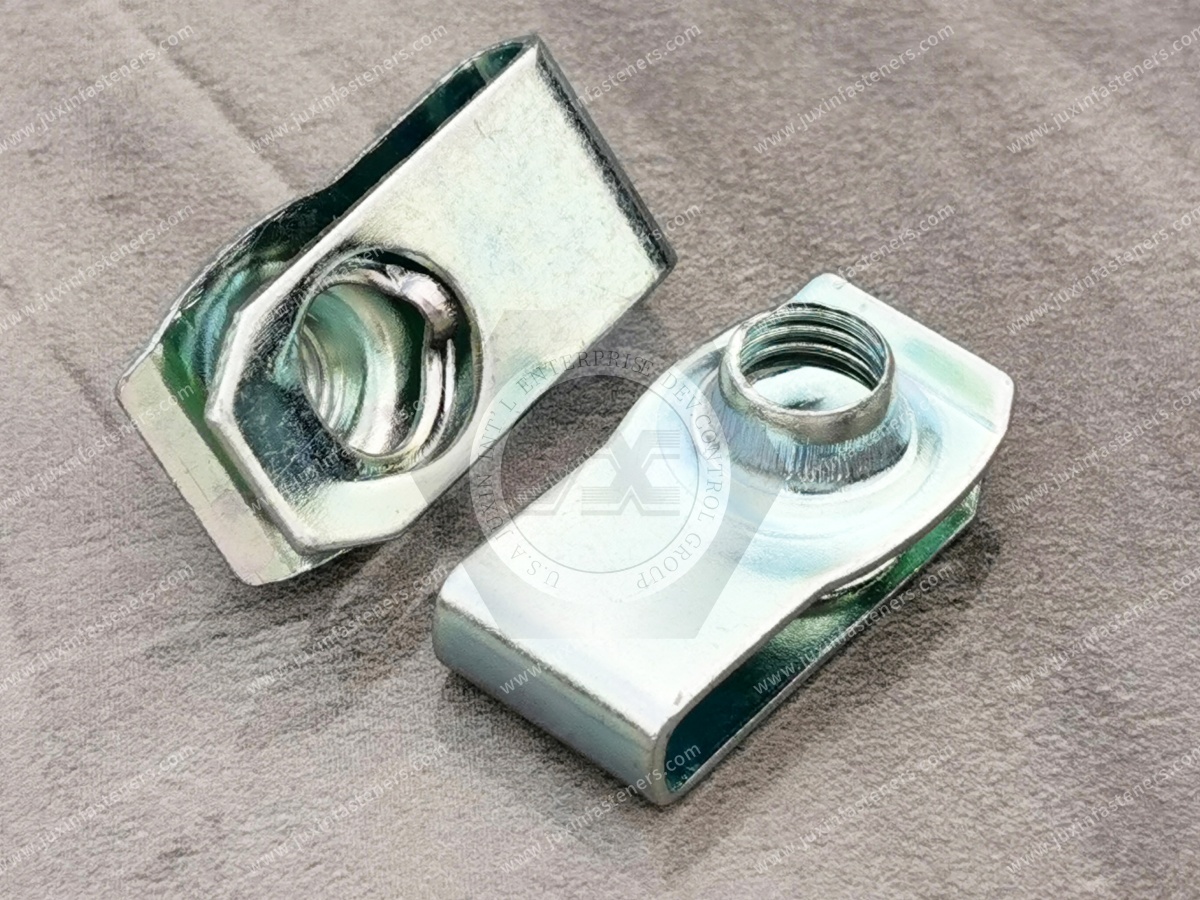
Strong-grip clip-on nuts are widely used to create retained threaded fastening points on sheet-metal panels, brackets, enclosures and formed components.
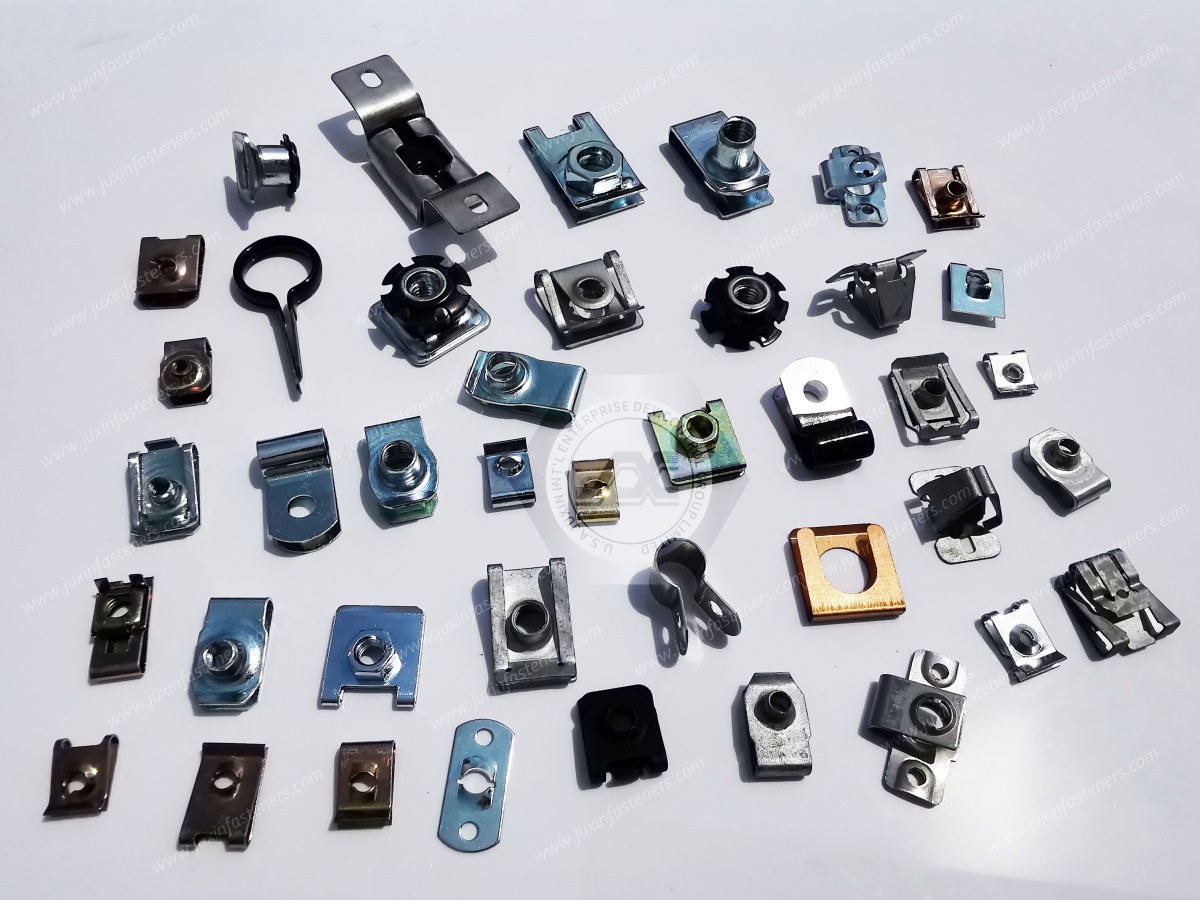
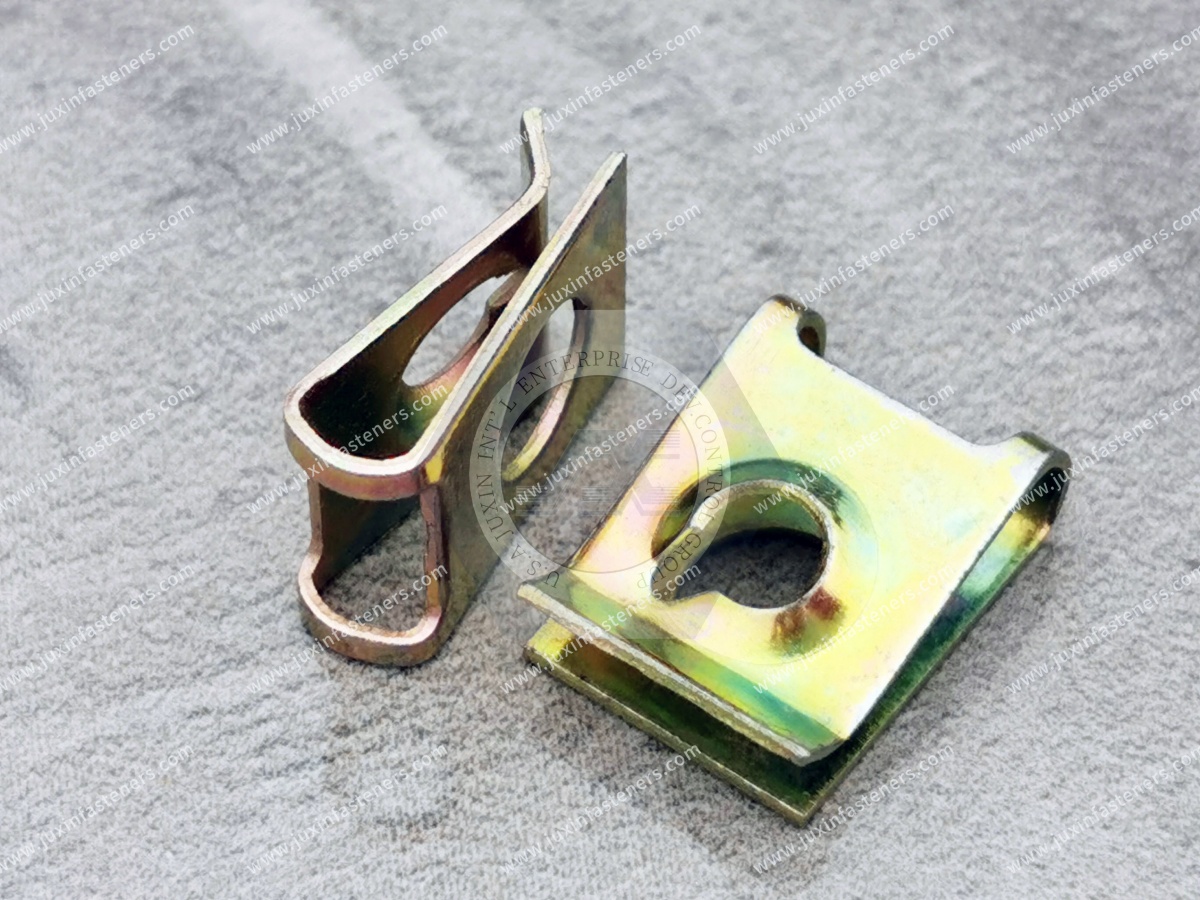
They are often called U-nuts, J-nuts, spring nuts, clip nuts or no-slip clip-on nuts, depending on the product geometry and industry terminology.
Product Specification
Strong-grip clip-on nuts are widely used to create retained threaded fastening points on sheet-metal panels, brackets, enclosures and formed components.
They are often called U-nuts, J-nuts, spring nuts, clip nuts or no-slip clip-on nuts, depending on the product geometry and industry terminology.
Although these names are sometimes used interchangeably, the actual material and clip geometry determine how the fastener behaves during installation and service.
For engineers and procurement teams, material selection should therefore begin with a different question:
What does the clip-on nut need to do in the assembly?
A clip-on nut is not simply a small threaded nut made from a particular grade of steel.
The spring section must retain the fastener on the panel, the threaded section must mate correctly with the intended screw, and the complete assembly must tolerate its actual environmental and mechanical conditions.
JUXIN FASTENERS supplies strong-grip clip-on nuts and related spring-steel fastening solutions for automotive, electrical, industrial,
appliance and sheet-metal applications. Material, geometry, thread configuration and surface finish can be selected according to the customer's drawing and application requirements.
For conventional nuts, engineers often focus primarily on thread strength and material grade.
For clip-on nuts, that approach is incomplete.
The material also contributes to the spring behavior of the clip. The clip must deform during installation and recover sufficiently to maintain its intended position on the panel.
That means the material decision affects several functions at the same time:
Elastic retention on the panel
Resistance to permanent deformation
Forming behavior during manufacturing
Thread performance
Corrosion resistance
Compatibility with the panel material
Surface-treatment options
Assembly behavior
Cost and sourcing availability
This is why selecting a material only because it has a higher nominal tensile strength can lead to the wrong engineering result.
For a spring-type clip-on fastener, elastic behavior and geometry can be more important than a simple strength ranking.
A strong-grip clip-on nut normally combines two functional areas.
The first is the spring clip, which grips the panel.
The second is the threaded or tapping section, which receives the mating screw.
These two areas experience different requirements.
The spring section needs appropriate elastic behavior and dimensional stability.
The threaded section needs to provide the intended screw engagement and withstand the installation and service conditions defined by the application.
The manufacturing process must then form the complete component without compromising the required geometry.
This is why a material change should not be treated as a simple purchasing substitution.
Changing from spring steel to stainless steel, for example, may change forming behavior, spring response,
surface finish requirements and overall assembly behavior even when the nominal dimensions remain the same.
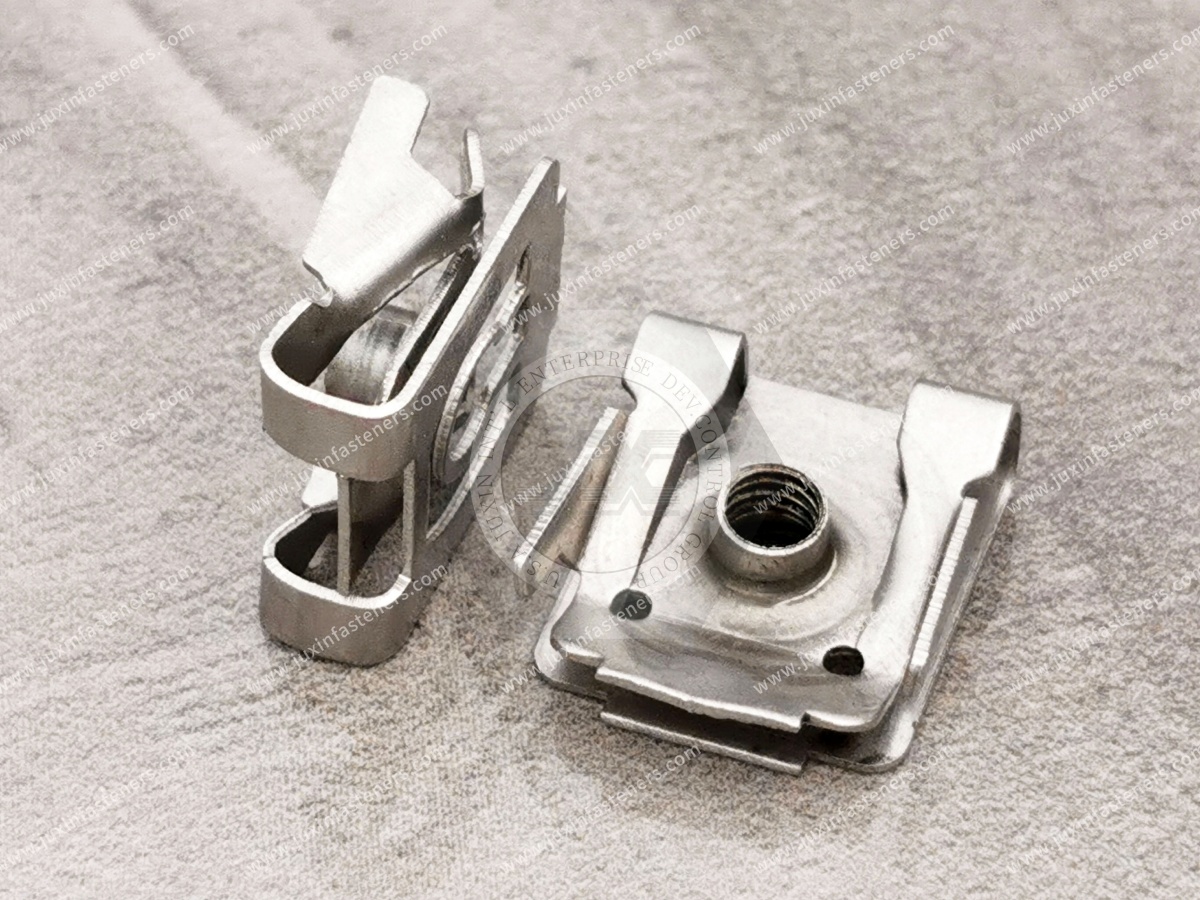
Spring steel is a natural material choice for clip-on fastening because the product depends on elastic deformation of the clip.
JUXIN FASTENERS supplies spring-steel clip-on products, including configurations using materials such as 65Mn, depending on the product design and customer requirement.
For many general sheet-metal applications, spring steel provides a practical combination of:
Elastic clip behavior
Good retention characteristics
Suitable forming capability when correctly processed
Efficient material cost
Wide availability
Compatibility with protective surface finishes
The important point is that the final performance depends on the complete material-and-geometry system, not the material name alone.
The thickness, clip width, bend radius, formed geometry, heat treatment and surface finish can all influence the finished component.
65Mn is commonly associated with spring-steel applications and can be used for clip-on fastening designs where elastic retention is an important functional requirement.
However, a material designation should not be treated as a universal performance specification.
A 65Mn clip-on nut can have different behavior depending on:
Material condition
Heat-treatment process
Final thickness
Clip geometry
Forming method
Surface treatment
Product dimensions
Therefore, an RFQ should not simply say “65Mn, strong grip.”
The drawing should define the actual component geometry and the material requirement, while any required mechanical or functional validation should be agreed with the supplier.
This is particularly important for OEM applications where the clip is part of a controlled assembly system.
Stainless steel can be an appropriate choice when corrosion resistance is a major requirement.
Typical applications may include:
Humid environments
Outdoor equipment
Washdown areas
Coastal or high-humidity environments
Certain electrical enclosures
Applications where surface corrosion is difficult to tolerate
Assemblies where a stainless fastening system is already specified
However, “stainless steel” should not automatically be interpreted as “better.”
Stainless steel selection should consider the actual grade, forming requirements, corrosion environment, mating materials and required surface condition.
For example, austenitic stainless steel such as 304 may be attractive for corrosion resistance,
but the suitability of a particular stainless material for a spring clip depends on the actual product geometry and required spring behavior.
The supplier should therefore validate the material and design together rather than treating stainless steel as a direct drop-in replacement for a spring-steel clip.
This is an important distinction for design engineers.
304 stainless steel is widely used in corrosion-resistant applications, but a 304 sheet or wire specification does not by itself define the spring performance of a finished clip-on nut.
The fastener manufacturer must consider:
Material condition
Thickness
Forming process
Final geometry
Required elastic response
Work hardening behavior
Surface condition
Application environment
For this reason, a customer should not request:
“Make the existing spring-steel clip in 304 stainless.”
without confirming whether the original clip geometry remains suitable.
A material substitution may require engineering review and sample validation.
ISO 3506-1 is a useful example of why standards should be applied carefully: its current scope covers corrosion-resistant stainless-steel bolts,
screws and studs with specified grades and property classes; it is not a generic standard for every stainless-steel fastener geometry.
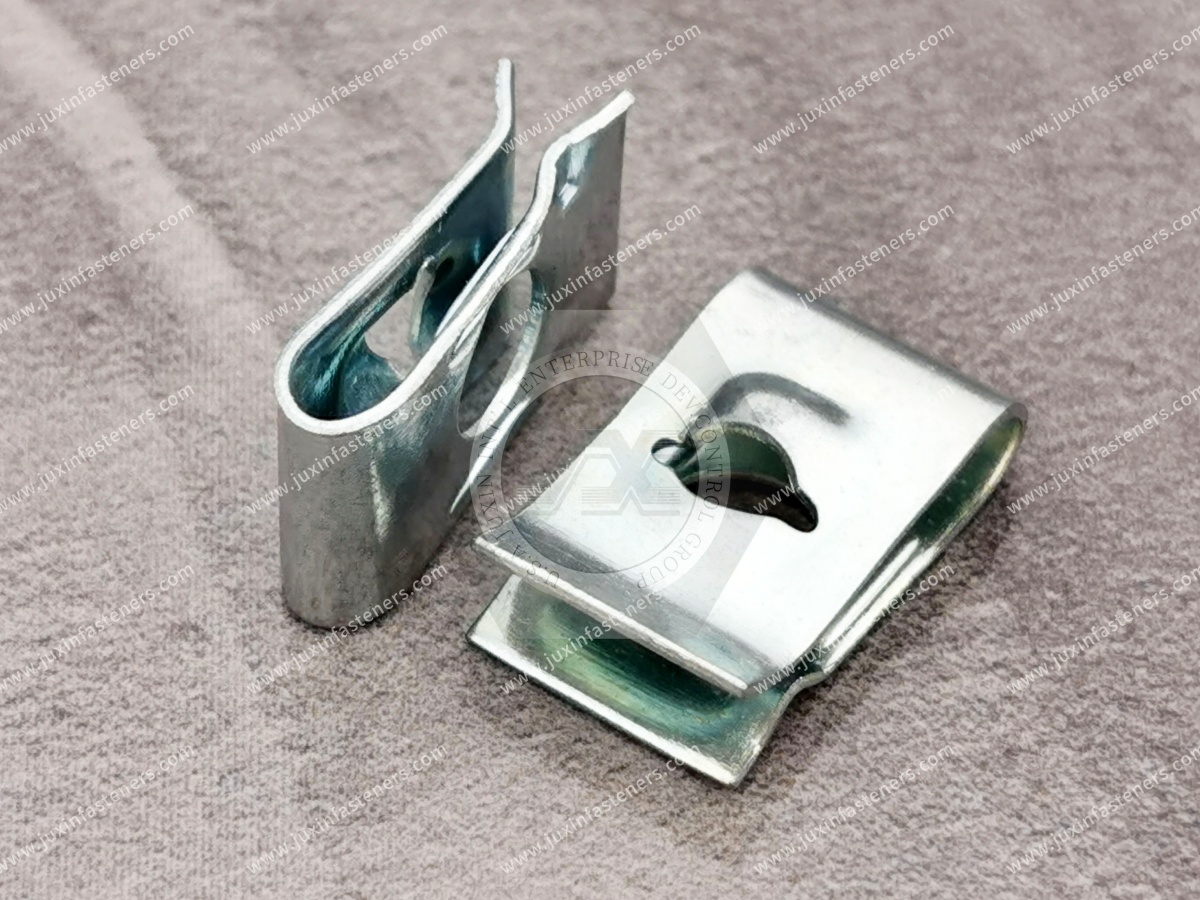
Carbon-steel clip-on fasteners can provide an economical solution when the application does not require stainless steel.
Depending on the design, carbon-steel components can be supplied with protective surface finishes selected for the intended environment.
Common finish discussions include:
Zinc plating
Black phosphate
Other customer-specified protective finishes where applicable
The surface finish should be treated as part of the material-selection decision.
A carbon-steel clip used in a dry interior assembly has very different requirements from a component exposed to moisture, road contamination or outdoor weather.
This is why the material and finish should be specified together.
One of the biggest problems in the original material-selection approach is treating Grade 8.0 as though it were a universal clip-on nut material designation.
ISO 898-1:2013 specifies mechanical and physical properties for carbon-steel and alloy-steel bolts, screws and studs within its scope. It is not a generic property-class standard for every clip-on nut.
Therefore, a procurement specification should not simply state:
“Grade 8.0 clip-on nut.”
unless the supplier and customer have specifically established what the designation means for that particular product.
For a clip-on nut, the functional requirements of the spring clip, the threaded portion, the material condition and the finished geometry need to be defined together.
The same principle applies to other fastener standards: a standard should only be cited when the actual product falls within that standard's scope.
This is one of the most useful engineering distinctions when evaluating strong-grip clip-on nuts.
A material can have high tensile strength without automatically being the best material for a spring clip.
The clip needs to deform during installation and recover appropriately.
The design therefore depends on the relationship between:
Material properties + thickness + geometry + forming + heat treatment + service conditions.
Increasing nominal material strength does not automatically produce better panel retention.
Likewise, selecting a corrosion-resistant material does not automatically provide the same spring behavior as a dedicated spring-steel design.
The correct material is the one that satisfies the functional requirements of the complete fastener.
Corrosion resistance should not be evaluated by material name alone.
For a carbon-steel clip-on nut, the surface finish is often an important part of the corrosion-control system.
For stainless steel, the selected grade and surrounding environment matter.
The customer should consider:
Humidity
Water exposure
Salt exposure
Chemical contact
Cleaning agents
Road contaminants
Temperature cycling
Contact with dissimilar metals
Required appearance
Expected service life
The correct finish should then be specified according to the actual environment.
A statement such as “zinc-plated = corrosion-proof” is not an appropriate engineering specification.
Likewise, a salt-spray test result should not automatically be interpreted as equivalent to real-world service life.
ASTM B117, for example, is a laboratory test method rather than a direct prediction of field service life.
The acceptance criteria should therefore be agreed for the actual application rather than using a generic hour figure.
Zinc-plated carbon-steel clip-on nuts are commonly considered for general industrial and automotive applications where corrosion protection is required without moving to stainless steel.
They can be appropriate for:
Interior automotive assemblies
General sheet-metal brackets
Electrical equipment
Appliance structures
Industrial cabinets
Dry or moderately exposed environments
The actual suitability depends on the coating system, substrate, environment and customer's corrosion requirement.
For OEM sourcing, the RFQ should identify the required coating or finish rather than simply stating “zinc.”
Black phosphate finishes can be used where a dark appearance and basic surface protection are appropriate.
They are generally more relevant to controlled or relatively dry environments than to applications where substantial external corrosion resistance is required.
This makes black phosphate a potential option for selected:
Interior brackets
Equipment housings
Machinery components
Dry sheet-metal assemblies
Components where a dark finish is desirable
Again, the finish should be selected according to the environment rather than the appearance alone.
The decision between stainless steel and coated spring steel should be made using the actual application requirements.
Elastic clip retention is a primary requirement.
The application has a manageable corrosion environment.
A protective coating can satisfy the environmental requirement.
Cost efficiency is important.
The product is used in high-volume sheet-metal assembly.
Corrosion resistance is a primary design requirement.
The assembly is exposed to persistent moisture.
The customer specification requires stainless material.
The surrounding fastening system already uses stainless components.
The environmental conditions justify the additional material cost.
The important point is that stainless steel is an environmental solution, while spring steel is often a functional spring-retention solution.
The two requirements can overlap, but they should not be confused.
The clip-on nut does not operate independently from the panel.
The panel may be:
Carbon steel
Stainless steel
Aluminum
Coated sheet metal
Painted sheet metal
Galvanized sheet
Other engineered sheet materials
The fastener material and surface finish should be evaluated for compatibility with the panel and surrounding components.
Dissimilar-metal contact can introduce galvanic-corrosion considerations when the environment contains sufficient moisture or an electrolyte.
This is particularly relevant when stainless steel fasteners are installed against aluminum or other dissimilar metals in exposed environments.
Material compatibility should therefore be reviewed as part of the assembly rather than only at the fastener level.
Clip-on nuts are primarily associated with sheet-metal fastening, but some assemblies contain plastic panels, molded structures or hybrid metal-plastic interfaces.
In these situations, the fastener should not be selected solely by metal strength.
The engineering team should consider:
Panel stiffness
Local bearing area
Edge geometry
Stress concentration
Installation force
Screw driving behavior
Temperature
Creep of the surrounding polymer
Potential cracking during assembly
A stainless clip-on nut is not automatically safer for a plastic panel.
Likewise, a stronger steel clip does not automatically solve a plastic-panel design problem.
The panel and fastening system must be evaluated together.

Automotive engineers often use different fastening architectures within the same vehicle.
Interior trim may prioritize:
Low cost
Assembly speed
Retention
Controlled appearance
Serviceability
Exterior components may place greater emphasis on:
Moisture exposure
Road contamination
Corrosion protection
Temperature cycling
Vibration
Assembly consistency
Engine-compartment or high-temperature areas may require a completely different review of material, coating and spring behavior.
Therefore, “automotive clip-on nut” is not a sufficient material specification.
The installation location and environment should be part of the RFQ.
For related automotive fastening solutions, see the JUXIN FASTENERS guide to automotive high-strength fasteners, bolts, nuts and clamps.
Electrical enclosures often use thin sheet metal where threaded attachment points must be created without welding.
Clip-on nuts can be useful for:
Covers
Brackets
Cable-management components
Mounting accessories
Internal panels
Serviceable equipment assemblies
Here, the material decision should consider enclosure material, indoor or outdoor exposure, humidity,
corrosion requirements and whether the fastener is installed before or after surface finishing.
Where the enclosure is already painted or coated, a removable clip-on design may also provide an assembly advantage over processes that require welding before finishing.
Appliance manufacturers frequently work with thin formed sheet metal and high-volume assembly processes.
Strong-grip clip-on nuts can support:
Housing panels
Internal brackets
Service panels
Mounting structures
Covers
Component retention
The procurement focus is often on repeatability, cost, assembly efficiency and controlled material/finish specifications.
This makes clear RFQ documentation particularly important.
Industrial machinery may require removable covers and brackets that are repeatedly accessed during maintenance.
Clip-on nuts can provide a convenient retained fastening point where:
The panel edge is accessible.
A removable screw joint is required.
Welding is undesirable.
The assembly must remain serviceable.
Production or maintenance teams benefit from captive fastening components.
For higher-load structural connections, however, engineers should not automatically substitute a clip-on nut for a permanently installed structural fastening method.
The load path and joint design determine the appropriate architecture.
A good purchasing specification should avoid vague descriptions such as:
“Strong clip nut, stainless, anti-rust.”
A better specification identifies the actual requirements:
Product type: Clip-on nut / U-nut / J-nut / no-slip clip-on nut
Mating screw: Screw type, diameter and specification
Panel: Material and thickness
Clip function: Required retention and installation direction
Base material: Customer-specified material or approved equivalent
Surface finish: Required coating or finish
Environment: Interior, exterior, humid, chemical, temperature cycling, etc.
Drawing: Revision-controlled 2D drawing
Inspection: Defined dimensional and material requirements
Quantity: Prototype, annual demand or production volume
This gives the supplier enough information to quote the correct product instead of making assumptions.
Before releasing a new clip-on nut into production, engineering should verify the complete fastening system.
Useful validation points include:
Fit over the actual panel
Installation direction
Clip retention before screw installation
Screw alignment
Screw compatibility
Thread engagement or tapping behavior
Installation process
Panel deformation
Removal and service requirements
Environmental exposure
Surface-finish compatibility
Vibration requirements where applicable
Where the application is critical, the validation method and acceptance criteria should be agreed before production.
This is an important procurement lesson.
If an existing production part uses a spring-steel clip-on nut and procurement wants to substitute stainless steel for cost,
availability or corrosion reasons, the change should not be treated as a simple material substitution.
The change may affect:
Spring behavior
Clip retention
Forming
Installation force
Surface finish
Corrosion behavior
Panel interaction
Supplier process
Validation requirements
The supplier should therefore review the drawing and application before approving the substitution.
This is particularly important in controlled OEM supply chains.
Stainless steel can be the right answer for one application and the wrong answer for another.
Similarly, spring steel can be an excellent choice for a high-volume dry or controlled environment but may require a different corrosion-control strategy for an exposed application.
The engineering objective is not to maximize one material property.
It is to find the best balance between:
Spring function + panel retention + corrosion environment + assembly process + service requirements + total cost.
That is the real material-selection problem.
JUXIN FASTENERS supplies strong-grip clip-on nuts and related spring-steel fastening solutions for OEM and industrial applications.
Available product configurations can include:
Strong-grip clip-on nuts
J-nut style fastening solutions
U-nuts
No-slip clip-on nuts
Clip-on nuts for tapping screws
Clip-on barrel nuts
Spring-steel clip fasteners
Custom clip-on fastening components
Material and finish should be selected according to the actual product configuration and customer requirements.
Rather than treating one material as universally superior, JUXIN FASTENERS can evaluate the required panel,
screw, geometry, environment and production requirements when developing or sourcing a clip-on nut.
For applications requiring a different fastening architecture, related clip-on nuts for tapping screws and barrel nuts can be evaluated alongside self-clinching nuts, weld nuts and blind rivet nuts.
A good fastening supplier should also identify when another architecture is more appropriate.
A clip-on nut may not be the best choice when:
The panel edge is inaccessible.
The fastening point is far from an edge.
A permanent integrated nut is required.
The joint requires a different load path.
The panel geometry cannot retain the clip.
A blind-installed threaded insert is more appropriate.
Depending on the application, alternatives may include:
Self-clinching nuts
Weld nuts
Blind rivet nuts
Threaded inserts
Conventional bolted joints
For example, a blind rivet nut may be more suitable when the threaded attachment point is located in the middle of a panel and only one side of the sheet is accessible.
See the JUXIN FASTENERS Blind Rivet Nuts Engineering Guide for a different approach to creating threaded holes in sheet-metal assemblies.
For an engineering quotation, send as much of the following information as available:
2D drawing
3D model when available
Clip-on nut type
Mating screw
Thread or tapping-screw specification
Panel material
Panel thickness
Edge geometry
Hole dimensions and location
Required retention function
Base material
Surface finish
Corrosion environment
Temperature environment
Assembly method
Prototype quantity
Annual production quantity
Packaging requirements
Inspection requirements
Drawing revision
If the current product is being replaced by a new supplier, a physical sample can also be useful for dimensional and assembly evaluation.
Selecting the right material for a strong-grip clip-on nut is not simply a choice between “cheap steel” and “better stainless steel.”
The correct solution depends on how the spring clip functions, how the fastener interacts with the panel, which screw is used,
what environment the assembly will experience and how the component will be manufactured and installed.
JUXIN FASTENERS supplies strong-grip clip-on nuts, U-nuts, J-nuts, no-slip clip-on nuts and related spring-steel fastening solutions for industrial and OEM applications.
For a quotation or engineering review, send your drawing, mating screw specification, panel thickness, material, surface-finish requirement, application environment and expected quantity.
Email: info@juxinfasteners.com
Website: www.juxinfasteners.com
A complete application description allows the sourcing and engineering teams to evaluate the fastening architecture and material together, helping prevent unsuitable material substitutions before production.
Product Packaging
Packaging Standard
At Juxin Fasteners, we apply standardized export packaging to ensure product protection, traceability, and compliance with international logistics requirements.
1. Standard Export Packaging
Unless otherwise specified, all products will be packed according to our factory standard export packaging, which includes:
Moisture-resistant inner protection
Poly bag or small box packing as required
Reinforced export cartons
Clear labeling with part number, specification, batch number, and quantity
Palletizing for sea or air shipment when necessary
Our standard packaging is designed to ensure safe transportation, efficient warehousing, and long-distance international shipping.
2. Customized Packaging Options
We also provide customized packaging solutions according to customer requirements, including but not limited to:
Private labeling
Customized barcodes
Specific carton dimensions
Retail packaging
Special pallet configuration
Customer-specific marking and identification
So that you know, customized packaging may involve additional costs and extended lead time depending on the complexity of the requirements.
3. Compliance & Quality Assurance
All packaging processes are controlled under our ISO 9001 quality management system to ensure consistency, traceability, and product integrity throughout the supply chain.
Product Pictures
Contact Us
Tel.:
+86 020 8621 0320
+86 020 3121 6067
E-mail:
Technical Support:
Navigation
SEND INQUIREY