Call Us
+86 136 6007 9809
Call Us
+86 136 6007 9809

What are custom weld fasteners?
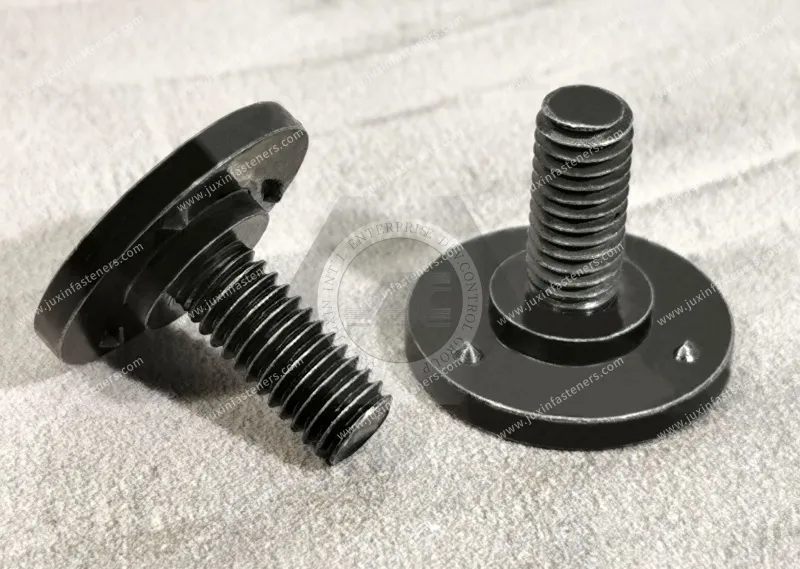
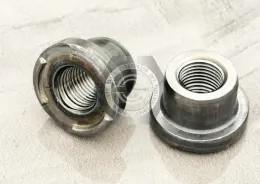
Custom weld fasteners are non-standard threaded or mounting components engineered for applications where standard catalog weld nuts, weld studs,
or other weld hardware cannot adequately satisfy the required geometry, installation access, load path, welding configuration, or assembly requirements.
Product Specification
What are custom weld fasteners?
Custom weld fasteners are non-standard threaded or mounting components engineered for applications where standard catalog weld nuts,
weld studs, or other weld hardware cannot adequately satisfy the required geometry, installation access, load path, welding configuration, or assembly requirements.
Custom designs can include:
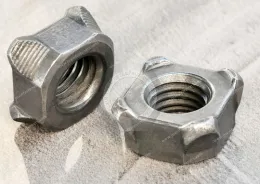
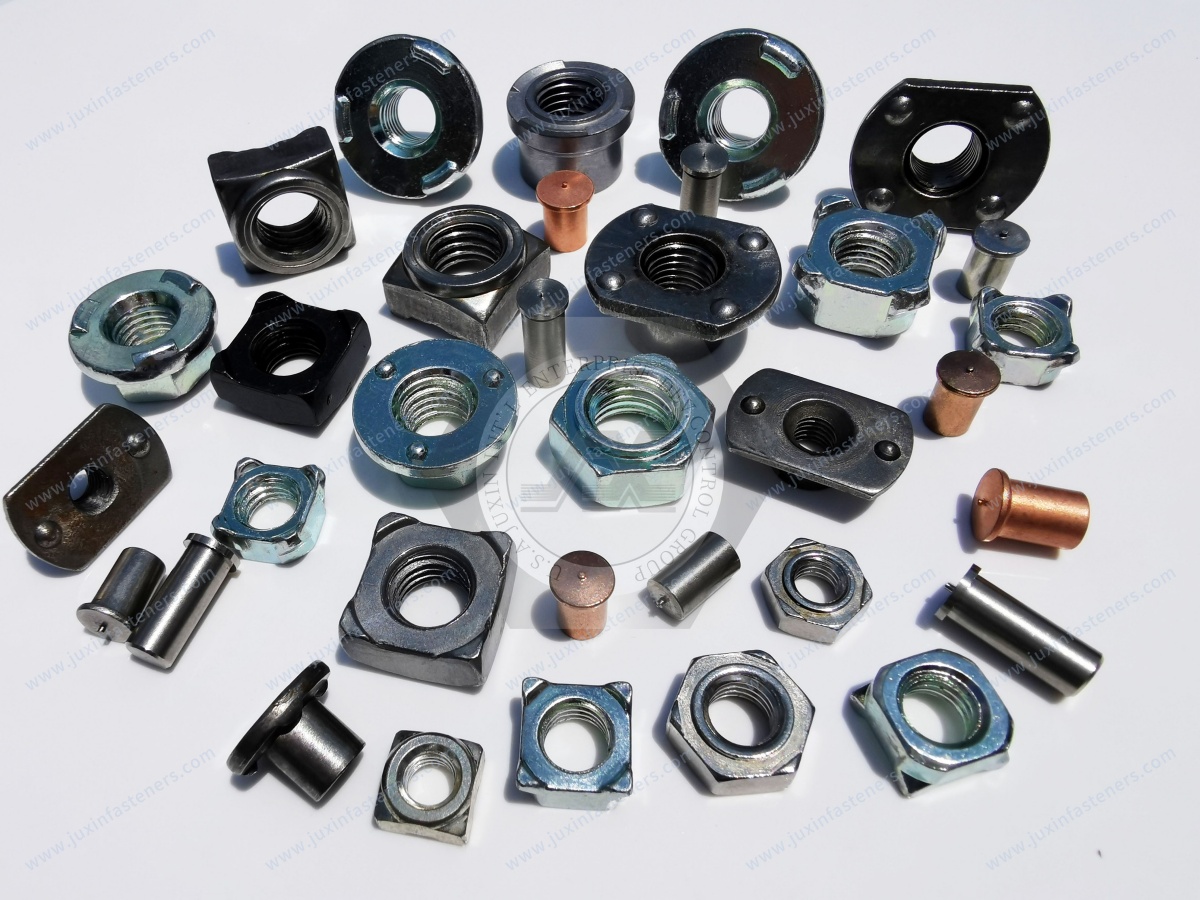
Custom weld nuts
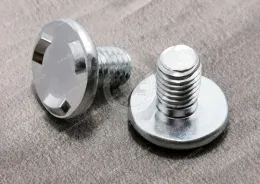
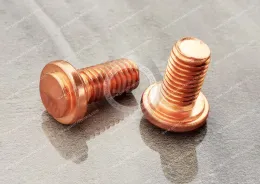
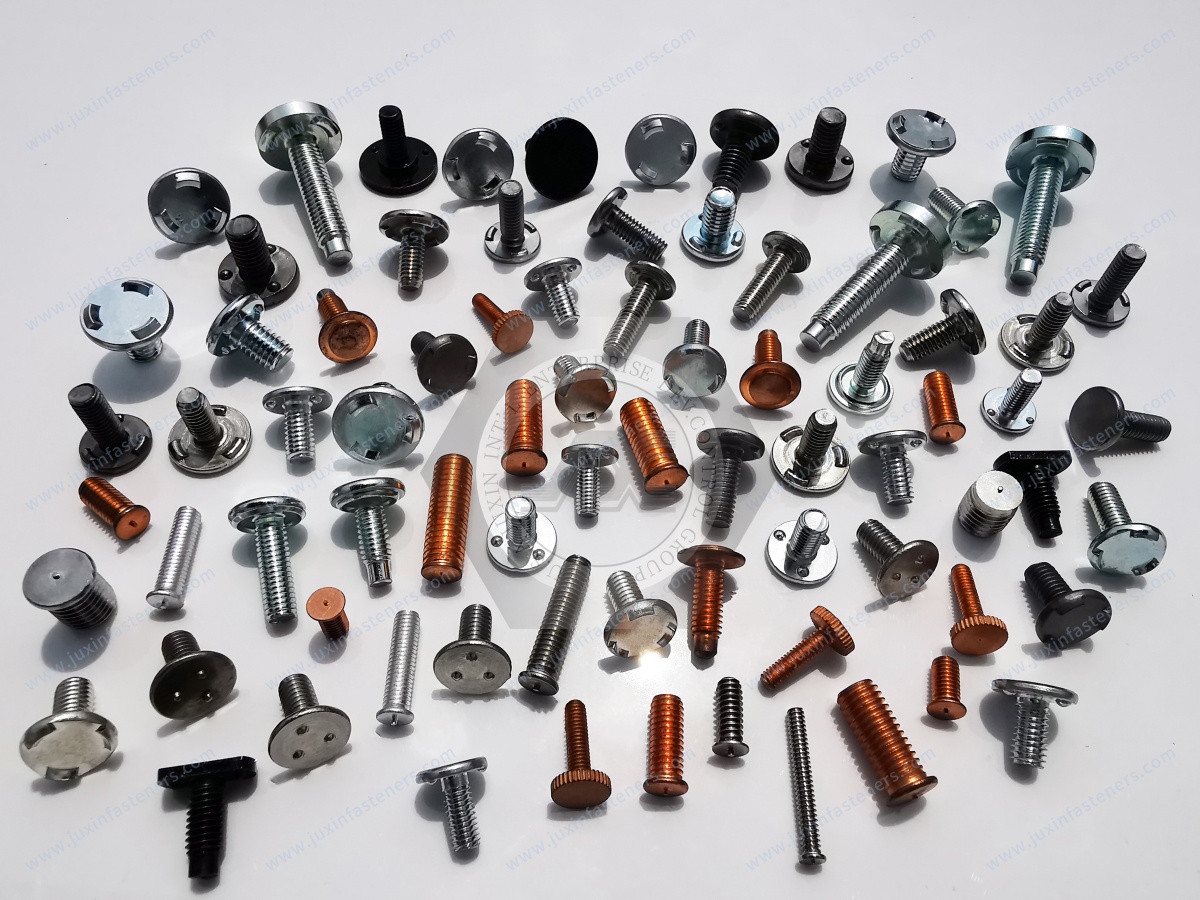
Special weld studs
Flanged weld studs
Extended-body weld nuts
Stepped weld fasteners
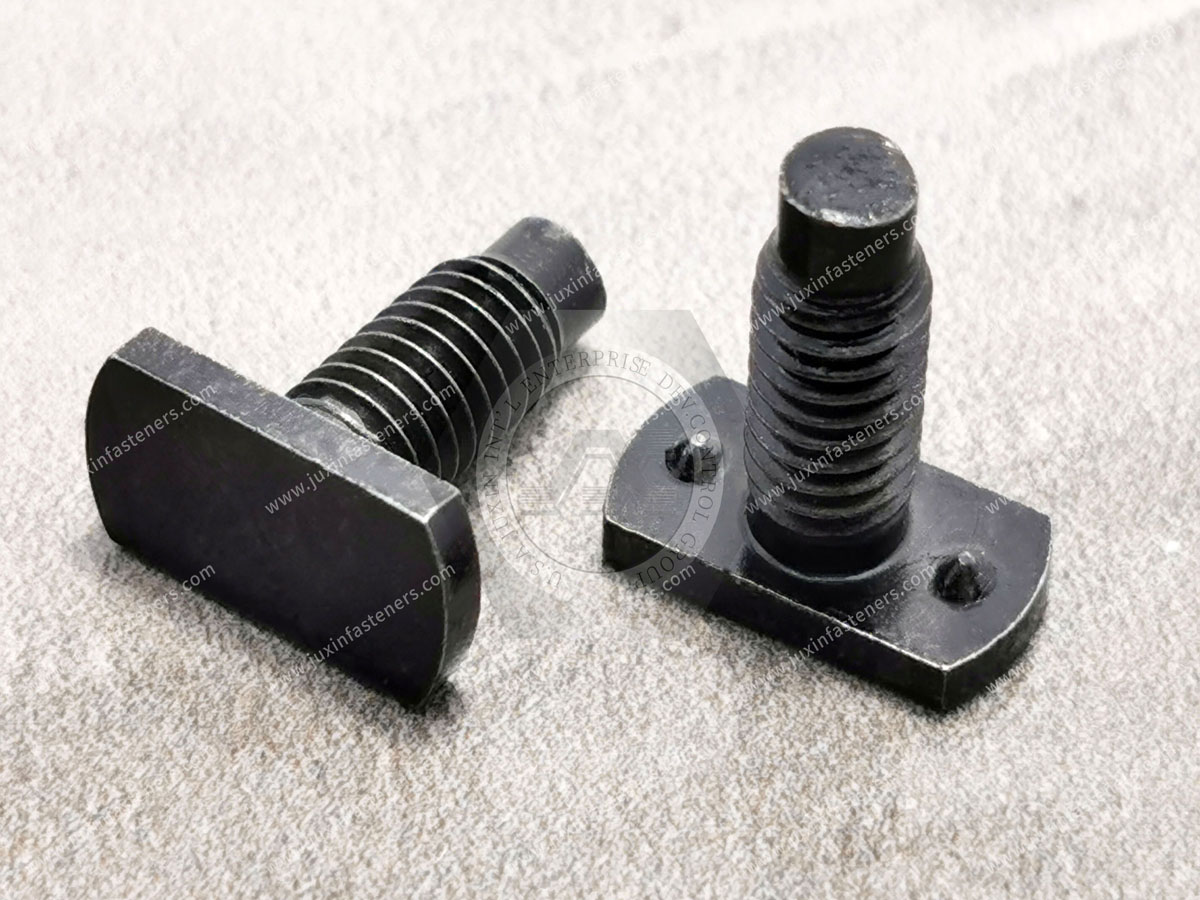
Tab weld nuts
Offset weld fasteners
Multi-projection mounting components
Weld fastener plates
Asymmetrical fastener geometries
Fasteners with special locating features
Fasteners combining threaded and mounting features
These components may be permanently attached to sheet metal, brackets, plates, or fabricated structures using resistance projection welding, spot welding, or another application-specific joining process.
A custom weld fastener may be required when a standard part cannot provide the necessary combination of:
Available installation space
Electrode access
Thread position
Fastener height
Flange dimensions
Offset geometry
Projection arrangement
Component clearance
Load direction
Mounting footprint
Assembly sequence
A simplified custom configuration can be represented as:
      [ Non-Standard Threaded Body ]
                    |
                    | Engineered Position
                    v
      +---------------------------+
      |    Custom Mounting Plate  |
      +--[P1]--[P2]--[P3]--[P4]--+
========================================
             Base Substrate
The projection arrangement shown above is only an example.
The appropriate number, position, and geometry of projections depend on the fastener design, substrate, welding process, electrode configuration, and required mechanical performance.
Engineers may specify custom weld fasteners when:
Spatial clearance is severely restricted.
The threaded attachment point must be offset from the weld footprint.
A standard catalog fastener interferes with adjacent components.
A specific mounting footprint is required.
The assembly contains a complex stamped or formed structure.
Multiple mounting functions need to be integrated into one component.
The welding equipment requires a particular electrode-access geometry.
The load path requires a different fastener footprint.
The fastener must interface with a customer-specific assembly process.
Custom fastening should therefore begin with the application problem, not simply with a request to make a catalog fastener look different.
JUXIN FASTENERS supports OEM custom weld fastener development through engineering drawing review, material and process evaluation,
DFM analysis, prototype development, tooling assessment, and production sourcing for non-standard fastening applications.
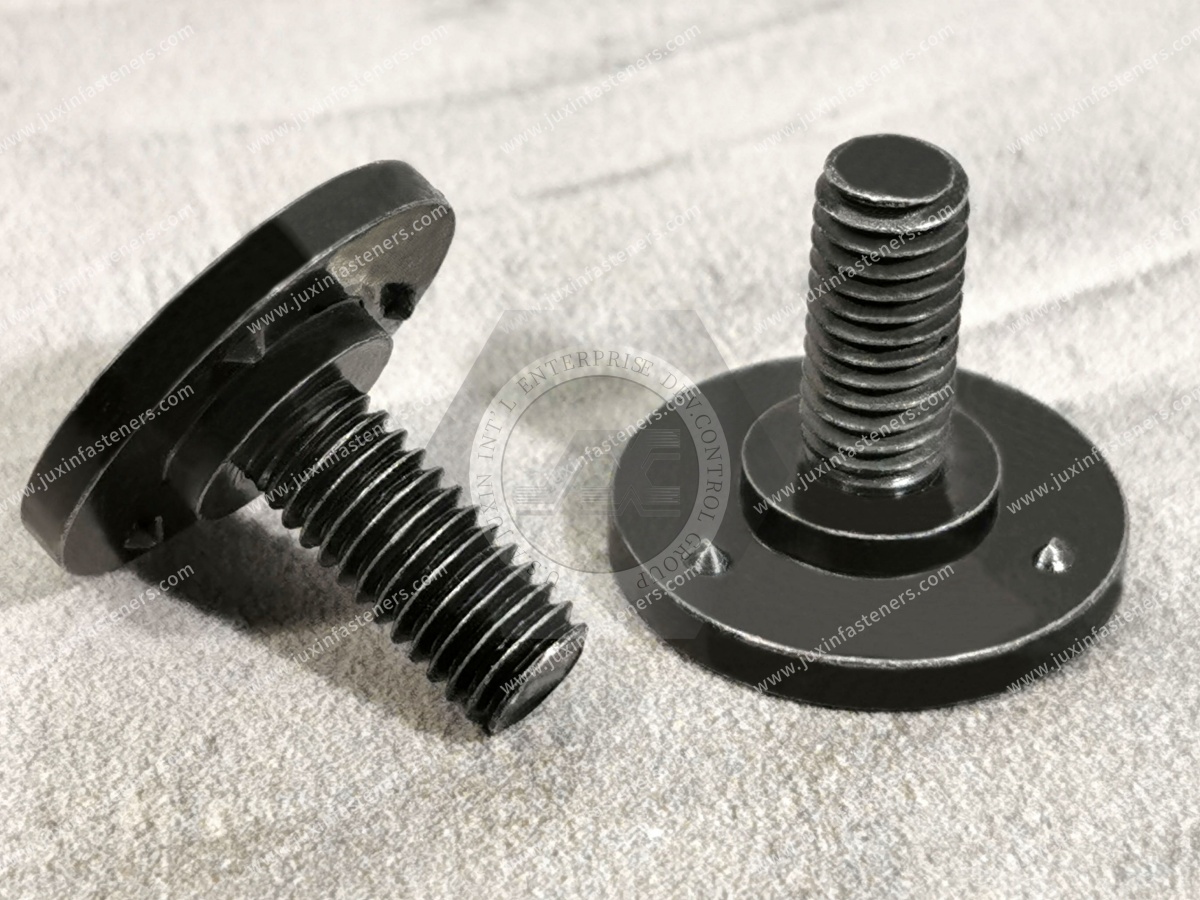
Standard catalog weld fasteners are usually the first option to evaluate because they can simplify qualification, sourcing, tooling, and production.
Custom engineering becomes valuable when the standard solution creates a significant design or manufacturing compromise.
Off-the-shelf DIN, ISO, or manufacturer-specific weld nuts may not fit inside narrow structural channels, folded sheet-metal sections, complex stamped panels, or compact equipment housings.
A custom fastener may allow the designer to modify:
Body height
Flange diameter
Tab length
Thread location
Offset distance
Fastener orientation
Mounting footprint
For example:
Standard Fastener

      [THREAD]
         |
      [BODY]
         |
   ============
      PANEL


Custom Offset Fastener

        [THREAD]
           |
           |
       [ OFFSET ]
           |
    ============
       PANEL
The custom design can move the threaded interface into an available assembly envelope while keeping the weld area in a manufacturable location.
This can be particularly useful in:
Automotive structures
Electrical enclosures
HVAC assemblies
Industrial machinery
Agricultural equipment
Battery housings
Server cabinets
Fabricated sheet-metal assemblies
A standard weld nut may be mechanically adequate for a simple axial loading condition but may not be the best geometry for an application involving combined:
Tensile loading
Shear loading
Bending
Torque
Repeated vibration
Offset loading
Custom fastener geometry can modify the mounting footprint or projection arrangement to better suit the intended load path.
However, changing the projection pattern does not automatically guarantee higher mechanical strength.
The resulting joint must be evaluated through appropriate engineering analysis and validation.
The design team should consider:
Fastener geometry
Projection location
Welded interface
Parent-sheet thickness
Parent-material properties
Load direction
Local stress concentration
Joint stiffness
Assembly preload
Expected service cycles
The objective is to develop a fastening system that provides a repeatable load path rather than simply increasing the number of projections.
A successful custom weld fastener program usually begins with the customer's application rather than the fastener alone.
A practical development sequence can include:
Customer Application
        ↓
2D Drawing / 3D CAD Review
        ↓
Material & Substrate Review
        ↓
Welding Process Review
        ↓
DFM / Manufacturability Review
        ↓
Prototype / Sample Development
        ↓
Dimensional & Functional Validation
        ↓
Process Qualification
        ↓
Production Tooling
        ↓
Mass Production
The exact sequence varies according to the part complexity, production volume, customer qualification process, and manufacturing method.
Before designing a custom weld fastener, the engineering team should understand:
Where the fastener will be installed
What component it will mount
How the component is assembled
How the load enters the joint
What sheet material is used
What sheet thickness is involved
How the weld fastener will be welded
What environmental conditions exist
What coating or plating is required
What production volume is expected
This information can prevent an apparently simple custom geometry from creating problems later in production.
The 2D drawing should define the functional characteristics of the part.
Important information can include:
Thread specification
Thread class
Critical dimensions
Datum references
Projection geometry
Flange dimensions
Fastener height
Concentricity or positional requirements
Surface finish
Material
Heat-treatment requirements where applicable
Plating or coating
Inspection requirements
Not every dimension requires the same tolerance.
A strong DFM review distinguishes between:
Critical-to-function dimensions
and
Non-critical manufacturing dimensions.
Over-tolerancing a custom fastener can unnecessarily increase tooling and manufacturing cost.
A 3D CAD model can help evaluate:
Installation envelope
Adjacent component clearance
Thread orientation
Welding access
Fastener seating
Assembly sequence
Interference conditions
STEP or another customer-approved neutral CAD format can be useful when the project requires 3D geometry review.
The customer's native CAD format should be confirmed before submission rather than assuming that every supplier can process every proprietary format.
When submitting a custom fastener inquiry, engineering teams should prepare the following technical data:
             CUSTOM FASTENER RFQ CHECKLIST

[1] 2D Engineering Drawing
    PDF with dimensions, tolerances, thread specifications,
    material, finish, and critical functional requirements

[2] 3D CAD Model
    STEP, IGES, or another agreed neutral CAD format
    where 3D geometry review is required

[3] Substrate Material
    Sheet metal grade, thickness, coating,
    and relevant surface condition

[4] Annual Volume / Project Volume
    Estimated production quantity,
    prototype quantity, and forecast where available

[5] Welding Process
    Resistance projection welding, spot welding,
    or another application-specific joining process

[6] Application Requirements
    Mechanical loading, vibration, temperature,
    corrosion exposure, and assembly requirements
Additional technical information can significantly improve the quotation and DFM review.
The drawing should identify the required thread standard and tolerance class.
For example, ISO metric internal thread tolerance classes such as 6H may be specified where appropriate, but the required class must come from the customer's design standard and application.
Thread requirements should also consider the manufacturing sequence.
Depending on the design, threading may occur:
Before coating
After coating
Through a controlled masking process
Through another application-specific manufacturing sequence
The supplier should review the interaction between thread tolerance, coating thickness, gauging, and final assembly.
The fastener material should be selected according to:
Required mechanical performance
Manufacturing method
Welding compatibility
Corrosion requirements
Surface treatment
Customer specifications
The fastener material does not necessarily have to be identical to the parent sheet material.
Dissimilar material combinations may be technically feasible, but they require appropriate evaluation of:
Electrical resistance
Thermal behavior
Metallurgical compatibility
Weldability
Corrosion
Mechanical performance
Therefore, "matching the fastener alloy to the sheet alloy" should not be treated as a universal rule.
Custom weld fasteners may require:
Zinc plating
Zinc-alloy plating
Stainless steel
Organic coatings
Other application-specific finishes
The surface treatment should be reviewed together with the welding process.
If the fastener is welded after plating, the coating can affect the welding interface.
If the fastener is plated after welding, the complete manufacturing sequence and required corrosion protection must be evaluated.
Projection geometry is one of the most important aspects of a custom weld fastener.
The projection creates a localized contact area that influences current concentration and heat generation during resistance welding.
Possible projection configurations may include:
Single projection
Multiple projections
Ring-type projection
Segmented projection
Application-specific projection layouts
The appropriate configuration depends on:
Fastener size
Fastener shape
Sheet material
Sheet thickness
Welding equipment
Electrode geometry
Required mechanical performance
Joint geometry
A larger number of projections is not automatically better.
The engineering objective is to create an appropriate and repeatable welding interface.
Custom projection design can help address:
Fastener stability
Welding access
Current distribution
Local heat concentration
Load distribution
Assembly constraints
The final projection geometry should be validated on representative substrate material using the intended welding process.
The appropriate manufacturing method depends on the geometry, material, tolerances, production volume, and required secondary operations.
Potential processes may include:
Cold heading
Cold forming
Thread forming
Thread tapping
CNC machining
Turning
Stamping
Secondary machining
Welding
Grinding
Surface treatment
Cold heading or cold forming can be suitable for certain custom fastener geometries, particularly when the design is compatible with forming operations and production volume supports dedicated tooling.
Potential advantages can include:
High production efficiency
Repeatable geometry
Reduced material waste compared with some machining routes
Suitability for volume production
However, not every custom weld fastener can or should be manufactured entirely through cold forming.
Geometry, material behavior, tolerance requirements, tooling complexity, and secondary operations must be evaluated.
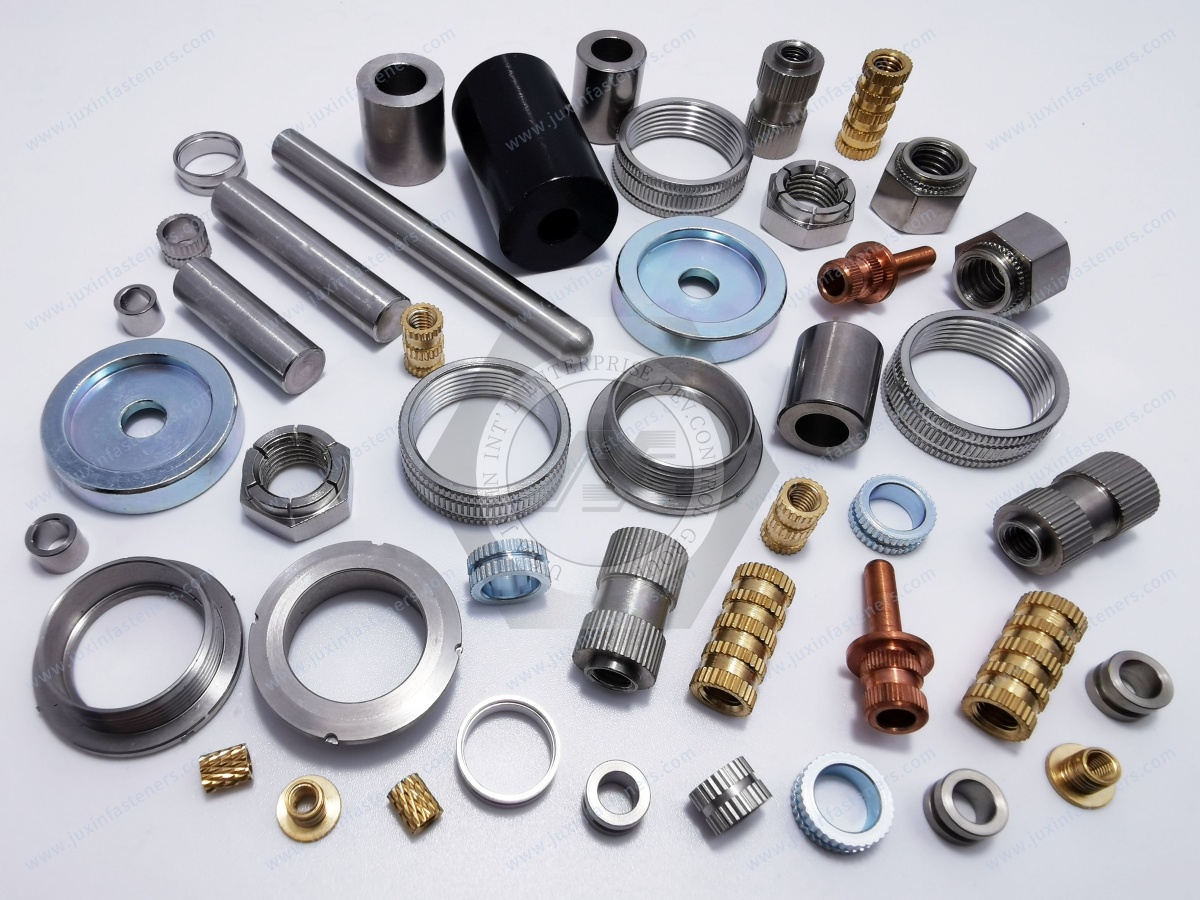
CNC machining can be useful for:
Complex geometries
Prototypes
Low-volume production
Secondary features
Tight dimensional requirements where appropriate
For higher production volumes, the most economical manufacturing route may involve a combination of forming and secondary machining rather than machining the entire component from bar stock.
Some custom weld fasteners may require a combination of:
Cold Forming
     ↓
Secondary Machining
     ↓
Thread Processing
     ↓
Projection / Feature Finishing
     ↓
Surface Treatment
     ↓
Inspection
The optimal route depends on the part geometry and production requirements.
Prototype samples are important because a custom weld fastener is not fully qualified by dimensional inspection alone.
Prototype evaluation can include:
Thread dimensions
Body dimensions
Flange dimensions
Projection dimensions
Overall height
Critical positional features
Welding compatibility
Projection collapse behavior
Weld consistency
Parent-sheet condition
Electrode accessibility
Depending on the application:
Torque or rotation resistance
Push-out
Pull-out
Tensile loading
Shear loading
Bending
Fatigue
The selected test should correspond to the actual application load path.
Where required, evaluate:
Corrosion exposure
Temperature cycling
Humidity
Vibration
Chemical exposure
Other customer-specific environmental conditions
No universal mechanical test value should be assigned to a custom weld fastener without reference to the actual design, substrate, welding process, and application requirements.
Custom fasteners may require dedicated tooling.
Tooling requirements can depend on:
Part geometry
Material
Forming method
Production volume
Dimensional tolerance
Number of forming stages
Secondary operations
The tooling strategy should be discussed before commercial quotation.
Tooling cost may include:
Forming dies
Heading tools
Punches
Gauges
Inspection fixtures
Welding-process fixtures where required
Secondary machining fixtures
Tooling lead time also varies according to complexity, manufacturing route, supplier capacity, and sample requirements.
Therefore, a universal statement such as "all custom weld fastener tooling takes two to four weeks" should not be used as a guaranteed production commitment.
The supplier should provide the actual development schedule after reviewing the drawing and manufacturing requirements.
The cost of a custom weld fastener is influenced by more than the raw material.
Important cost drivers may include:
Part size
Material
Geometry
Number of forming stages
Tooling
Machining
Thread processing
Projection complexity
Surface treatment
Inspection
Packaging
Production volume
A high-volume custom part may justify dedicated forming tooling because tooling cost can be distributed across a larger production quantity.
For low-volume projects, machining or another flexible manufacturing route may be more appropriate.
Therefore, procurement should evaluate:
Piece Price + Tooling + Development + Inspection + Logistics + Total Production Cost
rather than comparing the unit price with a standard catalog fastener alone.
Custom weld fasteners can be useful across many industries.
Potential applications include:
Body structures
Brackets
Battery assemblies
Interior structures
Chassis accessories
Electrical mounting
Potential applications include:
Control cabinets
Server racks
Electrical boxes
Grounding points
Internal mounting brackets
Potential applications include:
Air handling units
Ventilation housings
Filter systems
Access panels
Internal brackets
Potential applications include:
Agricultural machinery
Excavators
Construction equipment
Protective guards
Hydraulic-system accessories
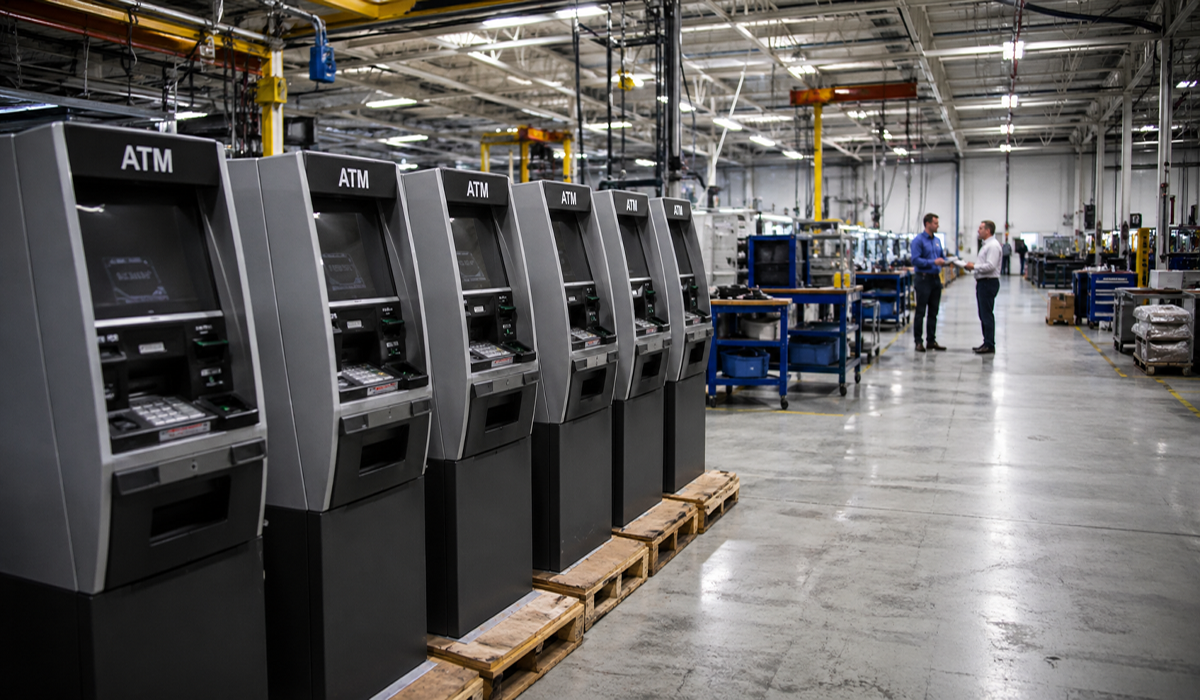
Potential applications include:
Machine frames
Covers
Guards
Motor brackets
Sensor mounts
Equipment housings
Potential applications include:
Battery enclosure components
Thermal-management brackets
Electrical mounting
Grounding/bonding interfaces
Structural accessory components
The appropriate custom geometry should always be developed around the specific application.
Procurement teams should involve the supplier early when the fastener is a critical custom component.
Early supplier involvement can help identify:
Unnecessary tolerances
Difficult forming features
Welding-access problems
Coating conflicts
Tooling risks
Over-engineered geometries
Opportunities for standardization
A strong RFQ package should include:
2D drawing
3D CAD
Revision level
Applicable specifications
Fastener material
Substrate material
Substrate thickness
Heat treatment where applicable
Surface treatment
Welding process
Assembly process
Annual volume
Prototype quantity
Target production timing
Mechanical loading
Torque requirement
Vibration
Fatigue
Temperature
Corrosion
Electrical continuity where applicable
Dimensional inspection
Thread inspection
Weld validation
Material certification where required
Traceability
Packaging
Customer-specific documentation
Before approving a custom design, engineers should ask whether an existing standard weld fastener can satisfy the application.
Standardization can reduce:
Tooling cost
Development time
Qualification effort
Inventory complexity
Supplier dependency
Replacement difficulty
Customization becomes justified when a standard component creates a meaningful problem in:
Space
Assembly
Welding
Load path
Serviceability
Cost
Product architecture
A custom fastener should therefore provide a measurable engineering or manufacturing benefit.
The goal is not to make the component more complicated.
The goal is to make the fastening solution better matched to the application.
Before approving a custom weld fastener, review:
Is a standard catalog fastener genuinely unsuitable?
What specific problem does the custom design solve?
Is the thread specification clearly defined?
Are critical dimensions identified?
Are non-critical dimensions appropriately toleranced?
Is the fastener material suitable?
Is the substrate material identified?
Is substrate thickness defined?
Is the welding process known?
Is electrode access available?
Is the projection geometry suitable?
Is the fastener orientation correct?
Is the load path understood?
Has local stress concentration been considered?
Has parent-sheet failure been considered?
Has weld-interface failure been considered?
Has vibration or fatigue been considered?
Has corrosion exposure been considered?
Has the coating sequence been reviewed?
Has prototype testing been defined?
Has production tooling been considered?
Has the manufacturing route been reviewed?
Has total cost been evaluated?
Are inspection requirements defined?
Are packaging and traceability requirements defined?
Custom weld fasteners require coordination between product design, manufacturing engineering, welding, tooling, quality control, and procurement.
JUXIN FASTENERS supports OEM customers with custom fastening projects involving:
Custom weld nuts
Custom weld studs
Special flanged weld fasteners
Tab weld nuts
Offset weld fasteners
Multi-projection designs
Custom mounting plates
Engineered threaded weld components
Other non-standard fastening geometries
Our engineering review can consider:
2D drawings
3D CAD models
Material selection
Substrate compatibility
Projection design
Manufacturing method
Surface treatment
Prototype requirements
Mechanical validation
Production volume
For custom projects, the best result usually comes from involving the fastener manufacturer before the final design is locked.
Early DFM review can help identify manufacturability risks before tooling and mass production begin.
Weld Fasteners Solutions — Engineering information covering weld nuts, weld studs, projection welding, material compatibility, DFM, inspection, and OEM sourcing.
Custom Weld Fasteners — Custom engineering and manufacturing guidance for non-standard weld nuts, weld studs, projection configurations, and special mounting geometries.
Projection Welding Process Optimization — Technical guidance covering projection geometry, current distribution, electrode force, weld timing, and process validation.
Weld Fastener Selection — Engineering guidance for choosing between standard and custom weld fastening solutions.
OEM Custom Fastener Manufacturing — Application-focused guidance for custom fastener development, drawing review, prototyping, tooling, and production sourcing.
For an accurate DFM review and quotation, provide as much of the following information as available:
2D engineering drawing
3D CAD model where applicable
Thread specification
Fastener material
Surface treatment
Substrate material
Sheet thickness
Welding process
Application
Mechanical requirements
Annual or project volume
A complete drawing is preferred because it allows the supplier to evaluate dimensions, tolerances, tooling, manufacturing route, and inspection requirements.
Not every project requires both.
A 2D drawing is generally important for defining functional dimensions, tolerances, material, thread, surface treatment, and inspection requirements.
A 3D CAD model can be particularly useful for complex geometries, spatial-clearance review, assembly analysis, and DFM evaluation.
For complicated custom fasteners, providing both can reduce ambiguity during engineering review.
In some applications, modifying an existing design may be more efficient than creating a completely new geometry.
The appropriate approach depends on:
Required modification
Existing tooling
Material
Production volume
Dimensional requirements
Welding requirements
A DFM review can determine whether a modified standard design or a completely custom design is more practical.
Yes, depending on the application.
The fastener and substrate do not always need to use identical materials.
However, dissimilar material combinations should be evaluated for:
Welding compatibility
Electrical behavior
Thermal behavior
Metallurgical effects
Corrosion
Mechanical performance
Material selection should therefore be based on the actual application rather than an assumption that identical materials are always required.
Yes.
Projection geometry can be customized for specific fastener shapes and welding applications.
However, the projection pattern should be designed together with the substrate, welding equipment, electrode geometry, load path, and required performance.
Changing the number or position of projections does not automatically guarantee higher weld strength.
There is no universal tooling lead time.
The actual schedule depends on:
Part complexity
Manufacturing process
Material
Tooling design
Number of forming stages
Secondary operations
Prototype requirements
Production volume
Supplier capacity
After reviewing the drawing and project requirements, the supplier can provide a project-specific development schedule.
Custom fasteners usually involve additional engineering, tooling, development, or inspection costs compared with an existing catalog part.
However, customization can reduce total cost when it:
Eliminates additional brackets
Simplifies assembly
Reduces loose hardware
Improves component clearance
Reduces secondary operations
Improves automation
Solves a recurring manufacturing problem
The correct comparison should therefore be based on total installed and production cost rather than piece price alone.
Send your 2D engineering drawings, 3D CAD models, substrate specifications, welding requirements, application information, and annual volume forecasts to our engineering team.
EMAIL: info@juxinfasteners.com
WEBSITE: www.juxinfasteners.com
JUXIN FASTENERS supports OEM customers with custom weld nuts, weld studs, projection-welded fasteners, special threaded components, and other non-standard fastening solutions.
For each custom project, we evaluate the part geometry, material, substrate, welding process, projection design, manufacturing route, validation requirements, production volume, and total cost together.
The objective is not simply to manufacture a non-standard fastener. It is to develop a fastening component that is manufacturable, weldable, inspectable, and suitable for the customer's complete assembly process.
Precision Fastening Solutions Since 2003.
Product Packaging
Packaging Standard
At Juxin Fasteners, we apply standardized export packaging to ensure product protection, traceability, and compliance with international logistics requirements.
1. Standard Export Packaging
Unless otherwise specified, all products will be packed according to our factory standard export packaging, which includes:
Moisture-resistant inner protection
Poly bag or small box packing as required
Reinforced export cartons
Clear labeling with part number, specification, batch number, and quantity
Palletizing for sea or air shipment when necessary
Our standard packaging is designed to ensure safe transportation, efficient warehousing, and long-distance international shipping.
2. Customized Packaging Options
We also provide customized packaging solutions according to customer requirements, including but not limited to:
Private labeling
Customized barcodes
Specific carton dimensions
Retail packaging
Special pallet configuration
Customer-specific marking and identification
So that you know, customized packaging may involve additional costs and extended lead time depending on the complexity of the requirements.
3. Compliance & Quality Assurance
All packaging processes are controlled under our ISO 9001 quality management system to ensure consistency, traceability, and product integrity throughout the supply chain.
Product Pictures
Contact Us
Tel.:
+86 020 8621 0320
+86 020 3121 6067
E-mail:
Technical Support:
Navigation
SEND INQUIREY