Call Us
+86 136 6007 9809
Call Us
+86 136 6007 9809

What key information must be included in an industrial weld fastener RFQ?
A comprehensive Request for Quotation (RFQ) for weld nuts, weld studs, and other weld fasteners should provide enough engineering, application, commercial,
and quality information for a supplier to determine whether the part is manufacturable, weldable, inspectable, and commercially viable.
Product Specification
What key information must be included in an industrial weld fastener RFQ?
A comprehensive Request for Quotation (RFQ) for weld nuts, weld studs, and other weld fasteners should provide enough engineering,
application, commercial, and quality information for a supplier to determine whether the part is manufacturable, weldable, inspectable, and commercially viable.
For most OEM and industrial sourcing projects, the most useful RFQ package includes:
A current 2D engineering drawing with dimensions, tolerances, thread requirements, material, surface treatment, and critical characteristics
A 3D CAD model, when geometry or assembly interface cannot be fully understood from the drawing
The substrate material specification and relevant sheet or plate thickness range
Information about the welding process and installation environment
Estimated annual usage (EAU), order quantities, forecast requirements, and production timing
Applicable quality, inspection, packaging, traceability, and documentation requirements
Prototype, PPAP, first article, validation, or other customer-specific requirements where applicable
Delivery destination and commercial terms needed for an accurate quotation
An incomplete RFQ can create problems long before production begins. A supplier may quote the wrong geometry, assume an unsuitable material or finish,
misunderstand the welding process, underestimate packaging requirements, or exclude documentation and validation costs from the original quotation.
A well-structured RFQ therefore does more than request a price. It establishes a common technical and commercial reference between the buyer and supplier.
             [ Procurement RFQ Submission ]
                         |
          +--------------+--------------+
          |                             |
          v                             v
 [ Engineering Definition ]      [ Commercial Definition ]
          |                             |
   2D Drawing / CAD              EAU / Order Quantity
   Material / Finish             Delivery Schedule
   Thread / Geometry             Packaging Requirements
   Welding Conditions            Commercial Terms
          |                             |
          +--------------+--------------+
                         |
                         v
              [ Supplier DFM Review ]
                         |
                         v
              [ JUXIN FASTENERS ]
                         |
                         v
       [ Technical + Commercial Quotation ]
For procurement teams sourcing weld fasteners for global manufacturing programs, the objective should be quotation accuracy rather than simply quotation speed.
JUXIN FASTENERS supports OEM and industrial buyers by reviewing the technical definition of weld fasteners together with manufacturing, welding, quality, and sourcing requirements.
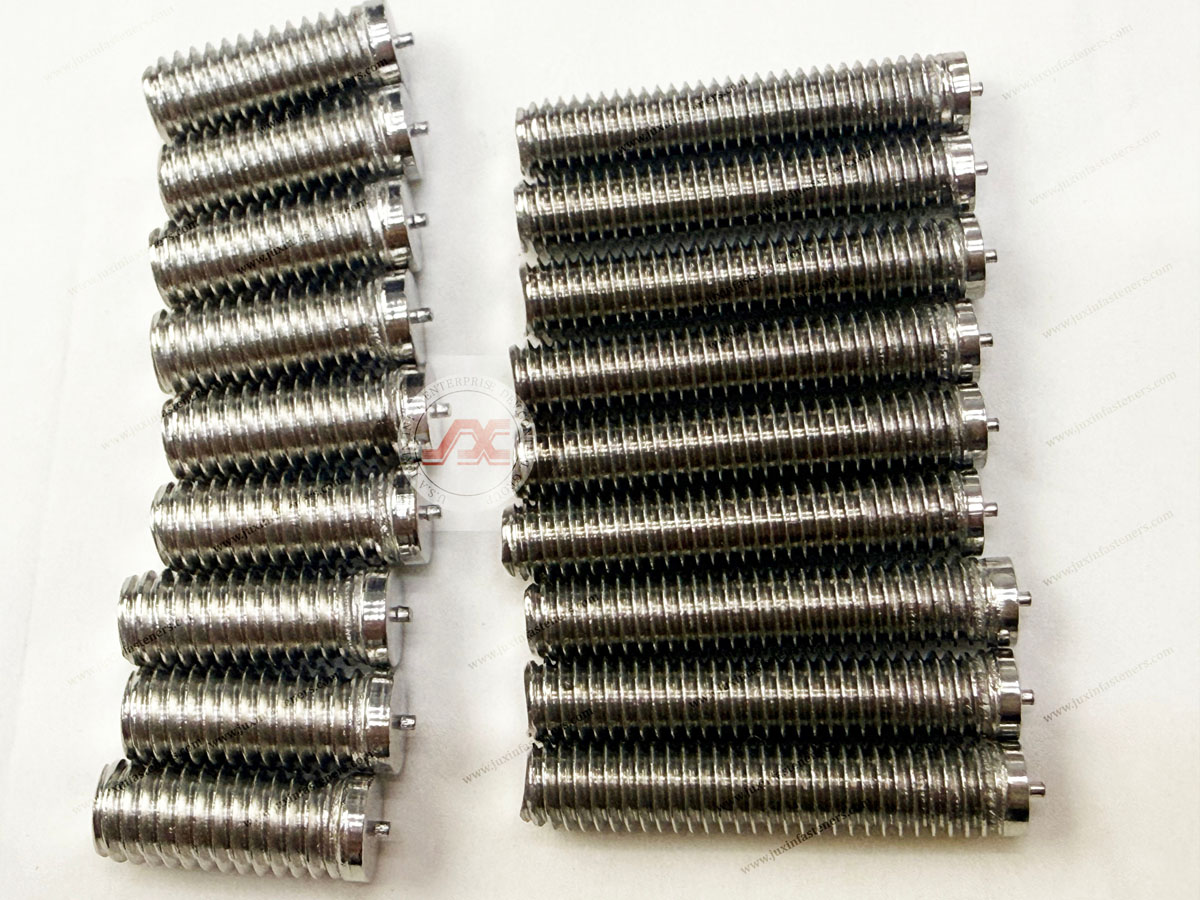
Before submitting an RFQ, procurement teams should verify five major information groups.
The drawing should identify all dimensions that influence manufacturing and assembly.
Depending on the component, this may include:
Thread diameter and pitch
Internal or external thread specification
Thread tolerance or class
Body shape and across-flat or across-corner dimensions
Flange dimensions
Projection geometry
Projection quantity and location
Overall height
Pilot or locating features
Hole or clearance interface
Critical positional tolerances
Datum structure
Surface finish requirements
Special features required for automated feeding or assembly
A thread designation such as an ISO metric thread class should be taken directly from the customer's drawing or applicable specification.
It should not be assumed as a universal default for every weld fastener.
Likewise, projection dimensions and tolerances should be controlled according to the specific weld fastener design and welding process.
A fixed tolerance such as ±0.03 mm should not be treated as a universal weld-fastener requirement.
For custom parts, the supplier should review the drawing before quotation if any dimension may affect forming, machining, tooling, welding, feeding, or final assembly.
A weld fastener cannot be evaluated independently from the material into which it will be welded.
The RFQ should identify, where available:
Base material grade
Material standard
Sheet or plate thickness
Coating or surface condition
Welding process
Production welding equipment
Expected weld location
Whether the substrate is coated, galvanized, painted, plated, or otherwise treated
Any customer-specific weldability requirements
For example, a weld nut intended for a low-carbon steel panel may require a different engineering evaluation from one intended for stainless steel, HSLA steel, or another substrate.
The supplier should understand the actual joint system rather than quoting a fastener solely from its nominal size.
Annual usage is one of the most important commercial inputs in an OEM RFQ.
Procurement teams should consider providing:
Estimated Annual Usage (EAU)
Initial order quantity
Typical release quantity
Minimum or maximum order quantities, if applicable
Forecast period
Prototype quantity
Pilot-production quantity
Mass-production timing
Required delivery frequency
Destination
Expected program duration
EAU helps suppliers evaluate manufacturing economics, tooling requirements, raw-material purchasing, production scheduling, inspection workload, and packaging.
However, EAU should not be used to assume a particular manufacturing method.
For example, a high-volume part may be suitable for cold forming, while another high-volume component may require a combination of forming, machining, thread processing, or secondary operations.
The appropriate manufacturing route depends on geometry, material, tolerances, annual volume, tooling economics, and quality requirements.
Quality documentation should be defined clearly in the RFQ rather than assumed.
Depending on the project, buyers may request:
Material certificates
Material heat or lot traceability
Dimensional inspection reports
First article inspection documentation
Surface treatment certificates
Plating thickness or performance documentation where specified
Welding validation records
Sample inspection results
Process capability data where specifically required
Customer-specific quality documentation
Certificates of conformity
Packaging inspection records
A mill test certificate or material certificate should not automatically be treated as mandatory for every weld fastener purchase.
The requirement depends on the customer's quality system, industry, specification, material risk, and contractual requirements.
Similarly, ISO, DIN, and ASME should not simply be listed as generic supplier “compliance standards.”
A procurement RFQ should identify the specific standard and applicable clause or specification where compliance is required.
Packaging can become a major manufacturing issue when weld fasteners are used in automated assembly.
The RFQ should state whether the components will be:
Bulk packed
Tray packed
Bagged
Layer packed
Separated by orientation
Supplied for automatic bowl feeding
Supplied for linear feeding
Delivered in a specified container
Subject to customer-specific packaging specifications
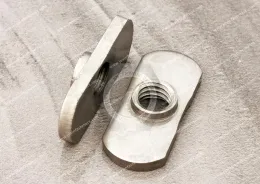
Weld nuts and studs may have projections, flanges, tabs, or asymmetric geometries that influence how they nest, interlock, orient, and feed.
Packaging therefore should not be treated as a purely logistics-related issue.
For automated production, the buyer and supplier should clarify the actual feeding and presentation requirements before mass production.
A supplier can usually prepare a more accurate quotation when the RFQ separates technical requirements from commercial requirements.
The technical package should answer:
What is the component?
Where is it installed?
What material is it welded into?
What welding process is used?
What dimensions are critical?
What thread is required?
What surface treatment is required?
What loads or environmental conditions matter?
What inspection requirements apply?
The commercial package should answer:
How many pieces are required?
How often will they be ordered?
When is the first delivery required?
Where will the goods be delivered?
What packaging is required?
What commercial terms apply?
Are tooling costs expected to be quoted separately?
Are prototype and production prices required separately?
Separating these two groups helps prevent technical assumptions from becoming hidden commercial assumptions.

Selecting a weld fastener supplier requires more than comparing unit prices.
A procurement team should evaluate the supplier across at least four dimensions:
The supplier should demonstrate a manufacturing route appropriate to the specified part.
Depending on geometry and volume, this may include:
Wire preparation
Cold forming or heading
Machining
Thread rolling or thread processing
Projection forming
Secondary operations
Surface treatment coordination
Dimensional inspection
Packaging and sorting
The important question is not whether a supplier claims to have a particular machine.
The important question is whether the supplier can consistently manufacture the required geometry, material, tolerances, thread, projections, finish, and annual volume.
For custom weld fasteners, a DFM review should take place before tooling is finalized.
For projects requiring traceability, procurement teams should confirm how the supplier controls:
Incoming raw material
Material grade
Heat or lot identification
Production batches
Subcontracted surface treatment
Inspection records
Finished-product identification
Traceability requirements should be agreed before production rather than introduced after the parts have already entered the supply chain.
A capable supplier should be able to discuss more than dimensions and unit prices.
Useful technical support may include:
Drawing review
DFM feedback
Material selection discussion
Projection geometry review
Welding-process considerations
Hole and panel interface review
Surface-treatment compatibility
Packaging and feeding considerations
Prototype evaluation
Failure analysis support
This becomes particularly important for custom weld fasteners where the fastener and welding process are closely connected.
Procurement teams should distinguish between:
The supplier's internal quality system
Product-specific inspection requirements
Customer-specific quality requirements
Industry-specific requirements
Regulatory or contractual requirements
Do not assume that a supplier's general quality statement automatically satisfies a customer's specific quality requirements.
The RFQ should state exactly what documentation, inspection, traceability, and validation are required.
The 2D drawing remains one of the most important documents in an industrial fastener RFQ.
A useful drawing should clearly define:
Overall dimensions
Thread dimensions
Flange dimensions
Body geometry
Projection geometry
Locating features
Critical radii or chamfers
Orientation features
Not every dimension needs the same tolerance.
Critical characteristics should be identified according to their effect on:
Welding
Assembly
Thread engagement
Positioning
Automated feeding
Clearance
Functional performance
Applying unnecessarily tight tolerances to every dimension can increase manufacturing cost without improving functional performance.
A good DFM review therefore asks:
Which dimensions are actually function-critical?
The RFQ should identify:
Thread size
Pitch
Internal or external thread
Thread tolerance/class
Thread length
Any customer-specific thread standard
Functional gauge requirements, where applicable
Thread requirements should be consistent with the mating bolt or screw and the final assembly environment.
A 3D CAD model can significantly improve communication for non-standard weld fasteners.
Common formats may include:
STEP
IGES
Native CAD formats where supported
The 3D model helps suppliers understand:
Overall geometry
Orientation
Clearance
Interface conditions
Projection location
Assembly envelope
Relationship between multiple features
However, the 3D model should not automatically override the 2D engineering drawing.
The procurement package should clearly identify which document controls dimensional requirements when discrepancies exist.
For production parts, revision control is also critical.
The RFQ should identify:
Drawing revision
CAD revision
Revision date
Engineering change status
Applicable specification revision
This prevents suppliers from quoting different versions of the same component.
Weld fasteners are unique because the final performance depends on both the fastener and the joining process.
Where available, the RFQ should identify:
Resistance projection welding or other joining method
Welding equipment type
Electrode configuration
Access limitations
Panel material
Panel thickness
Surface condition
Production orientation
Number and location of weld projections
Required inspection method
Any customer welding specification
Procurement does not necessarily need to specify the welding parameters.
In many projects, those parameters are developed and validated by the manufacturing or welding engineering team.
However, the supplier should know enough about the intended application to avoid supplying a geometry that is unsuitable for the planned welding process.
The lowest quoted unit price does not necessarily produce the lowest total procurement cost.
OEM sourcing teams should consider:
Total Cost of Ownership = Part Cost + Tooling + Packaging + Freight + Inspection + Quality Documentation + Inventory Impact + Production Risk
The exact cost structure varies by project.
For example, a slightly higher unit price may be commercially preferable if the supplier provides:
Better dimensional consistency
More suitable packaging
More reliable delivery
Lower sorting requirements
Better traceability
More efficient production release
More stable quality
Conversely, unnecessary requirements can increase cost without improving product performance.
The goal of an RFQ should therefore be cost transparency and functional optimization, not simply the lowest nominal piece price.
An OEM RFQ should ideally distinguish between different production stages.
The purpose is to confirm:
Geometry
Fit
Thread compatibility
Welding feasibility
Assembly access
Basic functional performance
The focus moves toward:
Repeatability
Production process stability
Packaging
Feeding
Inspection
Welding process validation
Supply-chain readiness
The focus expands to:
Capacity
Consistent quality
Lot traceability
Delivery performance
Packaging control
Change management
Long-term commercial stability
The supplier's quotation should make clear whether prototype tooling, production tooling, samples, inspection, and mass-production pricing are included or quoted separately.
A supplier audit should focus on evidence rather than marketing language.
Useful questions include:
What manufacturing process is proposed for this part?
Which operations are performed internally?
Which operations are subcontracted?
How are critical dimensions controlled?
How are production changes managed?
What material specification will be used?
How is incoming material verified?
Is heat/lot traceability available if required?
What inspection equipment is available?
How are thread characteristics verified?
How are critical dimensions recorded?
What happens when nonconforming parts are detected?
Can the supplier review the weld projection geometry?
Has the fastener been designed for the intended substrate and welding process?
What validation information is available?
How are weld-related complaints investigated?
What is the production lead time after approval?
What are the normal production batch sizes?
What is the packaging method?
How are urgent or forecast changes handled?
What is the process for engineering changes?
These questions help procurement teams distinguish between a supplier that can simply manufacture a drawing and a supplier that can support an engineered OEM component.
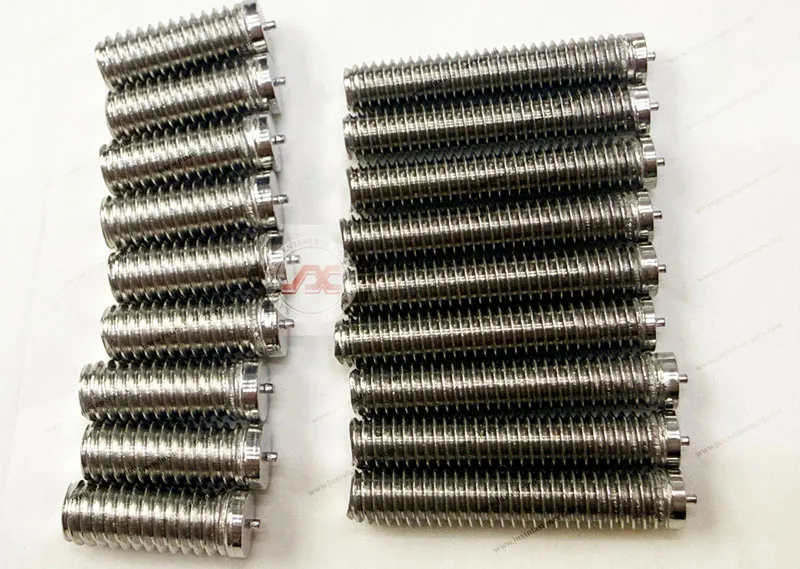
A photograph can communicate general appearance but cannot define:
Thread specification
Tolerances
Material
Projection geometry
Surface treatment
Critical dimensions
A drawing is normally required for an engineered quotation.
The same weld fastener geometry may behave differently depending on the substrate material, thickness, coating, and welding process.
The application information is therefore part of the engineering definition.
A supplier cannot accurately evaluate production economics without knowing approximate demand.
Providing EAU and release patterns creates a better basis for quotation.
If inspection reports, material certificates, traceability, packaging specifications, or special validation are required, these should be identified during quotation.
Late-added requirements can affect both cost and lead time.
If an alternative material, finish, geometry, or manufacturing route is acceptable, the RFQ should define what must remain equivalent.
For example:
Mechanical function
Thread compatibility
Weldability
Corrosion performance
Dimensions
Surface treatment
Regulatory compliance
Assembly performance
“Equivalent” should not be left as an undefined assumption.
Before releasing an RFQ, procurement teams can use the following checklist:
ENGINEERING
□ Current 2D drawing
□ Current 3D CAD model, if applicable
□ Drawing revision identified
□ Thread specification defined
□ Critical dimensions and tolerances defined
□ Projection geometry defined
□ Surface treatment defined

APPLICATION
□ Substrate material identified
□ Sheet/plate thickness identified
□ Welding process identified
□ Welding access considered
□ Assembly environment identified
□ Functional load or performance requirements identified

COMMERCIAL
□ Prototype quantity
□ Initial order quantity
□ Estimated annual usage
□ Release frequency
□ Required production date
□ Delivery destination
□ Commercial terms

QUALITY
□ Material documentation requirements
□ Inspection requirements
□ Traceability requirements
□ Surface-treatment documentation
□ Validation requirements
□ Customer-specific quality documents

PACKAGING
□ Bulk or tray packaging
□ Automated feeding requirements
□ Orientation requirements
□ Container specification
□ Labeling requirements
This checklist can significantly reduce quotation ambiguity before the RFQ reaches the supplier.
When several suppliers submit quotations, procurement should avoid comparing only the unit price.
A useful comparison table should include:
| Evaluation Area | Supplier A | Supplier B | Supplier C |
|---|---|---|---|
| Unit Price | |||
| Tooling Cost | |||
| Prototype Cost | |||
| Production Lead Time | |||
| Material Specification | |||
| Surface Treatment | |||
| Inspection Scope | |||
| Traceability | |||
| Packaging | |||
| Annual Capacity | |||
| Technical Support | |||
| Commercial Terms |
The final sourcing decision should reflect technical compliance, quality risk, supply reliability, and total cost, not just the lowest initial quotation.
For custom weld fasteners, DFM review is one of the most valuable steps before tooling and production.
A supplier may identify:
A difficult forming feature
An unnecessarily tight tolerance
An inefficient projection geometry
An avoidable machining operation
A problematic material choice
A coating compatibility concern
A feeding limitation
A packaging problem
A feature that provides no functional benefit
Early review gives the OEM an opportunity to improve the design before tooling investment and production qualification.
This is particularly important for high-volume programs because a small design issue can become a recurring production cost after launch.
A strong OEM procurement process should connect engineering, sourcing, manufacturing, quality, and the supplier.
[ Product Design ]
       |
       v
[ Engineering Drawing + CAD ]
       |
       v
[ Substrate + Welding Definition ]
       |
       v
[ Procurement RFQ ]
       |
       v
[ Supplier DFM Review ]
       |
       v
[ Technical + Commercial Quotation ]
       |
       v
[ Prototype Samples ]
       |
       v
[ Welding / Assembly Validation ]
       |
       v
[ Production Approval ]
       |
       v
[ Mass Production ]
       |
       v
[ Ongoing Quality + Supply Management ]
This integrated workflow is much more robust than treating fasteners as a simple catalog purchasing item.
For OEM applications, the best supplier relationship usually begins before mass production.
An effective sourcing process can include:
Identify where the weld fastener will be installed and what function it performs.
Make sure the supplier receives the correct engineering revision.
Identify material, thickness, coating, and welding process.
Share prototype, pilot, annual, and release quantities where available.
Ask the supplier to identify manufacturing or welding-related risks before tooling.
Ensure tooling, prototypes, inspection, packaging, and production parts are clearly identified.
Evaluate fit, thread function, welding behavior, and other application-specific requirements.
Only after technical and commercial requirements are aligned should the component enter regular production.
JUXIN FASTENERS approaches weld fastener procurement as an engineering and manufacturing process rather than simply a price quotation.
For OEM and industrial customers, technical review can cover:
Standard and custom weld nuts
Weld studs
Projection weld fasteners
Non-standard geometries
Drawing and CAD review
Material selection
Projection design considerations
Manufacturing DFM
Prototype development
Surface-treatment requirements
Packaging requirements
Production sourcing
The objective is to establish a clear connection between the customer's engineering requirements and the supplier's manufacturing process.
For custom components, providing the complete technical package at the RFQ stage allows the supplier to identify potential manufacturing and application issues before production tooling is committed.
Weld Fasteners Solutions
Weld Nuts vs. Self-Clinching Nuts Engineering Guide
Weld Nuts vs. Blind Rivet Nuts Engineering Guide
Custom Weld Fasteners Engineering & Manufacturing Guide
Automotive BIW Weld Fasteners
EV Battery Enclosure Weld Fasteners
Electrical Enclosure Weld Fasteners
Heavy Machinery and Agricultural Weld Fasteners
At minimum, provide the current 2D drawing, fastener specification, material, surface treatment, application/substrate information, required quantity, and delivery requirements.
For custom or application-sensitive parts, a 3D CAD model and information about the welding process can make the quotation and DFM review more accurate.
No.
A complete 2D drawing may be sufficient for many standard components. However, a 3D model can be valuable for custom geometries,
complex interfaces, unusual projections, or components where orientation and clearance are difficult to interpret from a 2D drawing.
Not as a universal requirement.
Projection dimensions and tolerances should be based on the specific fastener design, welding process, substrate, tooling, and functional requirements.
If the customer already has a validated drawing or welding specification, that requirement should be followed.
Not necessarily.
Material certificates and traceability documentation should be specified when required by the customer's quality system, material specification, industry requirements, or contractual terms.
EAU is important because it helps the supplier evaluate production economics, tooling, material purchasing, capacity planning, packaging, and production scheduling.
It also allows procurement teams to compare quotations on a more realistic total-cost basis.
RFQ response time depends on the completeness and complexity of the inquiry.
A standard catalog inquiry may be simpler to review than a custom weld fastener requiring drawing analysis, DFM evaluation, tooling assessment, material review, and quotation preparation.
For this reason, the most efficient approach is to provide the complete technical and commercial package at the beginning of the RFQ process.
Packaging can directly affect automated assembly.
Weld fasteners with projections, tabs, flanges, or asymmetric geometries can interlock, nest, become misoriented, or experience thread damage if packaging and handling are unsuitable.
Where automatic feeding is involved, the RFQ should clearly state the required presentation and packaging conditions so the supplier can evaluate them before production.
Procurement teams should also compare:
Tooling cost
Prototype cost
Lead time
Material specification
Surface treatment
Quality documentation
Traceability
Inspection scope
Packaging
Production capacity
Technical support
Delivery reliability
Total cost of ownership
The cheapest quoted unit price is not necessarily the lowest-risk sourcing option.
If you are sourcing weld nuts, weld studs, projection weld fasteners, or custom weld fasteners for an OEM or industrial application, send the complete engineering and commercial information with your RFQ.
Useful information includes:
2D engineering drawing
3D CAD model, if available
Material specification
Sheet or plate thickness
Welding process
Surface treatment
Prototype quantity
Estimated annual usage
Packaging requirements
Quality and documentation requirements
Target production schedule
Contact JUXIN FASTENERS
Email: info@juxinfasteners.com
Website: www.juxinfasteners.com
JUXIN FASTENERS supports OEM and industrial buyers with weld fastener engineering review, custom manufacturing, DFM support, prototyping, and production sourcing.
Precision Fastening Solutions Since 2003.
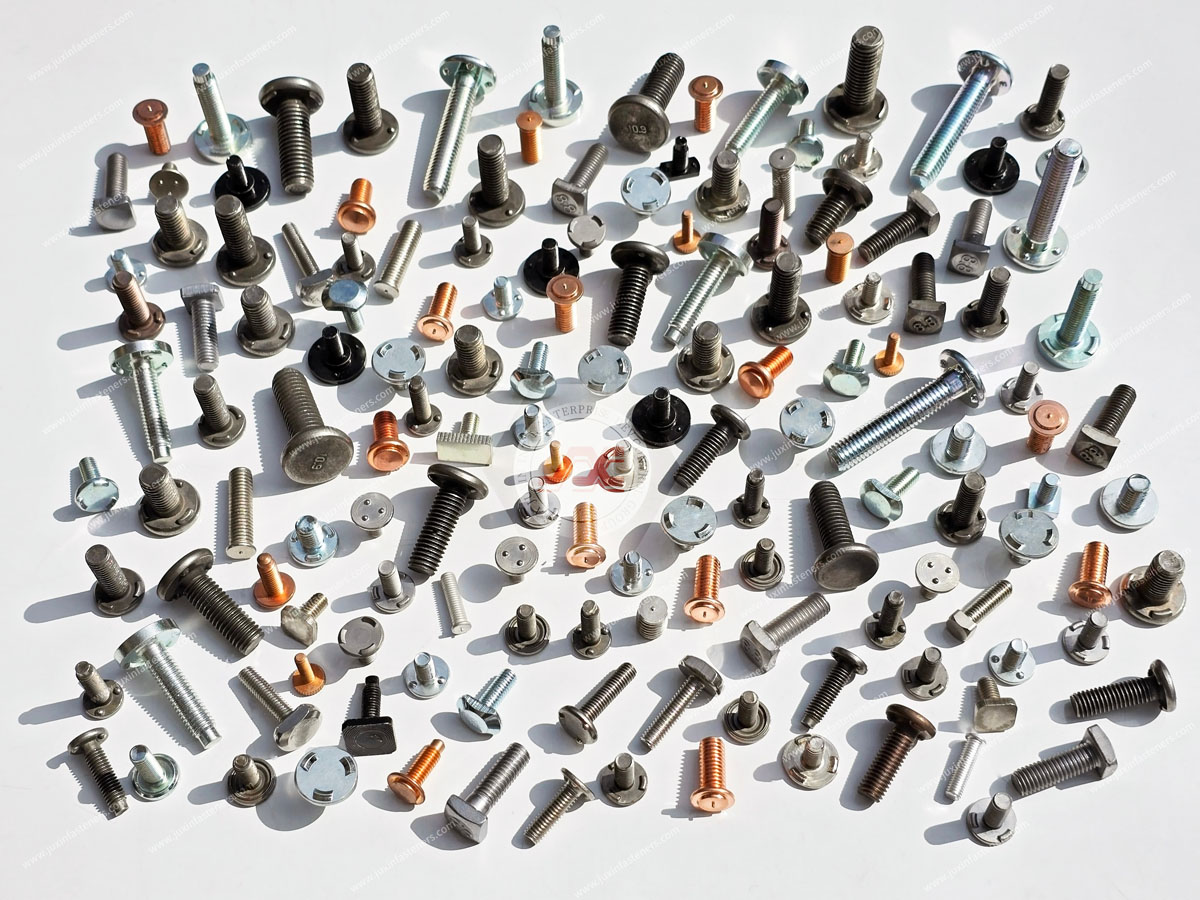
Product Packaging
Packaging Standard
At Juxin Fasteners, we apply standardized export packaging to ensure product protection, traceability, and compliance with international logistics requirements.
1. Standard Export Packaging
Unless otherwise specified, all products will be packed according to our factory standard export packaging, which includes:
Moisture-resistant inner protection
Poly bag or small box packing as required
Reinforced export cartons
Clear labeling with part number, specification, batch number, and quantity
Palletizing for sea or air shipment when necessary
Our standard packaging is designed to ensure safe transportation, efficient warehousing, and long-distance international shipping.
2. Customized Packaging Options
We also provide customized packaging solutions according to customer requirements, including but not limited to:
Private labeling
Customized barcodes
Specific carton dimensions
Retail packaging
Special pallet configuration
Customer-specific marking and identification
So that you know, customized packaging may involve additional costs and extended lead time depending on the complexity of the requirements.
3. Compliance & Quality Assurance
All packaging processes are controlled under our ISO 9001 quality management system to ensure consistency, traceability, and product integrity throughout the supply chain.
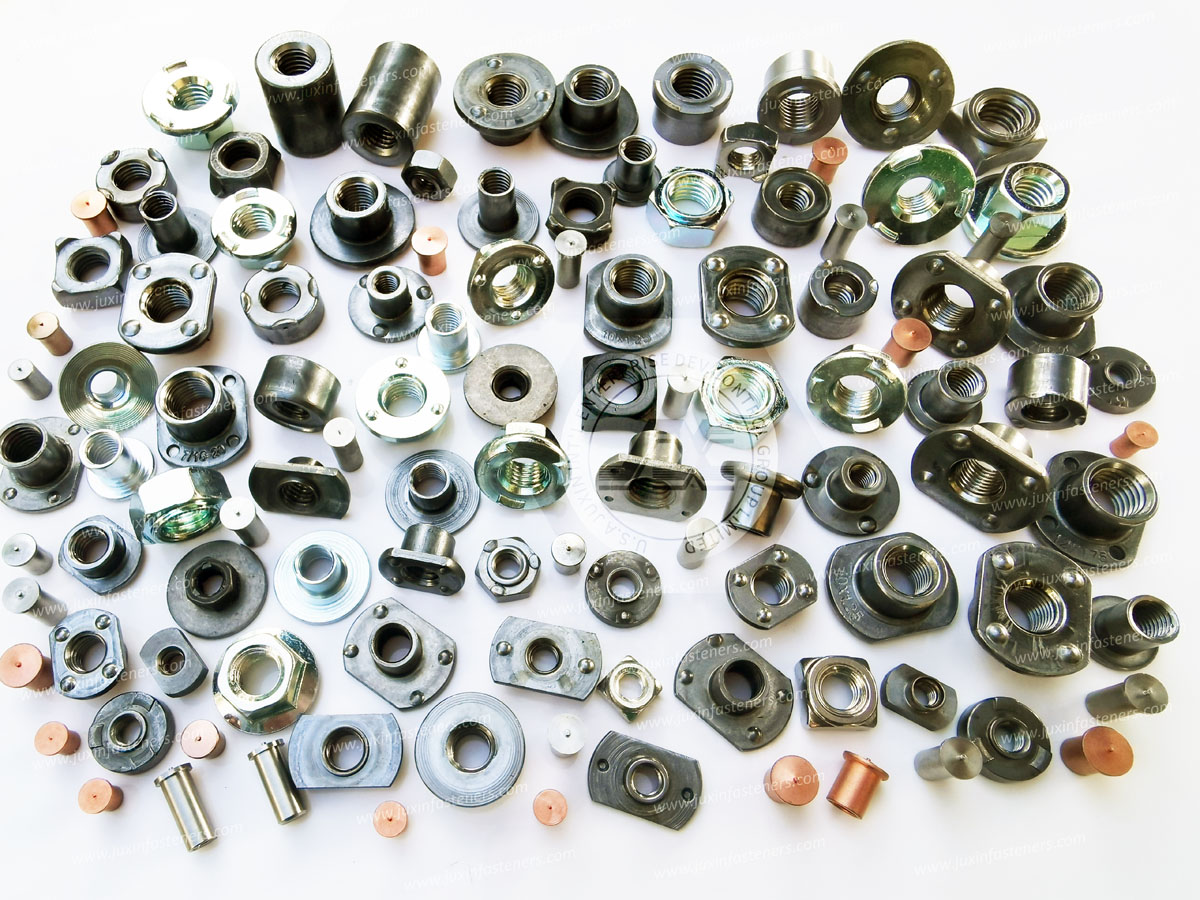
Product Pictures
Contact Us
Tel.:
+86 020 8621 0320
+86 020 3121 6067
E-mail:
Technical Support:
Navigation
SEND INQUIREY