Call Us
+86 136 6007 9809
Call Us
+86 136 6007 9809

What fasteners are used in electrical enclosures and server cabinets?
Electrical enclosures, NEMA-rated cabinets, IP-rated enclosures, control panels, server cabinets, and other sheet-metal electrical equipment can use
weld nuts, grounding weld studs, threaded weld fasteners, and internal mounting fasteners that are permanently attached to the enclosure panel before final assembly or finishing.
Product Specification
What fasteners are used in electrical enclosures and server cabinets?
Electrical enclosures, NEMA-rated cabinets, IP-rated enclosures, control panels, server cabinets, and other sheet-metal electrical equipment can use weld nuts, grounding weld studs, threaded weld fasteners, and internal mounting fasteners that are permanently attached to the enclosure panel before final assembly or finishing.
Depending on the enclosure design and manufacturing process, these fasteners may be installed using resistance projection welding or other application-specific welding processes. They provide threaded mounting points for components such as DIN rails, cable-management hardware, brackets, grounding or bonding conductors, covers, terminal hardware, and other internal equipment.
The key engineering advantage is that the threaded fastening point can be created on the inside or controlled side of the sheet-metal structure, reducing the need for through-holes, external nuts, or additional hardware that could interfere with the exterior appearance of a finished cabinet.
For electrical enclosure manufacturers, however, fastener selection is not simply a question of thread size.
The design must balance:
Mechanical attachment requirements
Electrical continuity and protective bonding requirements
Sheet-metal material and thickness
Welding compatibility
Coating and surface-finish conditions
Internal component access
Exterior appearance requirements
Enclosure sealing architecture
Manufacturing sequence
Automated or manual assembly requirements
Corrosion environment
Inspection and validation requirements
A grounding weld stud, for example, should not be treated as automatically providing a compliant grounding path merely because it is welded to the enclosure.
The complete electrical path—including the enclosure material, coatings, contact interfaces, terminal hardware, assembly condition, and applicable electrical requirements—must be evaluated and validated.
Likewise, a weld fastener does not automatically make an enclosure NEMA- or IP-rated.
The enclosure's ingress protection depends on the complete enclosure design, including seams, doors, gaskets, cable entries, penetrations, covers, and assembly interfaces.
A practical enclosure fastening architecture can be represented as:
      Internal Component
              |
              v
     [ Internal Weld Nut ]
              |
              |
===================================  Enclosure Wall
              |
              |
        Clean Exterior Face
For grounding or bonding applications:
 Grounding / Bonding Conductor
              |
       [Terminal / Lug]
              |
       [Grounding Stud]
              |
        Welded Interface
              |
===================================  Enclosure Panel
              |
       Protective Bonding Path
The objective is to create a repeatable fastening and bonding interface while preserving the required mechanical, electrical, environmental, and cosmetic performance of the finished enclosure.
JUXIN FASTENERS supports OEM enclosure manufacturers with weld fastener selection based on the actual sheet material, fastener geometry,
welding process, coating system, electrical requirements, and production conditions.
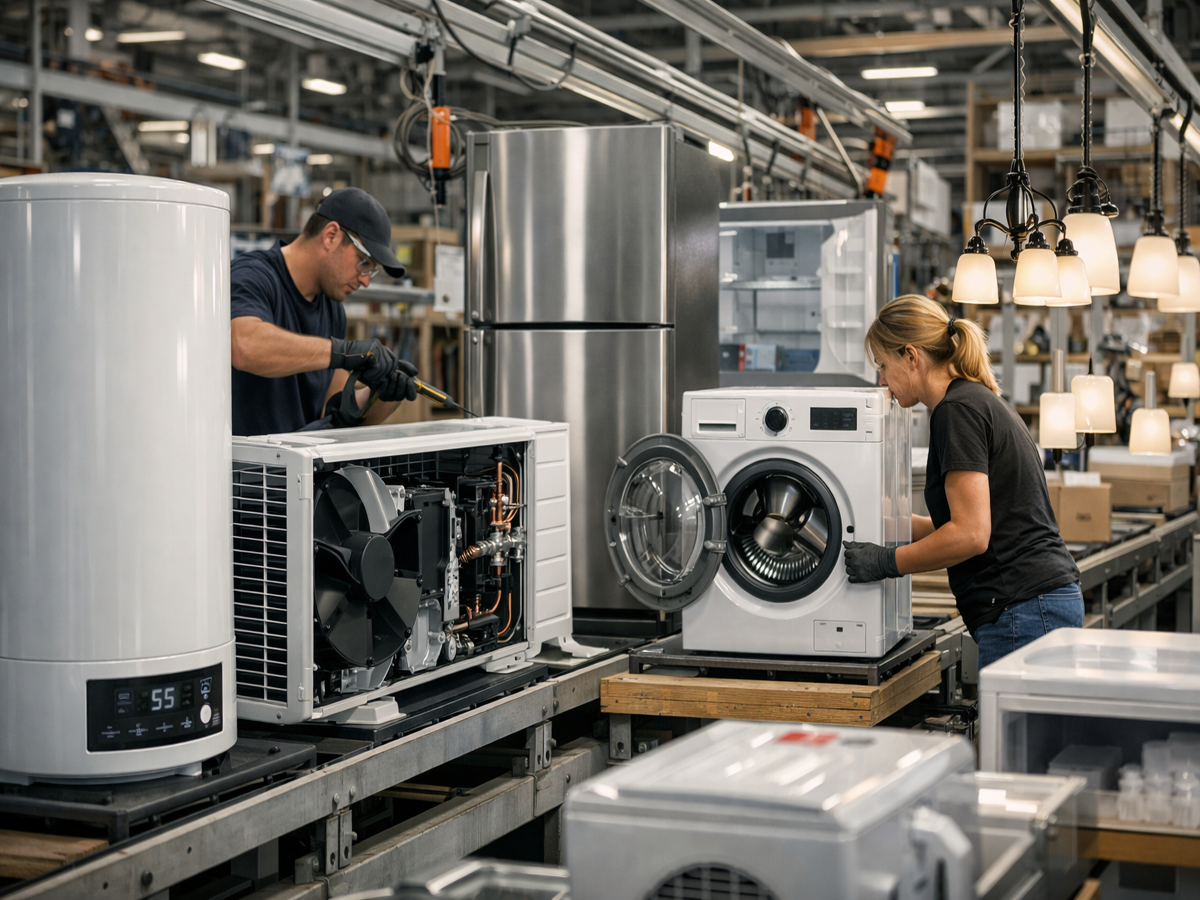
Electrical cabinets frequently contain grounding or protective bonding points that connect metallic enclosure components to the equipment grounding or protective bonding system.
A grounding weld stud can provide a convenient attachment point for a grounding conductor, bonding strap, terminal lug, or other electrical connection.
However, the engineering objective is not simply to "pierce paint."
The electrical connection must be designed so that the complete intended current path remains suitable under the applicable electrical and environmental requirements.
Important considerations include:
Base-metal electrical conductivity
Surface coatings and paint systems
Contact area
Terminal or lug design
Fastener material
Fastener surface treatment
Contact pressure
Joint configuration
Corrosion exposure
Vibration
Thermal cycling
Assembly torque
Long-term contact stability
Applicable customer or electrical standards
For painted or powder-coated enclosures, the location and preparation of the grounding interface are especially important.
In some designs, the grounding point may require a controlled uncoated contact area, a coating-removal operation, a conductive interface feature, or another validated method of establishing the required electrical path.
Therefore, a specification such as "grounding stud suitable for painted enclosure" is not sufficient by itself for procurement.
The RFQ should identify the actual coating system and electrical bonding requirement.
A useful procurement specification can include:
Enclosure base material
Sheet thickness
Coating type
Coating thickness or process, where controlled
Grounding/bonding application
Terminal or lug configuration
Required electrical test method
Environmental exposure
Corrosion requirements
Fastener material
Surface finish
Thread specification
Electrical enclosure manufacturers often place high importance on exterior appearance.
Control cabinets, electrical boxes, server racks, automation cabinets, and other visible equipment may receive painting, powder coating, or other finishing processes after weld fasteners have been installed.
The manufacturing objective is therefore to create the required internal attachment without producing unacceptable distortion, discoloration, indentation, spatter, or other visible defects on the exterior surface.
Projection welding parameters and fastener geometry influence how heat and current are concentrated around the weld location.
Relevant process variables can include:
Projection geometry
Projection height and shape
Electrode geometry
Electrode force
Welding current
Weld time
Squeeze time
Hold time
Sheet material
Sheet thickness
Fastener material
Surface condition
Coating condition
Panel stiffness
Heat flow through the assembly
These parameters must be developed for the actual fastener, sheet material, equipment, and production process.
There is no universal welding parameter set that guarantees zero exterior distortion for every electrical enclosure.
For thin or cosmetically sensitive panels, the enclosure manufacturer should validate the complete welding process before production release.
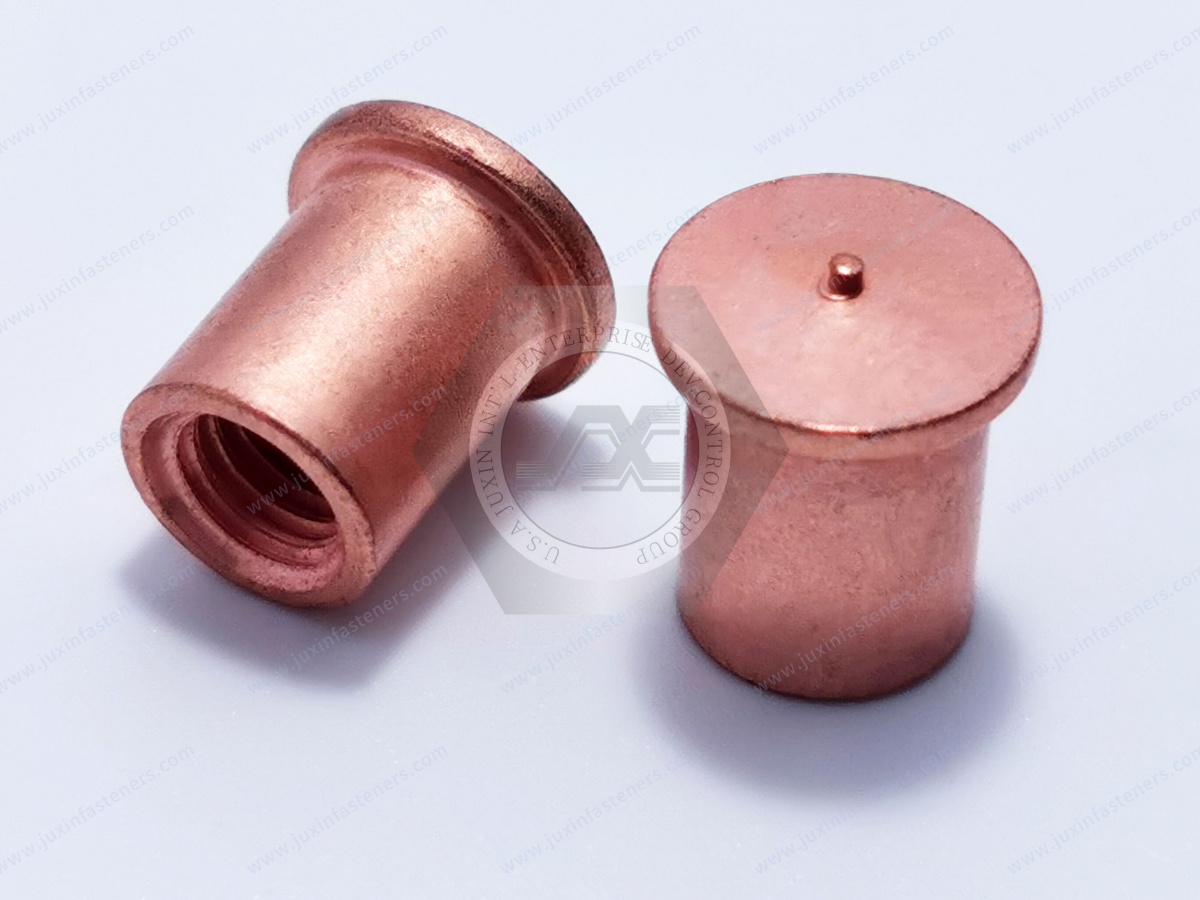
Weld nuts are commonly considered when an enclosure requires permanent internal threaded mounting points.
Typical applications include:
DIN rail mounting
Electrical component brackets
Terminal-block supports
Cable-management brackets
Busbar support hardware
Fan or filter mounting
Transformer brackets
Control equipment
Accessory panels
Internal shields
Structural support brackets
The major advantage is that the threaded mounting feature can be integrated into the sheet-metal manufacturing process before the final assembly stage.
This can reduce dependence on loose nuts that are difficult to access inside enclosed or partially assembled structures.
However, the appropriate weld nut geometry depends on the panel design.
The engineering team should consider:
Nut flange geometry
Projection configuration
Thread size
Fastener orientation
Available electrode access
Hole configuration, where applicable
Panel thickness
Local panel stiffness
Component loading
Assembly tool access
For components subject to repeated assembly and removal, the thread and welded attachment should be evaluated for the actual installation environment rather than selected solely by nominal thread size.
Server racks and electronic equipment cabinets have additional design considerations.
Internal mounting hardware may need to support:
Cable-management systems
Fan assemblies
Power-distribution components
Brackets
Grounding conductors
Shielding panels
Equipment supports
Thermal-management components
Accessory hardware
In these applications, fastener placement can be as important as fastener strength.
A poorly positioned weld nut can interfere with cable routing, internal clearances, removable panels, or service access.
A grounding stud may also need to be positioned so that the grounding conductor can be installed and serviced without interfering with other components.
For high-volume rack or cabinet production, the fastener design should therefore be reviewed together with the enclosure's stamping, bending, welding, coating, and final assembly sequence.
Electrical enclosures can be manufactured from different grades and forms of sheet metal.
Common material families may include:
Low-carbon steel
Stainless steel
Galvanized or coated steel
Aluminum and aluminum alloys
Other application-specific sheet materials
Weld fastener selection must consider the compatibility between the fastener, substrate, welding process, and required final performance.
Low-carbon steel is widely used in fabricated electrical cabinets and industrial control enclosures.
Resistance projection welding can be an efficient method for attaching suitable weld nuts and weld studs to compatible steel sheet.
The engineering review should include:
Sheet thickness
Steel grade
Surface condition
Coating condition
Fastener material
Projection design
Electrode access
Welding equipment capability
Required mechanical performance
The correct combination should be validated on representative production material.
Stainless steel enclosures are frequently selected where corrosion resistance, cleanliness, or appearance is important.
However, stainless steel should not simply be treated as equivalent to carbon steel from a welding-process perspective.
Its electrical and thermal characteristics can influence resistance welding behavior, while the surface condition can also affect the electrical interface.
Important considerations include:
Stainless steel grade
Sheet thickness
Fastener material
Surface finish
Welding process
Electrode configuration
Heat input
Required corrosion performance
Electrical bonding requirements
Where a grounding point is required on a stainless enclosure, electrical continuity and corrosion behavior should be evaluated together.
Coated steel can introduce additional process considerations because the coating affects the electrical and thermal interface during welding.
The enclosure manufacturer should determine whether the welding operation is performed:
Before coating
Through a controlled coating condition
At a locally prepared area
With another validated process sequence
The effect of the coating on welding consistency, electrode condition, appearance, corrosion protection, and electrical continuity should be evaluated as part of process development.
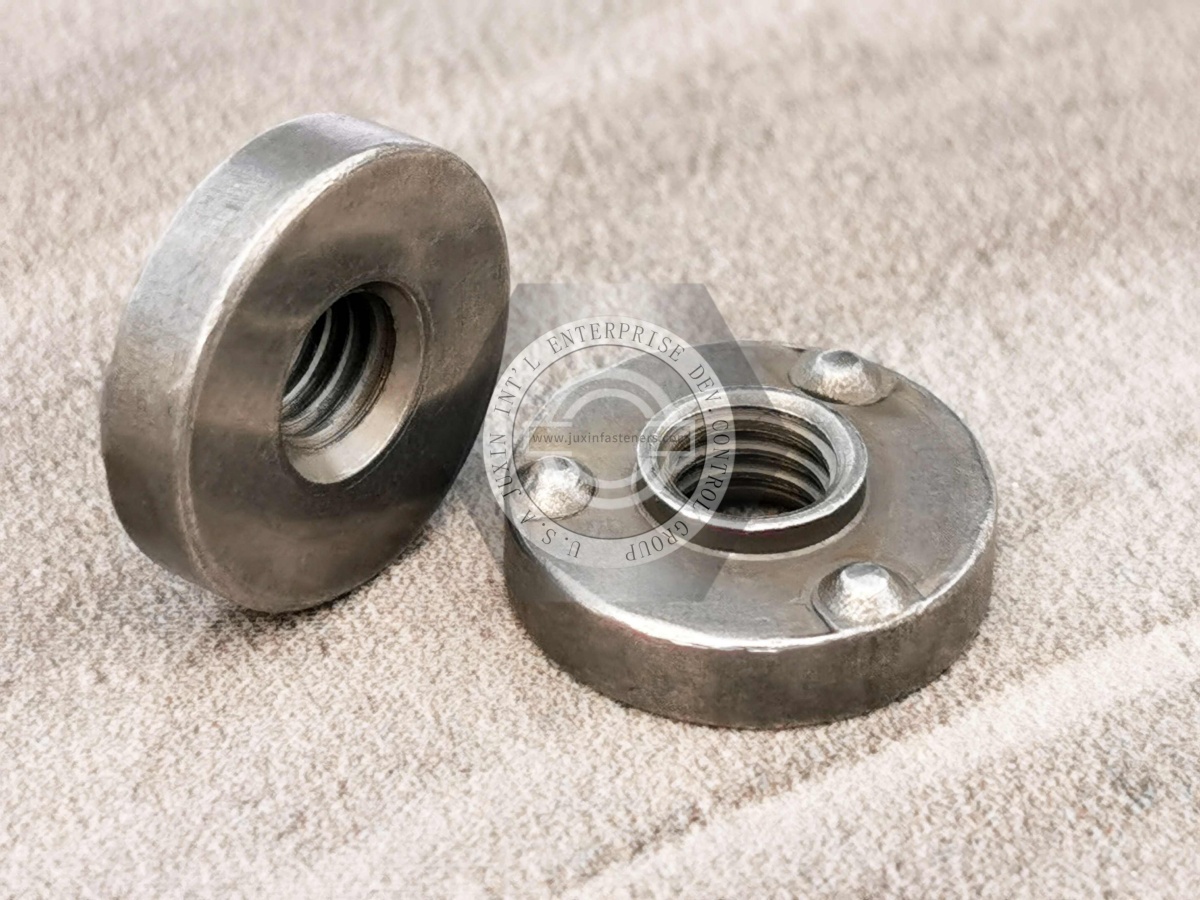
Although both may be attached to sheet metal by welding, grounding studs and weld nuts serve different engineering purposes.
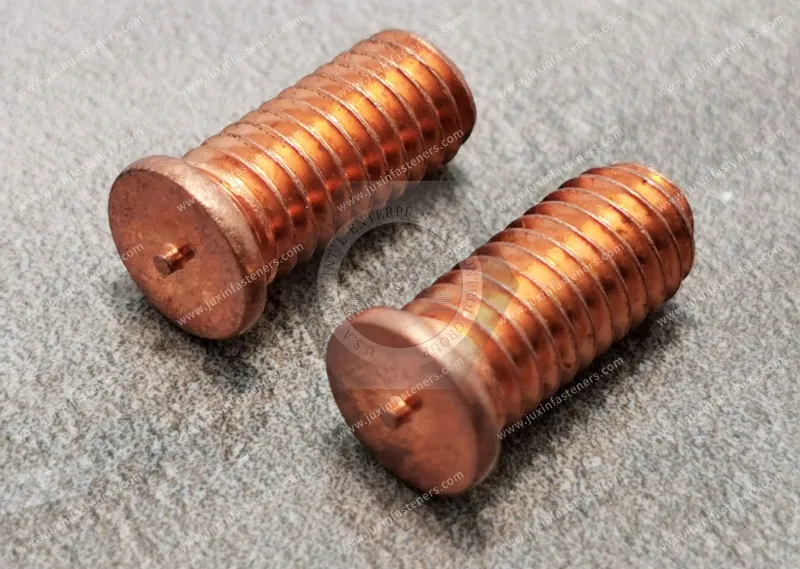
Grounding studs are typically considered when a protruding threaded attachment point is required for:
Grounding terminals
Bonding straps
Electrical conductors
Protective bonding connections
Cable or terminal attachment
The stud geometry should be selected according to the terminal hardware and installation method.
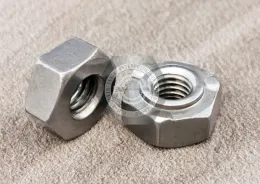
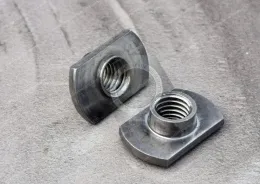
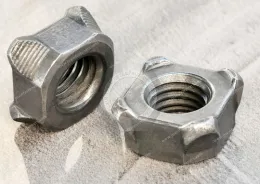
Weld nuts are typically used where an internal female thread is required.
Applications may include:
DIN rail attachment
Component mounting
Brackets
Covers
Cable-management hardware
Internal support structures
The two should not be treated as interchangeable simply because both can be welded to sheet metal.
The correct choice depends on the required connection architecture.
One of the major reasons to integrate weld fasteners into electrical enclosure production is to maintain a controlled exterior surface.
A typical manufacturing sequence may involve:
Sheet Metal Forming
        ↓
Fastener Positioning
        ↓
Resistance / Projection Welding
        ↓
Weld Inspection
        ↓
Cleaning / Surface Preparation
        ↓
Painting or Powder Coating
        ↓
Final Assembly
        ↓
Electrical / Mechanical Inspection
The actual manufacturing sequence varies by enclosure design and factory process.
Installing weld fasteners before final finishing can eliminate the need for some externally visible mechanical hardware.
However, the process must also account for:
Weld spatter
Panel deformation
Heat marks
Surface contamination
Coating compatibility
Weld accessibility
Fastener alignment
Thread protection during finishing
Post-weld cleaning
The objective should be controlled and validated exterior quality, rather than an unsupported guarantee of a "flawless" or "zero-defect" finish.
For highly visible enclosure panels, cosmetic acceptance criteria should be defined in the customer's drawing or quality specification.
Design for Manufacturing is especially important when weld fasteners are installed during high-volume enclosure production.
The location should provide adequate access for the welding electrodes and avoid interference with:
Bends
Flanges
Embossments
Adjacent welds
Internal components
Cable routes
Gaskets
Service openings
The required clearance should be determined from the actual welding equipment and electrode configuration rather than from a universal distance rule.
Where the weld nut or other fastener uses a prepared hole, the hole size, location, and tolerance should be matched to the specific fastener design.
A generic hole tolerance should not be assumed for every weld fastener.
The enclosure drawing should define the relevant positional requirements based on the assembly function.
Before releasing the design, engineers should confirm that assembly tools can reach the threaded connection.
This is particularly important inside:
Deep cabinets
Server racks
Narrow electrical boxes
Folded sheet-metal structures
Multi-level equipment assemblies
A mechanically suitable fastener can still create a production problem if the operator or automated tool cannot reach it reliably.
Orientation should be reviewed during the complete assembly process.
The fastener should support the intended:
Component installation direction
Tool access
Grounding terminal installation
Cable routing
Service access
Final enclosure assembly
This becomes increasingly important in automated or semi-automated production.
Quality control should cover both the fastener and the welded attachment.
Typical inspection points may include:
Thread specification
Thread gauge acceptance
Overall fastener dimensions
Flange dimensions
Stud height
Fastener position
Perpendicularity or orientation where functionally relevant
Projection geometry
Surface condition
The actual inspection characteristics should be derived from the approved drawing and customer specification.
Weld quality should be evaluated according to the applicable process and customer requirements.
Possible validation methods may include:
Visual inspection
Destructive weld testing
Torque or rotation testing where appropriate
Push-out or pull-out testing where appropriate
Metallographic examination
Process monitoring
Electrical continuity testing for grounding applications
No single test is sufficient for every application.
For example, a grounding stud requires not only mechanical attachment but also verification of the intended electrical path.
Where the weld fastener forms part of a protective bonding or grounding system, the electrical validation method should be clearly defined.
Depending on the product and applicable requirements, the evaluation may consider:
Connection resistance
Continuity
Contact stability
Environmental exposure
Corrosion
Thermal cycling
Mechanical disturbance
Final assembled condition
The relevant acceptance criteria should come from the applicable electrical standard, customer specification, or system-level design requirement.
A weld stud should therefore not be marketed as a "grounding solution" solely because it can be welded to a metal panel. Its suitability depends on the complete electrical and mechanical system.
Weld fasteners can be used inside NEMA- or IP-rated enclosure systems, but the fastener itself does not automatically establish the enclosure's NEMA or IP rating.
Ingress protection is a system-level characteristic.
The complete enclosure may include:
Door seals
Gaskets
Cable glands
Penetrations
Welded seams
Access covers
Fastener interfaces
Ventilation components
Drainage features
Therefore, when a weld nut or weld stud is specified for an enclosure described as "IP-rated" or "NEMA-rated," procurement teams should distinguish between:
Fastener function
and
Complete enclosure certification or ingress performance.
A threaded weld fastener may support the mechanical assembly while the enclosure's overall sealing performance depends on the complete design.
This distinction is particularly important for outdoor electrical cabinets, industrial control equipment, battery-related electrical enclosures, and equipment exposed to dust, water, cleaning processes, or condensation.
For OEM procurement, the fastest way to obtain an accurate quotation is to provide enough technical information for the supplier to understand the complete fastening application.
A useful RFQ package can include:
Weld nut, weld stud, or other weld fastener type
Thread size
Thread standard
Fastener dimensions
Projection geometry, where applicable
Material
Surface finish
Required packaging
Sheet material
Sheet thickness
Coating or surface treatment
Panel geometry
Fastener location
Edge proximity
Hole geometry
Assembly environment
Resistance welding process
Available welding equipment
Electrode configuration
Welding orientation
Automation requirements
Production volume
Prototype or mass-production status
For grounding or bonding applications, also provide:
Grounding purpose
Terminal or lug type
Required electrical test
Applicable customer specification
Environmental exposure
Corrosion requirements
Coating condition at the contact area
Where applicable, provide:
Inspection plan
Drawing tolerances
Weld validation requirements
Traceability requirements
Sampling requirements
Packaging requirements
Customer-specific documentation
This information allows a supplier to evaluate not just the unit price of the fastener but the complete manufacturing and validation requirements.
Procurement teams should avoid evaluating enclosure weld fasteners solely on piece price.
The total installed cost can include:
Fastener unit cost
Welding cycle requirements
Labor
Electrode maintenance
Scrap
Rework
Thread repair
Coating-related rework
Assembly time
Additional loose hardware
Inspection
Packaging
Logistics
A weld nut that costs slightly more per piece may still provide a lower total manufacturing cost if it eliminates loose nuts, simplifies assembly, improves tool access, or reduces rework.
Conversely, a more complex weld fastener is not automatically the most economical choice.
The correct evaluation should consider the complete production process.
Before releasing an electrical enclosure design for production, review the following:
Is the fastener type appropriate for the required mechanical connection?
Is a weld nut or weld stud the correct connection architecture?
Is the sheet material compatible with the selected welding process?
Is the sheet thickness suitable for the selected fastener and welding process?
Is electrode access available?
Is the fastener located away from process interference?
Is the fastener orientation suitable for final assembly?
Can the assembly tool reach the thread?
Is the grounding point positioned correctly?
Has the electrical bonding path been evaluated?
Has the effect of paint or powder coating been considered?
Is the external cosmetic surface protected from unacceptable weld effects?
Have weld integrity requirements been defined?
Have electrical continuity requirements been defined where applicable?
Has the complete enclosure sealing architecture been considered?
Are NEMA/IP requirements being evaluated at the complete enclosure level rather than assigned automatically to the fastener?
Are drawing tolerances sufficient for repeatable production?
Have prototype weld trials been completed?
Has the production welding process been validated?
Are inspection criteria documented?
Are packaging and corrosion-protection requirements defined?
Electrical enclosure fastening requires more than a standard threaded component.
The fastener must work within the manufacturer's complete sheet-metal, welding, coating, assembly, electrical, and quality-control process.
JUXIN FASTENERS can support OEM and industrial enclosure projects involving:
Weld nuts
Grounding weld studs
Weld studs
Custom weld fasteners
Sheet-metal fastening solutions
Electrical cabinet hardware
Server rack fastening
Industrial enclosure fastening
Custom OEM fastener development
The engineering evaluation should be based on the actual application rather than a generic catalog selection.
For projects involving grounding, coating, exterior cosmetic requirements, or enclosure sealing,
customers should provide the relevant drawings and specifications so that the fastener design and manufacturing process can be evaluated together.
Weld Fasteners Solutions — Engineering information covering weld nuts, weld studs, projection welding, DFM, material compatibility, and weld-fastener selection.
Electrical Enclosure Fastening Solutions — Application-focused fastening strategies for control cabinets, electrical boxes, server racks, and industrial sheet-metal enclosures.
Grounding Weld Studs & Nuts — Threaded weld fastening options for grounding and bonding applications where the complete electrical connection requires validation.
Weld Fastener Engineering — Technical guidance covering welding process design, sheet-metal compatibility, fastener geometry, inspection, and OEM sourcing.
Weld fasteners can be attached to the appropriate side of the sheet-metal panel before final finishing,
allowing internal threaded mounting points to be created without requiring conventional externally visible nuts or through-fasteners.
However, exterior appearance depends on the complete welding process, including electrode geometry,
welding parameters, sheet thickness, material, panel stiffness, and production sequence.
Therefore, cosmetic performance should be validated on representative production panels rather than assumed automatically.
Yes, suitable weld studs can be used as attachment points for grounding or protective bonding conductors.
However, the complete electrical path must be evaluated. Paint, powder coating, contact interfaces, terminal hardware, corrosion,
assembly conditions, and the applicable electrical requirements can all affect the final connection.
A weld stud should not be assumed to provide compliant grounding simply because it is welded to the enclosure.
No.
A weld fastener alone does not establish an IP67 or IP68 enclosure rating.
IP performance depends on the complete enclosure system, including doors, gaskets, seams, cable entries, penetrations, covers, and other interfaces.
The fastener may be part of the mechanical assembly, but the final ingress-protection performance must be validated at the enclosure level.
Yes. Weld nuts can provide permanent threaded mounting points for brackets, cable-management systems, fans, electrical components, shielding panels, and other internal equipment.
The fastener position should be reviewed against rack geometry, tool access, cable routing, service requirements, and the production welding process.
They can be, but the manufacturing sequence must be considered.
If welding is performed before coating, the weld area, thread, fastener surface, and subsequent coating process should be evaluated.
For grounding applications, the coating and electrical contact strategy requires particular attention because the desired mechanical attachment does not automatically establish the required electrical continuity.
At minimum, provide the fastener type, thread, dimensions, sheet material, sheet thickness, coating condition, application, welding process, annual or project volume, and relevant drawing requirements.
For grounding applications, also provide the electrical bonding requirement, terminal configuration, environmental conditions, and applicable test or customer specification.
The more complete the RFQ information, the more accurately the supplier can evaluate fastener geometry, material, welding compatibility, quality requirements, and total manufacturing cost.
Send your electrical enclosure drawings, grounding specifications, sheet-metal information, coating requirements, and volume requirements to our engineering team.
EMAIL: info@juxinfasteners.com
WEBSITE: www.juxinfasteners.com
JUXIN FASTENERS provides OEM fastening solutions for electrical and electronic enclosures, industrial cabinets, server racks, control panels, and other sheet-metal applications.
For each project, we evaluate the fastener, substrate, welding process, coating system, electrical requirement, assembly method,
and production volume together to help customers develop a practical and repeatable fastening solution.
Precision Fastening Solutions Since 2003.
Product Packaging
Packaging Standard
At Juxin Fasteners, we apply standardized export packaging to ensure product protection, traceability, and compliance with international logistics requirements.
1. Standard Export Packaging
Unless otherwise specified, all products will be packed according to our factory standard export packaging, which includes:
Moisture-resistant inner protection
Poly bag or small box packing as required
Reinforced export cartons
Clear labeling with part number, specification, batch number, and quantity
Palletizing for sea or air shipment when necessary
Our standard packaging is designed to ensure safe transportation, efficient warehousing, and long-distance international shipping.
2. Customized Packaging Options
We also provide customized packaging solutions according to customer requirements, including but not limited to:
Private labeling
Customized barcodes
Specific carton dimensions
Retail packaging
Special pallet configuration
Customer-specific marking and identification
So that you know, customized packaging may involve additional costs and extended lead time depending on the complexity of the requirements.
3. Compliance & Quality Assurance
All packaging processes are controlled under our ISO 9001 quality management system to ensure consistency, traceability, and product integrity throughout the supply chain.
Product Pictures
Contact Us
Tel.:
+86 020 8621 0320
+86 020 3121 6067
E-mail:
Technical Support:
Navigation
SEND INQUIREY