Call Us
+86 136 6007 9809
Call Us
+86 136 6007 9809

Hex Weld Nuts in Automotive Manufacturing – High-Strength Threaded Welding Solutions for Thin Sheet Metal Applications
In modern automotive engineering, fastening technology plays a critical role in structural integrity, lightweight design, and production efficiency. Among the most widely adopted solutions, the hex weld nut (hexagonal weld nut / automotive weld nut) has become an essential component for creating strong, permanent threaded connections in thin-sheet-metal assemblies.
Product Specification
Hex Weld Nuts in Automotive Manufacturing – High-Strength Threaded Welding Solutions for Thin Sheet Metal Applications
In modern automotive engineering, fastening technology plays a critical role in structural integrity, lightweight design, and production efficiency. Among the most widely adopted solutions, the hex weld nut (hexagonal weld nut / automotive weld nut) has become an essential component for creating strong, permanent threaded connections in thin-sheet-metal assemblies.
As a professional industrial fastener manufacturer and supplier of automotive weld nuts, we provide high-precision hex weld nuts designed for automotive body, chassis, and bracket applications, fully compatible with global OEM standards and automated production systems.
What Is a Hex Weld Nut?
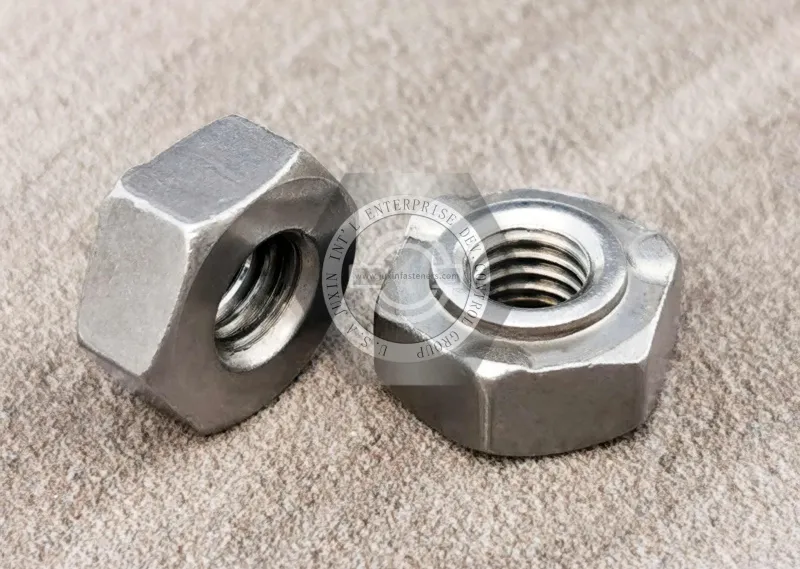
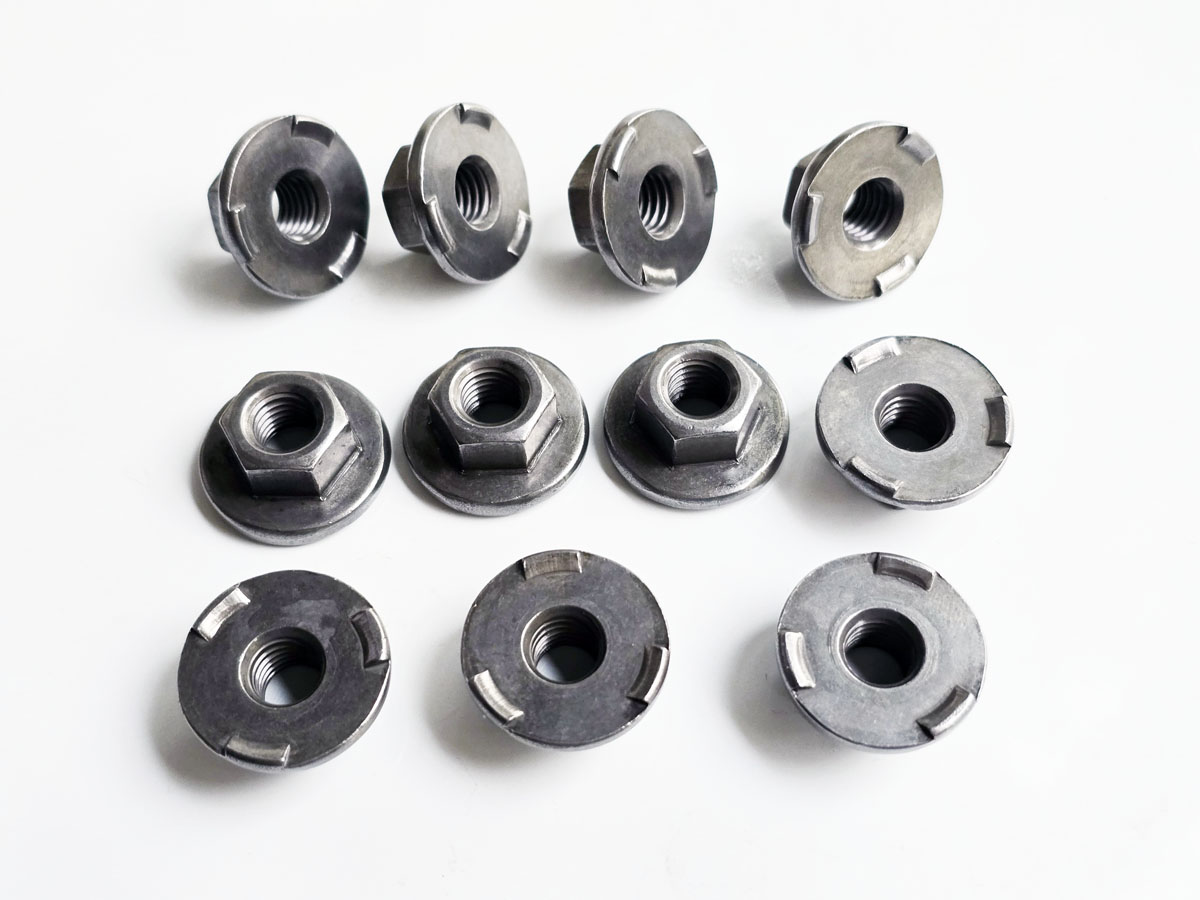
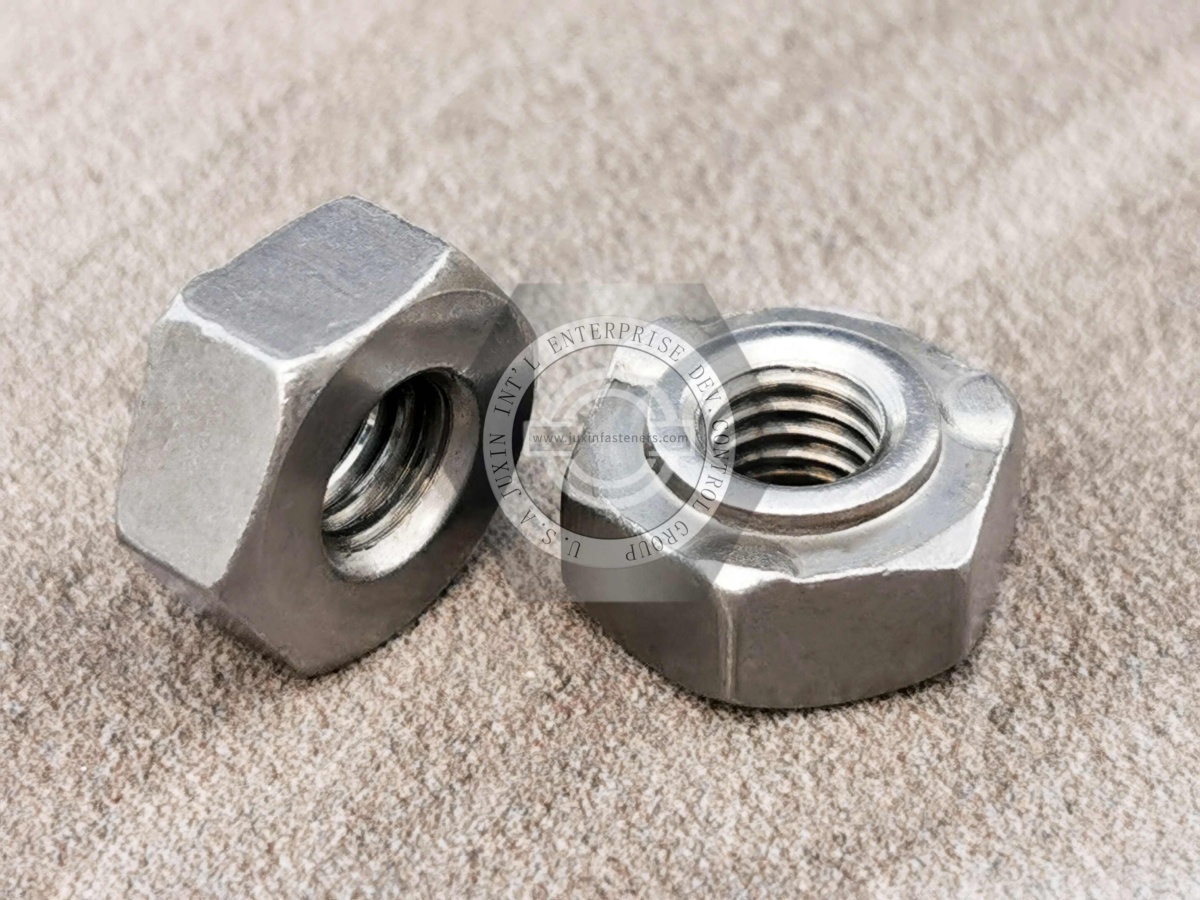
A hex weld nut is a non-threaded, weldable fastener designed to be permanently attached to sheet metal by resistance welding. Unlike conventional nuts, hexagonal weld nuts do not rely on pre-cut threads for installation. Instead, they are fixed to the base material through a controlled thermal fusion process.
During installation, high temperature generated by projection welding (resistance spot welding) melts the contact surface between the nut and the sheet metal, forming a strong metallurgical bond after cooling.
Key design characteristics:
Hexagonal geometry for precise positioning and anti-rotation performance
Welding projections (nibs) for controlled energy concentration
Internal metric thread formed before assembly use
High compatibility with automated welding systems
This structure makes the hex weld nut for automotive sheet metal a reliable solution for high-volume manufacturing environments.
Automotive Applications of Hex Weld Nuts
In the automotive industry, hex weld nuts are widely used to create high-efficiency threaded connection points in thin-gauge sheet metal components. They replace traditional drilling, tapping, or riveting methods, significantly improving production speed and structural performance.
Common application areas include:
Automotive body-in-white (BIW) structures
Chassis frame rails and cross members
Seat rail mounting systems
Brackets for suspension and braking systems
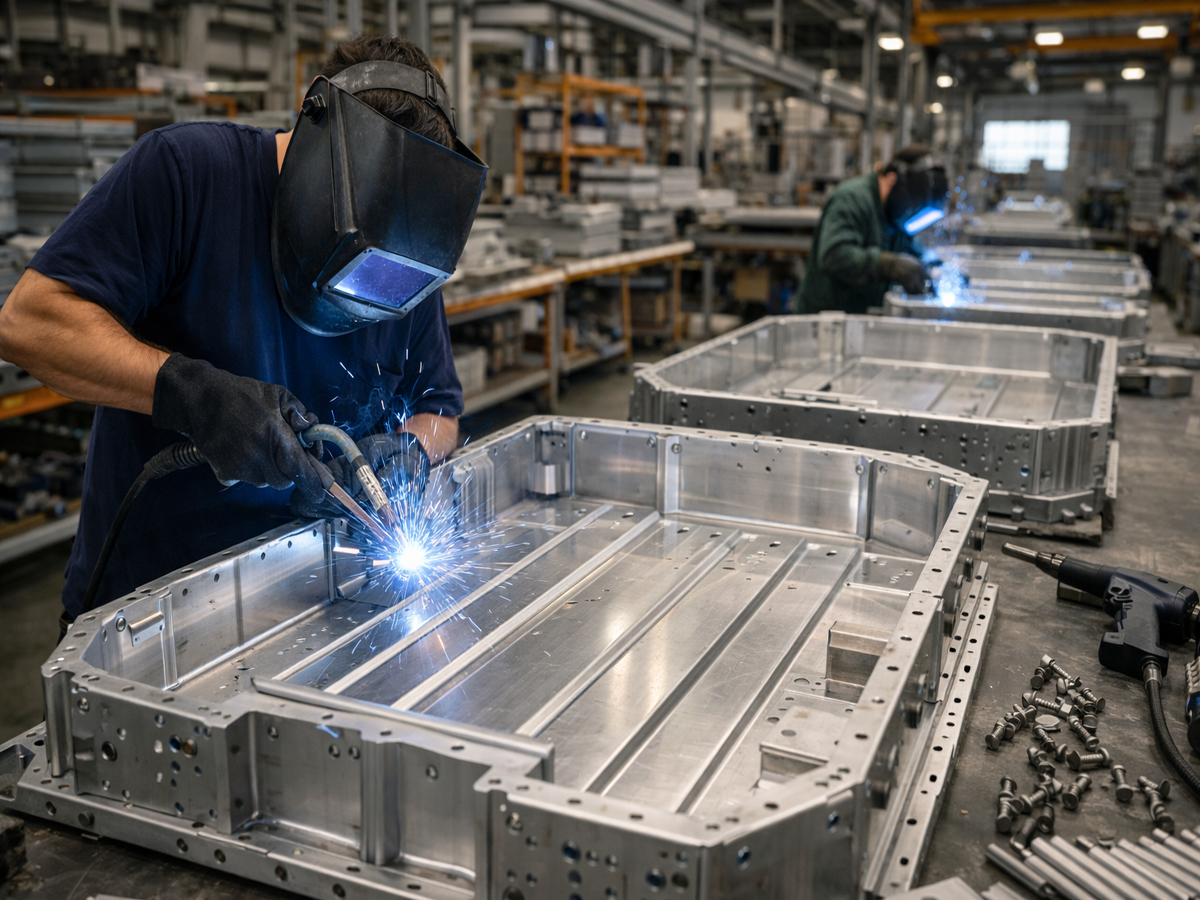
Electric vehicle battery trays and pack housings
In these applications, automotive weld nuts (hexagonal type) provide stable threaded interfaces for bolts and fasteners, ensuring long-term durability under vibration and load conditions.
Why Hex Weld Nuts Are Essential in Automotive Engineering
The need for lightweight design, compatibility with automation, and high structural reliability drives the adoption of hex weld nuts in automotive manufacturing.
Key engineering advantages:
Eliminates drilling and tapping operations
Enables single-sided installation in closed structures
Supports robotic welding and mass production lines
Reduces assembly time and labor cost
Improves structural integrity in thin sheet metal
Ensures consistent thread performance without tolerance variation
Unlike traditional threaded solutions, weld nuts for automotive sheet metal avoid tolerance accumulation issues because the thread is not formed in the base material but integrated into the welded component.
Structure and Industry Standards (DIN 929 Weld Nuts)
Our hex weld nuts (DIN 929 standard weld nuts) are engineered according to strict international specifications for automotive and industrial use.
Standard features:
Standard compliance: DIN 929 hex weld nut
Welding projections:typically 3 welding nibs + locating boss design
Thread class: Metric 6G tolerance for reliable bolt engagement
Material: low-carbon steel (≤ 0.25% C) for superior weldability
Low-carbon steel ensures stable fusion during welding and reduces the risk of brittle weld joints, making it ideal for automotive projection welding nuts.
Welding Process and Manufacturing Requirements
The performance of a hexagonal weld nut depends heavily on precise control of welding and surface preparation.
1. Projection Welding Process
Welding method:resistance spot welding/projection welding
Welding time: typically 20–100 ms
Current range: 3–8 kA
Cooling: rapid solidification creates strong metallurgical bonding
The entire welding cycle is completed within 1–2 seconds, enabling high-speed automated production.
2. Installation Requirements
To ensure optimal performance of automotive weld nuts, the following conditions must be met:
Sheet metal must be pre-punched with accurate locating holes
Surface must be cleaned (oil, oxide, and contaminants removed)
Welding parameters must match sheet thickness (e.g., M6 weld nut for 1.2–2.0 mm steel plate)
Proper electrode pressure must be maintained to avoid weak fusion
Incorrect parameters may lead to defects such as burn-through, cold welds, or insufficient bonding strength.
Quality Control for Automotive Weld Nuts (IATF 16949 Standard)
To meet automotive industry requirements, the production of hex weld nuts is strictly controlled under the IATF 16949 quality management system.
Inspection and testing procedures include:
Visual inspection of weld uniformity
Torque testing (e.g., M6 weld nuts ≥ 40 N·m without thread stripping)
Pull-out strength verification
Hammer impact testing for structural stability
Surface coating inspection (zinc plating / Dacromet corrosion protection)
Defect prevention is achieved through precise control of welding current, time, and electrode force, ensuring consistent batch quality for automotive-grade weld nuts.
Material and Surface Treatment Options
To meet different environmental demands, our hex weld nuts for automotive applications are available in multiple finishes:
Material options:
Low-carbon steel (standard automotive use)
Stainless steel (corrosion-resistant applications)
Surface treatments:
Zinc plating for general corrosion protection
Dacromet coating for high corrosion resistance environments
Custom anti-rust coatings for EV battery systems
These options ensure long-term durability in harsh operating conditions, including underbody and outdoor exposure.
Advantages of Hex Weld Nuts Compared to Traditional Fasteners
Compared with embedded nuts, rivet nuts, or post-tapping solutions, hex weld nuts for sheet metal assemblies offer significant benefits:
Higher torque resistance and pull-out strength
No need for backside access during installation
Better space efficiency in compact assemblies
Stronger metallurgical bond vs mechanical fastening
Ideal for high-density threaded point layouts
These advantages make them a preferred choice in modern automotive lightweight engineering and EV structural design.
Conclusion – Reliable Automotive Welding Fastener Solution
The hex weld nut (DIN 929 automotive weld nut) is a core fastening solution in modern vehicle manufacturing, offering a combination of strength, efficiency, and compatibility with automation. From traditional vehicle bodies to next-generation electric-vehicle platforms, these weld nuts provide reliable threaded connections in thin-sheet metal structures where reliability is critical.
As a professional supplier of automotive weld nuts, hexagonal weld nuts, and projection welding fasteners, we support OEM and Tier 1 manufacturers with consistent quality, engineering support, and customized production solutions.
If you are looking for a reliable supply of high-performance hex weld nuts for automotive applications, our engineering team is ready to support your project with samples, technical guidance, and mass-production capabilities.
Product Packaging
Packaging Standard
At Juxin Fasteners, we apply standardized export packaging to ensure product protection, traceability, and compliance with international logistics requirements.
1. Standard Export Packaging
Unless otherwise specified, all products will be packed according to our factory standard export packaging, which includes:
Moisture-resistant inner protection
Poly bag or small box packing as required
Reinforced export cartons
Clear labeling with part number, specification, batch number, and quantity
Palletizing for sea or air shipment when necessary
Our standard packaging is designed to ensure safe transportation, efficient warehousing, and long-distance international shipping.
2. Customized Packaging Options
We also provide customized packaging solutions according to customer requirements, including but not limited to:
Private labeling
Customized barcodes
Specific carton dimensions
Retail packaging
Special pallet configuration
Customer-specific marking and identification
So that you know, customized packaging may involve additional costs and extended lead time depending on the complexity of the requirements.
3. Compliance & Quality Assurance
All packaging processes are controlled under our ISO 9001 quality management system to ensure consistency, traceability, and product integrity throughout the supply chain.
Product Pictures
Contact Us
Tel.:
+86 020 8621 0320
+86 020 3121 6067
E-mail:
Technical Support:
Navigation
SEND INQUIREY