Call Us
+86 136 6007 9809
Call Us
+86 136 6007 9809

Projection Weld Nut Automotive Solution for Vehicle Module Assembly and Thin Sheet Metal Structures
Introduction: Why Projection Weld Nut Automotive Fasteners Are Critical in Modern Vehicle Assembly
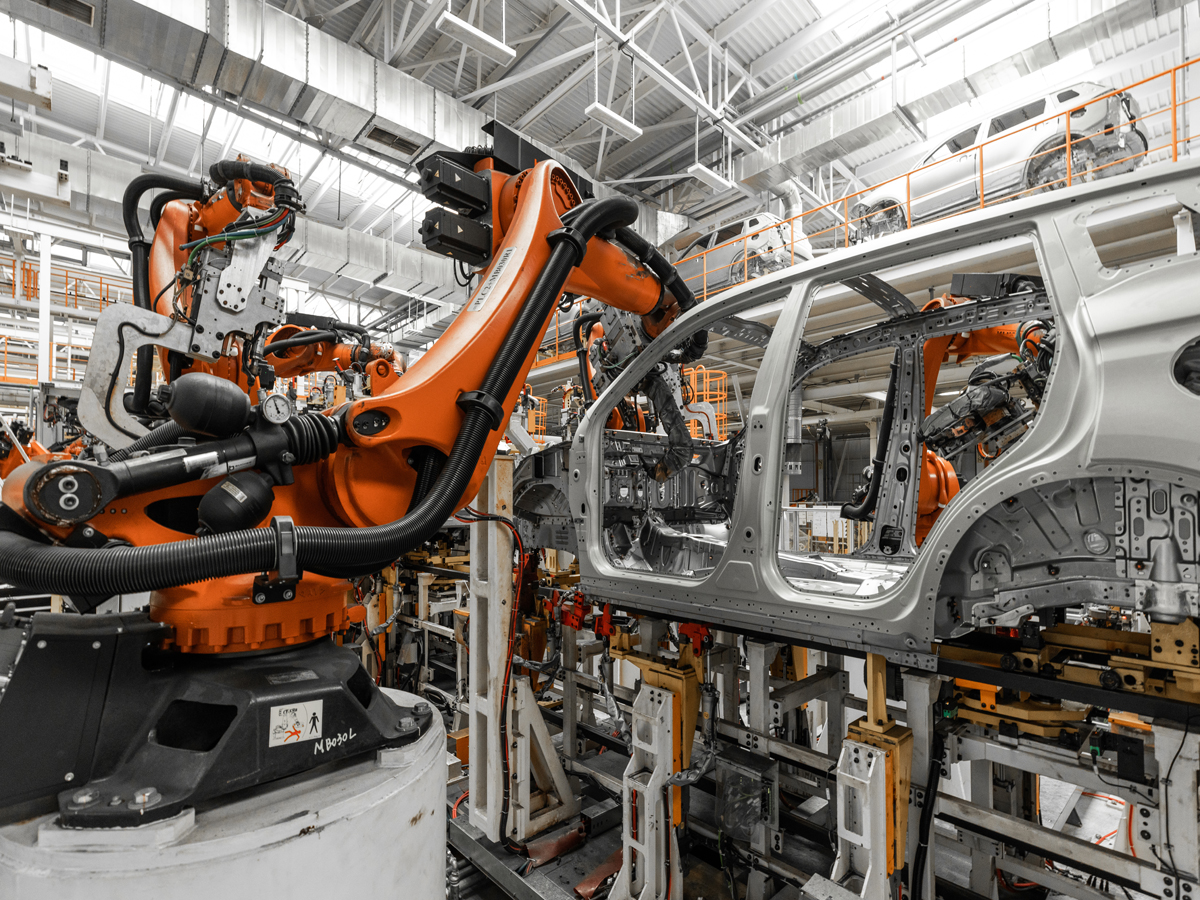
Automotive manufacturing increasingly relies on lightweight structures, thin-gauge sheet metal components, and modular assembly systems. Modern vehicles integrate numerous subassemblies, including seat systems, battery trays, ECU brackets, wiring harness boxes, and chassis reinforcement modules. These assemblies require permanent threaded attachment points that can withstand vibration loads while maintaining production efficiency.
A projection-welded nut automotive solution addresses these challenges by creating a welded threaded anchor directly on sheet-metal components using resistance projection welding.
Product Specification
Projection Weld Nut Automotive Solution for Vehicle Module Assembly and Thin Sheet Metal Structures
Introduction: Why Projection Weld Nut Automotive Fasteners Are Critical in Modern Vehicle Assembly
Automotive manufacturing increasingly relies on lightweight structures, thin-gauge sheet metal components, and modular assembly systems. Modern vehicles integrate numerous subassemblies, including seat systems, battery trays, ECU brackets, wiring harness boxes, and chassis reinforcement modules. These assemblies require permanent threaded attachment points that can withstand vibration loads while maintaining production efficiency.
A projection-welded nut automotive solution addresses these challenges by creating a welded threaded anchor directly on sheet-metal components using resistance projection welding.
Unlike conventional bolt-and-nut assemblies, a projection-weld nut automotive fastening system forms an embedded internal-thread interface before final assembly, enabling modules to be installed quickly during vehicle production.
Today, projection-welded nuts are widely used in automotive applications:
Electric seat rail systems
Seatbelt anchor brackets
ECU mounting supports
EV battery tray assemblies
Wiring harness boxes
Floor panel reinforcement structures
Firewall mounting brackets
Body side panels and cross members
This fastening technology improves the efficiency of automated assembly while increasing vibration resistance and structural reliability.
Structure Design of Projection Weld Nut Automotive Fasteners
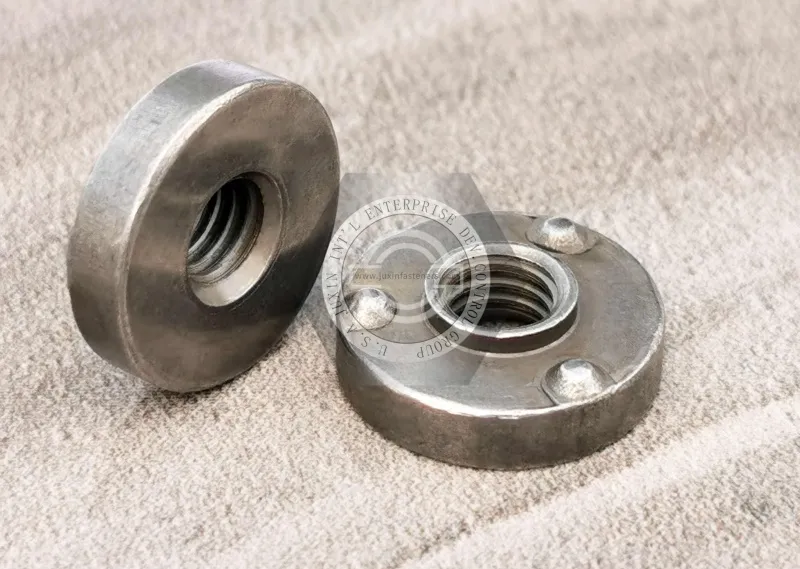
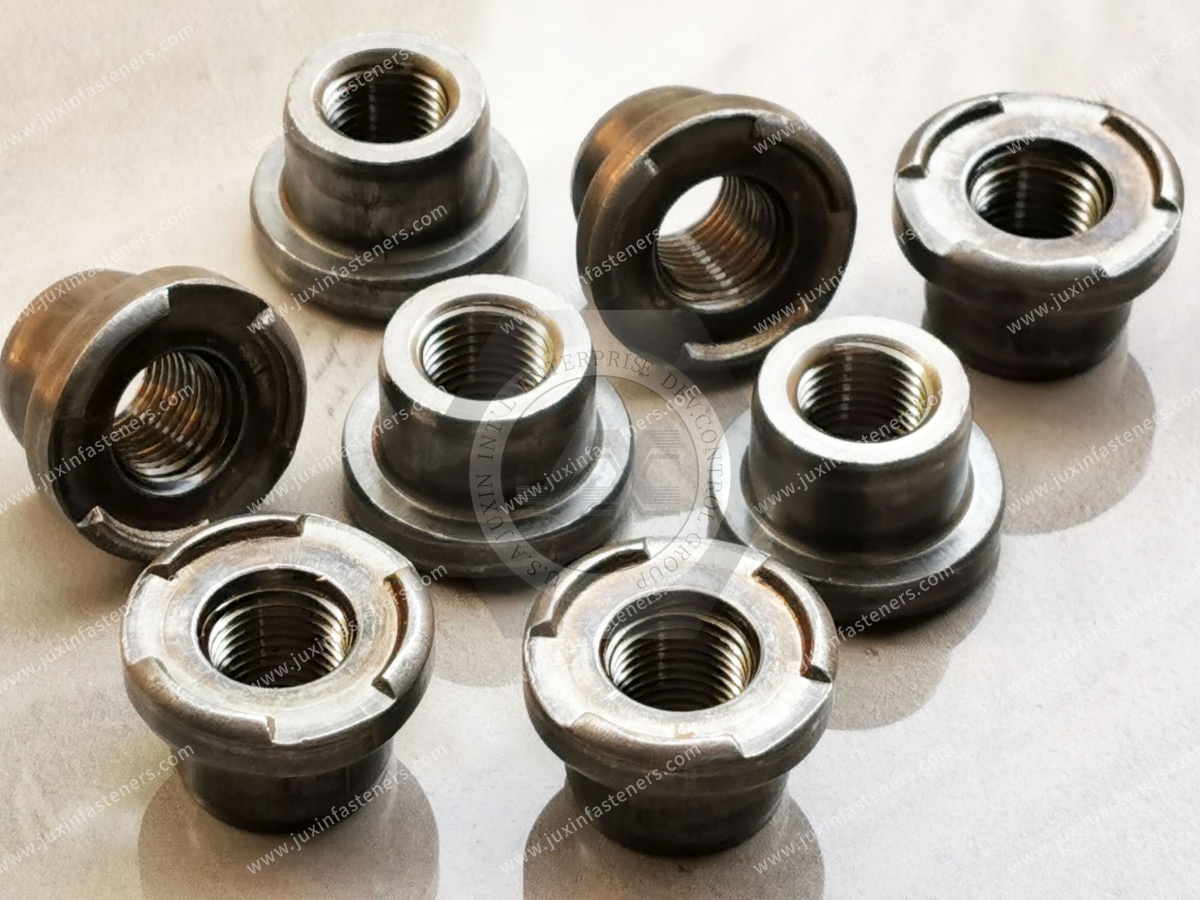
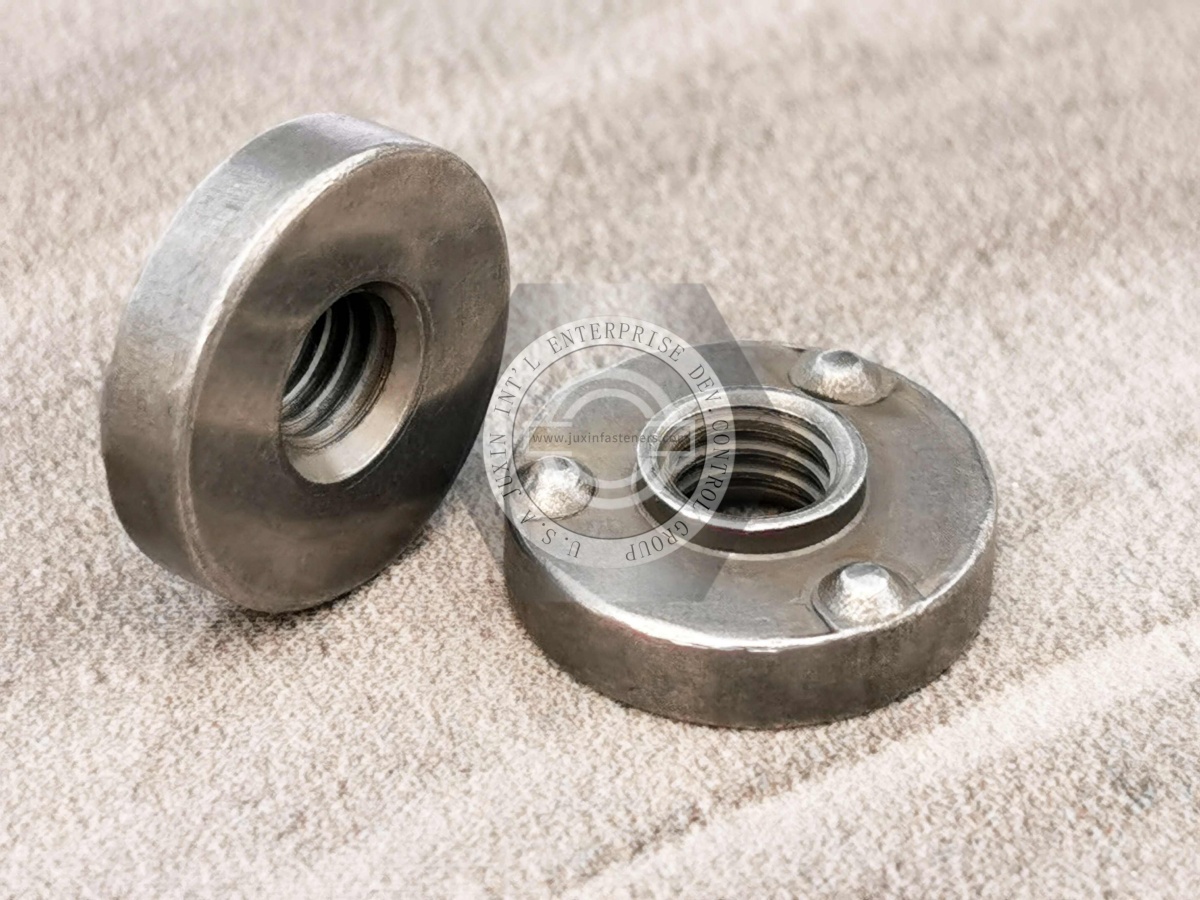
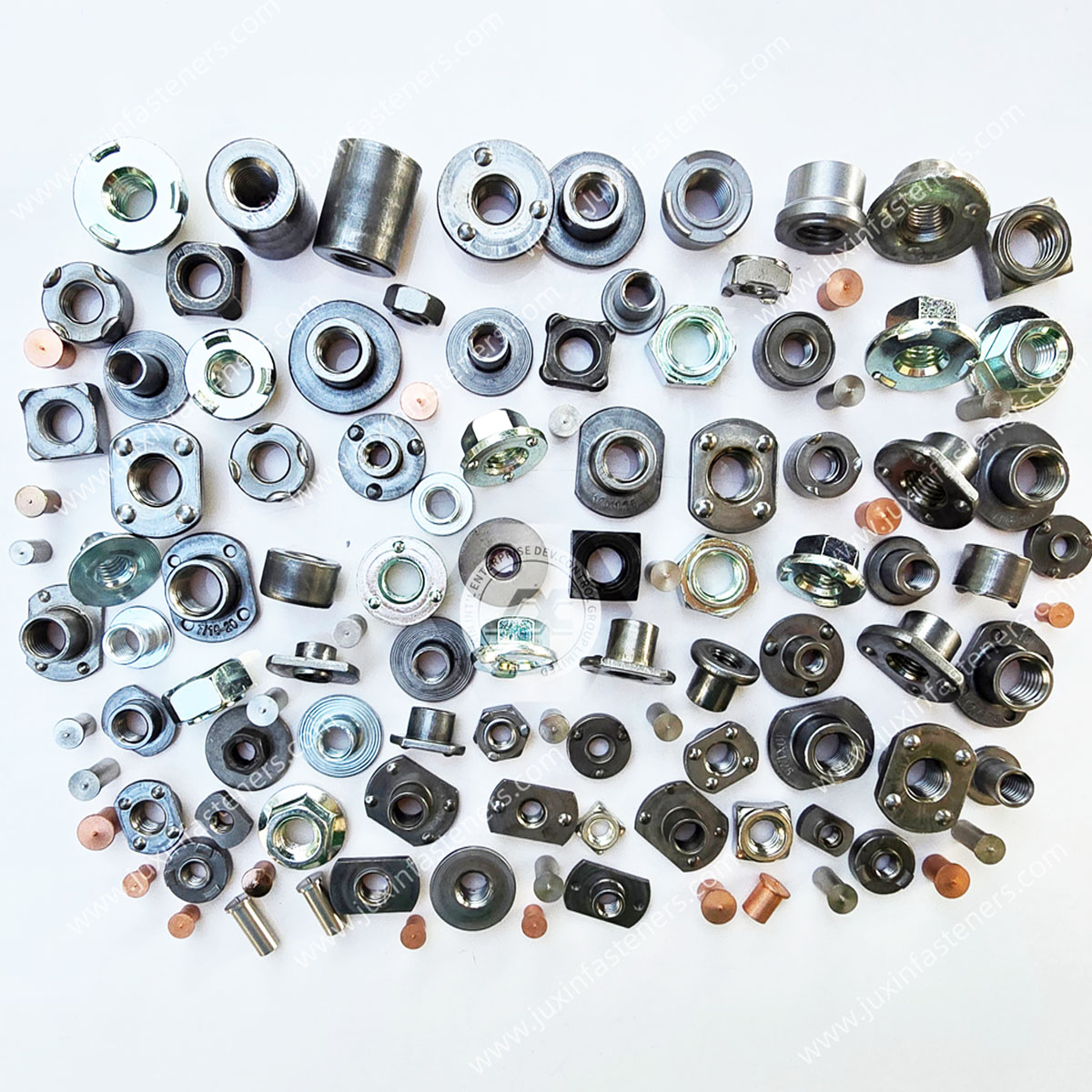
A standard projection weld nut automotive component consists of:
Hexagonal nut body
Integrated flange base
Three welding projections
Internal metric threads
Corrosion-resistant coating layer
The flange base serves several important functions.
First, it enlarges the contact surface between the nut and sheet metal.
Second, it distributes installation loads and reduces local stress concentration.
Third, it improves the accuracy of welding positioning during automated production.
After projection welding, the projection weld nut automotive assembly becomes a permanent threaded insert that cannot be removed without damaging the base material.
Common thread sizes include:
M5 Projection Weld Nut Automotive
M6 Projection Weld Nut Automotive
M8 Projection Weld Nut Automotive
M10 Projection Weld Nut Automotive
M12 Projection Weld Nut Automotive
M14 Projection Weld Nut Automotive
M16 Projection Weld Nut Automotive
Among these, M6 to M14 projection weld nut automotive products are most frequently used in OEM vehicle programs.
Materials and Surface Treatment for Projection Weld Nut Automotive Production
Material selection directly influences welding quality, load capacity, and corrosion resistance.
Typical materials used for projection-welded nuts in automotive manufacturing include:
Carbon Steel Projection Weld Nut Automotive
Common materials:
C10E Steel
10B21 Steel
Advantages:
Excellent weldability
Stable forming performance
Suitable for automated production lines
Good mechanical strength
Recommended applications:
Seat mounting systems
Body structures
Chassis reinforcement brackets
Stainless Steel Projection Weld Nut Automotive
For corrosion-sensitive applications, manufacturers may select stainless materials.
Applications include:
Battery tray assemblies
EV structural modules
High humidity environments
Corrosion-resistant mounting systems
Surface Treatment Options
To improve service life, projection-welded nut automotive fasteners are commonly used:
Zinc Plated Projection Weld Nut Automotive
Color Zinc Projection Weld Nut Automotive
Dacromet Projection Weld Nut Automotive
For underbody structures and chassis environments exposed to water, salt spray, and road debris, Dacromet projection-weld nut automotive solutions provide improved corrosion protection.
Resistance Projection Welding Process for Automotive Module Installation
A projection-weld nut automotive assembly is installed with resistance projection-welding equipment.
During welding, electrical current concentrates at the welding projections.
The projections melt first, creating localized metallurgical bonding between the flange base and the sheet metal.
Compared with traditional spot welding, projection weld nut automotive welding offers:
Better heat concentration
Reduced sheet burn-through risk
Higher positional accuracy
Improved joint consistency
Automotive manufacturers increasingly prefer:
Medium-frequency inverter welding machines
because they provide:
Stable current output
Accurate energy control
Reduced thread deformation
Better repeatability
Critical process controls include:
Welding Gun Perpendicularity
Improper electrode angle may cause:
Uneven projection collapse
Incomplete fusion
Reduced pull strength
Stable Clamping Force
A consistent welding force ensures:
Uniform nugget formation
Proper projection melting
Reliable joint strength
Heat Input Control
Excessive welding current may damage internal threads.
Proper control prevents:
Thread distortion
Spatter contamination
Surface defects
This is especially important for DIN 929 projection weld nut automotive applications.
Projection Weld Nut Automotive Applications in Vehicle Modules
Electric Seat Rail Systems
Modern electric seats require:
Permanent threaded positions
High vibration resistance
Accurate installation locations
A projection-welded nut automotive solution for seat rails creates secure attachment points directly on floor structures.
Benefits include:
Faster automated assembly
Reduced installation variation
Improved durability
Common specification:
M8 Projection Weld Nut Automotive
Seatbelt Anchor Brackets
Seatbelt assemblies undergo repeated loading cycles and must meet safety requirements.
Using high-strength projection-weld nut automotive fasteners improves:
Structural rigidity
Load transfer stability
Long-term fatigue performance
Recommended grades:
Class 8 Projection Weld Nut Automotive
Class 10 Projection Weld Nut Automotive
EV Battery Tray Mounting Systems
Electric vehicle battery packs require:
Thin sheet integration
Corrosion resistance
Permanent fastening points
High automation compatibility
A projection-weld nut automotive solution for battery trays provides embedded threaded interfaces before final module installation.
Recommended coatings:
Dacromet Projection Weld Nut Automotive
Zinc-Nickel Systems
Composite corrosion coatings
These treatments improve resistance against:
Salt spray attack
Moisture exposure
Underbody corrosion
Post-weld oxidation
ECU and Wiring Harness Brackets
Electronic modules require lightweight mounting structures.
A projection-weld nut automotive fastening system allows direct installation onto:
Firewall panels
Side structures
Body reinforcement plates
Electrical mounting beams
This replaces:
Stud welding
Loose nut installation
Secondary threaded inserts
while improving assembly speed.
Selection Criteria for Projection Weld Nut Automotive Design
Choosing the correct automotive specification for projection weld nuts depends on several factors.
Sheet Thickness Matching
Typical automotive sheet thickness:
≤3 mm
Example:
An M8 projection weld nut is commonly used in automotive design:
Φ16–18 mm flange diameter
Proper matching improves load distribution and weld quality.
Strength Requirements
Load-bearing applications should use:
Grade 8 Projection Weld Nut Automotive
Grade 10 Projection Weld Nut Automotive
These are commonly specified for:
Chassis brackets
Seat anchors
Battery structures
Reinforcement beams
Corrosion Environment
For severe environments, including:
Underbody structures
Coastal vehicles
EV battery compartments
Recommended option:
Dacromet Projection Weld Nut Automotive Fasteners
Welding Zone Quality Requirements
Reliable production of projection-weld nuts in automotive applications requires strict welding preparation.
Before welding:
Remove:
Oil contamination
Rust
Scale layers
Surface debris
Poor cleanliness may cause:
Weak weld joints
Incomplete fusion
Reduced pull strength
Additionally, engineers should avoid overlap between adjacent heat-affected zones (HAZ).
Excessive thermal interaction can result in:
Distortion
Strength reduction
Welding inconsistency
Proper weld spacing improves structural performance.
Conclusion
The projection weld nut automotive solution has become a key fastening technology in modern vehicle manufacturing.
By combining:
Resistance projection welding
Integrated flange support
Permanent threaded interfaces
Vibration resistance
Automated installation compatibility
Corrosion protection
The projection weld nut automotive system provides efficient fastening for:
Electric seat rails
Seatbelt anchors
ECU brackets
EV battery trays
Wiring harness modules
Body side structures
Floor panels and firewalls
For OEM engineers and procurement teams searching for:
Projection Weld Nut Automotive Supplier
Projection Weld Nut Automotive Manufacturer
M8 Projection Weld Nut Automotive
Dacromet Projection Weld Nut Automotive
Battery Tray Projection Weld Nut Automotive Solution
This fastening technology remains one of the most effective solutions for automotive module assembly and thin-sheet-metal integration.
Product Packaging
Packaging Standard
At Juxin Fasteners, we apply standardized export packaging to ensure product protection, traceability, and compliance with international logistics requirements.
1. Standard Export Packaging
Unless otherwise specified, all products will be packed according to our factory standard export packaging, which includes:
Moisture-resistant inner protection
Poly bag or small box packing as required
Reinforced export cartons
Clear labeling with part number, specification, batch number, and quantity
Palletizing for sea or air shipment when necessary
Our standard packaging is designed to ensure safe transportation, efficient warehousing, and long-distance international shipping.
2. Customized Packaging Options
We also provide customized packaging solutions according to customer requirements, including but not limited to:
Private labeling
Customized barcodes
Specific carton dimensions
Retail packaging
Special pallet configuration
Customer-specific marking and identification
So that you know, customized packaging may involve additional costs and extended lead time depending on the complexity of the requirements.
3. Compliance & Quality Assurance
All packaging processes are controlled under our ISO 9001 quality management system to ensure consistency, traceability, and product integrity throughout the supply chain.
Product Pictures
Hot Products
Contact Us
Tel.:
+86 020 8621 0320
+86 020 3121 6067
E-mail:
Technical Support:
Navigation
SEND INQUIREY