Call Us
+86 136 6007 9809
Call Us
+86 136 6007 9809

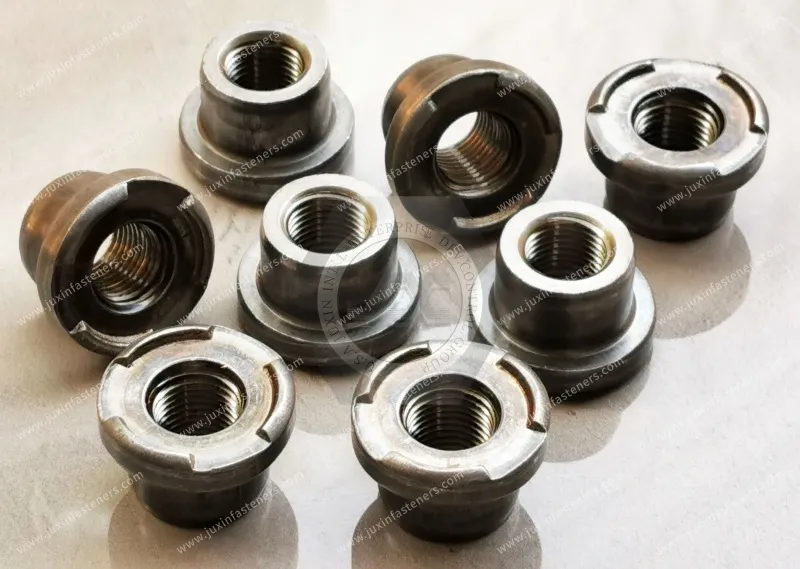
Mercedes-Benz M177 Engine Bay Weld Nut Solutions for Cooling Module Applications
Hex flange projection weld nut, automotive weld nuts, Mercedes engine bay fasteners, projection weld nuts, flange weld nuts, cooling module fastening solutions, sheet metal weld nuts, robot welding fasteners, engine bay fastening systems, M177 engine platform
Product Specification
Mercedes-Benz M177 Engine Bay Weld Nut Solutions for Cooling Module Applications
Hex flange projection weld nut, automotive weld nuts, Mercedes engine bay fasteners, projection weld nuts, flange weld nuts, cooling module fastening solutions, sheet metal weld nuts, robot welding fasteners, engine bay fastening systems, M177 engine platform
1. Introduction: Engine Bay Fastening in the Mercedes-Benz M177 Platform
Modern Mercedes-Benz engine architectures, such as the M177 V8 engine platform, integrate highly complex mechanical and thermal systems. These include:
Engine bay structural brackets
Cooling module assemblies
Front-end carrier systems
Auxiliary engine accessory mounting structures
These components operate under demanding conditions involving high thermal loads, continuous vibration, and strict packaging constraints.
To ensure long-term reliability and manufacturing efficiency, Mercedes engine bay systems rely heavily on robot-compatible fastening solutions, particularly the hex flange projection weld nut.
This fastening technology has become a standard solution for integrating sheet-metal components into high-performance automotive platforms.
2. Engine Bay Structural Requirements in M177 Systems
Mercedes-Benz engine bay assemblies must meet stringent engineering and manufacturing requirements, including:
High Temperature Resistance
Components are exposed to continuous thermal cycling generated by engine operation and cooling system activity.
Continuous Vibration Durability
Engine-mounted structures must withstand long-term dynamic vibration without loosening or fatigue failure.
Compact Installation Space
Modern engine bay designs require high-density packaging with minimal installation space for fastening systems.
Full Robotic Welding Compatibility
Production systems are fully automated, requiring fastening components that support:
High-speed robotic placement
Resistance welding integration
Stable positioning accuracy
Traditional methods such as threaded tapping or manual fastening are not suitable for these conditions.
3. Application of Weld Nuts in M177 Cooling Module Systems
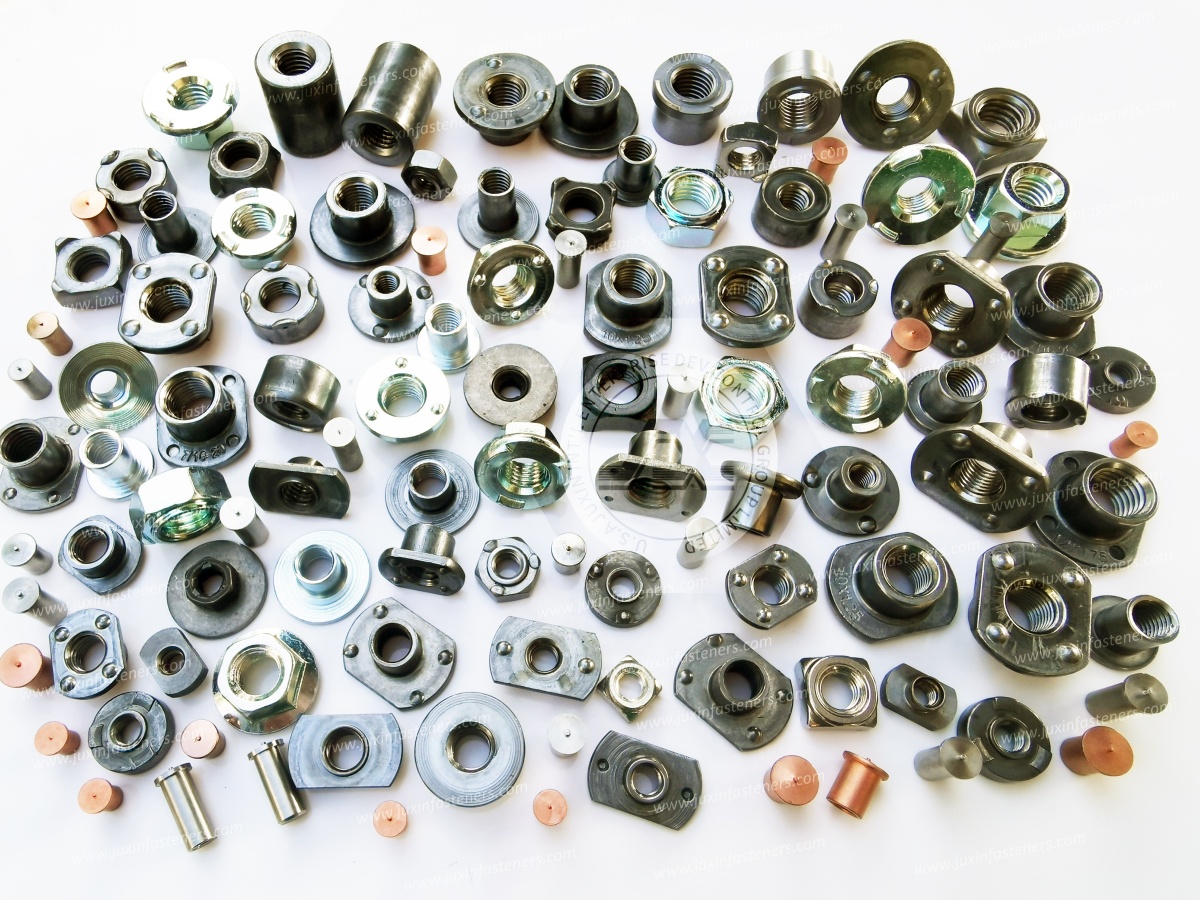
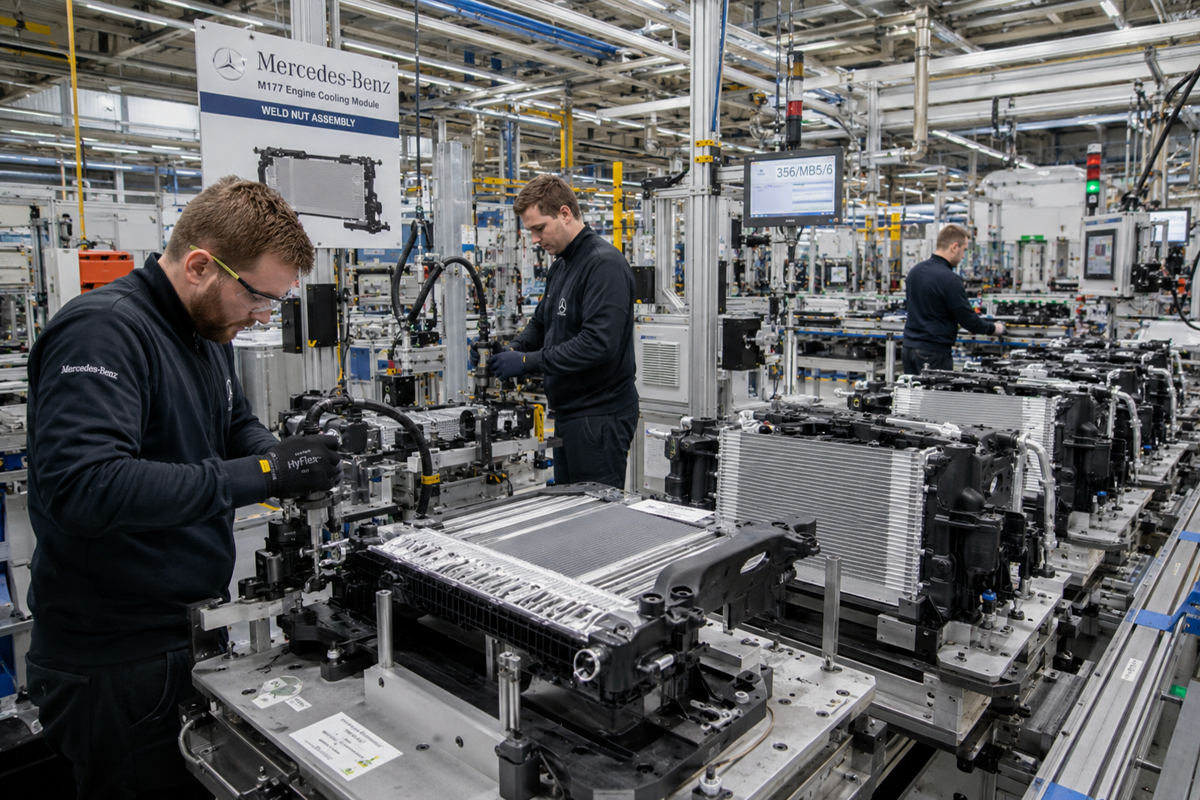
Within the Mercedes-Benz M177 cooling system architecture, automotive weld nuts are widely used in the following structural areas:
Radiator mounting brackets
Intercooler support structures
Cooling module carrier frames
Engine accessory mounting points
Front-end structural reinforcement assemblies
These components are typically manufactured from stamped sheet-metal parts and require direct integration via projection welding.
By eliminating secondary machining operations, flange weld nuts for automotive applications significantly improve production efficiency while maintaining structural reliability.
4. Why Flange Projection Weld Nuts Are Used in Mercedes Engine Systems
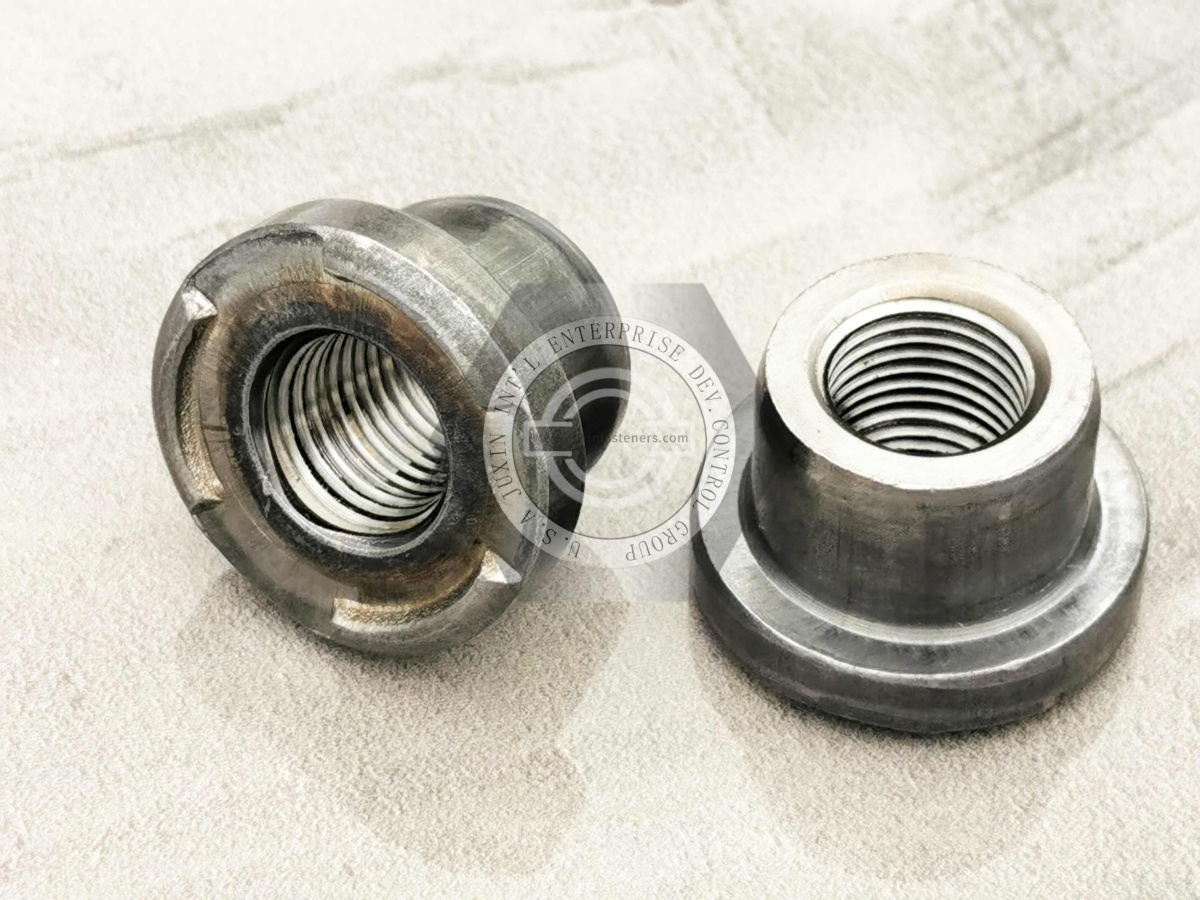
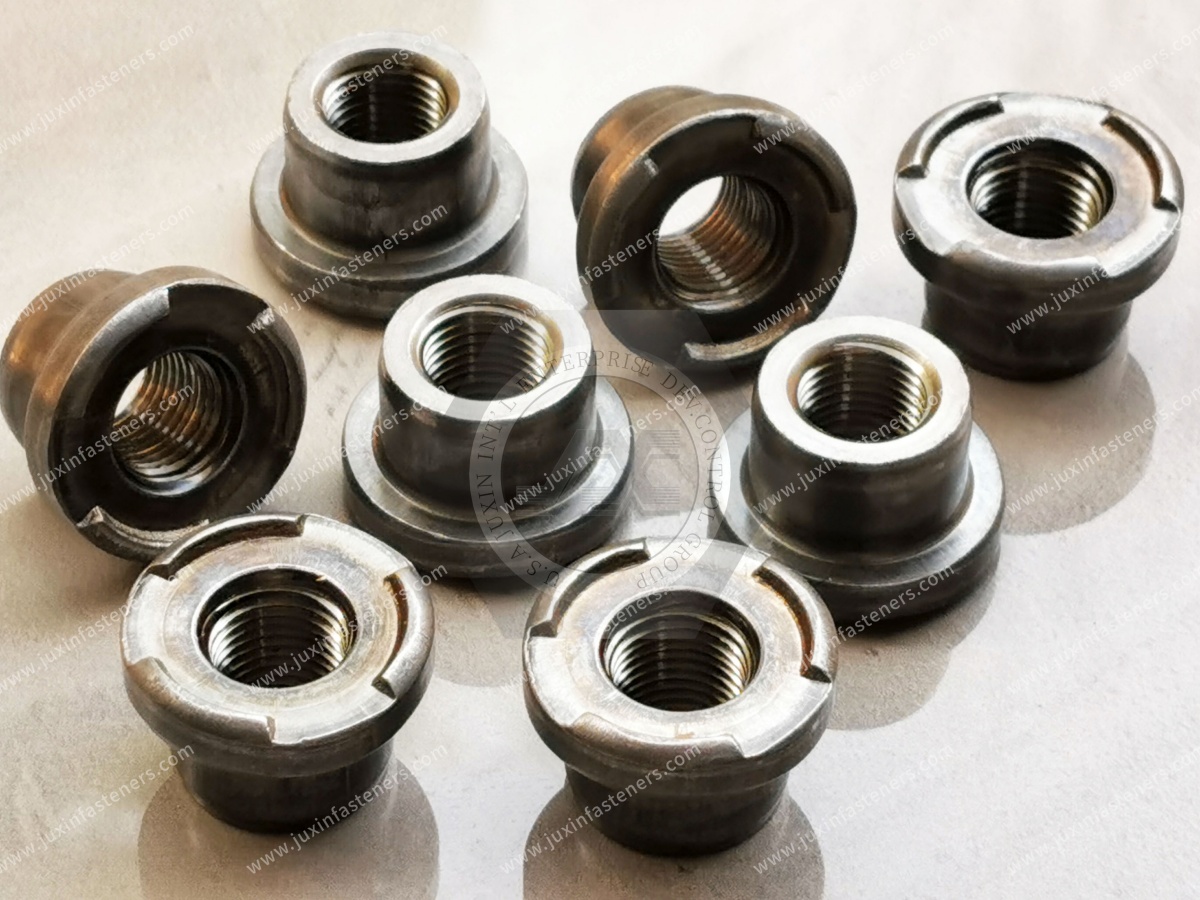
The hex flange projection-weld nut is engineered to meet the demands of automated automotive production systems.
✔ Robot Welding Compatibility
The flange geometry provides a stable, consistent electrode contact surface during resistance welding, ensuring repeatable weld quality on robotic production lines.
✔ Pilot Self-Centering Design
Integrated pilot structures improve positioning accuracy during automated pick-and-place operations, reducing the risk of misalignment in high-speed assembly environments.
✔ Multi-Projection Welding System (3 or 4 Points)
Multiple welding projections ensure:
Uniform energy distribution
Strong weld penetration into sheet metal
High structural bonding strength
Reduced risk of weld failure
This design is essential for high-strength automotive projection-weld nuts used in engine-bay systems.
✔ Sheet Metal Tolerance Adaptation
Stamped sheet metal components naturally include dimensional variations. Flange projection weld nuts are designed to compensate for these tolerances, ensuring stable assembly without additional correction processes.
5. Engineering Benefits in M177 Engine Bay Applications
Several key engineering advantages drive the widespread use of flange projection weld nuts in Mercedes engine systems:
High Automation Compatibility
Fully optimized for robotic welding lines and automated assembly systems.
Structural Reliability
Provides strong, durable fastening performance under mechanical loads and vibration.
Thermal Cycling Stability
Maintains integrity under repeated heating and cooling cycles within engine environments.
High-Efficiency Mass Production
Reduces assembly time, eliminates secondary operations, and supports high-volume manufacturing requirements.
6. Engineering Conclusion
In the Mercedes-Benz M177 engine bay and cooling module system, fastening technology plays a critical role in ensuring both structural integrity and manufacturing efficiency.
The hex flange projection weld nut has become a preferred solution due to its ability to support:
Fully automated robotic welding systems
High-temperature engine environments
Continuous vibration resistance requirements
High-volume OEM production efficiency
Compared with traditional fastening methods, automotive flange-weld nuts offer a superior combination of precision, reliability, and production scalability.
As a result, they are widely adopted across Mercedes engine bay applications, particularly in cooling module structures, radiator mounting systems, and front-end carrier assemblies.
Internal Engineering Resources
Mercedes Engine Bay Weld Nut Application (M177 Platform)
Flange vs Square Weld Nut Engineering Comparison
Robot Welding Fastener Design Guide
Product Packaging
Packaging Standard
At Juxin Fasteners, we apply standardized export packaging to ensure product protection, traceability, and compliance with international logistics requirements.
1. Standard Export Packaging
Unless otherwise specified, all products will be packed according to our factory standard export packaging, which includes:
Moisture-resistant inner protection
Poly bag or small box packing as required
Reinforced export cartons
Clear labeling with part number, specification, batch number, and quantity
Palletizing for sea or air shipment when necessary
Our standard packaging is designed to ensure safe transportation, efficient warehousing, and long-distance international shipping.
2. Customized Packaging Options
We also provide customized packaging solutions according to customer requirements, including but not limited to:
Private labeling
Customized barcodes
Specific carton dimensions
Retail packaging
Special pallet configuration
Customer-specific marking and identification
So that you know, customized packaging may involve additional costs and extended lead time depending on the complexity of the requirements.
3. Compliance & Quality Assurance
All packaging processes are controlled under our ISO 9001 quality management system to ensure consistency, traceability, and product integrity throughout the supply chain.
Product Pictures
Hot Products
Fastener Packaging & Feeder Compatibility: Automation & OEM Sourcing Guide
Automotive Hex Flange Weld Nut Solution for Thin Sheet Metal Structures in Automotive Manufacturing
Robot Welding Fastener Design for Automotive Sheet Metal Manufacturing
Projection Welding Process & DFM Joint Optimization | JUXIN FASTENERS
Contact Us
Tel.:
+86 020 8621 0320
+86 020 3121 6067
E-mail:
Technical Support:
Navigation
SEND INQUIREY