Call Us
+86 136 6007 9809
Call Us
+86 136 6007 9809

DIN 929 Hex Weld Nut Solution for Automotive Thin Sheet Metal and Structural Assembly
Introduction: Why DIN 929 Hex Weld Nut Is Critical in Modern Automotive Manufacturing
In modern vehicle engineering, especially in Body-in-White (BIW), chassis systems, and electric-vehicle structures, manufacturers face increasing challenges in assembling thin-sheet metal components. Traditional tapping, riveting, or backside nut installation methods often fail when access is limited or when permanent, high-strength threaded connections are required.
Product Specification
DIN 929 Hex Weld Nut Solution for Automotive Thin Sheet Metal and Structural Assembly
Introduction: Why DIN 929 Hex Weld Nut Is Critical in Modern Automotive Manufacturing
In modern vehicle engineering, especially in Body-in-White (BIW), chassis systems, and electric-vehicle structures, manufacturers face increasing challenges in assembling thin-sheet metal components. Traditional tapping, riveting, or backside nut installation methods often fail when access is limited or when permanent, high-strength threaded connections are required.
The DIN 929 Hex Weld Nut provides a standardized, reliable, and fully weldable solution for creating permanent internal threads directly on sheet metal structures.
A DIN 929 Hex Weld Nut is widely used in automotive, rail transit, shipbuilding, and mold manufacturing industries, where vibration resistance, automation compatibility, and structural integrity are critical.
This solution is especially effective for:
Automotive chassis frame rails
Body side panels and floor pans
Seat rail systems
Seatbelt anchor points
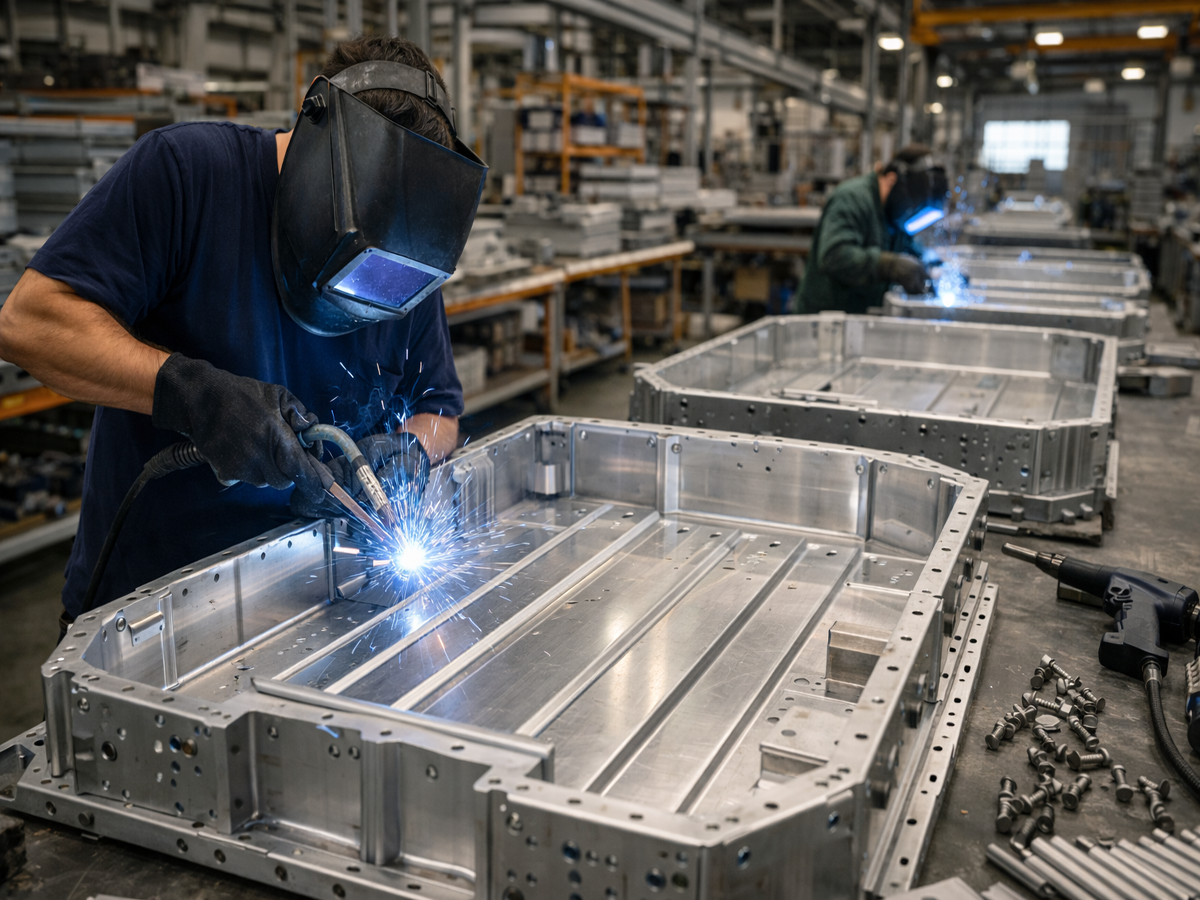
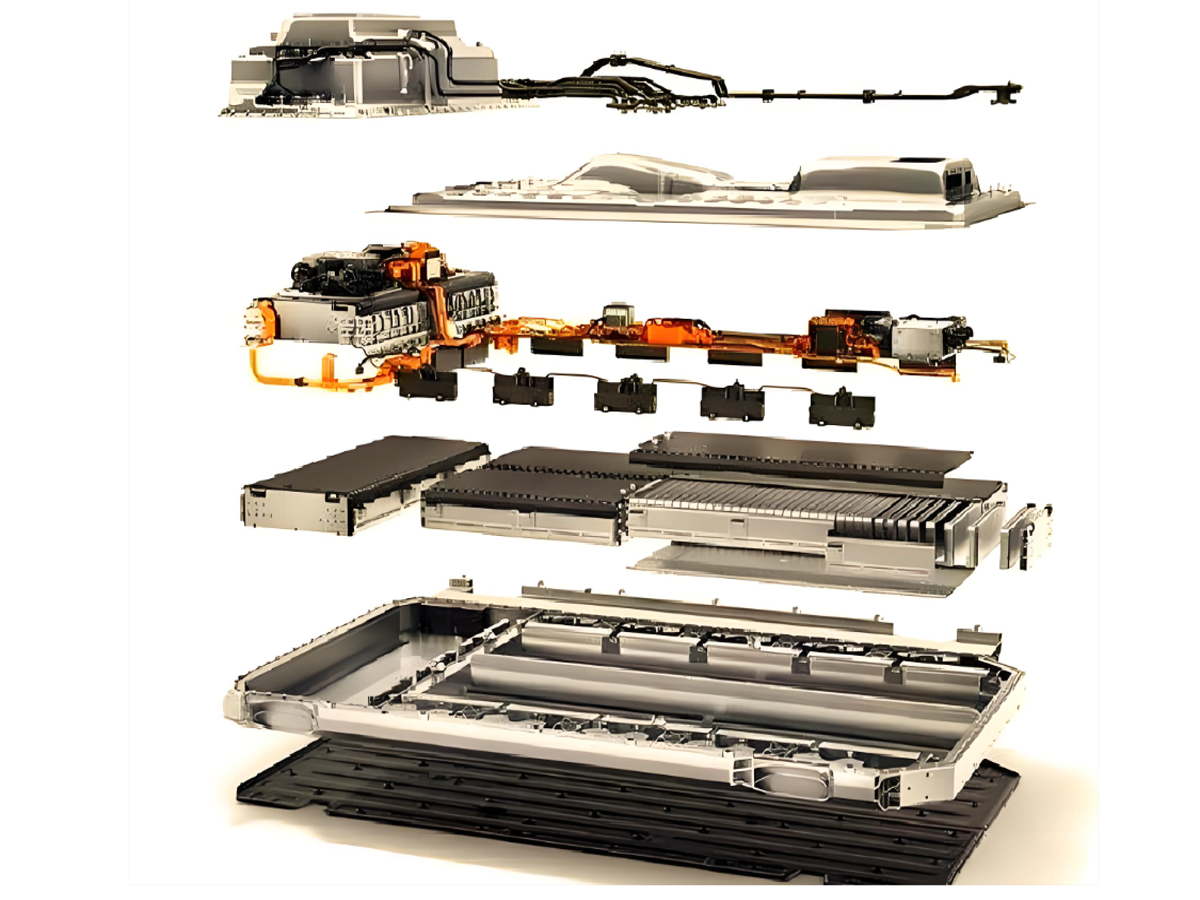
EV battery tray structures
Motor and electric drive mounting brackets
Wiring harness and heat shield mounting systems
By using DIN 929 Hex Weld Nut technology, manufacturers eliminate the limitations of conventional threaded fastening methods in thin-wall metal structures.
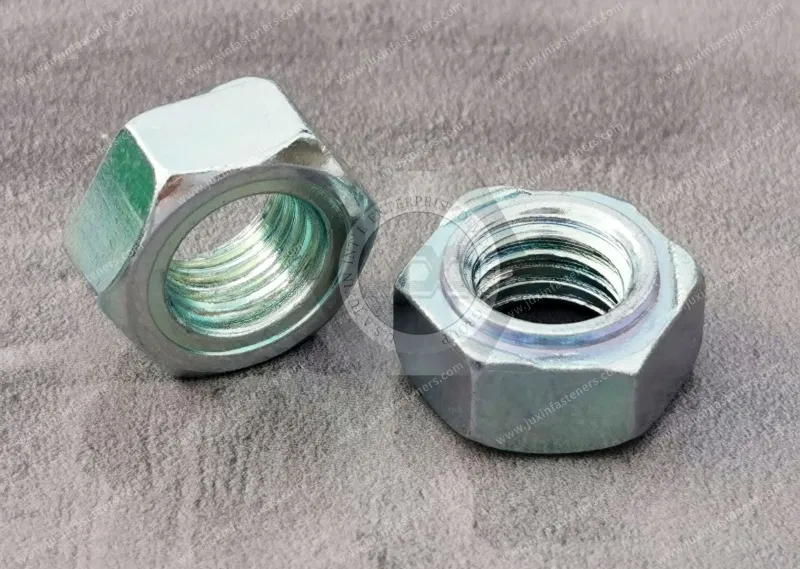
Structure Design of DIN 929 Hex Weld Nut
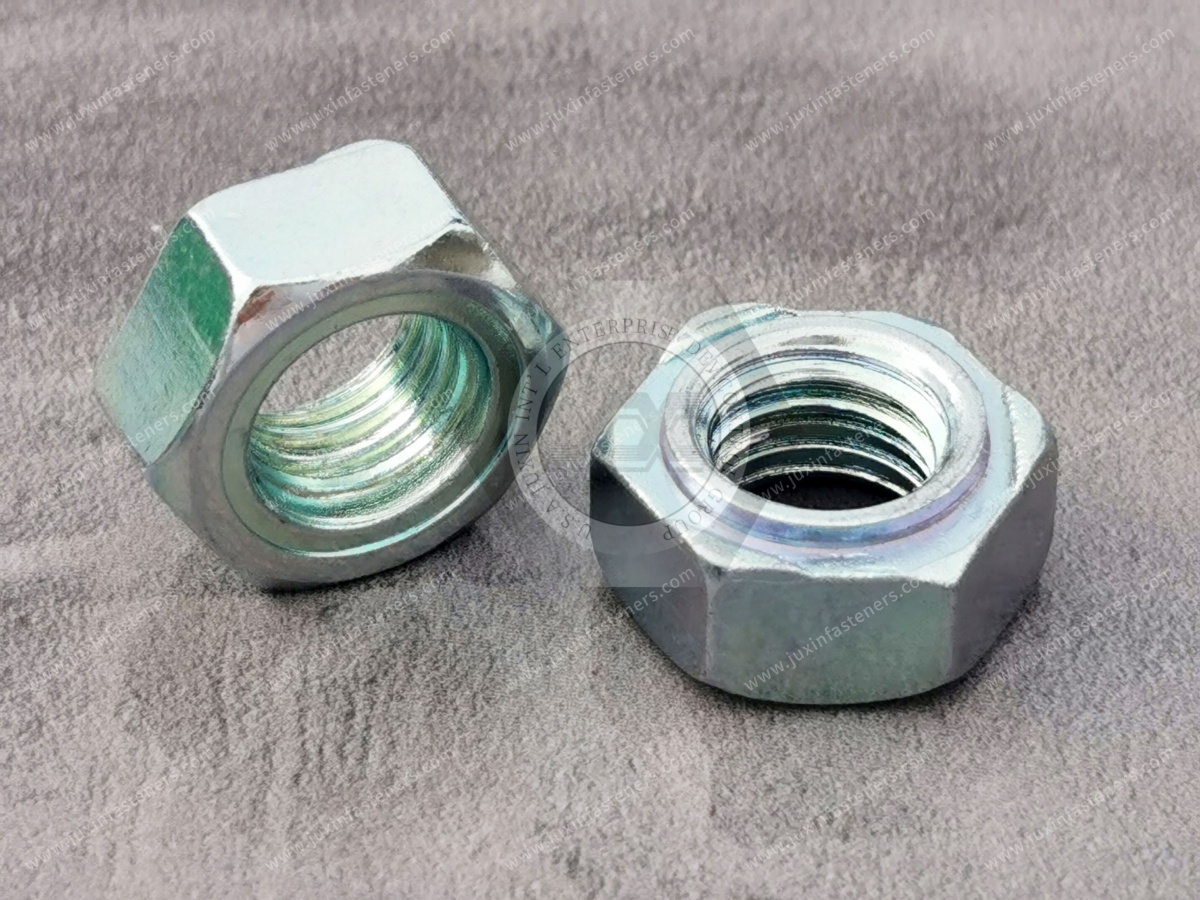
The DIN 929 Hex Weld Nut follows a standardized structural configuration designed for resistance projection welding and high-strength fastening applications.
Its structure consists of:
Hexagonal nut body for torque application
Integrated welding base for resistance spot welding
Three welding projections for energy concentration
Precision locating boss for automatic alignment
The locating boss ensures accurate positioning during assembly, improving welding repeatability in automated production lines.
After welding, the DIN 929 Hex Weld Nut becomes a permanent, non-removable threaded anchor embedded into the base material.
This structure solves a key manufacturing limitation: the inability to form threads directly in thin sheet metal (typically ≤6 mm thick).
Material Engineering and Manufacturing Design
A high-performance DIN 929 Hex Weld Nut is typically manufactured using low-carbon steel with excellent weldability.
Common material specifications include:
Low-carbon steel (≤0.25% carbon content)
High-formability carbon steel for automated production
Stainless steel variants for corrosion-resistant applications
The material structure supports:
Stable projection welding behavior
Controlled heat distribution
Reduced risk of thread deformation
To improve corrosion performance, surface treatments are commonly applied:
Zinc-plated DIN 929 Hex Weld Nut
Color zinc coating
Dacromet-coated DIN 929 Hex Weld Nut
Anti-corrosion composite coatings for EV applications
These treatments are particularly important in underbody and battery compartment environments where exposure to moisture, salt spray, and chemicals is high.
Resistance Projection Welding Process for DIN 929 Hex Weld Nut
The installation of a DIN 929 Hex Weld Nut is achieved through resistance projection welding, also known as spot projection welding.
During this process:
The nut is precisely positioned on a pre-punched sheet metal hole
Welding electrodes apply controlled pressure
High electrical current flows through the three projections
Heat is concentrated at projection points
The projections melt and fuse with the base material
This creates a metallurgical bond that permanently secures the nut to the sheet metal.
Key Welding Parameters
Current: approximately 3–10 kA
Welding time: 20–100 ms
Sheet thickness: typically ≤6 mm
Equipment:medium-frequency inverter projection welding machine
Critical process requirements include:
Accurate alignment of the locating boss with the pilot hole
Clean surface free from oil and rust
Controlled electrode pressure
Stable current output
Proper process control ensures:
No burn-through of sheet metal
No thread deformation
No cold weld formation
Stable weld nugget formation
A key design guideline is to maintain a D/T ratio (diameter-to-thickness) ≤ 8 to prevent thermal damage.
Automotive Applications of DIN 929 Hex Weld Nut
Body-in-White (BIW) Structures
The DIN 929 Hex Weld Nut is widely used in BIW assemblies where structural integrity and manufacturing efficiency are essential.
Applications include:
Side body panels
Floor pan reinforcement
Cross members
Structural brackets
These components require high rigidity and repeatable assembly performance in mass production environments.
Chassis Frame Rails and Structural Systems
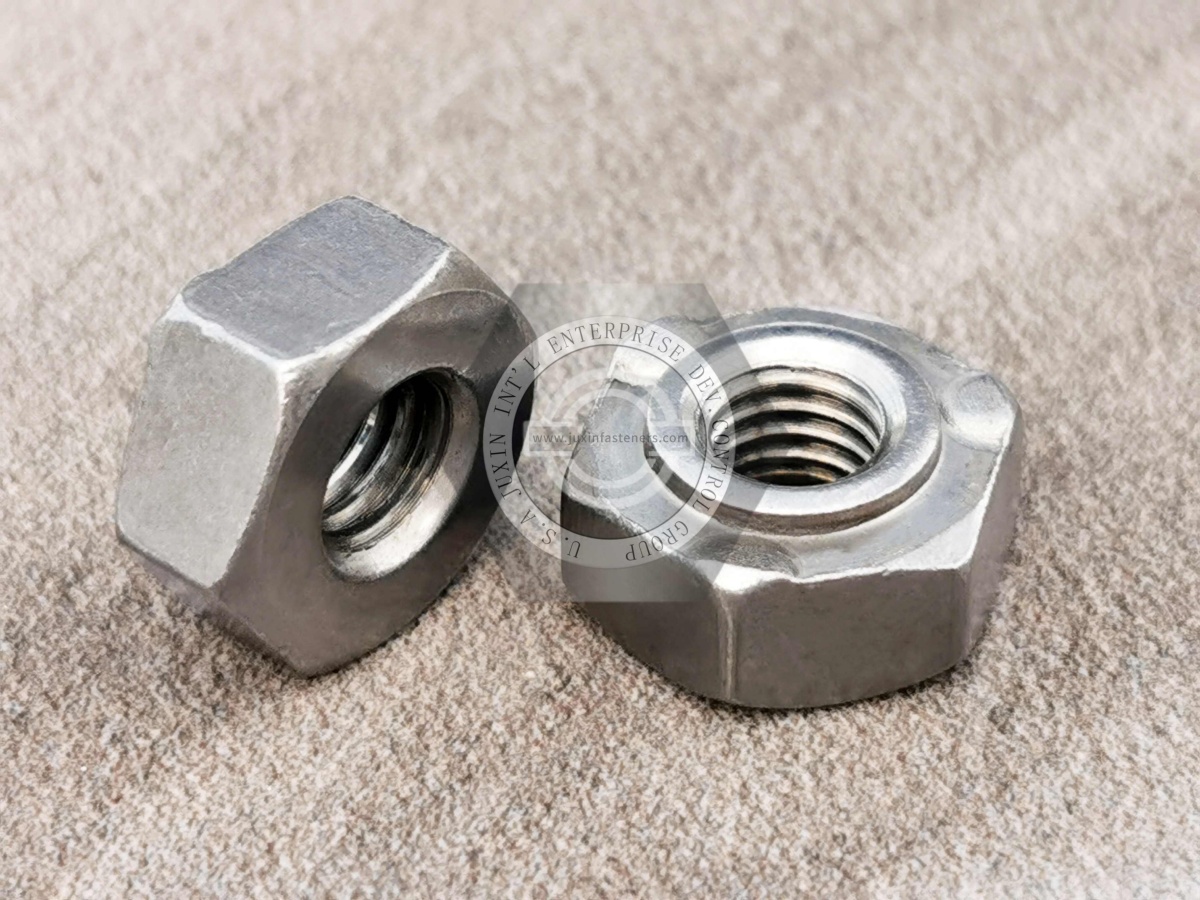
In chassis systems, the DIN 929 Hex Weld Nut provides permanent threaded interfaces for:
Suspension brackets
Reinforcement beams
Load-bearing connection points
It ensures stable load transfer and vibration resistance under dynamic driving conditions.
Seatbelt Anchor Points and Seat Rail Systems
Safety-critical applications require extremely reliable fastening solutions.
A DIN 929 Hex Weld Nut is used in:
Seatbelt anchor mounting
Electric seat rail systems
Seat adjustment mechanisms
It provides consistent torque performance and high pull-out strength, ensuring long-term structural safety.
EV Battery Pack and Electric Drive Modules
In new energy vehicle (NEV) platforms, the DIN 929 Hex Weld Nut is widely used for:
Battery tray mounting systems
Electric drive support brackets
High-voltage enclosure assemblies
Its ability to support automation and thin-sheet integration makes it a preferred solution for EV platform architectures.
Wiring Harness and Thermal Shield Mounting
Additional applications include:
Wiring harness brackets
Heat shield fastening systems
ECU mounting structures
These applications benefit from fast installation and compact structural design.
Advantages of DIN 929 Hex Weld Nut in Automotive ManufacturingThe DIN 929 Hex Weld Nut offers several engineering and production advantages:
✔ Permanent threaded connection without backside access
✔ No need for tapping thin sheet metal
✔ High compatibility with robotic welding systems
✔ Fast welding cycle (≤1 second per point)
✔ Maintains body integrity without through-holes
✔ Excellent thread accuracy after welding
✔ Suitable for high-volume automotive production
Compared with traditional riveting or tapping, the DIN 929 Hex Weld Nut significantly improves manufacturing efficiency and structural reliability.
Quality Control and Automotive Standards Compliance
Production of DIN 929 Hex Weld Nut systems must comply with strict automotive quality standards, including IATF 16949 requirements.
Post-Weld Inspection Includes:
Visual inspection for spatter, cracks, and misalignment
Thread verification using GO / NO-GO gauges
Torque and pull-out strength testing
Weld nugget consistency evaluation
Typical Mechanical Requirement Example:
M6 DIN 929 Hex Weld Nut
Proof load ≥ 15,500 N
Defect Prevention Measures:
Optimization of welding current and pressure
Proper surface cleaning before welding
Use of shielding or a controlled environment when required
Post-weld corrosion protection (zinc plating, Dacromet coating)
These controls ensure consistent quality in mass production environments.
Industry Trends and Future Development
The application of DIN 929 Hex Weld Nut technology continues to expand across electric-vehicle and lightweight-automotive platforms.
Key industry trends include:
Increased adoption in EV battery tray systems
Replacement of stud welding in certain applications
Integration into fully automated robotic welding lines
Development of laser-assisted projection welding technologies
Advanced welding technologies are improving:
Thermal control accuracy
Welding speed (30%+ improvement in cycle time)
Reduction of sheet metal deformation
Higher consistency in mass production
As automotive manufacturing continues to evolve toward lightweight structures and electrification, the DIN 929 Hex Weld Nut remains a core fastening solution.
Conclusion
The DIN 929 Hex Weld Nut is a standardized, high-performance projection-weld fastener designed to meet the challenges of modern automotive manufacturing.
It provides:
Permanent threaded integration
Excellent vibration resistance
High automation compatibility
Reliable performance in thin sheet metal structures
Strong corrosion-resistant options
Proven suitability for EV and chassis systems
From BIW structures to EV battery systems, the DIN 929 Hex Weld Nut continues to play a critical role in enabling efficient, high-strength, and automated automotive assembly.
For engineers and procurement teams seeking DIN 929 Hex Weld Nut suppliers, manufacturers, or automotive projection-weld nut solutions, this fastening system remains one of the most reliable choices for modern vehicle production.
Product Packaging
Packaging Standard
At Juxin Fasteners, we apply standardized export packaging to ensure product protection, traceability, and compliance with international logistics requirements.
1. Standard Export Packaging
Unless otherwise specified, all products will be packed according to our factory standard export packaging, which includes:
Moisture-resistant inner protection
Poly bag or small box packing as required
Reinforced export cartons
Clear labeling with part number, specification, batch number, and quantity
Palletizing for sea or air shipment when necessary
Our standard packaging is designed to ensure safe transportation, efficient warehousing, and long-distance international shipping.
2. Customized Packaging Options
We also provide customized packaging solutions according to customer requirements, including but not limited to:
Private labeling
Customized barcodes
Specific carton dimensions
Retail packaging
Special pallet configuration
Customer-specific marking and identification
So that you know, customized packaging may involve additional costs and extended lead time depending on the complexity of the requirements.
3. Compliance & Quality Assurance
All packaging processes are controlled under our ISO 9001 quality management system to ensure consistency, traceability, and product integrity throughout the supply chain.
Product Pictures
Contact Us
Tel.:
+86 020 8621 0320
+86 020 3121 6067
E-mail:
Technical Support:
Navigation
SEND INQUIREY