Call Us
+86 136 6007 9809
Call Us
+86 136 6007 9809

Juxin Fasteners manufactures custom hex nuts with captive washer assemblies for industrial OEM applications.
These fasteners combine an internally threaded hex nut with a retained washer arrangement, helping reduce loose-part handling and support consistent assembly operations.
Depending on the approved design, the assembly may incorporate a flat washer, spring washer or another customer-specified washer configuration.
Rotating and fixed washer arrangements must be distinguished during engineering review.
The supplied product information identifies M10 and 10B21 steel, subject to confirmation against the actual photographed assembly.
Custom metric and Unified inch-thread configurations can be evaluated according to customer drawings.
Juxin Fasteners supports OEM/ODM fastener manufacturing through cold heading, cold forming,
CNC machining and product-specific secondary operations selected according to engineering and production requirements.
Product Specification
Hex Nuts with Captive Washers for Industrial OEM Assemblies
Custom Nut and Washer Assemblies | SEMS-Style Hex Nuts
Juxin Fasteners manufactures hex nuts with captive washers and custom nut-and-washer assemblies for industrial machinery, electrical equipment,
automotive components, automation systems and other OEM manufacturing applications.
These assemblies combine an internally threaded hexagonal nut with a washer arrangement retained as part of the fastener assembly.
Depending on the design, the retained component may be a flat washer, spring washer or another functional washer.
The washer may rotate relative to the nut or be retained in a different configuration.
Captive washer assemblies are particularly useful when production teams need to reduce loose-part handling, simplify fastener preparation and maintain consistent component combinations.
Juxin Fasteners supports OEM/ODM manufacturing, made-to-drawing fasteners and industrial batch production.
Our manufacturing capabilities include cold heading, cold forming, CNC machining and product-specific secondary operations,
with manufacturing routes selected according to each product's engineering requirements.
Product Overview
| Feature | Description |
|---|---|
| Product Type | Hex Nut with Captive Washer Assembly |
| Alternative Terms | Captive Washer Nut; SEMS-Style Nut; Nut and Washer Assembly |
| Visible Configuration | Hexagonal Internally Threaded Nut with Retained Circular Washer Structure |
| Identified Thread Size | M10 — Drawing Confirmation Required |
| Identified Steel Material | 10B21 — Assembly Confirmation Required |
| Washer Arrangement | Flat, Spring or Customer-Specified Washer Design |
| Washer Rotation | According to Approved Design |
| Surface Finish | Customer-Specified; Photographed Finish Not Verified |
| Inch-Thread Designs | UNC/UNF Options Subject to Engineering Feasibility |
| Production | OEM/ODM Made-to-Drawing Manufacturing |
The exact washer count, washer profile, thread dimensions, retention method and material specifications must be confirmed from the product drawing.
What Is a Captive Washer Hex Nut?
A captive washer hex nut is an internally threaded nut supplied with one or more washers retained as part of the assembly.
The retained washer arrangement reduces the need to handle separate washers during installation.
In some designs, the washer rotates independently of the nut. In others, its movement is limited by the retention geometry.
The nut, washer and retention method must be considered together because they influence installation, bearing contact, overall height and manufacturing requirements.
The term SEMS nut is also used in industrial fastening catalogs for certain preassembled nut-and-washer products.
Flat Washer and Spring Washer Configurations
Hex Nut with Captive Flat Washer
A flat washer provides a bearing surface between the nut and the clamped component.
Depending on its geometry and material, it can help distribute contact pressure and protect the mating surface.
Hex Nut with Captive Spring Washer
A spring washer may provide an elastic or locking-related function depending on its design.
Its effectiveness depends on the joint and should not be assumed to provide reliable vibration resistance without appropriate validation.
Hex Nut with Multiple Captive Washers
Some custom assemblies combine a flat washer and a spring washer.
The order, geometry, retention method and function of each washer must be specified in the engineering drawing.
Rotating vs. Fixed Washer Assemblies
A rotating washer arrangement allows relative movement between the washer and nut before or during tightening.
A fixed arrangement restricts that movement.
The choice affects assembly handling, surface contact, tightening behavior and retention design.
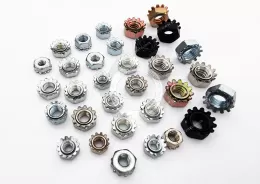
The photographed product appears to incorporate a retained washer structure, but its rotation and retention mechanism cannot be confirmed from the photograph alone.
Metric Thread References
The supplied product information identifies M10.
The standard coarse metric thread reference is M10 × 1.5.
| Thread Designation | Nominal Diameter | Pitch | Approximate Diameter in Inches |
|---|---|---|---|
| M10 × 1.5 | 10 mm | 1.50 mm | 0.394 in |
| M10 × 1.25 | 10 mm | 1.25 mm | 0.394 in |
M10 × 1.25 is shown as an alternative metric thread reference, not as a confirmed available version of this product.
Thread pitch, tolerance and nut dimensions must be verified against the approved drawing.
Unified Inch-Thread References for Custom OEM Projects
North American equipment manufacturers may specify UNC or UNF threads.
The following thread designations are examples for potential custom-engineered assemblies.
| Thread Size | Thread Series | Threads per Inch |
|---|---|---|
| #8-32 | UNC | 32 |
| #10-24 | UNC | 24 |
| #10-32 | UNF | 32 |
| 1/4-20 | UNC | 20 |
| 1/4-28 | UNF | 28 |
| 5/16-18 | UNC | 18 |
| 5/16-24 | UNF | 24 |
| 3/8-16 | UNC | 16 |
| 3/8-24 | UNF | 24 |
| 7/16-14 | UNC | 14 |
| 7/16-20 | UNF | 20 |
| 1/2-13 | UNC | 13 |
| 1/2-20 | UNF | 20 |
These references do not represent confirmed standard inventory.
Each custom thread size requires evaluation of nut dimensions, washer retention geometry and manufacturing feasibility.
Metric and Unified inch threads are not interchangeable.
Material Selection
10B21 Steel
10B21 is identified in the supplied technical information as a material for the product under review.
Material selection should consider the required forming characteristics, heat treatment, mechanical properties and finished fastener specification.
A material designation alone does not establish the finished nut's strength grade or property class.
Other Steel Grades
Alternative steels may be evaluated for custom assemblies based on strength, manufacturing and cost requirements.
Stainless Steel
Stainless steel may be considered for applications requiring corrosion resistance.
The specific grade, such as A2 or A4, must be established by the customer specification and manufacturing feasibility review.
The nut and washer materials should be evaluated together, particularly where dissimilar materials or different hardness levels affect the assembly.
Surface Finishing
Possible finishes for engineering evaluation include:
Zinc plating
Zinc alloy plating
Zinc flake coating
Black oxide
Phosphate coating
Other customer-specified finishes
Coating compatibility with the washer retention mechanism and the required thread fit should be considered.
No particular coating or corrosion performance is claimed for the photographed part without verification.
Engineering Design Considerations
Washer Retention
The washer must remain captured under the specified handling and assembly conditions.
The retention feature should be defined in the drawing and evaluated for deformation or damage.
Washer Rotation
Where free rotation is required, the washer must have appropriate clearance and geometry.
Overall Assembly Height
The combined height of the nut and retained washer components can affect bolt engagement and installation clearance.
Bearing Diameter
The washer outside diameter determines the contact footprint and must suit the mating surface.
Thread Engagement
Sufficient thread engagement is essential for the intended load.
Tightening Behavior
Friction between the nut, washer and mating surface can influence the relationship between installation torque and bolt preload.
The correct tightening procedure should be established for the actual assembly.
Captive Washer Nuts vs. Integral Flange Nuts
An integral flange nut has a flange formed as part of the nut body.
A captive washer nut has a separate washer component retained with the nut.
These configurations differ in construction, manufacturing, bearing behavior and possible washer rotation.
Captive Washer Nuts vs. Distorted-Thread Locknuts
A distorted-thread locknut uses a controlled interference feature in its internal thread to create prevailing torque.
A captive washer nut does not automatically possess this locking mechanism.
A custom assembly may combine multiple functional features, but each must be defined and verified.
Captive Washer Nuts vs. Self-Aligning Flange Nuts
Self-aligning flange nuts use mating curved or spherical surfaces to accommodate angular misalignment.
A flat captive washer assembly should not be described as self-aligning unless the actual design provides and validates that function.
Automotive and EV Equipment Applications
Custom captive washer nuts may be evaluated for selected automotive equipment assemblies, including:
Mounting brackets
Auxiliary equipment supports
Production fixtures
Accessory assemblies
Noncritical mechanical connections
Automotive qualification requirements depend on the application and OEM specifications.
Industrial Machinery and Equipment
Potential uses include:
Machinery guards
Equipment frames
Mechanical mounting brackets
Service panels
Industrial accessories
Preassembled washers can help reduce loose-component handling during production.
Electrical Enclosures and Control Cabinets
Possible applications include:
Enclosure brackets
Control panel supports
Electrical cabinet accessories
Mechanical mounting hardware
Electrical grounding or bonding performance must be separately evaluated where required.
HVAC Equipment
Captive washer nuts may be considered for:
Equipment housings
Mechanical brackets
Fan assemblies
Support structures
Serviceable mechanical connections
Washer configuration should be selected according to the joint requirements.
Industrial Automation and Robotics
Production equipment may benefit from reduced loose-part handling during assembly and maintenance.
Applications should be reviewed for installation access, vibration, service cycles and assembly repeatability.
Data Center and Server Infrastructure
Potential applications include selected mechanical cabinet and infrastructure assemblies.
Fastener selection must reflect the actual equipment requirements rather than assumed industry-wide needs.
Power Electronics and Energy Storage Equipment
Nut-and-washer assemblies may be evaluated for mechanical supports and equipment enclosures.
Electrical, thermal and vibration requirements must be considered where applicable.
Production Engineering Benefits
For manufacturing engineers and production managers, captive washer assemblies may offer:
Reduced loose-part handling
Simplified fastener preparation
Lower risk of omitted washers
More consistent component combinations
Potential improvements in assembly efficiency
Actual benefits depend on production volume, equipment, assembly sequence and inspection requirements.
OEM Manufacturing Capabilities
Juxin Fasteners is an industrial fastener manufacturer supporting standard and custom-engineered fastening components.
Our manufacturing capabilities include cold heading, cold forming, CNC machining and product-specific secondary operations.
Depending on the design, the nut body, washer and retention features may require different manufacturing operations.
The final process route is established through engineering and manufacturing feasibility review.
Custom Manufacturing Options
Customer-specific features may include:
Metric or Unified inch threads
Hexagon dimensions
Nut height
Washer outside diameter
Washer thickness
Washer material
Washer profile
Washer rotation clearance
Retention geometry
Surface coating
Mechanical property requirements
Dimensional tolerances
Assembly and packaging requirements
All custom designs are subject to technical evaluation.
Inspection and Quality Requirements
Depending on the drawing, inspection may include:
Internal thread gauging
Nut dimensions
Washer dimensions
Washer retention
Washer rotation where applicable
Overall assembly height
Surface finish
Coating thickness
Mechanical property verification
Functional assembly testing
Inspection methods and acceptance criteria should be specified for the actual product.
Applicable Engineering Standards
The following standards may be relevant to specific elements of the assembly.
| Standard | Relevant Scope |
|---|---|
| ISO 4032 | Hexagon Nut Dimensional Reference |
| ISO 261 | Metric Screw Thread General Plan |
| ISO 965 Series | Metric Screw Thread Tolerances |
| ASME B1.1 | Unified Inch Screw Threads |
| ASME B18.2.2 | Inch-Series Nut Dimensions |
| ISO 7089 | Plain Washer Dimensional Reference |
| DIN 127 | Historical Spring Lock Washer Reference, Where Applicable |
| ISO 898-2 | Carbon Steel and Alloy Steel Nut Mechanical Properties |
| ISO 3506-2 | Stainless Steel Nut Mechanical Properties |
These standards are references for applicable components or requirements. They do not establish that the complete custom captive washer assembly conforms to a single standard.
Frequently Asked Questions
What is a captive washer hex nut?
It is a hex nut supplied with one or more washers retained as part of the assembly.
What is a SEMS nut?
SEMS nut is a term used in industrial fastening catalogs for certain preassembled nut-and-washer products.
Does the washer rotate?
Some captive washer designs permit rotation, while others restrict movement. The drawing must define the required function.
Can a captive washer nut include a spring washer?
Yes. The washer type and retention design must be specified.
Does a captive washer automatically prevent loosening?
No. Locking performance depends on the washer and joint design.
Is this a self-aligning flange nut?
Not necessarily. Self-alignment requires a suitable geometry that permits angular compensation.
Is this a distorted-thread locknut?
Not unless a controlled prevailing-torque thread feature is included and verified.
What metric size is identified?
M10 is identified in the supplied information, subject to confirmation against the actual product drawing.
Can Unified inch-thread versions be manufactured?
Custom UNC and UNF versions can be evaluated according to customer drawings.
Can Juxin Fasteners manufacture custom washer assemblies?
Yes. Juxin Fasteners supports made-to-drawing OEM/ODM fastening components subject to engineering and manufacturing feasibility review.
Request an OEM Manufacturing Quote
Juxin Fasteners supports industrial OEM and Tier-1/Tier-2 manufacturing programs requiring custom fasteners, captive washer nuts and precision metal fastening components.
Please provide the following information for quotation:
2D drawing or 3D CAD model
Customer part number
Nut thread size and pitch
Metric, UNC or UNF thread designation
Material and mechanical property requirements
Hexagon dimensions
Washer quantity and type
Washer outside diameter and thickness
Washer retention method
Washer rotation requirements
Surface treatment
Dimensional tolerances
Functional and inspection requirements
Order quantity and annual forecast
Packaging requirements
Target delivery schedule
Our engineering team can review your requirements for manufacturing feasibility and industrial batch production.
Juxin Fasteners
Industrial Fastener Manufacturer | Custom Captive Washer Nuts | OEM Nut and Washer Assemblies
Website: https://www.juxinfasteners.com/
Email: info@juxinfasteners.com
Product Packaging
Packaging Standard
At Juxin Fasteners, we apply standardized export packaging to ensure product protection, traceability, and compliance with international logistics requirements.
1. Standard Export Packaging
Unless otherwise specified, all products will be packed according to our factory standard export packaging, which includes:
Moisture-resistant inner protection
Poly bag or small box packing as required
Reinforced export cartons
Clear labeling with part number, specification, batch number, and quantity
Palletizing for sea or air shipment when necessary
Our standard packaging is designed to ensure safe transportation, efficient warehousing, and long-distance international shipping.
2. Customized Packaging Options
We also provide customized packaging solutions according to customer requirements, including but not limited to:
Private labeling
Customized barcodes
Specific carton dimensions
Retail packaging
Special pallet configuration
Customer-specific marking and identification
So that you know, customized packaging may involve additional costs and extended lead time depending on the complexity of the requirements.
3. Compliance & Quality Assurance
All packaging processes are controlled under our ISO 9001 quality management system to ensure consistency, traceability, and product integrity throughout the supply chain.
Product Pictures

Contact Us
Tel.:
+86 020 8621 0320
+86 020 3121 6067
E-mail:
Technical Support:
Navigation
SEND INQUIREY