Call Us
+86 136 6007 9809
Call Us
+86 136 6007 9809

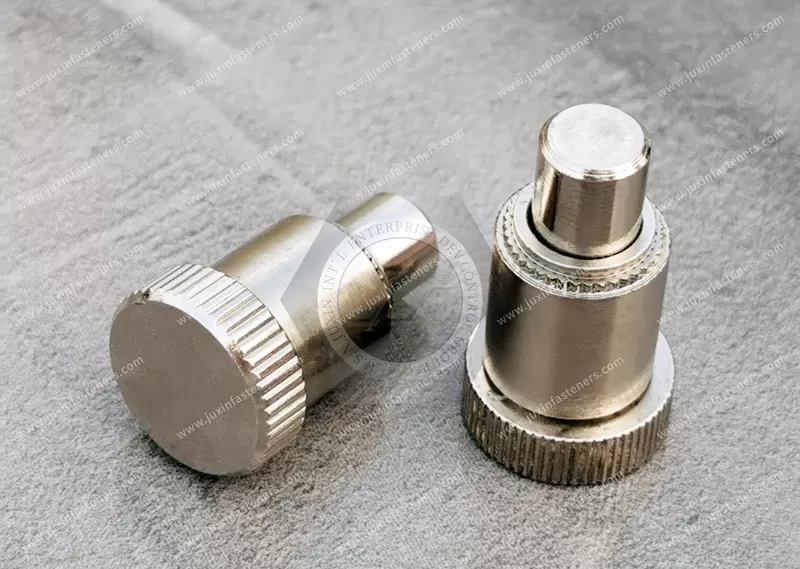
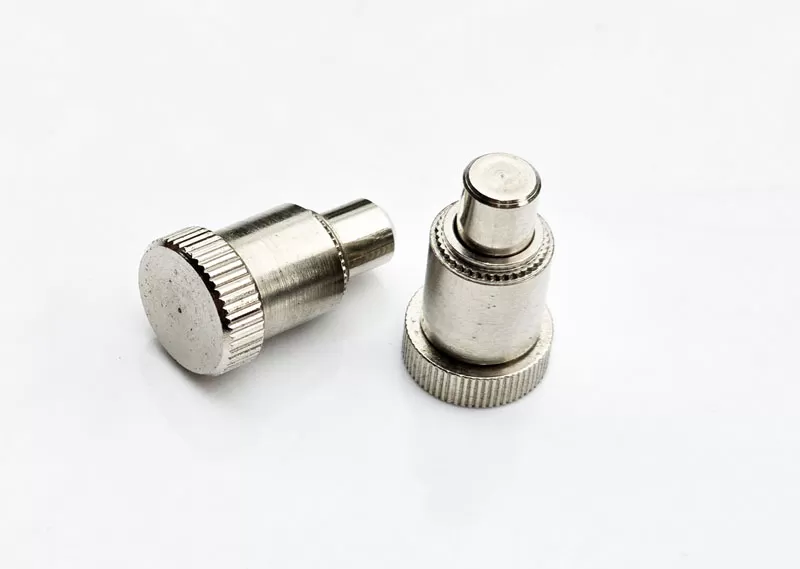
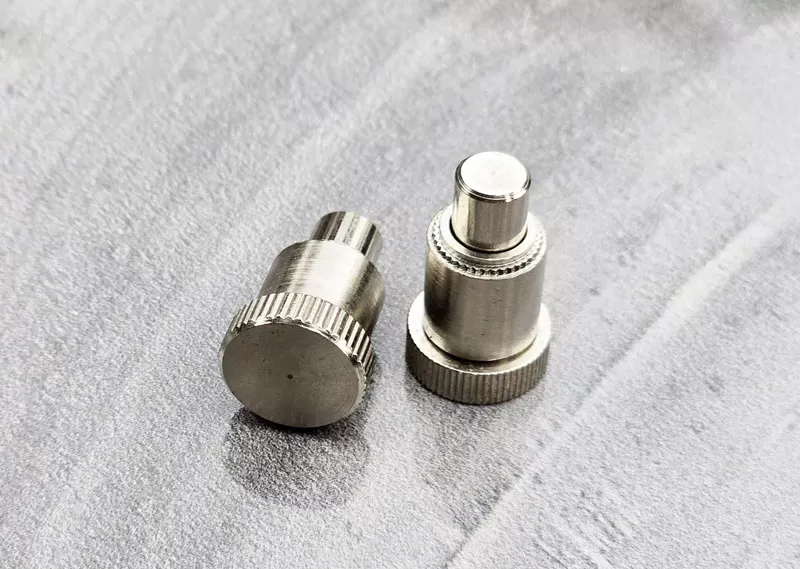
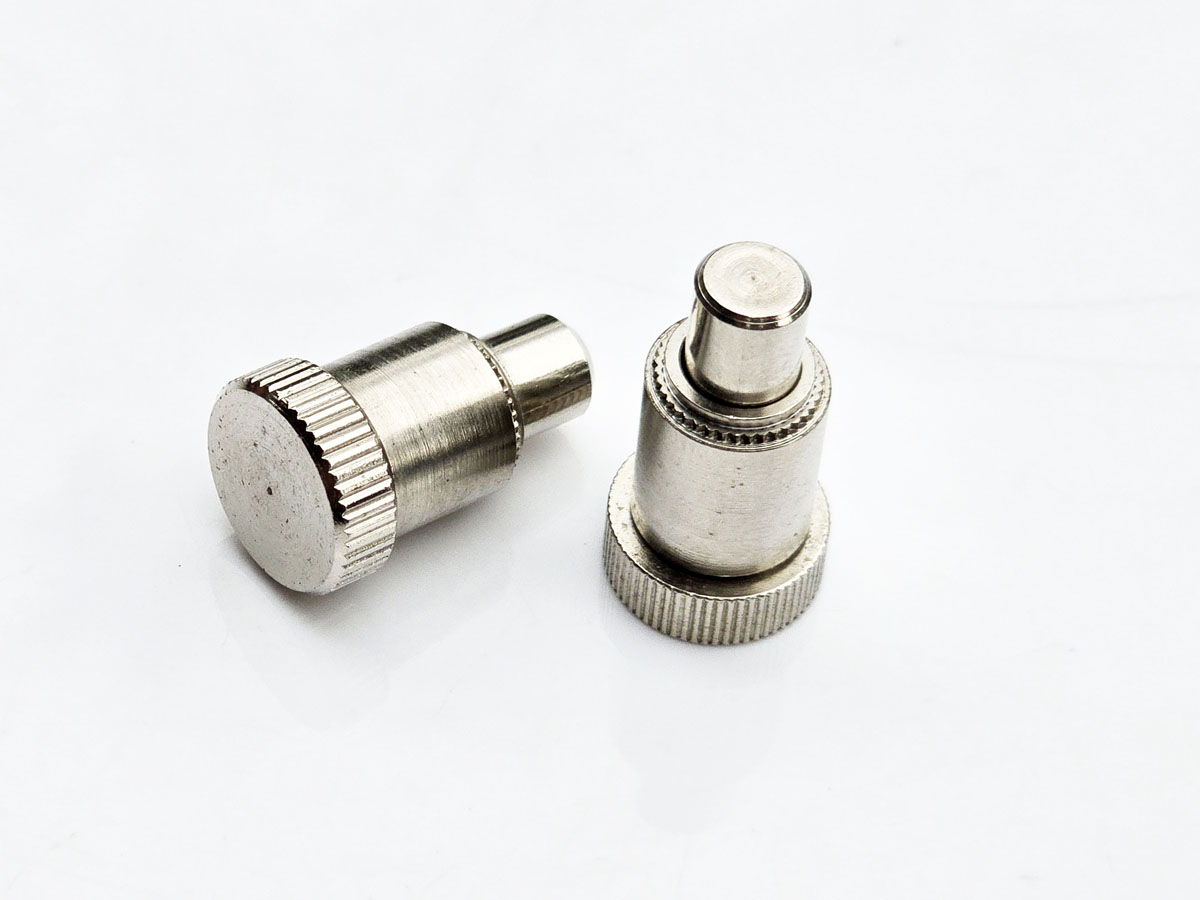
JUXIN FASTENERS supplies spring-loaded retractable plungers with a quick lockout mechanism for industrial positioning, drawer-guide stops, indexing systems, and mechanical latch applications.
Designed for panel mounting, these components provide a manually retractable locating pin that can be held in the withdrawn position during equipment adjustment, movement, or maintenance.
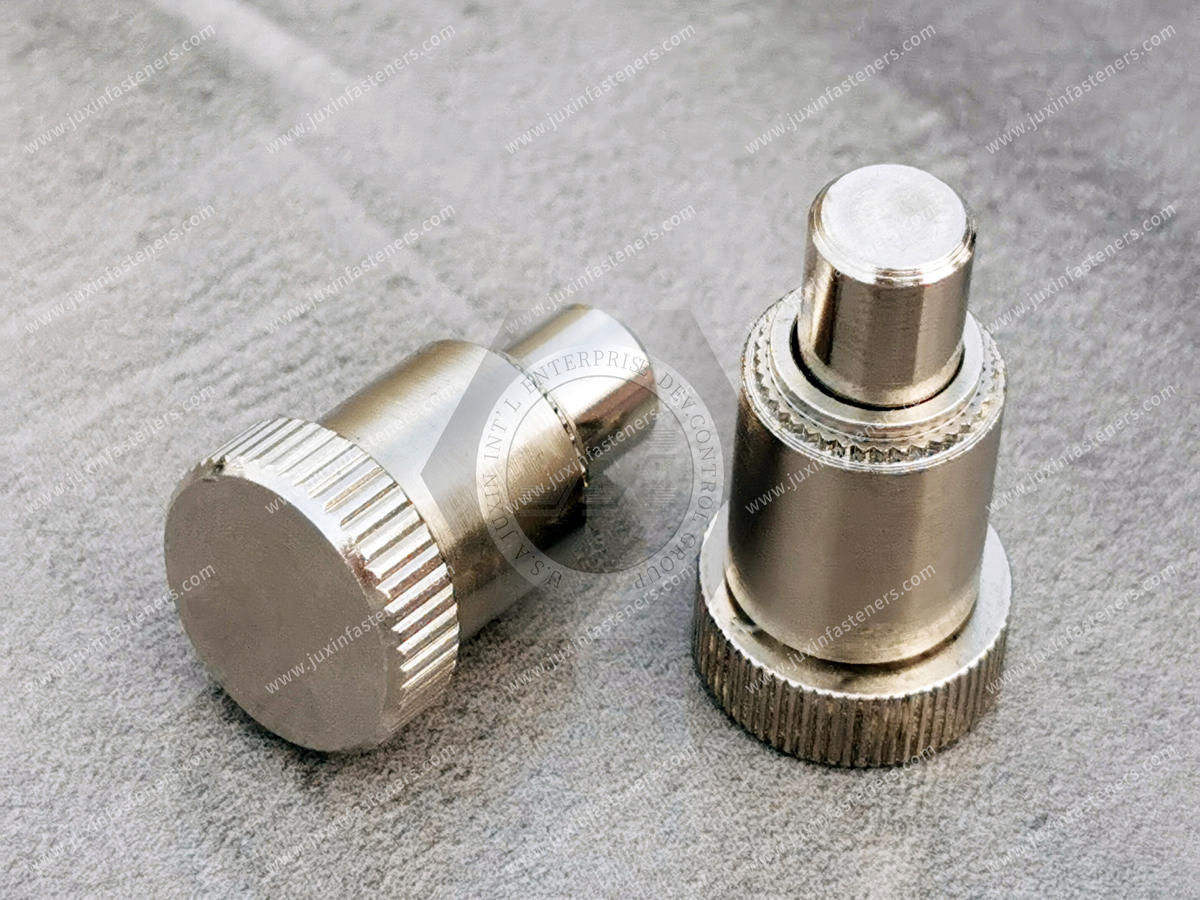
The product incorporates a spring-loaded plunger, an accessible operating head, and a mounting body.
Available material specifications include C45 (1045), C46 (1046), C20, and free-machining steel grades such as 1213, 1214, and 1215, subject to product configuration and engineering confirmation.
A nominal 0.250-inch plunger diameter is specified for the referenced design.
Custom dimensions and application-specific configurations may be evaluated against customer drawings and approved specifications.
Product Specification
Spring-Loaded Retractable Plungers with Lockout for Industrial Positioning and Panel-Mounted Assemblies
Product Overview
Spring-loaded retractable plungers are mechanical positioning components designed to provide controlled pin engagement and manual withdrawal in industrial equipment.
Unlike conventional threaded fasteners that create a clamping joint, these plungers perform locating, stopping, indexing, or detent functions within a mechanical assembly.
The referenced JUXIN FASTENERS design incorporates a quick lockout feature that holds the plunger in its retracted position.
This allows an operator to temporarily disengage the locating pin without continuously holding the operating head.
Typical applications include retractable drawer-guide stops, indexing mechanisms, latch detents, adjustable machine components, and equipment assemblies requiring repeatable manual positioning.
The product is described as a flare-mount panel component. Final mounting geometry, installation dimensions, and installation tooling requirements must be verified against the corresponding product drawing.
How the Spring-Loaded Lockout Mechanism Works
A spring-loaded retractable plunger uses an internal spring to bias the locating pin toward its engaged position.
During normal operation, the extended pin can engage a corresponding hole, recess, stop surface, or locating feature in the mating component.
When manual disengagement is required, the operator retracts the pin using the accessible operating head.
The quick lockout mechanism allows the plunger to remain withdrawn while an equipment component is repositioned, adjusted, or serviced.
Once the lockout is released, the spring returns the pin toward its extended position, subject to the available travel and mating geometry.
This operating principle can reduce the need for separate temporary holding devices in suitable manually operated positioning assemblies.
The lockout mechanism should not be interpreted as a certified safety interlock or load-rated locking system without application-specific testing and supporting documentation.
Product Configuration and Technical Reference
Product type: Spring-loaded retractable plunger
Primary function: Manual positioning, indexing, stopping, and mechanical detent engagement
Operating mechanism: Spring-biased retractable pin with quick lockout
Mounting configuration: Flare-mount panel installation, subject to approved drawing
Nominal plunger diameter: 0.250 inch (6.35 mm), approximately 6.4 mm
Panel hardness limitation: HRB 80 maximum, as specified in the supplied product information
Retracted-position characteristic: The reverse side of the sheet is described as flush when the plunger is fully retracted, subject to the specified installation geometry
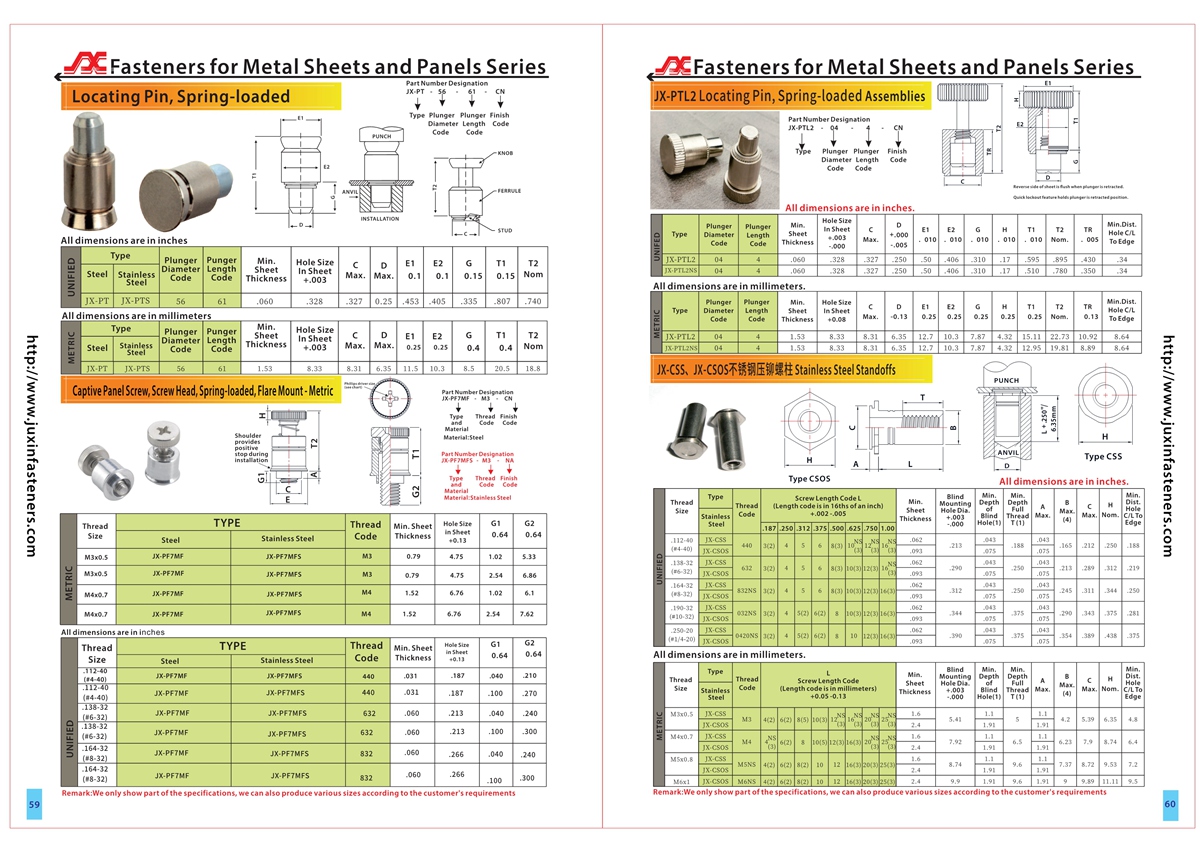
Lockout alternatives: Type JX-PSL2 and Type JX-PTL2 are identified in the supplied information as versions without the lockout feature, available by special order
Dimensional customization: Customer-specific sizes may be evaluated based on technical drawings and application requirements
Technical documentation: Refer to pages 59–60 of the applicable product specification PDF or CAD documentation for the detailed configuration.
The complete dimensional table, mounting hole geometry, panel thickness range, installation force, spring characteristics, and load ratings have not been independently verified from the referenced drawings.
These values must be confirmed before engineering approval or production release.
Material Options and Engineering Selection
The supplied material information identifies several potential steel grades.
Medium-carbon steels:
C45 (1045)
C46 (1046)
Low-carbon steel:
C20
Free-machining steels:
1213
1214
1215
These grades should be treated as potential material options rather than interchangeable specifications.
C45 and 1045 are commonly associated with medium-carbon steel applications where mechanical strength and machinability must be balanced.
However, differences between applicable material specifications, processing conditions, and finished component requirements must be considered.
Free-machining steel grades such as 1213, 1214, and 1215 may be considered for precision-turned components, depending on the required mechanical characteristics and manufacturing process.
Material selection should account for the function of each component, including the operating head, mounting body, retractable pin, and any internal elements.
The material grades listed above do not establish the spring material, surface hardness, heat treatment, or corrosion protection of the finished assembly.
For OEM projects, the final material specification should be established through the approved component drawing, purchase specification, and applicable material documentation.
Flare-Mount Installation into Sheet Metal
The referenced product is described as a flare-mount design intended for installation into a prepared sheet-metal panel.
Flare mounting differs from conventional threaded installation and from self-clinching fastening.
In a flare-mounted configuration, retention is achieved through deformation of a designated mounting feature during installation.
The precise deformation sequence and required tooling depend on the actual product geometry.
Before installation, the manufacturing engineer should verify the mounting hole diameter, panel thickness, panel hardness, installation direction, and clearance for the operating head and retractable pin.
The supplied technical description specifies use in sheets with hardness of HRB 80 or less.
This limitation is important because excessive substrate hardness can interfere with the intended deformation and retention process.
A panel that is too hard, too thin, or incorrectly prepared may not provide the intended mounting performance.
The required hole preparation, flaring dimensions, and minimum panel thickness must be taken from the approved product drawing rather than estimated from the nominal pin diameter.
Production installation should be validated using representative panel materials, actual tooling, and production-equivalent process conditions.
Flush Reverse-Side Design Considerations
The supplied product description states that the reverse side of the sheet is flush when the plunger is retracted.
This characteristic may be useful in assemblies where rear-side protrusion would interfere with moving components or where available clearance is limited.
Potential applications include equipment drawers, guided mechanisms, sliding components, and compact sheet-metal assemblies.
However, flushness must be evaluated relative to the mounting surface and the fully retracted position defined by the product drawing.
Design engineers should confirm the installed projection, retraction stroke, mating component clearance, and any dimensional variation introduced by the mounting operation.
A flush reverse-side condition in the retracted state does not establish that the pin is flush when extended.
Metric and Inch Dimensional Considerations
The supplied nominal plunger diameter is 0.250 inch, corresponding to 6.35 mm.
The approximate metric reference is 6.4 mm.
For engineering documentation, the distinction between a nominal quarter-inch diameter and a nominal metric diameter is important.
A 0.250-inch locating pin should not automatically be treated as interchangeable with a nominal 6 mm or 6.4 mm pin.
Fit, clearance, tolerance, engagement depth, and mating-hole geometry must be evaluated independently.
Where the product is supplied in a metric configuration, its dimensions should be established from the corresponding metric drawing.
Any threaded features, if present in a particular variant, must be identified by their actual thread designation.
Metric and Unified thread systems are not directly interchangeable.
Industrial Applications
Industrial Drawer and Slide Assemblies
Retractable plungers can serve as manually operated stops in industrial drawers, guided trays, and sliding equipment assemblies.
A spring-loaded pin can engage a designated stopping or positioning feature, while the lockout function permits temporary withdrawal during adjustment or removal.
Engineers should verify the direction of applied forces and avoid relying on an unverified plunger as a primary structural load-bearing component.
Machine Positioning and Indexing
In adjustable machinery, indexing plungers can establish repeatable mechanical positions when used with appropriately designed locating holes or engagement features.
Applications may include manually adjusted fixtures, positioning plates, sliding mechanisms, and equipment setup systems.
Locating accuracy depends on the pin diameter, mating geometry, installation tolerance, component rigidity, and wear conditions.
Industrial Enclosures and Equipment Panels
Panel-mounted retractable plungers may be used in access mechanisms and serviceable equipment assemblies where manual engagement and disengagement are required.
The compact mounting arrangement can be useful when access is limited and the reverse side of the panel must remain clear during retraction.
Suitability for a particular enclosure depends on the mechanical design, installation geometry, environmental conditions, and required retention performance.
Automation Equipment and Production Fixtures
Retractable locating pins can support manual changeover, positioning, and adjustment functions in manufacturing equipment.
The lockout feature may simplify setup procedures when an operator needs to keep a pin withdrawn while moving a fixture or machine component.
Production managers should evaluate operator accessibility, engagement visibility, maintenance requirements, and the consequences of incomplete pin engagement.
Electrical and Electronic Equipment
Spring-loaded positioning components may be considered for mechanical adjustment or access mechanisms in electrical cabinets, electronic equipment frames, and industrial control assemblies.
These applications require evaluation of vibration, environmental exposure, electrical clearance, mechanical accessibility, and component retention.
The product should not be assumed to provide electrical grounding, electromagnetic shielding, or safety-related locking performance.
Special-Purpose OEM Mechanical Assemblies
Custom machinery and OEM equipment may require retractable pins with specific dimensions, mounting arrangements, operating-head geometries, or engagement characteristics.
JUXIN FASTENERS can review customer-defined requirements against the applicable product configuration and available manufacturing options.
Custom feasibility, tooling, tolerances, and validation requirements should be confirmed before production commitment.
Lockout and Non-Lockout Plunger Selection
A lockout plunger is useful when the operator needs to hold the pin in its retracted position during an adjustment or movement sequence.
A non-lockout version may be appropriate where automatic spring return is preferred and temporary retention in the withdrawn position is unnecessary.
The supplied product information identifies JX-PSL2 and JX-PTL2 as non-lockout versions available by special order.
The exact dimensional and mounting differences between these versions must be verified against their respective drawings.
For OEM design selection, engineers should evaluate whether accidental lockout, incomplete engagement, or unintended release could affect the equipment's operation.
Where positive engagement confirmation is necessary, the complete machine design may require an additional indication or verification mechanism.
Retractable Plungers Compared with Alternative Fastening Components
Retractable Plungers vs. Captive Panel Screws
A captive panel screw is normally designed to remain attached to a panel while providing threaded fastening to another component.
A retractable plunger is primarily intended for mechanical positioning, indexing, stopping, or detent engagement.
Although both may be installed in panels and incorporate spring-loaded elements, their functional purposes are different.
Engineers should not substitute one for the other without reviewing the complete assembly requirements.
Retractable Plungers vs. Ball Plungers
Ball plungers commonly provide spring-loaded contact through a ball element, often for light positioning or detent functions.
Retractable pin plungers use a projecting pin that can be manually withdrawn.
The appropriate selection depends on the mating geometry, desired engagement behavior, operating method, and required holding or locating function.
Retractable Plungers vs. Fixed Locating Pins
Fixed locating pins provide a permanent locating feature but do not offer manual withdrawal.
Retractable plungers allow temporary disengagement, which may be useful for adjustable assemblies and equipment requiring frequent repositioning.
The additional moving components introduce considerations involving spring function, wear, contamination, and operator handling.
Engineering Design and Installation Checklist
Before approving a retractable plunger for production, the engineering team should evaluate the following requirements.
Confirm the nominal pin diameter and dimensional tolerances.
Verify the mating hole or locating feature geometry.
Check the required engagement depth and retraction travel.
Confirm the available installation space and operating-head clearance.
Review the panel thickness and hardness.
Validate the mounting method and installation tooling.
Confirm whether lockout is required.
Assess expected side loads, vibration, and operating frequency.
Evaluate material compatibility and environmental exposure.
Define inspection requirements for pin movement, spring return, lockout operation, and installed retention.
Establish acceptance criteria through the approved engineering drawing and application validation plan.
Common Installation and Application Risks
Incorrect Mounting Hole Preparation
An oversized, undersized, or poorly formed mounting hole may prevent proper installation and retention.
The mounting hole should be produced according to the approved drawing and verified before production installation.
Excessive Panel Hardness
The supplied product information limits panel hardness to HRB 80 or less.
Using a harder panel without engineering approval may interfere with the intended flare-mount installation.
Insufficient Pin Engagement
Incorrect assembly tolerances or insufficient mating-hole depth can prevent full engagement.
The required pin travel and engagement geometry should be checked under actual operating conditions.
Unintended Side Loading
A retractable plunger used as a mechanical stop may experience lateral forces.
Without verified load data, the component should not be assumed suitable for high-impact or structural stopping applications.
Incorrect Lockout Operation
Operators must understand whether the pin is engaged or held in its retracted position.
For equipment where engagement is critical, appropriate operational checks should be incorporated into the machine procedure.
Contamination and Wear
Dust, chips, debris, or environmental contamination may affect sliding movement and spring return.
Maintenance requirements should reflect the actual operating environment and duty cycle.
Production Engineering and Assembly Efficiency
For production managers and manufacturing engineers, component selection should consider the total installed cost rather than the purchase price alone.
A suitable retractable plunger may simplify a manual positioning operation by combining pin engagement, manual withdrawal, and temporary lockout in one mechanical component.
However, actual assembly efficiency depends on mounting preparation, installation tooling, operator access, inspection requirements, and production volume.
For higher-volume OEM production, process validation should establish consistent mounting retention and reliable plunger operation.
A practical production inspection plan may include mounting-hole verification, installed-position checks, manual retraction testing, spring-return observation, and lockout-function verification.
Where applicable, first-article inspection and customer-specific process documentation can be defined during supplier qualification.
OEM Procurement and Supplier Qualification
Purchasing engineers, supplier development teams, procurement managers, and supply chain managers should identify both the commercial requirements and the critical engineering characteristics before issuing a production RFQ.
Recommended technical information includes the approved 2D drawing, available 3D CAD model, product designation, material requirements, mounting configuration, panel specifications, dimensional tolerances, and operating requirements.
Commercial requirements may include annual demand, expected order quantities, delivery schedule, packaging specifications, labeling instructions, and destination market.
Where customer-specific quality documentation or inspection reporting is required, the requested scope should be communicated during quotation.
Any material traceability, dimensional inspection report, first-article documentation, or other qualification deliverable must be agreed upon before order acceptance.
Custom Spring-Loaded Retractable Plunger RFQ
JUXIN FASTENERS welcomes technical inquiries for standard and customer-specific retractable plunger configurations.
For efficient engineering review and quotation, please provide:
Product drawing or reference model
Required pin diameter and stroke
Lockout or non-lockout configuration
Panel material, hardness, and thickness
Mounting hole and installation requirements
Material and surface finish specifications
Expected operating conditions
Estimated order quantity and annual demand
Required inspection and documentation
Packaging and delivery requirements
Our team can review the submitted requirements and confirm product suitability, available specifications, and manufacturing feasibility before quotation.
Frequently Asked Questions
What is a spring-loaded retractable plunger?
A spring-loaded retractable plunger is a mechanical component that uses spring force to extend a locating pin and allows the operator to withdraw it manually.
It is commonly used for indexing, positioning, stops, and detent mechanisms.
What is the purpose of the lockout feature?
The lockout feature holds the plunger in its withdrawn position, allowing the associated mechanical assembly to be moved or adjusted without continuously pulling the operating head.
Can the plunger be installed in sheet metal?
The referenced product is described as a flare-mount design for sheet-metal installation. The supplied information specifies a maximum sheet hardness of HRB 80.
Panel thickness, mounting hole dimensions, and installation tooling must be verified against the approved drawing.
Is a 0.250-inch plunger the same as a 6 mm plunger?
No. A nominal 0.250-inch diameter equals 6.35 mm. It is not dimensionally identical to 6 mm. Selection must be based on the actual product and mating-component tolerances.
Are non-lockout versions available?
The supplied product information identifies JX-PSL2 and JX-PTL2 as non-lockout versions available by special order. Exact configurations and availability should be confirmed during quotation.
Can this component replace a captive panel screw?
Not automatically. Captive panel screws primarily provide threaded fastening, while retractable plungers provide positioning or detent engagement.
The correct component depends on the required mechanical function.
Can the plunger be used as a safety locking device?
The available information does not establish safety certification or rated locking performance. Safety-critical applications require a separate engineering assessment and appropriate validation.
Can JUXIN FASTENERS review custom dimensions?
Customer-specific dimensions and configurations may be submitted for engineering review. Manufacturing feasibility and final specifications must be confirmed against the drawing and application requirements.
What information should an OEM buyer include in an RFQ?
An effective RFQ should include the product drawing, material requirements, mounting dimensions, operating conditions, lockout requirements, order quantity, quality expectations, and delivery requirements.
Related Industrial Fastening Products
For related equipment design and supplier sourcing, explore JUXIN FASTENERS product families including:
Captive Panel Screws and Panel Fasteners
Spring-Loaded Fastening Components
Self-Clinching Fasteners for Sheet Metal
Precision Pins and Custom Machined Fasteners
These product families support different fastening, positioning, and panel assembly functions. Final selection should follow the specific mechanical and installation requirements.
Contact JUXIN FASTENERS for OEM Supply and Engineering RFQs
JUXIN FASTENERS supports industrial customers seeking spring-loaded retractable plungers, panel-mounted positioning components, and customer-specific mechanical fastening solutions.
Whether your project involves machinery positioning, equipment access mechanisms, industrial drawer assemblies, or custom OEM hardware,
our team can review drawings and technical requirements to support product selection and quotation.
For engineering inquiries, technical drawing reviews, and OEM purchasing requests, contact:
Email: info@juxinfasteners.com
Website: www.juxinfasteners.com
Send us your technical drawings, application requirements, and estimated purchasing quantities to request an engineering review and commercial quotation.
Product Packaging
JUXIN FASTENERS offers protective packaging arrangements for spring-loaded retractable plungers and precision industrial fastening components.
The supplied packaging configuration includes an inner protective polyfoam layer, outer corrugated cartons, and palletized packing for shipment.
Reference carton dimensions:
29 × 19 × 19.5 cm
23.5 × 17.5 × 8 cm
Reference pallet dimensions:
215 × 100 × 90 cm
These dimensions represent supplied packaging references and are not guaranteed packing dimensions for every product size or order quantity.
Packaging arrangements may be adjusted according to component dimensions, shipment quantity, transportation requirements, and customer-specific instructions.
OEM packaging requirements, including part identification, carton labeling, lot identification, protective separation, and customer-defined packing instructions, can be reviewed during order confirmation.
Final packing quantities, carton selection, pallet configuration, and shipment arrangements will be confirmed according to the approved order and packaging requirements.
Product Pictures
Contact Us
Tel.:
+86 020 8621 0320
+86 020 3121 6067
E-mail:
Technical Support:
Navigation
SEND INQUIREY