Call Us
+86 136 6007 9809
Call Us
+86 136 6007 9809

Spring-Loaded Locating Pins – PT-59-T10-CN
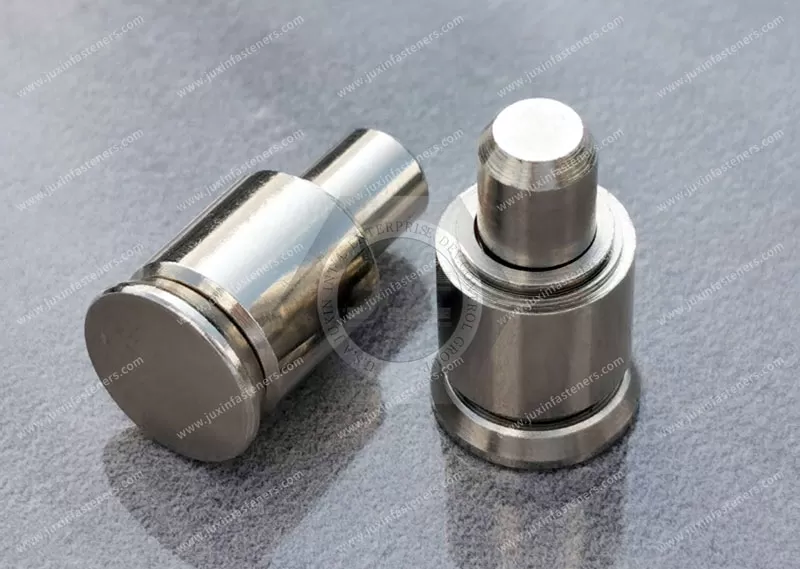
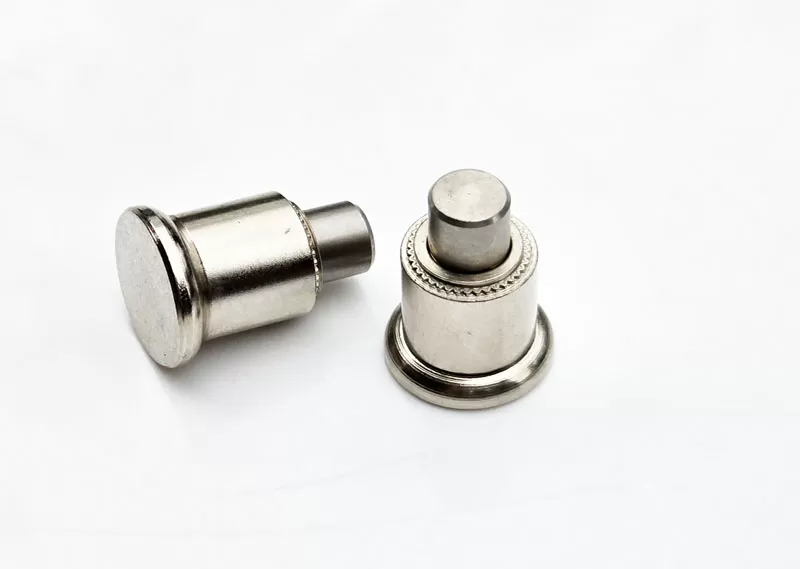
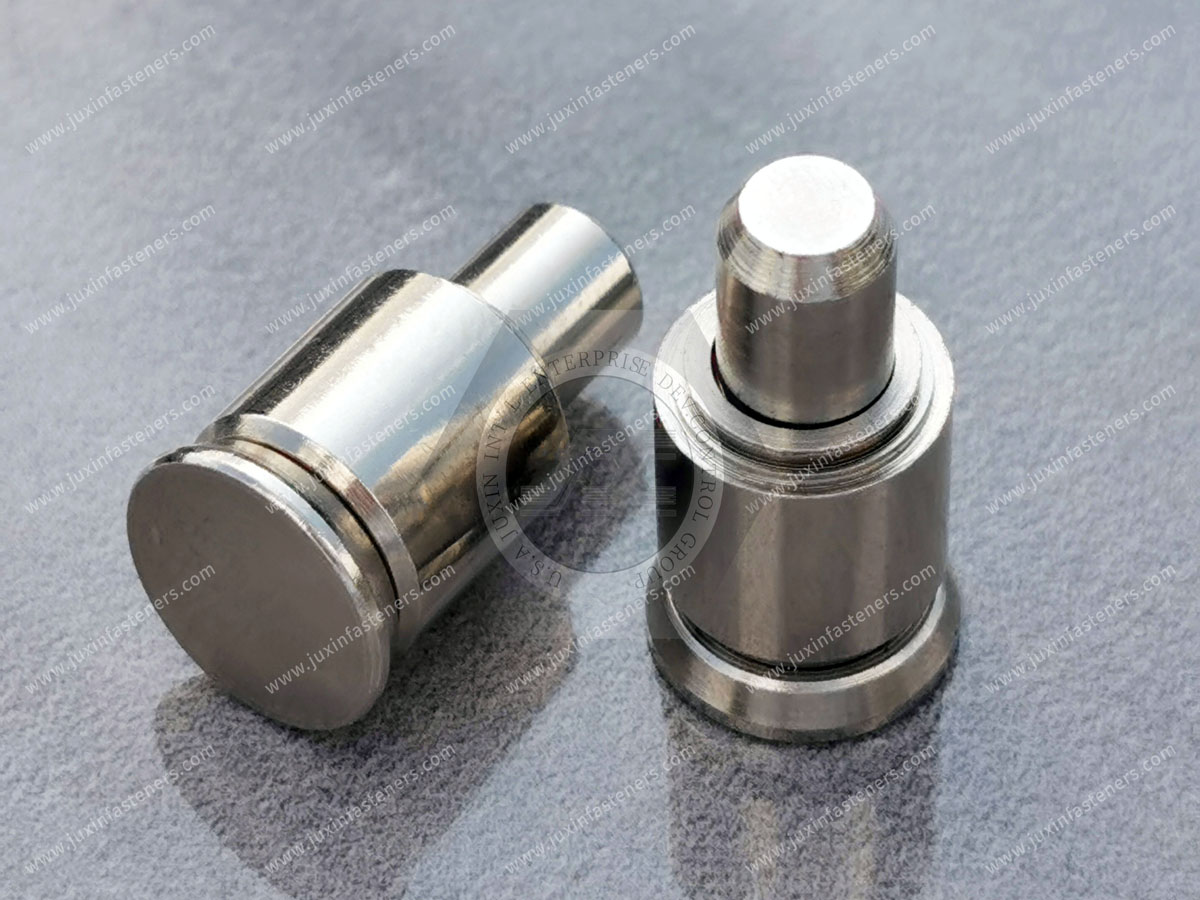
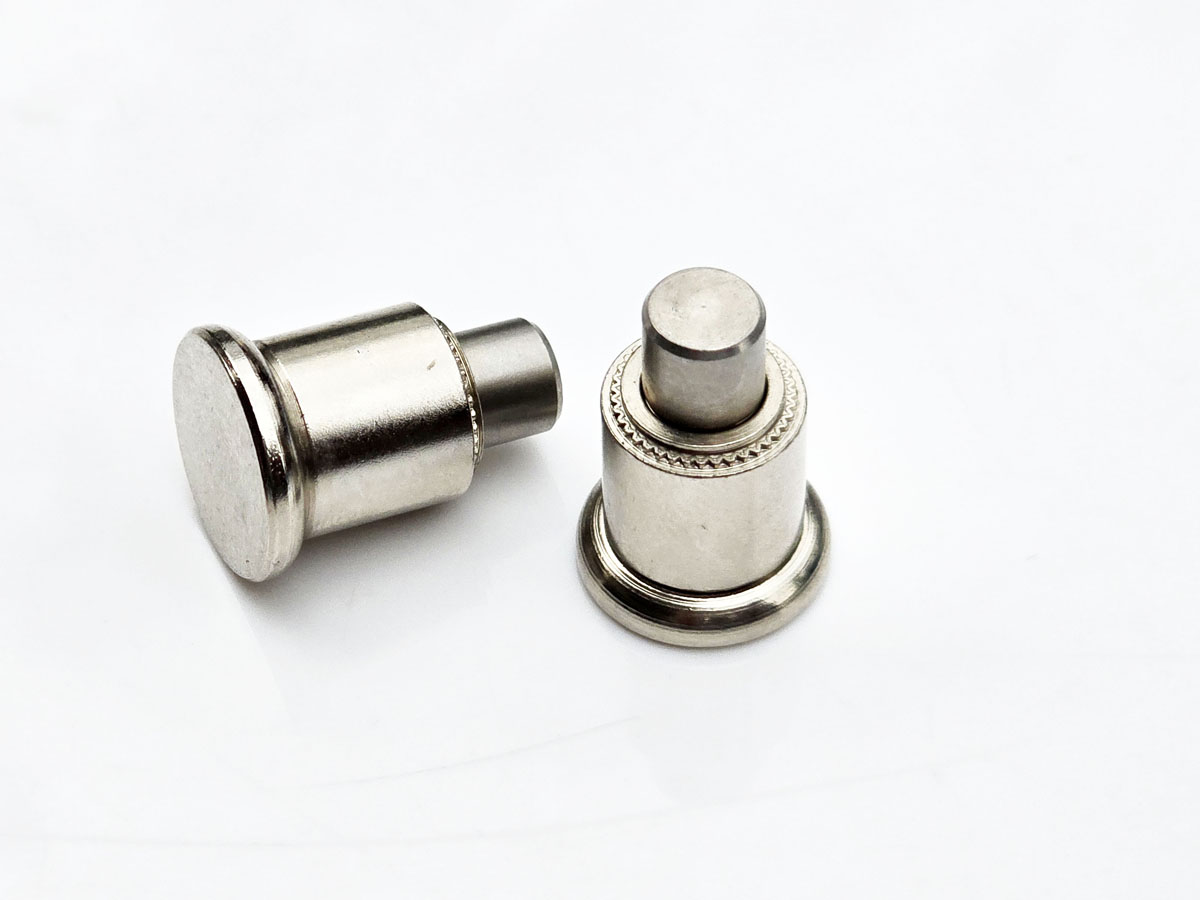
PT-59-T10-CN spring-loaded locating pins are designed for controlled positioning, indexing, and retractable engagement in industrial sheet metal assemblies.
Material: Carbon steel. Material options include C45, C46, C20, and free-machining steels such as 1213, 1214, and 1215, subject to the approved product specification.
The spring-loaded plunger provides a retractable locating feature that can be disengaged when equipment components require adjustment, removal, or repositioning.
A key design feature is the flush reverse-side condition when the plunger is fully retracted, helping reduce interference with adjacent components.
The quick lockout mechanism holds the plunger in its retracted position during maintenance or equipment changeover.
The standard application is intended for compatible sheet materials with a maximum hardness of HRB 80, subject to installation requirements.
A version without the lockout feature may be reviewed for special-order requirements.
Typical applications include industrial automation equipment, positioning fixtures, machine enclosures, access mechanisms, assembly tooling, and adjustable mechanical systems.
Product Specification
PT-59-T10-CN Spring-Loaded Locating Pins – Industrial Positioning and Indexing Solutions
PT-59-T10-CN spring-loaded locating pins provide a retractable mechanical positioning feature for industrial equipment, sheet metal assemblies, and applications requiring repeated engagement and release.
The product combines spring-actuated positioning with a lockout function that can hold the plunger in the retracted position.
Its flush reverse-side design is particularly useful where protruding hardware could interfere with moving components or adjacent assemblies.
Juxin Fasteners offers this product series for OEM engineering evaluation, replacement-part sourcing, and custom industrial fastening requirements.
Product Design and Operating Principle
A spring-loaded locating pin uses a spring-biased plunger to engage a corresponding locating hole, recess, or positioning feature.
When engaged, the plunger provides a defined mechanical reference for the associated component.
When the plunger is withdrawn, the mating component can be repositioned or removed.
The spring assists with returning the plunger toward its extended position after release.
The PT-59-T10-CN configuration incorporates a lockout function for holding the plunger retracted.
The exact operating travel, engagement geometry, and spring characteristics must be verified against the approved product drawing.
Quick Lockout Mechanism
The lockout function allows the operator to retain the plunger in its withdrawn position.
This can be useful during fixture adjustments, access-panel handling, or equipment changeovers where the locating feature must remain disengaged temporarily.
Without a lockout function, an operator may need to maintain continuous force on a spring-loaded plunger while moving the associated component.
A lockout mechanism can reduce that handling requirement.
The lockout is a positioning convenience feature and should not be assumed to provide safety-rated locking or machine guarding.
Its operating method and holding performance must be confirmed for the selected configuration.
Flush Reverse-Side Clearance
One of the distinguishing characteristics of the PT-59-T10-CN series is its flush reverse-side condition when the plunger is retracted.
This feature can be valuable in assemblies with restricted clearance behind the mounting sheet.
For example, a movable component may pass close to the rear face of a panel during repositioning.
A protruding plunger could interfere with that movement.
The flush condition can help reduce such interference when the plunger is fully withdrawn.
Engineers must still check the complete installed fastener envelope, including any mounting features, head geometry, and operating clearance.
Sheet Metal Installation and Material Compatibility
The stated application is intended for sheets with a maximum hardness of HRB 80.
The mounting sheet must be compatible with the locating pin's retention and installation design.
For press-installed or self-clinching configurations, the relationship between fastener hardness and sheet hardness is especially important.
The installation process should use the mounting-hole dimensions and tooling arrangement specified in the approved technical drawing.
The fastener must be aligned correctly with the prepared hole.
Adequate support beneath the panel helps reduce distortion during installation.
The specified hardness limit should not be interpreted as approval for every sheet material below HRB 80.
Sheet thickness, material ductility, mounting-hole tolerance, and the fastener's installation geometry must also be evaluated.
Carbon Steel Material Options
The supplied material range includes carbon steels such as C45, C46, and C20, together with free-machining steels such as 1213, 1214, and 1215.
These materials offer different combinations of machinability, strength, and heat-treatment response.
The material selected for the final product must satisfy the required machining, forming, hardness, and operating characteristics.
Where applicable, material requirements may be specified using recognized EN, ISO, SAE, or ASTM material designations.
Equivalent material grades must be confirmed through chemical composition and mechanical property requirements rather than assumed from similar names.
The exact production material for PT-59-T10-CN should be established through the approved drawing and purchase specification.
Corrosion Protection and Surface Finish
Carbon steel components may require protective surface treatment depending on their operating environment.
Possible finishes can be evaluated according to customer requirements and manufacturing feasibility.
For zinc or zinc-alloy coatings, applicable ISO or ASTM coating specifications can be considered.
Coating thickness and finish selection must account for the dimensions and movement of the plunger assembly.
An unsuitable coating can interfere with sliding action or change the fit of critical features.
Outdoor, humid, chemically exposed, or washdown environments require a separate corrosion-resistance assessment.
No particular coating performance or corrosion classification should be assumed without supporting test data.
Locating and Indexing Applications
Industrial Automation
Spring-loaded locating pins can provide repeatable positioning points in adjustable machine assemblies and automation equipment.
They may be used where a component must be disengaged and repositioned during setup.
Assembly Fixtures
Manufacturing fixtures frequently require locating features to position interchangeable tooling or workholding components.
A retractable pin can support changeover operations when the mating geometry and loads are suitable.
Machine Enclosures
Retractable locating pins may assist with positioning removable equipment covers or access components.
They should not be used as substitutes for certified safety interlocks or protective locking systems.
Industrial Machinery
Mechanical assemblies may use spring-loaded indexing pins to select predetermined positions.
The selected pin must be assessed for the actual operating loads and potential movement of the associated components.
Test and Inspection Equipment
Adjustable test fixtures may benefit from retractable positioning elements that allow repeated setup changes.
Consistent locating-hole geometry and adequate mounting rigidity are important for repeatability.
Packaging and Production Equipment
Changeover components in packaging machinery may require positioning hardware that can be engaged and released without fully removing the fastener.
A lockout configuration may simplify repositioning during non-operating setup procedures.
Engineering Selection: Locating Pin Versus Threaded Fastener
A threaded fastener primarily creates a clamped joint through controlled tightening.
A spring-loaded locating pin primarily provides a retractable positioning or indexing function.
These components should not be treated as direct substitutes.
A locating pin may identify or retain a component at a selected position, but its ability to resist axial or transverse loads depends on its geometry and construction.
Where the assembly requires a structural clamping force, a separate threaded fastener or other suitable retention mechanism may be necessary.
Engineering Selection: Lockout Versus Non-Lockout Versions
A lockout locating pin can remain retracted while the operator adjusts the mating component.
This can be advantageous for assemblies requiring frequent repositioning.
A non-lockout version may be suitable where automatic spring return is preferred and temporary retraction does not need to be maintained.
The non-lockout version should be specified only after confirming its availability and dimensional compatibility.
The choice should reflect the actual equipment operating sequence rather than price alone.
Locating Accuracy and Mating-Hole Design
The accuracy of a locating assembly depends on more than the nominal diameter of the pin.
The mating-hole diameter, pin tip geometry, mounting position, and structural stiffness all influence positioning behavior.
Excessive clearance between the locating pin and mating hole can allow unwanted movement.
Insufficient clearance can cause difficult engagement, especially when multiple locating features must align simultaneously.
A chamfer or lead-in feature may help guide engagement where included in the approved design.
Engineers should assess the complete tolerance stack between the mounting panel and the mating component.
Pin Engagement and Mechanical Loading
The locating pin must provide sufficient engagement for its intended positioning function.
Engagement depth, pin diameter, support conditions, and mating-material strength affect the mechanical response.
A locating pin subjected to excessive transverse loading may experience bending or damage at the engagement point.
Repeated engagement under misalignment can also accelerate wear.
The spring force should not be confused with the structural load capacity of the engaged pin.
For applications involving vibration, shock, or repeated movement, mechanical qualification should reflect the actual service conditions.
Installation Quality and Inspection
Installation quality should be checked before the locating pin is incorporated into the final equipment assembly.
The mounting feature should be properly seated and retained.
The plunger should move smoothly through its intended operating range.
The lockout feature should engage and release as designed.
The fully retracted position should provide the specified reverse-side clearance.
Inspection should also check for panel deformation, excessive looseness, binding, or damage to the mounting area.
Acceptance criteria should be defined by the approved drawing and application requirements.
Common Engineering Failure Modes
Plunger Binding
Misalignment, contamination, unsuitable surface treatment, or dimensional interference can restrict plunger movement.
Insufficient Retraction Clearance
An incorrect installation or unsuitable mating geometry can prevent the plunger from reaching its intended retracted position.
Mounting Retention Failure
Incorrect hole preparation or incompatible sheet material may reduce the security of the mounting feature.
Premature Wear
Repeated engagement under excessive side load can damage the locating pin or mating hole.
Unintended Release
An unsuitable locating arrangement may allow movement under vibration or external loading.
These risks should be addressed through dimensional verification, installation controls, and application-specific testing.
Technical Specifications
Product type: Spring-loaded locating pin.
Model: PT-59-T10-CN.
Primary function: Retractable positioning and indexing.
Operating feature: Spring-loaded plunger.
Lockout: Quick lockout holds the plunger in the retracted position.
Reverse-side condition: Flush when the plunger is fully retracted.
Recommended mounting sheet hardness: HRB 80 maximum, subject to the approved installation specification.
Material family: Carbon steel.
Available material options: Subject to the approved manufacturing drawing and purchasing requirements.
Non-lockout option: Available for special-order review.
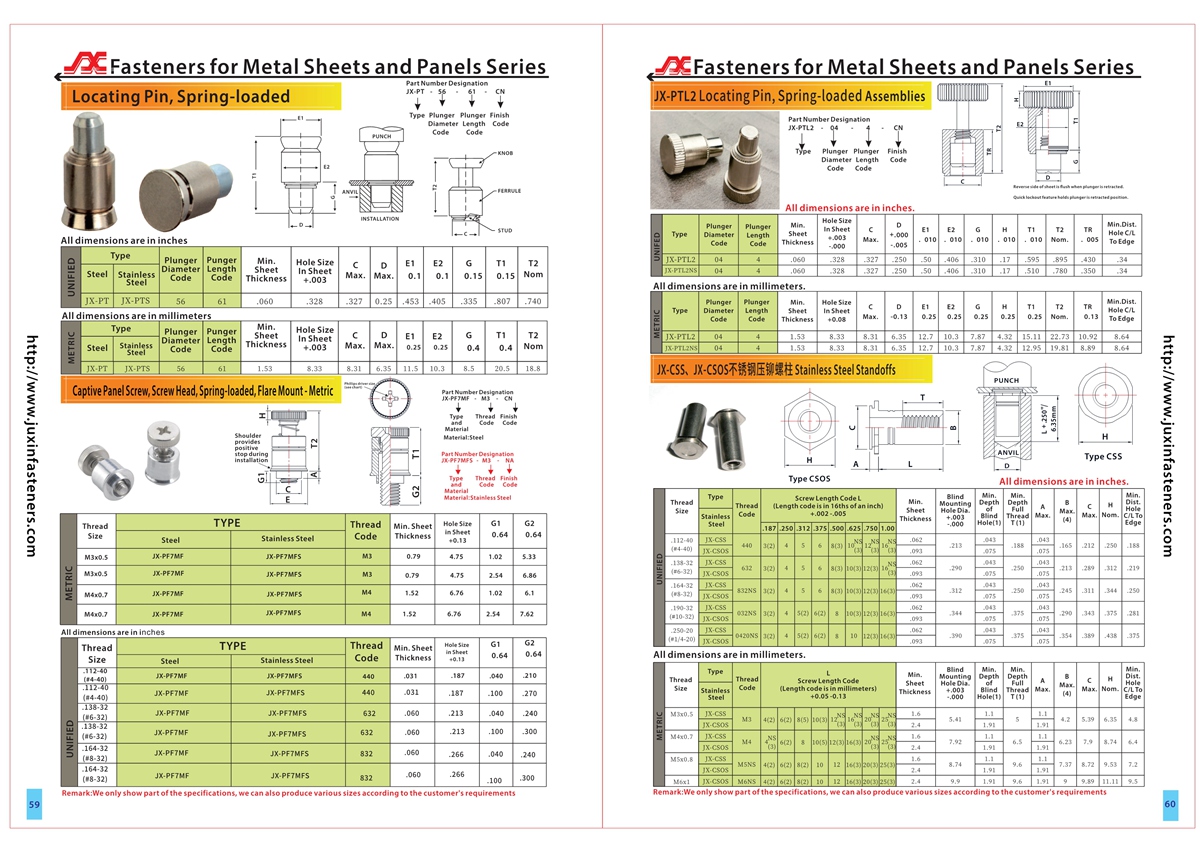
Installation dimensions: Refer to the applicable product drawing.
Plunger diameter and travel: According to the selected technical specification.
Spring force: To be confirmed for the selected configuration.
Surface finish: According to the approved product specification.
Custom dimensions: Subject to technical review and manufacturing feasibility.
Product drawings: Refer to the associated PDF and CAD information, pages 59–60, after confirming the drawing revision and model.
Dimensional Standards and Drawing Control
PT-59-T10-CN is a model-specific locating pin and should not be represented as an ISO- or DIN-standardized product without evidence of such designation.
Applicable ISO, ASME, ASTM, EN, or SAE requirements may be used to define material properties, dimensional tolerances, surface finishes, and inspection methods where relevant.
The approved product drawing should remain the primary dimensional reference.
Any alternative or custom version must be evaluated for mounting compatibility and functional performance.
OEM Engineering and Purchasing Checklist
Before requesting production pricing, the customer should define the required model and drawing revision.
The mounting panel material, thickness, and hardness must be identified.
The prepared mounting-hole geometry should be provided.
The required pin engagement and retraction clearances should be specified.
The equipment operating sequence should establish whether lockout is required.
The expected operating loads, vibration exposure, and environmental conditions should be communicated.
Where necessary, prototype testing should verify installation retention, plunger operation, and locating repeatability.
For repeat production, inspection requirements and acceptance criteria should be agreed before order confirmation.
Frequently Asked Questions
What is a spring-loaded locating pin?
A spring-loaded locating pin is a mechanical positioning component with a retractable plunger that can engage a mating hole or locating feature.
What is the purpose of the lockout mechanism?
The lockout mechanism holds the plunger in its withdrawn position, allowing the associated component to be repositioned without continuous manual retraction.
What does flush reverse-side clearance mean?
It means the locating plunger does not project beyond the specified reverse-side reference surface when fully retracted, according to the product design.
Can PT-59-T10-CN be installed in stainless steel panels?
Suitability cannot be determined from material name alone. The stated sheet hardness limit is HRB 80, and the installation geometry and material compatibility must also be verified.
Is the locating pin suitable for safety-critical machine locking?
Not automatically. Safety-related applications require a separate assessment and appropriately rated components.
Is a version without lockout available?
A non-lockout configuration can be considered on special order, subject to technical confirmation.
Can Juxin Fasteners review custom locating pin requirements?
Yes. Customer drawings and functional requirements can be submitted for technical and commercial review.
Related Products and Internal Linking
For permanent sheet metal positioning features, explore Self-Clinching Pilot Pins – JX-TPS.
For removable PCB or panel support, review JX-SKC Detachable Self-Clinching Standoffs.
For spring-loaded panel retention, explore JX-PFC2 / JX-PFS2 Captive Panel Screws.
For other positioning and fastening requirements, review the Self-Clinching Fasteners and Specialty Fastening Solutions product categories.
Each product reference should link to its verified corresponding page on www.juxinfasteners.com.
OEM Sourcing and Supply Chain Considerations
Procurement teams should evaluate locating pins using their functional specifications rather than relying only on the model name.
Two visually similar spring plungers may differ in stroke, spring force, mounting geometry, lockout operation, and installation requirements.
A successful OEM sourcing process should confirm the approved drawing, material, surface finish, dimensional tolerances, operating performance, and inspection criteria.
For high-volume production, the quotation should identify the required quantity, annual demand, sampling requirements, and delivery expectations.
Where applicable, the customer may request material documentation, inspection records, and agreed traceability information.
Request a Quotation for PT-59-T10-CN Locating Pins
Juxin Fasteners supports industrial OEM sourcing and custom inquiries for spring-loaded locating pins and related fastening components.
Please send the required product model, technical drawing, mounting sheet specifications, operating requirements, finish requirements, and estimated purchasing quantity.
Our team can review the information for product selection, engineering feasibility, and commercial quotation.
Email: info@juxinfasteners.com
Website: www.juxinfasteners.com
Juxin Fasteners – Industrial Positioning, Panel Fastening, and OEM Mechanical Assembly Solutions.
Product Packaging
Packaging and Export Protection
Juxin Fasteners provides protective export packaging for PT-59-T10-CN spring-loaded locating pins.
Packaging is selected to protect the plunger, mounting features, and moving components against impact, contamination, and damage during transportation.
Standard packing may include protective inner bags or small boxes, reinforced export cartons, and palletized shipments when required.
Packaging labels can identify the product model, material, specification, production batch, and quantity according to agreed customer requirements.
Custom packaging options include protective separators, customer-specific labels, barcodes, defined packing quantities, custom carton configurations, and pallet arrangements.
Final packaging quantities and shipment configurations are confirmed according to order volume, product dimensions, and OEM purchasing requirements.
Product Pictures
Contact Us
Tel.:
+86 020 8621 0320
+86 020 3121 6067
E-mail:
Technical Support:
Navigation
SEND INQUIREY