Call Us
+86 136 6007 9809
Call Us
+86 136 6007 9809

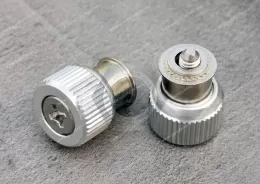
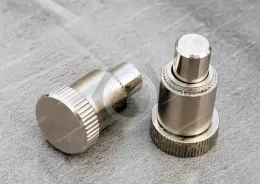
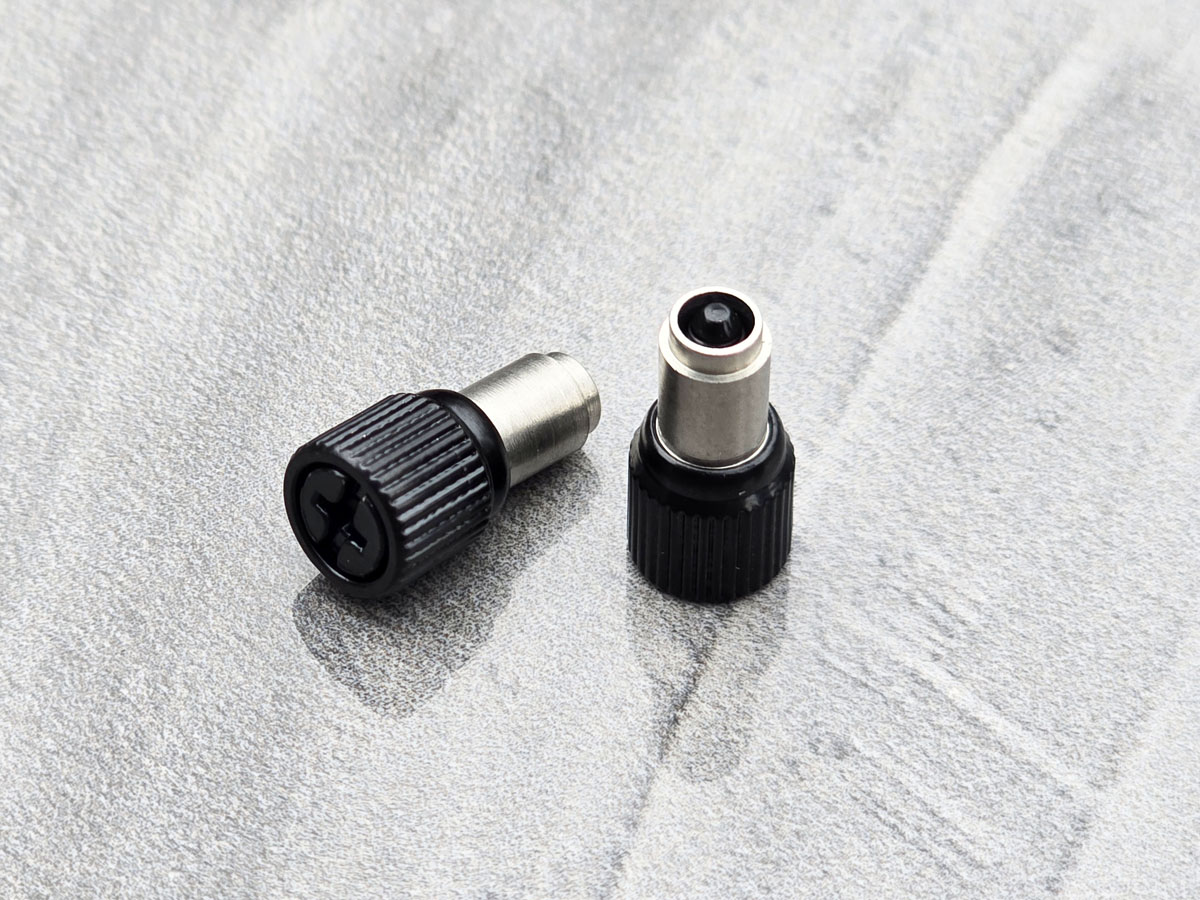
Large-Knob Spring-Loaded Captive Panel Screws – JX-PF09
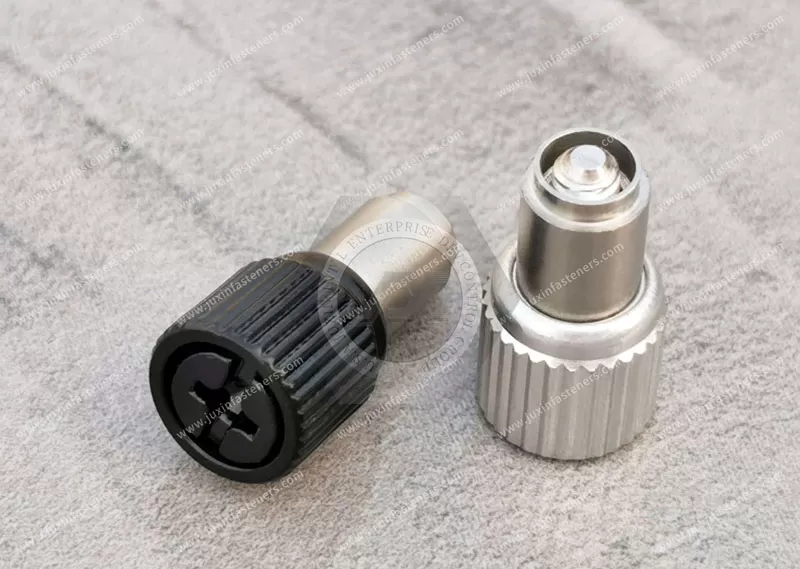
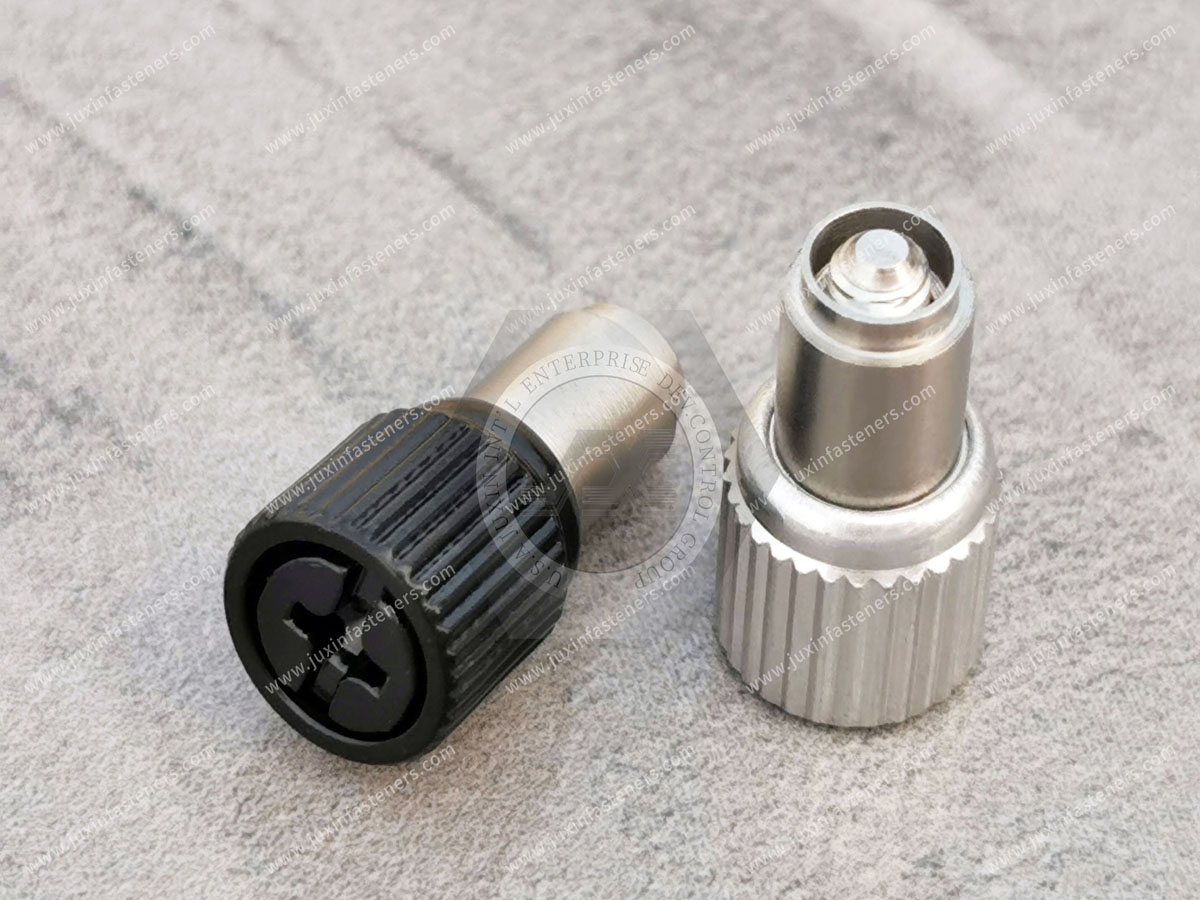
JX-PF09 is a large-knob spring-loaded captive panel screw designed for removable industrial equipment panels where mating-hole alignment and convenient maintenance access are important.
Its floating fastening concept helps accommodate limited misalignment between the panel-mounted screw and the mating threaded component.
The captive mechanism keeps the screw attached to the panel when disengaged, reducing loose hardware during equipment servicing.
Key Features
Large operating knob for convenient manual access.
Spring-loaded captive screw mechanism.
Floating fastening design to accommodate mating-hole misalignment.
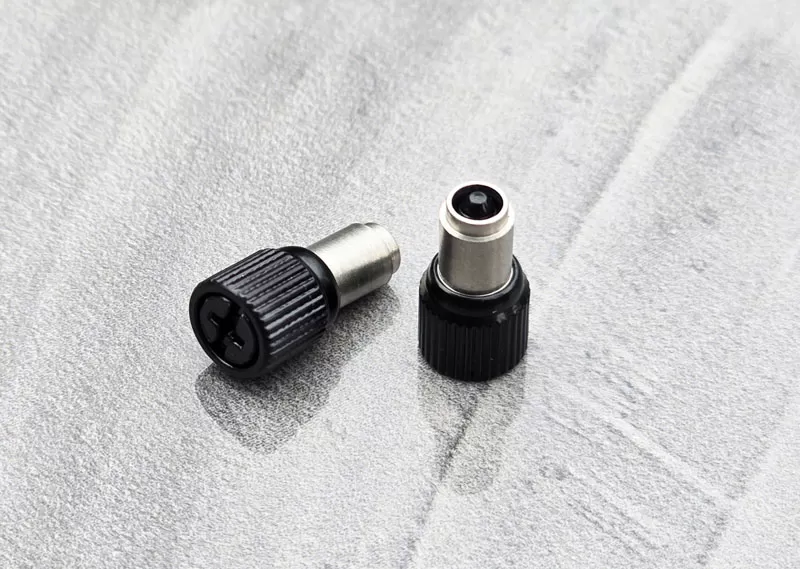
Universal slot/Phillips drive.
Knurled cap for improved finger grip.
Mounting concept suitable for panels across a broad range of hardness levels, subject to approved installation requirements.
Referenced Unified threads from #4 to 1/4 inch.
Referenced metric threads from M3 to M6.
Knurled metal, smooth metal, black metal and custom-color plastic cap options referenced within the product family.
Material Options
Stainless steel grades referenced include SUS302, SUS303, SUS316, SUS410, SUS420 and SUS430. Actual grade availability and individual component materials require confirmation.
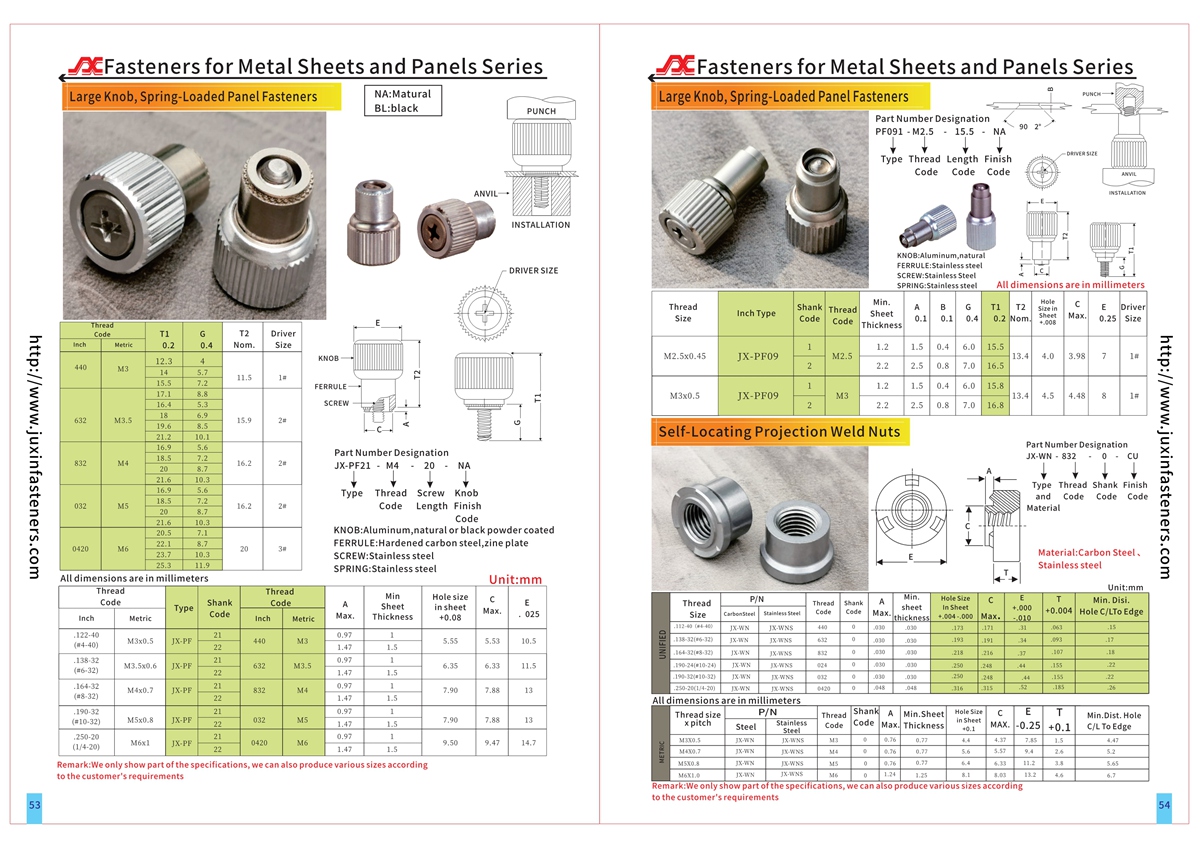
Refer to the product PDF and CAD documentation on pages 53–54 for exact dimensions, mounting requirements and available configurations.
Product Specification
Large-Knob Spring-Loaded Captive Panel Screws – JX-PF09
Floating Captive Fastening Solutions for Mating-Hole Misalignment and Industrial Panel Assembly
JUXIN FASTENERS supplies JX-PF09 large-knob spring-loaded captive panel screws for industrial equipment manufacturers, enclosure designers and OEM procurement teams.
The JX-PF09 series is intended for applications where the mating threaded hole may not align perfectly with the screw's nominal panel position.
Its floating fastening concept provides limited positional accommodation, helping designers manage assembly tolerances without relying on excessive installation force or forcing a screw into a misaligned thread.
The large knob provides convenient manual operation, while the spring-loaded captive mechanism keeps the screw associated with the removable panel.
Product Overview
Product model: JX-PF09
Product category: Large-knob spring-loaded captive panel screw
Primary engineering function: Mating-hole misalignment compensation
Operating head: Large knob
Drive type: Universal slot/Phillips
Retention mechanism: Spring-loaded captive screw
Mounting characteristic: Floating alignment capability
Panel compatibility: Broad panel-hardness range, subject to approved mounting requirements
Referenced Unified threads: #4 through 1/4 inch
Referenced metric threads: M3 through M6
Referenced material family: Stainless steel
Cap configurations: Knurled metal, smooth metal, black metal and custom-color plastic options referenced in the supplied product information
Typical applications: Industrial enclosures, machinery covers and removable equipment panels
Technical documentation: Product PDF and CAD drawings, pages 53–54
Custom configurations: Subject to drawing review
The actual floating movement, mounting dimensions, screw lengths and available component combinations must be confirmed from the selected engineering drawing.
Mating-Hole Misalignment Compensation
Mating-hole misalignment occurs when a panel-mounted screw does not align precisely with the threaded hole in the supporting structure.
This can result from manufacturing tolerances, panel positioning, sheet-metal forming, coating thickness or assembly variation.
In a rigidly mounted screw arrangement, misalignment may make thread engagement difficult.
Operators may be tempted to apply additional force, increasing the risk of cross-threading or damaging the mating component.
The JX-PF09 floating fastening concept is intended to accommodate limited positional variation.
This can make assembly easier where the mating hole is slightly displaced from its nominal location.
However, floating movement is not unlimited.
The allowable adjustment must be confirmed from the product drawing.
A floating captive screw should not be used to compensate for incorrectly manufactured or severely misaligned components.
Understanding the Assembly Tolerance Stack-Up
Panel-hole position is only one contributor to assembly misalignment.
The total variation may also include the position of the mating nut, bracket tolerances, panel flatness and installation repeatability.
For example, a removable control-cabinet cover may be produced separately from the equipment frame.
Both parts can meet their individual dimensional tolerances while the combined assembly produces a small positional mismatch.
A floating captive screw may help accommodate that mismatch.
The engineer should calculate the expected tolerance stack-up and compare it with the fastener's documented movement range.
The selected floating allowance should exceed the required positional accommodation with an appropriate design margin.
No numerical float allowance should be assumed without supporting product data.
Panel Hardness Compatibility
The supplied product information describes the mounting concept as suitable for panels across a broad range of hardness levels.
This may be advantageous where conventional self-clinching fasteners are unsuitable because of panel hardness.
However, panel hardness alone does not establish installation compatibility.
Panel thickness, ductility, brittleness and mounting geometry must also be evaluated.
The approved drawing should define the installation method and required panel preparation.
Representative production panels should be used for validation.
Spring-Loaded Captive Screw Function
The spring-loaded mechanism allows controlled movement of the screw within the retaining assembly.
When the screw is disengaged from the mating thread, it remains associated with the panel.
This helps reduce loose hardware during maintenance.
The spring does not replace the threaded joint's clamping function.
Correct thread engagement and appropriate tightening remain necessary.
The engineer should verify the screw's retracted position, operating travel and available engagement length.
Large-Knob Manual Operation
The large operating knob provides a convenient gripping surface.
This can be useful for equipment panels opened periodically for inspection, adjustment or maintenance.
Knurled surfaces may improve finger grip.
However, the knob requires sufficient operating clearance.
The enclosure designer should consider nearby equipment, adjacent fasteners and the intended maintenance procedure.
Universal Slot/Phillips Drive
The supplied information identifies a universal slot/Phillips drive.
This provides an additional tool-operated option when manual tightening is insufficient.
The exact drive geometry should be verified against the approved drawing.
The OEM should establish an appropriate tightening procedure.
No unrestricted tightening torque should be inferred from the drive designation.
Thread Selection: Unified Inch Sizes
The supplied product information references Unified thread sizes from #4 through 1/4 inch.
ASME B1.1 provides a relevant reference for Unified screw-thread designations and tolerances.
The exact thread pitch and tolerance class must be specified.
The mating component must use a compatible Unified thread.
Thread Selection: Metric Sizes
The referenced metric range extends from M3 through M6.
ISO 261 and ISO 965 provide relevant references for metric thread designations and tolerances.
The exact pitch and tolerance class must be confirmed.
Metric and Unified threads are not directly interchangeable.
Nominal diameter similarity does not establish thread compatibility.
Screw Length and Thread Engagement
The selected screw length must accommodate the complete panel assembly.
Important factors include panel thickness, mating component position, spring travel and required thread engagement.
The floating mechanism must not interfere with screw movement or engagement.
A screw that is too short may provide insufficient engagement.
A screw that is too long may bottom out or interfere with internal components.
The correct length should be established from the approved assembly drawing.
Stainless Steel Material Selection
The supplied information references SUS302, SUS303, SUS316, SUS410, SUS420 and SUS430 stainless steel grades.
These grades have different mechanical properties, machinability and corrosion characteristics.
They should not be treated as interchangeable without engineering review.
For example, austenitic stainless steels and martensitic stainless steels can differ significantly in hardness and magnetic behavior.
Because captive panel screws contain multiple components, the screw, spring, retainer and knob may not use the same material grade.
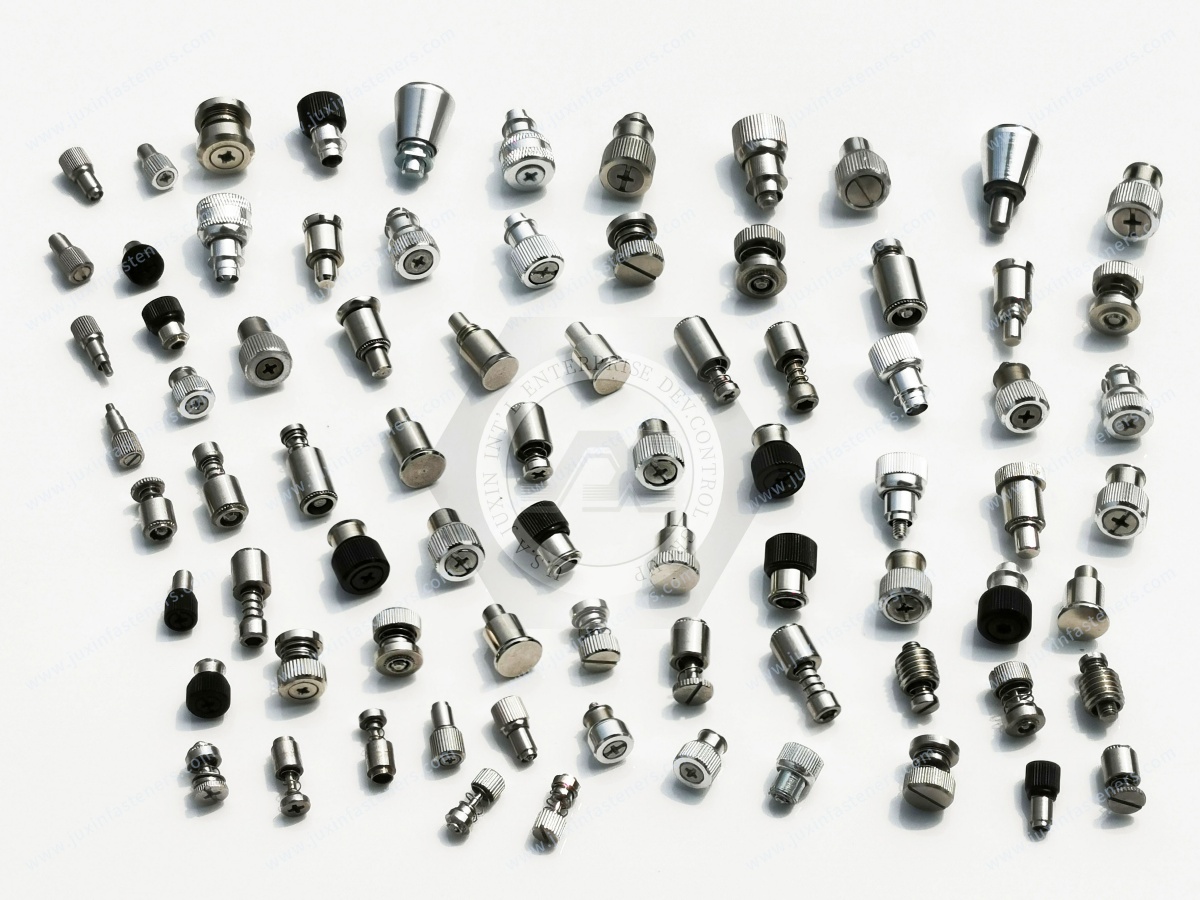
The exact material of each component must be confirmed.
Where required, procurement specifications may reference corresponding ASTM or EN material requirements after grade equivalence has been verified.
Corrosion and Environmental Considerations
Stainless steel selection should reflect the actual service environment.
Indoor electronic enclosures may have different requirements from equipment exposed to humidity, cleaning chemicals or outdoor conditions.
The spring and retainer should be included in the corrosion assessment.
Contact between dissimilar metals may require additional consideration.
No fixed corrosion-resistance rating or environmental service life should be assumed without supporting test data.
Knob and Cap Options
The supplied product information references knurled metal, smooth metal, black metal and custom-color plastic caps.
Knurled metal caps provide a textured gripping surface.
Smooth metal caps may be selected for different handling or appearance requirements.
Black metal caps may support equipment designs using dark exterior finishes.
Custom-color plastic caps may help with visual identification or product styling.
Actual cap availability for JX-PF09 must be confirmed before quotation.
Mounting-Hole Preparation
The correct mounting-hole geometry is essential for reliable captive fastener installation.
The selected drawing should define the hole size, panel thickness, mounting direction and installation method.
The floating mechanism must remain functional after installation.
Incorrect mounting may restrict the intended positional movement.
The installed fastener should be inspected to confirm that it remains securely retained while allowing the specified floating adjustment.
Engineering Trade-Off: Floating Versus Fixed Captive Screws
Fixed captive screws maintain a defined position relative to the panel.
They may be appropriate where the mating holes are accurately controlled.
Floating captive screws provide limited positional accommodation.
They may be advantageous where separate components contribute to assembly variation.
However, floating mechanisms can introduce additional movement and may require different mounting geometry.
The engineer should select the configuration according to the actual tolerance stack-up.
Engineering Trade-Off: Floating Captive Screws Versus Oversized Clearance Holes
An oversized clearance hole may provide some assembly adjustment.
However, excessive clearance can reduce positional control and may create undesirable movement.
A floating captive screw provides a designed movement mechanism while retaining the screw in the panel.
The two approaches should be compared based on joint geometry, installation requirements and required positional control.
Engineering Trade-Off: Captive Screws Versus Loose Screws
Loose screws may have a lower initial component cost.
However, they must be handled separately during maintenance.
Captive screws remain associated with the panel.
This can reduce misplaced hardware and simplify repeated servicing.
The OEM should compare assembly cost, maintenance frequency and equipment requirements.
Industrial Applications
Industrial Control Cabinets
Floating captive screws may help accommodate minor alignment variation between removable cabinet covers and supporting frames.
Electronic Equipment Enclosures
Retained hardware can reduce loose components during servicing.
Industrial Machinery Covers
Large-knob captive screws may simplify repeated opening and closing of inspection covers.
Automation Equipment
Modular equipment panels may benefit from limited positional accommodation during assembly.
Telecommunications Equipment
Serviceable housings may use floating captive fastening where mating-hole alignment varies within controlled limits.
Test and Measurement Equipment
Instrument covers may benefit from retained screws for repeated maintenance access.
Server and Network Equipment
Selected equipment panels may use captive fasteners where alignment accommodation and serviceability are required.
Transportation Equipment
Removable equipment covers may benefit from captive fastening, subject to application-specific vibration and retention validation.
Engineering Example: Control Cabinet Door Alignment
Consider a removable control-cabinet panel secured to a supporting frame.
The panel and frame are manufactured separately.
Small dimensional variations may cause the screw position to differ slightly from the mating threaded hole.
A fixed captive screw may be difficult to engage.
A JX-PF09 floating captive screw may be considered to accommodate the expected positional variation.
Before approval, the engineer should calculate the tolerance stack-up and compare it with the product's documented floating range.
The selected fastener should then be evaluated for thread engagement, retention and repeated operation.
This approach addresses the actual assembly problem rather than relying on a generic captive screw specification.
OEM Procurement and Supplier Qualification
Purchasing teams should identify the complete part configuration rather than requesting only a generic spring-loaded captive screw.
The approved specification should include the model, thread, screw length, mounting geometry, floating range, knob configuration, material and finish.
For replacement projects, visual similarity does not establish interchangeability.
The mounting method and permitted movement must be compared.
Sample evaluation can help verify compatibility before production approval.
RFQ Information
Required model: JX-PF09
Unified or metric thread specification
Screw length and spring travel
Required floating adjustment
Panel material and hardness
Panel thickness
Mounting-hole dimensions
Mating-hole location and tolerance
Knob and cap configuration
Material and surface finish
Environmental conditions
Estimated order quantity and annual demand
Engineering drawing and revision
Installation and inspection requirements
Packaging and labeling requirements
Providing these details helps JUXIN FASTENERS review the intended configuration and prepare an accurate quotation.
Quality and Functional Verification
A suitable inspection plan may include dimensional inspection, thread verification, material confirmation and functional testing.
The screw should remain captive when disengaged.
The spring-loaded mechanism should move smoothly.
The knob should remain securely attached.
The installed retainer should remain stable.
The floating mechanism should provide the specified movement.
The screw should engage the mating thread without binding.
Where required, the OEM may specify retention testing and repeated operation testing.
Acceptance criteria should be established before production.
No fixed floating range, retention load, spring force, tightening torque or service-life rating should be assumed without validated data.
Frequently Asked Questions
What is the main purpose of JX-PF09?
It is a large-knob spring-loaded captive panel screw intended to accommodate limited mating-hole misalignment.
What does floating mean?
Floating refers to controlled positional movement that helps the screw align with the mating threaded hole.
Can it correct severe hole misalignment?
No. The allowable adjustment is limited and must be confirmed from the product drawing.
Can it be installed in hard panels?
The supplied information describes broad panel-hardness compatibility, subject to the approved mounting requirements.
What thread sizes are referenced?
Unified #4 through 1/4 inch and metric M3 through M6.
Is the screw retained when disengaged?
Yes. The captive mechanism is intended to keep the screw associated with the panel.
Are custom knob options available?
Several cap options are referenced within the product family, subject to configuration confirmation.
Can custom dimensions be requested?
Customer-specific requirements can be reviewed using engineering drawings and application details.
Related JUXIN FASTENERS Products
Large-Knob Spring-Loaded Captive Panel Screws – JX-PF21 / JX-PF22
For related captive fastening applications with positive-stop retainers and mounting-style options.
Close-to-Edge Captive Panel Screws – JX-PF11MF / JX-PF12MF
For applications emphasizing low-force installation and flush-back mounting.
Large-Knob Captive Panel Screws – JX-PF51 / JX-PF52
For alternative large-knob captive fastening configurations.
Large-Knob Captive Panel Screws – JX-PF11 / JX-PF12 / JX-PF15
For conventional large-knob captive panel fastening applications.
Low-Profile Captive Panel Screws – JX-PF30 / JX-PF31 / JX-PF32
For applications requiring reduced external projection.
Tool-Only Captive Panel Screws – JX-PFC2P
For concealed-head, tool-operated service access.
Use these descriptive product names as internal-link anchor text and connect them to the corresponding verified JUXIN FASTENERS product pages.
Request a JX-PF09 OEM Quotation
JUXIN FASTENERS supplies captive panel fastening solutions for industrial equipment manufacturers, enclosure designers, sheet-metal fabricators and international OEM procurement teams.
For JX-PF09 inquiries, please provide the required thread size, floating adjustment, mounting geometry, panel material, knob configuration and expected order quantity.
Engineering drawings, annual demand and inspection requirements will help support technical review and quotation preparation.
Email: info@juxinfasteners.com
Website: www.juxinfasteners.com
Product Packaging
JUXIN FASTENERS provides protective export packaging for JX-PF09 large-knob spring-loaded captive panel screws.
Standard Packaging
Protective inner packaging may include polybags, foam protection or suitable small boxes, depending on product dimensions and configuration.
Outer packaging consists of export cartons selected for the shipment.
Palletizing can be arranged for consolidated international shipments when required.
Product Identification
Packaging labels can identify the product model, thread specification, quantity and production batch or lot number.
Customized OEM Packaging
Customer-specific packaging arrangements can be reviewed, including private labels, barcode identification, designated carton quantities, protective separators and pallet configurations.
Final packing quantities, carton dimensions and shipment arrangements will be confirmed according to the approved purchase order and packaging requirements.
Product Pictures
Contact Us
Tel.:
+86 020 8621 0320
+86 020 3121 6067
E-mail:
Technical Support:
Navigation
SEND INQUIREY