Call Us
+86 136 6007 9809
Call Us
+86 136 6007 9809

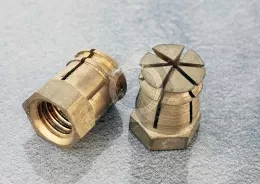
Steel hex union nuts are threaded coupling components used in railway vehicle pipe fitting assemblies and customer-engineered industrial fluid connections.
Unlike ordinary hex nuts, these components are designed to work with compatible pipe fitting bodies, mating connection elements and specified sealing geometries.
Juxin Fasteners manufactures carbon steel hex union nuts in metric thread sizes M12, M18, M20, M24, M27, M33, M36, M45 and M48, with custom stainless steel, brass and inch-thread configurations subject to engineering review.
Surface finish options include zinc plating, blue-passivated zinc, yellow zinc, black zinc and zinc-nickel alloy coatings.
Applications include railway rolling stock pneumatic systems, industrial pipe connections, machinery fluid lines and custom OEM equipment.
Manufacturing supports drawing-based dimensions, CNC machining, cold forming where suitable, internal threads, functional inspection and industrial batch production.
Product Specification
Steel Hex Union Nuts for Railway Pipe Fittings
Custom Carbon Steel Threaded Union Nuts for Railway Pneumatic Lines, Tube Connections and OEM Industrial Fluid Systems
Juxin Fasteners manufactures steel hex union nuts for railway vehicle pipe fitting assemblies, industrial pneumatic connections and custom-engineered fluid handling equipment.
These threaded coupling components are designed to engage compatible pipe fitting bodies and associated connection elements.
Unlike conventional hex nuts used for general mechanical fastening, a pipe union nut is part of a connection assembly whose geometry, sealing method and mechanical performance must be evaluated as a complete system.
Our product range includes metric thread configurations from M12 through M48, with carbon steel as the primary material and customer-specific stainless steel, brass and Unified inch-thread options available for engineering review.
Juxin Fasteners supports OEM/ODM manufacturing, customer drawings, precision internal threads, special bearing geometries, surface finishing and industrial batch production.
Product Technical Specifications
| Parameter | Specification |
|---|---|
| Product Name | Steel Hex Union Nut |
| Alternative Names | Threaded Pipe Union Nut, Hexagonal Pipe Fitting Nut |
| Product Category | Custom Engineered Pipe Connection Nuts |
| Primary Material | Carbon Steel |
| Additional Material Options | Stainless Steel, Brass — Subject to Review |
| Metric Thread Sizes | M12, M18, M20, M24, M27, M33, M36, M45, M48 |
| Thread Pitch | According to Approved Drawing |
| Inch Threads | Custom UNC, UNF or Pipe Thread Designs Subject to Review |
| Nominal Pipe Size | Defined Separately from Nut Thread Size |
| Connection Type | Customer-Specified Threaded Pipe Fitting Assembly |
| Bearing Geometry | According to Approved Drawing |
| Surface Finishes | Zinc, Blue-Passivated Zinc, Yellow Zinc, Black Zinc, Zinc-Nickel |
| Temperature Requirements | Application-Specific |
| Pressure Requirements | Complete Assembly Qualification Required |
| Manufacturing | OEM/ODM Made-to-Drawing |
| Production | Industrial Batch Manufacturing |
Engineering Note: Thread size, nominal pipe diameter, sealing geometry and operating pressure are separate specifications.
They must not be assumed from the nut's nominal thread diameter alone.
What Is a Hex Union Nut?
A hex union nut is a threaded mechanical component used to retain or tighten a compatible pipe fitting connection.
It typically includes:
A hexagonal wrenching body.
An internally threaded section.
A connection-facing bearing surface.
Application-specific internal geometry.
A mating interface for the associated fitting assembly.
Depending on the design, the nut may act on a pipe connection element, shoulder, sleeve or other retaining component.
The exact load-transfer and sealing arrangement must be established from the approved assembly drawing.
A hex union nut does not independently provide a fluid-tight seal merely because it has an internal thread.
Hex Union Nuts vs. Slotted Hexagon Nuts
These two products serve different functions.
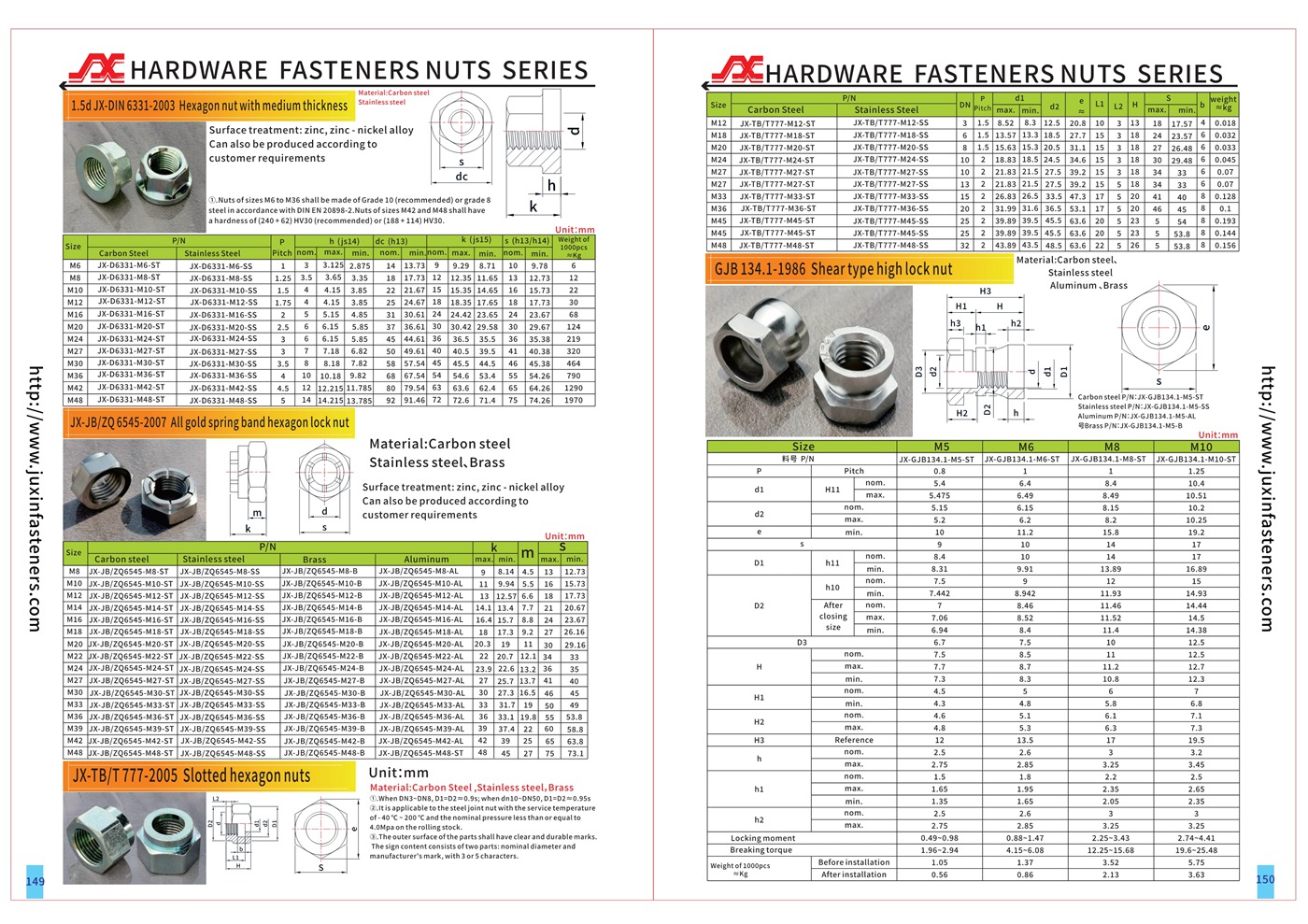
| Feature | Hex Union Nut | Slotted Hexagon Nut |
|---|---|---|
| Primary Application | Pipe Fitting Connection | Mechanical Fastening |
| Internal Thread | Yes | Yes |
| Hexagonal Body | Yes | Yes |
| Pipe Connection Geometry | Application-Specific | Not Inherent |
| Cotter Pin Slots | Not Inherent | Usually Present |
| Sealing Function | Depends on Complete Fitting | Not Intended for Pipe Sealing |
| Typical Industry | Railway and Industrial Piping | Machinery and Mechanical Assemblies |
The term "slotted hexagon nut" should be reserved for a nut that actually incorporates the relevant slots.
The product should not be classified as a castle nut or cotter-pin locking nut unless its drawing confirms that design.
Hex Union Nuts vs. Yor-Lok Tube Fittings
Yor-Lok is a commercial tube fitting system that commonly uses two ferrules to grip tubing.
A typical double-ferrule fitting includes:
A fitting body.
A front ferrule.
A back ferrule.
A threaded nut.
The ferrules engage the tubing as the fitting is assembled.
A custom railway pipe union nut may have a different internal geometry, connection method and sealing arrangement.
Therefore, a hex union nut should not be advertised as compatible with Yor-Lok, Swagelok or other proprietary fitting systems without dimensional and functional verification.
Hex Union Nuts vs. DIN 3870 Compression Nuts
DIN 3870 is associated with union nuts used in specified compression fitting systems.
ISO 8434-1 addresses 24-degree cone connectors using cutting rings and related connection components.
These are relevant international references for understanding industrial tube fitting terminology.
However, a custom railway pipe union nut is not automatically dimensionally interchangeable with a DIN 3870 compression nut.
Important differences may include:
Thread size.
Thread pitch.
Internal shoulder.
Bearing geometry.
Nut length.
Tube connection method.
Sealing arrangement.
Installation procedure.
Compatibility must be established through engineering drawings and assembly testing.
Metric Hex Union Nut Sizes
Juxin Fasteners supports the following supplied metric thread size range for engineering review and production.
| Thread Size | Nominal Diameter | Approximate Inch Diameter |
|---|---|---|
| M12 | 12 mm | 0.4724 in |
| M18 | 18 mm | 0.7087 in |
| M20 | 20 mm | 0.7874 in |
| M24 | 24 mm | 0.9449 in |
| M27 | 27 mm | 1.0630 in |
| M33 | 33 mm | 1.2992 in |
| M36 | 36 mm | 1.4173 in |
| M45 | 45 mm | 1.7717 in |
| M48 | 48 mm | 1.8898 in |
The inch dimensions are nominal diameter conversions for reference only.
They do not identify equivalent Unified or pipe threads.
Thread Pitch and Connection Compatibility
The nominal metric diameter does not establish the required thread pitch.
For example, M24 may be manufactured with different thread pitches depending on the approved connection specification.
The purchasing drawing must identify:
Nominal thread diameter.
Thread pitch.
Thread tolerance.
Thread direction.
Mating fitting specification.
Engagement length.
Required internal geometry.
Thread pitch must never be inferred solely from the nominal nut size.
American Inch-Thread Union Nut Options
For North American OEM projects, Juxin Fasteners can evaluate custom Unified inch-thread union nuts according to customer drawings.
Potential engineering configurations include:
| Unified Thread | Series | Nominal Diameter | Threads per Inch |
|---|---|---|---|
| 1/2-13 | UNC | 0.5000 in | 13 |
| 1/2-20 | UNF | 0.5000 in | 20 |
| 5/8-11 | UNC | 0.6250 in | 11 |
| 5/8-18 | UNF | 0.6250 in | 18 |
| 3/4-10 | UNC | 0.7500 in | 10 |
| 3/4-16 | UNF | 0.7500 in | 16 |
| 7/8-9 | UNC | 0.8750 in | 9 |
| 7/8-14 | UNF | 0.8750 in | 14 |
| 1-8 | UNC | 1.0000 in | 8 |
| 1-12 | UNF | 1.0000 in | 12 |
These are potential custom thread configurations, not confirmed standard inventory or direct replacements for the listed metric products.
Actual feasibility depends on the nut body, connection geometry, material and customer requirements.
UNC, UNF, NPT and BSPP — Important Differences
Industrial pipe connection specifications may use several thread systems.
| Thread System | Typical Description | Primary Consideration |
|---|---|---|
| ISO Metric | Metric Screw Threads | Diameter and Pitch |
| UNC | Unified National Coarse | Inch Diameter and TPI |
| UNF | Unified National Fine | Inch Diameter and TPI |
| NPT | Tapered Pipe Thread | Tapered Thread Connection |
| BSPP / G | Parallel Pipe Thread | Sealing Method Must Be Defined |
| BSPT / R | Tapered Pipe Thread | Thread and Sealing Compatibility |
These systems are not interchangeable.
A pipe union nut designed for one thread and sealing system must not be substituted for another without engineering verification.
Nominal Pipe Diameter vs. Nut Thread Diameter
A critical consideration in railway and industrial pipe fittings is the distinction between nominal pipe size and connection thread size.
Nominal pipe diameter, often expressed as DN, identifies the nominal size of the piping system.
The nut thread designation identifies the actual threaded connection.
For example, a DN10 pipe connection does not automatically require an M10 nut.
The corresponding nut dimensions depend on the specific fitting design.
A complete specification should identify both the nominal pipe size and the actual nut thread.
Railway Rolling Stock Pipe Fitting Applications
Railway vehicles use pipe fitting assemblies in pneumatic and other engineered fluid systems.
Potential applications include:
Railway pneumatic equipment.
Vehicle auxiliary pipe connections.
Rolling stock service piping.
Equipment air supply connections.
Mechanical fluid connection assemblies.
Maintenance-replaceable pipe fittings.
The required connection geometry must match the railway equipment manufacturer's design.
For safety-related pneumatic systems, the complete fitting assembly must satisfy the applicable engineering and validation requirements.
Railway Pneumatic Systems
Pneumatic systems are important in railway vehicle equipment.
Threaded pipe connection components may be used in assemblies involving:
Compressed air distribution.
Pneumatic control equipment.
Auxiliary air circuits.
Equipment connection points.
Maintenance-accessible pneumatic lines.
The union nut must be selected according to the actual fitting design.
A nut cannot independently establish the pressure rating, sealing performance or suitability of a pneumatic connection.
Railway Brake Equipment — Engineering Considerations
Some railway pneumatic systems are associated with braking equipment.
Components intended for brake-related applications require particularly careful engineering evaluation.
Relevant considerations include:
Approved fitting design.
Material specifications.
Pressure requirements.
Vibration exposure.
Fatigue loading.
Sealing performance.
Assembly torque.
Traceability.
Functional testing.
Juxin Fasteners supports made-to-drawing manufacturing, but brake-system qualification must be established for the specific assembly and application.
Industrial Pneumatic Equipment
Custom hex union nuts may also be considered for industrial pneumatic systems where the mating fitting geometry is compatible.
Potential applications include:
Pneumatic machinery.
Factory air distribution equipment.
Industrial valve accessories.
Compressed air equipment assemblies.
Automation equipment.
Serviceable pipe connections.
These applications require verification of pressure, temperature, material and sealing requirements.
Industrial Fluid Handling Equipment
Threaded union nuts can be relevant to selected fluid handling assemblies.
Potential applications include:
Industrial fluid control equipment.
Machinery service piping.
Equipment valve connections.
Process equipment accessories.
Custom mechanical pipe joints.
The suitability of the nut depends on the complete connection design.
The product should not be presented as a universal pressure fitting.
Machinery and Equipment Manufacturing
Industrial machinery manufacturers may require custom connection nuts for proprietary pipe fitting systems.
Potential applications include:
Machine lubrication lines.
Equipment pneumatic circuits.
Auxiliary fluid connections.
Serviceable machinery piping.
Industrial control equipment.
Customer-specific geometry is often more important than a generic fastener designation.
Construction and Agricultural Equipment
Manufacturers of construction and agricultural machinery may use threaded pipe connections in selected pneumatic and fluid systems.
Potential applications include:
Auxiliary equipment piping.
Maintenance connections.
Machine lubrication equipment.
Fluid distribution accessories.
Serviceable mechanical assemblies.
Compatibility and performance must be confirmed according to the equipment design.
Railway Maintenance and Replacement Parts
Replacement pipe fitting nuts require accurate dimensional identification.
Important requirements include:
Original engineering drawing.
Thread size and pitch.
Internal bearing geometry.
Hex dimensions.
Material.
Surface finish.
Mating connection components.
Assembly requirements.
A visually similar nut may not be functionally interchangeable.
Replacement components should be evaluated against the approved equipment specification.
Carbon Steel Hex Union Nuts
Carbon steel is the primary material specified for this product family.
Important engineering considerations include:
Machinability.
Formability.
Thread strength.
Mechanical properties.
Corrosion protection.
Manufacturing cost.
Production quantity.
The actual material grade should be selected according to the approved drawing and mechanical requirements.
Stainless Steel Custom Union Nuts
Stainless steel may be evaluated for applications requiring additional corrosion resistance.
Potential material choices include suitable 304 or 316 stainless steel grades, subject to the required mechanical properties and manufacturing feasibility.
Important considerations include:
Corrosion environment.
Thread galling.
Strength requirements.
Machining characteristics.
Surface condition.
Mating component material.
Stainless steel is not automatically the best material for every pressure connection.
Brass Custom Union Nuts
Brass may be considered for selected industrial fluid and pneumatic connection designs.
Potential advantages include:
Machinability.
General corrosion resistance in compatible environments.
Electrical conductivity.
Suitability for certain equipment fittings.
Brass strength and chemical compatibility must be evaluated for the intended service.
A brass version should not automatically be assigned the same mechanical or pressure performance as a steel version.
Zinc-Plated Steel Union Nuts
Zinc plating is a common corrosion protection option for carbon steel components.
Important coating requirements include:
Coating thickness.
Passivation.
Thread fit.
Surface appearance.
Corrosion resistance.
Compatibility with mating components.
The coating must not interfere with the specified thread engagement or connection geometry.
Blue-Passivated Zinc Finish
Blue-passivated zinc provides a metallic appearance for selected industrial steel components.
Corrosion protection depends on the specified coating system.
Yellow Zinc Finish
Yellow zinc may be selected for customer-specified appearance and corrosion protection requirements.
The exact coating chemistry must be confirmed.
Black Zinc Finish
Black zinc provides a dark zinc-based finish.
It is distinct from black oxide and should be specified separately.
Zinc-Nickel Alloy Finish
Zinc-nickel coatings may be considered for industrial applications requiring engineered corrosion protection.
Important specifications include:
Coating composition.
Thickness.
Passivation.
Sealing treatment.
Corrosion testing.
Thread fit.
No particular corrosion resistance performance should be claimed without verified test data.
Temperature and Pressure Requirements
The source railway pipe fitting specifications describe an application range of approximately −40°C to +200°C and nominal pressure up to 4.0 MPa for the specified steel fitting systems.
These values are system-level reference conditions associated with the relevant pipe fitting specification.
They are not independent performance ratings for every nut manufactured by Juxin Fasteners.
The actual operating conditions must be evaluated according to:
Complete fitting geometry.
Material properties.
Mating components.
Sealing method.
Thread engagement.
Assembly torque.
Pressure testing.
Temperature testing.
Equipment requirements.
Pressure Conversion Reference
4.0 MPa is approximately:
40 bar.
580 psi.
These conversions are for reference only and do not constitute a certified pressure rating for an individual union nut.
Connection Sealing Considerations
A union nut generally provides mechanical retention or clamping force within a connection assembly.
The actual seal may depend on:
Metal-to-metal seating surfaces.
A spherical connection element.
A gasket.
A sealing ring.
A compression sleeve.
Another approved sealing component.
The correct sealing method must be confirmed from the assembly drawing.
A union nut should not be described as leakproof without complete assembly testing.
Installation and Assembly Requirements
Installation requirements depend on the fitting design.
A typical engineering review includes:
Confirming the mating thread.
Inspecting the union nut dimensions.
Checking the connection bearing surfaces.
Verifying the sealing components.
Aligning the mating fitting.
Engaging the threads correctly.
Applying the specified assembly procedure.
Performing the required functional inspection.
Tightening torque must be defined for the actual fitting assembly.
Excessive torque can damage threads, bearing surfaces or sealing components.
Custom Union Nut Manufacturing
Juxin Fasteners is an industrial fastener manufacturer supporting customer-engineered nuts and precision metal components for global OEM manufacturers.
Our manufacturing capabilities include:
Cold heading.
Cold forming.
CNC machining.
Precision internal threading.
Custom metal component manufacturing.
Product-specific secondary operations.
Surface finishing according to specification.
OEM/ODM made-to-drawing manufacturing.
Industrial batch production.
The selected manufacturing process depends on the material, nut dimensions, internal geometry, tolerances and production quantity.
Custom pipe union nuts with complex internal bearing surfaces may require CNC machining or other precision operations.
Not every design requires every available manufacturing process.
Custom Engineering Options
Customer-specific configurations may include:
Special metric threads.
UNC and UNF threads.
Customer-specified pipe threads.
Modified hex dimensions.
Custom nut height.
Internal shoulders.
Special bearing surfaces.
Connection-specific internal profiles.
Carbon steel material grades.
Stainless steel.
Brass.
Custom surface treatments.
Part marking.
OEM packaging.
All custom configurations are subject to engineering and manufacturing feasibility review.
Quality Inspection
A project-specific inspection plan may include:
Material verification.
Internal thread gauge inspection.
Thread pitch verification.
Hex width across flats.
Nut height measurement.
Internal shoulder dimensions.
Bearing surface geometry.
Surface finish inspection.
Visual inspection.
Mating fitting assembly checks.
Marking verification.
Packaging and quantity verification.
Additional functional testing may be required according to the approved customer specification.
Product Marking and Identification
Certain railway fitting specifications include requirements for durable part identification.
Depending on the controlling drawing, marking may identify:
Nominal pipe size.
Manufacturer identification.
Customer part number.
Traceability information.
The marking location, size and content must follow the approved specification.
Marking must not compromise functional surfaces or thread engagement.
Production Manager Considerations
Production managers should evaluate:
Thread engagement consistency.
Assembly tool access.
Installation torque.
Connection geometry.
Surface finish consistency.
Assembly cycle time.
Rework requirements.
Component interchangeability.
Inspection efficiency.
Production batch consistency.
Proper component identification helps reduce assembly errors.
OEM Purchasing and Supply Chain Requirements
Purchasing managers and supplier development engineers should confirm:
Approved engineering drawing.
Drawing revision.
Nominal pipe size.
Nut thread diameter.
Thread pitch.
Thread tolerance.
Hex dimensions.
Nut height.
Internal bearing geometry.
Material grade.
Surface finish.
Marking requirements.
Mating fitting details.
Temperature requirements.
Pressure requirements for the complete assembly.
Inspection criteria.
Initial order quantity.
Annual purchasing forecast.
Packaging requirements.
These details are essential for reliable made-to-drawing manufacturing.
Relevant International Engineering References
ISO 261 and ISO 724
ISO metric screw-thread designations and basic dimensions.
ISO 965 Series
ISO metric screw-thread tolerances.
ASME B1.1
Unified inch screw-thread requirements for applicable UNC and UNF custom configurations.
ASME B1.20.1
Pipe thread reference for applications specifying compatible NPT threads.
ISO 228-1
Parallel pipe thread requirements for applications specifying G threads.
ISO 7-1
Pipe thread requirements for specified pressure-tight threaded connections.
ISO 8434-1
24-degree cone connectors with cutting rings and related tube fitting components. Relevant for engineering comparison, not automatic interchangeability.
DIN 3870
Union nut reference for specified compression fitting configurations. Dimensional compatibility must be verified.
ASTM B633
Electrodeposited zinc coatings on iron and steel.
ASTM B841
Electrodeposited zinc-nickel alloy coatings.
Customer-Approved Engineering Drawings
The controlling requirements for custom pipe union nut geometry, threads, materials, surface finishes and functional acceptance criteria.
References to international standards do not establish automatic product conformity or certification.
Frequently Asked Questions
What is a steel hex union nut?
It is a threaded hexagonal component used to retain or tighten compatible pipe fitting connection elements.
Is a hex union nut the same as a slotted hexagon nut?
No. A slotted hexagon nut typically has slots for mechanical locking arrangements. A pipe union nut is designed for a specific pipe fitting connection.
Is this product a Yor-Lok fitting?
No. Yor-Lok is a distinct tube fitting system. Compatibility must not be assumed.
What metric sizes does Juxin Fasteners support?
The supplied product range includes M12, M18, M20, M24, M27, M33, M36, M45 and M48.
Can custom inch-thread union nuts be manufactured?
Yes. UNC, UNF and other customer-specified thread configurations may be evaluated according to engineering drawings.
Are metric and inch threads interchangeable?
No. Different thread systems must be matched to the correct mating components.
Is nominal pipe size the same as nut thread diameter?
No. Nominal pipe size and nut thread diameter are separate dimensions.
Can these nuts be used in railway pneumatic systems?
They can be manufactured for specified railway pneumatic pipe fitting assemblies, subject to the applicable design and qualification requirements.
Are the nuts rated for 4.0 MPa?
A pressure rating applies to the qualified fitting assembly, not automatically to an individual nut.
Can stainless steel and brass versions be manufactured?
Customer-specific stainless steel and brass configurations can be evaluated according to the required dimensions, material properties and manufacturing feasibility.
Can zinc-nickel coatings be specified?
Yes. Zinc-nickel finishing requirements may be evaluated for compatible carbon steel configurations.
Can Juxin Fasteners manufacture replacement union nuts?
Yes. Replacement components can be evaluated when accurate drawings and mating fitting specifications are available.
Request a Quote — Steel Hex Union Nuts
Juxin Fasteners manufactures industrial fastening components and custom-engineered metal nuts for global OEM manufacturers,
railway equipment suppliers, machinery manufacturers, production managers, purchasing teams and supply chain professionals.
We support steel hex union nut manufacturing for railway pipe fittings, pneumatic equipment, industrial fluid connections and customer-specific mechanical assemblies.
Recommended RFQ Information
2D engineering drawing or 3D CAD model.
Nominal pipe size.
Actual nut thread diameter.
Thread pitch and tolerance.
Metric, UNC, UNF or specified pipe thread system.
Nut body height.
Hex width across flats.
Internal shoulder and bearing geometry.
Mating fitting details.
Material grade.
Surface finish.
Required operating temperature.
Complete assembly pressure requirements.
Sealing arrangement.
Marking requirements.
Inspection and acceptance criteria.
Initial order quantity.
Estimated annual purchasing volume.
Packaging and delivery requirements.
Please send your engineering drawings, technical specifications and purchasing requirements for manufacturing feasibility review and quotation.
Juxin Fasteners
Industrial Fastener Manufacturer | Steel Hex Union Nuts | Railway Pipe Fitting Nuts | Custom OEM/ODM Metal Components
Website: https://www.juxinfasteners.com/
Email: info@juxinfasteners.com
Product Packaging
Packaging Standard
At Juxin Fasteners, we apply standardized export packaging to ensure product protection, traceability, and compliance with international logistics requirements.
1. Standard Export Packaging
Unless otherwise specified, all products will be packed according to our factory standard export packaging, which includes:
Moisture-resistant inner protection
Poly bag or small box packing as required
Reinforced export cartons
Clear labeling with part number, specification, batch number, and quantity
Palletizing for sea or air shipment when necessary
Our standard packaging is designed to ensure safe transportation, efficient warehousing, and long-distance international shipping.
2. Customized Packaging Options
We also provide customized packaging solutions according to customer requirements, including but not limited to:
Private labeling
Customized barcodes
Specific carton dimensions
Retail packaging
Special pallet configuration
Customer-specific marking and identification
So that you know, customized packaging may involve additional costs and extended lead time depending on the complexity of the requirements.
3. Compliance & Quality Assurance
All packaging processes are controlled under our ISO 9001 quality management system to ensure consistency, traceability, and product integrity throughout the supply chain.
Product Pictures

Contact Us
Tel.:
+86 020 8621 0320
+86 020 3121 6067
E-mail:
Technical Support:
Navigation
SEND INQUIREY