Call Us
+86 136 6007 9809
Call Us
+86 136 6007 9809

JUXIN FASTENERS supplies custom stainless steel flat head rivets and drawing-based fastening components for commercial foodservice equipment and industrial OEM assemblies.
This product originated from a customer-specific glove bracket application.
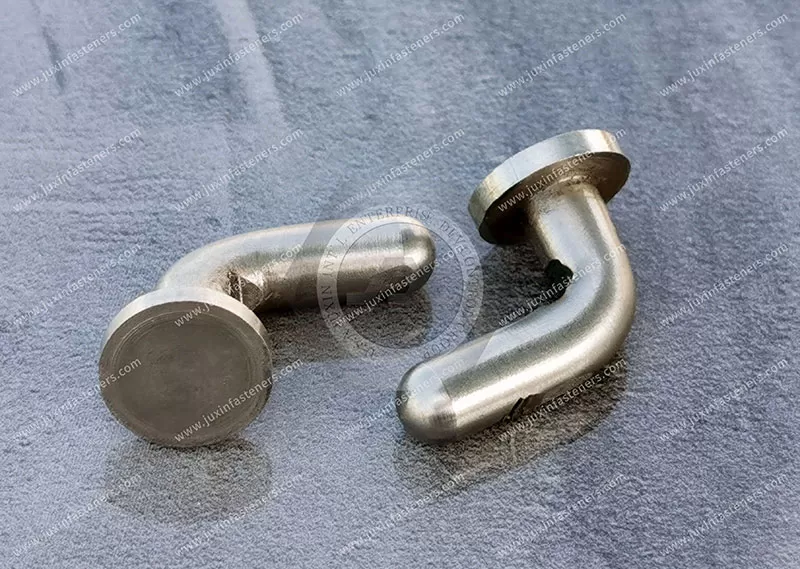
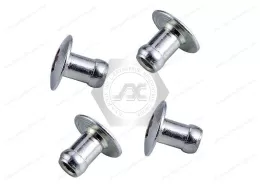
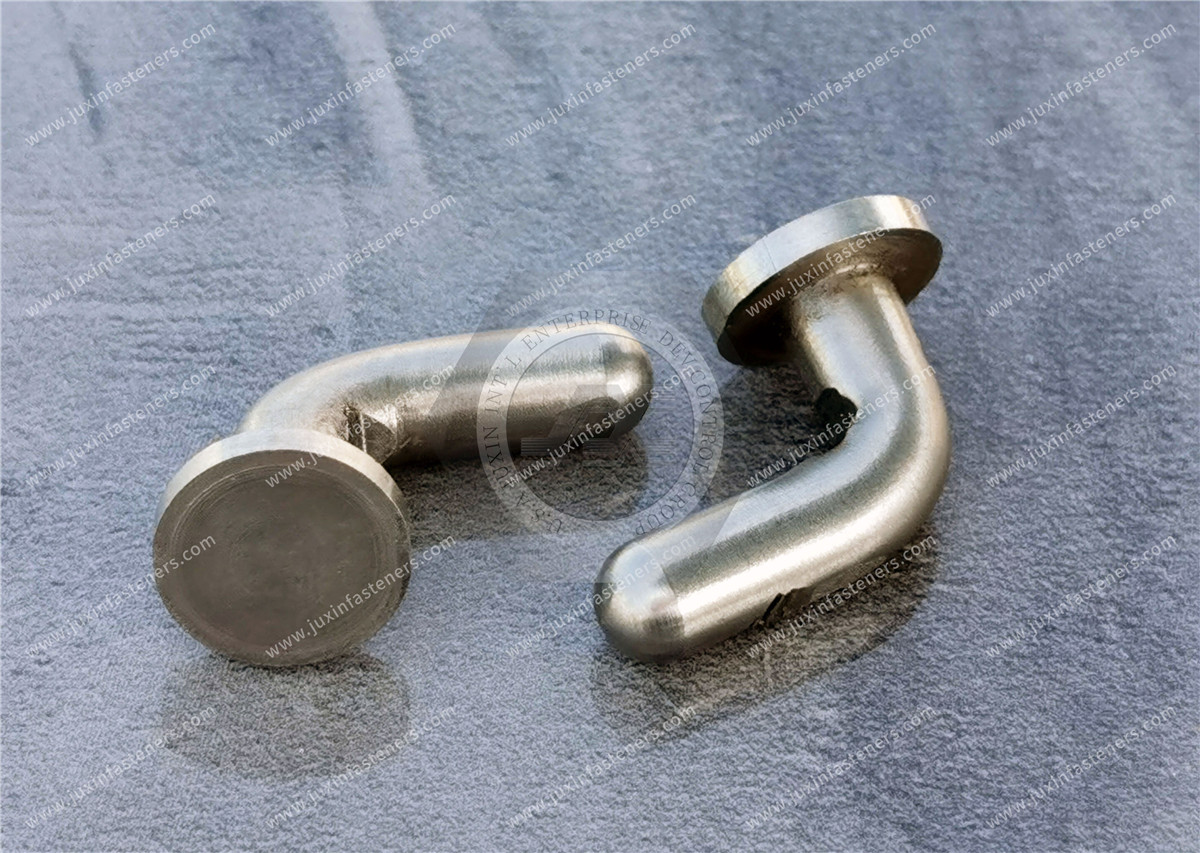
The supplied product image shows flat-head, solid-shank components, including a bent configuration whose final geometry requires drawing confirmation.
Explore material selection, custom forming, bracket retention, dimensional tolerances, installation considerations, corrosion compatibility and quality inspection.
OEM engineers and sourcing teams can submit 2D drawings or 3D CAD files for technical review and quotation.
Product Specification
Custom Stainless Steel Flat Head Rivets for Foodservice Equipment and OEM Bracket Assemblies
JUXIN FASTENERS supplies custom stainless steel flat head rivets and specialized fastening components manufactured according to customer engineering drawings.
This product was developed for a customer-specific glove bracket application associated with commercial foodservice equipment.
Unlike a standard catalog rivet, the component is identified by its particular head configuration, shank geometry and intended equipment assembly.
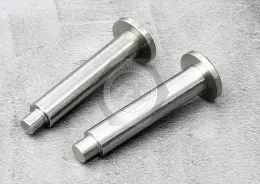
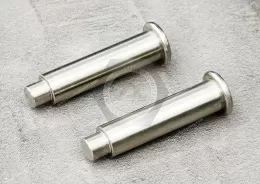
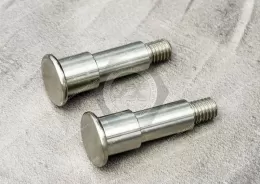
The supplied product image shows stainless steel fasteners with broad, flat circular heads and solid shanks.
One visible configuration includes a bent section, indicating the potential importance of custom forming and installation geometry.
The exact finished geometry, dimensions, material grade and installation method must be verified against the approved engineering drawing.
For industrial OEM customers, JUXIN FASTENERS supports technical evaluation of custom rivets, formed fastening components and drawing-based production requirements.
Product Overview and Technical Specifications
Product Name: Custom Stainless Steel Flat Head Rivets
Application: Commercial Foodservice Equipment and Customer-Specific Glove Bracket Assembly
Original Customer Description: Flat Head Solid Rivet, Glove Brkt
Primary Material: Stainless Steel
Head Configuration: Flat Circular Head, subject to drawing confirmation
Shank Configuration: Solid Shank
Special Geometry: Customer-Specific Formed Configuration, subject to drawing confirmation
Manufacturing Basis: Customer Engineering Drawing
Dimensional Requirements: According to Approved 2D or 3D Documentation
Original Drawing References:
ISO 2768-1 — General Tolerances for Linear and Angular Dimensions
ISO 13920 — General Tolerances for Welded Constructions
These standards were referenced in the original product information.
Their actual applicability, tolerance classes and drawing instructions must be confirmed for the relevant part or assembly.
No specific stainless steel grade, nominal diameter, overall length, bend radius, head dimensions or mechanical performance values are established by the currently available product information.
What Is a Custom Stainless Steel Flat Head Rivet?
A custom stainless steel flat head rivet is a non-standard fastening component designed to meet particular assembly requirements.
Conventional solid rivets have a manufactured head and a solid shank. They are commonly installed by deforming the free end of the shank to form a second retaining head.
However, custom components described as rivets may incorporate additional geometric features or be used in specialized retaining assemblies.
These may include:
Non-standard head dimensions.
Special shank lengths.
Formed or bent sections.
Application-specific clearances.
Custom material requirements.
Controlled positioning features.
Customer-defined dimensional tolerances.
The intended installation method must be established from the actual drawing.
A custom formed rivet should not automatically be assumed to install in the same way as a standard straight-shank solid rivet.
Why Custom Rivets Are Used in Commercial Foodservice Equipment
Commercial foodservice equipment manufacturers often require fastening components that fit into compact mechanical assemblies.
Standard catalog fasteners may not provide the required head profile, shank geometry or component clearance.
Custom fastening components can be evaluated for applications involving:
Equipment brackets.
Mechanical retaining components.
Glove holder or dispenser mounting assemblies.
Commercial kitchen equipment hardware.
Fabricated stainless steel assemblies.
Appliance mounting components.
Selected equipment accessories.
The correct design depends on the intended assembly function.
A custom stainless steel rivet may provide a permanent connection, a locating feature or a specialized retaining function, depending on its geometry and installation method.
Custom Glove Bracket Fastening Application
The original customer description identifies the application as Glove Brkt, commonly understood as an abbreviation for glove bracket.
For this product, that description should be retained as application context rather than treated as a universal industrial fastener standard.
Engineering Challenge
A customer-specific bracket may require a fastening component that fits a restricted installation space and maintains the specified relationship between connected parts.
Important considerations include:
Bracket thickness.
Mounting-hole dimensions.
Head bearing area.
Shank geometry.
Assembly clearance.
Required retention.
Corrosion exposure.
Installation accessibility.
Cleaning and maintenance requirements.
Engineering Solution
A drawing-based custom stainless steel rivet can be evaluated against the bracket's specific dimensional and functional requirements.
If the finished component includes a bent section, the bend location, angle, radius and orientation may be critical to the assembly.
If the bent configuration is produced during installation rather than during manufacturing, the installation process and final joint geometry must be specified separately.
The product drawing should clearly identify which features are present in the delivered part and which features result from assembly.
Stainless Steel Material Selection
Stainless steel is commonly used in commercial equipment because selected grades offer useful corrosion resistance and can be compatible with repeated cleaning environments.
However, stainless steel is not a single material specification.
Material selection should consider:
Stainless steel grade.
Chemical composition.
Mechanical properties.
Hardness.
Ductility.
Formability.
Corrosion exposure.
Surface condition.
Cleaning chemicals.
Operating temperature.
304 Stainless Steel
304 stainless steel is widely used in industrial and commercial equipment.
It may be considered where its corrosion resistance and forming properties are suitable for the application.
However, the existing JUXIN information does not confirm that this particular custom rivet is manufactured from 304 stainless steel.
316 Stainless Steel
316 stainless steel may be considered for certain environments involving more demanding corrosion exposure.
Its suitability depends on the actual operating conditions and customer requirements.
The availability of a specific grade for this custom part must be confirmed.
Material Grade Verification
The material grade should be specified in the customer drawing or purchasing documentation.
A generic stainless steel description is not sufficient where the application requires defined mechanical properties, corrosion performance or material traceability.
Custom Head Geometry and Bearing Area
The manufactured head is a critical part of the rivet design.
For a flat head configuration, engineers should evaluate:
Head diameter.
Head height.
Head surface profile.
Edge geometry.
Bearing area.
Clearance from adjacent components.
Surface condition.
Alignment with the shank.
A broad head may distribute contact over a larger area, but the actual mechanical benefit depends on the complete assembly.
The head dimensions must be confirmed from the drawing.
Solid Shank Design and Mechanical Function
The solid shank provides the main body of the component.
Important engineering characteristics include:
Shank diameter.
Shank length.
Straightness.
Surface condition.
Material hardness.
Dimensional tolerance.
Compatibility with the receiving hole.
If the component is installed by conventional riveting, the shank must also have suitable forming characteristics.
If it is used as a locating pin or specialized retaining component, the relevant fit and retention requirements may be different.
The fastening mechanism should be confirmed before specifying installation instructions.
Special Formed and Bent Rivet Configurations
Some OEM applications require a fastening component with a non-standard shank profile.
The supplied product image includes a visibly bent configuration.
For a custom bent component, engineering drawings may need to define:
Bend angle.
Bend radius.
Bend position.
Straight-section lengths.
Overall envelope dimensions.
Head orientation.
Shank diameter.
Forming direction.
Critical clearances.
Permissible deformation.
Engineering Challenge
Bending can change local material properties and affect dimensional accuracy.
Incorrect forming may create cracks, unwanted deformation or interference with adjacent equipment.
Engineering Solution
The forming process should be selected according to the specified stainless steel grade, material condition and component geometry.
The final part should be inspected against the approved drawing.
The image alone does not establish whether the bend is a manufactured feature or an installation result.
Dimensional Tolerances and Engineering Drawing Requirements
Custom fasteners require clear dimensional control.
Important characteristics may include:
Head diameter.
Head height.
Shank diameter.
Overall length.
Bend angle.
Bend radius.
Bend location.
Concentricity.
Surface finish.
Burr condition.
Critical assembly clearances.
The drawing should distinguish critical functional dimensions from general manufacturing dimensions.
ISO 2768-1 General Tolerances
ISO 2768-1 addresses general tolerances for certain linear and angular dimensions without individual tolerance indications.
The applicable tolerance class must be stated in the engineering drawing or associated specifications.
A reference to ISO 2768-1 alone does not establish a particular tolerance value for every feature.
Individually specified tolerances take precedence where applicable.
ISO 13920 for Welded Constructions
ISO 13920 addresses general tolerances for welded constructions.
It is relevant when the customer's equipment assembly includes welded structures and the drawing invokes the standard.
It should not be presented as a dedicated solid-rivet dimensional standard.
For a custom rivet installed into a welded bracket assembly, the rivet's individual dimensions and the welded assembly's tolerances may need to be evaluated separately.
Engineering Drawing Review
Before manufacturing, the technical team should verify:
Which drawing notes apply to the fastener.
Which notes apply to the assembled bracket.
Whether the specified standards include tolerance classes.
Which dimensions are individually toleranced.
Whether a formed configuration is required.
Which dimensions affect assembly fit and function.
Industrial Applications and Engineering Solutions
1. Commercial Foodservice Equipment Manufacturing
Commercial foodservice equipment OEMs may require custom fastening components for specialized brackets and mechanical assemblies.
Potential applications include:
Commercial kitchen equipment brackets.
Equipment accessory mounts.
Glove holder assemblies.
Retaining hardware.
Stainless steel equipment subassemblies.
Engineering Challenge
Equipment components may require compact fastening geometry, repeatable installation and compatibility with cleaning procedures.
Engineering Solution
Custom stainless steel rivets can be evaluated according to the equipment drawing, installation conditions and environmental requirements.
Important considerations include:
Bracket geometry.
Material compatibility.
Head clearance.
Installation accessibility.
Cleaning exposure.
Corrosion resistance.
Retention performance.
Assembly inspection.
Food-contact suitability must be established separately where relevant.
2. Commercial Cooking Equipment
Manufacturers of commercial cooking equipment may require specialized fastening components for selected mechanical hardware.
Potential applications include:
Equipment accessory brackets.
Non-food-contact retaining components.
Mechanical mounting hardware.
Fabricated equipment assemblies.
Engineering Challenge
Heat, cleaning chemicals and repeated equipment use may affect fastening performance.
Engineering Solution
The fastener should be evaluated for the actual temperature range, corrosion environment and mechanical loading.
The appropriate stainless steel grade and assembly design must be specified.
No universal temperature rating is established for this custom component.
3. Food Processing Equipment
Food processing equipment manufacturers may use custom stainless steel fastening components where the geometry and hygiene requirements are appropriate.
Potential applications include:
Equipment support hardware.
Mechanical brackets.
Instrument mounting components.
Selected retaining assemblies.
Engineering Challenge
Equipment design may require cleaning access, corrosion resistance and avoidance of contamination traps.
Engineering Solution
The joint should be reviewed as part of the complete equipment assembly.
Important factors include:
Material specification.
Surface condition.
Cleaning accessibility.
Joint geometry.
Corrosion exposure.
Inspection requirements.
A stainless steel fastener is not automatically approved for direct food contact.
4. Industrial Appliance Manufacturing
Industrial appliance OEMs may require custom rivets for non-standard bracket connections and mechanical components.
Potential applications include:
Equipment brackets.
Accessory mounts.
Retaining hardware.
Fabricated sheet-metal assemblies.
Engineering Challenge
Standard rivets may not fit the required installation space or component geometry.
Engineering Solution
A custom fastener can be designed around the required head profile, shank dimensions and assembly clearances.
The final geometry must be validated against the customer's drawing.
5. Electrical and Instrument Equipment
Custom stainless steel rivets may be evaluated for selected mechanical hardware in electrical and instrument equipment.
Potential applications include:
Instrument mounting brackets.
Equipment identification hardware.
Mechanical retaining parts.
Enclosure accessories.
Engineering Challenge
Compact equipment may require precise component positioning and restricted installation clearances.
Engineering Solution
The fastener geometry should be evaluated for mechanical fit, electrical clearance and service accessibility.
Stainless steel fasteners are electrically conductive and should not be assumed to provide electrical insulation.
6. Industrial Machinery and Automation Equipment
Industrial machinery manufacturers may require non-standard retaining components for mechanical assemblies.
Potential applications include:
Custom brackets.
Equipment mounting hardware.
Locating components.
Specialized retaining pins.
Mechanical support assemblies.
Engineering Challenge
The fastener must maintain the required fit and retention under operating loads.
Engineering Solution
The engineering review should consider:
Material grade.
Joint geometry.
Installation method.
Static loading.
Vibration.
Wear.
Corrosion.
Dimensional tolerances.
Inspection requirements.
For load-bearing or safety-critical applications, appropriate engineering validation is necessary.
Custom Manufacturing Considerations
Custom stainless steel rivets may require one or more manufacturing operations depending on the approved design.
Potential processes include:
Wire or bar stock preparation.
Head forming.
Shank forming.
Cutting.
Bending.
Machining.
Deburring.
Surface finishing.
Dimensional inspection.
The actual production process depends on the geometry, material grade, tolerance requirements and order quantity.
No specific manufacturing method should be assumed without engineering review.
Installation and Assembly Engineering
The correct installation method depends on the finished fastener design.
For a conventional straight-shank solid rivet, installation may involve supporting the manufactured head and deforming the opposite shank end.
For a preformed custom component, installation may instead involve positioning, retaining or joining operations defined by the customer.
The engineering team should establish:
Required installation access.
Tooling compatibility.
Assembly sequence.
Fixture support.
Permissible forming force.
Head seating.
Joint retention.
Final component geometry.
Installation instructions must be based on the actual customer drawing rather than the product name alone.
Common Engineering Problems and Prevention
Incorrect Head Fit
Possible causes include head diameter variation, unsuitable head height or incorrect bracket clearance.
Review head geometry and assembly tolerances.
Incorrect Bent Geometry
Possible causes include forming variation, springback or unsuitable material condition.
Review bend angle, radius and forming process.
Cracking During Forming
Possible causes include excessive deformation, inappropriate bend radius or unsuitable material condition.
Review the stainless steel grade and forming requirements.
Assembly Misalignment
Possible causes include incorrect hole position, shank dimensions or bracket tolerances.
Review the complete tolerance stack-up.
Insufficient Retention
Possible causes include an incorrect fastening mechanism, inadequate joint engagement or unsuitable assembly geometry.
Review the intended joint design and validation requirements.
Corrosion or Surface Damage
Possible causes include unsuitable material selection, surface contamination or incompatible cleaning chemicals.
Review material specifications and environmental conditions.
Quality Inspection for Custom Stainless Steel Rivets
Quality control should follow the approved drawing and customer-defined acceptance criteria.
Material Verification
Confirm the specified stainless steel grade and material condition.
Dimensional Inspection
Relevant characteristics may include:
Head diameter.
Head height.
Shank diameter.
Overall length.
Bend angle.
Bend radius.
Bend position.
Critical clearances.
Drawing-defined tolerances.
Visual Inspection
Check for:
Cracks.
Burrs.
Surface damage.
Deformed heads.
Unacceptable forming marks.
Other defects affecting fit or function.
Assembly Verification
Where required, confirm that the finished component fits the intended bracket and installation arrangement.
Functional Testing
Depending on the customer application, testing may include:
Retention performance.
Shear or tensile loading.
Assembly fit.
Vibration resistance.
Corrosion exposure.
Repeated operation.
Installation consistency.
These are potential customer-defined validation activities, not claims that every test is routinely performed for this product.
Foodservice Equipment Hygiene and Compliance Considerations
Commercial foodservice equipment may be subject to equipment-specific sanitation and safety requirements.
Depending on the equipment type and market, relevant standards may include NSF/ANSI requirements for food equipment or commercial cooking equipment.
However, the use of stainless steel alone does not establish NSF certification or direct food-contact suitability.
For equipment manufacturers, engineering review may need to address:
Material suitability.
Surface cleanliness.
Corrosion resistance.
Cleaning accessibility.
Joint geometry.
Crevice formation.
Contamination risks.
Applicable customer and regulatory requirements.
Any certification or conformity claim must be supported by the appropriate documentation.
Production Engineering and OEM Supply Requirements
For production managers and manufacturing engineers, custom fastener selection affects more than component price.
Important factors include:
Dimensional consistency.
Material availability.
Tooling requirements.
Forming repeatability.
Inspection time.
Assembly efficiency.
Scrap and rework.
Production scheduling.
Engineering change control.
Repeat-order consistency.
A properly defined drawing helps reduce ambiguity between the equipment designer, fastener manufacturer and assembly operation.
Custom Rivets to 2D Drawings and 3D CAD Files
JUXIN FASTENERS supports technical inquiries for non-standard stainless steel rivets and related fastening components.
Customer-specific requirements may include:
Flat head or other head geometries.
Custom shank diameters.
Special lengths.
Formed or bent sections.
Controlled radii.
Special clearances.
Stainless steel material grades.
Surface finish requirements.
Dimensional tolerances.
Assembly-specific features.
Manufacturing feasibility and pricing must be evaluated according to the supplied engineering requirements.
Frequently Asked Engineering Questions
What is a custom stainless steel flat head rivet?
It is a fastening component manufactured with a specified head and shank geometry according to the customer's engineering drawing.
What does Glove Brkt mean?
It appears to be an abbreviated customer application description for glove bracket.
It is not a recognized universal rivet size or standard designation.
Is this a standard catalog rivet?
The available information identifies a customer-specific application and does not establish a standard catalog part number.
Is the pictured bent component a bent-shank rivet?
The photograph shows a bent configuration, but the drawing must confirm whether that geometry is present before installation or results from assembly.
Is the material 304 stainless steel?
The supplied information confirms stainless steel but does not specify the grade.
The material must be verified.
Can these rivets be used in commercial kitchen equipment?
They may be suitable for selected equipment components when the material, geometry, installation and environmental requirements are satisfied.
Are these rivets food-contact approved?
No food-contact approval has been established from the available information.
Any such requirement must be reviewed separately.
Does ISO 2768-1 define the complete rivet tolerance?
No. It addresses certain general linear and angular tolerances where properly invoked.
Critical dimensions and applicable classes must be identified in the drawing.
Does ISO 13920 apply directly to all solid rivets?
No. ISO 13920 addresses welded constructions. Its relevance depends on the customer's assembly and drawing requirements.
Can custom bent rivets be manufactured?
Custom formed geometries can be evaluated according to the supplied drawing, stainless steel grade and manufacturing requirements.
What information is needed for an OEM quotation?
A complete engineering drawing, material grade, head and shank dimensions, any formed geometry, tolerances,
installation requirements and estimated production quantity provide the basis for technical review.
Request a Drawing-Based OEM RFQ
JUXIN FASTENERS supports engineering inquiries for custom stainless steel flat head rivets
and specialized fastening components used in commercial foodservice equipment and industrial manufacturing.
For a new OEM project or an existing production component, please provide:
2D engineering drawing or 3D CAD file.
Required stainless steel grade.
Head diameter and head height.
Shank diameter and length.
Bend angle and bend radius, if applicable.
Critical dimensions and tolerances.
Surface finish requirements.
Intended equipment application.
Bracket and receiving-hole dimensions.
Installation method.
Required mechanical performance.
Environmental and cleaning conditions.
Quality and inspection requirements.
Prototype or initial production quantity.
Estimated annual production demand.
Target project schedule.
Our team can review the supplied requirements and discuss the next steps for engineering clarification and quotation.
JUXIN FASTENERS
Website: https://www.juxinfasteners.com/
Email: info@juxinfasteners.com
Submit Your Engineering Drawings for a Custom Stainless Steel Rivet RFQ.
Product Packaging
Packaging Standard
At Juxin Fasteners, we apply standardized export packaging to ensure product protection, traceability, and compliance with international logistics requirements.
1. Standard Export Packaging
Unless otherwise specified, all products will be packed according to our factory standard export packaging, which includes:
Moisture-resistant inner protection
Poly bag or small box packing as required
Reinforced export cartons
Clear labeling with part number, specification, batch number, and quantity
Palletizing for sea or air shipment when necessary
Our standard packaging is designed to ensure safe transportation, efficient warehousing, and long-distance international shipping.
2. Customized Packaging Options
We also provide customized packaging solutions according to customer requirements, including but not limited to:
Private labeling
Customized barcodes
Specific carton dimensions
Retail packaging
Special pallet configuration
Customer-specific marking and identification
So that you know, customized packaging may involve additional costs and extended lead time depending on the complexity of the requirements.
3. Compliance & Quality Assurance
All packaging processes are controlled under our ISO 9001 quality management system to ensure consistency, traceability, and product integrity throughout the supply chain.
Product Pictures
Contact Us
Tel.:
+86 020 8621 0320
+86 020 3121 6067
E-mail:
Technical Support:
Navigation
SEND INQUIREY