Call Us
+86 136 6007 9809
Call Us
+86 136 6007 9809

Semiconductor manufacturing equipment, robotic automation systems and precision industrial machinery often contain removable access panels that
must be opened for inspection, calibration, cleaning or maintenance.
Product Specification
Semiconductor manufacturing equipment, robotic automation systems and precision industrial machinery often contain removable access panels that
must be opened for inspection, calibration, cleaning or maintenance.
These panels may protect:
Motion-control components
Robotic actuators
Electrical control modules
Sensors and instrumentation
Pneumatic equipment
Cable-management systems
Precision mechanical assemblies
Process-support equipment
In these applications, a loose screw is more than an assembly inconvenience.
A fastener dropped into a moving mechanism, electrical compartment or sensitive equipment area may create a foreign object risk,
delay maintenance or require additional inspection before the equipment can return to service.
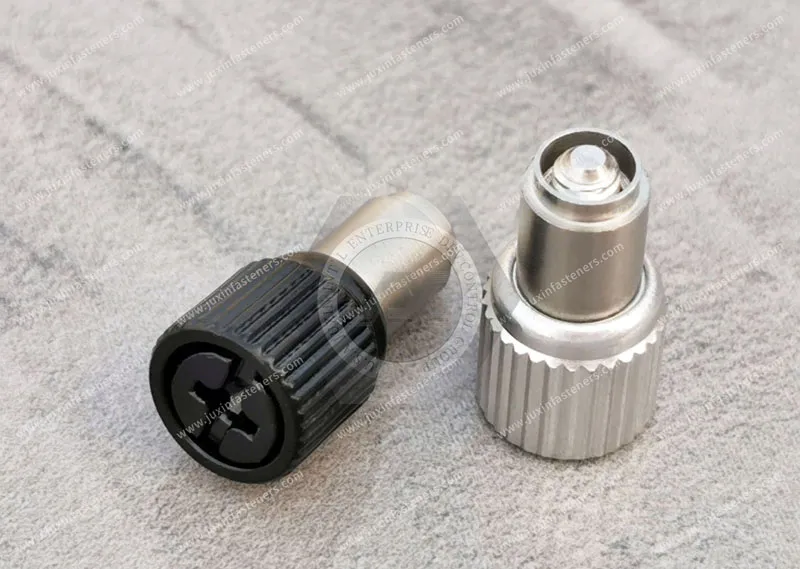
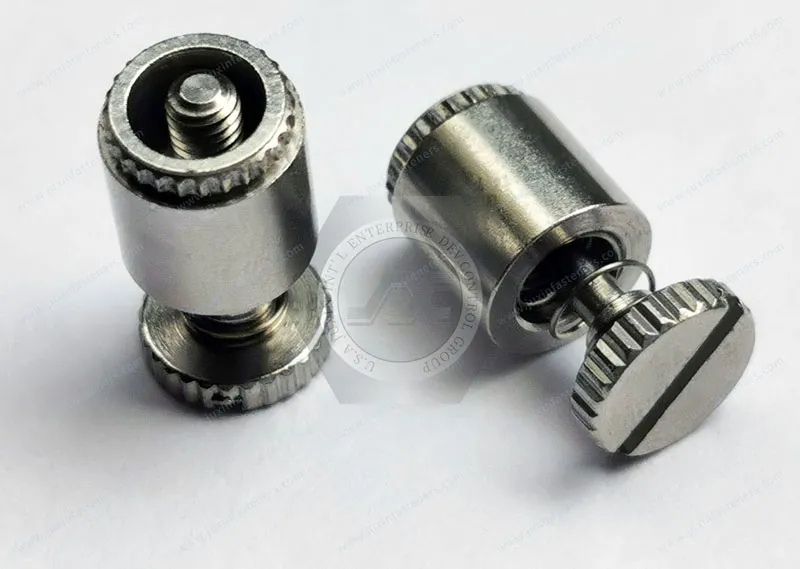
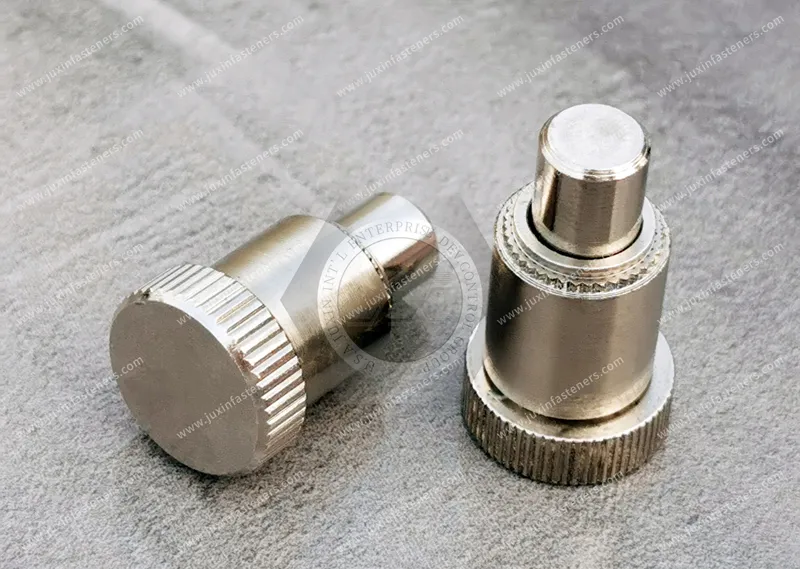
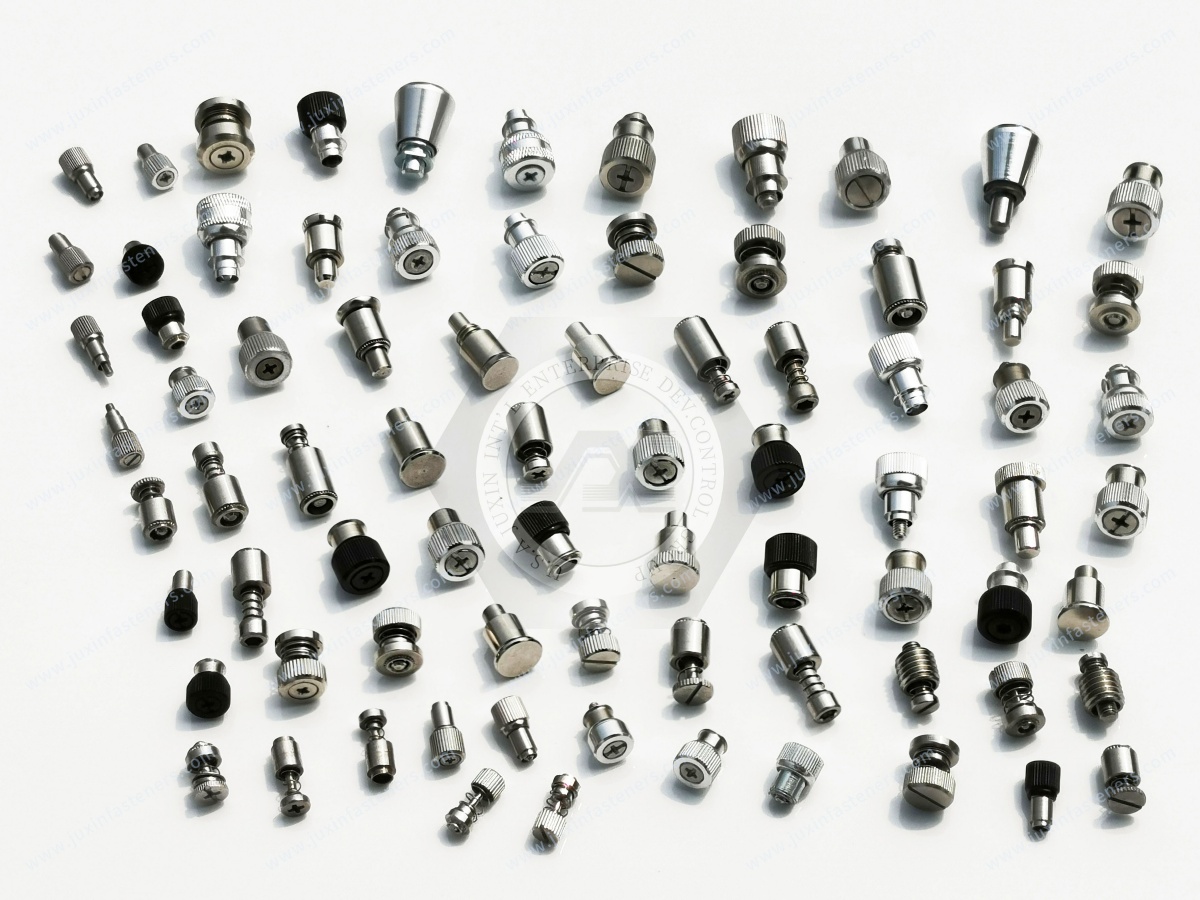
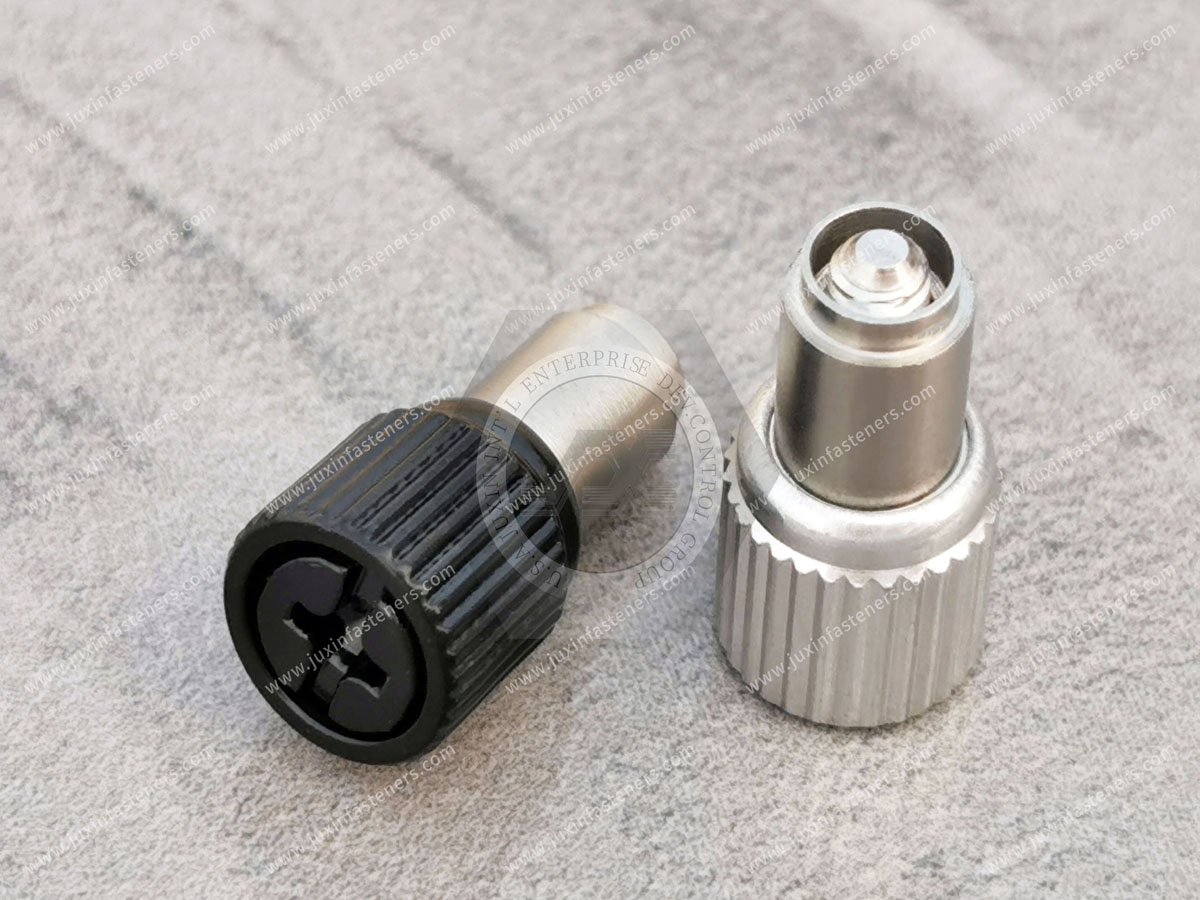
Captive panel fastening systems are designed to retain screws or other fastening elements on a removable panel when the threaded connection is disengaged.
However, not every self-clinching fastener is a captive panel screw, and not every retained screw is installed by self-clinching.
JUXIN FASTENERS supports industrial OEMs with sheet metal fastening components, including self-clinching nuts, studs, standoffs and drawing-based custom fastening requirements.
For captive panel screw assemblies, spring-loaded retained screws and specialized press-in retainers,
the exact construction and manufacturing feasibility must be confirmed against the customer's drawing and technical requirements.
This engineering guide explains how to select a suitable panel fastening architecture for semiconductor equipment, robotic enclosures and serviceable industrial machinery.
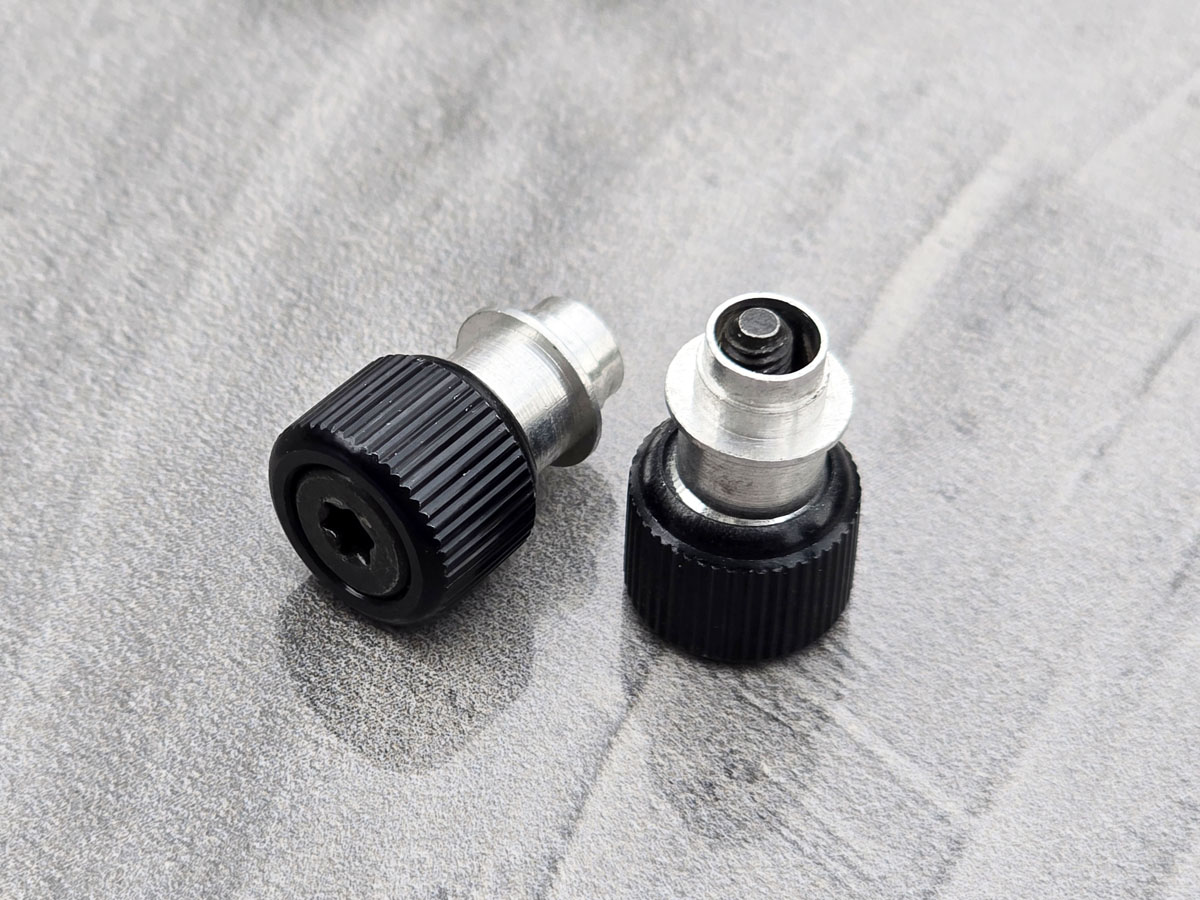
A captive panel fastener is a fastening component or assembly designed to remain attached to a panel or structure when it is disengaged from its mating thread.
Depending on the design, a captive panel fastening system may incorporate:
A retained screw
A panel retainer
A threaded receptacle
A retaining sleeve
A spring
A washer or retaining ring
A press-in mounting feature
A separate panel attachment component
The exact construction varies by product.
The defining feature is the retention of the fastening element during panel opening or removal.
This is different from the function of a conventional self-clinching nut, which provides a permanent internal thread in sheet metal.
These terms describe different functions.
Captive panel screw: A screw designed to remain retained on the panel when disengaged.
Self-clinching nut: A permanently installed internally threaded fastener retained in suitable sheet metal.
Self-clinching stud: A permanently installed male threaded attachment point.
Self-clinching standoff: A permanently installed component providing spacing and a threaded or unthreaded mounting interface.
Self-clinching panel retainer: A retaining component that may be installed into suitable sheet metal using a clinching process, depending on its design.
A captive panel assembly may use a self-clinching retainer.
But captive retention and self-clinching installation are not interchangeable concepts.
A common design mistake is to assume that one fastening feature automatically provides several others.
In reality, four functions should be evaluated independently.
| Function | Engineering Meaning | Does Captive Retention Automatically Provide It? |
|---|---|---|
| Captive retention | Screw remains attached to the panel | Yes, when the retention system functions as designed |
| Thread locking | Resistance to unintended rotational loosening | No |
| Panel alignment | Accommodation of positional variation | No |
| Vibration resistance | Ability of the complete joint to withstand dynamic loading | No |
Captive does not mean vibration-proof.
Captive does not mean self-locking.
Captive does not mean spring-loaded.
Captive does not mean tool-free.
These distinctions are especially important for high-value industrial equipment.
Semiconductor equipment can include complex mechanical and electronic systems requiring controlled maintenance access.
Potential applications include:
Equipment service covers
Automation module panels
Motion-control cabinets
Sensor access panels
Electrical equipment enclosures
Tooling and handling equipment
Auxiliary process equipment
Loose hardware can introduce additional inspection and maintenance work.
Retained panel fasteners can reduce the likelihood of screws becoming separated from the access panel during routine service.
However, captive hardware does not eliminate every possible foreign object risk.
Retention failure, component damage, incorrect installation and other loose items must still be considered.
Foreign object damage, often abbreviated FOD, refers to damage or operational risk associated with unwanted objects entering equipment or sensitive operating areas.
Potential sources include:
Loose screws
Washers
Nuts
Broken fastener components
Installation debris
Maintenance tools
Other unintended objects
In semiconductor-related automation and robotic machinery, dropped hardware may interfere with:
Moving axes
Precision mechanisms
Electrical assemblies
Sensors
Cable routing
Mechanical drives
A properly designed captive screw assembly retains the screw on the access panel after it is unthreaded from the mating component.
This can reduce loose-hardware handling during maintenance.
However, the retention system must be evaluated for the actual application.
A captive screw can reduce the risk of a screw being dropped.
But it cannot independently prevent:
Loose washers
Broken retaining components
Detached panel hardware
Incorrectly installed fasteners
Maintenance debris
For high-value equipment, engineers should evaluate the entire service procedure.
Questions include:
How often is the panel opened?
Is the panel removed completely?
Is maintenance performed above sensitive components?
Can the screw separate from its retainer?
Are additional loose components required?
Is visual confirmation of screw retention possible?
The goal is a serviceable fastening system with fewer opportunities for loose parts.
Some equipment panels are opened only during initial commissioning.
Others are opened frequently for:
Inspection
Calibration
Component replacement
Cleaning
Troubleshooting
Preventive maintenance
The expected service frequency affects fastening-system selection.
A captive screw assembly intended for repeated operation should be evaluated for:
Thread wear
Retention integrity
Drive recess wear
Alignment
Corrosion
Spring behavior where applicable
Operator access
A panel opened once a year may have different requirements from one opened every shift.
The number of expected service cycles can influence:
Retainer design
Material selection
Mating thread choice
Screw drive type
Inspection requirements
Replacement strategy
Do not assume that every captive panel fastener can withstand a fixed number of installation and removal cycles.
The relevant lifecycle requirement should be specified and validated.
Some captive panel fastener assemblies use press-in or self-clinching retention features.
These designs depend on the properties of the host panel.
Important variables can include:
Panel thickness
Panel material
Panel hardness
Installation hole diameter
Edge distance
Panel flatness
Installation force
Tooling access
A retainer suitable for one aluminum panel may not be appropriate for a harder stainless steel sheet.
The actual fastener design and installation specification must be reviewed.
Aluminum sheet metal is widely used in industrial equipment enclosures because it can offer low weight and useful corrosion resistance.
However, different aluminum alloys and tempers have different mechanical properties.
For press-in retainers, engineers should confirm:
Aluminum alloy and temper
Sheet thickness
Hardness
Hole dimensions
Local deformation
Required retention strength
Anodized surfaces and coating sequence may introduce additional considerations.
Stainless steel panels may be selected for corrosion resistance or equipment-specific environmental requirements.
However, some stainless steel sheets are too hard for certain clinching designs.
A stainless steel retainer is not automatically suitable for installation in stainless steel sheet.
The fastener and host panel must be evaluated as a material pair.
A procurement description such as:
Stainless Steel Captive Panel Fastener for Stainless Steel Sheet
does not establish installation compatibility.
The RFQ should identify:
Panel grade
Panel thickness
Panel hardness
Fastener material
Installation method
Retention requirements
This prevents material selection from being confused with installation feasibility.
Some captive screw designs include a spring-loaded mechanism that retracts the screw when disengaged.
Other captive screws remain extended.
These configurations behave differently during panel opening.
The screw remains retained but may continue to project from the panel.
Potential design considerations include:
Screw projection
Panel removal path
Adjacent equipment clearance
Operator handling
A spring-loaded design may retract the screw away from the mating thread after disengagement.
Potential advantages include easier panel movement and reduced interference.
However, the actual retraction travel depends on the specific assembly.
A captive screw may remain attached to the panel but still obstruct panel removal.
For example, a long screw may remain engaged with or interfere with the mating structure even after its threads are disengaged.
Engineers should check:
Screw free length
Retained projection
Retraction travel
Panel opening direction
Adjacent component clearance
A retained screw is not necessarily a retractable screw.
Service panels may experience small positional variations due to:
Fabrication tolerances
Panel flexibility
Assembly stack-up
Hinge positioning
Thermal expansion
Repeated handling
A rigidly located screw may be difficult to engage if the mating thread is misaligned.
Some captive assemblies incorporate limited float or alignment accommodation.
However, not all designs provide this feature.
For repeated service applications, consider:
Screw-to-hole clearance
Retainer alignment
Mating thread position
Panel movement
Lead-in geometry
Operator access
Cross-threading risk should be evaluated at the complete assembly level.
Captive retention prevents the screw from separating from the panel.
Floating alignment accommodates some positional variation.
A fastening system may provide one function without the other.
For an access panel with significant tolerance stack-up, a floating retained screw or a suitable floating mating nut may be worth evaluating.
The correct design depends on the assembly.
Robotic equipment can experience vibration from:
Motors
Actuators
Gearboxes
Moving axes
Equipment acceleration
Nearby machinery
A captive screw remains retained when disengaged, but captive retention alone does not prevent an assembled threaded joint from loosening under vibration.
If vibration resistance is required, engineers should separately evaluate:
Joint preload
Screw size
Thread engagement
Joint stiffness
Locking mechanism
Operating loads
Service requirements
This is a critical distinction for robotic equipment.
A captive screw may gradually unthread under certain operating conditions.
The retention feature may prevent the screw from falling away after disengagement.
But the panel can still become loose.
Therefore:
Captive retention protects against screw separation.
Thread locking addresses rotational loosening.
Joint design controls load transfer and clamp retention.
These functions must be addressed independently.
Semiconductor and precision automation equipment may require controlled panel geometry.
Panel flatness can affect:
Door fit
Cover alignment
Sealing interfaces
Equipment appearance
Mechanical clearance
A press-in retainer may introduce localized deformation if the installation conditions are unsuitable.
Engineers should evaluate:
Installation force
Tooling support
Panel thickness
Edge distance
Nearby bends
Local stiffness
Mechanical press installation avoids welding heat but does not automatically guarantee zero panel distortion.
Some industrial enclosures require low-profile or flush hardware to reduce protrusions.
Possible reasons include:
Operator clearance
Equipment packaging
Adjacent component movement
Access restrictions
Industrial design
However, flush mounting depends on the complete fastener and panel geometry.
A countersunk screw does not automatically create a flush captive assembly.
The retainer, head, panel thickness and installation method must all be compatible.
A screw head may sit flush with the outer panel surface while the retaining mechanism projects on the inside.
Alternatively, a captive retainer may fit within the panel assembly but leave the screw head protruding.
For compact machinery, engineers should evaluate both sides of the panel.
The RFQ should specify:
Maximum external projection
Maximum internal projection
Panel thickness
Screw travel
Retention geometry
This avoids selecting hardware based only on a front-view drawing.
Semiconductor equipment applications may require:
Controlled service access
Reduced loose-hardware handling
Corrosion-resistant materials
Low-particle-generation design
Compatibility with specified cleaning procedures
Repeatable panel assembly
However, not every semiconductor equipment location has the same environmental requirements.
A control cabinet outside the process area may have different requirements from hardware installed near a sensitive process module.
The term semiconductor equipment fastener does not establish cleanroom suitability.
Cleanroom-related applications may require additional evaluation of:
Particle generation
Surface condition
Cleaning procedures
Material compatibility
Lubricants
Coatings
Packaging
Handling
A stainless steel captive screw is not automatically cleanroom-qualified.
Any special cleanliness or contamination-control requirement should be defined by the OEM and confirmed through the appropriate validation process.
Robotic automation equipment may require retained hardware for:
Safety covers
Control cabinet doors
Sensor access panels
Actuator housings
Maintenance covers
Equipment guarding
The correct design depends on:
Access frequency
Vibration
Panel thickness
Screw projection
Operator clearance
Maintenance procedure
Where a panel is part of a safety-related guarding system, the complete guarding arrangement must meet the applicable equipment safety requirements.
A captive fastener alone does not establish machine safety compliance.
Motion-control cabinets may contain:
Drives
Controllers
Power supplies
Communication modules
Cable connections
Cooling components
Service panels should be designed to avoid unnecessary loose-hardware handling.
Captive screws may be considered for removable covers.
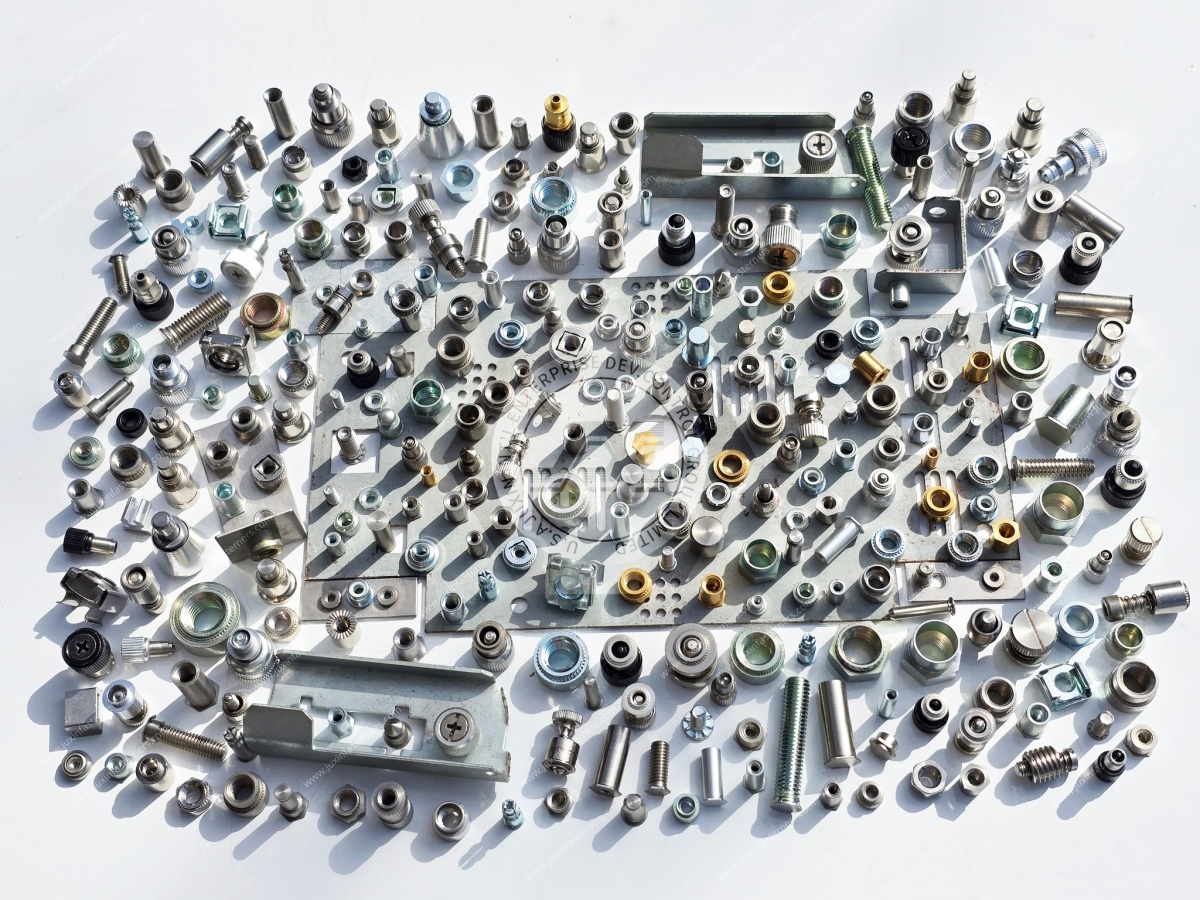
Self-clinching nuts, studs and standoffs may be used elsewhere in the cabinet for fixed mounting interfaces.
These components perform different functions and should be selected accordingly.
Automated guided vehicles and autonomous mobile robots may use removable panels for:
Battery access
Electrical maintenance
Sensor servicing
Mechanical inspection
Potential requirements include:
Compact geometry
Vibration resistance
Repeated service
Weight considerations
Corrosion exposure
Captive screw systems can be considered where retained hardware improves maintenance handling.
The complete joint must still be evaluated for operating loads.
Material selection depends on:
Corrosion environment
Mechanical requirements
Wear
Thread behavior
Temperature
Cleaning exposure
Equipment-specific contamination requirements
Potential materials may include:
Carbon steel
Alloy steel
Austenitic stainless steel
Other application-specific materials
The material and configuration must be confirmed for the actual design.
Stainless steel may be selected for corrosion resistance in suitable environments.
However, the actual grade matters.
For example, 304 and 316 stainless steels have different corrosion-resistance characteristics.
Neither should be described as universally resistant to all chemicals or operating conditions.
Thread galling should also be considered in stainless steel threaded assemblies.
Stainless steel screws and mating stainless steel threads can be susceptible to adhesive wear or galling under certain conditions.
Risk depends on factors such as:
Material combination
Surface condition
Thread fit
Assembly speed
Lubrication
Applied load
For frequently serviced panels, engineers should consider the complete mating-thread combination.
The correct material pairing and assembly procedure may be more important than selecting stainless steel alone.
Carbon steel and alloy steel components may be suitable for selected industrial equipment applications.
Potential considerations include:
Mechanical strength
Corrosion protection
Wear
Surface finish
Operating environment
Where a protective coating is required, the finish should be specified according to the actual service conditions.
Potential surface treatments may include:
Zinc-based coatings
Zinc-nickel coatings
Stainless steel passivation where appropriate
Other customer-specified finishes
The selection depends on the material and application.
A specified salt spray result should not be treated as a direct prediction of field service life.
ASTM B117 provides a salt spray test method, not a universal guarantee of corrosion performance in actual equipment environments.
For captive panel hardware, surface finish may also influence:
Thread friction
Assembly torque
Retainer fit
Wear
Electrical contact
Appearance
Particle generation
A coating substitution should therefore be evaluated against the complete functional requirements.
| Selection Factor | Captive Panel Fastener | Standard Loose Screw |
|---|---|---|
| Screw retained during panel opening | Yes, when designed and installed correctly | No |
| Loose-hardware handling | Can be reduced | Screw must be handled separately |
| Installation complexity | May require additional retaining features | Often simpler |
| Initial component cost | May be higher | Often lower |
| Service convenience | Can be advantageous | Depends on application |
| Vibration locking | Not automatic | Not automatic |
| Alignment capability | Design-dependent | Design-dependent |
| Replacement | Depends on retention construction | Usually straightforward |
Captive panel hardware may provide lifecycle value even when its initial component cost is higher.
For a frequently serviced machine, the cost of a fastening system may include:
Initial hardware
Installation labor
Maintenance time
Replacement hardware
Lost screws
Inspection
Equipment downtime
A retained fastening system may reduce some maintenance-related costs.
However, the actual benefit depends on service frequency and equipment design.
A higher component price may be justified in some applications but not in others.
Quarter-turn fasteners can provide rapid access through a limited rotational movement.
They are often considered for frequently opened panels.
However, quarter-turn systems and threaded captive screws have different operating characteristics.
| Selection Factor | Captive Threaded Screw | Quarter-Turn Fastener |
|---|---|---|
| Engagement method | Threaded | Limited-turn locking mechanism |
| Access speed | Depends on thread length | Often designed for rapid access |
| Clamp behavior | Depends on threaded joint | Depends on quarter-turn mechanism |
| Retention | Design-dependent | Design-dependent |
| Panel design | Threaded mating interface | Matching receptacle or cam interface |
| Suitable use | Threaded service panel assemblies | Rapid-access panel systems |
The selection should follow the actual equipment requirements.
JUXIN FASTENERS' confirmed product capabilities should not be interpreted as an automatic offer of every quarter-turn or spring-loaded captive mechanism.
Self-clinching studs provide permanently attached male threads.
They are useful for selected fixed mounting applications.
However, a self-clinching stud is not equivalent to a captive panel screw.
For removable service panels, the designer should determine whether:
A retained screw is required
A fixed stud with a removable nut is acceptable
A different access mechanism is preferable
The service procedure should drive the choice.
Self-clinching nuts provide permanent internal threads in suitable sheet metal.
They can serve as mating threaded components for removable covers.
However, the screw itself remains loose unless a separate retention feature is provided.
This creates a useful design distinction.
Self-clinching nut = permanent threaded receptacle.
Captive screw = retained removable fastening element.
Some panel assemblies may use both technologies.
Self-clinching standoffs provide spacing and mounting interfaces.
They are useful for:
Electronic modules
Circuit boards
Equipment brackets
Internal chassis assemblies
Captive panel screws are more directly associated with retained service access.
A standoff should not be substituted for a captive retainer simply because both are installed in sheet metal.
| Engineering Requirement | Main Design Question | Possible Fastening Direction |
|---|---|---|
| Prevent loose screws during service | Must the screw remain on the panel? | Captive panel screw |
| Frequent access | How often is the panel opened? | Retained screw or rapid-access system |
| Screw retraction | Must the screw clear the mating structure? | Retractable captive design |
| Limited panel thickness | Can the panel support the retention mechanism? | Application-specific retainer review |
| Threaded mounting point | Is a permanent internal thread required? | Self-clinching nut |
| Permanent male thread | Is a fixed stud required? | Self-clinching stud |
| Controlled spacing | Is a defined stand-off height required? | Self-clinching standoff |
| Vibration resistance | Is rotational locking required? | Separate joint-locking evaluation |
| Cleanliness requirement | Are particle limits specified? | Material and process validation |
The correct solution should be selected according to function, not product name alone.
Before selecting a captive panel fastening system, engineers should review:
Panel material
Panel thickness
Installation method
Hole geometry
Retainer geometry
Screw head clearance
Screw projection
Retraction travel
Mating thread location
Panel removal path
Tool access
Maintenance frequency
The design should also consider nearby bends, ribs, hinges and structural features.
A common design oversight is to evaluate the fastener only when the panel is closed.
During maintenance, the panel may:
Swing open
Slide outward
Lift vertically
Move past adjacent equipment
A retained screw that projects from the panel may interfere with this movement.
Therefore, engineers should evaluate the entire panel opening path.
This is particularly important in densely packaged semiconductor and robotic equipment.
Depending on the application, validation may include:
Retention testing
Repeated engagement and disengagement
Thread inspection
Screw projection measurement
Spring travel measurement where applicable
Corrosion testing where specified
Panel deformation inspection
Functional maintenance trials
The required acceptance criteria should be established by the OEM.
No universal installation-cycle guarantee should be assumed.
A captive assembly contains at least two functional interfaces.
Retention Interface: Keeps the screw attached to the panel.
Threaded Interface: Connects the panel to the mating structure.
Depending on the design, there may also be:
A spring mechanism
A floating alignment feature
A press-in retainer
A sealing element
Each relevant function may require separate verification.
A screw that tightens correctly is not necessarily retained correctly.
Likewise, a securely retained screw may still have unacceptable thread wear.
Design engineers should evaluate the following sequence.
Is the panel removable, hinged or sliding?
Must the screw remain attached when fully disengaged?
Specify aluminum, steel, stainless steel or another material.
Check compatibility with the intended retaining mechanism.
Specify thread, length, head type and drive style.
Check external and internal projection.
Determine whether floating movement is necessary.
Evaluate joint locking separately from retention.
Consider corrosion, cleaning, wear and cleanliness.
Establish the required retention and service-cycle acceptance criteria.
This process helps prevent incorrect product selection.
For accurate technical review and quotation, procurement teams should provide:
2D drawing
3D model where available
Complete assembly drawing
Panel material
Panel thickness
Installation hole dimensions
Thread size and pitch
Screw length
Head and drive type
Retention mechanism
Required screw projection
Retraction travel where applicable
Required floating movement
Material specification
Surface finish
Service environment
Expected maintenance cycles
Required testing
Prototype quantity
Annual forecast
Documentation requirements
Where the customer is requesting a specialized spring-loaded or press-in captive assembly, manufacturing feasibility and product availability must be confirmed during RFQ review.
A standalone screw drawing may not show:
Retainer fit
Panel thickness
Mating thread position
Screw travel
Clearance
Spring behavior
Panel opening path
Therefore, a complete captive panel fastening RFQ should ideally include the assembly context.
This can prevent a technically correct individual component from failing in the finished equipment.
For a drawing-based captive panel fastening system, the qualification process may follow:
Existing Assembly Review → Drawing Review → Functional Requirement Definition → Manufacturing Feasibility → Sample
→ Retention Evaluation → Assembly Test → Maintenance-Cycle Validation → Golden Sample Approval → Production
When evaluating an alternative supplier, the OEM should compare:
Geometry
Retention mechanism
Material
Finish
Installation method
Functional travel
Thread compatibility
Service behavior
Two products with the same thread size are not necessarily interchangeable.
An approved sample should be associated with:
Drawing revision
Material
Surface finish
Retention geometry
Functional dimensions
Required test results
For multi-component captive assemblies, the approval should address the complete assembly rather than only the screw.
Depending on the project, documentation may include:
Dimensional inspection
Material verification
Surface finish inspection
Functional retention test results
Assembly evaluation
Agreed lifecycle testing
Customer-specific inspection records
Additional documents, including EN 10204 inspection documentation where applicable, should be agreed during quotation and order review.
JUXIN FASTENERS does not represent every drawing-based captive panel design as a stocked, prequalified or cleanroom-certified product.
Depending on the component and application, relevant references may include:
ISO metric thread specifications
ASME/ANSI inch-thread specifications
Applicable ISO or ASTM material standards
ISO 3506 series for relevant stainless steel fastener mechanical properties within its scope
ASTM B117 for specified salt spray testing
EN 10204 for agreed inspection documentation
Customer-specific dimensional and functional requirements
Specialized captive panel screw assemblies are frequently controlled by product drawings and application-specific specifications.
No single general ISO or DIN standard should be assumed to define every spring-loaded, retractable or self-clinching captive panel fastener.
For related industrial fastening requirements, explore:
A detailed guide to captive retention, panel access, screw projection and maintenance requirements.
For permanently installed male threaded attachment points.
For permanent mounting interfaces requiring controlled spacing.
For permanent internal threads in compatible sheet metal panels.
For broader selection of press-installed sheet metal fasteners.
For removable and captive threaded mounting systems.
For applications requiring rotational resistance in threaded joints.
These related solutions help engineers distinguish between retention, mounting, spacing and vibration-locking functions.
Are you developing:
Semiconductor equipment enclosures
Robotic automation cabinets
Motion-control equipment
Industrial machinery access panels
Precision instrumentation housings
Automated guided vehicle covers
Electrical control cabinets
Serviceable sheet metal equipment
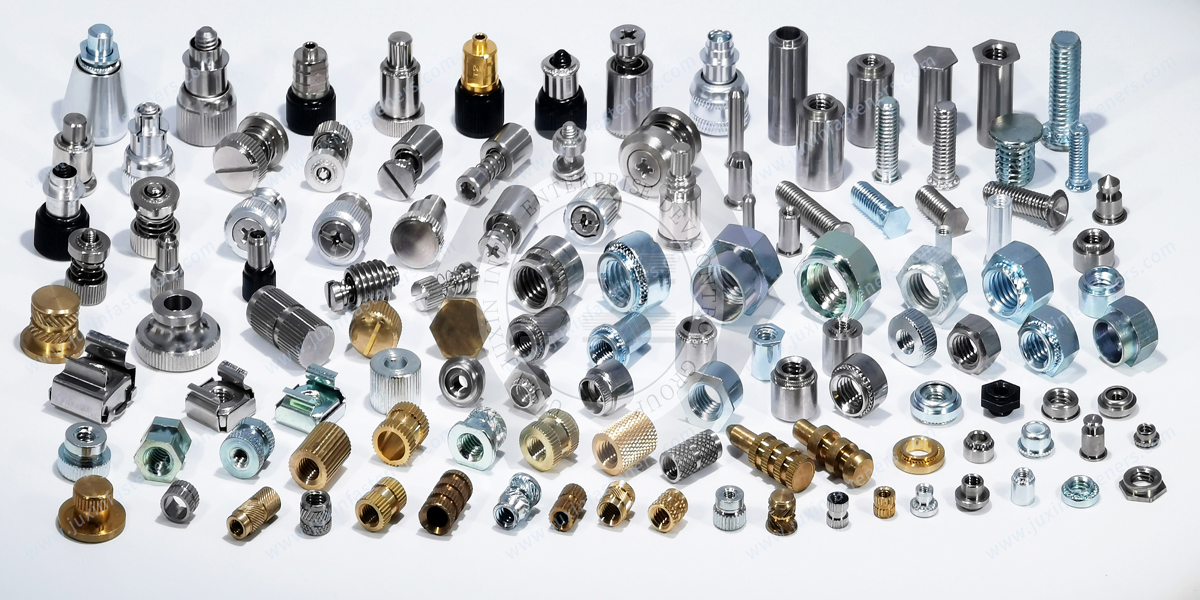
JUXIN FASTENERS can review requirements for:
Self-clinching nuts
Self-clinching studs
Self-clinching standoffs
Custom sheet metal fastening components
Drawing-based retained panel hardware
Special screws and fastening components
For specialized captive screw assemblies, spring-loaded mechanisms and press-in retainers, availability and manufacturing feasibility are subject to drawing review and confirmation.
Please provide:
2D Drawing + Assembly Drawing + Panel Material + Panel Thickness + Thread Size + Retention Requirement + Surface Finish + Quantity
If your project requires retraction, floating alignment or repeated maintenance operation, include the relevant functional requirements.
The objective is to identify a fastening solution that supports safe service access, reliable assembly, reduced loose-hardware handling and long-term equipment maintainability.
JUXIN FASTENERS
Website: www.juxinfasteners.com
Engineering & RFQ: info@juxinfasteners.com
Send your drawing and application requirements for technical review and quotation.
Product Packaging
Packaging Standard
At Juxin Fasteners, we apply standardized export packaging to ensure product protection, traceability, and compliance with international logistics requirements.
1. Standard Export Packaging
Unless otherwise specified, all products will be packed according to our factory standard export packaging, which includes:
Moisture-resistant inner protection
Poly bag or small box packing as required
Reinforced export cartons
Clear labeling with part number, specification, batch number, and quantity
Palletizing for sea or air shipment when necessary
Our standard packaging is designed to ensure safe transportation, efficient warehousing, and long-distance international shipping.
2. Customized Packaging Options
We also provide customized packaging solutions according to customer requirements, including but not limited to:
Private labeling
Customized barcodes
Specific carton dimensions
Retail packaging
Special pallet configuration
Customer-specific marking and identification
So that you know, customized packaging may involve additional costs and extended lead time depending on the complexity of the requirements.
3. Compliance & Quality Assurance
All packaging processes are controlled under our ISO 9001 quality management system to ensure consistency, traceability, and product integrity throughout the supply chain.
Product Pictures
Contact Us
Tel.:
+86 020 8621 0320
+86 020 3121 6067
E-mail:
Technical Support:
Navigation
SEND INQUIREY