Call Us
+86 136 6007 9809
Call Us
+86 136 6007 9809

Parallel sheet-metal structures appear throughout modern industrial equipment.
A server chassis may contain a secondary deck above the base panel. An electrical cabinet may use a raised internal control panel.
Product Specification
Parallel sheet-metal structures appear throughout modern industrial equipment.
A server chassis may contain a secondary deck above the base panel. An electrical cabinet may use a raised internal control panel.
A semiconductor machine may require separated electronics compartments. An automation controller may use multiple sheet-metal layers around PCBs, cables and power components.
The engineering problem is not simply:
How do we fasten two panels?
It is:
How do we join, position or retain two parallel panels while controlling their separation, alignment, load path, assembly access and future serviceability?
Traditional solutions may use a machine screw, tubular spacer, washers and nut. Other designs use conventional standoffs, brackets, formed sheet-metal features or welded components.
Panel-to-panel fasteners provide another architecture by integrating some of these functions into engineered hardware installed in one panel and used to support or attach another panel.
Depending on the fastener design, the system may provide:
a retained mounting point;
a defined stand-off feature;
a threaded secondary attachment;
a snap or retention feature;
a slide-fit interface;
or another panel-to-panel connection.
The correct product cannot be selected from the phrase “panel-to-panel fastener” alone.
The real engineering relationship is:
Primary Panel + Fastener Mounting Interface + Functional Height + Secondary Panel Interface + Final Retention + Load Path
That complete system determines whether the assembly works.
A panel-to-panel fastener is engineered hardware used to attach, position, retain or space one panel relative to another.
In many sheet-metal applications, the fastener is permanently retained in the primary panel through a self-clinching, press-in or other attachment method.
A secondary panel then interfaces with the opposite end of the fastener.
Depending on the design, the secondary interface may use:
a machine screw;
threaded feature;
snap feature;
retaining head;
keyhole-type engagement;
or another engineered attachment mechanism.
The result can be a more integrated assembly than a conventional stack of separate spacer, nut, washer and fastening components.
But not every panel-to-panel fastener performs all of these functions.
Before selecting hardware, define what the second panel actually needs.
Does it need to be:
permanently joined?
removable?
supported?
spaced?
located?
clamped?
electrically isolated?
electrically bonded?
accessible for service?
installed from one side?
allowed to move slightly for tolerance?
protected from over-compression?
These requirements lead to different fastener architectures.
This is why panel-to-panel fastener should be treated as a functional product family rather than a single universal geometry.
A useful way to analyze the assembly is to separate the two interfaces.
The primary panel retains the fastener.
The design must therefore consider:
panel material;
panel thickness;
material condition or hardness where relevant;
mounting-hole geometry;
installation process;
local flatness;
edge distance;
bend proximity;
and installation-tool access.
The secondary panel determines how the assembly is completed.
The design may need to consider:
clearance-hole size;
attachment thread;
retaining geometry;
panel thickness;
access direction;
screw length;
driver clearance;
removal path;
and required movement.
The two interfaces should not be treated as identical.
These product families can overlap, but the engineering intent may differ.
A conventional threaded standoff often creates spacing and provides a threaded mounting interface.
A panel-to-panel fastener may be optimized specifically for:
sheet-metal-to-sheet-metal assembly;
captive installation in the primary sheet;
secondary panel retention;
reduced loose hardware;
quick panel attachment;
or application-specific panel stacking.
The correct choice depends on the assembly.
Do not select a panel-to-panel fastener merely because the assembly contains two parallel sheets.
A Keyhole Standoff is especially useful when the secondary panel should engage through an enlarged opening and then translate into a retained position.
A Panel-to-Panel Fastener may instead use direct threaded, snap, retained or other attachment.
The search intent is different:
Keyhole Standoff → Slide-Fit / Hang-and-Slide / Module Positioning
Panel-to-Panel Fastener → Parallel Panel Attachment / Spacing / Retention
Some panel-to-panel systems may incorporate keyhole-style geometry, but the terms should not automatically be treated as interchangeable.
This distinction is particularly useful for chassis designers.
A Right-Angle Fastener provides a threaded attachment axis for a component oriented approximately perpendicular to the host sheet.
A Panel-to-Panel Fastener typically addresses two panels arranged approximately parallel to one another.
In simplified form:
Right-Angle Fastener → 90° Panel Relationship
Panel-to-Panel Fastener → Parallel Panel Relationship
These two pages should therefore support each other through internal linking because engineers frequently compare both architectures during enclosure design.
A floating self-clinching nut primarily addresses controlled lateral thread movement for alignment.
A panel-to-panel fastener primarily addresses attachment or spacing between panel layers.
If the parallel-panel assembly also has significant hole-position variation, a floating threaded feature may be appropriate elsewhere in the assembly.
This creates an important design principle:
Spacing and alignment are different functions.
Do not expect the spacing fastener to automatically solve every tolerance problem.
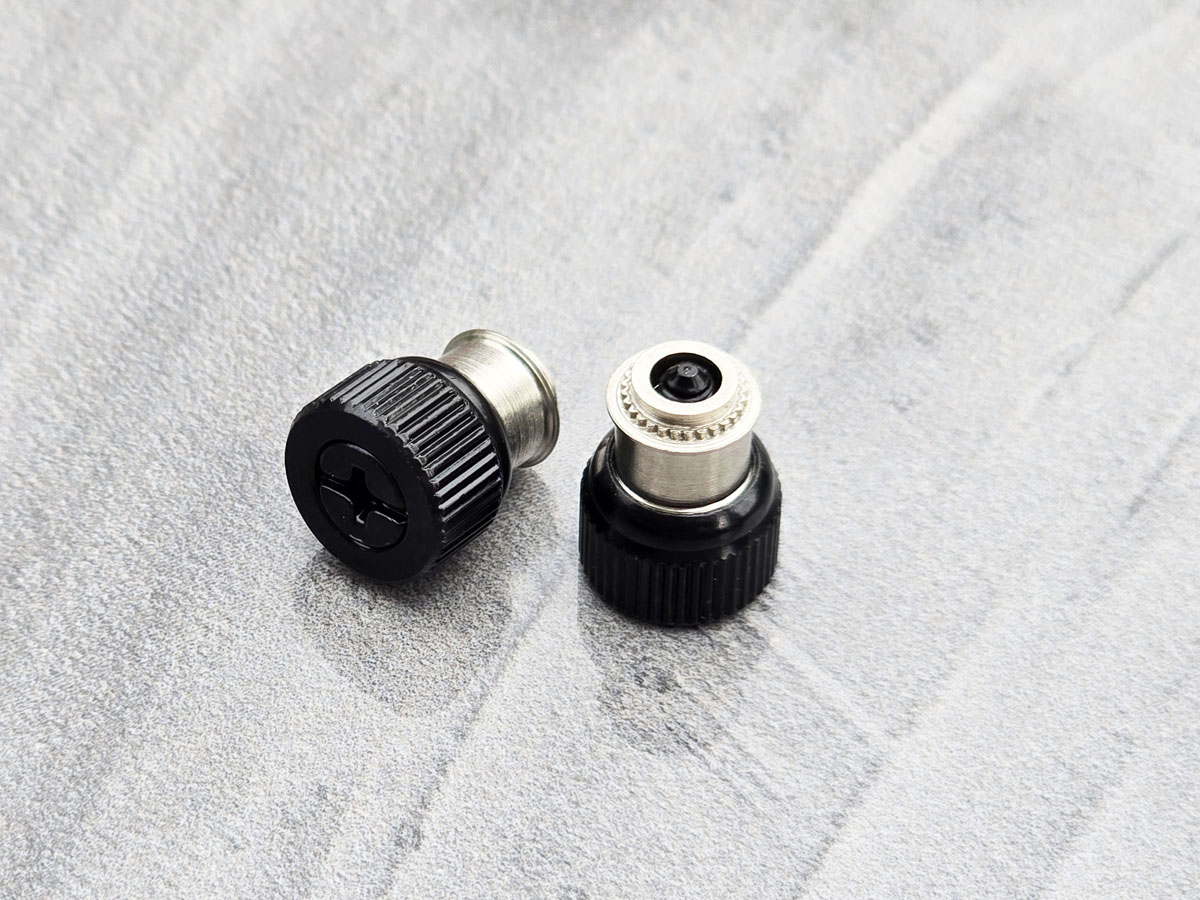
A captive panel screw addresses a different service problem.
Its primary function is to keep the screw retained with a removable panel.
A panel-to-panel fastener establishes the interface between the panels.
In serviceable equipment, the two architectures may work together:
Panel-to-Panel Hardware → Establishes the Panel Interface
Captive Panel Screw → Provides Retained Threaded Access
This combination can be useful where maintenance teams repeatedly remove a secondary panel.
One of the easiest mistakes in parallel-panel design is treating the fastener body height as automatically equal to the required functional panel gap.
The actual assembly may involve:
primary-panel surface;
fastener shoulder;
spacer body;
secondary-panel thickness;
retaining feature;
washer;
gasket;
coating;
formed panel features;
and other interfaces.
Therefore:
Nominal Fastener Height ≠ Automatically Functional Panel Gap
The drawing should define exactly where the gap is measured.
For example:
Primary Panel Surface → Secondary Panel Inner Surface
is different from:
Primary Panel Outer Surface → Secondary Panel Outer Surface
This sounds basic, but it becomes critical during second-source qualification.
A parallel-panel assembly can be understood through several datums:
Datum A: primary-panel reference surface
Datum B: fastener seating surface
Datum C: secondary-panel support surface
Datum D: secondary-panel outer or inner surface
Datum E: secondary attachment interface
The required spacing should be tied to the functional datums rather than an ambiguous overall dimension.
This is particularly important when:
PCB clearance is limited;
cables pass between panels;
connectors must align;
cooling components occupy the gap;
insulation barriers require separation;
or neighboring modules must fit within a fixed envelope.
Even if the fastener body is produced consistently, final panel spacing may vary because of:
primary-panel thickness;
fastener seating;
panel flatness;
body-height tolerance;
secondary-panel thickness;
coating;
formed features;
tightening;
and panel deflection.
The complete stack should therefore be evaluated.
For precision-sensitive assemblies, engineers should identify which dimensions actually control the functional gap.
A single spacer point may establish local separation.
A large panel supported by four, six, eight or more fasteners creates a more complex system.
Possible variation can come from:
fastener installed height;
panel flatness;
mounting-hole location;
secondary-hole position;
formed-panel distortion;
and body-height variation.
If one mounting point sits differently from the others, tightening the secondary panel can force the sheet to conform.
Possible consequences include:
local panel bowing;
preload variation;
screw-starting difficulty;
distortion;
noise;
or stress in attached components.
Therefore, multi-point panel spacing should be treated as a datum and flatness problem, not simply a fastener-height problem.
A spacer body can provide a hard stop or load-transfer feature.
However, it cannot guarantee that the entire panel remains flat.
Panel deflection can still result from:
panel thickness;
unsupported span;
fastener spacing;
screw torque;
external load;
manufacturing flatness;
thermal effects;
and neighboring components.
The correct engineering statement is:
The spacer can help define local separation at the mounting point.
It does not automatically guarantee zero deflection between mounting points.
Where the secondary panel is secured by a screw, tightening creates a load path.
A simplified path may be:
Screw Head → Secondary Panel → Spacer / Fastener Interface → Fastener Body → Primary Panel
Depending on the architecture, the spacer body may limit compression between the two panels.
But the complete joint must still consider:
screw preload;
panel contact;
fastener geometry;
thread engagement;
material;
panel stiffness;
and local bearing surfaces.
The fastener should not automatically be described as preventing all panel crushing or bowing.
For threaded panel-to-panel designs, screw length must account for the full assembly stack.
Review:
secondary-panel thickness;
washers where used;
required engagement;
available thread depth;
bottoming risk;
rear clearance;
and neighboring components.
A screw that is too short may provide insufficient engagement.
A screw that is too long may bottom in a blind thread or interfere with internal equipment.
Longer is not automatically safer.
Depending on the product design, the secondary attachment may use a blind or through-threaded interface.
A blind thread may be useful where screw projection must be controlled.
A through thread may provide different engagement flexibility.
This connects naturally to another Engineered Metal Panel Fasteners topic:
Blind Self-Clinching Nuts are used when the engineering problem centers on a closed-end female thread in the host panel.
Panel-to-Panel Fasteners address the broader relationship between two panel layers.
The products may appear similar in certain geometries, but the Search Task is different.
Some panel-to-panel fasteners can support front-access assembly of the secondary panel.
Others may require:
rear access;
a second tool;
sliding engagement;
snap engagement;
or another assembly sequence.
Therefore, single-sided assembly should only be claimed when the selected architecture actually provides it.
This distinction matters for procurement because two visually similar fasteners may create very different assembly processes.
Where the primary interface uses self-clinching technology, the host panel becomes part of the fastener retention system.
Selection should consider:
host material;
sheet thickness;
material condition or hardness;
mounting-hole geometry;
edge distance;
bend proximity;
local flatness;
installation access;
and tooling.
Installation requirements depend on the actual product and panel combination.
There is no universal installation force suitable for every panel-to-panel fastener.
The mounting hole must match the specific fastener design.
Hole preparation may affect:
installation;
seating;
panel deformation;
retention;
and installed position.
Do not assume that every self-clinching product requires exactly the same hole-edge condition.
The fastener supplier's design requirement or approved drawing should control the mounting-hole specification.
The ability of a self-clinching design to install correctly depends on the relationship between fastener and host-sheet properties.
Possible host materials may include suitable:
carbon steel sheet;
stainless steel sheet;
aluminum sheet;
and other ductile sheet materials.
Compatibility depends on the actual alloy, condition, hardness, thickness and fastener design.
A generic statement such as “the sheet must be softer than the fastener” is useful as a principle but insufficient as a complete material specification.
The space between two panels may be used for:
electronics;
wiring;
connectors;
insulation;
airflow;
cooling hardware;
shielding;
sensors;
or other equipment.
However, the fastener does not itself create thermal performance.
If a designer needs a particular spacing for airflow or thermal management, the required gap should come from the equipment's thermal design.
The panel-to-panel fastener then helps implement that mechanical geometry.
Therefore:
Panel Gap Can Support Thermal Architecture
but
Panel-to-Panel Fastener ≠ Thermal Solution by Itself
Parallel-panel gaps are also frequently used for cables and connectors.
Designers should consider:
cable diameter;
bend radius;
connector size;
harness movement;
abrasion risk;
service removal;
and cable installation sequence.
A nominal gap that appears adequate in CAD may become insufficient once:
cable tolerances;
connectors;
clips;
insulation;
and technician access
are considered.
Two parallel metal panels may need either:
electrical continuity;
intentional isolation;
or no specific electrical function.
A metal panel-to-panel fastener does not automatically create a validated grounding or bonding path.
Electrical behavior can be influenced by:
fastener material;
panel material;
paint;
powder coating;
anodizing;
plating;
contact surfaces;
contact pressure;
corrosion;
and assembly geometry.
Where bonding is required, it should be evaluated and verified at the assembly level.
Likewise, the presence of a physical gap does not automatically establish an electrical insulation rating.
Parallel-panel assemblies may experience vibration and shock.
Potential issues include:
screw loosening;
panel movement;
local fretting;
fastener-to-sheet loading;
resonance;
secondary-panel impact;
and fatigue.
The presence of a solid spacer does not make the assembly vibration-proof.
Where formal vibration requirements apply, the complete assembly should be validated to the relevant program requirements.
Depending on material and application, possible finishes may include:
trivalent clear zinc;
trivalent yellow zinc;
black zinc;
zinc-nickel;
nickel;
black nickel where validated;
and stainless-steel passivation.
Hexavalent chromium should not be specified.
Finish selection should consider:
corrosion environment;
appearance;
mating materials;
galvanic considerations;
dimensional effect;
electrical requirements where applicable;
wear;
and manufacturing sequence.
A salt-spray test requirement, where specified, is a laboratory corrosion test condition and should not be interpreted directly as field service life.
AI servers, GPU systems, network switches, storage platforms and rack-mounted infrastructure frequently contain multiple internal sheet-metal levels.
Potential panel-to-panel applications include suitable:
secondary chassis decks;
internal partition panels;
fan or cooling-control structures;
electronics subassemblies;
power-module panels;
cable-management structures;
serviceable internal panels;
and equipment subframes.
A defined panel separation may provide mechanical space for:
electronics;
cables;
connectors;
cooling components;
or service access.
The fastener should not automatically be described as improving airflow or heat dissipation.
Its function is to help establish and retain the mechanical architecture defined by the chassis engineer.
PDU, UPS and related power systems contain multiple layers of electrical and mechanical assemblies.
Potential applications include:
internal control panels;
protective partitions;
electronic module plates;
power-control subassemblies;
and secondary sheet-metal structures.
Panel-to-panel hardware can help reduce loose spacer handling where a retained attachment architecture is appropriate.
Electrical insulation, creepage, clearance and bonding requirements remain system-level design considerations.
Cooling Distribution Units and liquid-cooling control equipment contain electrical, sensor, pump-control and service structures.
Potential applications include suitable:
controller panels;
electronics plates;
internal partitions;
cable-management structures;
sensor mounting panels;
and serviceable subassemblies.
Panel-to-panel hardware may help establish the required physical separation between these structures.
It should not be treated as part of a pressure boundary unless specifically engineered and validated for that function.
Electrical cabinets, inverter systems, control equipment and power electronics often use layered internal mounting structures.
Potential applications include:
secondary mounting plates;
control-panel layers;
protective barriers;
internal covers;
electronics support panels;
and serviceable subassemblies.
Panel-to-panel hardware can provide a retained mounting architecture without requiring a loose spacer at every mounting point.
Where electrical separation or bonding is important, those requirements must be separately defined.
Communication equipment uses compact layered mechanical packaging around:
PCBs;
power supplies;
fiber interfaces;
network electronics;
cooling components;
and cable systems.
Potential applications include:
internal equipment decks;
electronics mounting plates;
communication chassis partitions;
network equipment modules;
and serviceable secondary panels.
For outdoor equipment, corrosion and environmental sealing require separate evaluation.
Semiconductor equipment combines precision automation, electronics, sensors, power systems and service modules.
Potential panel-to-panel applications may include suitable:
electronics mounting panels;
control-system subframes;
equipment partitions;
internal covers;
sensor panels;
and service structures.
The hardware itself should not be represented as vacuum-compatible, cleanroom-qualified or semiconductor-process compatible without appropriate validation.
Industrial machinery frequently uses multi-layer control and enclosure structures.
Potential applications include:
machine-control panels;
electronics subassemblies;
internal equipment covers;
mounting decks;
service panels;
and protective partitions.
A retained panel-to-panel architecture may simplify production or service where loose spacers and nuts are difficult to handle.
Robotics and automation equipment contain:
controllers;
I/O modules;
vision systems;
power electronics;
sensors;
communication equipment;
and cable management.
Panel-to-panel fasteners may support layered control chassis and internal equipment panels.
Where the equipment moves, vibration, acceleration and service loads require application-specific validation.
Automotive and EV systems use layered electronic and enclosure structures.
Potential applications may include suitable:
electronic control-unit housings;
inverter electronics;
charging equipment;
display/control assemblies;
interior electronics;
and serviceable equipment structures.
Panel-to-panel hardware may simplify selected sheet-metal assemblies.
It should not automatically be described as crash-qualified, battery-structural hardware or vehicle-safety hardware.
Battery and stationary energy-storage systems contain BMS electronics, power controls, communication equipment and thermal-management controls.
Potential applications may include:
internal control plates;
electronics panels;
serviceable partitions;
communication modules;
and secondary cabinet structures.
Panel-to-panel hardware should not automatically be treated as battery-module restraint or enclosure-sealing hardware.
Rail equipment contains electrical, communication, passenger-information and control systems that require long-term maintenance.
Potential applications include:
electronics chassis;
control cabinets;
communication equipment;
internal mounting plates;
and service panels.
Program-specific vibration, fire and structural requirements remain separate qualification issues.
HVAC systems contain multiple layers of control, power and sensor equipment.
Potential applications include:
electrical mounting plates;
control panels;
service structures;
secondary covers;
and internal partitions.
A defined gap may help provide physical space for cables or components.
It does not automatically create thermal, acoustic, airtight or waterproof performance.
Potential applications may include:
diagnostic equipment chassis;
laboratory instrument housings;
medical carts;
internal electronic panels;
control assemblies;
and serviceable subframes.
Panel-to-panel hardware may help reduce loose components in frequently serviced equipment.
The fastener itself does not establish medical-device certification, sterilization compatibility or biocompatibility.
Instrumentation systems frequently package PCBs, sensors, displays and communication modules between compact panel layers.
Panel-to-panel fasteners can help establish controlled mechanical separation while supporting removable assembly.
Where sensor or optical alignment is critical, the fastener should not be assumed to provide precision positioning unless that function is specifically designed and validated.
Commercial food-service equipment often contains multiple internal mechanical and electrical layers within stainless-steel or coated sheet-metal housings.
Potential applications include suitable:
control-system mounting panels;
display and user-interface assemblies;
refrigeration-control modules;
electrical compartments;
serviceable secondary covers;
power-supply panels;
dispensing equipment electronics;
and internal equipment partitions.
For example, a commercial refrigeration, cooking or dispensing system may use a secondary control plate spaced from the main enclosure wall to provide room for wiring, connectors or electrical components.
A panel-to-panel fastener can help establish and retain that mechanical arrangement while reducing dependence on loose spacer hardware.
However, the fastener should not automatically be described as:
food-contact compliant;
hygienic-design certified;
washdown-rated;
waterproof;
or resistant to every cleaning chemical.
Those requirements depend on equipment location, material, finish, cleaning process and customer specification.
Electronic appliances often use layered internal structures around controls, displays, power components and wiring.
Potential panel-to-panel applications include:
controller plates;
secondary covers;
internal electronic decks;
display assemblies;
and power-module structures.
High-volume applications should consider assembly sequence, hardware count, automation compatibility and inspection requirements.
Vending machines, kiosks and ATMs contain serviceable:
control electronics;
displays;
payment systems;
power supplies;
communication modules;
and internal panels.
Panel-to-panel fasteners can provide retained mounting points for layered assemblies.
Security-sensitive panels may require separate controlled-access fastening.
Construction and off-highway equipment uses layered electrical and control enclosures in demanding environments.
Potential applications include:
display housings;
electronic control boxes;
service panels;
internal mounting plates;
and communication equipment.
Shock, vibration, contamination and corrosion should be defined according to the application.
Panel-to-panel fasteners may be considered for suitable aerospace-related tooling, ground-support equipment, electronics enclosures and non-flight-critical assemblies where program requirements permit.
Generic industrial panel hardware should not be represented as flight-qualified or aerospace-certified without the required evidence.
The broader Engineered Metal Panel Fasteners Solutions architecture allows engineers and procurement teams to select hardware by problem rather than by catalog name.
Use when the primary challenge is retaining the screw with a removable service panel.
Use when the primary challenge is controlled lateral thread movement for alignment.
Use when the primary challenge is providing a permanent female thread with closed-end geometry or controlled screw projection.
Use when the component should engage through an entry feature and slide into a retained position.
Use when the required threaded attachment axis is oriented for a perpendicular panel relationship.
Use when two panel layers need an integrated attachment, retention or spacing architecture.
Consider when the primary requirement is a permanently installed threaded spacing point rather than a specialized secondary-panel retention architecture.
Consider when standard hardware cannot meet the required panel stack, mounting method, attachment interface, material, finish or equipment geometry.
These pages should be connected with contextual internal links because the products solve related—but distinctly different—mechanical problems.
Panel-to-panel hardware can be difficult to second-source because visually similar products may establish different installed geometry.
A replacement should not be approved using only:
thread size;
material;
finish;
and approximate body length.
Engineering should evaluate:
primary mounting interface;
installed position;
body height;
functional support height;
secondary attachment interface;
thread geometry where applicable;
secondary-panel position;
assembly direction;
load path;
material;
finish;
and service requirements.
Critical dimensions and interfaces match the approved drawing or defined requirement.
Some dimensions may differ while required form, fit, function, installation and service performance remain acceptable after validation.
One or more features are intentionally changed to suit the customer's revised assembly.
The fastener is developed around the actual panel stack and equipment architecture.
Functional equivalent does not mean identical.
Depending on the design, critical dimensions may include:
primary mounting diameter;
mounting-shank geometry;
installed height;
body diameter;
body length;
support shoulder position;
functional panel gap;
secondary attachment geometry;
thread size;
thread pitch;
usable thread depth;
secondary-panel hole geometry;
panel thickness;
material;
and finish.
The most important dimension is the one that affects assembly function—not necessarily the easiest dimension to measure.
When the original drawing is unavailable, a physical sample can support development.
A practical workflow is:
Physical Sample → Dimensional Review → Functional Review → Critical Feature Identification → Material / Finish Information Review
→ Drawing Confirmation → Manufacturing Feasibility → Prototype / Sample Development → Customer Validation → Production
For panel-to-panel hardware, the sample should ideally be reviewed together with:
primary-panel information;
secondary-panel information;
panel-stack drawing;
mating screw or attachment;
and required functional spacing.
A fastener sample by itself may not reveal:
which surfaces define the required gap;
panel thickness;
assembly direction;
required clearance;
final clamp path;
or service requirements.
A physical sample alone may also not establish exact alloy chemistry, heat treatment, hardness or coating chemistry.
A useful RFQ should define the complete parallel-panel system.
Provide:
material;
thickness;
material condition or hardness where relevant;
mounting-hole geometry;
edge distance;
bend proximity;
surface finish;
and installation access.
Define:
required functional gap;
datum surfaces used to measure the gap;
panel orientation;
allowable variation;
number of mounting points;
and panel flatness requirements where relevant.
Provide:
material;
thickness;
attachment-hole geometry;
attachment method;
removal requirement;
access direction;
and surface finish.
Provide where available:
2D drawing;
3D model;
physical sample;
mounting geometry;
body height;
support geometry;
secondary attachment feature;
thread size and pitch where applicable;
material;
and finish.
Where applicable, define:
screw size;
screw length;
washer;
locking feature;
required engagement;
and installation method.
Where relevant, define:
vibration;
shock;
temperature;
corrosion exposure;
chemical exposure;
electrical requirements;
repeated service;
and cleaning environment.
Include:
prototype/sample quantity;
pilot quantity;
production quantity;
estimated annual usage;
packaging requirements;
traceability requirements where specified;
target schedule;
and long-term supply expectations.
Procurement and supplier-development teams should evaluate more than the quoted unit price.
Relevant capabilities may include:
drawing review;
panel-stack understanding;
manufacturing feasibility;
material control;
dimensional inspection;
thread control where applicable;
finish control;
sample development;
production capacity;
inspection planning;
high-volume scalability;
packaging;
change communication;
and long-term supply support.
Where customer drawings define push-out, pull-out, torque-out, shear or other performance requirements, the validation method should be agreed for the actual fastener and panel combination.
Generic values from another geometry should not be substituted without technical review.
For suitable high-volume programs, automatic optical sorting may be applicable to compatible externally measurable fastener characteristics depending on geometry and inspection requirements.
It does not replace functional validation of the assembled panel system.
JUXIN FASTENERS supports Engineered Metal Panel Fasteners Solutions for OEM manufacturers, equipment builders, sheet-metal fabricators and industrial supply chains.
Panel-to-panel fastener projects can be developed from:
customer 2D drawings;
3D models;
physical samples;
primary-panel drawings;
secondary-panel drawings;
panel-stack information;
custom dimensions;
specified materials;
specified surface finishes;
and application-specific requirements.
The appropriate manufacturing route depends on:
geometry;
mounting architecture;
attachment method;
thread requirements;
material;
tolerances;
finish;
secondary operations;
tooling;
and production quantity.
There is no universal manufacturing method or production-volume threshold suitable for every panel-to-panel fastener.
Prototype or sample evaluation can be used before volume production so the customer can verify:
primary-panel installation;
secondary-panel attachment;
functional spacing;
alignment;
screw access where applicable;
panel flatness;
assembly sequence;
service removal;
and compatibility with the actual equipment.
A panel-to-panel project can be reduced to a practical engineering decision path:
Why are the two panels separated?
→ Is the gap required for structure, electronics, wiring, connectors, cooling hardware, insulation or service access?
→ Which surfaces define the required functional gap?
→ Which panel should permanently retain the fastener?
→ How should the secondary panel attach?
→ Does the secondary panel need to be removable?
→ Is backside access available?
→ Does the assembly require a screw, snap, keyhole or another retention method?
→ What tolerance stack controls the final panel position?
→ How many mounting points are used?
→ Could multiple fasteners force the panel to distort?
→ What loads pass through the fastener and panels?
→ What host-sheet material and thickness are used?
→ What material and finish suit the environment?
→ Is electrical bonding or isolation required?
→ What service and removal requirements apply?
→ Which dimensions are critical for second-source qualification?
→ How will the sample be validated in the actual assembly?
→ What production and supply requirements apply?
This changes the sourcing question from:
“Do you have a panel spacer fastener?”
to:
“Can this fastening architecture establish the required relationship between the primary and secondary panels while meeting assembly, load, clearance and service requirements?”
That is the more useful question for mechanical engineers, design engineers, chassis engineers, procurement teams and supplier-development managers.
For panel-to-panel fasteners, parallel sheet-metal hardware, custom panel spacers, replacement hardware, functional equivalents or second-source programs,
send your available 2D drawing, 3D model, physical sample, panel-stack information and application requirements to:
JUXIN FASTENERS can review the available information and evaluate an appropriate sample-development and manufacturing path for your engineered metal panel fastener project.
Product Packaging
Packaging Standard
At Juxin Fasteners, we apply standardized export packaging to ensure product protection, traceability, and compliance with international logistics requirements.
1. Standard Export Packaging
Unless otherwise specified, all products will be packed according to our factory standard export packaging, which includes:
Moisture-resistant inner protection
Poly bag or small box packing as required
Reinforced export cartons
Clear labeling with part number, specification, batch number, and quantity
Palletizing for sea or air shipment when necessary
Our standard packaging is designed to ensure safe transportation, efficient warehousing, and long-distance international shipping.
2. Customized Packaging Options
We also provide customized packaging solutions according to customer requirements, including but not limited to:
Private labeling
Customized barcodes
Specific carton dimensions
Retail packaging
Special pallet configuration
Customer-specific marking and identification
So that you know, customized packaging may involve additional costs and extended lead time depending on the complexity of the requirements.
3. Compliance & Quality Assurance
All packaging processes are controlled under our ISO 9001 quality management system to ensure consistency, traceability, and product integrity throughout the supply chain.
Product Pictures
Contact Us
Tel.:
+86 020 8621 0320
+86 020 3121 6067
E-mail:
Technical Support:
Navigation
SEND INQUIREY