
Call Us
+86 136 6007 9809
Call Us
+86 136 6007 9809

Oct. 13, 2026
AI data centers and high-density computing systems increasingly use liquid cooling architectures to manage heat generated by GPUs, CPUs and other high-performance electronic components.
These systems may include direct-to-chip cold plates, coolant distribution units (CDUs), liquid distribution manifolds, server chassis, mounting brackets and serviceable enclosure panels.
Although the cooling system depends on fluid circulation, many of its mechanical components rely on threaded fasteners to maintain alignment, secure equipment and support controlled assembly.
The fastening requirements are not identical across the system.
A screw securing a cold plate to a processor mounting assembly has different design considerations from a bolt supporting a CDU frame or a self-clinching nut installed in a sheet metal server enclosure.
For mechanical and thermal engineers, important considerations include clamping force, thermal expansion, material compatibility, mounting geometry, thread engagement and assembly tolerances.
Manufacturing engineers and production managers must also evaluate installation repeatability, torque control, automated assembly, service accessibility and production consistency.
Procurement and supplier development teams need to verify material specifications, drawing conformity, alternative sourcing feasibility,
inspection requirements, minimum order quantities and long-term supply arrangements.
JUXIN FASTENERS supplies industrial machine screws, socket head screws, nuts, washers, self-clinching fasteners, threaded standoffs,
locking hardware and drawing-based custom metal components for suitable liquid cooling and data center equipment applications.
This guide examines fastening selection for cold plate mounting, CDU equipment frames, manifold support structures and liquid-cooled server assemblies,
while distinguishing mechanical fasteners from pressure-sealing components.
Liquid cooling equipment contains several categories of mechanical connections.
| Equipment Application | Potential Fastener Solution | Main Engineering Consideration |
|---|---|---|
| CPU and GPU cold plate mounting assemblies | Precision machine screws and specified mounting hardware | Clamping force, flatness and installation consistency |
| Direct-to-chip cooling modules | Socket head screws and custom mounting studs | Limited space and thermal cycling |
| CDU support frames | Bolts, nuts and washers | Structural attachment and serviceability |
| Liquid cooling manifold brackets | Machine screws, studs and mounting hardware | Alignment and support loading |
| AI server chassis | Self-clinching nuts and threaded standoffs | Thin sheet metal installation and repeatable assembly |
| Server access panels | Captive panel screws | Maintenance access and reduced loose-part handling |
| Cooling pump auxiliary brackets | Bolts and suitable locking hardware | Vibration and joint stability |
| Electrical control enclosures | Self-clinching studs and machine screws | Panel mounting and assembly efficiency |
| Custom thermal management modules | Drawing-based screws, spacers and special fasteners | Dimensional compatibility and OEM integration |
The appropriate fastener depends on the actual mounting function.
A fastener suitable for a CDU enclosure should not automatically be treated as suitable for a cold plate sealing joint or pressurized coolant connector.
Direct-to-chip cold plates transfer heat from processors to circulating coolant.
Depending on the design, a cold plate may be attached through a dedicated mounting frame, spring-loaded screw arrangement or other controlled clamping mechanism.
The mounting assembly must apply appropriate force without damaging the processor package, substrate or cold plate.
Insufficient mounting force may contribute to poor thermal interface contact, uneven pressure distribution or mechanical instability.
Excessive mounting force may deform mounting structures or damage sensitive components.
The allowable load depends on the processor package, cold plate geometry, mounting hardware and approved thermal assembly design.
A cold plate mounting system must account for the distribution of force across the thermal interface.
Increasing screw torque does not necessarily produce a more uniform contact pressure.
Engineering insight: A cold plate mounting screw should be selected as part of a controlled clamping assembly, not solely by thread diameter or strength class.
For OEM applications, the approved mounting drawing, loading requirements and installation procedure should govern fastener selection.

Some processor cooling assemblies use springs to control or distribute mounting force.
Depending on the design, the assembly may include:
Precision machine screws
Compression springs
Shoulder screws
Washers
Threaded inserts
Mounting frames
Captive screw arrangements
Spring-loaded mounting systems may help accommodate specified dimensional variations or changes in assembly conditions.
However, their performance depends on spring characteristics, travel, geometry and the complete mechanical design.
The screw must provide the required thread engagement without bottoming out or preventing the intended spring compression.
Where shoulder screws are used, shoulder diameter and length may control alignment or travel.
The manufacturing process must ensure the intended tightening sequence and mounting condition.
Engineering insight: Two mounting screws with identical threads may not be functionally equivalent if their shoulder length, under-head geometry or effective clamping travel differs.
Drawing-based replacement sourcing should therefore consider the entire mounting mechanism.
Liquid-cooled servers may combine copper, aluminum, stainless steel, carbon steel and polymer components.
These materials have different thermal expansion characteristics.
During thermal cycling, dimensional changes may influence joint loading and component alignment.
Important considerations include:
Fastener material
Cold plate material
Mounting frame material
Grip length
Joint stiffness
Temperature range
Thermal cycling frequency
Clamped material deformation
Copper and steel have different thermal expansion coefficients.
The effect on a particular joint depends on geometry, temperature changes and the complete load path.
Aluminum structures may expand differently from steel fasteners.
The design should account for thread engagement, joint stiffness and installation requirements.
Engineering insight: Differential thermal expansion does not automatically cause leakage or preload loss in every mixed-metal assembly.
The actual outcome depends on the joint configuration and the relationship between the clamped components.
Liquid cooling systems require reliable fluid containment.
However, a threaded fastener is not inherently a sealing component.
A fluid connection may rely on:
O-rings
Gaskets
Sealing surfaces
Compression fittings
Approved quick-disconnect couplings
Welded or brazed connections
Other engineered sealing arrangements
Fasteners may provide mechanical clamping or component retention, but they do not independently establish leak-tightness.
Some cold plate assemblies contain internal seals.
Where screws are used to clamp a sealed joint, their function must be evaluated alongside the sealing geometry, gasket or O-ring properties and the approved tightening procedure.
Liquid cooling manifolds and connectors may require specialized pressure-containing components.
A custom retaining screw or pin should not be represented as a qualified pressure-retaining component without appropriate engineering validation.
Engineering insight: Fastener preload, seal compression and fluid pressure are related design considerations, but a fastener specification alone cannot establish coolant containment performance.
Leak testing and pressure verification must be defined for the complete fluid assembly.
Liquid cooling systems may use different coolant formulations depending on the equipment architecture.
Examples include specified water-based coolants, inhibited glycol mixtures and other application-specific fluids.
Material compatibility depends on the actual coolant formulation, operating temperature, concentration and exposure conditions.
Galvanic corrosion may occur when dissimilar metals are electrically connected in the presence of a suitable electrolyte.
Potentially relevant material combinations include:
Copper and aluminum
Stainless steel and aluminum
Carbon steel and copper alloys
However, the presence of dissimilar metals does not automatically mean significant galvanic corrosion will occur.
The actual risk depends on electrical contact, electrolyte exposure, material potentials, exposed area ratios and operating conditions.
A fastener exposed only to ambient air may have different requirements from a component in direct contact with coolant.
Engineering insight: Material selection should begin by identifying whether the fastener is inside the wetted fluid path, exposed to possible leaks or used only in an external mounting structure.
This distinction helps avoid unnecessary material upgrades while protecting critical locations.
Stainless steel may be considered for selected liquid cooling equipment applications.
Applicable parts of ISO 3506 define mechanical properties for relevant stainless steel fasteners.
However, stainless steel is not universally compatible with every coolant or mixed-metal assembly.
Space limitations are common in high-density server hardware.
Socket head cap screws may be considered where compact installation and tool accessibility are important.
ISO 4762 is a relevant dimensional standard for hexagon socket head cap screws.
Important selection factors include:
Head diameter
Head height
Socket size
Thread diameter
Screw length
Required tool clearance
Material and property class
Surface finish
The screw head must remain accessible to the intended installation tool.
Thread engagement must be appropriate for the mating material and joint loading.
A screw that is too long may bottom out in a blind tapped hole before the intended clamping force is achieved.
Engineering insight: In compact cooling modules, screw length tolerance and available blind-hole depth can be as important as nominal screw strength.
The OEM should define the relevant dimensions and installation limits.
Liquid-cooled server systems still require extensive sheet metal assembly.
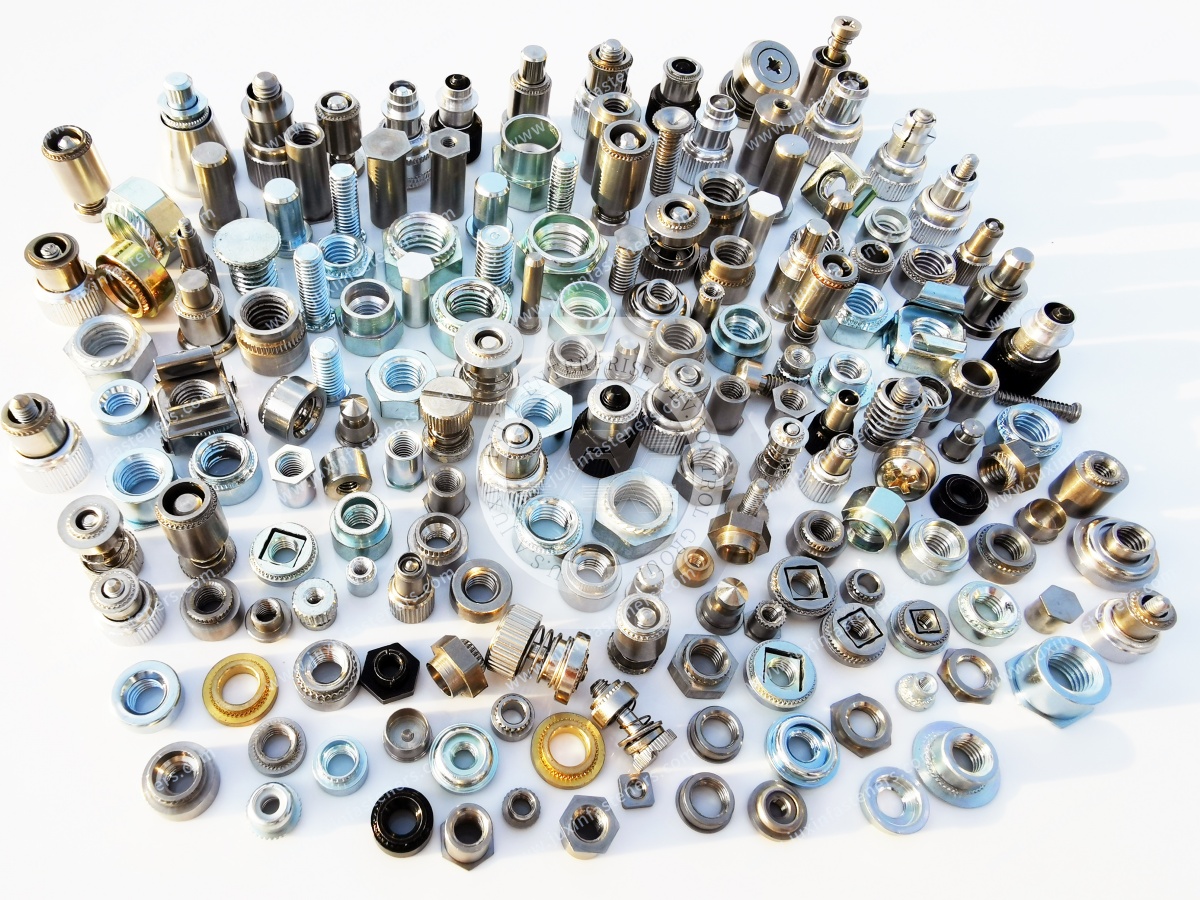
Self-clinching fasteners can provide threaded attachment points in suitable metal panels.
Self-clinching nuts may be used in:
AI server chassis
CDU control cabinets
Cooling equipment panels
Sensor mounting brackets
Electrical enclosures
Their installation depends on panel thickness, hardness, hole dimensions and the selected fastener design.
Self-clinching studs provide fixed threaded mounting points.
They may help position brackets or equipment modules during assembly.
Threaded standoffs may provide spacing and attachment points for circuit boards, control modules and enclosure components.
Engineering insight: Self-clinching fasteners are not universally suitable for every thin sheet metal material.
Installation performance depends on the relationship between fastener geometry, panel hardness and panel thickness.
For alternative sourcing, the OEM should verify installation hole requirements and retention performance rather than relying on thread size alone.
CDUs, cooling manifolds and liquid-cooled server enclosures may require periodic access for inspection and maintenance.
Captive panel screws remain retained in the panel when disengaged from the mating thread.
Potential applications include:
CDU access covers
Cooling equipment service panels
Server enclosure covers
Electrical control cabinets
Captive screws may reduce loose-part handling during maintenance.
However, captive retention does not automatically provide vibration resistance, sealing or structural load capacity.
Engineering insight: Captive screws should be selected according to the access-panel function, including panel thickness, retention geometry and the expected maintenance procedure.
CDUs may contain pumps, fans and other rotating components.
These assemblies can generate vibration.
Depending on the application, potential fastening options include:
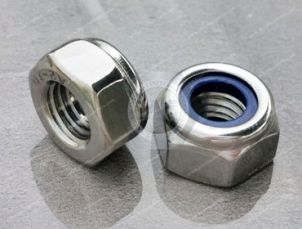
All-metal prevailing-torque lock nuts
Nylon-insert lock nuts where suitable
Properly designed preloaded joints
Application-specific locking arrangements
All-metal prevailing-torque lock nuts use a mechanical locking feature.
Depending on the product design, ISO 7042 and related specifications may apply.
They may be considered for selected CDU frames, pump support brackets and auxiliary mounting structures.
Prevailing torque is not the same as bolt preload.
A locking nut may resist rotation but cannot independently prevent preload loss caused by joint settlement or deformation.
Engineering insight: Vibration resistance must be evaluated at the joint level rather than inferred from the presence of a locking feature.
Fasteners used in liquid cooling equipment may require different finishes depending on their function.
Potential options include:
Zinc-plated carbon steel
Stainless steel
Customer-specified corrosion-resistant coatings
Specialized surface finishes where technically appropriate
Coating thickness can affect thread fit and installation friction.
For precision assemblies, coating requirements should be considered during dimensional specification.
Some thermal management equipment may require controls on particulate contamination, residues or surface cleanliness.
These requirements must be defined by the OEM.
A standard industrial fastener should not automatically be described as cleanroom-qualified or suitable for direct coolant contact.
For susceptible high-strength steel fasteners, manufacturing and coating processes should consider hydrogen embrittlement risk.
Engineering insight: The most corrosion-resistant or highest-strength fastener is not necessarily the best choice for every liquid cooling application.
Mechanical function, material compatibility, dimensional control and cleanliness requirements must be evaluated together.
Standard catalog fasteners may not satisfy every cooling module design.
Drawing-based custom hardware may be required for:
Special screw lengths
Precision shoulders
Custom threaded studs
Low-profile head geometry
Controlled spacer dimensions
Special nuts
Drawing-specific washers
Custom mounting pins
Cooling equipment bracket components
JUXIN FASTENERS supports drawing-based inquiry review for industrial fastening components.
Manufacturing feasibility depends on material, geometry, tolerances and production quantity.
Cold forming may be appropriate for selected fastener geometries and production volumes.
CNC machining may be appropriate for complex geometries, controlled shoulders and drawing-specific features.
Some components may require a combination of forming and secondary machining.
Engineering insight: Custom fastener drawings should distinguish critical functional dimensions from noncritical features.
Unnecessarily restrictive tolerances can increase manufacturing cost without improving assembly performance.
Production managers and manufacturing engineers must balance precision, assembly speed and repeatability.
High-density server modules may contain restricted mounting locations.
Fastener head geometry and tool clearance should be considered during design.
Installation procedures should be appropriate for the actual fastener, surface condition and joint.
Self-clinching fasteners may be installed during sheet metal fabrication before final equipment assembly.
This can reduce loose-part handling during later production stages.
Captive screws and accessible mounting arrangements may simplify maintenance.
Fastener dimensions and thread quality can influence automated or semi-automated assembly.
Fastener unit price is only one part of total manufacturing cost.
Installation labor, inspection, rework, maintenance and supply continuity should also be considered.
Applicable standards depend on the specific fastener and equipment application.
| Product or Requirement | Potentially Relevant Standard |
|---|---|
| Hexagon socket head cap screws | ISO 4762 |
| Hexagon head bolts | ISO 4014 / ISO 4017 |
| Hexagon nuts | ISO 4032 |
| Carbon steel and alloy steel bolt mechanical properties | ISO 898-1 |
| Carbon steel nut mechanical properties | ISO 898-2 |
| Stainless steel fastener mechanical properties | Applicable parts of ISO 3506 |
| All-metal prevailing-torque nuts | ISO 7042 where applicable |
| Metric thread specifications | Applicable ISO metric thread standards |
| Inch-series threaded fasteners | Applicable ASME/ANSI standards |
| Material inspection documents | EN 10204 where contractually specified |
Custom cold plate mounting screws, manifold retention components and specialized thermal hardware may require drawing-specific dimensions and functional validation.
Metric, UNC, UNF and other thread systems must be treated as separate specifications.
Certain liquid cooling components form part of pressure-containing assemblies.
These may include:
Cold plate fluid chambers
Manifold connections
Quick-disconnect couplings
Pump housings
Coolant distribution interfaces
Fasteners used in these locations may require specialized design and qualification.
Requirements may include:
Approved material specifications
Controlled dimensions
Defined preload
Pressure testing
Leak testing
Thermal cycling validation
Coolant compatibility assessment
Project-specific inspection documentation
The actual requirements depend on the equipment design and procurement specification.
General industrial fasteners should not be represented as independently leak-proof or qualified pressure-containing components without the necessary evidence.
Liquid cooling equipment manufacturers may seek alternative suppliers for screws, nuts, washers, standoffs, self-clinching hardware and custom fasteners.
Supplier qualification should consider both technical conformity and commercial supply requirements.
| Evaluation Area | Key Questions |
|---|---|
| Drawing conformity | Are dimensions, threads and tolerances correct? |
| Material specification | Is the required material grade identified? |
| Mounting function | Does the fastener support the intended clamping and alignment requirements? |
| Surface treatment | Is the finish compatible with the assembly and environment? |
| Cleanliness | Are any special contamination controls required? |
| Inspection | Which dimensions and characteristics require verification? |
| Documentation | Which material and inspection records are required? |
| Commercial supply | What are the MOQ, annual demand and delivery expectations? |
Some data center equipment projects require material inspection documentation under EN 10204.
The specific document type should be identified during procurement.
An EN 10204 3.1 inspection certificate should not be assumed for every standard industrial fastener.
Where required, documentation availability and traceability requirements must be confirmed before order acceptance.
Two fasteners with the same nominal dimensions may differ in:
Material grade
Mechanical properties
Head geometry
Grip length
Thread position
Coating thickness
Installation friction
Cleanliness requirements
For precision liquid cooling assemblies, dimensional similarity alone does not establish functional equivalence.
The OEM should define the required validation and approval procedures.
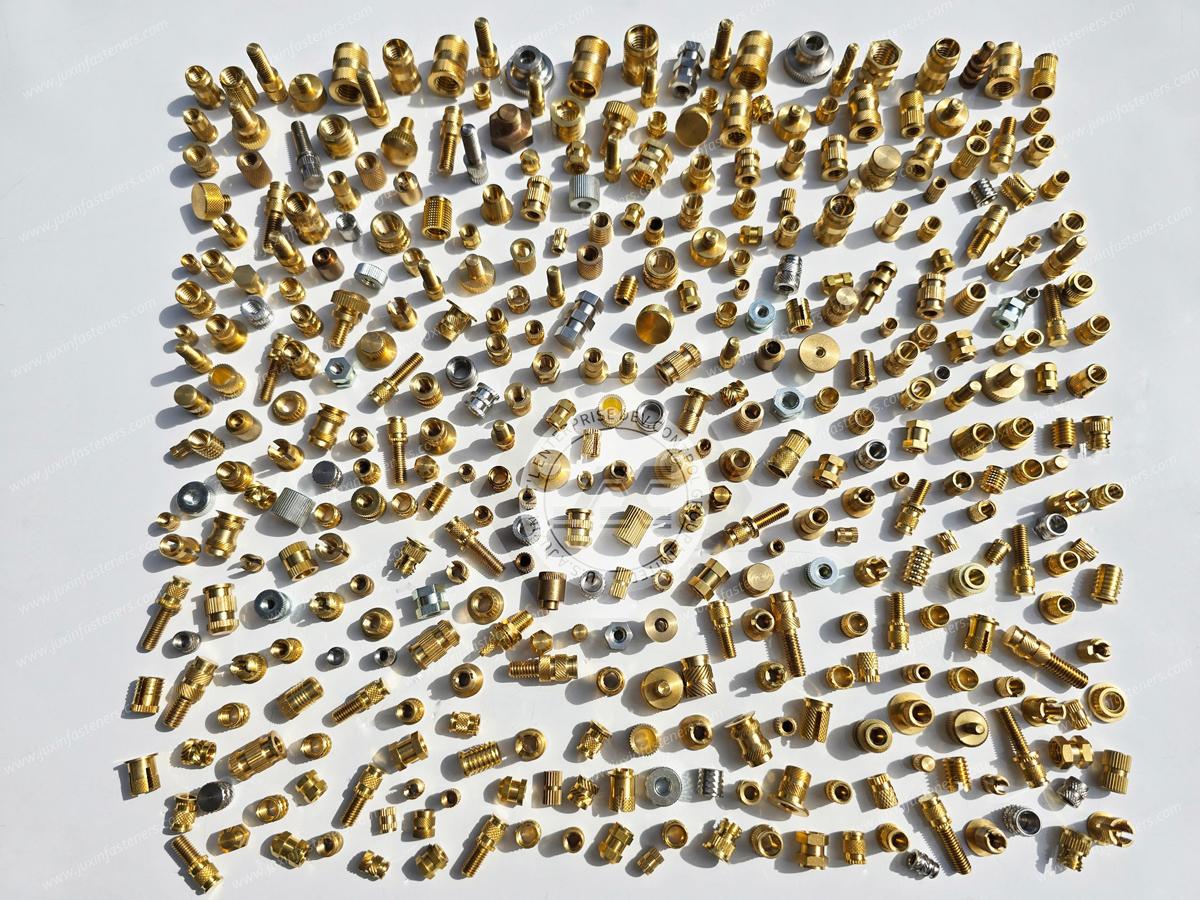
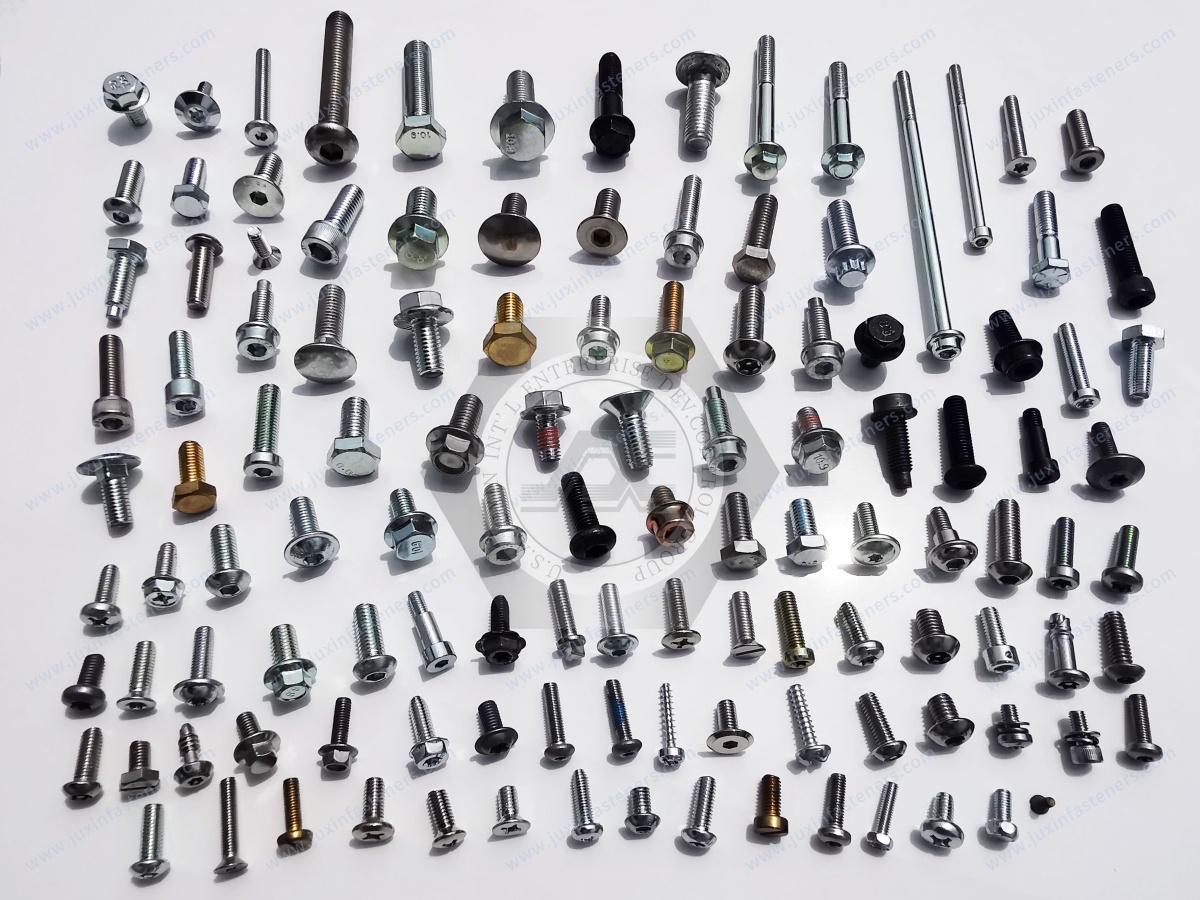
JUXIN FASTENERS supports OEM sourcing and drawing-based technical review for industrial fasteners used in suitable liquid cooling and data center equipment applications.
For direct-to-chip cooling modules, CDU frames, server chassis, manifold supports and thermal management equipment, please provide:
2D drawings and available 3D models
Fastener type and thread specification
Material and mechanical property requirements
Mounting geometry and joint loading
Required surface treatment
Cleanliness or contamination control requirements
Inspection and testing requirements
Prototype quantity and annual forecast
Packaging and delivery requirements
For sealing-critical or pressure-containing assemblies, please also identify the applicable design, validation and qualification requirements.
Our team can review the supplied information to discuss suitable standard and custom fastening options and quotation feasibility.
Website: www.juxinfasteners.com
OEM Technical Review & RFQ: info@juxinfasteners.com
Send your drawings and purchasing requirements to discuss fastening solutions for your next liquid-cooled server or data center thermal management project.
AI Data Center Server Rack & Cabinet Fastening Solutions — mechanical fastening for server racks and enclosures.
Self-Clinching Standoffs for AI Server Chassis & Electronic Enclosures — threaded spacing and mounting hardware.
Captive Panel Screws & Retained Fasteners for Serviceable Equipment Panels — maintenance-friendly access hardware.
Custom Cold-Headed Fasteners & Special Formed Parts for Industrial OEMs — drawing-based custom fastener sourcing.
Self-Clinching Nuts for Power Electronics & Sheet Metal Enclosures — threaded attachment points for thin metal panels.
These related topics provide additional guidance on precision mounting, sheet metal fastening, equipment serviceability and OEM supplier qualification.
 MORE NEWS


Oct. 13, 2026
Contact Us
Tel.:
+86 020 8621 0320
+86 020 3121 6067
E-mail:
Technical Support:
Navigation
SEND INQUIREY