
Call Us
+86 136 6007 9809
Call Us
+86 136 6007 9809

Oct. 01, 2026
Fastener material selection should never begin with the assumption that the strongest, most corrosion-resistant or most expensive material is automatically the best choice.
A fastener operates as part of a joint system.
Its performance depends on the interaction between the fastener material, mating component, applied load, temperature, moisture,
chemicals, surface treatment, installation process and expected service life.
A carbon steel fastener with an appropriate coating may be suitable for one automotive or electrical assembly,
while stainless steel may be necessary for another. Aluminum may reduce weight but cannot simply replace steel without checking mechanical requirements.
PA66 can provide electrical insulation but introduces moisture absorption and creep considerations that do not apply to metal hardware.
For engineers, the correct question is therefore not:
“Which fastener material is best?”
It is:
“Which material provides the required mechanical, environmental and assembly performance for this specific joint?”
JUXIN Fasteners supplies metal and polymer fastening components for automotive manufacturing, AI data center cabinets, telecommunications equipment,
semiconductor equipment, rail transit, electrical power equipment, energy systems, medical equipment, food machinery, marine equipment, electronics,
HVAC, motorcycles, bicycles, racing vehicles, leisure equipment and outdoor applications.
Our material capabilities include carbon and alloy steels, stainless steel grades such as 304 and 316, aluminum alloys,
titanium alloys for selected drawing-based components, and engineering polymers including PA6, PA66, POM, PP, PC, PVDF and PEEK for appropriate fastening applications.
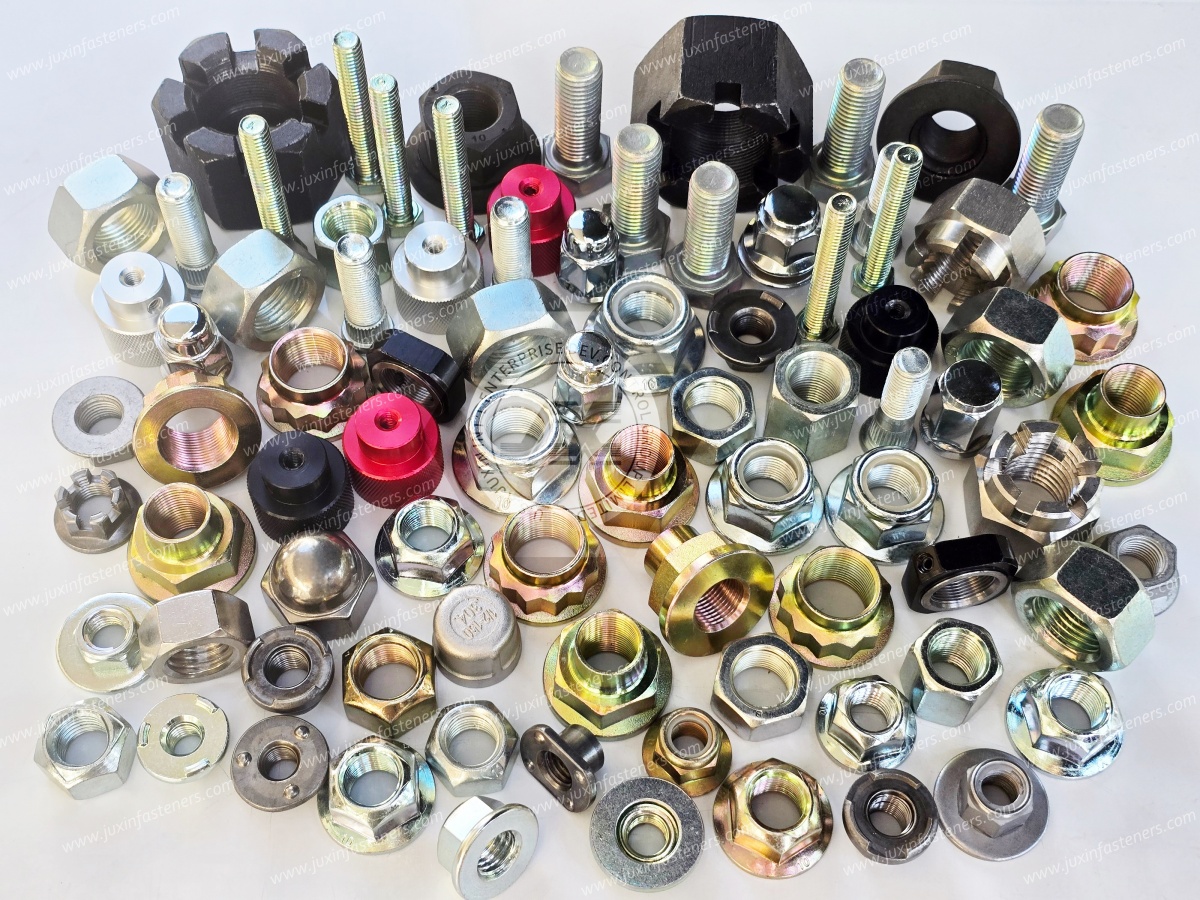
Fastener material selection should consider at least seven engineering factors:
Mechanical load
Corrosion environment
Operating temperature
Mating material
Electrical requirements
Weight requirement
Manufacturing and installation process
For polymer components, moisture absorption, chemical compatibility and creep must also be considered.
These factors interact.
For example, selecting stainless steel to improve corrosion resistance can introduce galling concerns in stainless-on-stainless threaded assemblies.
Using stainless steel in contact with aluminum can also require galvanic-corrosion evaluation depending on the environment.
Changing from steel to polymer may solve an electrical isolation problem while reducing allowable sustained mechanical load.
Material selection is therefore a trade-off rather than a ranking from “good” to “better.”
Carbon steel remains one of the most widely used materials for industrial fasteners because it combines manufacturability, mechanical performance, availability and cost efficiency.
JUXIN uses appropriate carbon steel grades according to the product, forming process, required mechanical properties and customer drawing.
Typical carbon-steel fastener families can include:
Weld nuts
Weld studs
Rivet nuts
Lock nuts
Self-clinching hardware
Custom screws and nuts
Drawing-based components
Carbon steel is particularly suitable when the component requires cold forming, welding, controlled mechanical properties or cost-effective high-volume production.
Depending on grade and processing, advantages can include:
Good forming capability
Broad mechanical-property range
Good manufacturing efficiency
Wide industrial availability
Cost efficiency
Compatibility with multiple coating systems
Bare carbon steel is susceptible to corrosion when exposed to moisture and aggressive environments.
For this reason, industrial carbon-steel fasteners commonly use protective surface treatments.
Depending on the project, JUXIN can evaluate finishes such as zinc-based coatings, zinc-nickel systems, black zinc-nickel and other customer-specified industrial finishes.
The correct coating should be selected according to the required performance rather than appearance alone.
Alloy steel can be used where higher mechanical properties are required than can be achieved economically with lower-strength carbon steel.
Typical applications can include higher-strength threaded components and drawing-based fasteners requiring controlled mechanical properties.
The material cannot be selected independently of heat treatment.
For fasteners requiring property classes such as 8.8 or 10.9, the complete manufacturing route may include material selection, forming, heat treatment, thread processing and surface treatment.
For high-strength steel fasteners, certain electroplating processes can introduce hydrogen-embrittlement risk.
This does not mean plated high-strength fasteners cannot be used.
It means material strength, coating process, applicable standards and post-treatment requirements must be considered together.
Procurement should therefore avoid changing coating suppliers or plating systems on high-strength components solely on the basis of color or price.
304 stainless steel is widely used for industrial fastening components requiring useful general corrosion resistance.
JUXIN supplies or evaluates 304 stainless steel across appropriate product families such as:
Rivet nuts
Nuts
Custom fasteners
Machined components
Selected weld fasteners
Threaded components
304 can be suitable for many indoor, humid and moderately corrosive industrial environments.
However, “stainless steel” should not be treated as a universal corrosion specification.
Performance depends on the grade and exposure environment.
316 stainless steel contains molybdenum and generally provides improved resistance to certain chloride-containing and more aggressive corrosive environments compared with 304.
Applications may include selected marine, outdoor, chemical-processing or industrial environments where the additional corrosion resistance is justified.
However, 316 is not automatically required simply because a product is used outdoors.
Engineers should consider:
Actual chemical exposure
Chloride exposure
Humidity
Temperature
Mating material
Mechanical requirement
Cost
Product availability
Using 316 where 304 already satisfies the requirement can add cost without improving the functional result.
Conversely, using 304 purely to reduce cost may be inappropriate where the environment requires greater chloride resistance.
The practical selection question is not:
“Is 316 better than 304?”
The useful question is:
“Does the application require the additional corrosion resistance provided by 316?”
Consider 304 where:
General industrial corrosion resistance is required
Chloride exposure is limited
Indoor or moderately corrosive service dominates
Cost and availability matter
Consider evaluating 316 where:
Chloride exposure is more significant
Marine or coastal environments are involved
More aggressive chemical exposure exists
Customer specifications explicitly require 316
Final selection should always follow the actual environment and customer requirements.
European and international fastener drawings may specify stainless steel using ISO stainless fastener designations such as A2 and property classes such as A2-70.
It is important not to confuse material family with mechanical property designation.
An engineering drawing should identify the applicable specification clearly so that the supplier understands both material and required mechanical performance.
Procurement should avoid replacing a specified stainless fastener with another component simply because both are described commercially as “304 stainless.”
The applicable standard and property requirements should be checked.
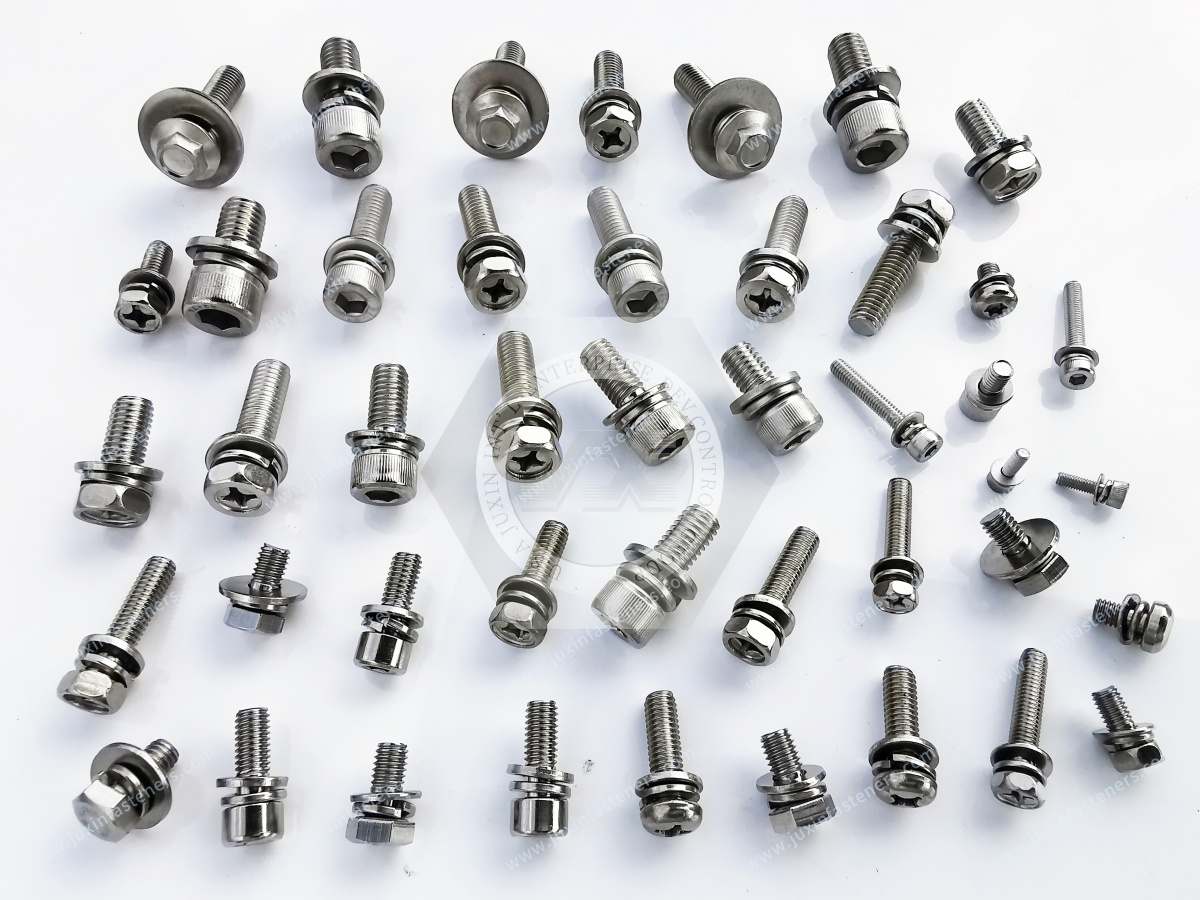
One material-related failure mode that deserves more attention is thread galling.
Stainless steel threaded fasteners can experience adhesive wear during tightening.
In severe cases, the bolt and nut threads can seize together.
Risk can increase with factors such as:
Stainless-on-stainless thread contact
High installation speed
High friction
Excessive tightening
Surface condition
Lack of appropriate lubrication where permitted
Galling is different from corrosion.
A fastener can have excellent corrosion resistance and still seize during assembly.
For stainless threaded assemblies, engineers and production teams should therefore consider installation speed, thread condition, lubrication policy where permitted, mating material and tightening method.
Material selection should address assembly behavior as well as environmental resistance.
A common industrial material decision is whether to use coated carbon steel or stainless steel.
These are not equivalent approaches.
Zinc-nickel coated steel combines a steel substrate with a corrosion-protection system.
Stainless steel obtains much of its corrosion behavior from the alloy itself and its passive surface.
The decision can depend on:
Required mechanical strength
Corrosion environment
Coating specification
Cost target
Thread behavior
Mating material
Production process
Appearance requirements
For some automotive, electrical or industrial assemblies, coated steel can provide an effective engineering solution.
For other applications, stainless steel may be more appropriate.
The correct choice should be based on the specified environment and performance requirement rather than a general assumption that stainless is always superior.
Aluminum alloys are useful where low weight and corrosion behavior are important.
JUXIN supports aluminum in appropriate products such as selected rivet nuts, CNC machined components and drawing-based parts.
Potential advantages include:
Low density
Weight reduction
Good corrosion behavior in suitable environments
Machinability for appropriate alloys
Compatibility with lightweight structures
However, aluminum has lower stiffness and different strength characteristics compared with many steels.
An aluminum fastener should therefore not be substituted for steel simply to reduce weight.
The joint load, thread engagement, fatigue requirements and mating materials must be reviewed.
Aluminum sheet and structures are increasingly common in transportation, electronics, energy and equipment manufacturing.
Fastener selection should consider more than whether the fastener physically fits the hole.
Important questions include:
Is the fastener steel, stainless or aluminum?
Is the environment wet or dry?
Can an electrolyte reach the joint?
Is electrical continuity required?
Is electrical isolation required?
What is the sheet thickness?
Will installation deform the aluminum?
Does the fastener installation require a maximum sheet hardness?
Is coating damage possible during installation?
For rivet nuts and self-clinching hardware, the mechanical relationship between the fastener and aluminum substrate must also be considered.
The mating panel is part of the fastening system.
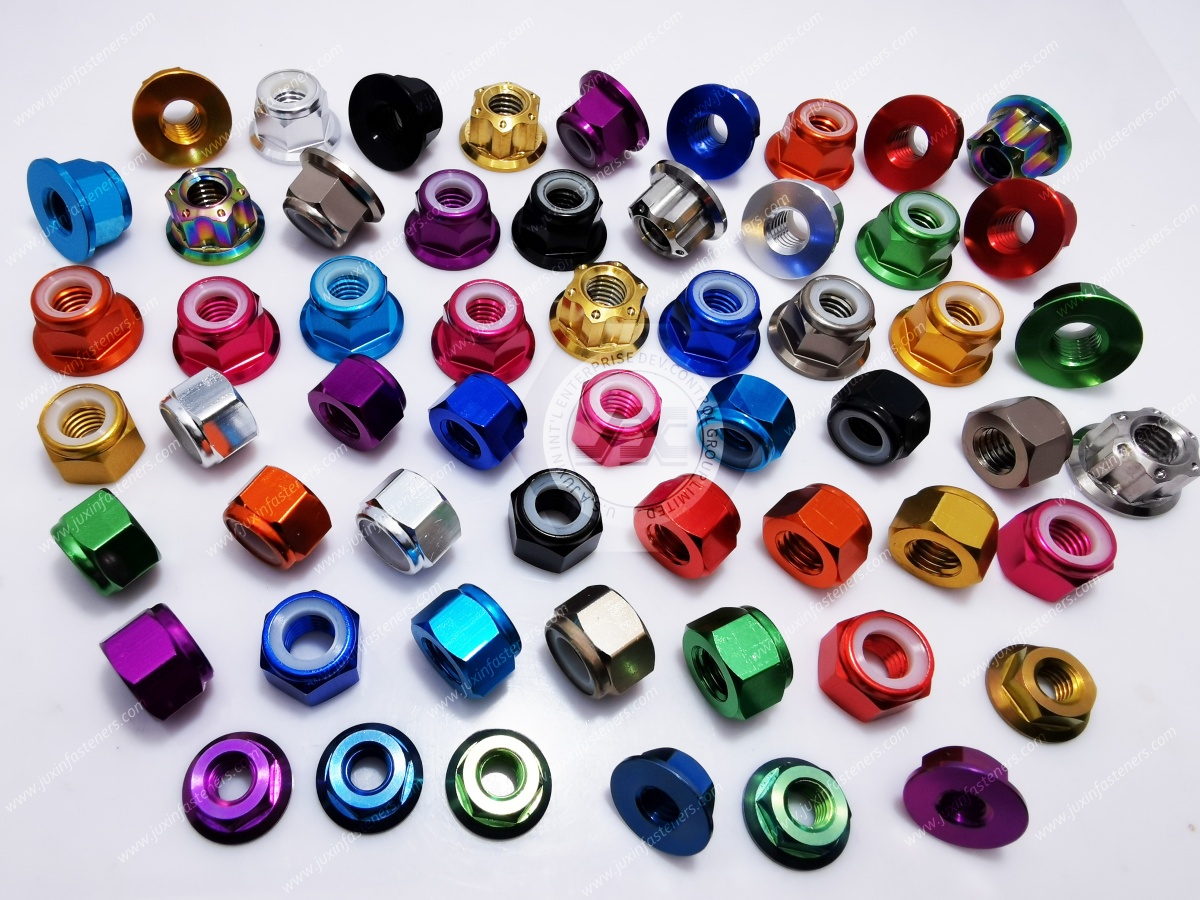
When different metals are placed in electrical contact and exposed to an electrolyte such as water or salt solution, galvanic corrosion can occur.
This matters when combinations such as stainless steel and aluminum are used in outdoor, marine, transportation or industrial equipment.
Risk depends on more than the names of the two metals.
Engineers should consider:
Relative electrochemical behavior
Surface-area relationship
Moisture or electrolyte exposure
Coatings
Joint geometry
Drainage
Electrical isolation
Expected service life
Possible mitigation strategies can include appropriate coatings, isolating washers or polymer components, sealants where suitable, or alternative material combinations.
The correct strategy depends on the complete joint.
Titanium alloys can provide an attractive combination of low density, corrosion resistance and mechanical performance for selected specialized applications.
JUXIN can evaluate titanium drawing-based fasteners and machined components where the project requirements and production route are suitable.
Potential applications may include selected:
Racing vehicle components
Lightweight equipment
Aerospace-related maintenance components
Specialized industrial equipment
Corrosion-sensitive assemblies
Titanium should not be selected merely because it is considered a premium material.
Its higher material and processing cost should be justified by the engineering requirement.
For custom titanium projects, drawings should specify the exact alloy rather than simply stating “titanium.”
PA6 and PA66 are widely used engineering polymers for fastening and retention components.
JUXIN supplies nylon components such as:
Nylon screws
Nylon nuts
Nylon washers
Spacers
Plastic rivets
Snap rivets
Custom molded fastening components
Potential advantages include:
Electrical insulation
Low weight
Corrosion resistance
Reduced risk of scratching mating surfaces
Good manufacturing versatility
However, nylon absorbs moisture.
This can affect:
Dimensions
Stiffness
Strength
Toughness
Long-term assembly behavior
The effect must be considered when tight tolerances or sustained mechanical loads are involved.
PA6 and PA66 are related materials, but they should not automatically be treated as interchangeable.
The selection can depend on:
Operating temperature
Moisture exposure
Required stiffness
Impact behavior
Dimensional stability
Processing requirements
Customer specification
For engineered fasteners, the resin grade matters in addition to the polymer family.
Flame-retardant, reinforced or other modified grades may behave differently from standard unfilled material.
Procurement should therefore avoid approving a material substitution based only on the term “nylon.”
POM, or acetal, is useful for components requiring good dimensional stability, relatively low moisture absorption and low friction.
Potential applications can include:
Spacers
Bushings
Retention components
Precision molded components
Selected fastening hardware
Compared with nylon, POM can be attractive where moisture-related dimensional change is a concern.
However, chemical compatibility, temperature and mechanical loading must still be evaluated.
POM is not simply “better nylon.”
It is a different material with different strengths and limitations.
Polypropylene provides low density and useful chemical resistance for suitable applications.
It can be used for selected plastic clips, rivets and molded retention components.
Its relatively lower stiffness and temperature capability compared with some engineering polymers should be considered.
PP is therefore generally selected because its property combination matches the application, not because it is a universal low-cost substitute.
Polycarbonate can provide useful toughness and dimensional properties for suitable molded components.
Where PC is specified for fastening or retention hardware, engineers should consider chemical exposure, temperature and stress conditions.
Chemical compatibility is especially important because some chemicals can cause stress cracking in susceptible polymers.
PVDF can be attractive for applications requiring strong chemical resistance and corrosion-free non-metallic hardware.
Potential applications can include selected:
Chemical-processing equipment
Electrical systems
Semiconductor-related equipment
Corrosive industrial environments
The requirement should justify the higher material cost compared with commodity engineering polymers.
PVDF should be specified by actual environmental need.
PEEK is a high-performance engineering polymer used where combinations of temperature capability,
chemical resistance and mechanical performance exceed the practical limits of more common plastics.
Potential applications can include selected:
Semiconductor equipment
Electrical equipment
Specialized industrial machinery
High-performance electronics
Chemical environments
PEEK is significantly more expensive than PA66, POM or PP.
It should therefore not be specified simply because it offers higher performance.
The application should require the properties that justify the material.
A polymer fastener can pass an initial assembly test and still lose clamping performance later.
This can occur because polymers exhibit creep under sustained load.
Creep is time-dependent deformation under continuous stress.
Its significance increases with factors such as:
Higher temperature
Higher sustained stress
Long service duration
Material type
Moisture condition
For this reason, metal and polymer fasteners should not be compared only by short-term tensile strength.
Where a polymer component carries continuous clamp load, engineers should evaluate whether long-term deformation can affect the joint.
This is especially important for electrical equipment, electronics, HVAC systems and other assemblies expected to operate continuously for years.
Metal fasteners are generally preferred where the application requires higher structural load capacity, stable preload or high mechanical strength.
Polymer fasteners can be advantageous where the application prioritizes:
Electrical isolation
Corrosion resistance
Low weight
Non-metallic contact
Surface protection
Chemical resistance with the appropriate resin
Some assemblies benefit from combining the two.
For example, a metal bolt may provide structural load while a polymer washer or spacer provides electrical or galvanic isolation.
The correct design does not always require choosing exclusively between metal and plastic.
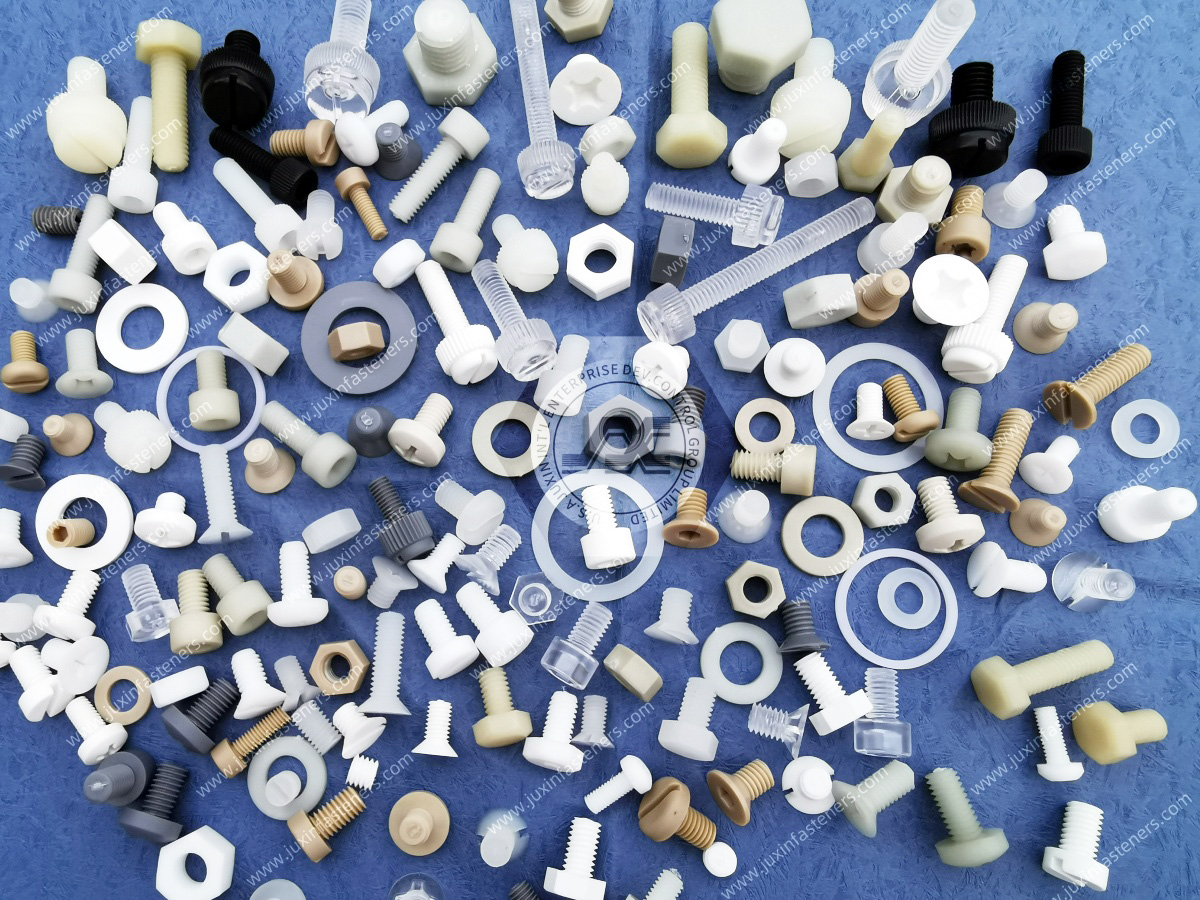
Automotive applications may use:
Carbon steel weld nuts
Alloy steel threaded components
Zinc-nickel coated fasteners
Stainless components
Aluminum components
Polymer clips and fasteners
Custom machined components
Material selection depends on load, corrosion zone, weight target, temperature and assembly process.
For weld nuts and studs, weldability and surface condition are particularly important.
AI data center equipment combines metal cabinets, electronics, power distribution and cooling infrastructure.
Fastener material decisions can involve:
Carbon steel for structural cabinet hardware
Stainless steel where corrosion requirements justify it
Nylon or polymer hardware for electrical isolation
Threaded inserts for polymer components
Custom metal components for power and cooling assemblies
Electrical function should be considered alongside mechanical requirements.
Telecommunications equipment can operate indoors, outdoors or in partially exposed environments.
Fastener material selection may therefore require evaluation of:
Humidity
Outdoor weather
Electrical isolation
UV exposure for polymers
Corrosion
Maintenance life
Stainless, coated steel and polymer components each have appropriate roles depending on the subsystem.
Semiconductor equipment can use stainless steel, aluminum, engineering polymers and drawing-based precision components.
However, cleanroom, vacuum, outgassing, particle or chemical requirements must be explicitly specified.
A material such as stainless steel or PEEK should never automatically be described as semiconductor-compatible without knowing the actual process environment.
Medical equipment can use stainless steel, aluminum and engineering polymers in appropriate mechanical assemblies.
If a project requires:
Biocompatibility
Sterilization resistance
Medical-grade resin
Regulatory documentation
these requirements must be stated separately.
A commercial grade of a particular polymer or metal should not automatically be represented as suitable for regulated medical use.
Food-processing and packaging equipment can expose fasteners to moisture, washdown and cleaning chemicals.
Stainless steel and selected engineering polymers may be suitable depending on the installation.
For direct food-contact applications, customer-specified regulatory and material requirements must be identified explicitly.
Rail equipment can combine steel, stainless steel, aluminum and polymer components across interior and exterior assemblies.
Relevant considerations can include:
Vibration
Corrosion
Weight
Fire-performance requirements for polymer components
Electrical requirements
Project-specific documentation
Material selection should follow the actual installation location rather than a generic “railway-grade” designation.
Marine environments increase the importance of chloride exposure and galvanic compatibility.
316 stainless steel may be considered for appropriate applications, but material selection still depends on actual exposure and joint design.
Dissimilar-metal combinations require particular attention in wet or salt-containing environments.
HVAC equipment combines sheet metal, moisture, temperature cycling and vibration.
Depending on the assembly, appropriate materials can include:
Coated carbon steel
Stainless steel
Nylon components
Other engineering polymers
Service environment and maintenance requirements should determine the final specification.
Electrical equipment may require fasteners to perform mechanical and electrical functions simultaneously.
Polymer screws, washers and spacers can provide electrical isolation.
Metal components can provide higher mechanical load capability.
The material decision should therefore consider:
Voltage environment
Grounding requirements
Insulation requirement
Temperature
Flame-performance requirement where applicable
Mechanical load
A practical first-stage comparison is:
Need cost-effective mechanical strength and forming capability?
Evaluate carbon or alloy steel.
Need general corrosion resistance?
Evaluate an appropriate stainless steel grade or coated steel according to the environment.
Need greater chloride resistance than typical 304 applications?
Evaluate 316 where the environment justifies it.
Need weight reduction?
Evaluate aluminum or titanium only after checking mechanical requirements.
Need electrical isolation?
Evaluate PA6, PA66, POM or another appropriate engineering polymer.
Need low moisture absorption and dimensional stability in a plastic component?
Evaluate whether POM better matches the application than nylon.
Need strong chemical resistance from a non-metallic component?
Evaluate materials such as PVDF according to the chemical environment.
Need high-performance polymer capability at elevated temperature or aggressive conditions?
Evaluate PEEK where its properties are technically justified.
This matrix is an initial screening tool. Final material selection requires the actual joint and operating conditions.
Do not specify only:
“Stainless steel.”
“Black coating.”
“Nylon.”
“Titanium.”
Instead provide the exact requirement where known.
A professional RFQ should include:
Fastener drawing or applicable standard
Exact material grade
Applicable material specification
Required mechanical properties
Heat treatment where applicable
Hardness where applicable
Surface treatment
Corrosion requirement
Operating temperature
Chemical exposure
Mating material
Electrical requirements
UV exposure where applicable
Flammability requirement for polymer components where applicable
Required material documentation
Sample quantity
Production quantity
Estimated annual usage
This reduces material substitutions, quotation ambiguity and qualification delays.
Procurement teams sometimes receive supplier proposals such as:
304 instead of 316
PA6 instead of PA66
POM instead of nylon
Zinc-plated steel instead of stainless steel
Aluminum instead of steel
These substitutions may reduce cost or improve availability.
They may also change performance.
Before approving a material substitution, compare:
Mechanical requirements
Corrosion environment
Temperature
Chemical exposure
Electrical function
Mating material
Manufacturing process
Long-term behavior
Customer specification
Required certification
A material substitution should be treated as an engineering decision, not merely a purchasing decision.
JUXIN Fasteners supplies metal and polymer fastening solutions for OEM and industrial manufacturing.
Our product scope includes weld nuts, weld studs, rivet nuts, blind rivets, self-clinching hardware, locking nuts, threaded inserts,
nylon and polymer fasteners, plastic rivets, CNC machined components and drawing-based custom parts.
If the material has already been specified, send us the drawing, grade, finish, quantity and documentation requirements for review and quotation.
If the material has not yet been finalized, provide the application conditions including load, mating material, temperature, corrosion exposure,
chemicals, electrical requirements and expected production quantity.
The engineering selection path is:
Application → Environment → Joint Function → Material → Surface Treatment → Fastener Design → Validation → RFQ
Email: info@juxinfasteners.com
Website: www.juxinfasteners.com
JUXIN FASTENERS — Metal and Polymer Fastening Solutions for Global Industrial Manufacturing
 MORE NEWS
Oct. 01, 2026
Oct. 01, 2026
Contact Us
Tel.:
+86 020 8621 0320
+86 020 3121 6067
E-mail:
Technical Support:
Navigation
SEND INQUIREY