
Call Us
+86 136 6007 9809
Call Us
+86 136 6007 9809

Oct. 12, 2026
HVAC Sheet Metal Fasteners & Vibration-Resistant Hardware for Commercial Air Handling Units
Commercial air handling units (AHUs), rooftop HVAC equipment, industrial ventilation systems and climate control cabinets rely on fastening components to connect sheet metal panels,
equipment frames, access doors, filter supports and mechanical assemblies.
These systems operate under a combination of airflow pressure, fan vibration, thermal expansion, condensation and maintenance requirements.
The fastening method can influence enclosure stiffness, gasket compression, installation efficiency and long-term serviceability.
For HVAC equipment manufacturers, selecting the correct sheet metal fastener is not simply a matter of matching a screw diameter to a mounting hole.
Panel thickness, material hardness, installation access, expected loading and production volume all influence the most suitable fastening solution.
JUXIN FASTENERS supplies industrial fastening components, including self-clinching nuts and standoffs, blind rivet nuts, prevailing-torque lock nuts,
stainless steel screws and drawing-based custom hardware for OEM equipment applications.
This guide explains how to select HVAC sheet metal fasteners for commercial air handling units, with practical engineering considerations for enclosure design,
vibration resistance, gasket sealing, automated assembly and supplier qualification.
HVAC Equipment Applications and Fastener Selection
Commercial HVAC equipment includes a variety of sheet metal and mechanical assemblies.
| HVAC Application | Potential Fastener Solution | Main Engineering Requirement |
|---|---|---|
| AHU control cabinets | Self-clinching nuts and standoffs | Reusable threads and accurate component mounting |
| Fan housing brackets | Bolts and prevailing-torque lock nuts | Joint preload and vibration resistance |
| Filter support frames | Machine screws, nuts and custom hardware | Alignment and maintenance access |
| Sheet metal access panels | Retained screws or other serviceable fasteners | Repeated opening and secure panel attachment |
| Rooftop equipment enclosures | Corrosion-resistant screws, nuts and washers | Outdoor durability |
| Closed-section sheet metal assemblies | Blind rivet nuts | One-sided installation |
| Electrical control panels | Self-clinching studs and threaded standoffs | Efficient component installation |
| Equipment mounting brackets | Bolts, lock nuts and washers | Structural loading and joint stability |
Fastener selection should begin with the actual panel design and assembly process.
A fastener suitable for a removable electrical enclosure panel may not be appropriate for a heavily loaded fan support or structural mounting bracket.
Self-Clinching Nuts for HVAC Sheet Metal Cabinets
Self-clinching nuts provide reusable internal threads in suitable ductile sheet metal.
During installation, the fastener is pressed into a correctly prepared mounting hole. The surrounding sheet material flows into the fastener's retention features, creating a mechanical attachment.
This technology can be useful for HVAC control cabinets, electrical equipment panels and other sheet metal components that require repeated screw installation.
Potential advantages include:
Reusable internal threads without conventional loose nuts
Reduced need for backside access during final assembly
Compact mounting geometry
Compatibility with selected automated insertion processes
Reduced handling of separate nuts during equipment assembly
However, successful installation depends on more than the nominal sheet thickness.
Minimum Sheet Thickness and Material Hardness
Self-clinching fasteners require an appropriate relationship between the fastener design and the parent sheet material.
Critical variables include:
Minimum sheet thickness
Sheet material hardness
Hole diameter and tolerance
Minimum edge distance
Installation force
Fastener material and geometry
Coating condition
Required push-out and torque-out performance
Engineering insight: A self-clinching nut designed for one sheet material may not achieve the same retention performance in a different sheet with identical thickness.
For example, galvanized steel, stainless steel and aluminum panels may require different fastener configurations because their hardness and deformation behavior differ.
A fastener must not be selected solely because its catalog description includes the correct thread size.
The specific fastener's approved sheet thickness and hardness range should be confirmed before production.
Installation in Galvanized Sheet Metal
Galvanized steel is commonly used in HVAC equipment enclosures.
When selecting self-clinching hardware for galvanized panels, engineers should consider the effect of the sheet coating and the base metal properties.
Installation should follow the applicable fastener specification.
Incorrect hole preparation, insufficient installation force or incompatible sheet hardness may cause reduced retention or panel distortion.
For OEM production, representative installation trials and inspection of the completed assembly are advisable.
Self-Clinching Standoffs for HVAC Electrical Panels
Self-clinching standoffs are useful where electrical or mechanical components must be mounted at a controlled distance from a sheet metal panel.
Potential applications include:
HVAC control boards
Electronic controller housings
Sensor mounting assemblies
Electrical equipment brackets
Internal equipment support panels
Important selection factors include thread size, standoff length, panel thickness and perpendicularity.
Engineering insight: A standoff's length tolerance can affect the alignment of multiple mounting points across a large electrical panel.
When several standoffs support one rigid component, the combined effect of panel flatness and standoff height variation should be considered.
The OEM drawing should identify the dimensions that directly influence mounting alignment.
Blind Rivet Nuts for One-Sided HVAC Assembly
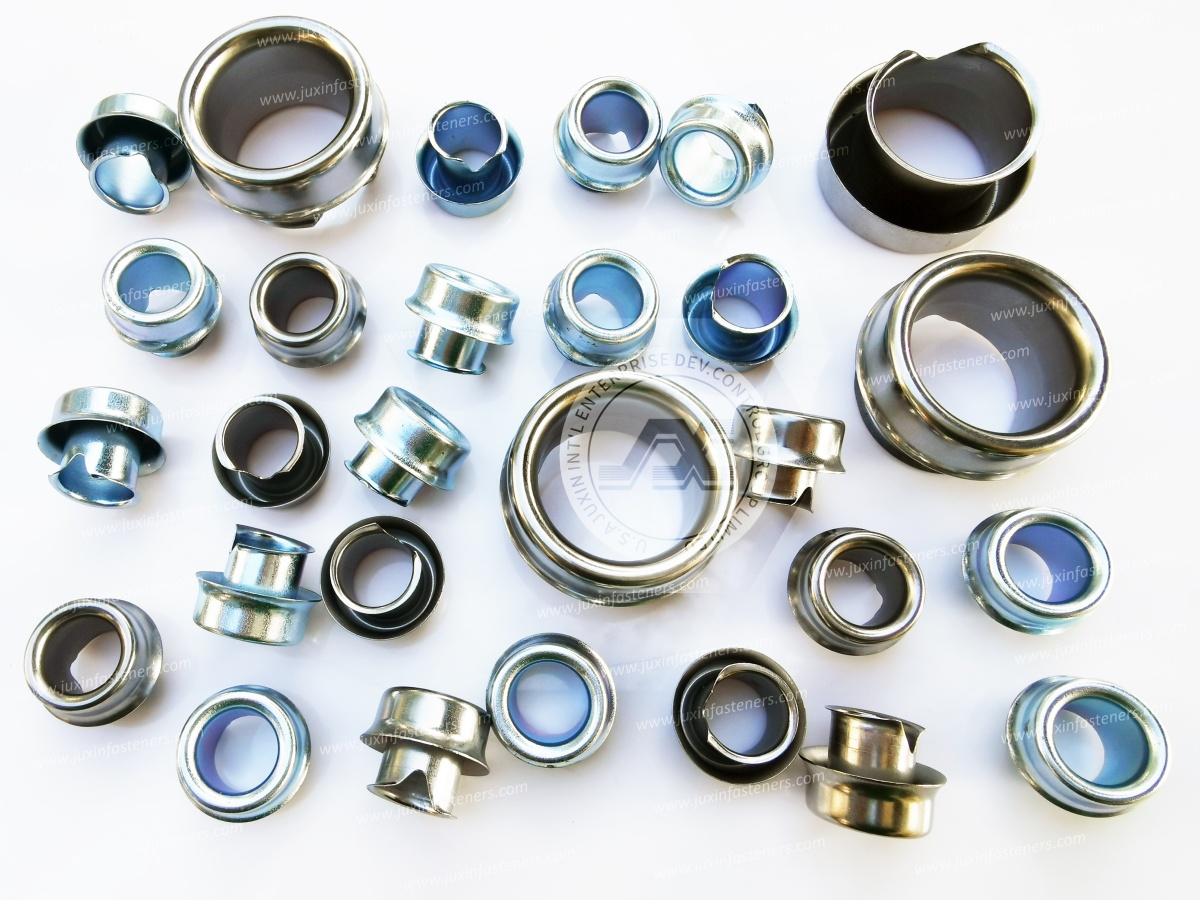
Blind rivet nuts provide internal threads in suitable panels, tubes or hollow sections where installation access is available from only one side.
They may be considered for:
Closed-section HVAC frames
Equipment housings with limited backside access
Sheet metal brackets
Serviceable mounting points
Selected ventilation equipment structures
Blind rivet nuts are available in different body geometries, including round, knurled and hexagonal designs.
The correct body style depends on hole geometry, material, required anti-rotation performance and installation equipment.
Self-Clinching Nuts vs. Blind Rivet Nuts
These fastener types are not direct substitutes in every application.
| Selection Factor | Self-Clinching Nut | Blind Rivet Nut |
|---|---|---|
| Installation principle | Press-in sheet metal deformation | Mechanical setting and body deformation |
| Typical installation stage | Often installed before final enclosure assembly | Can be installed into accessible finished structures |
| Sheet requirements | Requires suitable thickness and hardness | Requires suitable grip range and hole geometry |
| Backside access | Usually needed for installation tooling | Generally not needed |
| Reusable internal thread | Yes | Yes |
| Main design concern | Push-out, torque-out and sheet distortion | Spin-out, pull-out and setting quality |
Engineering insight: The best fastening method may depend more on the factory assembly sequence than on the finished joint geometry.
If the sheet metal panel is flat and accessible before enclosure assembly, a self-clinching nut may offer production advantages.
If the mounting location is inside a completed hollow section, a blind rivet nut may be more practical.
The final choice should be validated against mechanical requirements and manufacturing conditions.
Vibration-Resistant Fasteners for Fans and HVAC Equipment
Commercial air handling units may contain rotating fans, motors and other mechanical equipment that generate vibration.
Vibration can contribute to loosening in threaded joints when the joint design or installation conditions are unsuitable.
Potential solutions include:
All-metal prevailing-torque lock nuts
Nylon-insert lock nuts where compatible
Properly designed preloaded bolted joints
Suitable washers and locking arrangements
Application-specific retained hardware
All-Metal Prevailing-Torque Lock Nuts
All-metal prevailing-torque lock nuts provide resistance to rotational loosening through a mechanical locking feature.
Depending on the specific design, applicable standards may include ISO 7042 and related product specifications.
These nuts may be considered for selected fan brackets, motor supports and vibration-sensitive equipment assemblies.
However, prevailing torque does not guarantee that the joint will maintain its original clamp load under all operating conditions.
Why Preload Matters
A threaded joint may lose preload through:
Settlement of contacting surfaces
Embedment of coatings
Deformation of clamped materials
Thermal cycling
Joint separation
Inadequate initial tightening
A locking nut can resist rotational loosening without preventing every form of preload loss.
Engineering insight: Vibration-resistant hardware should be selected together with the joint design, not used as a replacement for proper clamping force.
For demanding applications, engineers should evaluate the fastener, mating components, installation procedure and actual operating vibration.
Nylon-Insert vs. All-Metal Lock Nuts
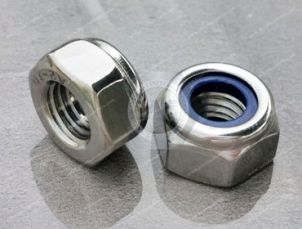
Nylon-insert lock nuts and all-metal prevailing-torque lock nuts offer different locking mechanisms.
Nylon-insert designs may be suitable for many moderate-temperature equipment applications.
All-metal designs may be considered where the operating environment or customer specification makes a polymer locking element unsuitable.
Selection should consider:
Operating temperature
Chemical exposure
Installation torque
Reuse requirements
Thread size and pitch
Corrosion protection
Equipment maintenance procedures
Neither design should be described as universally vibration-proof.
Fastener Selection and Air Leakage in HVAC Enclosures
Air leakage is an important design consideration for commercial air handling units.
Leaks may occur around access doors, removable panels, seams and other enclosure interfaces.
Fasteners influence the mechanical compression of sealing materials, but the complete sealing performance depends on the enclosure design.
Relevant variables include:
Gasket material
Gasket thickness
Compression characteristics
Panel stiffness
Fastener spacing
Joint geometry
Installation torque
Differential air pressure
Gasket Compression and Fastener Spacing
A gasket requires appropriate compression to perform its intended sealing function.
Insufficient compression may allow air leakage.
Excessive compression may damage the gasket, distort thin panels or reduce the effectiveness of the sealing arrangement.
Fastener spacing also matters.
If attachment points are too far apart, a flexible panel may bow between fasteners and produce uneven gasket contact.
Engineering insight: Increasing tightening torque is not always an effective solution for air leakage.
If the underlying problem is insufficient panel stiffness or excessive fastener spacing, higher torque may create localized deformation without producing uniform gasket compression.
The correct solution may involve changes to panel geometry, gasket selection, attachment spacing or the fastening arrangement.
Air leakage performance must be validated at the enclosure or equipment level.
A fastener supplier cannot guarantee the airtightness of an assembled AHU solely through the choice of screws or nuts.
Thread Stripping in Thin-Gauge HVAC Sheet Metal
Thin sheet metal presents challenges when conventional screws are used to create or engage threads directly in the panel.
Potential failure mechanisms include:
Thread stripping
Hole enlargement
Panel deformation
Reduced retention after repeated servicing
Inconsistent installation torque
The suitability of direct-threaded sheet metal fastening depends on sheet thickness, material properties, screw design and required load.
For applications requiring repeated disassembly, a separate threaded fastener such as a self-clinching nut or blind rivet nut may provide a more suitable solution.
However, these alternatives must also be evaluated for their own installation and retention limits.
Corrosion Protection for Rooftop HVAC Equipment
Rooftop HVAC units may be exposed to rain, condensation, humidity, atmospheric contaminants and coastal environments.
Corrosion can affect fastener appearance, serviceability and mechanical performance.
Potential material and finish options include:
Zinc-plated carbon steel
Zinc-nickel-coated steel where specified
Zinc-flake-coated steel
Stainless steel
Customer-specified corrosion-resistant finishes
The correct choice depends on the operating environment, material compatibility and equipment design.
A2 and A4 Stainless Steel
A2 stainless steel fasteners are commonly associated with 304-type stainless steel compositions.
A4 stainless steel fasteners are commonly associated with molybdenum-bearing 316-type compositions.
Applicable mechanical property requirements for stainless steel fasteners are covered by relevant parts of ISO 3506.
A4 may offer improved resistance in certain chloride-containing environments, but it is not immune to corrosion.
The material should be selected according to the actual exposure conditions.
Salt Spray Testing and ASTM B117
ASTM B117 defines a laboratory salt spray test method.
Test results may be useful when evaluating a specified coating system.
However, salt spray hours should not be interpreted as a direct prediction of outdoor service life.
Specific corrosion test requirements must be agreed upon for the product and finish being quoted.
Galvanic Corrosion in Mixed-Metal HVAC Assemblies
HVAC equipment may combine galvanized steel panels, stainless steel screws and aluminum structural members.
When dissimilar metals are electrically connected in the presence of an electrolyte, galvanic corrosion may occur.
Risk depends on the material combination, exposed surface areas and operating environment.
Potential mitigation measures include:
Compatible coatings
Insulating washers or barriers
Suitable material combinations
Moisture-management details
Joint designs that reduce water retention
The correct strategy should be evaluated for the actual assembly.
Custom HVAC Fasteners and Drawing-Based OEM Hardware
Standard catalog fasteners may not satisfy every HVAC equipment design.
Custom components may be considered where equipment manufacturers require:
Nonstandard lengths
Special thread configurations
Modified head geometry
Custom studs or spacers
Drawing-specific washers
Special mounting hardware
Controlled dimensions for automated assembly
JUXIN FASTENERS supports drawing-based sourcing and feasibility review for industrial fastening components.
The appropriate manufacturing method depends on the component design.
Cold forming may be suitable for certain fastener geometries and production volumes.
CNC machining may be appropriate for components requiring more complex profiles or controlled dimensional features.
For OEM projects, the manufacturing approach should be evaluated against the drawing, material requirements and expected order volume.
Production Efficiency in HVAC Sheet Metal Assembly
Production managers and manufacturing engineers must balance fastening reliability with installation speed and repeatability.
Several factors can influence assembly cost.
Fastener Feeding and Installation
The geometry and consistency of fasteners can affect compatibility with automated feeding and insertion equipment.
For self-clinching fasteners, installation tooling must be compatible with the fastener and sheet material.
Hole Preparation
Incorrect hole diameter or poor hole quality can affect the retention performance of self-clinching nuts and blind rivet nuts.
The production process should include appropriate hole preparation and inspection.
Assembly Sequence
The stage at which a fastener is installed can influence labor requirements.
A self-clinching nut installed before enclosure assembly may eliminate the need to handle a loose nut during final assembly.
Maintenance Access
HVAC access panels may be opened repeatedly for inspection, filter replacement and servicing.
Fastener selection should consider whether the joint is intended for frequent disassembly.
Total Assembly Cost
The lowest fastener unit price does not necessarily result in the lowest total manufacturing cost.
Installation time, tooling, scrap, rework and maintenance requirements should be considered when comparing fastening options.
International Standards and Technical Requirements
The applicable standard depends on the actual fastener type.
| Fastener or Requirement | Potentially Relevant Standard |
|---|---|
| Carbon steel bolt mechanical properties | ISO 898-1 |
| Carbon steel nut mechanical properties | ISO 898-2 |
| Stainless steel fastener mechanical properties | Applicable parts of ISO 3506 |
| All-metal prevailing-torque nuts | ISO 7042 where applicable |
| Nylon-insert prevailing-torque nuts | Applicable ISO product standards |
| Metric thread specifications | Applicable ISO metric thread standards |
| Inch-series threaded fasteners | Applicable ASME/ANSI standards |
| Salt spray testing | ASTM B117 |
| Material inspection documents | EN 10204 where contractually specified |
Self-clinching fasteners and blind rivet nuts must also be evaluated according to their specific product specifications and installation requirements.
A general ISO or DIN reference should not be used to imply that every proprietary self-clinching design follows the same geometry.
Metric, UNC, UNF and other thread systems are not directly interchangeable merely because their nominal diameters are similar.
OEM Supplier Qualification and Alternative Sourcing
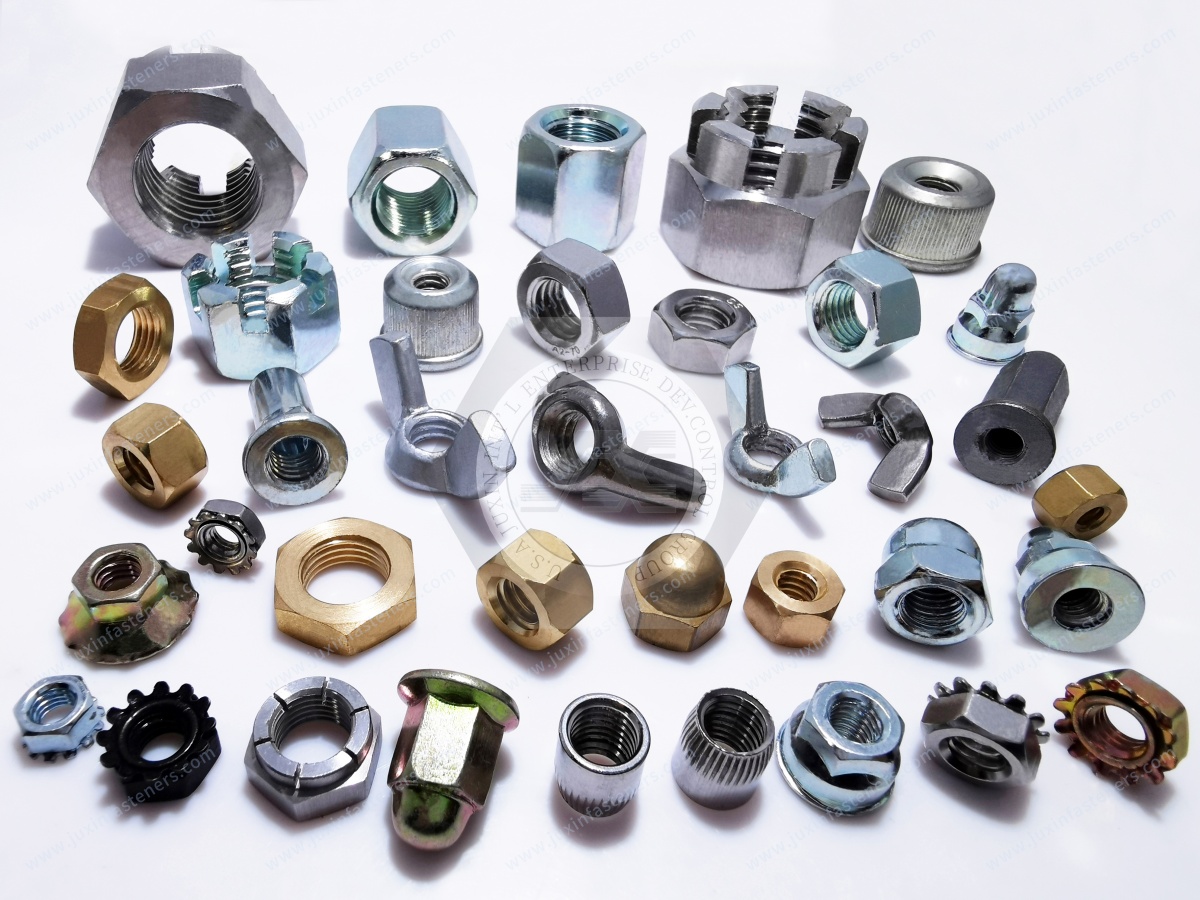
HVAC equipment manufacturers may seek alternative suppliers for sheet metal fasteners, locking nuts and custom components.
Supplier qualification should consider:
| Evaluation Area | Key Questions |
|---|---|
| Product geometry | Does the fastener match the drawing and installation requirements? |
| Sheet compatibility | Is the fastener suitable for the specified panel thickness and material? |
| Mechanical performance | Are push-out, torque-out or other relevant requirements defined? |
| Corrosion protection | Does the finish meet the agreed environmental specification? |
| Assembly compatibility | Can the fastener be installed using the intended equipment? |
| Quality inspection | Which dimensions and functional characteristics are critical? |
| Commercial supply | What are the MOQ, annual demand and delivery requirements? |
| Documentation | Which inspection reports or material records are required? |
For alternative sourcing, dimensional similarity alone may not establish functional interchangeability.
Two self-clinching nuts with the same thread size can differ in installation force, retention geometry and compatible sheet hardness.
Production trials may be necessary before approving a substitute.
Request HVAC Sheet Metal Fasteners and Custom Hardware
JUXIN FASTENERS supplies industrial fasteners and supports OEM drawing review for commercial HVAC equipment applications.
For air handling units, ventilation equipment, rooftop HVAC cabinets and sheet metal assemblies, please provide:
2D drawings and available 3D models
Required fastener type and thread size
Panel material and thickness
Hole dimensions and installation access
Mechanical loading or retention requirements
Required corrosion protection
Installation equipment or assembly method
Prototype quantity and annual demand
Required inspection and packaging specifications
Our team can review the supplied requirements to discuss suitable standard or custom fastening options and quotation feasibility.
Website: www.juxinfasteners.com
OEM Technical Review & RFQ: info@juxinfasteners.com
Send your drawings and purchasing requirements to discuss fastening solutions for your next HVAC equipment project.
Related JUXIN FASTENERS Engineering Solutions
Self-Clinching Nuts for Railway Interiors & HVAC Sheet Metal Cabinets — thin-sheet fastening and reusable internal threads.
All-Metal Prevailing-Torque Lock Nuts for High-Vibration Industrial Assemblies — vibration-resistant threaded fastening.
Blind Rivet Nuts for Sheet Metal Enclosures & One-Sided Assembly — one-sided threaded installation.
Custom Cold-Headed Fasteners & Special Formed Parts for Industrial OEMs — drawing-based custom fastener sourcing.
These related topics provide additional guidance on sheet metal fastening, joint reliability and OEM production requirements.
 MORE NEWS


Oct. 13, 2026
Contact Us
Tel.:
+86 020 8621 0320
+86 020 3121 6067
E-mail:
Technical Support:
Navigation
SEND INQUIREY