
Call Us
+86 136 6007 9809
Call Us
+86 136 6007 9809

Aug. 15, 2026
Medical equipment increasingly uses engineered polymers for housings, covers, electronic modules, diagnostic equipment, laboratory instruments and other precision assemblies.
These polymer components often need durable internal threads for screws, brackets, covers, electronics and serviceable components.
A metal threaded insert can provide a reusable internal thread without requiring the entire component to be manufactured from metal.
However, selecting a threaded insert for medical equipment involves more than choosing the correct thread size.
Engineers may need to consider:
Polymer material and grade
Boss geometry
Insert geometry
Installation process
Pull-out resistance
Torque resistance
Repeated assembly
Temperature
Cleaning chemicals
Sterilization exposure where applicable
Corrosion
Burr and particle control
Surface condition
Material documentation
Traceability
Packaging
Customer-specific quality requirements
The correct engineering path is:
Application → Device Classification & Requirements → Polymer → Boss Geometry → Insert Material → Insert Geometry → Installation
→ Cleanliness → Environment → Validation → Documentation → Supplier Qualification
The central principle is:
Precision Insert ≠ Qualified Medical Device Component.
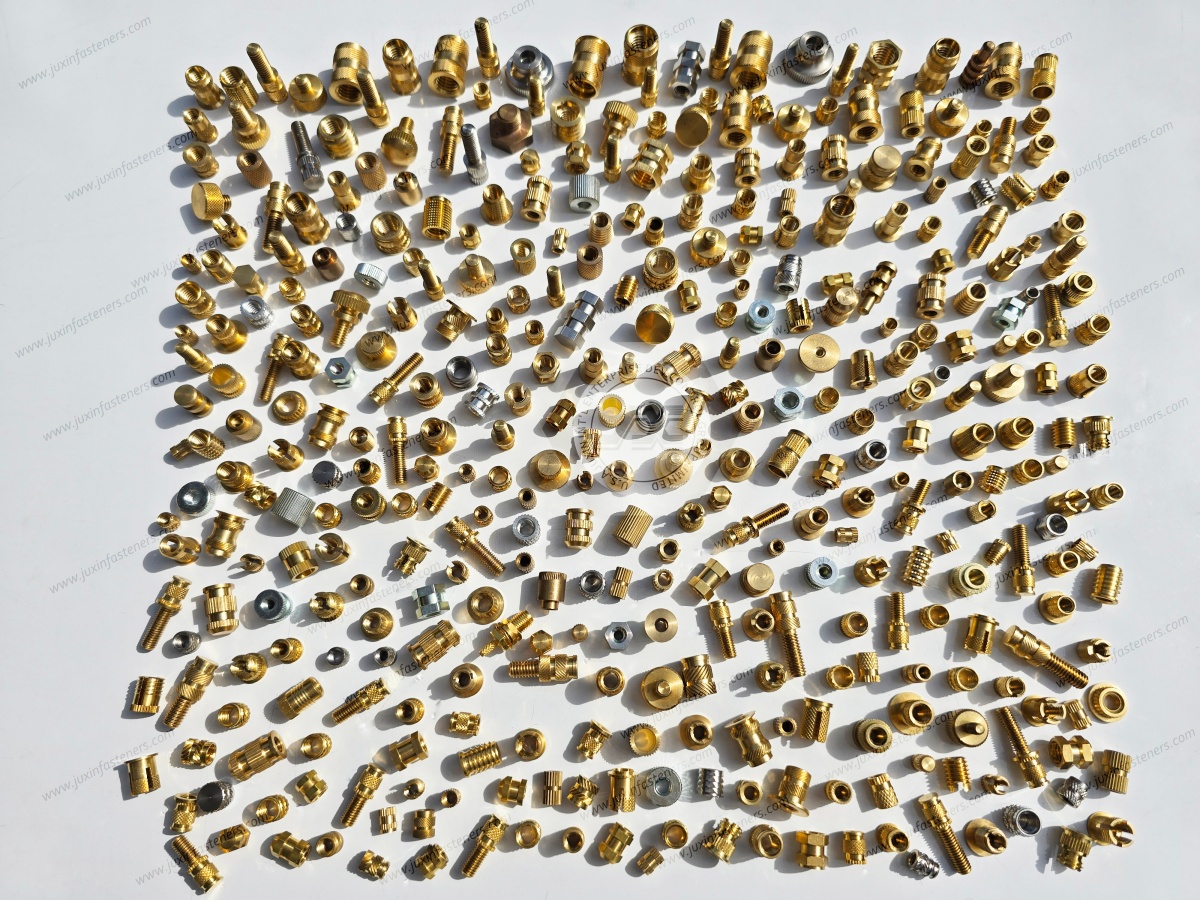
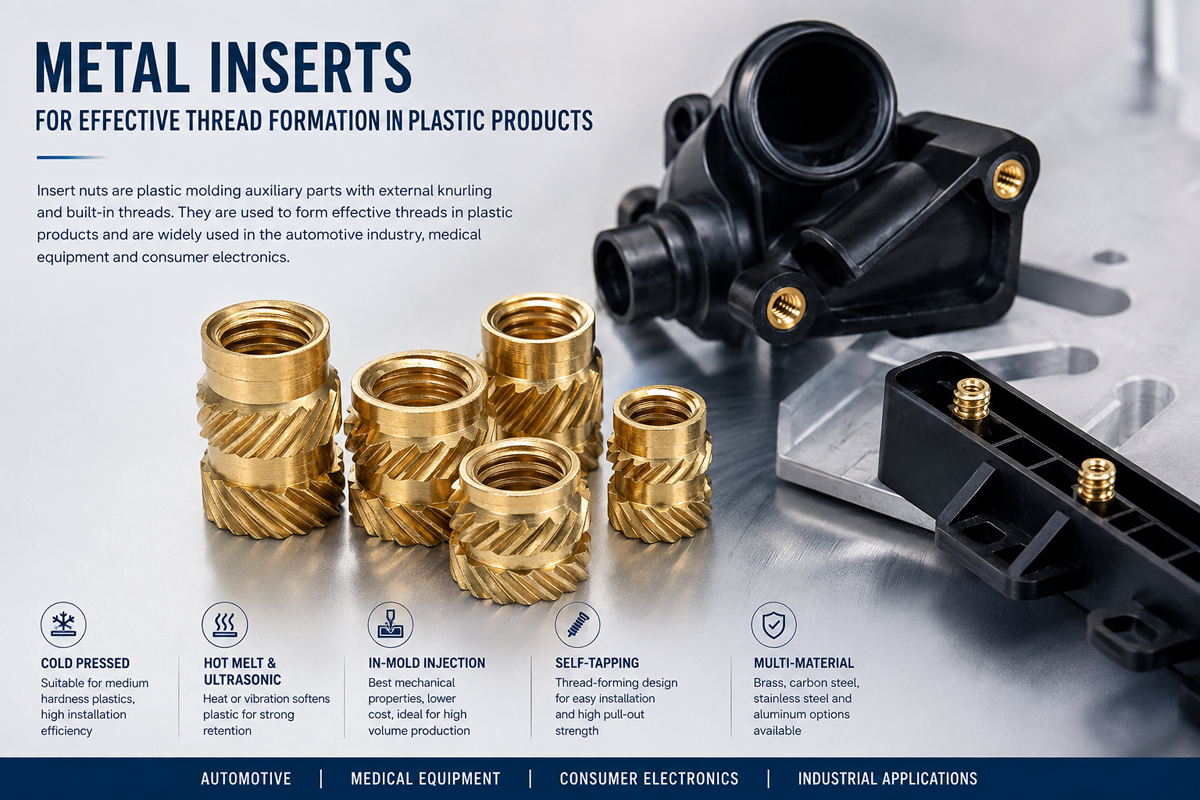
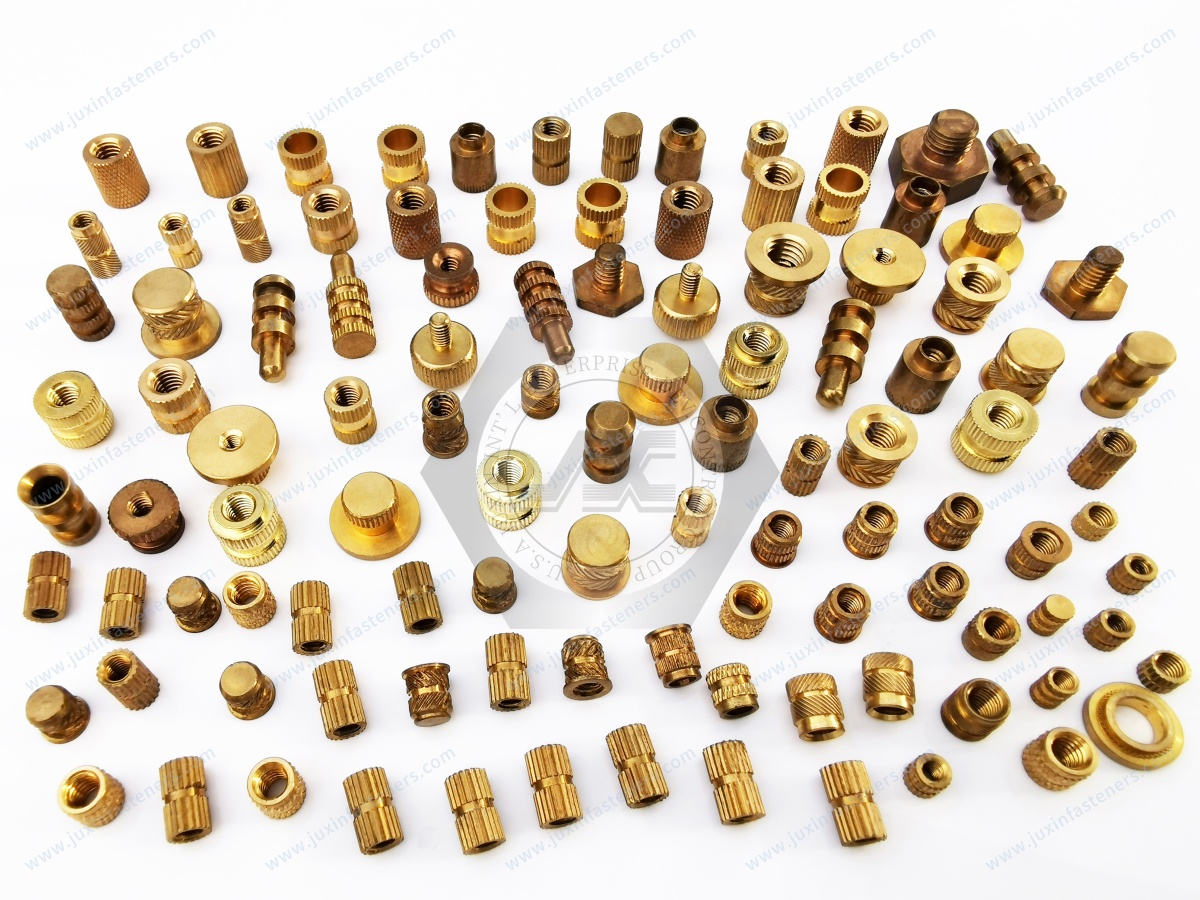
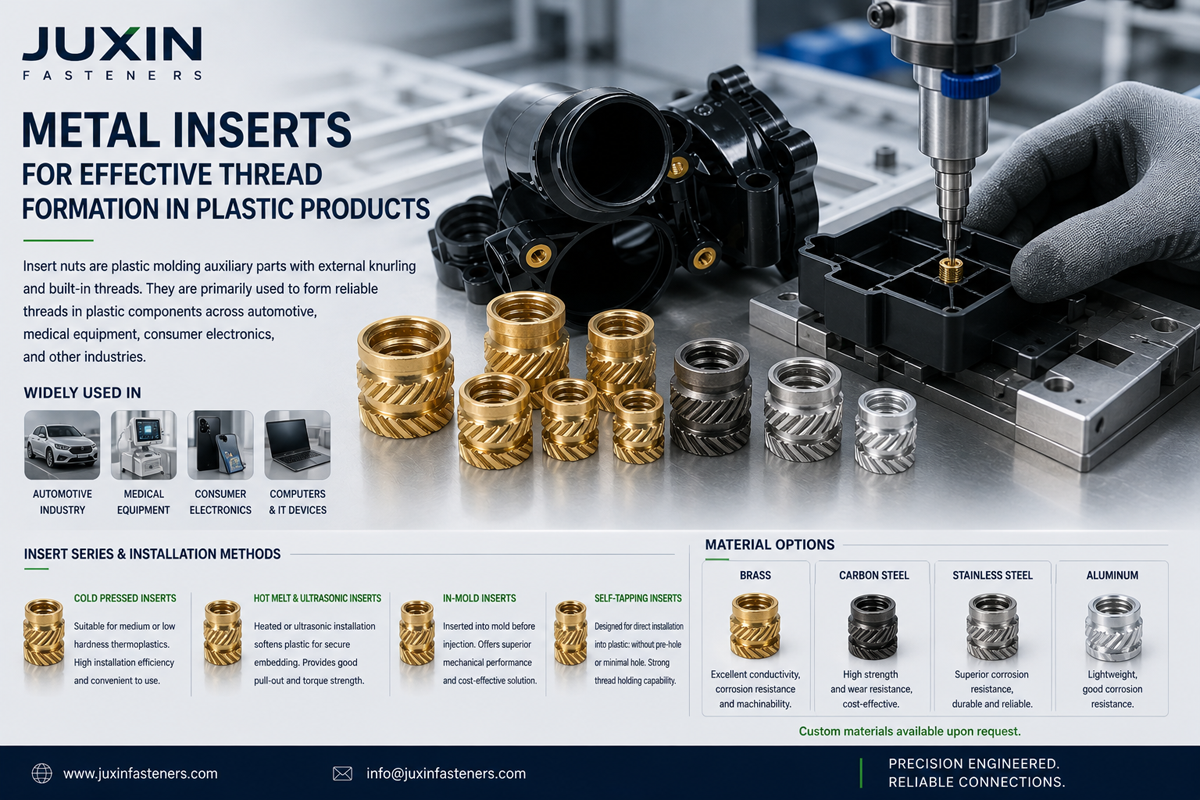
JUXIN FASTENERS supplies threaded inserts for engineered plastic assemblies, including heat-set inserts, ultrasonic insert solutions,
tapered threaded inserts, stainless steel inserts and drawing-based custom fastening components.
For medical equipment projects, the actual application, material, cleanliness, documentation and customer qualification requirements should be reviewed before supply suitability is confirmed.
Start with the device and plastic component—not the insert catalogue.
Define:
What does the component do?
Is the insert used in a medical device, laboratory instrument or supporting equipment?
Does the application have customer-specific or regulatory requirements?
What polymer and exact grade are used?
What boss geometry is available?
Which installation process is planned?
What pull-out and torque resistance are required?
Will the joint be repeatedly opened for maintenance?
Will the component be cleaned, disinfected or sterilized?
What chemicals and temperatures will it encounter?
What cleanliness and particle-control requirements apply?
What material documentation and traceability are required?
What packaging requirements apply?
Only after these questions are answered should the insert material and geometry be finalized.
A reliable selection path is:
Device Requirement + Polymer + Boss + Load + Installation + Environment + Cleanliness → Insert Specification
rather than:
Thread Size → Insert Selection
Medical and laboratory equipment may require repeated access for:
Maintenance
Calibration
Component replacement
Cleaning
Servicing
Inspection
Product upgrades
Direct plastic threads can be suitable for some applications, but repeated installation and removal may cause:
Thread wear
Local deformation
Thread stripping
Loss of assembly consistency
A metal threaded insert can provide a durable internal thread for serviceable polymer components.
But:
Metal Thread ≠ Metal Joint.
The insert still transfers load into the surrounding polymer.
If the plastic boss cracks, creeps or loses retention, a perfectly manufactured metal thread cannot prevent joint failure.
The actual load path is:
Screw → Internal Insert Thread → Insert Body → Retention Geometry → Polymer → Boss → Plastic Component
Failure can occur at any interface.
Potential failure modes include:
Screw-thread damage
Internal insert-thread damage
Insert pull-out
Insert rotation
Boss cracking
Boss splitting
Polymer creep
Loss of clamp load
Corrosion
Installation damage
Therefore:
Insert Strength ≠ Installed Joint Strength.
The insert and plastic component must be designed and validated together.
Threaded inserts may be evaluated for selected components in:
Potential applications include:
Equipment housings
Covers
Electronic modules
Internal mounting systems
Serviceable panels
Possible applications include:
Plastic enclosures
Display housings
Electronic mounting features
Covers
Internal brackets
Potential applications include:
Analytical instruments
Laboratory equipment housings
Control modules
Service panels
Instrument covers
Internal mechanical assemblies
Lightweight polymer housings may use threaded inserts for:
Covers
Internal electronics
Mounting features
Serviceable components
Precision inserts can be evaluated for:
Plastic electronics housings
Sensor-related equipment
Control modules
Internal brackets
Equipment covers
The exact requirements vary substantially by device and application.
Therefore:
Medical Equipment Application ≠ Medical Device Qualification.
A component used in a medical environment should not automatically be described as a regulated medical-device component.
The applicable requirements depend on:
Intended use
Device classification
Component function
Patient contact
Fluid contact
Sterilization
Customer specification
Regulatory framework
A threaded insert inside a diagnostic-equipment enclosure may have very different requirements from a component used in a patient-contacting or implantable system.
Therefore:
Used in Medical Equipment ≠ Suitable for Every Medical Application.
This distinction is important for both engineering and procurement.
Before selecting the insert, determine whether the component performs a:
Mechanical fastening function
Structural function
Enclosure function
Electrical-support function
Service-access function
Sealing-related function
Patient-contacting function
The insert supplier should not infer regulatory requirements from the word "medical."
The customer should define the actual application requirements.
Small screws and compact plastic components can make thread quality particularly important.
Poor internal threads can contribute to:
Assembly difficulty
Screw damage
Cross-threading
Inconsistent engagement
Thread stripping
Reduced serviceability
Depending on the thread system, applicable international standards may include ISO metric thread requirements or ASME Unified inch thread requirements.
But:
Thread Gauge Acceptance ≠ Installed Joint Performance.
Thread accuracy is necessary, but it does not prove that the insert will remain secure in the plastic component.
Medical electronics and instruments can use small fasteners in limited packaging space.
A small insert may have:
Limited engagement length
Thin surrounding boss walls
Tight positional tolerances
Restricted installation access
This can increase sensitivity to:
Hole dimensions
Alignment
Installation depth
Boss geometry
Polymer condition
Therefore:
Miniature Insert ≠ Miniature Engineering Risk.
The smaller the component becomes, the more important dimensional and process consistency may become.
Burrs can interfere with:
Assembly
Thread engagement
Seating
Handling
Cleanliness
For precision medical equipment, the drawing may require controlled edge condition or burr removal.
However, "burr-free" should not remain an undefined marketing phrase.
The customer drawing should identify functional requirements where edge condition is critical.
A supplier should control the manufacturing process accordingly.
Loose metallic particles can be undesirable in sensitive electronic, optical, laboratory or medical equipment.
Potential particle sources can include:
Machining debris
Burrs
Thread debris
Secondary processing
Handling
Packaging contamination
This creates an important distinction:
Visually Clean ≠ Defined Cleanliness Level.
If a project has specific particle or cleanliness requirements, they should be explicitly defined.
"Medical clean" is not a complete manufacturing specification.
A useful requirement may need to define:
Cleaning method
Prohibited residues
Particle requirement
Inspection method
Handling
Packaging
Acceptance criteria
Without defined criteria, two suppliers can interpret "clean" very differently.
Therefore:
Clean Appearance ≠ Verified Cleanliness.
This distinction is critical.
A threaded insert can be manufactured and packaged under controlled cleanliness requirements without being sterile.
Therefore:
Clean Component ≠ Sterile Component.
Sterility is a separate product and process requirement.
JUXIN FASTENERS should not represent ordinary threaded inserts as sterile medical components unless a specific validated project requirement has been established.
Potential insert materials may include:
Brass
Stainless steel
Other customer-specified metallic materials
Material selection should consider:
Mechanical requirements
Corrosion
Installation method
Polymer compatibility
Temperature
Cleaning chemicals
Sterilization where applicable
Regulatory/customer material restrictions
Electrical requirements where relevant
The material name alone is not enough.
Material Grade ≠ Finished Component Qualification.
Brass is widely used for threaded inserts because it can provide:
Good machinability
Accurate threads
Useful corrosion behavior
Good thermal conductivity for heat insertion
It can be suitable for many equipment applications.
But:
Brass Insert ≠ Automatically Medical-Suitable Insert.
The exact alloy, composition, environment and customer requirements must be reviewed.
Some projects may specify restrictions on lead or other substances.
If lead-free requirements apply, procurement should provide the actual material or regulatory specification.
The phrase "lead-free brass" alone may not define:
Exact alloy
Composition limits
Regulatory basis
Test method
Documentation requirement
Therefore:
Lead-Free Claim ≠ Complete Material Specification.
The approved material should be established from the customer's actual requirement.
Stainless steel may be evaluated where the application requires different:
Corrosion behavior
Mechanical characteristics
Chemical compatibility
Material requirements
JUXIN FASTENERS supports drawing-based stainless steel threaded insert projects, including tapered heat-set inserts manufactured from 303 stainless steel for industrial OEM applications.
However:
Stainless Steel ≠ Medical Qualification.
And:
Stainless Steel ≠ Corrosion-Proof.
The exact stainless grade must be evaluated against the application.
Different stainless steel grades can offer different combinations of:
Machinability
Corrosion behavior
Mechanical properties
Chemical compatibility
A project should not substitute one grade for another solely because all are described as "stainless steel."
Therefore:
Same Material Family ≠ Functional Equivalence.
If the drawing specifies a particular grade, any substitution should follow customer engineering approval.
A threaded insert may encounter:
Humidity
Condensation
Cleaning agents
Disinfectants
Laboratory chemicals
Temperature cycling
The surrounding screw and other components also matter.
Therefore:
Corrosion-Resistant Insert ≠ Corrosion-Resistant Assembly.
The insert, screw, coating, plastic and environment should be considered together.
Engineers sometimes focus only on whether the metal insert resists a cleaning chemical.
But the surrounding polymer may be more sensitive.
Chemical exposure can influence:
Polymer strength
Stress cracking
Dimensions
Insert retention
Surface condition
Therefore:
Chemically Resistant Metal ≠ Chemically Resistant Insert Joint.
The complete assembly should be evaluated.
Some medical equipment may be exposed to sterilization.
Other equipment may never be sterilized.
Potential processes can involve different combinations of:
Temperature
Moisture
Chemicals
Radiation
Repeated cycles
The insert material, polymer and complete assembly must be evaluated for the actual process.
Therefore:
Medical Application ≠ Sterilization Requirement.
And:
One Sterilization Method ≠ Another Sterilization Method.
A material that performs acceptably in one sterilization environment should not automatically be assumed suitable for another.
Where repeated sterilization applies, engineers should consider potential changes in:
Polymer properties
Dimensions
Creep
Insert retention
Corrosion
Surface condition
A metal insert may remain dimensionally stable while the surrounding polymer changes.
Therefore:
Insert Material Stability ≠ Assembly Stability.
Validation should use representative sterilization conditions and the actual production polymer where required.
A metal threaded insert used inside a medical equipment housing is not automatically a patient-contacting component.
If the application requires biological evaluation, the customer should define the relevant material and regulatory requirements.
A mechanical fastener supplier should not infer biocompatibility from the material name alone.
Therefore:
Material Name ≠ Biocompatibility Qualification.
And:
Medical Equipment Use ≠ Patient-Contact Approval.
Plastic housings are often selected partly because of electrical properties.
But adding a metal insert creates a conductive element.
If electrical isolation is important, engineers should evaluate:
Insert location
Creepage and clearance
Mating screw
Adjacent conductors
Plastic geometry
System requirements
Therefore:
Plastic Housing ≠ Electrically Isolated Assembly.
And:
Metal Insert ≠ Qualified Electrical Connection.
Mechanical fastening and electrical safety are separate engineering questions.
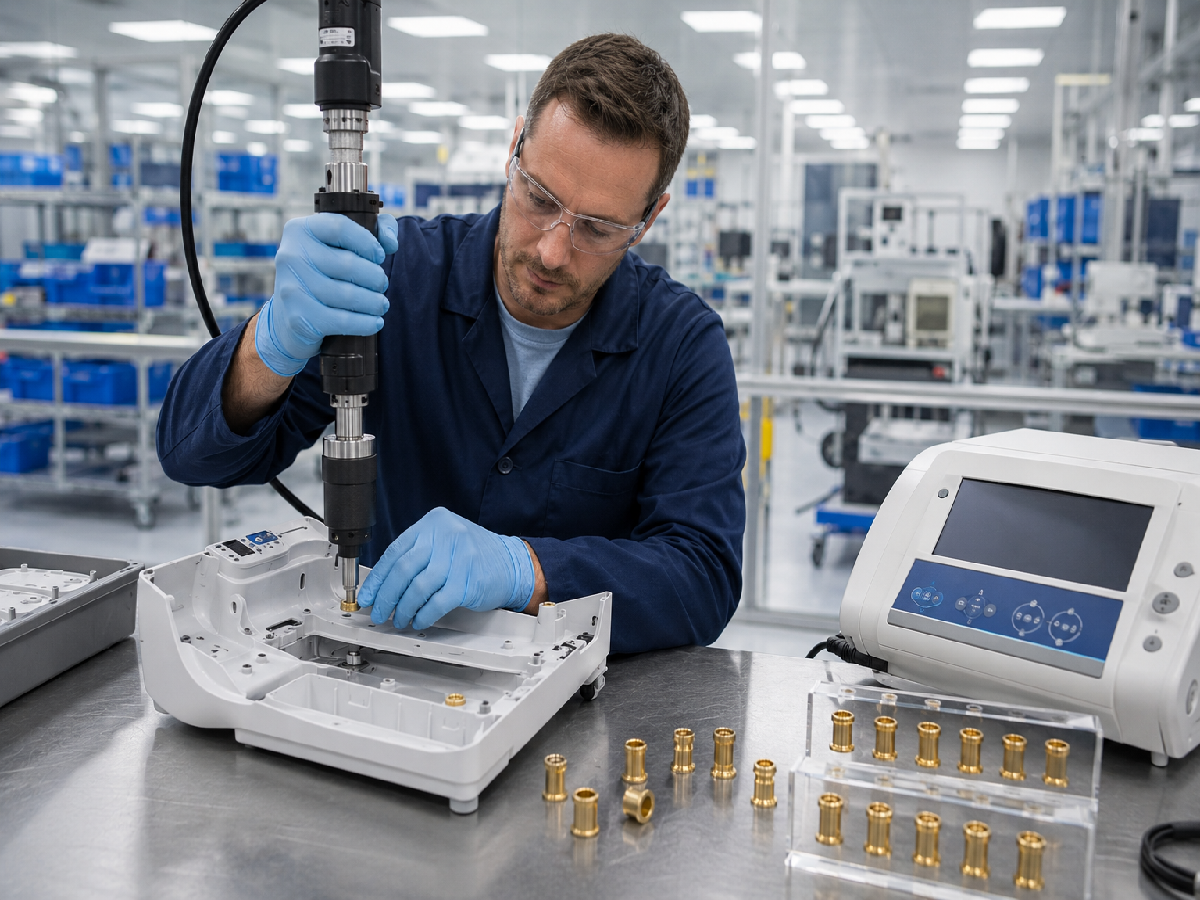
Heat-set installation uses controlled heat to soften suitable thermoplastic around the insert.
The polymer flows around the external retention geometry and solidifies after installation.
Important process variables can include:
Insert geometry
Polymer
Tool temperature
Installation speed
Installation depth
Alignment
Boss geometry
Cooling
Therefore:
Hotter Installation ≠ Better Retention.
Excessive heat can damage the plastic.
Insufficient heat can create poor polymer flow or excessive insertion force.
Ultrasonic insertion uses localized mechanical energy to soften compatible thermoplastic around the insert.
Potential benefits can include:
Short cycle times
Localized heating
Automation capability
But the process depends on:
Polymer
Insert geometry
Ultrasonic equipment
Fixture
Energy
Pressure
Installation depth
Therefore:
Ultrasonic Installation ≠ Heat-Set Installation With a Different Tool.
Each process requires its own validation.
Mechanical press-fit inserts may be suitable for selected plastic components.
But insertion generates radial forces in the boss.
If the interference is excessive, possible consequences include:
Boss cracking
Plastic deformation
Residual stress
Incomplete seating
Therefore:
More Interference ≠ Better Retention.
The insert and receiving hole must be designed for the actual polymer.
In-mold inserts are positioned before plastic molding.
The polymer is molded around the insert.
This can eliminate a separate post-molding insertion operation.
However, manufacturing must control:
Insert position
Mold retention
Plastic flow
Thread protection
Flash
Orientation
Therefore:
In-Mold Installation ≠ Automatically Better Joint Performance.
The finished component still requires appropriate validation.
Medical equipment may use many engineered polymers.
Depending on the project, these can include:
PA6
PA66
POM/acetal
PC-based materials
PEEK
Other engineering thermoplastics
But:
Same Polymer Name ≠ Same Finished Performance.
Performance can change with:
Exact grade
Reinforcement
Moisture
Temperature
Molding
Aging
Chemical exposure
The insert should therefore be evaluated in the actual production material.
PEEK can be selected for demanding engineering applications because of its useful temperature and chemical characteristics.
However:
PEEK ≠ Automatic Medical Qualification.
The exact grade, processing history, application, regulatory requirements and finished component must still be evaluated.
Material reputation cannot replace application qualification.
Important boss characteristics include:
Outside diameter
Receiving-hole diameter
Hole depth
Wall thickness
Distance from edges
Ribs
Molded features
Material-flow condition
Therefore:
Correct Insert + Incorrect Boss = Unreliable Joint.
The surrounding polymer determines how insert loads are transferred into the component.
If the receiving hole is too small:
Insertion force can increase
Boss stress can rise
Cracking may occur
If the hole is too large:
Pull-out resistance can decrease
Torque resistance can decrease
Polymer engagement can become insufficient
Therefore:
Insert OD Alone ≠ Correct Hole Specification.
Hole geometry should be defined for the actual insert and polymer.
External insert geometry can help resist:
Pull-out
Rotation
Installation movement
Relevant features may include:
Knurl angle
Knurl depth
Knurl direction
Retention bands
Taper
Lead-in geometry
Therefore:
Same Thread + Same OD ≠ Same Insert Performance.
This becomes particularly important during second-source qualification.
Pull-out testing evaluates axial retention of the insert in the plastic.
Performance can depend on:
Insert length
Retention geometry
Polymer
Boss dimensions
Hole dimensions
Installation
Temperature
Conditioning
Therefore:
Catalogue Pull-Out Value ≠ Finished Medical Component Pull-Out Performance.
Testing conditions must be understood before comparing values.
Torque-out testing evaluates resistance to rotation within the plastic.
This is different from axial retention.
Therefore:
Pull-Out ≠ Torque-Out.
A design can perform well in one mode and poorly in the other.
Both may need to be evaluated.
The screw applies load to the internal thread while also transferring reaction torque into the insert/plastic interface.
Therefore:
Screw Tightening Torque ≠ Insert Torque-Out Requirement.
Increasing screw torque does not automatically improve the joint.
Excessive tightening can cause:
Insert rotation
Insert pull-out
Thread stripping
Plastic crushing
Component distortion
More Installation Torque ≠ Better Joint.
Polymers can creep under sustained load.
They can also exhibit stress relaxation.
This can change:
Clamp load
Local contact pressure
Joint stiffness
over time.
Therefore:
Initial Assembly Torque ≠ Long-Term Joint Condition.
Medical equipment expected to remain assembled for long periods should consider long-term polymer behavior.
Medical and laboratory equipment may be opened repeatedly for:
Calibration
Maintenance
Cleaning
Repair
Component replacement
The metal internal thread can improve service durability.
But repeated assembly can still affect:
Insert/plastic interface
Boss
Bearing surface
Screw
Internal thread
Therefore:
Reusable Metal Thread ≠ Unlimited Service Life.
Where service cycling matters, the required cycle count should be defined by the customer.
| Engineering Requirement | Insert/Process to Evaluate | Key Question |
|---|---|---|
| Reusable thread in thermoplastic | Heat-set insert | Is the polymer compatible with thermal installation? |
| Fast automated insertion | Ultrasonic insert | Is the process stable in the actual polymer? |
| Insert integrated during molding | In-mold insert | Can position and thread protection be controlled? |
| Mechanical post-molding installation | Press-fit where appropriate | Can the boss withstand insertion stress? |
| High axial retention | Optimized retention geometry | How does the polymer fail during pull-out? |
| High rotational resistance | Anti-rotation geometry | Is sufficient polymer engaged? |
| Repeated maintenance | Durable metal thread | How does the joint perform after service cycles? |
| Cleaning/chemical exposure | Application-specific material system | Are both metal and polymer compatible? |
| Sterilization exposure | Validated material/process combination | What changes after repeated cycles? |
| Sensitive equipment | Defined cleanliness controls | What particle, residue and packaging criteria apply? |
Insert Type ≠ Application Qualification.
| Observed Failure | Possible Cause | Engineering Review |
|---|---|---|
| Insert pulls out | Insufficient polymer engagement | Insert length, knurl, boss, polymer |
| Insert rotates | Inadequate anti-rotation geometry | Knurl, hole, installation |
| Boss cracks | Excessive installation stress | Hole, wall thickness, process |
| Insert sits proud | Incomplete insertion | Tooling, alignment, process |
| Insert installed too deeply | Process-control problem | Depth control, heat/energy |
| Internal thread damages | Thread or torque problem | Thread, screw, installation torque |
| Clamp load decreases | Polymer creep | Temperature, time, preload |
| Corrosion occurs | Material/environment mismatch | Insert, screw, chemical exposure |
| Debris appears after assembly | Burr/particle issue | Manufacturing, cleaning, handling |
| Performance changes after sterilization | Material/environment interaction | Polymer, metal, sterilization process |
| Second-source insert fails | Functional mismatch | Geometry, material, installation, validation |
The observed symptom should be connected to the actual failure mechanism before changing the insert.
An insert can pass:
Dimensional inspection
Thread inspection
Pull-out testing
Torque testing
and still be unsuitable if the project has defined cleanliness requirements that are not met.
This is a critical Information Gain point for medical equipment sourcing:
Mechanical Compliance ≠ Cleanliness Compliance.
Both requirements must be controlled independently.
Depending on the drawing, important dimensions may include:
Internal thread
Overall length
Outside diameter
Knurl diameter
Taper
Lead-in
Shoulder/flange
Concentricity or other geometry where functionally required
But inspection should focus on functional characteristics.
More Inspection Data ≠ Better Product Qualification.
The correct characteristics must be inspected.
For precision medical equipment, surface inspection may evaluate:
Burrs
Damage
Foreign material
Coating condition where applicable
Handling damage
Acceptance criteria should come from the customer drawing or agreed specification.
Depending on the project, procurement may require:
Material lot identification
Production lot identification
Inspection records
Surface-treatment records
Packaging identification
But:
Medical Application ≠ Universal Full Traceability Requirement.
The required traceability depth should be established during supplier qualification.
A component can leave manufacturing in acceptable condition and become contaminated during:
Handling
Bulk packaging
Transportation
Repacking
Where cleanliness matters, packaging requirements should be defined.
Potential considerations include:
Packaging material
Part-to-part contact
Sealed packaging
Lot identification
Handling requirements
Therefore:
Clean Manufacturing + Uncontrolled Packaging ≠ Controlled Delivered Cleanliness.
Medical equipment can be subject to regulatory and quality-system requirements that vary by product, market and component function.
The fastener supplier should not assume that one regulatory framework applies to every project.
Instead, the customer should identify the applicable:
Drawing requirements
Material restrictions
Quality requirements
Documentation
Traceability
Validation
Change control
The governing principle remains:
Standard Compliance ≠ Application Qualification.
Medical-device manufacturers and their supply chains may operate under quality systems associated with ISO 13485.
However, an individual threaded insert should not be marketed as "ISO 13485 compliant" merely because it is supplied to medical equipment.
The relevant questions are:
What quality-system requirements apply to the supplier?
What controls apply to the component?
What documentation does the customer require?
Therefore:
Quality-System Standard ≠ Product Performance Standard.
Procurement and supplier-development teams should evaluate more than:
Thread
Dimensions
Material
Unit price
Useful qualification questions include:
Can the supplier manufacture the required retention geometry consistently?
How are threads inspected?
How are burrs controlled?
How is material identified?
How are dimensional records maintained?
Can cleanliness requirements be defined and controlled?
How are parts handled after production?
How are parts packaged?
Can functional pull-out and torque testing be agreed?
How are drawing revisions controlled?
How are process changes controlled?
What traceability can be provided?
What customer-specific documentation can be supported?
This turns the sourcing process from commodity purchasing into engineering qualification.
Medical insert second-sourcing should not be based only on:
Thread size
Length
Outside diameter
Material name
Appearance
A robust comparison can include:
Drawing + Revision + Material + Thread + Insert Geometry + Knurl Geometry + Surface Condition + Burr Requirement + Cleanliness
+ Polymer + Boss Geometry + Installation Process + Pull-Out + Torque-Out + Chemical/Sterilization Exposure + Packaging + Documentation + Traceability + Change Control
The key rule is:
Same Dimensions ≠ Functional Equivalence.
And for medical equipment:
Same Dimensions + Same Material ≠ Same Cleanliness or Documentation Capability.
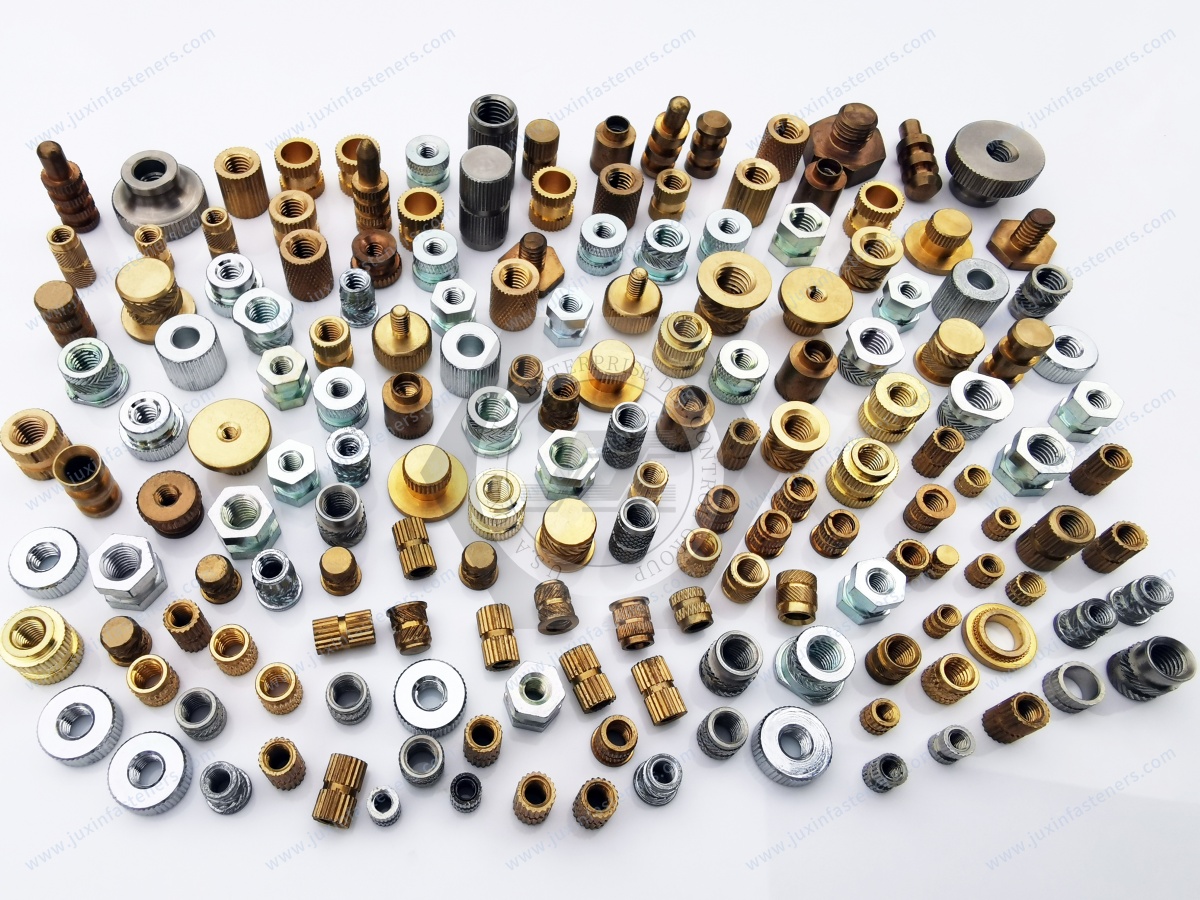
Two inserts can look nearly identical while differing in:
Knurl depth
Knurl angle
Pitch
Direction
Retention bands
Taper
These differences can change how the insert interacts with plastic.
Therefore:
Visual Similarity ≠ Functional Equivalence.
A second source should be qualified through drawing and functional requirements rather than photographs alone.
Changing:
Brass to stainless steel
One stainless grade to another
One coating to another
One material condition to another
can influence:
Installation
Corrosion
Chemical compatibility
Thread behavior
Cost
Cleanliness requirements
Therefore:
Material Substitution Can Be an Engineering Change.
Customer approval should be obtained where required.
Changes to:
Raw material
Manufacturing route
Surface treatment
Cleaning
Packaging
Subcontracted process
may affect a controlled medical-equipment component.
The required change-control process should be agreed with the customer.
Same Part Number ≠ Permission for Uncontrolled Process Change.
Medical-equipment procurement should consider:
Total Installed Cost = Insert Price + Installation + Tooling + Inspection + Cleaning + Packaging + Scrap + Rework
+ Downtime + Documentation + Logistics + Warranty Risk + Supply Risk
A low-cost insert can become expensive if it creates:
Assembly failures
Burr contamination
Boss cracking
Thread problems
Rework
Field-service issues
Therefore:
Lowest Insert Price ≠ Lowest Installed Cost.
Engineers may search:
Threaded inserts for medical devices
Medical equipment insert nuts
Heat-set inserts for medical plastic
Stainless steel inserts for medical equipment
Brass inserts for medical plastic housings
Threaded inserts for diagnostic equipment
Threaded inserts for laboratory instruments
Clean threaded inserts for medical electronics
Heat-set insert pull-out strength
Threaded insert boss design
Medical plastic insert sterilization compatibility
Precision threaded inserts for plastic
A useful technical page should answer these engineering questions rather than simply display an insert catalogue.
Commercial searches may include:
Medical device threaded insert manufacturer
Medical insert nut supplier
Precision threaded insert supplier
Stainless steel insert manufacturer
Heat-set insert manufacturer for medical equipment
Custom threaded inserts for medical plastic
Medical equipment fastener supplier
Second-source medical threaded insert manufacturer
Precision insert supplier with traceability
Custom insert nuts for diagnostic equipment
Procurement should evaluate both:
Can the Supplier Manufacture the Component?
and:
Can the Supplier Control the Material, Cleanliness, Documentation and Change Requirements Needed by This Project?
JUXIN FASTENERS supplies threaded inserts and custom fastening components for engineered plastic assemblies.
Relevant capabilities include:
Metal threaded inserts designed for controlled installation into suitable thermoplastics.
Insert geometries can be evaluated for ultrasonic installation according to the customer's plastic, boss design and process.
Tapered configurations for controlled insertion into suitable polymer components.
Drawing-based stainless steel threaded insert projects can be evaluated according to material, thread, geometry and application requirements.
JUXIN FASTENERS has experience with 303 stainless steel tapered heat-set inserts for drawing-based OEM projects.
Projects can be evaluated according to:
Metric or inch thread
Length
Outside diameter
Taper
Knurl geometry
Material
Surface condition
Tolerance
Installation method
Customer drawing
For medical-equipment applications, additional cleanliness, documentation, packaging and qualification requirements should be defined during RFQ review.
This distinction is essential.
JUXIN FASTENERS can manufacture or evaluate precision fastening components for medical-equipment projects.
But:
Manufacturing Capability ≠ Medical Device Qualification.
The customer must define the applicable project requirements.
This is especially important for applications involving:
Patient contact
Sterile environments
Fluid contact
Biological evaluation
Safety-critical functions
Regulatory submissions
No generic threaded insert should be represented as qualified for these applications without appropriate project-specific evaluation.
A more reliable development process is:
Medical Equipment Requirement → Plastic Component → Insert Drawing → Material → Installation Process → Prototype
→ Mechanical Validation → Environmental/Cleanliness Validation → Documentation → Supplier Qualification → Production
This is stronger than:
Find an Insert With the Correct Thread → Install It → Test Later
Early collaboration reduces the risk of redesigning the plastic boss or installation process after tooling has been completed.
They provide durable reusable metal threads inside suitable plastic components and can improve serviceability where equipment requires repeated assembly and disassembly.
They may be suitable for selected applications, but material composition, environment, cleanliness, customer requirements and component function must be evaluated.
Not automatically. Stainless steel offers different corrosion and mechanical characteristics, but the correct material depends on the application.
303 stainless steel inserts can be evaluated for appropriate equipment applications,
but the material grade alone does not establish medical, corrosion, sterilization or biocompatibility qualification.
Not automatically. Manufacturing cleanliness and sterility are different requirements.
Suitability depends on the insert material, polymer, sterilization process and number of cycles. The complete assembly should be evaluated.
They can be evaluated for suitable PEEK components, but the exact polymer grade, boss geometry, installation method and application requirements must be considered.
Not necessarily. Cleanliness requirements should have defined criteria and inspection or process controls.
Pull-out evaluates axial extraction resistance. Torque-out evaluates resistance to insert rotation in the plastic.
Not automatically. The surrounding polymer, boss and installation process may control failure.
That requires project-specific evaluation of the finished component and applicable biological, material and regulatory requirements.
Generic insert material alone does not establish suitability.
No. The metal insert remains conductive. Electrical insulation must be evaluated at assembly level.
Provide the controlled drawing, application, polymer, boss geometry, material, thread, installation method, functional requirements,
cleaning/sterilization exposure, cleanliness, documentation, traceability, packaging and annual volume.
Drawing-based insert projects can be evaluated for medical equipment according to the customer's material, geometry, quality and documentation requirements.
JUXIN FASTENERS can evaluate drawing-based stainless steel heat-set insert projects and has experience with 303 stainless steel tapered heat-set inserts.
A sample can support dimensional evaluation, but a controlled drawing, material specification, plastic,
installation process and functional requirements provide a much stronger qualification basis.
Yes. If cleanliness, particle control, cleaning or special packaging is required, it should be defined before production.
Some records may not be recoverable after manufacturing. Required traceability should therefore be defined before production begins.
Not necessarily. Installation stability, cleanliness, inspection, packaging, rework, documentation and supply risk should be included in total cost.
For an efficient engineering and sourcing review, provide:
2D drawing
3D model where available
Part number
Drawing revision
Equipment/device application
Component function
Applicable customer requirements
Insert type
Internal thread
Mating screw
Insert material
Exact material grade
Lead-free requirement where applicable
Surface treatment where applicable
Overall length
Outside diameter
Taper geometry
Knurl geometry
Flange/shoulder geometry where applicable
Polymer type
Exact polymer grade where available
Reinforcement/filler
Boss outside diameter
Hole diameter
Hole depth
Boss wall thickness
Installation method
Heat-set process requirements where defined
Ultrasonic process requirements where defined
Installation depth
Installation equipment
Required pull-out performance
Required torque-out performance
Screw tightening torque
Repeated assembly requirement
Service-cycle requirement
Operating temperature
Temperature cycling
Humidity
Cleaning chemicals
Disinfectant exposure
Sterilization method where applicable
Sterilization cycles where applicable
Corrosion requirement
Patient-contact requirement where applicable
Biological evaluation requirement where applicable
Electrical requirement where applicable
Dimensional tolerances
Thread inspection requirements
Burr requirement
Edge-condition requirement
Surface cleanliness requirement
Particle-control requirement
Cleaning requirement
Functional testing
Material documentation
Lot identification
Traceability requirement
First-article requirement
Customer-specific quality documentation
Change-control requirement
Packaging specification
Handling requirement
Annual volume
Production schedule
Approved baseline sample for second-source projects
For second-source development, also provide the approved drawing and existing functional qualification requirements where available.
This allows the component to be evaluated as:
Insert + Polymer + Boss + Installation + Screw + Environment + Cleanliness + Documentation
rather than simply:
Thread Size + Material + Price
This article should connect internally with existing JUXIN FASTENERS resources covering:
Threaded Inserts for Plastic
Heat-Set Threaded Inserts
Ultrasonic Threaded Inserts
Stainless Steel Threaded Inserts
Plastic and Nylon Fasteners
Medical Equipment Fastening Solutions
Medical Device Fastener Material Selection
Precision CNC Machined Components
ISO Metric Thread Tolerances
Stainless Steel Fastener Selection
Corrosion-Resistant Fasteners
Supplier Qualification and Second-Source Development
Use the existing indexed JUXIN FASTENERS URL when implementing each internal link.
The intended internal-link architecture is:
Medical Equipment → Plastic Component → Threaded Insert → Material → Installation → Cleanliness → Failure Mode → Validation → Supplier Qualification → RFQ
This keeps this page focused on the high-value search intent around medical equipment threaded inserts and precision plastic threaded connections,
rather than competing with the broader general threaded-insert product pages.
The threaded insert is only one component in the fastening system.
The complete system is:
Mating Screw + Insert + Retention Geometry + Polymer + Boss + Installation + Environment + Cleanliness + Documentation
Remember:
Precision Insert ≠ Qualified Medical Device Component.
Metal Thread ≠ Metal Joint.
Insert Strength ≠ Installed Joint Strength.
Medical Equipment Application ≠ Medical Device Qualification.
Used in Medical Equipment ≠ Suitable for Every Medical Application.
Thread Gauge Acceptance ≠ Installed Joint Performance.
Visually Clean ≠ Defined Cleanliness Level.
Clean Appearance ≠ Verified Cleanliness.
Clean Component ≠ Sterile Component.
Material Grade ≠ Finished Component Qualification.
Brass Insert ≠ Automatically Medical-Suitable Insert.
Stainless Steel ≠ Medical Qualification.
Stainless Steel ≠ Corrosion-Proof.
Material Name ≠ Biocompatibility Qualification.
Medical Equipment Use ≠ Patient-Contact Approval.
Medical Application ≠ Sterilization Requirement.
Insert Material Stability ≠ Assembly Stability.
Same Polymer Name ≠ Same Finished Performance.
Correct Insert + Incorrect Boss = Unreliable Joint.
Pull-Out ≠ Torque-Out.
More Installation Torque ≠ Better Joint.
Mechanical Compliance ≠ Cleanliness Compliance.
Clean Manufacturing + Uncontrolled Packaging ≠ Controlled Delivered Cleanliness.
Standard Compliance ≠ Application Qualification.
Quality-System Standard ≠ Product Performance Standard.
Same Dimensions ≠ Functional Equivalence.
Visual Similarity ≠ Functional Equivalence.
Manufacturing Capability ≠ Medical Device Qualification.
Lowest Insert Price ≠ Lowest Installed Cost.
For design engineers, this framework connects threaded-insert selection to polymer behavior, boss geometry,
installation, cleaning, sterilization and actual service requirements.
For procurement, supplier-development and supply-chain teams,
it provides a practical method for qualifying threaded insert manufacturers and second sources based on manufacturing control, cleanliness,
documentation and functional performance—not simply price and dimensions.
For medical equipment OEMs, the commercial development path should be:
Application → Drawing → Polymer → Insert → Installation → Cleanliness → Validation → Documentation → Supplier Qualification → RFQ
JUXIN FASTENERS can evaluate heat-set inserts, ultrasonic insert solutions, tapered threaded inserts,
stainless steel inserts and drawing-based custom fastening components for medical equipment, diagnostic systems, laboratory equipment and precision engineered plastic assemblies.
For a new project or second-source evaluation, send the controlled drawing together with the plastic material, boss geometry, insert material, installation process,
cleaning or sterilization exposure, functional requirements, cleanliness requirements, documentation requirements and annual volume.
JUXIN FASTENERS
Email: info@juxinfasteners.com
Website: www.juxinfasteners.com
Contact Us
Tel.:
+86 020 8621 0320
+86 020 3121 6067
E-mail:
Technical Support:
Navigation
SEND INQUIREY



