Call Us
+86 136 6007 9809
Call Us
+86 136 6007 9809

Nov. 02, 2026
Nylon Insert Hex Flange Lock Nuts for Automotive OEM Applications
Automotive Fastening Engineering, Prevailing-Torque Performance, Assembly Reliability, Custom Manufacturing and Tier-1/Tier-2 Supply Chain Solutions
1. Automotive OEM Fastening Challenges: Why Lock Nut Selection Matters
Automotive fastening systems operate under complex mechanical and environmental conditions.
Vibration, cyclic loading, temperature fluctuations, joint relaxation, corrosion exposure and high-speed assembly processes can influence the long-term performance of threaded connections.
For automotive OEM manufacturers and Tier-1/Tier-2 suppliers, selecting a locking nut involves more than matching the nominal thread size or mechanical property class.
The fastening system must support the required joint preload, provide suitable resistance to unintended rotational loosening,
maintain compatibility with the mating components and perform consistently during production assembly.
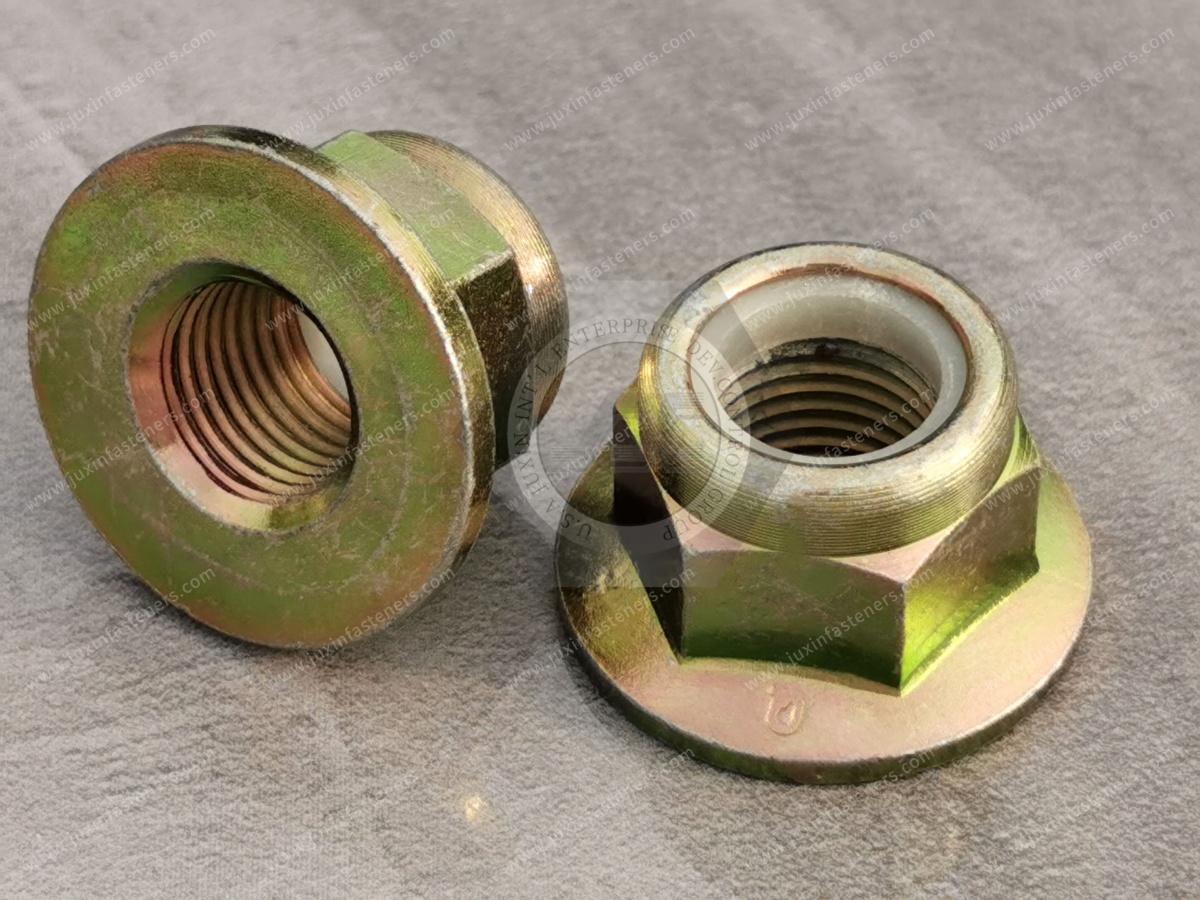
Nylon insert hex flange lock nuts combine three functional characteristics:
A threaded metal nut body designed to carry the specified mechanical load.
A polymer locking element that generates prevailing torque through interference with the mating bolt thread.
An integrated flange that provides a bearing surface between the nut and the assembled component.
These features can make nylon insert flange lock nuts suitable for selected automotive structural brackets, auxiliary mounting systems,
equipment supports and other engineered connections where the operating environment is compatible with the locking mechanism.
However, not every automotive connection is suitable for a nylon insert lock nut.
Wheel-bearing retention, pinion preload adjustment, high-temperature drivetrain components and safety-critical suspension connections may require specialized locking systems and application-specific validation.
The correct selection depends on the actual joint design rather than the automotive industry classification alone.
JUXIN FASTENERS is an industrial fastener manufacturer supporting standard and drawing-based OEM/ODM custom fastening components.
Our manufacturing approach combines cold heading, cold forming, CNC machining, product-specific secondary operations, and coordinated heat treatment and surface finishing according to the requirements of each product.
This engineering guide is intended for automotive design engineers, mechanical engineers, manufacturing engineers, production managers,
supplier development engineers, purchasing specialists, procurement managers and supply chain teams evaluating nylon insert hex flange lock nuts for new or existing automotive programs.
2. Automotive Applications: Where Nylon Insert Flange Lock Nuts May Be Suitable
The suitability of a nylon insert flange lock nut depends on the specific fastening joint, mechanical loads, environmental conditions and required validation.
The following application matrix provides an engineering screening framework rather than a universal approval list.
| Automotive System | Potential Fastening Application | Engineering Considerations | Selection Status |
|---|---|---|---|
| Chassis-related structures | Selected brackets and auxiliary supports | Vibration, preload, bearing pressure and corrosion | Application-specific evaluation |
| Body-in-white auxiliary structures | Non-welded brackets and removable attachments | Sheet thickness, bearing contact and service access | Joint validation required |
| Automotive equipment mounting | Auxiliary mechanical equipment supports | Dynamic loading, installation access and temperature | Potentially suitable |
| Commercial vehicle equipment | External equipment brackets and mounting structures | Vibration, corrosion and maintenance | Application-specific evaluation |
| EV auxiliary enclosures | Selected mounting brackets and external hardware | Thermal exposure, electrical clearances and coating | Engineering approval required |
| Automotive thermal-management equipment | Selected mounting brackets away from incompatible thermal zones | Temperature, fluid exposure and joint movement | Environmental validation required |
| Vehicle electrical equipment | Mounting hardware for suitable structural connections | Corrosion, vibration and electrical requirements | Design-dependent |
| Wheel-bearing adjustment | Specialized wheel-end retention | Bearing preload and dedicated locking architecture | Not a direct substitute |
| Differential pinion retention | Pinion shaft and bearing-preload systems | Specialized retention and preload procedures | Dedicated design required |
| High-temperature exhaust connections | Components exposed to sustained elevated temperatures | Polymer thermal limitations | Alternative locking systems may be necessary |
The table helps engineers identify where further evaluation is appropriate.
It does not establish that a particular nylon insert flange lock nut has been approved for a specific vehicle platform or safety-critical connection.
2.1 Automotive Chassis Brackets and Structural Attachments
Chassis-related brackets may experience vibration, cyclic loading, road contamination and thermal variation.
For these applications, engineers should evaluate:
Required bolt preload.
Joint stiffness and separation risk.
Dynamic shear and tensile loading.
Flange bearing pressure.
Mating surface hardness.
Coating and corrosion requirements.
Nylon insert operating temperature.
Service and replacement procedures.
The locking feature is intended to resist unintended nut rotation, but it does not replace correct joint preload or structural design.
2.2 Commercial Vehicle and Heavy-Duty Equipment Mounting
Commercial vehicle equipment may require larger fasteners, special flange dimensions and controlled locking characteristics.
Applications can involve mounting brackets, auxiliary equipment supports and selected serviceable structural attachments.
For these connections, procurement and engineering teams should evaluate both component-level locking performance and the assembled joint.
Large nominal thread diameters do not automatically indicate suitability for axle or wheel-end retention.
2.3 Electric Vehicle Auxiliary Assemblies
Electric vehicles introduce additional packaging, thermal-management and electrical-system considerations.
Nylon insert flange lock nuts may be evaluated for suitable auxiliary structures and equipment mounting arrangements.
Engineering review should consider:
Local operating temperature.
Vibration and mechanical loading.
Thermal expansion of mating materials.
Corrosion and coating compatibility.
Electrical isolation or bonding requirements where applicable.
Assembly accessibility.
Maintenance procedures.
A nylon insert does not make a metal fastener electrically insulating.
Electrical safety and grounding requirements must be addressed by the complete assembly design.
3. Engineering Selection: When Should an Automotive OEM Choose a Nylon Insert Flange Lock Nut?
A suitable locking fastener must satisfy the joint's mechanical, environmental and assembly requirements.
| Engineering Requirement | Nylon Insert Flange Lock Nut Consideration | Recommended Validation |
|---|---|---|
| Resistance to unintended nut rotation | Polymer insert generates prevailing torque | Prevailing-on and prevailing-off torque |
| Controlled joint preload | Depends on tightening method and friction | Torque–tension or direct preload testing |
| Cyclic vibration | Locking feature may resist rotation but cannot prevent every preload-loss mechanism | Joint-level vibration testing |
| High-temperature operation | PA66 performance may become limiting | Thermal aging and functional testing |
| Repeated removal | Locking torque may change with reuse | Defined installation/removal cycle testing |
| Corrosion exposure | Depends on nut material and coating | Customer-specified corrosion validation |
| Soft mating surface | Flange contact pressure must be assessed | Bearing-pressure and embedment evaluation |
| Automated assembly | Prevailing torque influences tool readings | Assembly process capability validation |
| Limited installation space | Flange and nut height may create interference | CAD clearance and tooling review |
| Safety-critical connection | Component selection alone is insufficient | OEM system-level approval |
A prevailing-torque locking feature should not be confused with a guarantee against all forms of joint loosening.
Bolted joints may lose preload through embedment, relaxation, joint separation, material creep or insufficient initial tightening.
A nylon insert may resist rotation without preventing these other failure mechanisms.
4. Understanding the PA66 Nylon Insert Locking Mechanism
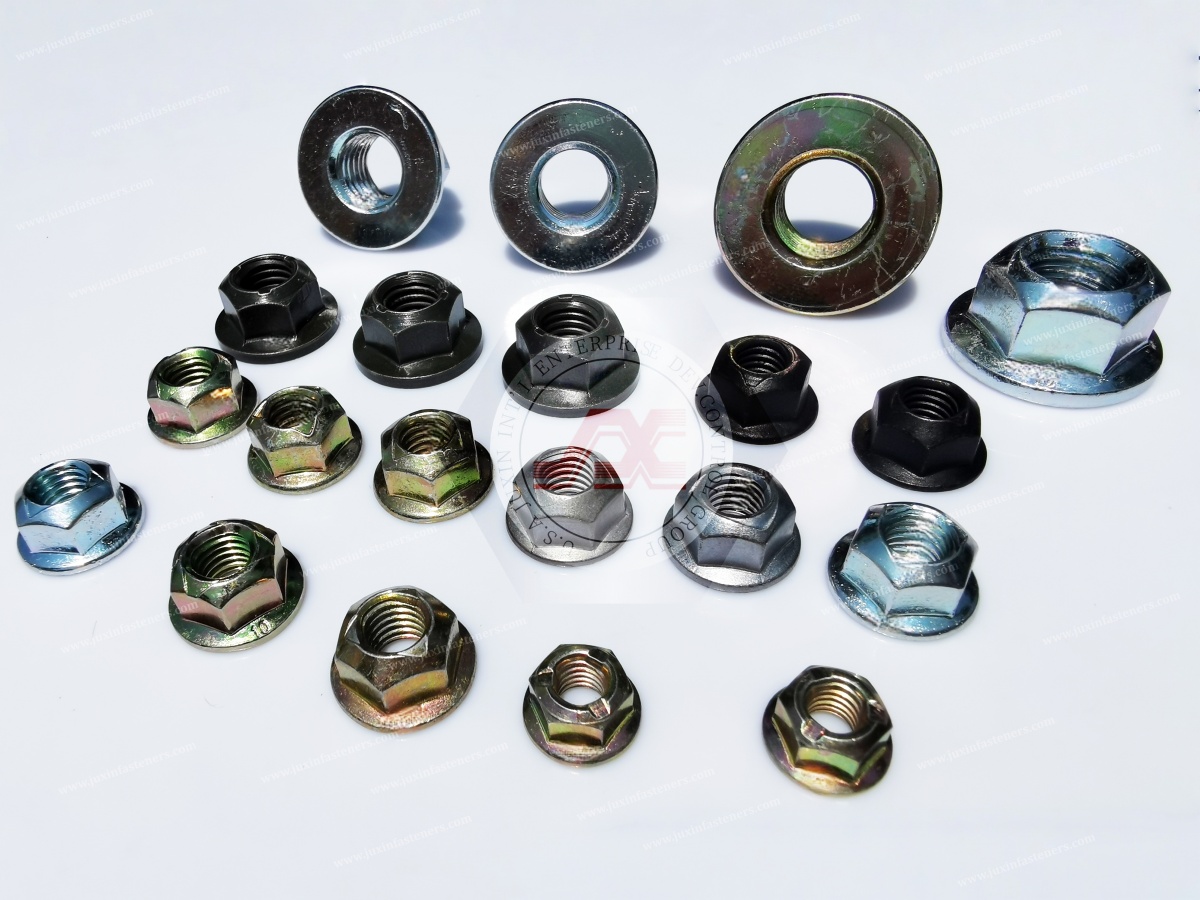
Nylon insert hex flange lock nuts typically use a polymer locking element retained near one end of the nut body.
As the mating bolt enters the insert, controlled interference produces local polymer deformation and resistance to relative rotation.
This resistance is known as prevailing torque.
4.1 Prevailing Torque Is Not Clamp Load
Prevailing torque is the rotational resistance generated by the locking feature.
Clamp load is the axial force developed in the bolted joint through tightening.
The nylon insert may generate prevailing torque before the flange contacts the joint surface.
Therefore, the torque measured by an assembly tool includes contributions that do not directly create joint preload.
For production-line tightening, the OEM must consider the locking feature when developing torque or torque-angle procedures.
4.2 Critical Factors Affecting Nylon Locking Performance
Locking performance depends on:
PA66 formulation and conditioning.
Insert internal geometry.
Insert retention and axial location.
Mating bolt thread dimensions.
Nut thread condition.
Surface coating and lubrication.
Installation speed.
Temperature.
Number of assembly cycles.
Excessive insert interference can increase installation torque and potentially damage the locking element or mating thread.
Insufficient interference can produce inadequate prevailing torque.
Both conditions require engineering controls.
4.3 PA66 Temperature, Moisture and Chemical Exposure
PA66 is an engineering thermoplastic whose properties depend on temperature, moisture content, chemical exposure and loading history.
Automotive engineers should evaluate the actual polymer grade and completed locking assembly rather than relying on a generic material temperature value.
Important conditions include:
Continuous operating temperature.
Short-term thermal peaks.
Thermal cycling.
Moisture absorption.
Oil and grease exposure.
Coolant and cleaning chemical compatibility.
Long-term polymer relaxation.
Prevailing torque after environmental conditioning.
Where the operating environment exceeds the validated performance of the polymer insert, an alternative locking design should be evaluated.
5. Nylon Insert Flange Nuts vs All-Metal Lock Nuts vs Conventional Hex Nuts
Automotive engineers may compare different nut configurations during joint development.
| Selection Factor | Nylon Insert Flange Lock Nut | All-Metal Prevailing-Torque Nut | Conventional Hex Nut |
|---|---|---|---|
| Locking principle | Polymer interference | Metal locking geometry | No inherent prevailing-torque feature |
| Bearing flange | Integrated | Available in selected designs | Usually separate from standard hex geometry |
| Temperature limitation | Polymer-dependent | Metal and design-dependent | Material and joint-dependent |
| Installation resistance | Influenced by nylon insert | Influenced by metal locking feature | Primarily friction and joint loading |
| Reuse | Requires validation | Requires validation | Depends on joint requirements |
| Coating interaction | Affects thread fit and friction | Affects locking and friction | Affects friction |
| Custom manufacturing | Available | Available | Available |
| Automotive suitability | Joint-specific | Joint-specific | Joint-specific |
An all-metal locking nut is not automatically superior to a nylon insert design.
The preferred choice depends on operating temperature, locking requirements, mating thread condition, joint preload and approved service procedures.
6. Metric and Inch-Series Automotive Lock Nut Specifications
Global automotive supply chains use different thread systems depending on vehicle platform, component design and legacy requirements.
JUXIN FASTENERS evaluates metric and inch-series custom fastener requirements based on approved drawings and manufacturing feasibility.
6.1 ISO Metric Thread Configurations
Metric thread designations specify nominal diameter and pitch.
Examples include:
| Metric Designation | Nominal Diameter | Pitch | Engineering Note |
|---|---|---|---|
| M6×1.0 | 6 mm | 1.0 mm | Standard coarse-pitch example |
| M8×1.25 | 8 mm | 1.25 mm | Standard coarse-pitch example |
| M10×1.5 | 10 mm | 1.5 mm | Standard coarse-pitch example |
| M12×1.75 | 12 mm | 1.75 mm | Standard coarse-pitch example |
| M16×2.0 | 16 mm | 2.0 mm | Standard coarse-pitch example |
| M20×2.5 | 20 mm | 2.5 mm | Standard coarse-pitch example |
| M22×2.5 | 22 mm | 2.5 mm | Standard coarse-pitch example |
These are thread-designation examples, not a complete availability list.
Actual supply configurations must be confirmed by drawing, material, property class, flange geometry and quantity.
Metric fine-thread alternatives must be explicitly designated with the required pitch.
6.2 Unified Inch-Series Configurations
Unified inch-series threads may use UNC or UNF designations.
For example:
3/4-16 UNF-2B
This identifies:
3/4-inch nominal thread diameter.
16 threads per inch.
Unified National Fine thread series.
Class 2B internal thread.
Relevant ASME thread requirements must be applied where specified.
6.3 Metric and Inch Threads Are Not Interchangeable
A numerical diameter conversion does not establish thread compatibility.
For reference:
M20 nominal diameter = approximately 0.7874 inches.
M22 nominal diameter = approximately 0.8661 inches.
3/4-inch nominal diameter = 19.05 mm.
These conversions are dimensional references only.
Metric threads cannot be substituted for UNC or UNF threads without redesign and verification.
7. Nut Property Classes, Materials and Mechanical Strength
For automotive steel lock nuts, material selection must support the required mechanical properties after manufacturing and heat treatment.
7.1 Class 8 and Class 10 Steel Nuts
ISO 898-2 provides mechanical-property requirements for applicable steel nuts with ISO metric threads.
Property Class 8 and Class 10 represent different mechanical-property categories.
The applicable proof-load requirements depend on the standard scope and actual product geometry.
For nonstandard nut designs, the OEM may require supplementary validation.
Property class does not establish a universal tightening torque.
7.2 Material Selection Matrix
| Material | Potential Application Considerations | Important Limitations |
|---|---|---|
| Carbon steel | Cost-effective automotive fastening | Strength and coating requirements |
| Alloy steel | Selected higher-strength configurations | Heat treatment and material control |
| Stainless steel | Corrosion-sensitive applications | Different property-class systems and galling risk |
| Aluminum alloy | Weight-sensitive, appropriately loaded joints | Lower load capacity and thread strength considerations |
| Brass | Specialized industrial applications | Mechanical strength limitations |
Class 8 and Class 10 designations under ISO 898-2 should not automatically be assigned to stainless steel, aluminum or brass products.
The final material and property requirements must be defined by the applicable specification.
7.3 Proof Load vs Tightening Torque
Proof-load testing evaluates the nut's mechanical resistance to a specified axial load under defined test conditions.
Tightening torque is an assembly input used to develop joint preload.
A nut passing proof-load testing does not establish that the complete assembly achieves the required clamp force.
Both requirements must be addressed independently.
8. Flange Geometry, Bearing Pressure and Joint Reliability
The integrated flange provides a bearing surface beneath the nut.
A properly designed flange can distribute compressive loading over an appropriate contact area.
However, flange size alone does not guarantee better performance.
8.1 Critical Flange Characteristics
| Feature | Engineering Purpose | Potential Failure Risk |
|---|---|---|
| Flange outside diameter | Defines bearing envelope | Component interference |
| Effective bearing area | Supports contact pressure distribution | Local deformation |
| Flange thickness | Provides structural support | Flange bending |
| Bearing-face flatness | Supports seating consistency | Uneven contact |
| Surface finish | Influences friction | Preload variation |
| Concentricity | Supports alignment | Uneven bearing contact |
| Nut height | Accommodates threads and locking element | Packaging or engagement issues |
8.2 Smooth vs Serrated Flange
Smooth flanges and serrated flanges have different contact characteristics.
A smooth flange may be selected for controlled contact and surface protection.
A serrated flange may increase resistance to relative rotation against some mating surfaces but can damage coatings and change friction behavior.
The flange configuration must be defined by the drawing.
A nylon insert flange nut should not automatically be assumed to have serrations.
8.3 Flange Nuts and Washer Replacement
An integrated flange may eliminate a separate plain washer in some approved designs.
However, it does not automatically replace hardened washers, sealing washers or other specialized bearing components.
Joint-level engineering approval remains necessary.
9. Automotive Vibration, Preload Loss and Joint Failure Modes
Vibration resistance is an important automotive fastening consideration, but the term "vibration-proof" should not be used as a universal performance claim.
Different loosening mechanisms require different controls.
9.1 Rotational Loosening
Relative movement and unfavorable joint conditions may allow a threaded fastener to rotate.
A prevailing-torque feature introduces resistance to rotation.
Its effectiveness must be evaluated under the specified joint conditions.
9.2 Non-Rotational Preload Loss
Joint preload may decrease without the nut rotating.
Potential causes include:
Embedment of contact surfaces.
Joint relaxation.
Material creep.
Thermal expansion differences.
Joint separation.
Inadequate initial tightening.
A nylon insert cannot independently prevent all of these mechanisms.
9.3 Joint-Level Vibration Validation
Where vibration performance is critical, the OEM may specify joint-level vibration or transverse-displacement testing.
ISO 16130 provides a reference for evaluating the vibration behavior of fastener assemblies under specified conditions.
The applicability of the method, test configuration and acceptance criteria must be agreed for the actual joint.
A successful prevailing-torque test should not be presented as proof of complete vibration resistance.
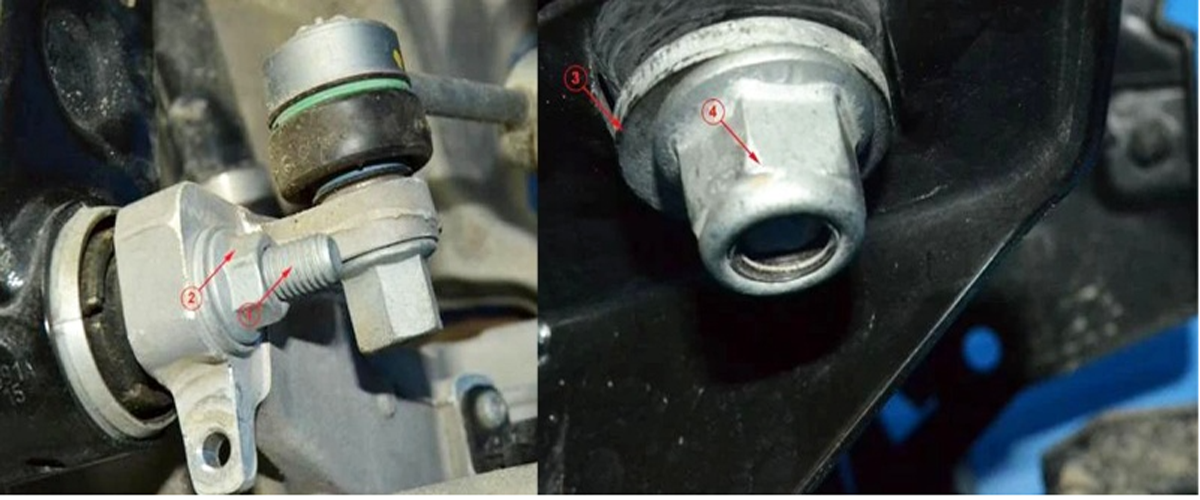
10. Automotive Assembly-Line Torque and Preload Control
Automotive production managers require repeatable fastening processes that support assembly quality, productivity and traceability.
Nylon insert lock nuts introduce prevailing torque into the tightening process.
10.1 Torque Contributions During Installation
The total applied torque is influenced by:
Prevailing torque from the locking insert.
Thread friction.
Bearing-surface friction.
Development of joint preload.
Installation conditions.
The relationship is not constant across all assemblies.
Torque-to-tension validation should use representative mating components and surface conditions.
10.2 Production Assembly Control Matrix
| Assembly Variable | Potential Impact | Recommended Control |
|---|---|---|
| Bolt thread tolerance | Changes insert interference | Approved mating bolt |
| Coating thickness | Changes fit and friction | Controlled coating specification |
| Nylon insert condition | Changes prevailing torque | Functional process verification |
| Installation speed | Influences locking interaction | Validated assembly settings |
| Tool calibration | Affects torque accuracy | Calibration program |
| Bearing surface | Changes friction and seating | Joint-interface control |
| Temperature | Influences polymer behavior | Environmental validation |
| Repeated assembly | May change locking torque | Defined reuse procedure |
10.3 Automated Assembly Considerations
For automated tightening, engineers may need to evaluate:
Nut presentation and feeding.
Tool engagement with the hexagonal body.
Flange seating.
Cross-threading prevention.
Prevailing-torque monitoring.
Torque-angle signature.
Final tightening acceptance.
Rework and replacement procedures.
Production cycle time and installation consistency should be evaluated together.
A locking nut that meets component-level specifications may still require adjustment to the approved assembly process.
11. Cold Heading, Cold Forming and CNC Manufacturing for Automotive Lock Nuts
JUXIN FASTENERS supports industrial fastener manufacturing using appropriate combinations of cold heading, cold forming, CNC machining and product-specific secondary operations.
The process route must be selected according to material, geometry, mechanical requirements and production volume.
11.1 Design for Manufacturability
The engineering review should establish:
Applicable thread standard.
Nut body geometry.
Flange dimensions.
Material and property class.
Locking insert requirements.
Heat-treatment requirements.
Surface finish.
Dimensional tolerances.
Critical characteristics.
Expected annual demand.
The objective is to identify a technically suitable and commercially practical manufacturing approach.
11.2 Cold Heading and Cold Forming
Cold forming may be appropriate for repeatable nut geometries and volume manufacturing.
Potential benefits include efficient material utilization and near-net-shape blank production.
Actual feasibility depends on forming geometry, material behavior, tooling and dimensional requirements.
11.3 CNC Machining
CNC machining may be used for specialized geometry, precision features or secondary finishing.
Potential operations include:
Precision flange finishing.
Special chamfers.
Thread generation where appropriate.
Insert-retention geometry.
Custom dimensions.
Other drawing-specific machining.
Not every fastener requires CNC machining.
For some components, combining cold forming and machining can provide a suitable manufacturing solution.
11.4 Heat Treatment
Heat treatment is selected to achieve the required mechanical properties of the metal nut body.
Relevant considerations include:
Steel grade.
Hardness.
Mechanical-property targets.
Dimensional stability.
Distortion.
Thread condition.
Verification requirements.
The nylon insert must be protected from manufacturing processes that could damage its functional properties.
11.5 Surface Finishing
Automotive lock nuts may require zinc-based, zinc-nickel or other customer-approved coatings.
Coating selection should consider:
Corrosion protection.
Friction requirements.
Thread fit.
Material condition.
Hydrogen embrittlement risk.
Environmental compliance.
Customer specifications.
Surface treatment must not be selected solely by appearance.
No salt-spray duration or corrosion performance should be claimed without a defined test method and verified results.
11.6 Nylon Insert Assembly
Insert installation should ensure the specified geometry, position, retention and locking function.
The assembly sequence must be compatible with the selected metal-body manufacturing and finishing processes.
Functional verification should confirm the required prevailing-torque behavior.
12. Engineering Comparison: Standard vs Custom Automotive Lock Nuts
Automotive manufacturers may use standard locking nuts where their dimensions and performance satisfy the application requirements.
Custom manufacturing may be necessary when standard components do not meet packaging, assembly or performance constraints.
| Requirement | Standard Lock Nut | Custom OEM Lock Nut |
|---|---|---|
| Thread dimensions | Defined by applicable standard | Standard or drawing-specific |
| Flange geometry | Standardized | Customer-defined |
| Nut height | Standard | Customizable |
| Locking element | Standard design | Application-specific design where feasible |
| Coating | Available standard options | Customer-approved specification |
| Torque requirements | Standard or agreed limits | OEM-specific validation |
| Quality documentation | Supplier/product-dependent | Contractually defined |
| Manufacturing economics | Depends on standard availability | Depends on tooling and volume |
Custom design should be justified by functional or commercial requirements.
Unnecessary dimensional customization can increase tooling complexity, inspection burden and procurement cost.
13. Prevailing-Torque Testing and Functional Validation
Prevailing-torque performance is a critical functional characteristic of nylon insert lock nuts.
ISO 2320 is a relevant reference for applicable metric prevailing-torque steel nuts.
For inch-series designs, the applicable ASME, IFI or customer-specified standards must be identified.
The actual standard scope must be verified before establishing acceptance criteria.
13.1 Potential Test Requirements
Depending on the product specification, testing may include:
First-installation prevailing-on torque.
Prevailing-off torque.
Torque after defined installation/removal cycles.
Insert retention.
Thread integrity.
Functional engagement.
Environmental conditioning.
The test method must define the mating bolt, surface condition, installation speed and acceptance limits.
13.2 Reuse and Service Requirements
Nylon insert lock nuts may experience changes in locking performance after repeated installation.
Reuse should not be assumed.
The OEM must define whether the component is single-use or suitable for validated reuse.
13.3 Environmental Validation
Depending on the application, additional evaluation may include:
Thermal cycling.
Elevated-temperature aging.
Chemical exposure.
Corrosion testing.
Vibration testing.
Post-conditioning prevailing torque.
Testing must be relevant to the actual automotive environment.
14. Thread Inspection and Dimensional Quality Control
Thread compatibility is essential for assembly consistency.
For ISO metric threads, ISO 1502 provides relevant thread gauging principles.
For Unified inch-series threads, the applicable ASME gauging requirements should be used.
Metric and inch-series thread gauges are not interchangeable.
14.1 Critical Dimensions
Potential characteristics include:
Internal thread tolerance.
Across-flats dimension.
Overall nut height.
Flange diameter.
Flange thickness.
Bearing-face geometry.
Insert position.
Insert retention.
Concentricity where required.
14.2 Inspection Before and After Insert Installation
The nylon locking element may prevent conventional full-depth thread gauging after assembly.
The control plan should therefore distinguish:
Thread verification before insert installation.
Insert dimensional and retention controls.
Final functional prevailing-torque verification.
Thread gauging and locking-torque testing measure different characteristics.
Both may be necessary.
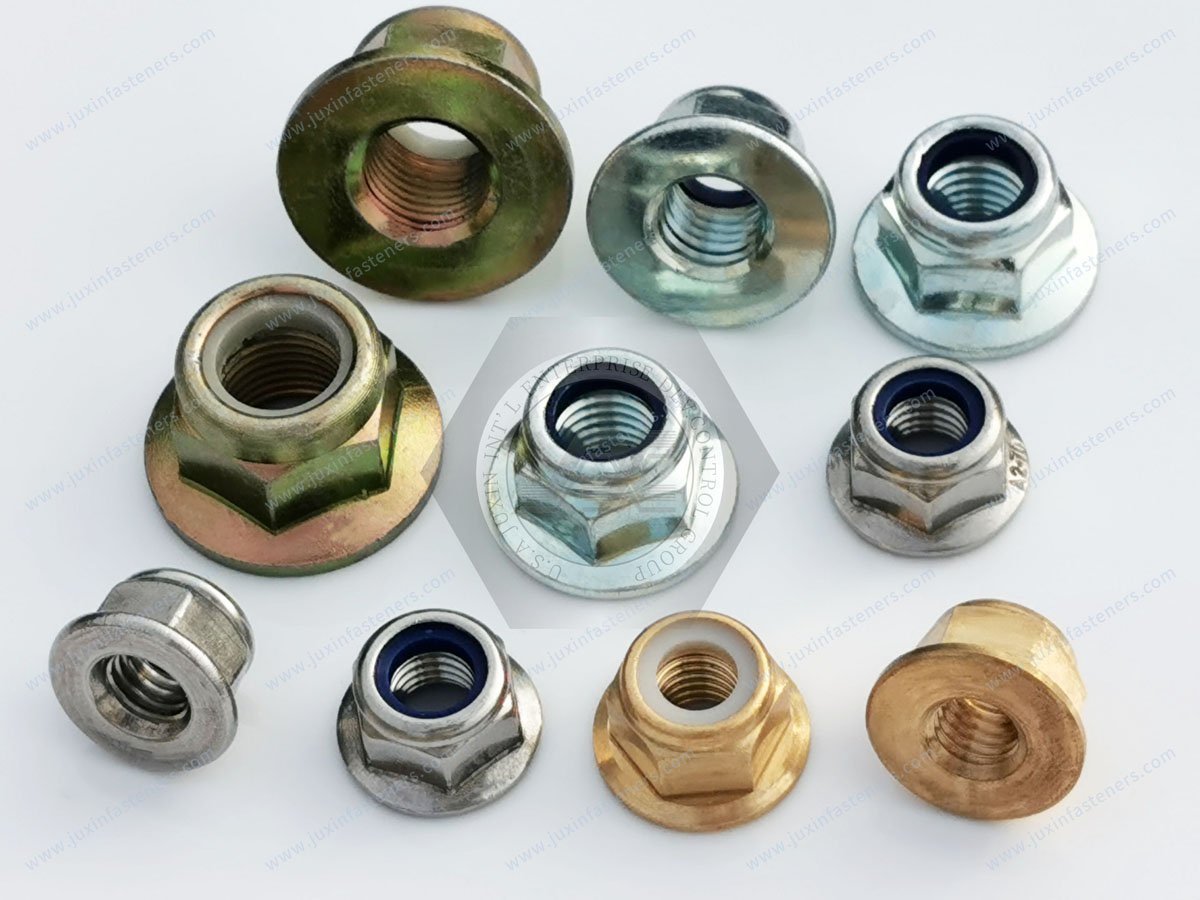
15. Automotive OEM Quality Planning and Supplier Qualification
Automotive OEMs and Tier-1/Tier-2 suppliers may require documented quality planning and production approval.
The specific requirements depend on the customer contract and product risk classification.
Potential requirements include:
Approved engineering drawings.
Material specifications.
Process flow diagrams.
Process Failure Mode and Effects Analysis (PFMEA).
Control plans.
Measurement System Analysis (MSA), where applicable.
Dimensional inspection records.
Mechanical-property verification.
Prevailing-torque test results.
Surface-treatment verification.
Production Part Approval Process (PPAP), where required.
Lot traceability.
Packaging specifications.
Engineering change control.
15.1 PPAP and Production Approval
PPAP is a customer-driven product and process approval framework commonly used in automotive supply chains.
A supplier should not claim PPAP approval simply because it manufactures automotive-type fasteners.
Required documentation, submission levels and approval status must be established for the specific customer program.
15.2 Critical and Special Characteristics
Potential special characteristics for nylon insert flange lock nuts may include:
Thread functionality.
Proof-load capability.
Prevailing torque.
Insert retention.
Flange bearing geometry.
Heat-treatment condition.
Coating and friction characteristics.
The actual classification must be determined through OEM engineering requirements and risk analysis.
15.3 Traceability and Change Control
Automotive purchasing programs may require traceability linking production lots to material, processing and inspection records.
Changes affecting material, geometry, heat treatment, coating or locking-element design may require customer notification and reapproval.
These requirements should be agreed before production.
16. Automotive Fastener Failure Modes and Preventive Controls
| Failure Mode | Potential Cause | Engineering Control |
|---|---|---|
| Insufficient prevailing torque | Insert or thread variation | Functional torque verification |
| Excessive installation torque | Excessive interference or friction | Defined upper limits |
| Thread stripping | Inadequate strength or incorrect tightening | Proof-load and joint validation |
| Preload loss | Embedment, relaxation or insufficient tightening | Joint-level preload validation |
| Insert damage | Temperature or installation interference | Environmental and functional testing |
| Insert displacement | Retention geometry variation | Retention inspection |
| Flange deformation | Excessive bearing pressure | Contact-pressure assessment |
| Coating damage | Unsuitable bearing interface | Coating and joint review |
| Corrosion | Inadequate protective system | Approved corrosion validation |
| Hydrogen embrittlement | Susceptible material and processing conditions | Appropriate process controls |
| Cross-threading | Misalignment or incompatible threads | Assembly and thread verification |
| Reuse-related torque loss | Polymer wear or deformation | Validated reuse policy |
The objective is not merely to detect defects after manufacturing, but to identify the characteristics that influence joint performance and control them through appropriate engineering and production processes.
17. Design for Manufacturability: Reducing Automotive OEM Fastener Cost Without Compromising Function
Automotive procurement teams frequently evaluate opportunities to reduce component cost while maintaining engineering performance.
For custom nylon insert flange lock nuts, cost optimization may involve:
Selecting a suitable forming process.
Reducing unnecessary machining.
Using practical dimensional tolerances.
Avoiding nonfunctional custom geometry.
Selecting an appropriate material.
Defining realistic surface-treatment requirements.
Standardizing packaging where possible.
Planning production around annual demand.
Cost reduction should not compromise proof-load capability, locking performance, joint reliability or customer quality requirements.
17.1 Manufacturing Process Selection Matrix
| Manufacturing Requirement | Cold Forming | CNC Machining | Combined Process |
|---|---|---|---|
| Repeatable high-volume geometry | Often advantageous | Depends on economics | Potentially suitable |
| Complex precision features | May require secondary operations | Often suitable | Often suitable |
| Material utilization | Can be favorable | Depends on material removal | Process-dependent |
| Custom flange geometry | Geometry-dependent | Flexible | Flexible |
| Tight dimensional requirements | Tooling-dependent | Process-dependent | May be advantageous |
| Tooling investment | Application-dependent | Application-dependent | Application-dependent |
| Production cost | Volume-dependent | Cycle-time-dependent | Design-dependent |
The most suitable process should be selected through actual manufacturing feasibility review.
18. Automotive Production Managers: Assembly Efficiency and Line Reliability
For production managers, a suitable fastener must support reliable assembly as well as product performance.
A locking nut that requires excessive installation force or produces inconsistent torque readings can affect production throughput and quality.
Important considerations include:
Nut feeding and orientation.
Tool engagement.
Installation access.
Cross-threading prevention.
Prevailing-torque variation.
Final tightening verification.
Rework procedures.
Operator safety.
Traceability requirements.
Where assembly automation is involved, representative fastener samples should be evaluated using the intended production equipment and mating components.
Production-line validation should be completed before final approval.
19. Automotive Supplier Development and Long-Term Sourcing Considerations
For automotive procurement teams, the decision to qualify a manufacturer extends beyond unit price.
Important factors include:
Engineering drawing interpretation.
Manufacturing process suitability.
Material sourcing.
Mechanical-property requirements.
Process consistency.
Inspection planning.
Surface-treatment control.
Quality documentation.
Change management.
Packaging and logistics.
Production forecast planning.
Commercial communication.
JUXIN FASTENERS supports drawing-based OEM/ODM fastener manufacturing inquiries and evaluates production requirements according to the actual specification and projected purchasing volume.
Customer-specific quality and documentation requirements should be reviewed before commercial commitments are finalized.
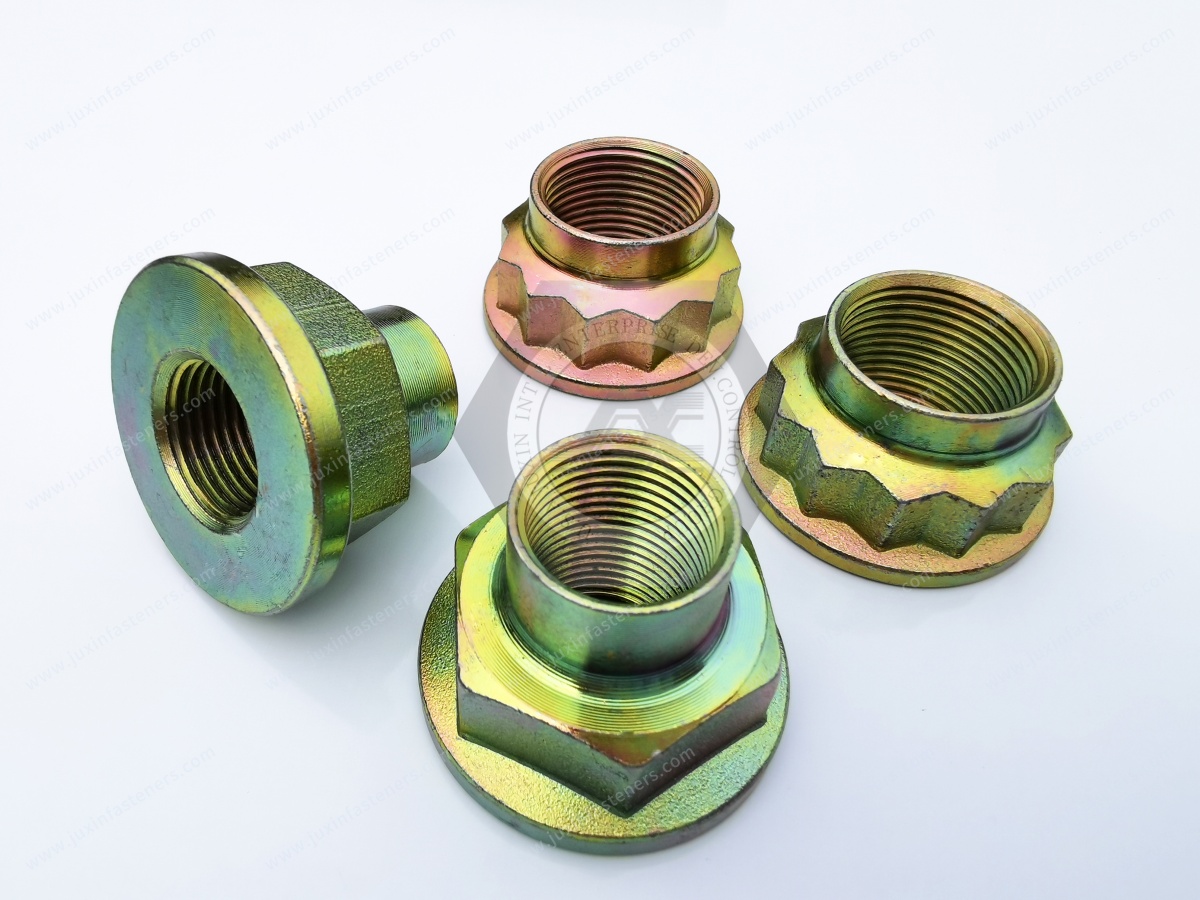
20. RFQ Checklist for Automotive Design and Manufacturing Engineers
| RFQ Requirement | Information to Provide |
|---|---|
| Engineering drawing | Latest 2D drawing and available 3D model |
| Thread | Metric or Unified designation and tolerance |
| Nut body | Geometry, height, across flats and flange dimensions |
| Material | Approved steel or other material specification |
| Mechanical properties | Property class or specified mechanical requirements |
| Nylon insert | Material and locking requirements |
| Prevailing torque | Test method and acceptance limits |
| Proof load | Applicable standard and required performance |
| Surface treatment | Coating, thickness and friction requirements |
| Mating bolt | Thread, grade, material and coating |
| Application | Joint loading, vibration and service environment |
| Temperature | Operating and exposure conditions |
| Assembly | Tightening method and target preload |
| Reuse | Service and replacement policy |
| Inspection | Critical characteristics and verification |
| Approval | OEM-specific validation requirements |
A complete technical RFQ reduces uncertainty and supports more accurate manufacturing evaluation.
21. RFQ Checklist for Automotive Purchasing and Supply Chain Managers
Purchasing specialists, procurement managers, supplier development engineers and supply chain managers should provide:
Product drawing and revision.
Estimated annual usage.
Initial purchasing quantity.
Forecast monthly or quarterly demand.
Expected program duration.
Sample or prototype requirements.
Target production schedule.
Required supplier qualification documentation.
PPAP requirements where applicable.
Packaging and labeling requirements.
Delivery destination.
Requested Incoterms.
Quality agreement requirements.
Engineering change-control requirements.
The more clearly these requirements are defined, the easier it is to evaluate tooling, production planning, quality documentation and commercial feasibility.
22. Frequently Asked Questions About Automotive Nylon Insert Flange Lock Nuts
What is a nylon insert hex flange lock nut?
It is a threaded nut combining a hexagonal metal body, an integral bearing flange and a polymer locking element that generates prevailing torque through interference with the mating bolt.
Are nylon insert flange lock nuts suitable for automotive vibration?
They may be suitable for selected automotive connections, but vibration performance depends on the complete joint design, preload, locking characteristics and validated service conditions.
What is the difference between a nylon insert flange nut and a DIN 985 lock nut?
A nylon insert flange nut incorporates an integral bearing flange. A conventional DIN 985-style nylon insert hex lock nut does not incorporate the same flange geometry.
They are not automatically interchangeable.
Can automotive nylon insert flange nuts use metric and UNF threads?
Both thread systems can be considered in manufacturing, subject to design feasibility.
Metric and Unified threads must follow their respective dimensional and gauging requirements and cannot be directly interchanged.
What is the difference between Class 8 and Class 10 steel nuts?
They represent different mechanical-property categories under the applicable ISO requirements for suitable metric steel nuts.
The correct selection depends on the joint and mating bolt specifications.
Can nylon insert flange lock nuts be reused?
Reuse depends on the approved design, service procedure and validated prevailing-torque performance after repeated assembly cycles.
Does the nylon insert maintain bolt preload?
The insert provides resistance to relative rotation.
It does not independently prevent preload loss caused by embedment, relaxation, joint separation or other non-rotational mechanisms.
Are nylon insert lock nuts suitable for high-temperature drivetrain applications?
Suitability depends on the actual temperature and validated polymer performance.
Specialized drivetrain connections may require different locking designs.
Can JUXIN FASTENERS manufacture custom automotive nylon insert flange lock nuts?
JUXIN FASTENERS supports OEM/ODM custom fastener manufacturing based on 2D/3D drawings, material requirements, geometry, locking specifications and projected production volumes.
Manufacturing feasibility and validation requirements are reviewed for each project.
23. Related Automotive Fastening Solutions
DIN 6926 Nylon Insert Hex Flange Lock Nuts
For standard nylon insert flange lock nut configurations, dimensional specifications and general product selection, explore the relevant DIN 6926 product family.
DIN 985 Nylon Insert Hex Lock Nuts
For applications requiring nylon insert locking without an integral flange, DIN 985-style nuts provide a different structural configuration.
All-Metal Prevailing-Torque Lock Nuts
Where polymer temperature limitations or application requirements make nylon inserts unsuitable, all-metal locking designs may be evaluated.
Custom Automotive Fastener Manufacturing
For nonstandard geometry, specialized thread requirements, controlled locking performance or drawing-based OEM production, custom manufacturing may provide a suitable solution.
24. Why JUXIN FASTENERS for Automotive OEM Fastener Manufacturing?
JUXIN FASTENERS is an industrial fastener manufacturer supporting standard and custom fastening components for automotive and industrial applications.
Our manufacturing approach combines appropriate processes according to the product's geometry, material, mechanical requirements and production volume.
Manufacturing solutions include:
Cold heading and cold forming.
CNC machining.
Product-specific secondary operations.
Heat-treatment and surface-finishing coordination.
OEM/ODM manufacturing based on 2D/3D drawings.
Custom fastener manufacturing feasibility review.
High-volume industrial fastener manufacturing program evaluation.
We understand that automotive OEMs and Tier-1/Tier-2 suppliers require more than dimensional compatibility.
Mechanical performance, locking characteristics, assembly consistency, quality planning, traceability and supply-chain requirements must be considered together.
Our objective is to support customers with technically appropriate fastening components and manufacturing solutions based on their approved specifications.
25. Request an Automotive OEM Nylon Insert Hex Flange Lock Nut Manufacturing Quotation
Are you developing or sourcing nylon insert hex flange lock nuts for an automotive OEM, Tier-1/Tier-2 supplier, commercial vehicle manufacturer, equipment mounting system or custom automotive assembly?
JUXIN FASTENERS welcomes engineering drawings and RFQs for standard and custom fastening requirements.
Please provide:
2D/3D engineering drawings.
Metric or inch-series thread specifications.
Material and mechanical-property requirements.
Flange geometry and dimensional tolerances.
Nylon insert specifications.
Prevailing-torque and proof-load requirements.
Surface-treatment requirements.
Application and environmental conditions.
Quality and validation requirements.
Estimated annual demand and initial order quantity.
Project schedule and delivery requirements.
Our team can review the technical requirements and discuss suitable manufacturing processes, production feasibility and quotation arrangements.
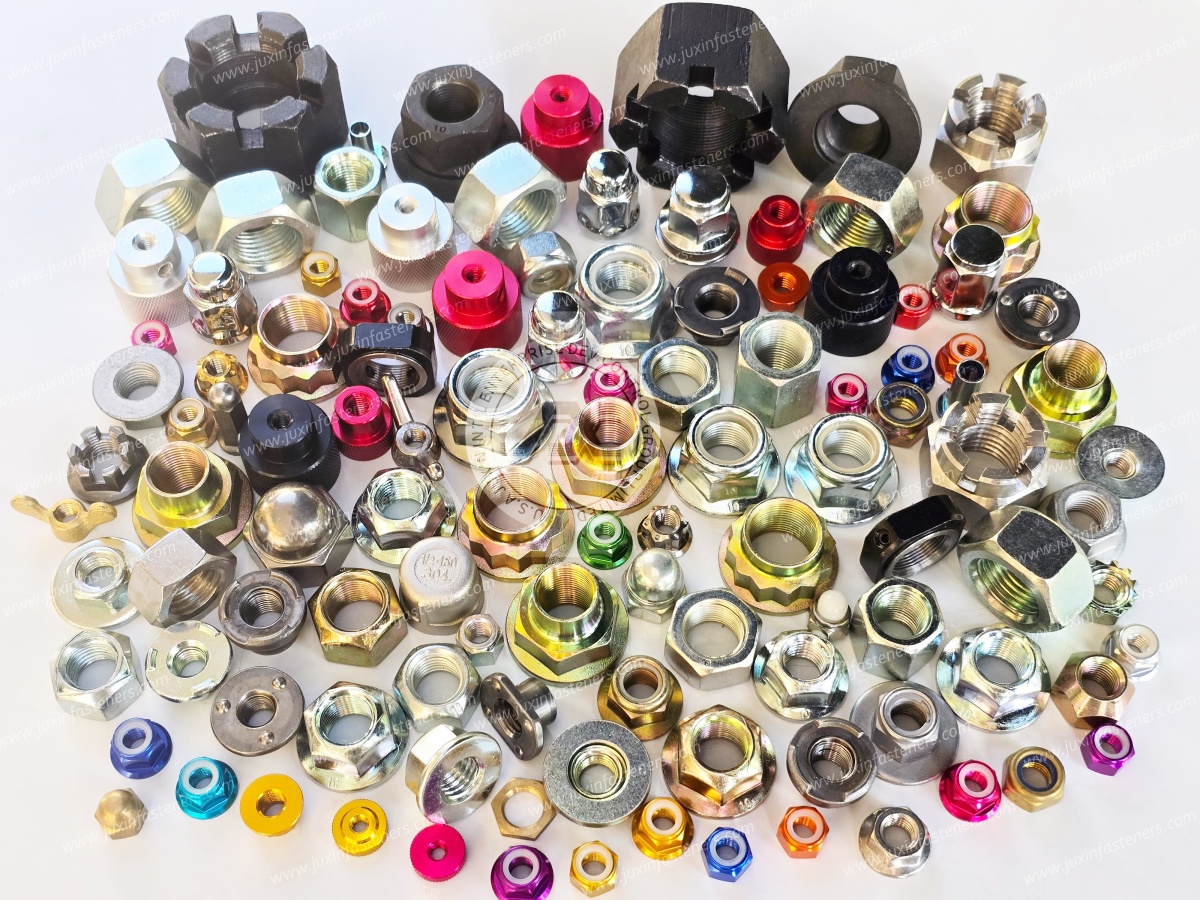
JUXIN FASTENERS — Industrial Fastener Manufacturer | Automotive OEM/ODM Custom Fastener Manufacturing
Website: https://www.juxinfasteners.com
Email: info@juxinfasteners.com
Send your automotive fastener drawings and RFQ to JUXIN FASTENERS for engineering review and a manufacturing quotation.
Contact Us
Tel.:
+86 020 8621 0320
+86 020 3121 6067
E-mail:
Technical Support:
Navigation
SEND INQUIREY