
Call Us
+86 136 6007 9809
Call Us
+86 136 6007 9809

Nov. 21, 2026
Equipment deployed in public or semi-public environments—EV charging pedestals, roadside 5G telecom enclosures, automated payment kiosks, solar inverter cabinets, railway passenger interiors, and urban lighting—faces constant risk of casual vandalism, unauthorized tampering, and copper/component theft. Standard Phillips, slotted, and hex fasteners can be defeated in seconds with pocket tools.
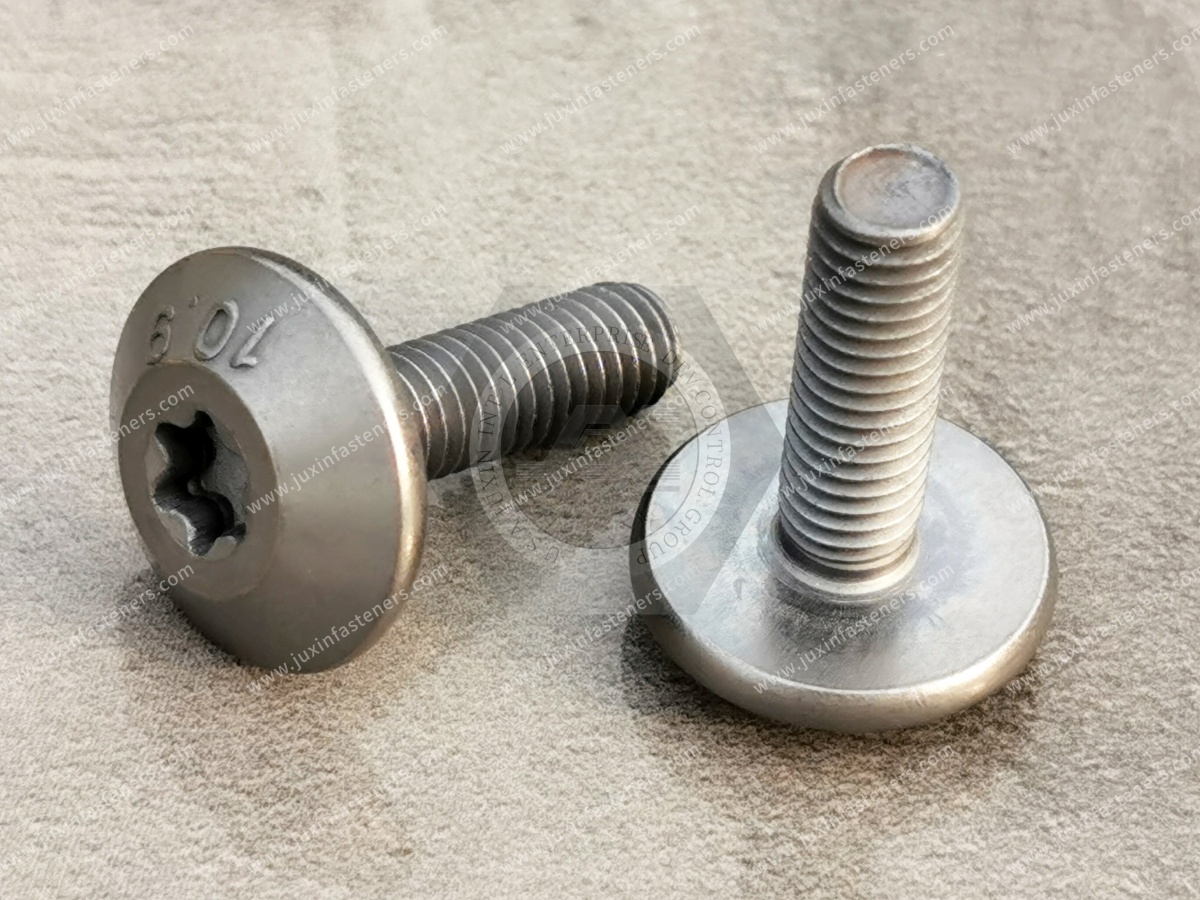
Yet choosing a security fastener purely because its head looks unusual often backfires on OEM assembly lines and field-service programs. Low-torque novelty drives cam out during automated assembly, brittle center pins shear off inside stainless drives, permanent one-way screws turn routine filter swaps into angle-grinder nightmares, and off-the-shelf security bits sold in every hardware store offer far less deterrence than procurement teams assume.
Balancing Deterrence Level Against Torque Capacity and Serviceability
Effective security-fastener selection starts with classifying two operational variables: (1) whether the joint must be opened periodically by authorized technicians (2-way reusable security) or sealed permanently (1-way non-removable security), and (2) the required installation torque and preload.
| Security Fastener Type | Serviceability | Torque Transmission & Cam-Out | Deterrence Tier | Best-Fit OEM Applications & Limitations |
|---|---|---|---|---|
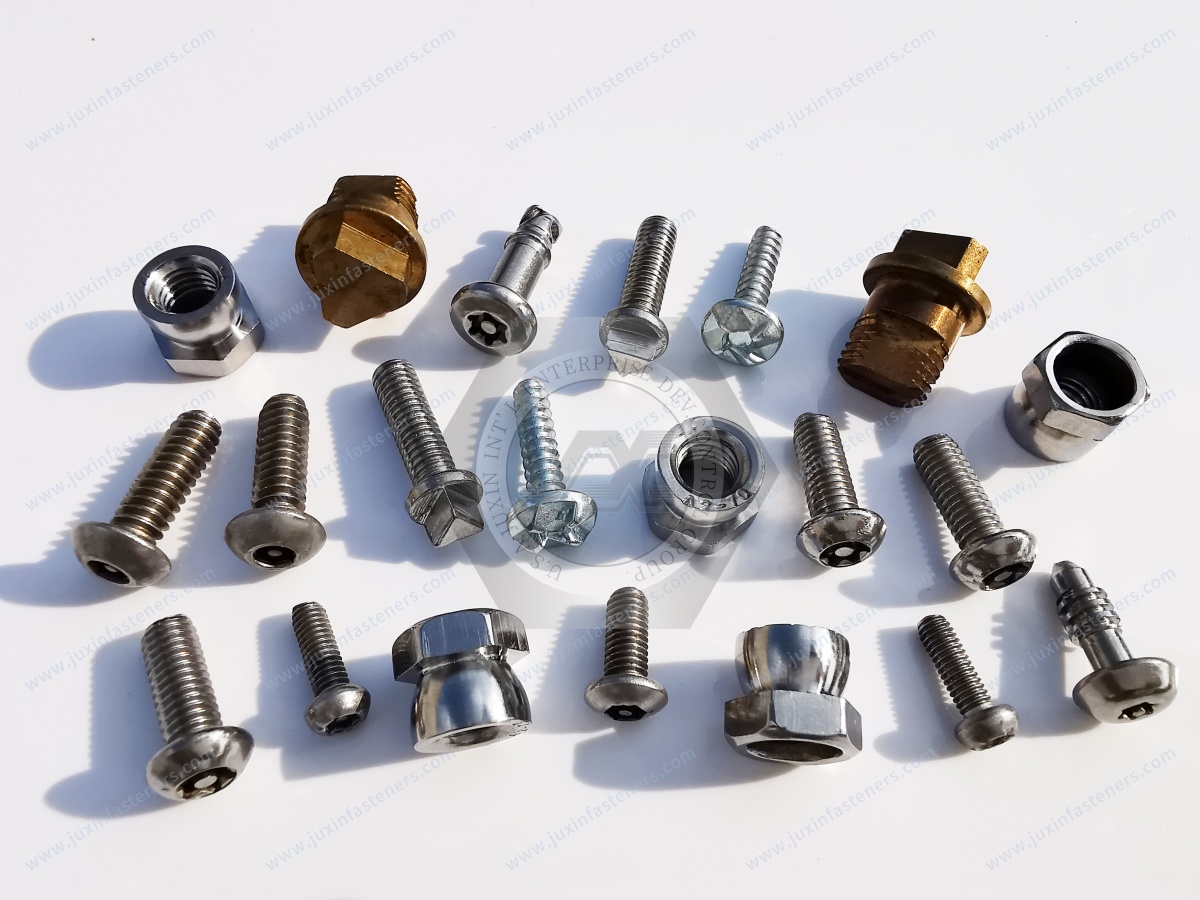
| Pin-in-Hexalobular (Pin-in-Torx) Screws | 2-way reusable (with matching hollow driver bit) | High torque transfer; minimal cam-out thanks to 6-lobe engagement | Medium (bits are commercially available, deters casual opportunistic tampering) | EV charger doors, transit panels, telecom covers, public kiosks needing frequent high-torque servicing |
| Pin-in-Hex (Tamper-Resistant Hex Socket) Screws | 2-way reusable (hollow hex key) | Good torque transfer; slightly higher bit-wear sensitivity than 6-lobe on small sizes | Medium (deters standard Allen-key users) | Machinery guards, commercial fixtures, public benches and enclosures |
| Spanner (Snake-Eye / Pig-Nose) & Tri-Wing Drives | 2-way reusable (dedicated two-pin or three-wing bit) | Low to moderate torque capacity; prone to bit slip/cam-out on high-torque or corroded joints | Medium (uncommon in everyday toolkits) | Light-duty architectural trim, elevator bezels, decorative covers; avoid on high-preload structural joints |
| One-Way Slotted / Clutch-Head Screws | 1-way permanent (tightens with standard flat blade; sloped ramps block unscrewing) | Moderate installation torque; cannot be backed out cleanly without specialized extraction | Medium-High against removal | Permanent public signs, restroom partitions, security hinges; unsuitable where field disassembly is ever needed |
| Breakaway Shear Nuts & Shear Bolts | 1-way permanent (hex drive section shears off at calibrated torque, leaving smooth tamper-resistant cone) | Self-limiting installation torque controlled by engineered shear-neck diameter | Higher deterrence against ordinary tools; not tamper-proof | Solar panels, street furniture, perimeter fencing, railway/infrastructure theft deterrence; verify shear torque window via batch testing |
| Custom Proprietary OEM Security Drives (Made-to-Drawing) | 2-way reusable with strictly controlled OEM-exclusive matching driver bits | Engineered specifically for target assembly torque and automated bit engagement | Potentially higher with controlled tool distribution; security depends on tool access and head geometry | Regulated metering, financial terminals, high-value EV/telecom fleets requiring controlled fleet-wide service access |
Hidden Failure Modes in Security Fastener Assemblies
Center-Pin Shear and Hollow-Bit Breakage: On small-diameter stainless steel Pin-in-Hexalobular or Pin-in-Hex screws (such as M3 or M4), the hollow wall of the mating driver bit is inherently thinner than a solid standard bit. Over-specifying seating torque or driving with impact tools frequently snaps the bit tip or bends the center security pin—rendering the screw unserviceable.
Stainless Steel Galling Inside Tamper-Resistant Drives: Outdoor security fasteners are predominantly 304 (A2) or 316 (A4) stainless steel to prevent rusted, unremovable heads. If stainless security screws gall inside stainless nuts during assembly, extracting a seized tamper-resistant head is dramatically harder than removing a standard hex bolt. Controlled low-RPM electric driving, smooth rolled threads, and OEM-validated anti-galling treatments are essential.
Head-Profile Grip Vulnerability: A sophisticated internal security recess is defeated instantly if a tall cylindrical pan or cheese head protrudes proudly enough to be gripped with locking pliers. Pairing tamper-resistant recesses with low-profile button heads, countersunk flat heads, or recessed counterbores eliminates external wrench purchase.
Inconsistent Shear-Nut Break Torque: On breakaway shear nuts, if material hardness or shear-groove diameter varies across production lots, the hex head either snaps too early (leaving the joint under-clamped) or refuses to shear cleanly at line torque. Tight CNC groove control and batch torque-to-shear verification are mandatory.
Custom OEM Security Drive Economics & Multi-Process Manufacturing
When standard off-the-shelf tamper-resistant drives no longer provide sufficient access control, OEMs can commission a custom proprietary recess or unique external lobular head geometry paired with controlled matching driver keys. As an industrial fastener manufacturer, Juxin Fasteners evaluates security fasteners across cold heading (for high-volume custom punch-formed recesses and button/countersunk heads), CNC machining (for precision shear-nut break grooves, low-to-medium volume proprietary heads, and custom matching driver sockets/keys), thread rolling, and passivated stainless or corrosion-resistant steel finishes.
Tooling considerations—specifically custom heading punches and matching hardened driver bits—are reviewed transparently against Estimated Annual Usage (EAU) during drawing feasibility assessment, ensuring both fastener repeatability and controlled tool supply for the OEM's service network.
Direct Engineering Q&A
Which tamper-resistant screw drive handles the highest assembly torque without cam-out? Among standard 2-way serviceable drives, Pin-in-Hexalobular (Pin-in-Torx) generally provides the strongest torque transfer and lowest cam-out risk compared to spanner or tri-wing drives—making it a reliable choice for automated assembly lines and outdoor stainless joints.
Are tamper-resistant fasteners guaranteed to be completely tamper-proof? No mechanical fastener is 100% immune to destructive power tools given unlimited time. Security fasteners are engineered to deter opportunistic unauthorized access, increase removal time and effort, and restrict normal servicing to authorized personnel carrying matched driver tooling.
Security Fastener OEM Drawing Review & RFQ Checklist
To evaluate standard tamper-resistant screws, breakaway shear nuts, or custom proprietary anti-theft fasteners and matching tooling with Juxin Fasteners, email info@juxinfasteners.com with:
2D & 3D Drawings & Drive Type: 2D PDF drawing and 3D STEP/IGES model specifying standard tamper-resistant drive (Pin-in-Hexalobular, Pin-in-Hex, Spanner, One-Way, Shear Nut) or custom proprietary head/recess geometry.
Serviceability & Torque Targets: 2-way serviceable vs. 1-way permanent requirement, target installation torque (or calibrated shear-off torque window for shear nuts), and head-access constraints.
Material & Outdoor Finish: Alloy grade (304/A2, 316/A4 stainless per ISO 3506, or alloy steel with zinc-nickel/zinc-flake coating), passivation, and anti-galling requirements.
Tooling, Samples & Volume: Whether matching driver bits/keys are needed alongside the fasteners, prototype sample quantities, and Estimated Annual Usage (EAU).
 MORE NEWS
Contact Us
Tel.:
+86 020 8621 0320
+86 020 3121 6067
E-mail:
Technical Support:
Navigation
SEND INQUIREY