
Call Us
+86 136 6007 9809
Call Us
+86 136 6007 9809

Jul. 08, 2026
Understanding Bolt and Nut Strength Classes: Proper Matching for Reliable Threaded Joints
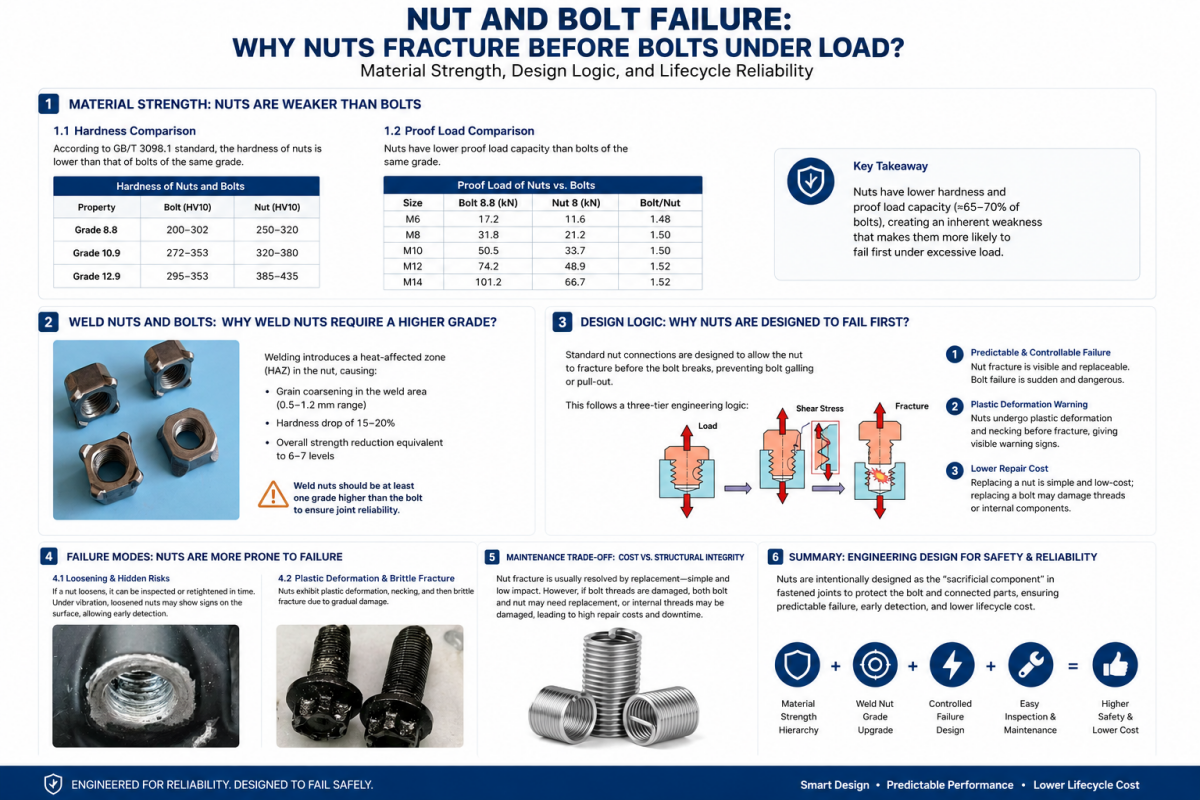
In industrial fastening systems, one of the most common misconceptions is that the bolt should always be stronger than the nut because it carries the primary load.
In reality, international fastening standards such as ISO 898-1 and ISO 898-2 are designed around a different engineering principle: the nut must provide sufficient proof load capacity to support the bolt's tensile performance without fully stripping the threads.
Understanding how bolt strength classes and nut property classes work together is critical for engineers, OEM manufacturers, and procurement professionals selecting threaded fasteners for automotive, transportation, machinery, electrical equipment, renewable energy systems, and structural assemblies.
Understanding Bolt Strength vs. Nut Strength
When discussing fastener strength, many people immediately think about hardness.
However, hardness alone does not determine the performance of a threaded joint.
Bolts Typically Have Higher Hardness
High-strength bolts such as:
Class 8.8 Bolts
Class 10.9 Bolts
Class 12.9 Bolts
are heat-treated to achieve high tensile strength and fatigue resistance.
As bolt strength increases, hardness generally increases as well.
For example:
Bolt Property Class | Typical Tensile Strength |
8.8 | 800 MPa |
10.9 | 1,000 MPa |
12.9 | 1,200 MPa |
Because bolts are designed to withstand axial tensile loading, they often exhibit higher hardness values than their matching nuts.
Why Nuts Must Have Sufficient Proof Load Capacity
The critical performance indicator for nuts is not hardness.
It is the proof load capacity.
According to ISO 898-2, a nut must be capable of withstanding the proof load generated by its matching bolt without experiencing thread deformation or stripping.
Typical matching combinations include:
Bolt Class | Nut Property Class |
8.8 | Class 8 |
10.9 | Class 10 |
12.9 | Class 12 |
This matching ensures that the nut threads remain fully functional while the bolt develops its intended preload.
Load Distribution Is Highly Uneven
One reason nuts require substantial load-bearing capability is that thread loading is not evenly distributed.
Engineering studies have shown that:
The first engaged thread may carry up to 35% of the total load.
The first two threads often carry more than 60% of the applied load.
Thread stresses near the bearing surface are significantly higher than average calculations suggest.
As a result, the internal threads of the nut are subjected to extremely concentrated shear forces.
Without adequate proof load strength, thread stripping can occur long before the bolt reaches its designed tensile capacity.
Why Engineers Prefer Bolt Failure Over Thread Stripping
A fundamental design philosophy in mechanical fastening is:
If overload occurs, the bolt should fail before the nut threads strip.
This approach is intentionally built into international fastener standards and OEM engineering specifications.
1. Predictable Failure Mode
A bolt fracture is generally visible and detectable.
Before failure, bolts often exhibit:
Elastic deformation
Plastic elongation
Necking
Loss of preload
These warning signs provide opportunities for inspection and maintenance.
Thread stripping, by contrast, can occur with little external indication.
The joint may appear intact while losing most of its load-carrying capacity.
2. Improved Safety in Critical Structures
Industries such as:
Automotive manufacturing
Electric vehicle battery systems
Railway transportation
Construction equipment
Industrial machinery
cannot tolerate hidden fastening failures.
A stripped thread in a critical assembly may cause a sudden loss of clamping force without warning.
Therefore, engineers intentionally design threaded joints so that overload results in a more predictable bolt failure rather than concealed thread damage.
3. Lower Maintenance Costs
Replacing a failed bolt is typically straightforward.
However, repairing stripped threads may require:
Re-tapping
Thread inserts
Helical coil repairs
Oversized fasteners
Replacement of expensive structural components
The cost difference can be substantial, especially in production equipment and large-scale assemblies.
Why Weld Nuts Often Require Higher Strength Considerations
When selecting weld nuts, engineers must account for the effects of the welding process itself.
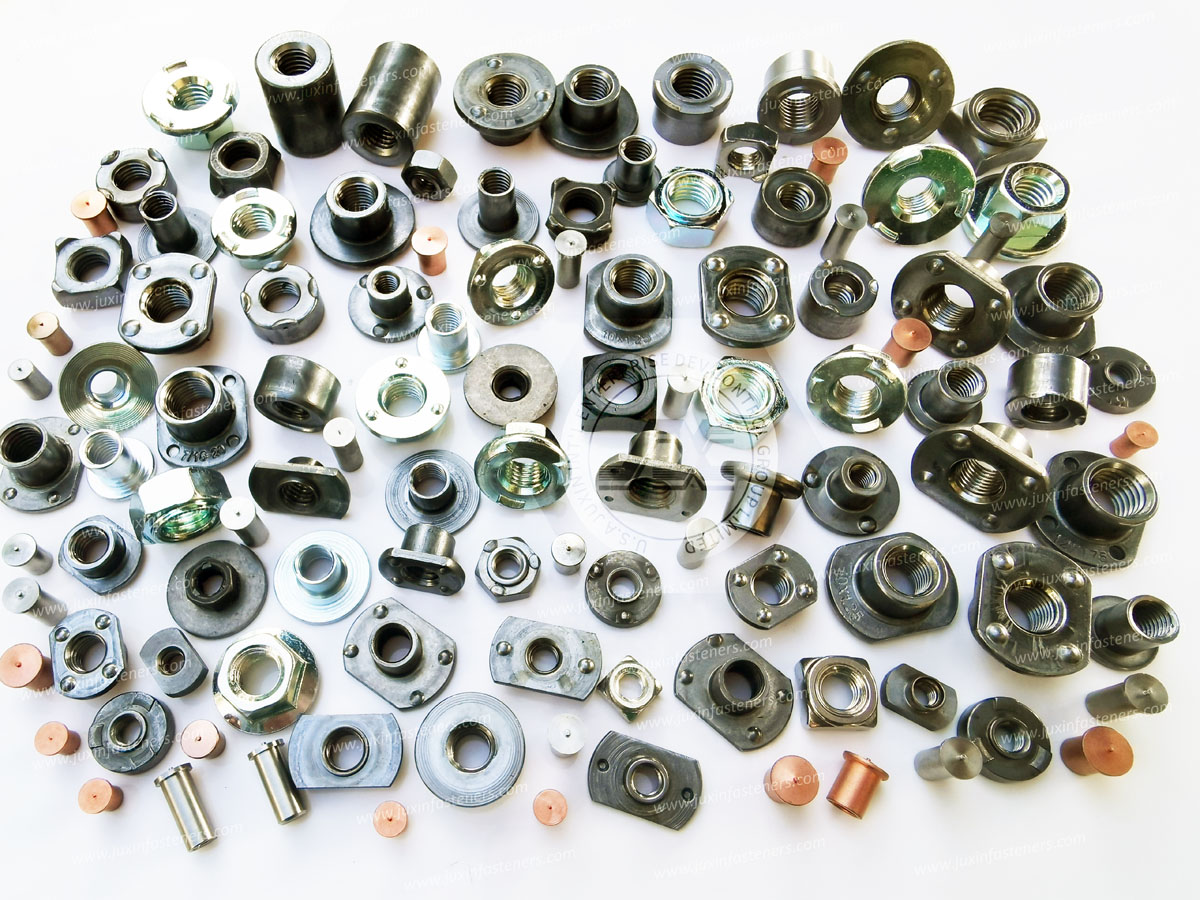
Common welded fastener products include:
Projection Weld Nuts
Hex Weld Nuts
Square Weld Nuts
Flange Weld Nuts
Hex Flange Weld Nuts
These fastening components are widely used in:
Automotive body structures
EV battery pack assemblies
Sheet metal fabrication
Industrial enclosures
Electrical cabinets
Appliance manufacturing
Heat-Affected Zones Can Reduce Mechanical Properties
During resistance welding, localized heating creates a heat-affected zone (HAZ) around the weld area.
Potential consequences include:
Grain growth
Reduced hardness
Reduced thread shear strength
Localized loss of mechanical properties
Depending on material grade and welding parameters, strength reductions may occur in the region closest to the weld projections.
For this reason, many OEM fastening specifications recommend additional validation of welded joints and, in certain applications, selecting weld nuts with sufficient strength margins to compensate for welding effects.
Selecting the Right Weld Nut for High-Strength Assemblies
When high-strength bolts are used in structural applications, the selection of weld nuts becomes especially important.
Engineers should evaluate:
Material Grade
Carbon Steel, Alloy Steel, Stainless Steel
Thread Engagement Length
Adequate thread engagement improves load distribution and stripping resistance.
Welding Process Quality
Proper welding current, pressure, and projection geometry help preserve mechanical performance.
Application Loads
Static loads, vibration loads, impact loads, and fatigue loads all influence fastener selection.
Working with experienced weld nut manufacturers helps ensure consistent performance and compliance with project requirements.
Best Practices for Matching Bolts and Nuts
For reliable threaded joints, engineers should follow these guidelines:
✓ Match bolt property classes with appropriate nut property classes
✓ Follow ISO 898 fastener requirements
✓ Verify proof load performance
✓ Evaluate thread stripping resistance
✓ Consider welding-related strength reductions
✓ Use qualified projection weld nuts and structural fasteners for critical assemblies
✓ Validate preload requirements through testing
Conclusion
The question of whether a bolt or nut is "stronger" cannot be answered by hardness alone.
High-strength bolts generally exhibit greater hardness, but properly designed nuts provide the proof load capacity necessary to support the bolt's full performance.
The ultimate objective of threaded joint design is not to maximize the strength of individual components. It is to control failure modes, maintain preload integrity, and ensure long-term reliability.
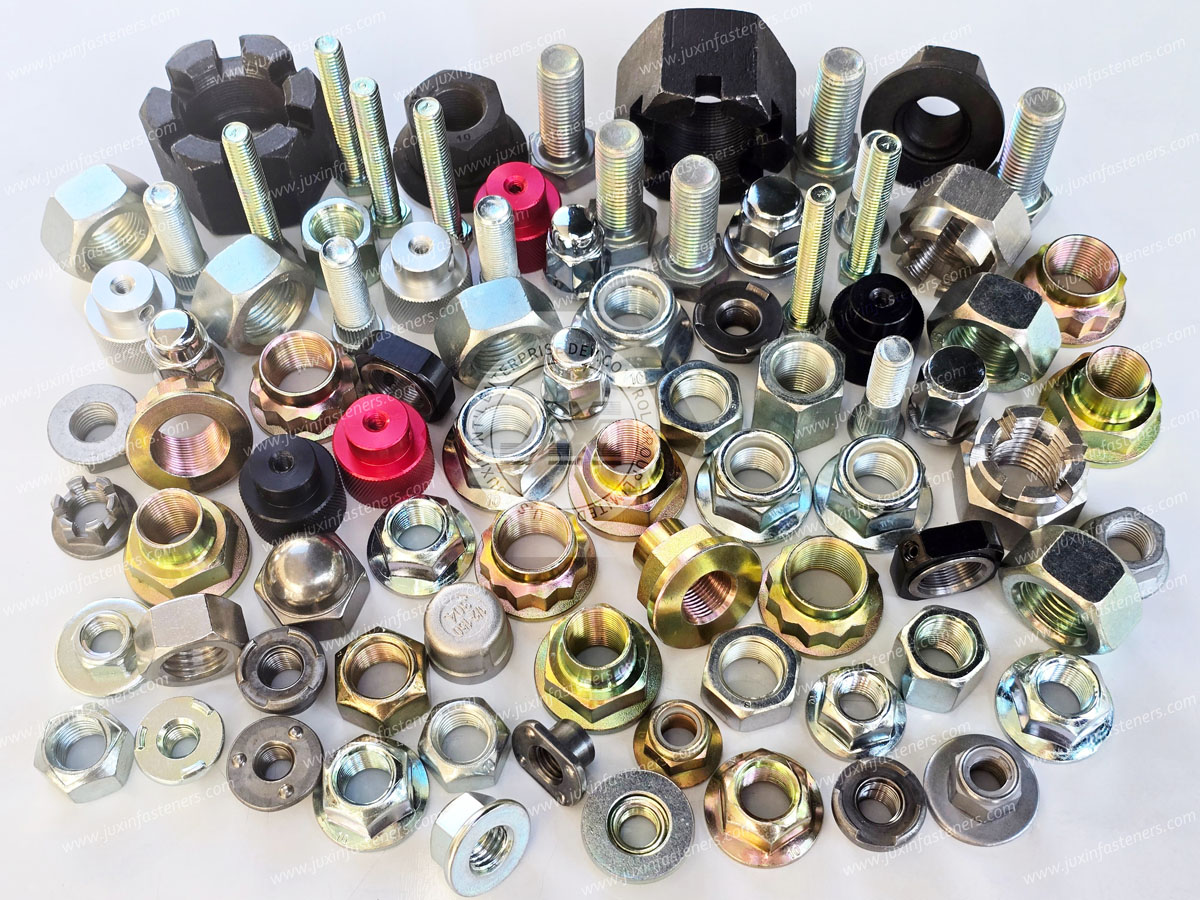
Whether selecting high-strength bolts, weld nuts, projection weld nuts, square weld nuts, hex weld nuts, or structural fastening systems, proper strength-class matching remains one of the most important principles in fastening engineering.
Juxin Fasteners manufactures a complete range of weld nuts, projection weld nuts, hex weld nuts, square weld nuts, flange weld nuts, threaded fasteners, and custom fastening solutions for automotive, industrial, sheet metal, EV battery, and OEM applications worldwide.
 MORE NEWS
Sep. 27, 2026
Sep. 27, 2026
Sep. 27, 2026
Contact Us
Tel.:
+86 020 8621 0320
+86 020 3121 6067
E-mail:
Technical Support:
Navigation
SEND INQUIREY