
Call Us
+86 136 6007 9809
Call Us
+86 136 6007 9809

Jun. 14, 2026
Wheel Bolt Tightening Solution: Preventing Over-Torque Failures in Automotive Wheel Assemblies
Why Proper Wheel Bolt Tightening Matters
A flat tire is one of the most common situations every driver eventually encounters. Replacing a wheel often seems straightforward, yet one critical step is frequently overlooked: properly tightening the wheel bolts or nuts.
In many repair shops, technicians use long breaker bars, extension pipes, or even body weight to tighten wheel bolts as much as possible. The assumption is simple: tighter means safer.
However, automotive engineering standards tell a different story.
Excessive tightening can significantly reduce the service life of wheel fasteners, damage wheel hubs, distort wheel mounting surfaces, and even increase the risk of bolt failure under dynamic loading.
This article explains the engineering principles behind wheel bolt tightening and provides practical solutions for achieving safe, reliable wheel fastening in passenger and commercial vehicles, as well as performance automotive applications.
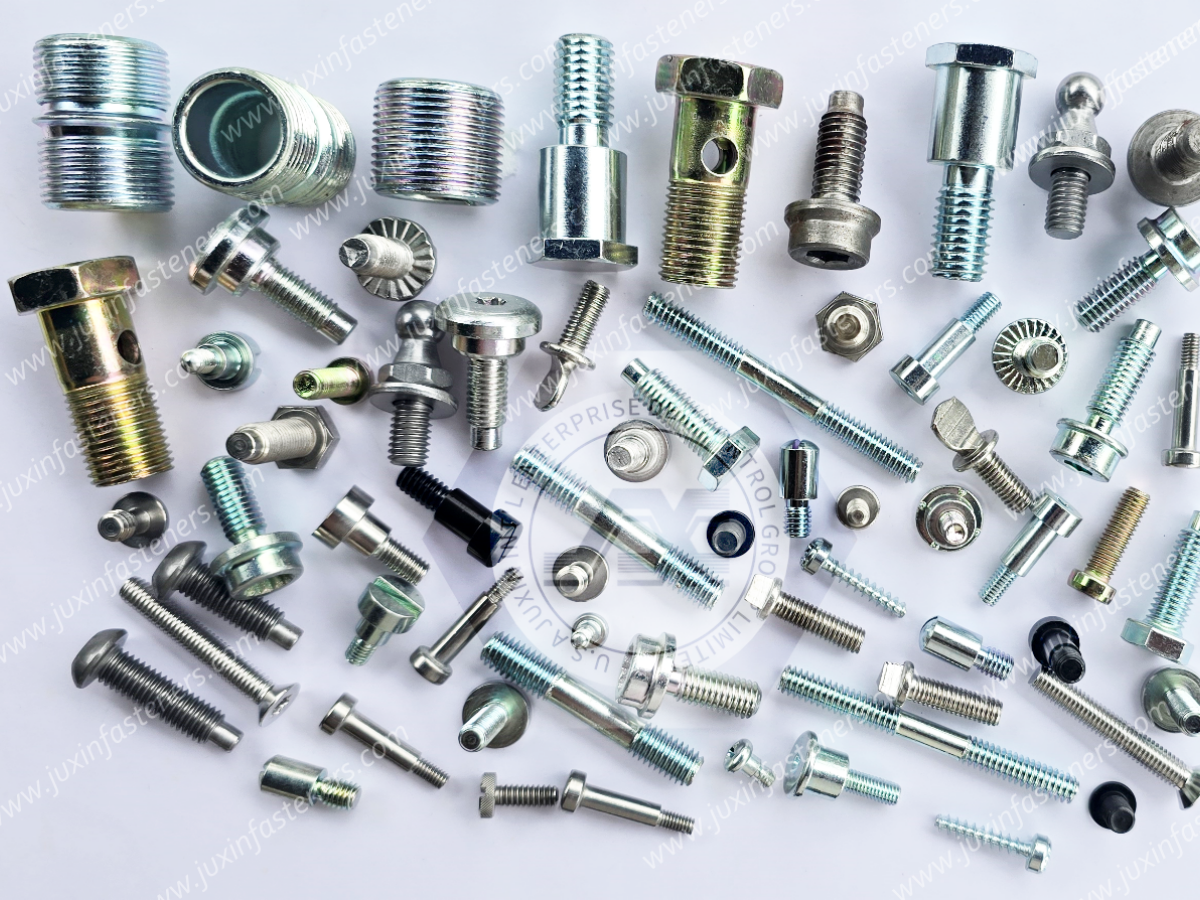
Understanding Automotive Wheel Fastening Systems
Modern vehicle wheel assemblies generally utilize one of two fastening methods:
Wheel Bolt Systems
In a wheel bolt system, the bolt passes through the wheel and brake rotor before threading directly into the wheel hub.
This design is commonly found on many European vehicles, including:
Volkswagen
Audi
BMW
Mercedes-Benz
Advantages
Easy replacement of damaged wheel bolts
Simplified hub design
Lower hub manufacturing cost
Limitations
More difficult wheel installation during service
Slightly greater torque relaxation tendency compared with wheel stud systems
Wheel Stud and Nut Systems
In a wheel stud system, permanent wheel studs are pressed into the hub. Wheel nuts secure the wheel onto the studs.
This design is widely used in:
North American vehicles
Japanese vehicles
Many commercial vehicles and trucks
Advantages
Easier wheel installation
Improved assembly efficiency
Better retention of clamp load
Limitations
Damaged studs require hub service or stud replacement
Higher maintenance cost when fasteners are damaged
Why Over-Tightening Wheel Bolts Is Dangerous
Many people assume that wheel bolts should be tightened as much as possible because wheels experience:
High-speed rotation
Cornering forces
Braking loads
Road impacts
Dynamic vibration
While wheel joints are indeed safety-critical connections, excessive torque creates several serious problems.
1. Permanent Plastic Deformation
When the tightening torque exceeds the elastic range of a high-strength bolt, the fastener enters the plastic deformation zone.
Once yielded, the bolt permanently stretches and can no longer provide a predictable clamp force.
This significantly reduces reusability and may require replacement after removal.
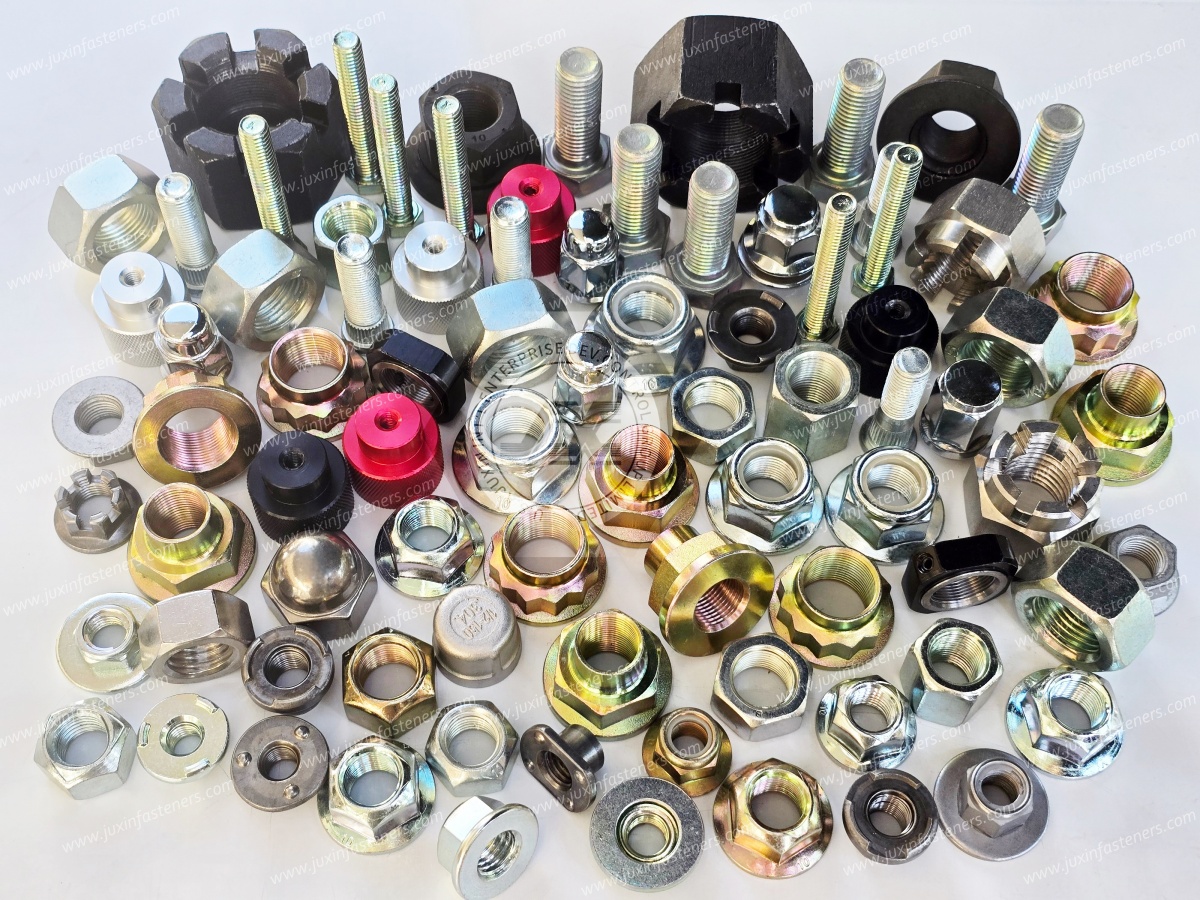
2. Increased Risk of Bolt Fracture
Over-tightened wheel bolts already carry excessive tensile stress before the vehicle begins operating.
Additional service loads can push the bolt beyond its fatigue limit, increasing the likelihood of:
Fatigue cracking
Sudden bolt fracture
Wheel retention failure
For safety-critical automotive joints, maintaining a sufficient safety margin below the yield strength is essential.
3. Thread Damage and Stripping
Excessive tightening transfers high loads into the internal hub threads.
Repeated service cycles may cause:
Thread deformation
Galling
Stripped threads
Expensive hub replacement
This issue is particularly critical for aluminum wheel hubs and lightweight vehicle platforms.
4. Damage to Wheel Seating Surfaces
Many modern wheels utilize aluminum alloys to reduce vehicle weight.
Over-tightening can:
Crush wheel seating surfaces
Distort mounting interfaces
Causes uneven load distribution
Reduce wheel-to-hub contact integrity
Over time, this may contribute to vibration and wheel assembly issues.
Engineering Requirements for Wheel Clamp Load
According to automotive fastening design practices aligned with ISO, SAE, and VDI engineering principles, wheel joints are designed to achieve a specific clamp force rather than maximum torque.
For a typical passenger vehicle utilizing five wheel bolts:
Steel Wheels
Minimum clamp load:
≥ 35 kN
Aluminum Alloy Wheels
Minimum clamp load:
≥ 25 kN
Furthermore, after multiple service cycles, wheel fasteners must continue to meet these clamp-load requirements.
Automotive manufacturers commonly validate wheel bolts after repeated installation and removal cycles to ensure consistent performance.
Recommended Wheel Bolt Tightening Torque
For many passenger vehicles equipped with M12 wheel bolts:
Parameter | Typical Value |
Recommended Assembly Torque | 120 N·m |
Maximum Service Torque | 140 N·m |
Typical Yield Torque | 180–200 N·m |
The recommended service torque is intentionally kept well below the bolt yield point.
This ensures:
Elastic operation
Reusability
Stable preload
Long fatigue life
Unlike torque-angle tightening used on engine cylinder head bolts, wheel bolts should not be tightened into the yield zone.
Why Torque-Controlled Tightening Is Essential
Professional automotive assembly plants do not rely on technician judgment alone.
Instead, they use:
Calibrated torque wrenches
Digital torque tools
Automated tightening systems
Multi-spindle synchronized wheel fastening equipment
These systems ensure that every wheel fastener receives the correct preload.
The difference between:
"Tight enough"
"Specified torque"
is often the difference between a reliable wheel assembly and a potential safety issue.
Best Practice for Wheel Installation
Step 1 – Initial Seating
Install all wheel bolts by hand.
Lightly tighten in a star pattern to seat the wheel evenly against the hub.
Step 2 – Intermediate Tightening
Apply approximately 50–70% of final torque.
Continue using a cross-pattern sequence.
Step 3 – Final Torque
Use a calibrated torque wrench.
Tighten each wheel bolt to the specified vehicle torque value.
For many passenger vehicles:
120 N·m is the typical target value.
Always follow the vehicle manufacturer's specifications.
Step 4 – Re-Torque Inspection
For commercial vehicles, off-road vehicles, and fleet applications, verify torque after the initial operating period according to maintenance requirements.
Fastener Selection for Wheel Applications
For automotive wheel assemblies, recommended products include:
High Strength Wheel Bolts
Automotive Wheel Studs
Wheel Nuts
Alloy Steel Bolts
Class 10.9 Bolts
Class 12.9 Bolts
Zinc Flake Coated Fasteners
Zinc Nickel Coated Fasteners
Corrosion-Resistant Automotive Fasteners
OEM Wheel Fasteners
Automotive Structural Fasteners
Protective coatings such as zinc-nickel plating and zinc flake coating improve corrosion resistance while maintaining controlled friction characteristics required for accurate preload generation.

Conclusion
Wheel bolt safety is not achieved by applying maximum force. It is achieved by applying the correct force.
Over-tightening can lead to:
Permanent bolt stretching
Reduced fatigue life
Thread stripping
Wheel seat damage
Increased maintenance costs
For reliable wheel retention, automotive engineers recommend:
✔ Using calibrated torque tools
✔ Following OEM torque specifications
✔ Tightening in a cross-pattern sequence
✔ Avoiding yield-zone tightening
✔ Replacing damaged or overstretched wheel fasteners
By combining proper tightening procedures with high-quality automotive wheel bolts and wheel fastening systems, manufacturers and service technicians can ensure long-term safety, durability, and performance throughout the vehicle lifecycle.
 MORE NEWS
Sep. 27, 2026
Sep. 27, 2026
Sep. 27, 2026
Contact Us
Tel.:
+86 020 8621 0320
+86 020 3121 6067
E-mail:
Technical Support:
Navigation
SEND INQUIREY