
Call Us
+86 136 6007 9809
Call Us
+86 136 6007 9809

Aug. 28, 2026
Vacuum Chamber Fasteners: Vented Screws and Vacuum-Compatible Fastening Solutions
Custom Vented Screws and Precision Fasteners for Vacuum Equipment OEMs
Vacuum chamber fasteners are mechanical fastening components selected for equipment operating under reduced-pressure conditions, where trapped gas,
material outgassing, surface contamination, temperature exposure, and joint reliability may influence system performance.
Unlike ordinary industrial fastening applications, vacuum equipment can impose requirements that extend beyond thread size, tensile strength, and dimensional accuracy.
A conventional screw installed in a blind threaded hole may create a trapped gas volume.
During evacuation, gas can escape slowly through narrow clearances, potentially contributing to a virtual leak and extending pump-down time.
For suitable applications, vented screws provide a designed gas escape path that can reduce this particular source of trapped gas.
However, venting alone does not make a fastener vacuum-compatible. Material selection, cleaning, surface condition, mechanical loading, temperature, and installation geometry must also be considered.
JUXIN FASTENERS supplies custom industrial fasteners and precision CNC machined components for drawing-based OEM applications, including vented screws, custom bolts,
threaded studs, washers, spacers, pins, and other non-standard mechanical components.
Specialized vacuum compatibility, cleaning, testing, and packaging requirements must be defined and evaluated according to each customer's equipment specifications.
Why Fastener Design Matters in Vacuum Equipment
Fasteners inside vacuum chambers form part of the mechanical assembly, but their geometry and material can also affect the vacuum environment.
Engineers may need to evaluate trapped gas volumes, blind threaded holes, material outgassing, surface contamination, thermal cycling, corrosion exposure, and joint stability.
The appropriate solution depends on the chamber design, operating pressure, temperature range, process environment, and the location of the fastener.
A screw installed outside the vacuum boundary may have different requirements from a screw installed inside the evacuated volume.
Similarly, a fastener used in a laboratory rough-vacuum fixture may not be suitable for a semiconductor high-vacuum or ultra-high-vacuum application.
Vacuum fastener selection should therefore be integrated into the equipment design rather than treated solely as a standard hardware purchasing decision.

Understanding Virtual Leaks in Vacuum Chambers
A virtual leak occurs when gas trapped within a system is released slowly into the evacuated volume, producing behavior that can resemble a real leak.
Unlike a real leak, which allows gas to enter through an unintended path from outside the vacuum system, a virtual leak can arise from gas already trapped within internal cavities or restricted spaces.
Blind threaded holes are one possible source.
When a conventional screw is installed into a blind tapped hole, gas may remain in the clearance around the screw or at the bottom of the hole.
During pump-down, this gas may escape gradually through narrow thread clearances.
The resulting gas load can interfere with evacuation performance, particularly where the trapped volume is significant relative to the system's pumping requirements.
However, slow pump-down or persistent gas load does not automatically prove that a fastener is causing a virtual leak.
Other causes may include surface desorption, material outgassing, trapped cavities elsewhere in the assembly, or genuine leaks.
A suitable vacuum-system assessment should distinguish between these mechanisms before selecting a corrective fastening solution.
What Are Vented Screws?
A vented screw is a threaded fastener incorporating a passage intended to allow gas to escape from a trapped volume into an appropriate evacuated region.
The venting feature may be formed through the screw or incorporated into a suitable alternative geometry.
Vented screws are commonly considered where a conventional solid fastener could obstruct evacuation of a blind threaded hole or another enclosed space.
Depending on the equipment design, applications may include vacuum chambers, semiconductor processing equipment, vacuum fixtures, electron-beam systems, analytical instruments, and laboratory vacuum assemblies.
A vented screw is not simply a standard screw with an arbitrary drilled hole.
The vent location, passage geometry, fastener dimensions, material, and surrounding assembly must be evaluated together.
The passage must communicate with the trapped volume and provide an appropriate route for gas to escape.
If the vent does not connect the trapped region to the intended evacuated space, it may provide little or no benefit.
Vented Screw Designs for Vacuum Chambers
Different venting configurations may be considered according to the fastener geometry and chamber construction.
Axially Vented Screws
An axially vented screw incorporates a passage along the fastener's axis.
In a suitable blind-hole assembly, this passage may provide a route for trapped gas to escape from the bottom of the threaded hole toward the evacuated region.
Axial venting is often associated with vented socket head cap screws and other custom threaded fasteners.
However, the actual vent geometry must be designed to maintain the required mechanical performance.
Radially Vented Screws
A radial vent hole extends across part of the fastener and may connect with an axial passage or another designed gas path.
Radial venting can be useful in selected geometries where a direct axial path alone does not provide the intended connection.
The hole location must be evaluated because removing material from a loaded threaded section or shank can introduce stress concentrations.
Custom Vented Socket Head Cap Screws
Vented socket head cap screws combine a familiar socket-drive configuration with a specified venting passage.
They may be considered where equipment designers require compact head geometry, tool access, and a defined method of evacuating trapped gas.
For metric socket head cap screws, ISO 4762 may be a relevant dimensional reference for the standard screw form.
For inch-series socket head cap screws, ASME B18.3 may be relevant.
However, adding a vent passage creates a modified or custom component. Compliance with every mechanical requirement of the unmodified standard must not be assumed.
The final drawing should define the vent feature, material, thread, dimensions, and any required strength verification.
Special Vented Bolts and Threaded Components
Custom vented bolts may incorporate non-standard head dimensions, thread lengths, shank geometry, or vent passages.
Depending on the application, other specialized components may include vented studs, threaded pins, or machined fastening interfaces.
Not every vacuum assembly requires vented fasteners.
Where a through-hole or another properly designed evacuation path already prevents gas entrapment, an additional vent feature may be unnecessary.
Engineering Design Considerations for Vented Screws
The effectiveness and reliability of a vented screw depend on the relationship between the fastener and the surrounding assembly.
Vent Passage Location
The vent must communicate with the volume that requires evacuation.
A passage positioned incorrectly may leave the trapped volume isolated.
Engineers should review the blind-hole depth, thread engagement, screw tip geometry, and any intersecting passages.
Vent Passage Size
The passage must provide adequate conductance for the intended application while preserving sufficient mechanical strength.
A larger passage may improve gas flow in some geometries, but it also removes more material from the fastener.
No universal vent diameter is suitable for every screw size or vacuum application.
The appropriate dimensions depend on the required gas path, pressure regime, component geometry, and mechanical loading.
Mechanical Strength and Stress Concentrations
Drilling a vent passage changes the fastener's cross-sectional geometry.
This may influence tensile strength, torsional capacity, fatigue behavior, and local stress distribution.
The effect depends on the passage diameter, location, material, and loading conditions.
For highly loaded joints, the modified fastener should be evaluated using appropriate engineering calculations or testing.
A vented screw should not automatically be assigned the same load capacity as an otherwise identical solid screw.
Thread Engagement
Vented fasteners must still provide adequate thread engagement for the intended mechanical load.
The required engagement depends on the fastener material, mating material, thread geometry, and joint design.
Where screws are installed into aluminum or other relatively soft materials, internal thread strength may be a limiting factor.
Installation Torque
Installation torque should be established from the actual joint requirements and modified fastener geometry.
The presence of a vent passage may affect the permissible installation conditions.
Torque values intended for standard solid screws should not automatically be transferred to custom vented screws without engineering review.
Venting Is Not a Vacuum Seal
A vented screw is designed to provide a gas escape path, not to create a vacuum-tight seal.
This distinction is particularly important where threaded fasteners pass through a chamber wall or form part of the pressure boundary.
A vent passage must not create an unintended connection between the vacuum chamber and the external atmosphere.
Where a fastener penetrates the vacuum boundary, the complete sealing arrangement must be evaluated separately.
Vacuum-Compatible Fastener Materials
Material selection is an important part of vacuum fastener design.
The appropriate material depends on operating pressure, temperature, mechanical loading, process gases, chemical exposure, magnetic requirements, and contamination-control expectations.
Stainless Steel Vacuum Fasteners
Stainless steel is commonly considered for vacuum equipment because of its mechanical properties, corrosion resistance, and availability in precision fastener forms.
Austenitic stainless steels may be suitable for certain vacuum applications, but their suitability depends on the specific grade, processing history, surface condition, and operating environment.
Stainless steel alone does not establish low outgassing or ultra-high-vacuum compatibility.
316L Stainless Steel Vented Screws
316L stainless steel may be specified where its corrosion behavior and material characteristics are appropriate.
However, 316L is not automatically suitable for every process gas, cleaning chemical, or vacuum temperature.
Its magnetic response can also be influenced by material condition and cold working.
Where low magnetic permeability is important, the required limits and verification method should be specified.
Titanium Fasteners
Titanium may be considered for specialized applications requiring particular strength-to-weight, corrosion, or material characteristics.
However, titanium threaded connections may require attention to galling, surface condition, and installation methods.
Its suitability must be evaluated against the complete operating environment and procurement requirements.
Aluminum Vacuum Components
Aluminum may be appropriate for selected lightweight mounting components, spacers, and precision machined interfaces.
However, aluminum threaded connections require consideration of thread engagement, mechanical strength, and repeated assembly.
Surface treatments and material compatibility should also be evaluated.
Customer-Specified Alloys
Certain vacuum equipment applications require materials selected according to established customer engineering specifications.
Where material substitutions are proposed, approval should be obtained before manufacturing.
The final selection should be based on the component's mechanical and environmental requirements rather than the term "vacuum-compatible" alone.
Outgassing and Material Compatibility
Outgassing refers to the release of gas from materials or their surfaces under vacuum conditions.
Potential contributors include absorbed gases, surface moisture, machining residues, oils, lubricants, coatings, and certain nonmetallic materials.
Outgassing behavior depends on the material, surface condition, temperature, vacuum environment, and prior processing.
A fastener made from an otherwise suitable alloy may still introduce unwanted gas loads if its surface contains unsuitable residues.
Lubricants and Thread-Locking Materials
Lubricants, anti-seize compounds, and thread-locking adhesives may affect outgassing and contamination behavior.
Their use should be evaluated against the actual vacuum environment and customer specifications.
A product suitable for conventional industrial machinery should not automatically be considered suitable for vacuum processing equipment.
Coatings and Surface Treatments
Coatings may influence corrosion resistance, friction, and surface condition.
However, some coatings or treatment residues may introduce contamination or outgassing concerns.
Where coatings are specified, engineers should evaluate their adhesion, dimensional effects, temperature compatibility, and vacuum-related requirements.
Temperature and Thermal Cycling
Vacuum equipment may experience elevated temperatures or repeated thermal cycles.
These conditions can influence material properties, fastener preload, and differential expansion between connected components.
Where stainless steel fasteners are used with aluminum or other materials, differences in thermal expansion should be evaluated when they could affect joint stability.
Surface Finish, Cleaning and Contamination Control
Vacuum equipment fasteners may require controlled surface conditions to support cleanliness and reduce unwanted contamination.
Depending on the application, customers may specify surface roughness, polishing, passivation, burr control, cleaning procedures, and packaging requirements.
Burr Control for Vented Passages
Drilling small vent passages can create burrs at passage entrances, exits, or intersections.
These burrs may obstruct the intended gas path or become sources of loose particles.
For custom vented screws, inspection planning should consider both the external geometry and the internal vent feature.
Where the passage is too small or inaccessible for conventional inspection, the manufacturing and verification method should be agreed before production.
Passivation of Stainless Steel Components
Chemical passivation may be specified for suitable stainless steel components.
ASTM A967/A967M may be relevant where stainless steel passivation is required.
However, passivation does not automatically establish vacuum compatibility, particle cleanliness, or a defined outgassing performance.
Cleaning Requirements
Cleaning procedures should be selected according to the component material, surface treatment, process environment, and customer acceptance criteria.
Potential considerations include removal of machining oils, loose particles, and other manufacturing residues.
Specialized cleaning requirements should be communicated during the RFQ stage rather than introduced after production.
Packaging and Handling
Cleaned components can become contaminated during handling or transportation.
Where necessary, packaging materials, handling procedures, and labeling should be defined according to customer specifications.
Cleanroom packaging or controlled handling should not be claimed unless the required procedures and acceptance criteria have been established.
Custom Vacuum Screws and Threaded Components
Standard catalog hardware does not always match the requirements of specialized vacuum equipment.
JUXIN FASTENERS supports drawing-based manufacturing of custom screws, bolts, studs, washers, threaded pins, and precision machined fastening components.
Potential custom features include special head geometry, non-standard thread lengths, axial or radial vent passages, precision diameters, slots, cross-holes, and customer-specified surface requirements.
Custom manufacturing allows equipment designers to define the required component geometry rather than redesigning every assembly around a standard catalog part.
However, the manufacturing feasibility and mechanical performance of each custom feature must be evaluated.
Metric and Inch Thread Specifications
Vacuum equipment manufacturers may use different thread systems depending on the equipment platform and target market.
ISO metric threads may be specified according to relevant ISO thread standards, including ISO 261 and ISO 965.
Unified UNC/UNF threads may be specified according to ASME B1.1.
Metric, UNC/UNF, and British Whitworth thread systems are not directly interchangeable.
A nominal metric-to-inch diameter conversion is only a dimensional reference and does not establish thread compatibility.
For custom vented fasteners, the drawing should identify the exact thread system, nominal size, pitch or threads per inch, tolerance class, and required engagement.
Precision CNC Machined Components for Vacuum Equipment
Vacuum chambers, fixtures, semiconductor processing equipment, and analytical instruments may require additional precision mechanical components.
Typical examples include locating pins, spacers, sleeves, bushings, shafts, brackets, threaded mounting blocks, and custom mechanical interfaces.
JUXIN FASTENERS supports drawing-based CNC machining requirements for these types of components.
For example, a custom threaded mounting block may need to be evaluated together with its mating vented screw.
The assembly review should consider thread engagement, blind-hole depth, gas escape path, material compatibility, and installation access.
Coordinating related components can help identify dimensional or functional problems before production.
Manufacturing Repeatability and Quality Control
For vacuum equipment OEM manufacturing, a successful process must provide consistent dimensions and defined acceptance characteristics across repeat production orders.
The inspection plan should begin with the approved drawing and intended component function.
Depending on customer requirements, inspection may include:
Thread dimensions and functional gauge verification
Overall dimensional measurement
Hole diameter and positional inspection
Vent passage geometry and continuity checks
Surface condition and burr inspection
Material identification and documentation review
Hardness verification when specified
Functional fit or assembly inspection
Project-specific cleanliness or surface verification
For vented screws, verifying that the passage is open and correctly positioned may be particularly important.
A component can meet its external dimensional requirements while still containing a blocked or incorrectly machined vent passage.
Inspection should therefore address the features that determine the fastener's actual function.
Where specialized vacuum testing, outgassing evaluation, or cleaning verification is required, the scope and acceptance criteria must be separately defined.
OEM Applications for Vacuum Fastening Solutions
Custom vacuum fasteners and vented screws may support several types of industrial equipment.
Semiconductor Manufacturing Equipment
Vented screws and precision threaded components may be used in suitable semiconductor processing chambers, vacuum fixtures, and related mechanical assemblies.
Material and cleanliness requirements depend on the specific process environment.
Industrial Vacuum Processing Equipment
Custom fasteners may support vacuum chambers, mechanical fixtures, and industrial vacuum systems.
The appropriate design depends on operating pressure, temperature, and mechanical loading.
Electron-Beam Equipment
Precision threaded components may be used in electron-beam systems where vacuum performance and mechanical stability are important.
Application-specific material, magnetic, and contamination requirements must be evaluated.
Analytical and Laboratory Instruments
Specialized fastening components may support analytical instruments and laboratory equipment operating under controlled vacuum conditions.
Electronics Manufacturing Equipment
Custom mechanical components may be used in precision manufacturing systems incorporating vacuum fixtures or controlled processing environments.
Industrial Automation
Precision fasteners and CNC machined parts may support automated systems that incorporate vacuum chambers, vacuum fixtures, or related mechanical assemblies.
How to Specify Vented Screws for an OEM RFQ
A complete technical specification helps engineering and procurement teams evaluate the correct manufacturing process, inspection requirements, and commercial quotation.
When requesting custom vented screws or vacuum chamber fasteners, customers should provide:
Engineering drawing or 3D CAD model
Intended vacuum level or operating pressure range
Material grade and applicable specification
Thread system, size, and tolerance
Fastener head geometry and overall dimensions
Axial or radial vent passage requirements
Blind-hole geometry and mating component information
Mechanical loading and installation requirements
Operating temperature range
Process gas or chemical exposure
Surface finish and cleaning requirements
Packaging and handling requirements
Prototype quantity and expected production volume
Inspection and documentation requirements
Not every project requires all of these specifications.
However, the intended installation location and vacuum-system configuration should be communicated so that the manufacturer can identify relevant manufacturing and inspection considerations.
OEM Supplier Development and Procurement Considerations
For vacuum equipment manufacturers, purchasing managers, supplier development teams, and supply chain professionals,
sourcing custom vented screws requires coordination between engineering, manufacturing, quality, and procurement.
A lower quoted unit price may not represent the lowest total procurement cost if the component requires additional inspection, cleaning, rework, or assembly modification.
Standard Versus Custom Vented Screws
Standard vented fasteners may be suitable where their dimensions, materials, and vent geometry meet the design requirements.
Custom vented screws may be appropriate where the assembly requires special head dimensions, thread lengths, vent passages, or other features.
Manufacturing Feasibility
Small vent passages, deep drilled holes, intersecting passages, and tight tolerances may increase manufacturing complexity.
These requirements should be evaluated before quotation.
MOQ and Lead Time
Minimum order quantities and manufacturing lead times depend on component geometry, material availability, machining operations, finishing, inspection, packaging, and order volume.
Drawing Revision Control
For repeat OEM orders, drawing revisions should clearly identify changes to vent geometry, thread dimensions, material, or surface requirements.
Inspection and Documentation
Customers should define which characteristics require inspection and whether material certificates, inspection records, or other documentation are necessary.
Cost Optimization for Custom Vacuum Fasteners
Engineering and procurement decisions can influence the total manufacturing cost of custom vented screws.
Using a standard screw form as the starting point may simplify manufacturing where the required vent geometry can be incorporated without compromising the design.
However, custom venting may require additional machining, burr removal, inspection, and cleaning.
Applying tight tolerances only to critical features can help avoid unnecessary manufacturing cost.
Where multiple vacuum components share compatible materials and thread specifications, standardization may simplify purchasing and maintenance.
Production quantity planning and clear drawing revisions can also support more efficient repeat-order management.
The objective is to balance vacuum-system requirements, mechanical reliability, manufacturing feasibility, and total procurement cost.
Custom Vacuum Fasteners from JUXIN FASTENERS
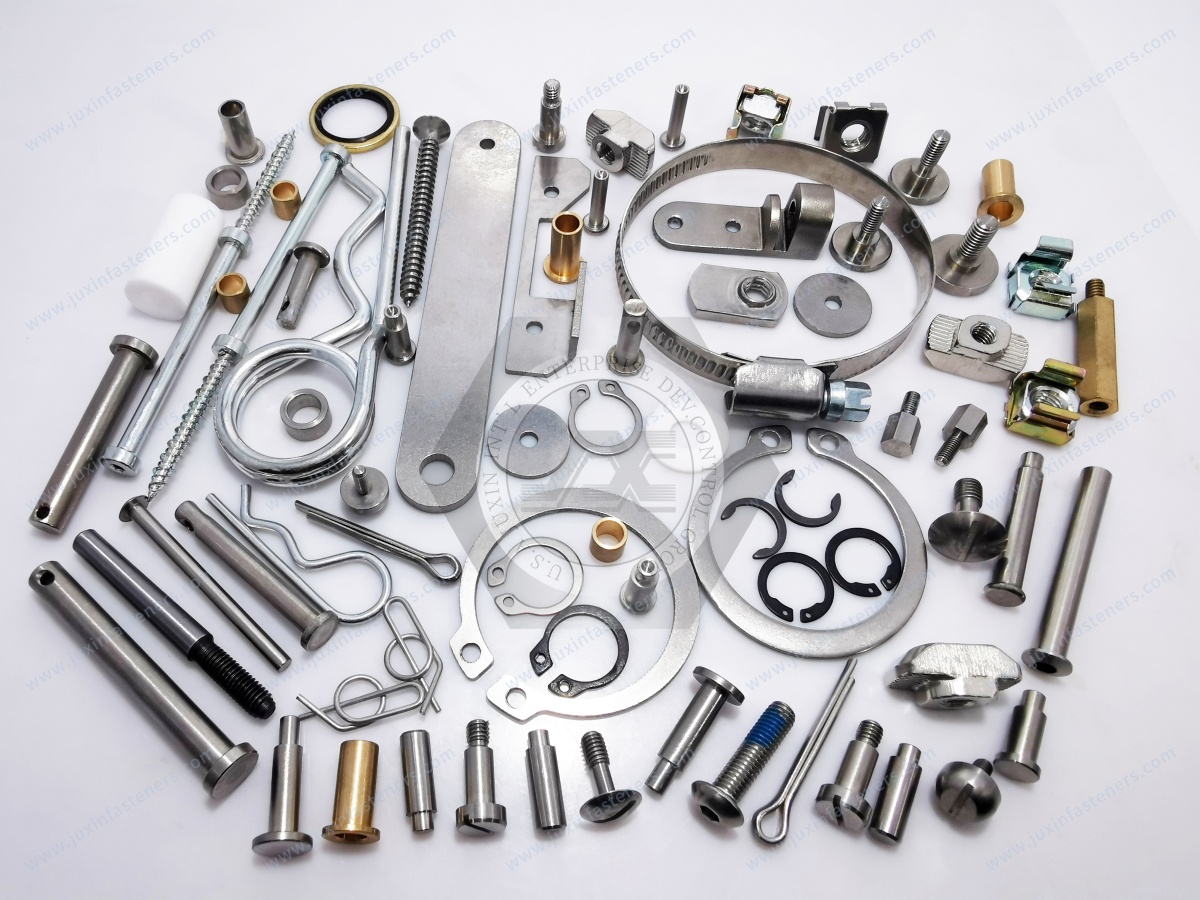
JUXIN FASTENERS supplies custom industrial fasteners and precision CNC machined components for international OEM applications.
Our drawing-based product scope includes vented screws, custom bolts, studs, washers, threaded pins, spacers, and other non-standard mechanical components.
For vacuum equipment projects, the appropriate manufacturing approach depends on material, geometry, thread specification, venting requirements, dimensional tolerances, and surface condition.
Specialized vacuum compatibility, outgassing performance, cleanliness, testing, and packaging requirements must be reviewed and confirmed for the specific application.
JUXIN FASTENERS does not claim that every supplied fastener is automatically suitable for high vacuum, ultra-high vacuum, or direct semiconductor process exposure.
The intended installation environment and customer-defined acceptance criteria determine the final component specification.
Request a Quote for Vacuum Chamber Fasteners and Vented Screws
If your company is sourcing custom vacuum chamber fasteners, vented socket head cap screws, stainless steel vented bolts, semiconductor vacuum equipment fasteners, or precision CNC machined threaded components, contact JUXIN FASTENERS for technical evaluation and quotation.
Please send your 2D engineering drawings, 3D CAD models, material specifications, thread requirements, vent passage details, expected quantities, and inspection criteria.
Where applicable, please also identify the operating pressure range, blind-hole geometry, temperature exposure, cleaning requirements, and packaging expectations.
Our team can review the manufacturing requirements and discuss suitable component specifications, machining considerations, and commercial quotation details.
JUXIN FASTENERS
Website: https://www.juxinfasteners.com/
Email: info@juxinfasteners.com
Custom Vacuum Chamber Fasteners | Vented Socket Head Screws | Stainless Steel Vented Bolts | Precision CNC Components | Drawing-Based OEM RFQ Support
Contact Us
Tel.:
+86 020 8621 0320
+86 020 3121 6067
E-mail:
Technical Support:
Navigation
SEND INQUIREY



