Call Us
+86 136 6007 9809
Call Us
+86 136 6007 9809

Industrial compressors, railway equipment, pumps, motors, HVAC systems, construction machinery and other dynamic equipment can expose bolted joints to vibration,
temperature changes, repeated loading and maintenance cycles.
In these applications, engineers frequently search for a “vibration-proof nut.”
That description is convenient, but technically misleading.
Product Specification
Industrial compressors, railway equipment, pumps, motors, HVAC systems, construction machinery and other dynamic equipment can expose bolted joints to vibration,
temperature changes, repeated loading and maintenance cycles.
In these applications, engineers frequently search for a “vibration-proof nut.”
That description is convenient, but technically misleading.
No lock nut should be treated as a substitute for a correctly designed bolted joint.
Joint preload, bolt stiffness, clamped-part stiffness, tightening method, bearing surfaces, transverse movement,
temperature, lubrication and service loading all influence whether a bolted joint remains secure.
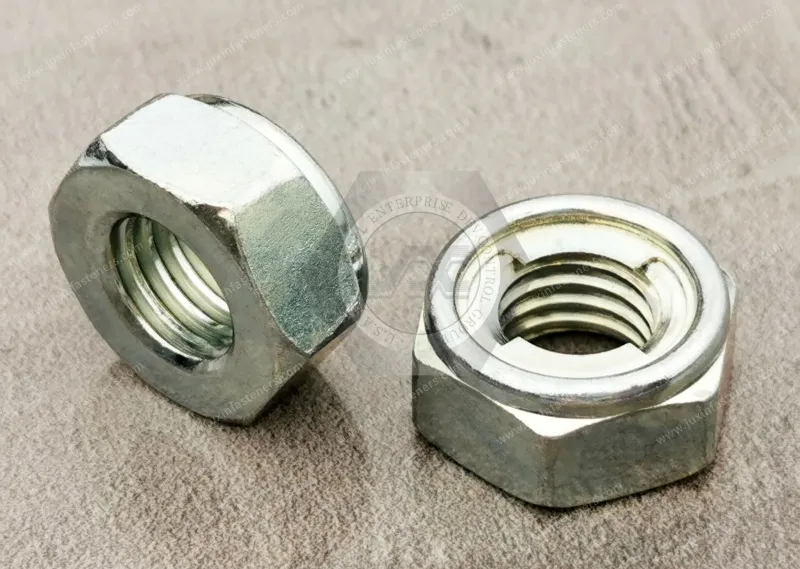
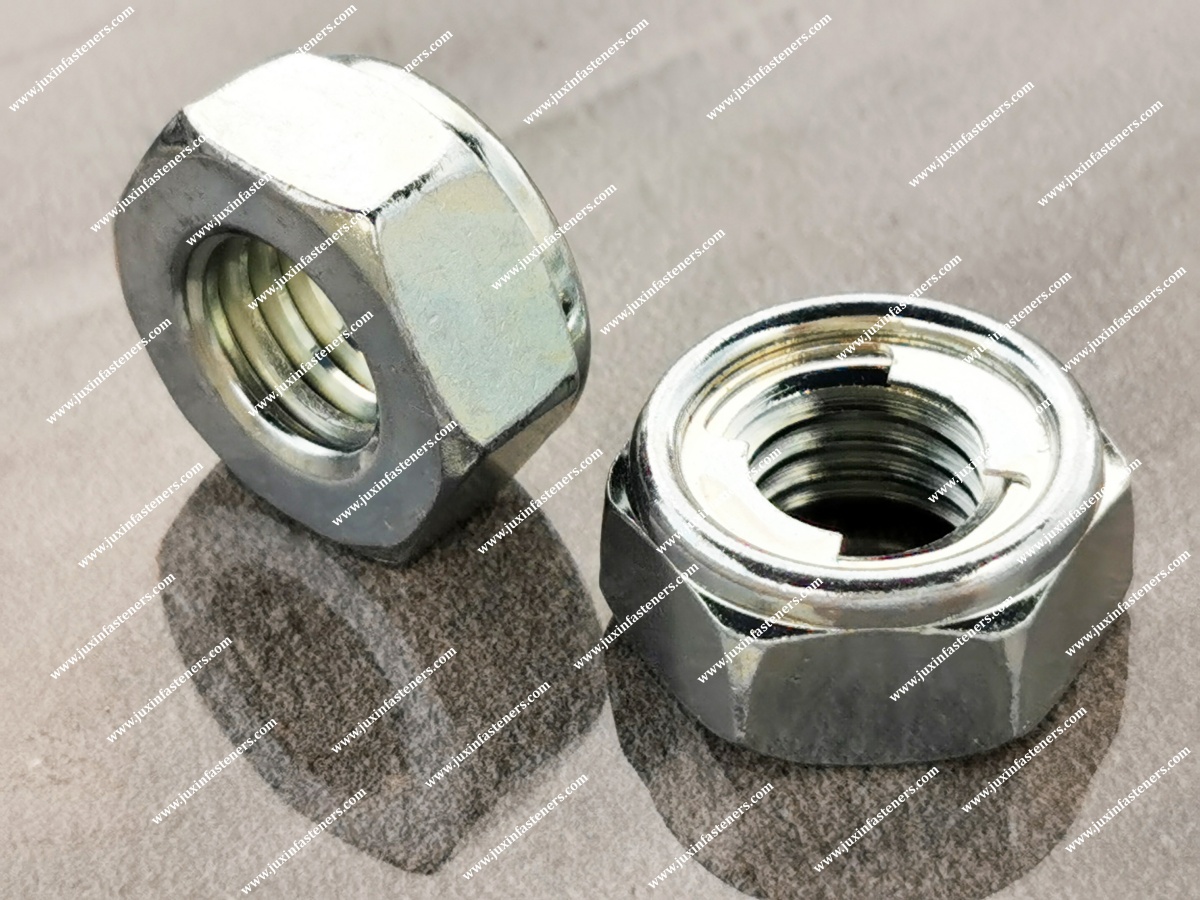
An all-metal prevailing-torque lock nut adds resistance to relative rotation through a mechanical locking feature within the nut.
Unlike a nylon-insert lock nut, the locking function does not depend on a polymer insert.
JUXIN FASTENERS supplies and develops multiple locking nut families, including:
All-metal prevailing-torque lock nuts
Stover-type lock nuts
Distorted-thread lock nuts
All-metal flange lock nuts
Fuji-style all-metal flange lock nuts
Spring-stop style locking nuts
Stainless steel all-metal lock nuts
Drawing-based custom locking nuts
These products can be evaluated for compressors, railway equipment, motors, pumps, industrial machinery, automotive equipment,
HVAC systems and other applications where a polymer locking element may not be the preferred solution.
An all-metal prevailing-torque nut uses controlled metallic thread interference or another mechanical deformation feature to create resistance as the nut travels along the mating bolt thread.
This resistance exists independently of the final clamping load.
That resistance is called prevailing torque.
Depending on nut design, the locking feature may involve:
Controlled deformation of the upper thread region
Distorted thread geometry
Deformed nut sections
Multiple locking segments
Spring-type metallic locking features
Application-specific all-metal locking geometry
The exact mechanism varies by product family.
The important engineering distinction is that prevailing torque is not the same as tightening torque and is not the same as clamp load.
This distinction is essential when specifying a lock nut.
Prevailing torque is the torque required to rotate the nut on the mating thread when the nut's locking feature is engaged but before the joint is fully clamped.
Tightening torque is the torque applied during final assembly.
It must overcome several sources of resistance, including thread friction, under-head or bearing-surface friction and, for a prevailing-torque nut, the locking feature itself.
Clamp load is the tension generated in the bolt and the corresponding compression in the clamped components.
A lock nut can have significant prevailing torque while the assembled joint still has insufficient preload.
This is why specifying only “high locking torque” does not guarantee a reliable bolted joint.
All-metal locking nuts are often considered where the application includes:
Vibration
Repeated dynamic loading
Elevated service temperature
Exposure conditions unsuitable for a polymer insert
Industrial fluids or chemicals
Compact joint geometry
OEM requirements for an all-metal locking mechanism
Typical industries include:
Industrial compressors
Railway equipment
Motors and generators
Pumps
HVAC equipment
Industrial machinery
Construction equipment
Agricultural machinery
Automotive systems
Material-handling equipment
Power equipment
Automation systems
The correct nut still needs to be selected according to the bolt, joint and service environment.
Both are prevailing-torque locking technologies, but their locking mechanisms are different.
| Design Factor | All-Metal Lock Nut | Nylon-Insert Lock Nut |
|---|---|---|
| Locking element | Metallic deformation or locking feature | Polymer insert |
| Polymer present | No | Yes |
| Elevated-temperature suitability | Application and material dependent; avoids polymer limitation | Limited by polymer material and application |
| Chemical compatibility | Depends on metal and coating | Must consider both metal and polymer |
| Prevailing torque | Generated mechanically by metallic locking feature | Generated by interference with nylon insert |
| Reuse | Must be evaluated against applicable specification and application | Also dependent on remaining prevailing torque and specification |
| Typical selection reason | All-metal locking required | General-purpose prevailing-torque fastening |
Neither technology is universally superior.
A DIN 985-type nylon insert lock nut can be an effective and economical solution in many applications.
An all-metal nut becomes particularly relevant when the service environment or engineering specification makes a polymer insert undesirable.
All-metal lock nuts are sometimes described as absorbing vibration.
That is not an accurate description of the primary locking mechanism.
The nut does not function like a vibration isolator or damping mount.
Instead, the locking feature creates resistance to relative rotation between the nut and mating thread.
The distinction matters because the actual bolted joint may still experience:
Transverse slip
Embedment
Settlement
Thermal expansion
Joint separation
Fatigue loading
The lock nut is one element in the joint.
It does not eliminate the underlying mechanical loads.
One of the most challenging conditions for threaded joints is transverse movement between the clamped parts.
If relative movement becomes sufficient to reduce frictional restraint at the thread and bearing interfaces, rotational loosening can occur.
The probability of loosening depends on the complete joint, including:
Initial preload
Joint stiffness
Bolt stiffness
Bearing surface
Friction condition
Transverse displacement
External loading
Thread geometry
Locking mechanism
This explains why simply replacing a standard nut with a lock nut may improve the joint but does not automatically correct an underlying preload or joint-design problem.
Rail equipment is frequently described as a “high-vibration application,” but that description is incomplete.
A railway bolted joint can also experience:
Repeated mechanical loading
Shock
Temperature variation
Environmental exposure
Maintenance cycles
Corrosion
Joint movement
Fastener selection should therefore be based on the actual assembly location and engineering requirement.
Potential applications for locking nuts may include:
Equipment mounting
Interior equipment structures
Electrical equipment
HVAC assemblies
Brackets
Auxiliary systems
Machinery installed on rolling stock
Safety-critical railway joints require application-specific engineering specifications, validation and approvals.
A general-purpose lock nut should never be assumed suitable for a safety-critical rail location merely because it is all-metal.
Industrial compressors can combine several demanding conditions:
Mechanical vibration
Cyclic loading
Elevated temperature
Lubricating oils
Maintenance access
Rotating or reciprocating machinery
A nylon-insert nut may or may not be appropriate depending on the actual temperature and chemical environment.
All-metal prevailing-torque nuts remove the polymer insert from the locking mechanism, but this does not mean every all-metal nut is automatically suitable for every compressor location.
Engineers should define:
Service temperature
Bolt material
Nut material
Lubrication condition
Required property class
Surface treatment
Tightening method
Maintenance requirement
before finalizing the fastener.
It is tempting to advertise an all-metal lock nut as a “300°C lock nut.”
That can be misleading without defining the complete fastener system.
Temperature capability can depend on:
Nut material
Bolt material
Strength class
Surface treatment
Lubricant
Coating
Required mechanical properties
Exposure duration
Removing the nylon insert eliminates one polymer-related temperature constraint.
It does not create one universal operating temperature for every all-metal lock nut.
For high-temperature applications, the service condition should be included in the RFQ.
Electric motors, pumps and related rotating equipment can create vibration and cyclic loading at:
Mounting points
Brackets
Covers
Auxiliary components
Equipment frames
All-metal lock nuts can be evaluated where the joint design requires a prevailing-torque nut and a polymer insert is not preferred.
The correct solution depends on:
Bolt size
Property class
Joint load
Temperature
Corrosion environment
Maintenance cycle
Required locking characteristics
HVAC systems can contain:
Compressors
Fans
Motors
Pumps
Structural frames
Sheet-metal equipment
Outdoor equipment
This creates several different fastening environments within one system.
The same lock nut should not automatically be specified for every location.
For example, an internal motor bracket and an outdoor structural mounting point can have very different corrosion and mechanical requirements.
Fastener standardization should therefore be balanced against actual application conditions.
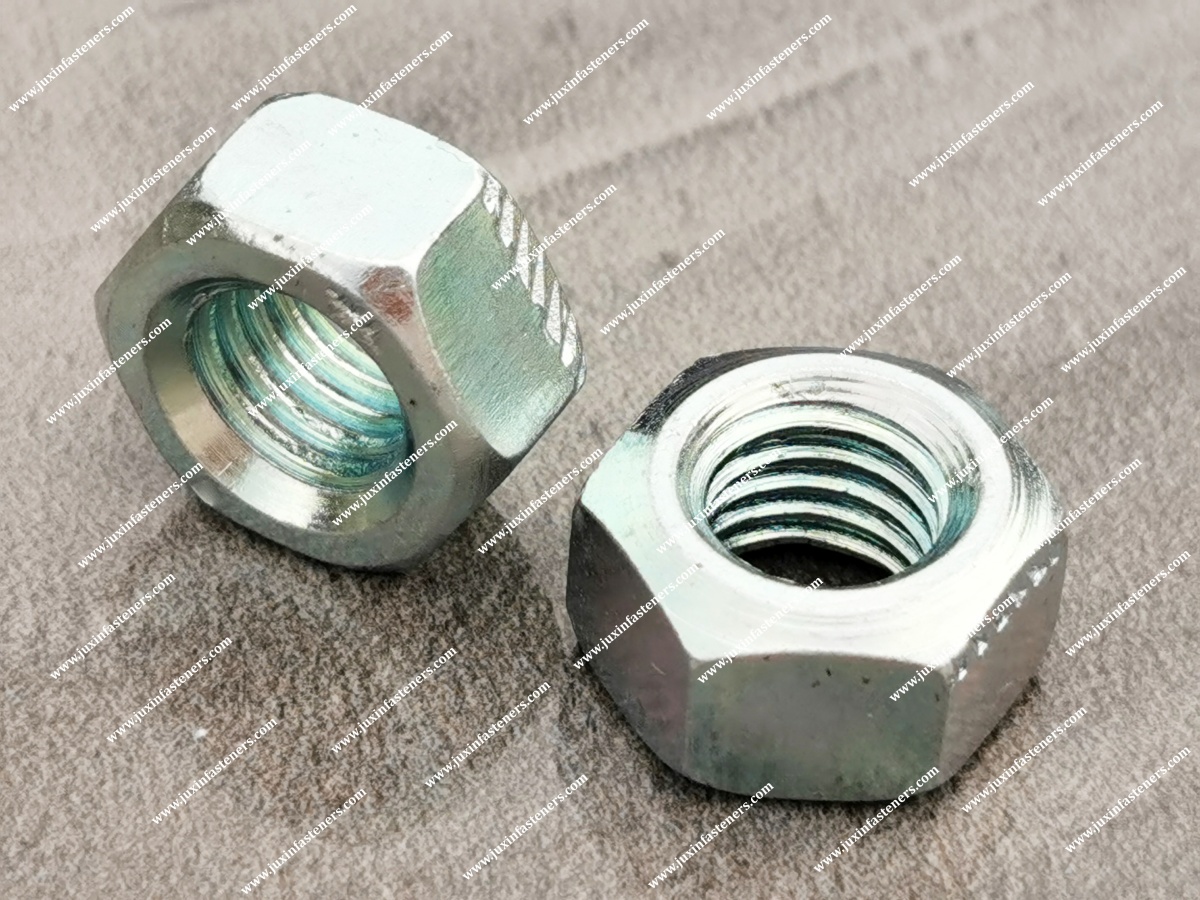
Stover-style lock nuts are a widely recognized form of all-metal prevailing-torque nut.
The upper portion of the nut is mechanically deformed to create interference with the mating bolt thread.
Potential applications include:
Industrial machinery
Compressors
Equipment frames
Motors
Pumps
Construction machinery
Agricultural machinery
Dynamic mechanical assemblies
Depending on the required geometry and specification, standards such as ISO 7042 and related prevailing-torque nut standards may be relevant.
The applicable standard should be confirmed from the customer drawing or specification rather than assumed from appearance alone.
DIN 980 is commonly associated with prevailing-torque all-metal hexagon nuts.
However, products described commercially as “DIN 980 lock nuts” can still require careful specification.
Procurement teams should confirm:
Thread
Nut style
Mechanical property requirement
Dimensions
Locking configuration
Surface finish
Applicable current specification or customer drawing
A product name alone is not enough for controlled OEM sourcing.
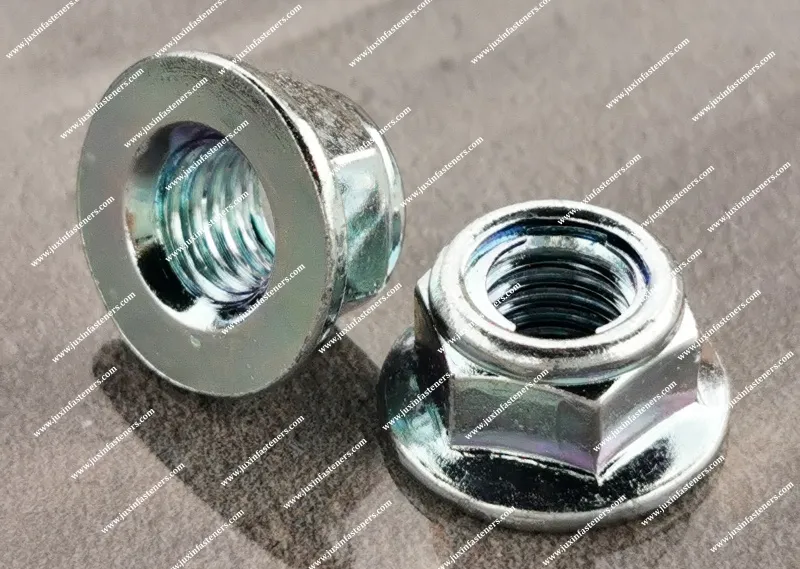
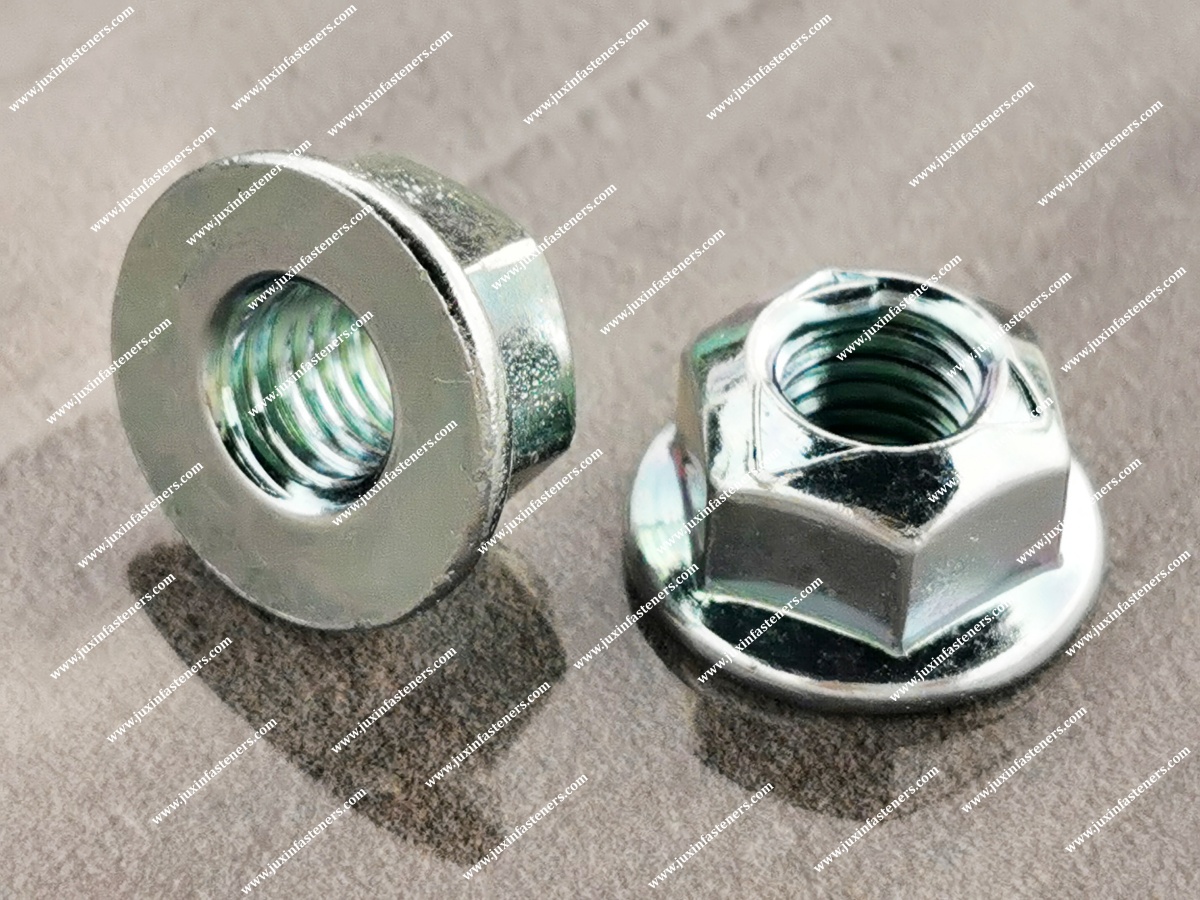
An all-metal flange lock nut combines a prevailing-torque locking mechanism with an integrated flange.
Depending on the design, the flange can provide a larger bearing area than a conventional hex nut.
Potential applications include:
Machinery frames
Motor mounts
Equipment brackets
Automotive components
Construction equipment
Industrial assemblies
The flange does not automatically eliminate the need for engineering review of the bearing surface.
Joint material, hole geometry, surface pressure and required washer function should still be considered.
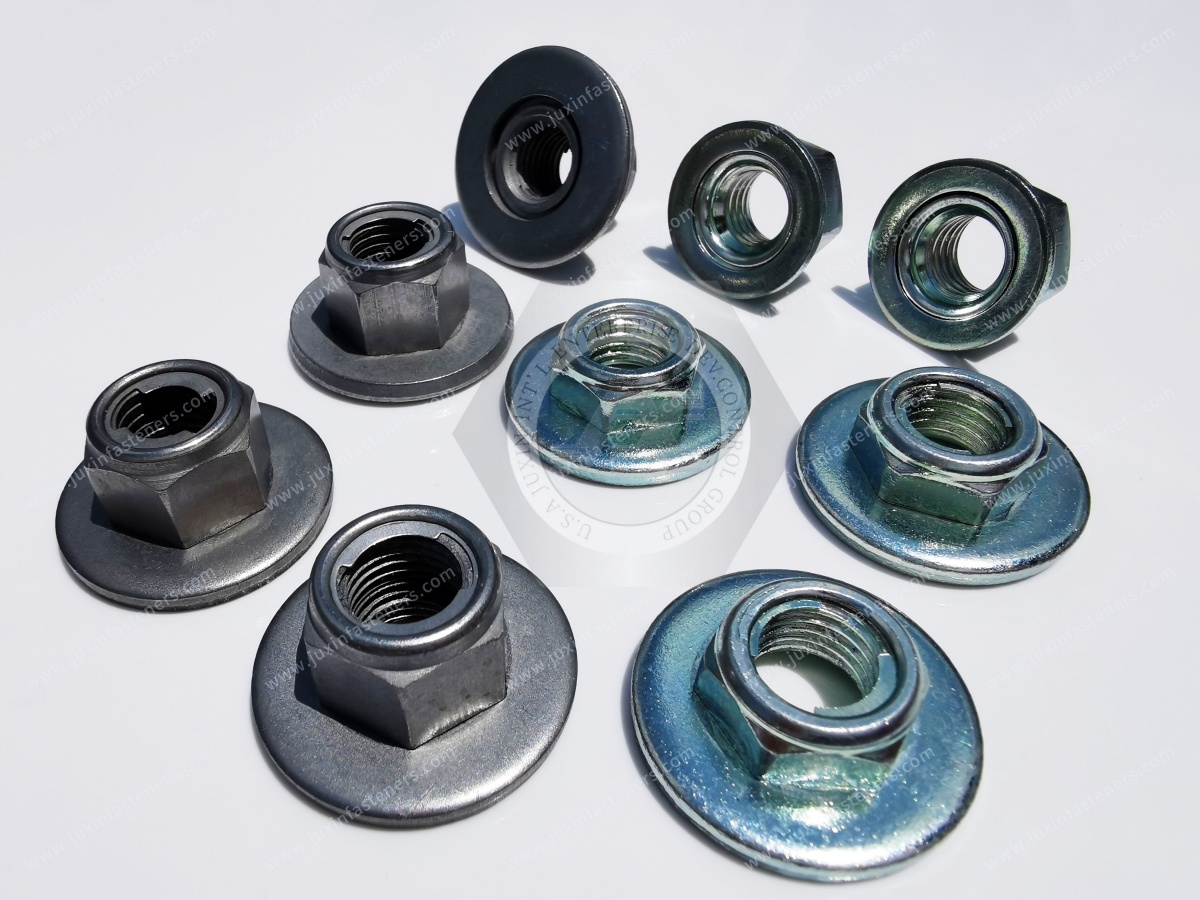
Some applications use all-metal flange lock nuts with spring-like locking features rather than a conventional distorted-top geometry.
JUXIN FASTENERS supports Fuji-style all-metal flange lock nuts, including drawing-specific configurations for OEM applications.
These products can be relevant where engineers require:
All-metal construction
Integrated flange
Prevailing-torque locking
Compact assembly
Application-specific locking geometry
The locking feature should be evaluated according to the mating bolt, thread and required prevailing-torque behavior.
For non-standard configurations, a drawing is strongly recommended.
Two M8 all-metal lock nuts can look similar while having different functional characteristics.
Differences may include:
Nut height
Width across flats
Flange geometry
Thread tolerance
Locking deformation
Prevailing-torque range
Material
Property class
Coating
Lubrication
Bearing surface
This is particularly important when replacing an existing OEM component.
A dimensional substitute may fit the bolt but still behave differently during automated tightening or final service.
ISO 2320 provides functional requirements related to prevailing-torque steel nuts.
For applications specified to an applicable prevailing-torque standard, engineers and procurement teams should consider characteristics such as:
First installation prevailing torque
Removal prevailing torque
Subsequent installation/removal behavior where applicable
Proof load requirements
Mating fastener conditions
The exact requirements depend on the nut type, size, property class and applicable specification.
JUXIN FASTENERS should evaluate the requested standard and test requirement at RFQ stage rather than assuming every all-metal lock nut uses the same acceptance criteria.
Transverse vibration testing is widely used to evaluate self-loosening behavior of bolted joints.
The commonly referenced Junker test subjects a bolted joint to transverse displacement while monitoring changes in clamp load.
This type of test can be useful for comparing locking strategies under controlled conditions.
However:
Passing a vibration test does not prove that a fastener is universally vibration-proof.
Test results depend on:
Test configuration
Joint geometry
Preload
Fastener size
Surface condition
Transverse displacement
Test procedure
If a customer requires vibration validation according to a specified test method, the requirement should be defined before production.
JUXIN FASTENERS does not treat a generic “Junker tested” statement as a substitute for the customer's actual application requirement.
All-metal prevailing-torque nuts are sometimes marketed as indefinitely reusable.
That is not a safe engineering assumption.
Each installation and removal cycle can affect:
Locking geometry
Thread surfaces
Coating
Lubrication
Prevailing torque
Mating bolt condition
If reuse is required, engineers should define the permitted number of cycles and the minimum acceptable prevailing torque according to the applicable specification or internal validation.
For maintenance-critical applications, replacement after removal may still be the preferred policy.
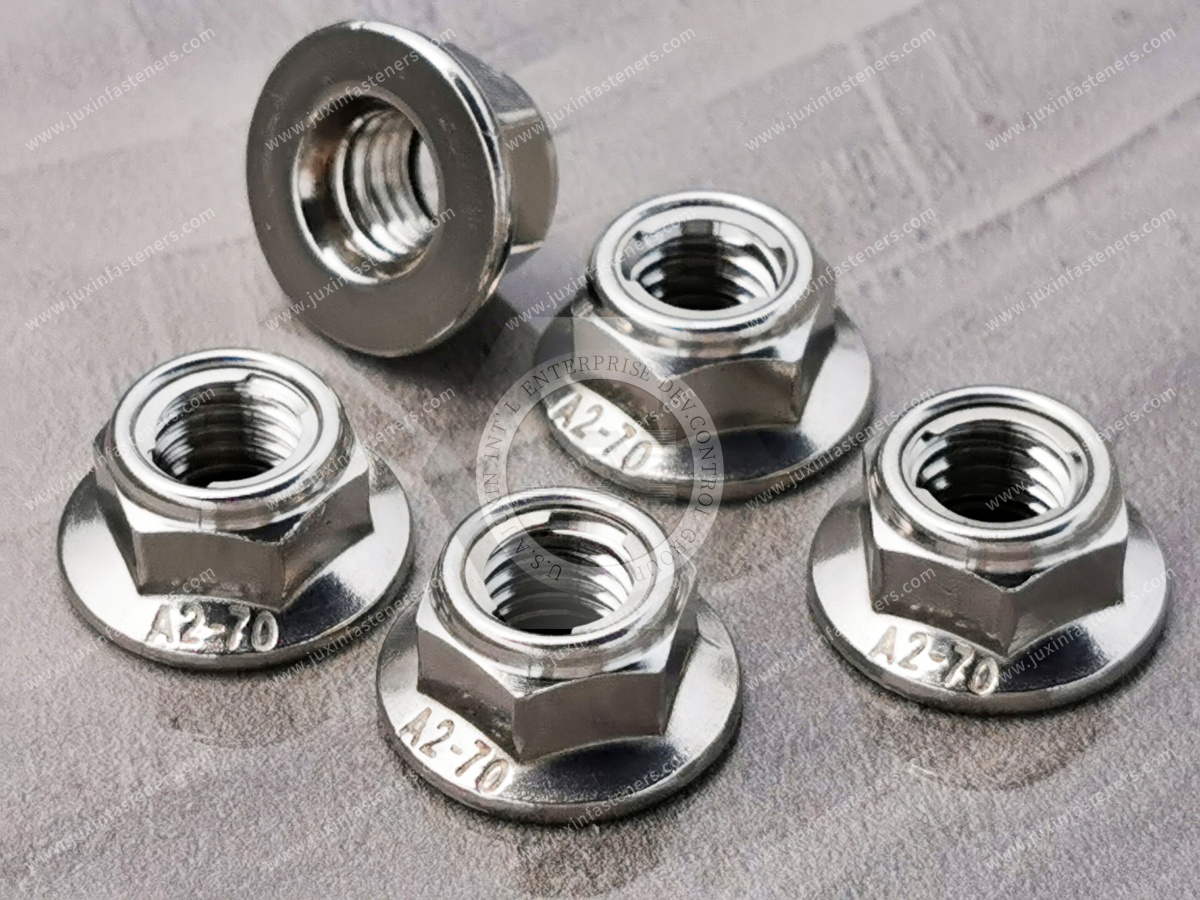
Stainless steel threaded assemblies require special attention to galling.
Galling is adhesive wear that can occur when mating stainless threads slide under load.
Risk can be influenced by:
Material combination
Surface finish
Lubrication
Tightening speed
Thread fit
Installation load
A prevailing-torque feature creates additional thread interaction, making assembly conditions particularly important.
For stainless steel lock nut applications, engineers should consider the complete nut-bolt pairing and assembly process rather than specifying “A2 stainless” alone.
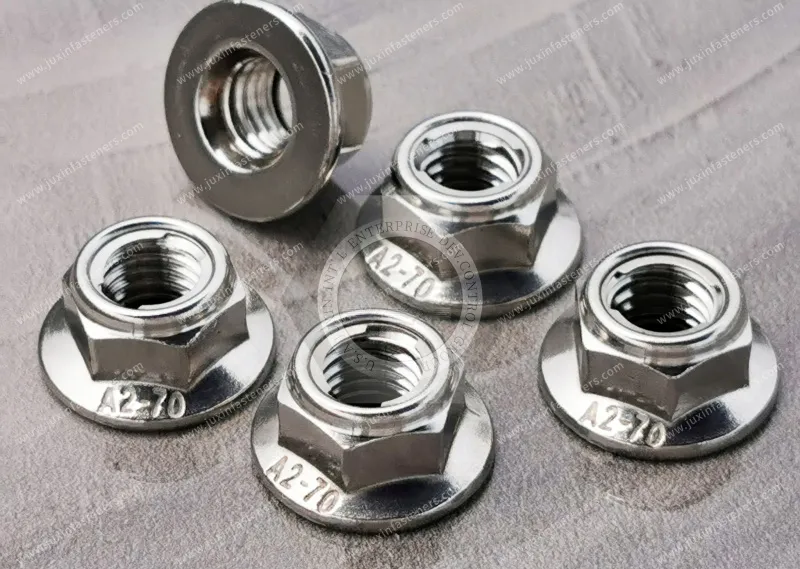
JUXIN FASTENERS supports stainless steel locking nut applications, including A2-70 all-metal lock nut configurations where appropriate to the product and drawing.
For OEM sourcing, specify:
Thread size
Nut geometry
Material/property requirement
Locking style
Flange requirement
Surface condition
Mating bolt specification
Required functional testing
This is particularly important for small all-metal flange lock nuts where the external appearance may not identify the locking mechanism.
Surface finish is not purely a corrosion decision.
It can also influence friction during tightening.
Possible requirements for carbon-steel lock nuts may include:
Zinc plating
Zinc-nickel plating
Customer-specified coating systems
Lubricated finishes
The appropriate finish depends on:
Corrosion environment
Tightening process
Required friction behavior
Mating bolt coating
Customer specification
A change in coating or lubrication can change torque-tension behavior even if the nut dimensions remain unchanged.
This is why procurement teams should not approve a finish substitution based only on appearance or salt-spray hours.
When tightening a conventional nut, much of the applied torque is already consumed by friction.
With a prevailing-torque nut, an additional portion of the tool output is required to overcome the locking feature.
Therefore:
Tool torque should not automatically be interpreted as bolt preload.
If an automated assembly process uses torque control, engineers should understand how prevailing torque interacts with the tightening strategy.
This becomes especially important when:
Prevailing torque is relatively high
Bolt size is small
Clamp load is tightly controlled
Automated nutrunners are used
Coating or lubrication changes
For critical joints, tightening strategy should be validated on the actual fastener combination.
For carbon-steel nuts, mechanical property requirements may be specified according to standards such as ISO 898-2, where applicable.
The required nut property class should match the joint design and mating bolt requirements.
Higher property class is not automatically better.
Using an unnecessarily high-strength nut can:
Increase cost
Change manufacturing requirements
Provide no functional benefit if the bolt or joint does not require it
The fastener system should be specified according to the actual mechanical design.
Design engineers should begin with these questions:
Why is a locking nut required?
Vibration, temperature, service policy or OEM specification?
Is a polymer insert acceptable?
If yes, a nylon-insert lock nut may remain a valid option.
What is the bolt specification?
Thread, property class, material and coating matter.
What prevailing-torque behavior is required?
Define the applicable standard or customer requirement.
What is the operating temperature?
Evaluate the complete material and coating system.
Will the nut be removed during maintenance?
Define reuse policy if applicable.
Is corrosion resistance required?
Select material and finish according to the actual environment.
Is assembly automated?
Prevailing torque and friction can influence tightening strategy.
This decision path is more useful than searching for a generic “anti-vibration nut.”
For accurate quotation and technical evaluation, provide:
Thread size and pitch
Standard or customer drawing
Lock nut style
Nut dimensions
Flange requirement
Material
Property class where applicable
Stainless grade where applicable
Surface finish
Mating bolt specification
Operating temperature
Application environment
Required prevailing-torque test
Reuse requirement if applicable
Vibration test requirement if applicable
Prototype quantity
Annual quantity
Packaging requirements
Inspection requirements
For replacement projects, sending the existing drawing is much safer than requesting only an “equivalent Stover nut.”
For prevailing-torque lock nuts, compare more than dimensional fit and unit price.
Important factors include:
Material
Mechanical property requirement
Thread quality
Locking geometry
Prevailing-torque consistency
Surface treatment
Lubrication condition
Dimensional consistency
Sample approval
Test requirements
Drawing revision control
Packaging
Production repeatability
A nut that looks identical can behave differently during tightening if the locking geometry, coating or lubrication changes.
Standard ISO and DIN prevailing-torque nuts cover many industrial requirements.
Custom designs may be needed where the OEM requires:
Special flange geometry
Restricted nut height
Special locking feature
Non-standard thread
Stainless steel construction
Small-size locking nut
Special bearing surface
Drawing-specific dimensions
JUXIN FASTENERS supports drawing-based custom locking nut projects in addition to standard locking nut families.
For custom projects, the mating bolt and functional requirement should be supplied together with the nut drawing.
A practical development path for an OEM lock nut project can follow:
Joint Requirement → Locking Method Selection → Drawing & Mating Bolt Review → Material & Finish Confirmation
→ Sample Evaluation → Prevailing-Torque / Assembly Validation → Golden Sample Approval → Production
The required tests should be agreed according to the customer specification and application rather than assumed from the product category.
JUXIN FASTENERS supports OEM manufacturers, equipment builders, Tier suppliers, industrial distributors and supplier-development teams with standard and drawing-based locking nut solutions.
This page serves as an engineering entry point for all-metal prevailing-torque lock nuts.
Related product and solution pages can include:
Stover All-Metal Lock Nuts — distorted-thread prevailing-torque nuts for industrial applications
DIN 980 All-Metal Lock Nuts — standard-based all-metal locking nut configurations
All-Metal Flange Lock Nuts — integrated flange and metallic prevailing-torque locking
Fuji-Style All-Metal Flange Lock Nuts — spring-stop style locking configurations
A2-70 Stainless Steel All-Metal Lock Nuts — stainless locking solutions for selected OEM applications
DIN 985 Nylon Insert Lock Nuts — polymer-insert prevailing-torque nuts for suitable environments
Custom Lock Nuts — drawing-based locking geometry and non-standard configurations
Precision Locknuts for CNC Spindles and Rotary Systems — precision bearing-retention nuts, which solve a different engineering problem from prevailing-torque lock nuts
These pages should target their own specific product intent and link back to this engineering guide where appropriate.
If you are designing or sourcing locking nuts for:
Industrial compressors
Railway equipment
Motors
Pumps
HVAC systems
Industrial machinery
Construction equipment
Agricultural machinery
Automotive assemblies
Power equipment
Automation systems
Dynamic mechanical equipment
send us your drawing, thread specification, mating bolt information, material requirement, surface finish,
service temperature, locking requirement and estimated quantity.
If the project includes a specific prevailing-torque, vibration or reuse requirement, include the applicable test specification or acceptance criteria with the RFQ.
JUXIN FASTENERS can evaluate Stover-type all-metal lock nuts, all-metal flange lock nuts, Fuji-style locking nuts,
stainless steel lock nuts and drawing-based custom locking nut configurations according to the application.
JUXIN FASTENERS
Website: www.juxinfasteners.com
Engineering & RFQ: info@juxinfasteners.com
Product Packaging
Packaging Standard
At Juxin Fasteners, we apply standardized export packaging to ensure product protection, traceability, and compliance with international logistics requirements.
1. Standard Export Packaging
Unless otherwise specified, all products will be packed according to our factory standard export packaging, which includes:
Moisture-resistant inner protection
Poly bag or small box packing as required
Reinforced export cartons
Clear labeling with part number, specification, batch number, and quantity
Palletizing for sea or air shipment when necessary
Our standard packaging is designed to ensure safe transportation, efficient warehousing, and long-distance international shipping.
2. Customized Packaging Options
We also provide customized packaging solutions according to customer requirements, including but not limited to:
Private labeling
Customized barcodes
Specific carton dimensions
Retail packaging
Special pallet configuration
Customer-specific marking and identification
So that you know, customized packaging may involve additional costs and extended lead time depending on the complexity of the requirements.
3. Compliance & Quality Assurance
All packaging processes are controlled under our ISO 9001 quality management system to ensure consistency, traceability, and product integrity throughout the supply chain.
Product Pictures
Hot Products
Contact Us
Tel.:
+86 020 8621 0320
+86 020 3121 6067
E-mail:
Technical Support:
Navigation
SEND INQUIREY