Call Us
+86 136 6007 9809
Call Us
+86 136 6007 9809

Wind energy systems, solar tracking equipment and renewable power generation installations depend on reliable mechanical connections throughout their structures, equipment modules and supporting assemblies.
Wind turbine auxiliary equipment, nacelle-mounted components, solar tracker drives, inverter cabinets and electrical support systems may experience repeated vibration, fluctuating mechanical loads, temperature changes and outdoor environmental exposure.
Product Specification
Wind Energy & Renewable Equipment Fasteners: High-Strength Bolts, Lock Nuts and OEM Hardware
Wind energy systems, solar tracking equipment and renewable power generation installations depend on reliable mechanical connections throughout their structures, equipment modules and supporting assemblies.
Wind turbine auxiliary equipment, nacelle-mounted components, solar tracker drives, inverter cabinets and electrical support systems may experience repeated vibration, fluctuating mechanical loads, temperature changes and outdoor environmental exposure.
These operating conditions make fastener selection an important part of equipment design and manufacturing.
For OEM engineers, the primary considerations include joint loading, bolt strength, preload, fatigue, corrosion resistance and component compatibility.
Manufacturing engineers and production managers must also consider installation efficiency, tightening procedures, dimensional consistency and assembly costs.
Procurement and supplier development teams must evaluate technical conformity, drawing-based customization, quality requirements, minimum order quantities, lead times and long-term supply continuity.
JUXIN FASTENERS supplies industrial bolts, nuts, washers, prevailing-torque lock nuts and drawing-based custom metal fasteners for suitable renewable energy equipment applications.
This guide examines practical fastening solutions for wind energy auxiliary equipment, solar mounting systems, tracking mechanisms and renewable power equipment enclosures,
with particular attention to mechanical reliability, corrosion protection, manufacturing efficiency and OEM sourcing.
Fastening Applications in Wind and Renewable Energy Equipment
Renewable energy equipment includes a wide range of structural, mechanical and electrical assemblies.
| Equipment Application | Potential Fastener Solution | Main Engineering Requirement |
|---|---|---|
| Wind turbine auxiliary equipment | High-strength bolts and nuts | Mechanical loading and joint stability |
| Nacelle equipment mounting brackets | Bolts, washers and lock nuts | Vibration resistance and serviceability |
| Generator and gearbox auxiliary mounts | Preloaded threaded fasteners | Joint integrity and installation control |
| Solar tracking mechanisms | Bolts, flange nuts and locking hardware | Repeated movement and fatigue |
| Solar mounting structures | Corrosion-protected bolts and nuts | Outdoor exposure and structural compatibility |
| Inverter equipment enclosures | Machine screws and self-clinching hardware | Efficient sheet metal assembly |
| Renewable energy electrical cabinets | Threaded standoffs and mounting screws | Component support and maintenance |
| Custom equipment assemblies | Drawing-based formed or machined fasteners | Geometry, fit and production consistency |
The appropriate fastener depends on the actual application.
A standard bolt used for an inverter cabinet should not automatically be specified for a wind turbine tower flange or another safety-critical structural connection.
High-Strength Bolts for Wind Energy Equipment
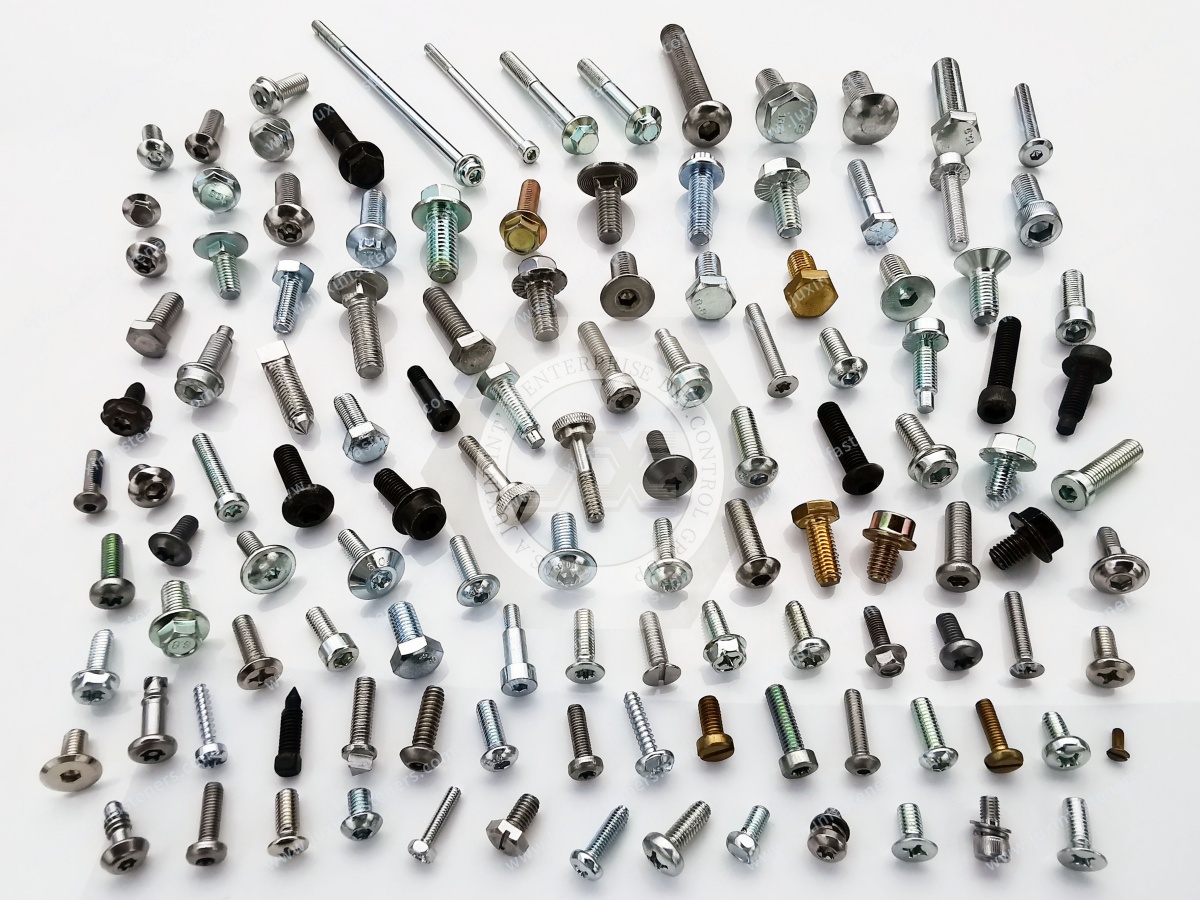
High-strength threaded fasteners are used in many types of industrial machinery and renewable energy equipment.
For applicable metric carbon steel and alloy steel bolts, ISO 898-1 defines mechanical property classes, including 8.8, 10.9 and 12.9.
These classes describe specified mechanical properties but do not independently establish suitability for a wind turbine application.
Property Class 8.8
Class 8.8 bolts may be appropriate for selected equipment brackets and general mechanical assemblies when supported by the design requirements.
Property Class 10.9
Class 10.9 bolts offer higher specified mechanical strength than class 8.8 bolts.
They may be considered where the joint requires higher strength or preload capacity.
Property Class 12.9
Class 12.9 bolts provide higher specified mechanical strength but require careful consideration of fatigue, environmental exposure, coating selection and application-specific requirements.
They are not automatically the preferred choice for every renewable energy connection.
Engineering insight: A higher bolt property class does not automatically produce a more fatigue-resistant joint.
Joint geometry, preload, load direction, material stiffness and installation conditions can have a greater influence on fatigue performance than a simple increase in nominal bolt strength.
Fatigue Loading in Wind Energy Equipment
Wind energy equipment can experience repeated loading from wind fluctuations, rotating machinery and structural movement.
Fatigue performance depends on the relationship between cyclic loading and the complete joint design.
Potential failure mechanisms include:
Fatigue cracking
Joint separation
Preload loss
Fretting damage
Bolt bending
Thread damage
Local bearing deformation
Important design factors include:
Bolt preload
Joint stiffness
Grip length
Thread position
Load direction
Clamped material properties
Surface condition
Installation consistency
Preload and Fatigue Resistance
A properly designed preloaded joint can reduce the variation in load experienced by the bolt under certain external loading conditions.
However, the required preload depends on the specific connection.
Insufficient preload may permit joint separation or slip.
Excessive preload may damage the bolt or clamped components.
Engineering insight: Fatigue problems cannot always be solved by replacing an existing bolt with a stronger bolt of the same dimensions.
The load path and joint stiffness should be evaluated before approving a fastener substitution.
Controlled Tightening in Renewable Energy Assemblies
Wind and renewable energy equipment may require controlled tightening procedures.
The relationship between tightening torque and bolt preload is influenced by friction.
Important factors include:
Thread surface condition
Coating type
Lubrication
Bearing surface friction
Bolt geometry
Nut configuration
Installation equipment
Two fasteners with identical nominal dimensions may achieve different preload values when tightened to the same torque if their surface conditions differ.
Torque-Controlled Tightening
Torque-controlled installation may be suitable for certain machinery assemblies when the procedure has been established for the actual fastener and joint.
Torque-Angle Tightening
Torque-angle methods may be used in applications requiring a more controlled installation sequence.
Direct Tensioning
Certain highly loaded joints may use direct tensioning methods.
The correct approach depends on the equipment manufacturer's design and installation specification.
Engineering insight: A replacement fastener can be dimensionally compatible while still requiring a review of the tightening procedure.
For OEM alternative sourcing, coating and friction characteristics may be critical acceptance criteria.
Vibration-Resistant Lock Nuts for Wind Equipment
Wind energy equipment may experience vibration from rotating machinery, motors, gearboxes and environmental loading.
Under unfavorable joint conditions, transverse movement can contribute to rotational loosening.
All-metal prevailing-torque lock nuts use a mechanical locking feature to resist rotation.
Depending on the design, ISO 7042 and related specifications may apply.
Potential applications include:
Auxiliary equipment brackets
Selected nacelle equipment mounts
Generator support components
Solar tracking equipment
Vibration-sensitive machinery assemblies
Prevailing Torque vs. Joint Preload
Prevailing torque is the resistance generated by the locking feature during thread engagement.
Joint preload is the clamping force holding the connection together.
These are different mechanical characteristics.
A prevailing-torque lock nut can resist rotation, but it cannot prevent every form of preload loss.
Engineering insight: Locking hardware should not be used as a substitute for proper joint design and installation control.
For critical applications, the complete connection must be validated under representative loading conditions.
Flange Nuts and Heavy-Duty Threaded Connections
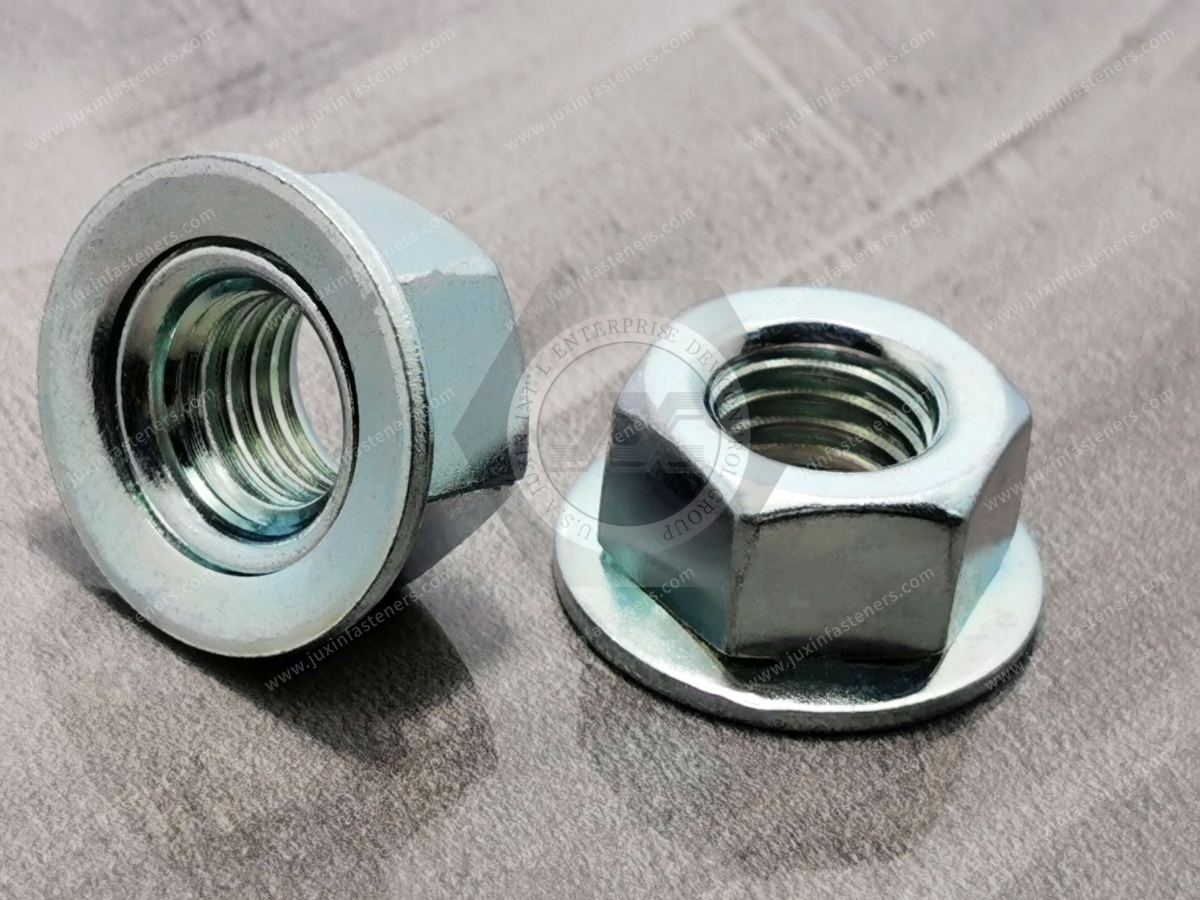
Flange nuts combine a nut body with an integral flange.
Depending on the design, the flange can provide a larger bearing surface than a comparable standard hex nut.
This may be useful in selected equipment assemblies.
Potential applications include:
Machinery mounting brackets
Solar tracking equipment
Mechanical support structures
Renewable energy auxiliary systems
Flange nuts are available with different geometries and locking features.
A serrated flange nut and a smooth-flange prevailing-torque nut are not functionally identical.
The correct design depends on the joint requirements.
Nut Compatibility
High-strength bolts require compatible mating nuts.
For applicable metric carbon steel nuts, ISO 898-2 defines relevant mechanical property requirements.
The OEM should consider nut strength, thread dimensions, installation access and surface treatment.
Engineering insight: A high-strength bolt combined with an unsuitable nut can produce a connection that fails to achieve the intended mechanical performance.
Bolt and nut specifications should be reviewed together.
Solar Mounting and Tracking System Fasteners
Solar equipment includes both stationary mounting structures and moving tracking mechanisms.
These applications have different fastening requirements.
Stationary Solar Mounting Structures
Fixed solar mounting systems require mechanical connections capable of supporting the intended structural loads.
Fastener selection may involve:
Corrosion-protected bolts
Compatible nuts and washers
Structural brackets
Mounting hardware
The correct fastener depends on the mounting system design and applicable project requirements.
Solar Tracking Systems
Solar trackers use mechanical systems to adjust the orientation of photovoltaic modules.
Their moving components may experience repeated loading, vibration and environmental exposure.
Potential fastener applications include:
Actuator mounting brackets
Drive system supports
Mechanical linkages
Tracker frame connections
Equipment housings
Engineering insight: A fastener used in a moving solar tracker joint may require different fatigue and locking considerations from a fastener used in a stationary mounting structure.
The OEM should distinguish between structural support joints and mechanical motion-related connections.
Corrosion Protection for Renewable Energy Fasteners
Renewable energy installations may operate in humid, coastal, industrial or otherwise demanding environments.
Corrosion protection affects long-term serviceability and maintenance requirements.
Potential surface treatment options include:
Zinc-plated carbon steel
Zinc-nickel coatings where specified
Zinc-flake coating systems
Stainless steel for suitable applications
Customer-specified protective finishes
The correct finish depends on environmental exposure, mechanical strength and joint requirements.
Zinc-Nickel Coatings
Zinc-nickel coatings may be considered for selected steel fasteners requiring corrosion protection.
Performance depends on the coating system, thickness, passivation and test conditions.
Zinc-Flake Coatings
Zinc-flake systems may be suitable for selected high-strength industrial fasteners.
Coating selection should consider thread fit, installation friction and hydrogen embrittlement susceptibility.
Stainless Steel Fasteners
Stainless steel may be suitable for certain outdoor renewable energy equipment applications.
Applicable parts of ISO 3506 define mechanical properties for relevant stainless steel fasteners.
However, stainless steel fasteners should not automatically replace high-strength carbon steel bolts without mechanical evaluation.
Salt Spray Testing
ASTM B117 defines a laboratory salt spray test method.
It can support evaluation of specified coating systems.
However, salt spray hours do not directly predict outdoor service life.
Engineering insight: Corrosion resistance and mechanical strength must be evaluated separately.
A coating that performs well in corrosion testing does not automatically establish that the fastener is suitable for a fatigue-sensitive structural joint.
Hydrogen Embrittlement in High-Strength Fasteners
Certain high-strength steel fasteners can be susceptible to hydrogen embrittlement.
Hydrogen may enter susceptible materials during manufacturing, cleaning, pickling, electroplating or other processes.
Under unfavorable conditions, hydrogen-assisted cracking may result in delayed brittle failure.
Risk depends on material strength, processing history, applied stress and environmental exposure.
For susceptible fasteners, coating selection should consider appropriate process controls and testing requirements.
Certain non-electrolytic coating systems may reduce hydrogen introduction associated with electrolytic deposition, but they do not eliminate every possible source of hydrogen.
Post-plating baking does not provide an unconditional guarantee against hydrogen embrittlement.
Custom Fasteners for Wind and Renewable Energy OEMs
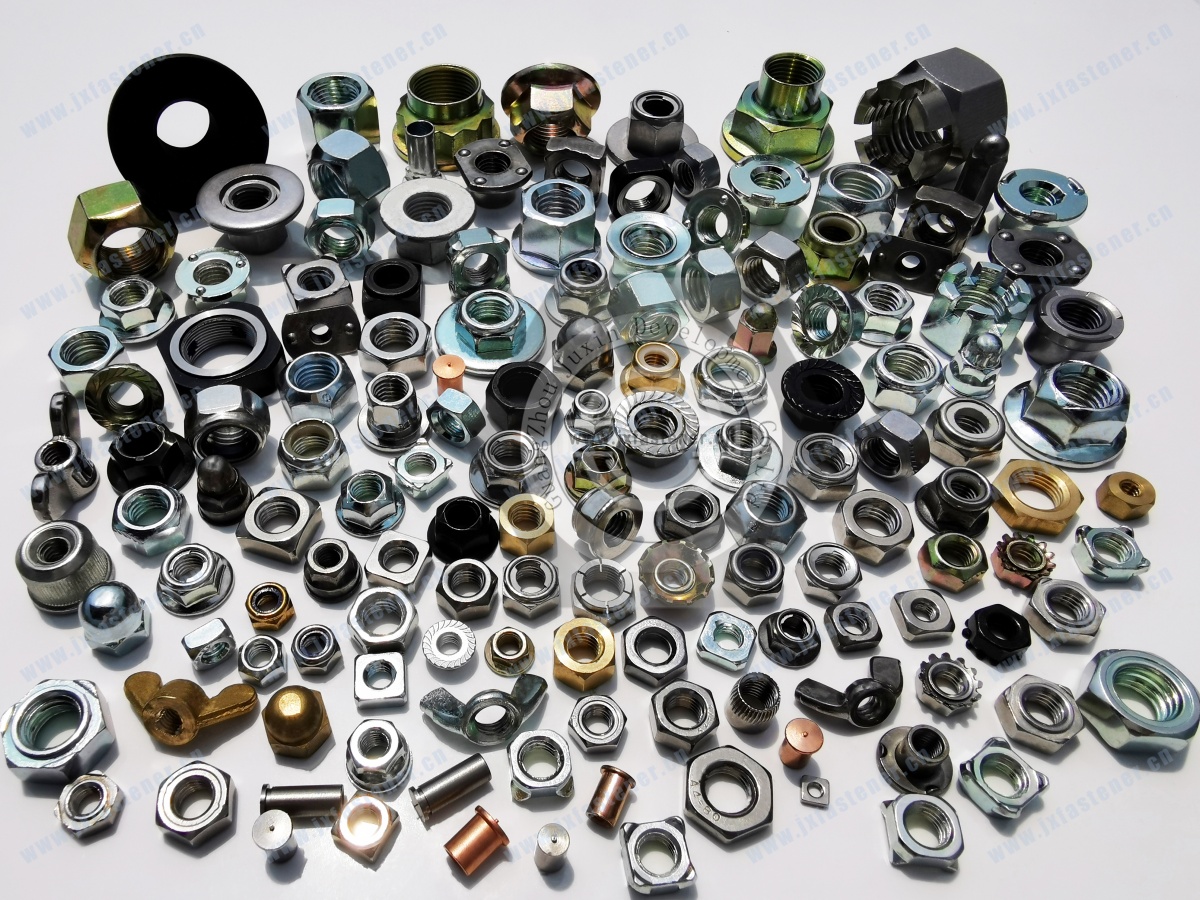
Standard catalog fasteners may not satisfy every equipment design.
Drawing-based custom hardware may be required for:
Special bolt lengths
Modified head geometry
Custom threaded studs
Precision machined nuts
Nonstandard washers
Special spacers
Drawing-specific metal connectors
Controlled dimensions for automated assembly
JUXIN FASTENERS supports drawing-based inquiry review for industrial fastening components.
Manufacturing feasibility depends on material, geometry, tolerances and expected production volume.
Cold Forming
Cold forming may be appropriate for selected fastener geometries and production quantities.
It can support efficient material utilization and repeatable production for suitable designs.
CNC Machining
CNC machining may be appropriate for complex geometries, controlled shoulders and drawing-specific dimensions.
Some components may require a combination of forming and secondary machining.
Engineering insight: Customization should focus on the dimensions and characteristics that affect equipment function.
Overly restrictive tolerances on noncritical features can increase manufacturing cost without improving performance.
For OEM sourcing, the drawing should distinguish functional requirements from general manufacturing preferences.
Manufacturing Efficiency in Renewable Energy Equipment Assembly
Production managers and manufacturing engineers must balance mechanical performance with installation speed, assembly consistency and cost.
Installation Accessibility
Renewable energy equipment may contain restricted mounting locations.
Fastener head geometry and tool clearance should be considered during design.
Assembly Sequence
Fastener installation should be coordinated with the equipment assembly sequence.
Components that are easy to install during subassembly may become difficult to access after final assembly.
Torque Control
Installation procedures should be appropriate for the actual fastener, coating and joint.
Dimensional Consistency
Fastener geometry and thread quality can influence automated or semi-automated assembly.
Maintenance and Replacement
Renewable energy equipment may require periodic servicing.
The OEM should define when fasteners may be reused and when replacement is required.
Total Assembly Cost
Fastener unit price is only one part of total manufacturing cost.
Installation labor, tooling, rework, maintenance and supply continuity should also be considered.
International Standards for Renewable Energy Fasteners
Applicable standards depend on the specific fastener and project requirements.
| Product or Requirement | Potentially Relevant Standard |
|---|---|
| Carbon steel and alloy steel bolt mechanical properties | ISO 898-1 |
| Carbon steel nut mechanical properties | ISO 898-2 |
| Hexagon head bolts | ISO 4014 / ISO 4017 |
| Regular hexagon nuts | ISO 4032 |
| All-metal prevailing-torque nuts | ISO 7042 where applicable |
| Stainless steel fastener mechanical properties | Applicable parts of ISO 3506 |
| Metric thread specifications | Applicable ISO metric thread standards |
| Inch-series threaded fasteners | Applicable ASME/ANSI standards |
| Salt spray testing | ASTM B117 |
| Material inspection documents | EN 10204 where contractually specified |
Wind turbine structural connections may require additional project-specific standards, qualified fastener assemblies and specialized documentation.
A general-purpose bolt meeting ISO 898-1 is not automatically qualified for a wind turbine tower flange, blade connection or another safety-critical assembly.
Metric and inch-series thread systems must be treated as separate specifications.
M10 metric threads, for example, are not directly interchangeable with superficially similar UNC or UNF threads.
Wind Turbine Structural Bolting: Application Boundaries
Wind turbine tower flange joints, blade connections, main shaft assemblies and foundation anchor systems may be subject to demanding design and qualification requirements.
These connections can involve:
High cyclic loading
Controlled preload
Specialized materials
Fatigue assessment
Environmental exposure
Inspection and traceability requirements
Project-specific approval procedures
Such applications should not be treated as interchangeable with ordinary industrial equipment mounting.
For critical wind turbine structural bolting, the responsible OEM must define the complete fastener specification and qualification requirements.
JUXIN FASTENERS should evaluate such inquiries individually and confirm manufacturing and documentation feasibility before making any supply commitment.
OEM Supplier Qualification and Alternative Sourcing
Renewable energy equipment manufacturers may seek alternative suppliers for bolts, nuts, washers, locking hardware and custom fasteners.
Supplier qualification should consider both technical conformity and commercial supply capability.
| Evaluation Area | Key Questions |
|---|---|
| Drawing conformity | Are dimensions, threads and tolerances correct? |
| Mechanical properties | Does the fastener meet the required property class? |
| Joint compatibility | Is the fastener suitable for the intended loading and installation method? |
| Surface treatment | Does the coating meet the agreed environmental requirements? |
| Functional performance | Are locking, fatigue or retention requirements defined? |
| Inspection | Which dimensions and characteristics require verification? |
| Documentation | Which material and inspection records are required? |
| Commercial supply | What are the MOQ, annual demand and delivery expectations? |
Material Traceability and Inspection Documents
Some renewable energy projects require material inspection documentation under EN 10204.
The specific document type should be identified during procurement.
An EN 10204 3.1 inspection certificate should not be assumed for every standard industrial fastener.
Where required, documentation availability and traceability requirements must be confirmed before order acceptance.
Alternative Sourcing: Functional Equivalence Matters
Two fasteners with the same nominal dimensions may differ in:
Mechanical properties
Grip length
Thread position
Coating thickness
Installation friction
Locking characteristics
Fatigue behavior
For demanding renewable energy applications, dimensional similarity alone does not establish functional equivalence.
The OEM should define the required validation and approval procedures.
Request Wind Energy and Renewable Equipment Fasteners
JUXIN FASTENERS supports OEM sourcing and drawing-based technical review for industrial fasteners used in suitable renewable energy equipment applications.
For wind turbine auxiliary equipment, solar mounting structures, tracking mechanisms, inverter enclosures and other renewable energy equipment, please provide:
2D drawings and available 3D models
Fastener type and thread specification
Material and mechanical property requirements
Joint loading and installation conditions
Required surface treatment
Applicable inspection and testing requirements
Prototype quantity and annual forecast
Packaging and delivery requirements
For wind turbine primary structural connections or other safety-critical applications, please identify the applicable qualification, inspection and approval requirements.
Our team can review the supplied information to discuss suitable standard and custom fastening options and quotation feasibility.
Website: www.juxinfasteners.com
OEM Technical Review & RFQ: info@juxinfasteners.com
Send your drawings and purchasing requirements to discuss fastening solutions for your next wind energy or renewable equipment project.
Related JUXIN FASTENERS Engineering Solutions
EV Battery Pack & Energy Storage Fastening Solutions for OEM Assemblies — fastening solutions for energy storage equipment.
All-Metal Prevailing-Torque Lock Nuts for High-Vibration Industrial Assemblies — vibration-resistant mechanical connections.
Agricultural & Construction Machinery Fasteners for Heavy-Duty and Vibration-Resistant Assemblies — high-strength machinery joint design.
Custom Cold-Headed Fasteners & Special Formed Parts for Industrial OEMs — drawing-based custom fastener sourcing.
These related topics provide additional guidance on high-strength threaded connections, locking fasteners, custom manufacturing and OEM sourcing requirements.
Product Packaging
Packaging Standard
At Juxin Fasteners, we apply standardized export packaging to ensure product protection, traceability, and compliance with international logistics requirements.
1. Standard Export Packaging
Unless otherwise specified, all products will be packed according to our factory standard export packaging, which includes:
Moisture-resistant inner protection
Poly bag or small box packing as required
Reinforced export cartons
Clear labeling with part number, specification, batch number, and quantity
Palletizing for sea or air shipment when necessary
Our standard packaging is designed to ensure safe transportation, efficient warehousing, and long-distance international shipping.
2. Customized Packaging Options
We also provide customized packaging solutions according to customer requirements, including but not limited to:
Private labeling
Customized barcodes
Specific carton dimensions
Retail packaging
Special pallet configuration
Customer-specific marking and identification
So that you know, customized packaging may involve additional costs and extended lead time depending on the complexity of the requirements.
3. Compliance & Quality Assurance
All packaging processes are controlled under our ISO 9001 quality management system to ensure consistency, traceability, and product integrity throughout the supply chain.
Product Pictures
Contact Us
Tel.:
+86 020 8621 0320
+86 020 3121 6067
E-mail:
Technical Support:
Navigation
SEND INQUIREY