Call Us
+86 136 6007 9809
Call Us
+86 136 6007 9809

Food processing and packaging machinery operates in environments where equipment reliability, cleanability, corrosion resistance and maintenance efficiency are essential.
Conveyor systems, beverage filling machines, food packaging lines, mixing equipment and processing machinery use threaded fasteners to connect equipment frames,
mechanical brackets, guards, access covers and auxiliary components.
Depending on their location, these connections may be exposed to moisture, cleaning chemicals, temperature changes, vibration and repeated disassembly.
Product Specification
Stainless Steel Fasteners for Food Processing & Packaging Machinery: Washdown and OEM Solutions
Food processing and packaging machinery operates in environments where equipment reliability, cleanability, corrosion resistance and maintenance efficiency are essential.
Conveyor systems, beverage filling machines, food packaging lines, mixing equipment and processing machinery use threaded fasteners to connect equipment frames,
mechanical brackets, guards, access covers and auxiliary components.
Depending on their location, these connections may be exposed to moisture, cleaning chemicals, temperature changes, vibration and repeated disassembly.
For equipment manufacturers, selecting suitable fasteners requires more than specifying stainless steel.
Material grade, joint geometry, surface condition, cleaning exposure, thread engagement and installation procedures all influence the performance of the complete assembly.
JUXIN FASTENERS supplies industrial stainless steel screws, bolts, nuts, washers, prevailing-torque lock nuts and drawing-based custom metal components for suitable food processing and packaging machinery applications.
This guide explains practical fastener selection for equipment frames, conveyor assemblies, packaging machines and washdown-exposed components,
while distinguishing general industrial stainless steel hardware from specialized hygienic fasteners used in direct product-contact or aseptic environments.
Fastening Applications in Food Processing and Packaging Equipment
Food-related machinery includes a wide variety of mechanical assemblies.
| Equipment Application | Potential Fastener Solution | Main Engineering Requirement |
|---|---|---|
| Food processing machine frames | Stainless steel bolts and nuts | Corrosion resistance and structural compatibility |
| Packaging conveyor assemblies | Machine screws and locking nuts | Vibration resistance and serviceability |
| Beverage filling equipment supports | Stainless steel threaded fasteners | Cleaning exposure and joint stability |
| Machine guarding and access covers | Screws and retained fastening arrangements | Maintenance access |
| Stainless steel equipment brackets | Bolts, washers and flange nuts | Joint loading and material compatibility |
| Auxiliary equipment housings | Machine screws and threaded hardware | Assembly consistency |
| Packaging machine mechanisms | Custom studs, spacers and machined hardware | Dimensional fit and repeatable assembly |
| Washdown-exposed equipment | Selected corrosion-resistant fasteners | Chemical compatibility and cleanability |
The appropriate fastener depends on the equipment zone and its exposure conditions.
A fastener suitable for a dry external machine frame may not be suitable for a direct food-contact surface or an aseptic processing connection.
Understanding Hygienic Zones in Food Machinery
One of the most important decisions in food equipment fastening is identifying where the fastener will be installed.
Different equipment areas may require different levels of hygienic design.
Direct Product-Contact Areas
These are surfaces that normally contact food or product during processing.
Fasteners used in these areas may require specialized geometry, surface finish, sealing and material requirements.
Exposed threads, recesses and inaccessible gaps may create cleaning challenges.
General-purpose stainless steel screws should not automatically be considered suitable.
Splash and Cleaning-Exposed Areas
These areas may be exposed to product splashes, moisture or cleaning chemicals without being intended as direct product-contact surfaces.
Fastener selection should consider corrosion resistance, drainage and cleanability.
Non-Product-Contact Equipment Areas
Machine frames, external brackets and auxiliary housings may permit conventional industrial fastening arrangements where the risk assessment and equipment design allow.
However, these components may still require corrosion protection and appropriate cleaning access.
Engineering insight: The same stainless steel bolt can be appropriate in one location and unsuitable in another location on the same food processing machine.
The decision depends on the hygienic function of the equipment zone, not simply the fastener material.
304 vs. 316 Stainless Steel Fasteners for Food Machinery
Austenitic stainless steels are commonly used in industrial equipment.
Two frequently considered material families are 304-type and 316-type stainless steels.
304-Type Stainless Steel
304-type stainless steel offers corrosion resistance in many industrial environments.
It may be suitable for selected dry or moderately exposed equipment components.
However, chloride-containing cleaning agents and unfavorable operating conditions can increase localized corrosion risk.
316-Type Stainless Steel
316-type stainless steel contains molybdenum, which generally improves resistance to certain chloride-related localized corrosion mechanisms compared with common 304-type compositions.
It may be considered for washdown-exposed machinery components.
However, 316 stainless steel is not immune to corrosion.
Its suitability depends on cleaning chemistry, concentration, temperature, exposure duration and joint geometry.
A2 and A4 Fastener Designations
Applicable parts of ISO 3506 use stainless steel material group designations such as A2 and A4.
A2 is commonly associated with 304-type compositions.
A4 is commonly associated with molybdenum-bearing 316-type compositions.
Mechanical property classes such as A2-70 and A4-80 identify additional strength requirements.
Engineering insight: A4-80 does not mean that a fastener is more hygienic than A4-70.
Mechanical strength and hygienic suitability are different characteristics.
The equipment designer must specify both the required mechanical properties and any applicable hygienic design requirements.
Washdown Cleaning and Chemical Compatibility
Food processing machinery may be cleaned using water, detergents, alkaline cleaners, acidic products or disinfectants.
The exact cleaning procedure varies by facility and equipment type.
Chemical compatibility depends on:
Cleaning agent composition
Concentration
Temperature
Contact time
Rinsing effectiveness
Surface condition
Material grade
Joint geometry
Chloride-Related Corrosion
Certain chloride-containing cleaning environments can promote localized corrosion of stainless steel.
Higher temperatures and concentrated deposits may increase the risk.
Crevice Corrosion
Crevice corrosion can develop in confined areas where moisture and chemicals remain trapped.
Potential locations include:
Beneath bolt heads
Under washers
Between overlapping plates
Inside threaded joints
Around poorly drained brackets
Engineering insight: Upgrading from 304 to 316 stainless steel does not automatically correct a joint that traps cleaning chemicals.
Improving drainage, accessibility and joint geometry may be necessary.
Clean-In-Place vs. External Washdown
Clean-In-Place (CIP) refers to cleaning processes in which relevant internal equipment surfaces are cleaned without the normal disassembly of the system.
External washdown generally refers to cleaning exposed machine surfaces.
These are not interchangeable terms.
A fastener on an external conveyor bracket may be exposed to washdown without being part of a CIP product-contact circuit.
The applicable cleaning requirements should be identified accurately during design and procurement.
Hygienic Fastener Geometry and Cleanability
Fastener geometry can influence the ease of cleaning a machine.
Conventional screw heads and exposed threads may create recesses or surfaces where residue accumulates.
Depending on the hygienic zone, the equipment designer may need to consider:
Smooth external profiles
Reduced exposed thread length
Accessible cleaning surfaces
Suitable sealing arrangements
Appropriate surface finishes
Avoidance of inaccessible crevices
Drainage and equipment orientation
Socket Head Screws and Cleaning Access
Socket head cap screws are useful in many industrial machinery assemblies because they offer compact geometry and tool engagement.
However, the internal drive recess can collect residue in certain exposed locations.
This does not make every socket head screw unsuitable for food machinery.
It means the fastener must be evaluated according to its location and cleaning requirements.
Engineering insight: A fastener with excellent mechanical performance may still be a poor choice for a product-contact surface if its geometry cannot be cleaned adequately.
For demanding hygienic applications, the complete fastener arrangement should be reviewed rather than relying on material grade alone.
Sealing and Hygienic Joint Design
Certain food machinery assemblies require sealed connections.
Sealing performance depends on the complete joint, including:
Fastener geometry
Sealing element
Mating surface condition
Compression
Material compatibility
Installation procedure
Cleaning exposure
A stainless steel screw alone does not provide a hygienic seal.
For direct product-contact or aseptic applications, specialized sealing components and validation may be necessary.
Availability of such specialized assemblies must be confirmed for each project.
Thread Galling in Stainless Steel Machinery Fasteners
Stainless steel threaded fasteners can experience galling under unfavorable installation conditions.
Galling involves adhesive wear and material transfer between contacting thread surfaces.
In severe cases, the threads may seize during tightening or removal.
This can be particularly troublesome in equipment requiring repeated maintenance.
Factors influencing galling include:
Material pairing
Thread fit
Surface condition
Installation speed
Lubrication
Applied load
Contamination
Reducing Galling Risk
Depending on the application, potential measures include:
Controlled tightening speed
Clean thread surfaces
Appropriate thread fit
Suitable material combinations
Application-compatible lubrication
Specified anti-galling treatments
Lubricants used near food processing operations may require additional suitability assessment.
Engineering insight: An anti-galling lubricant that works in ordinary industrial machinery may be inappropriate in a food processing environment.
The equipment manufacturer must determine whether the lubricant is acceptable for the intended location and exposure conditions.
Stainless Steel Lock Nuts for Packaging Machinery
Food packaging equipment may contain conveyors, motors, rotating mechanisms and vibrating assemblies.
These systems can expose threaded connections to repeated movement.
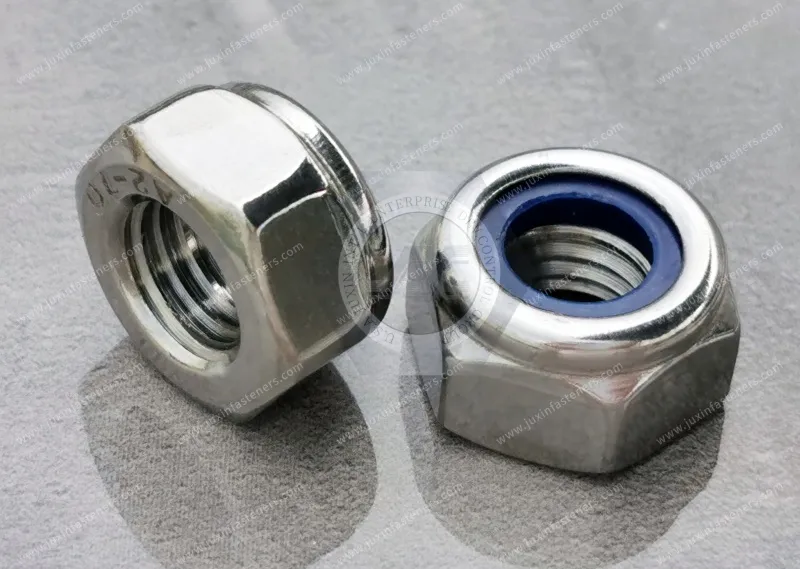
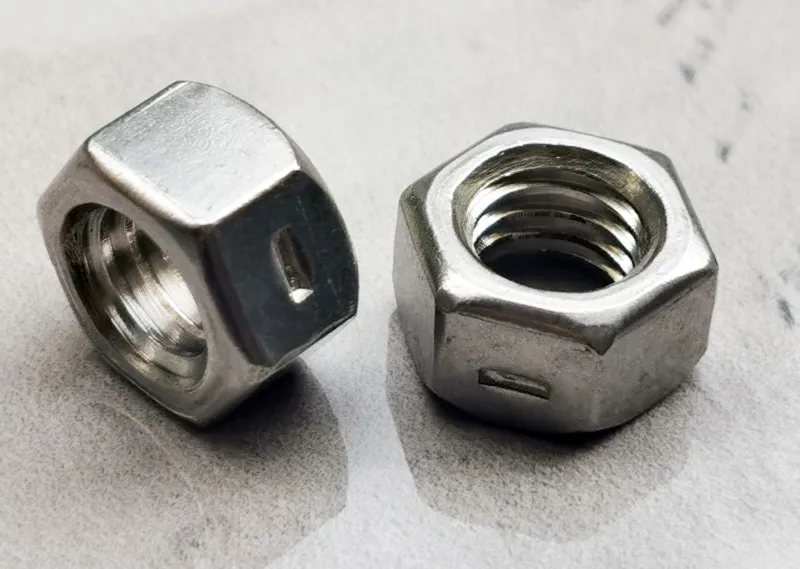
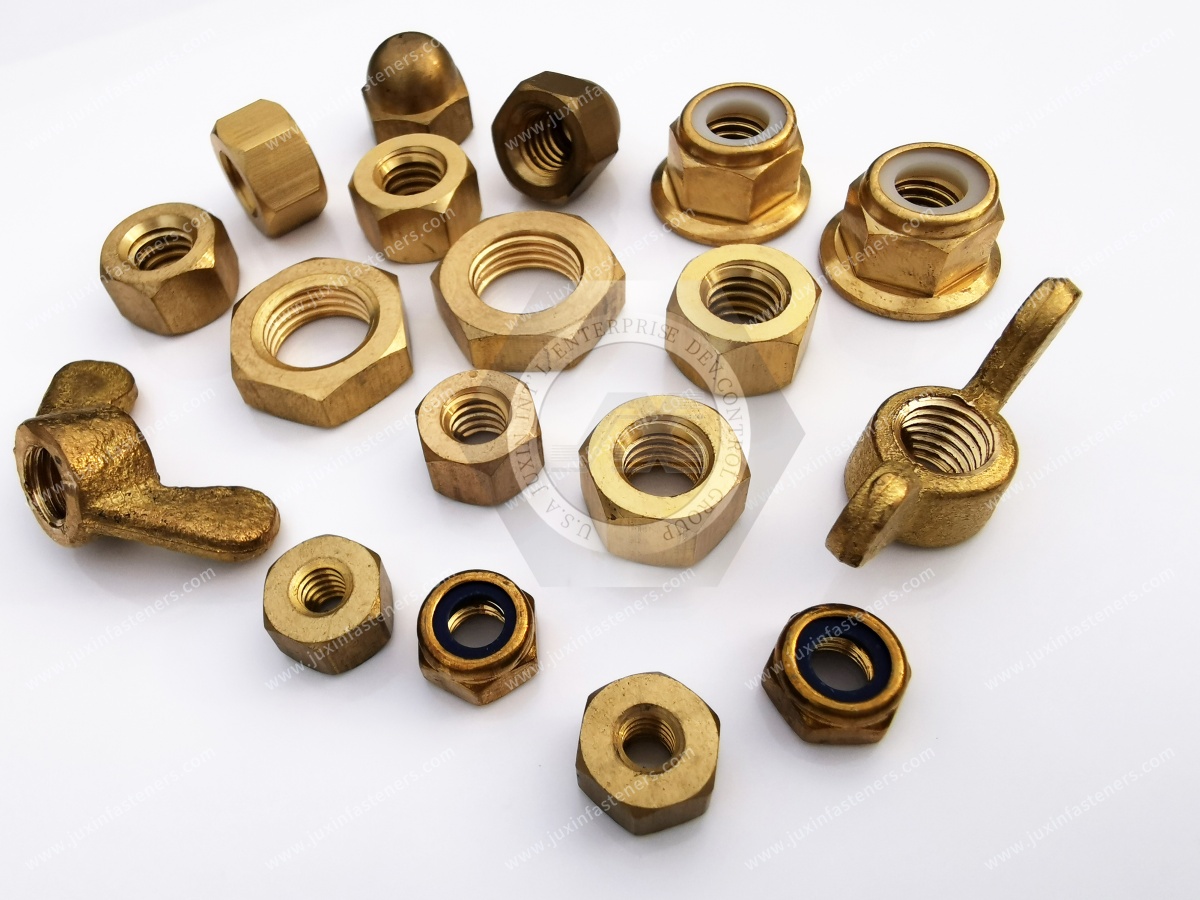
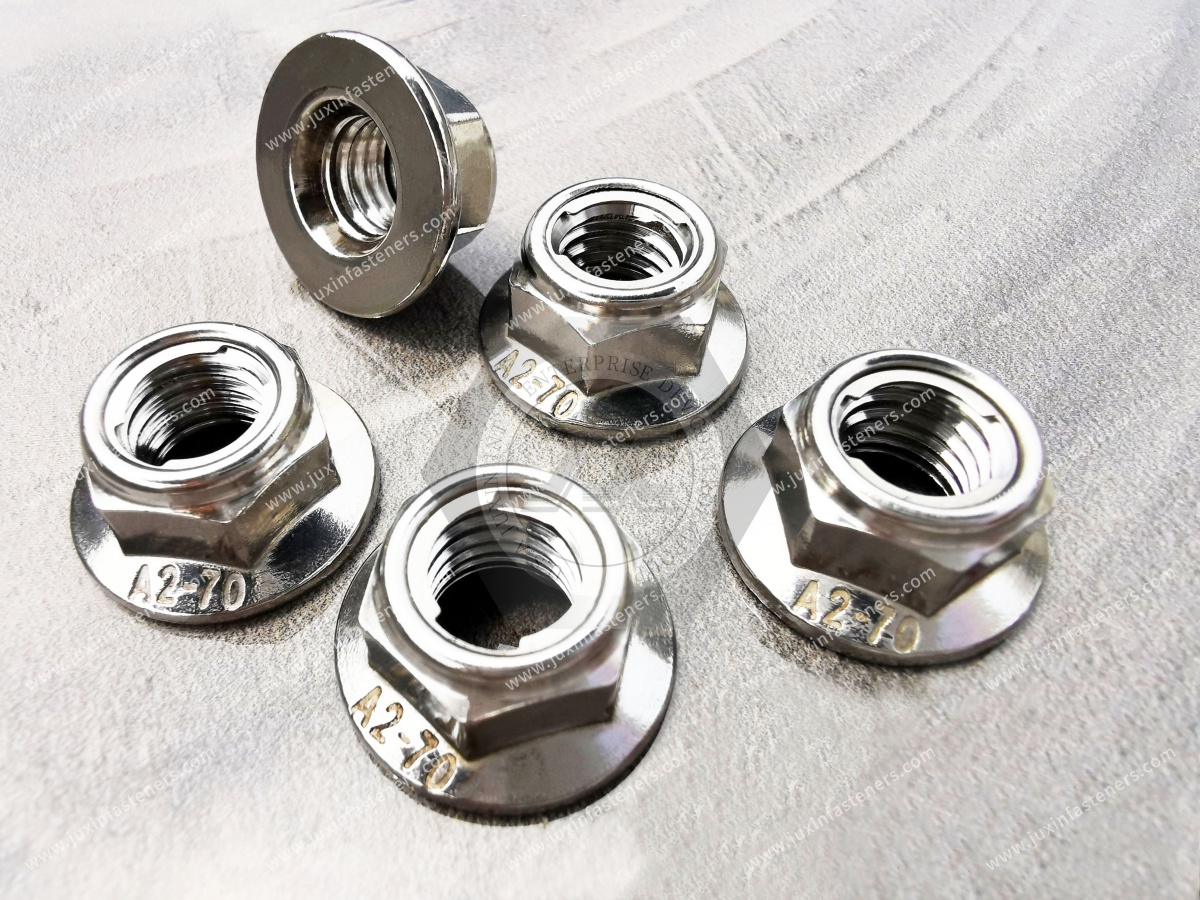
Prevailing-torque lock nuts may be considered where resistance to rotational loosening is required.
Potential options include:
All-metal prevailing-torque lock nuts
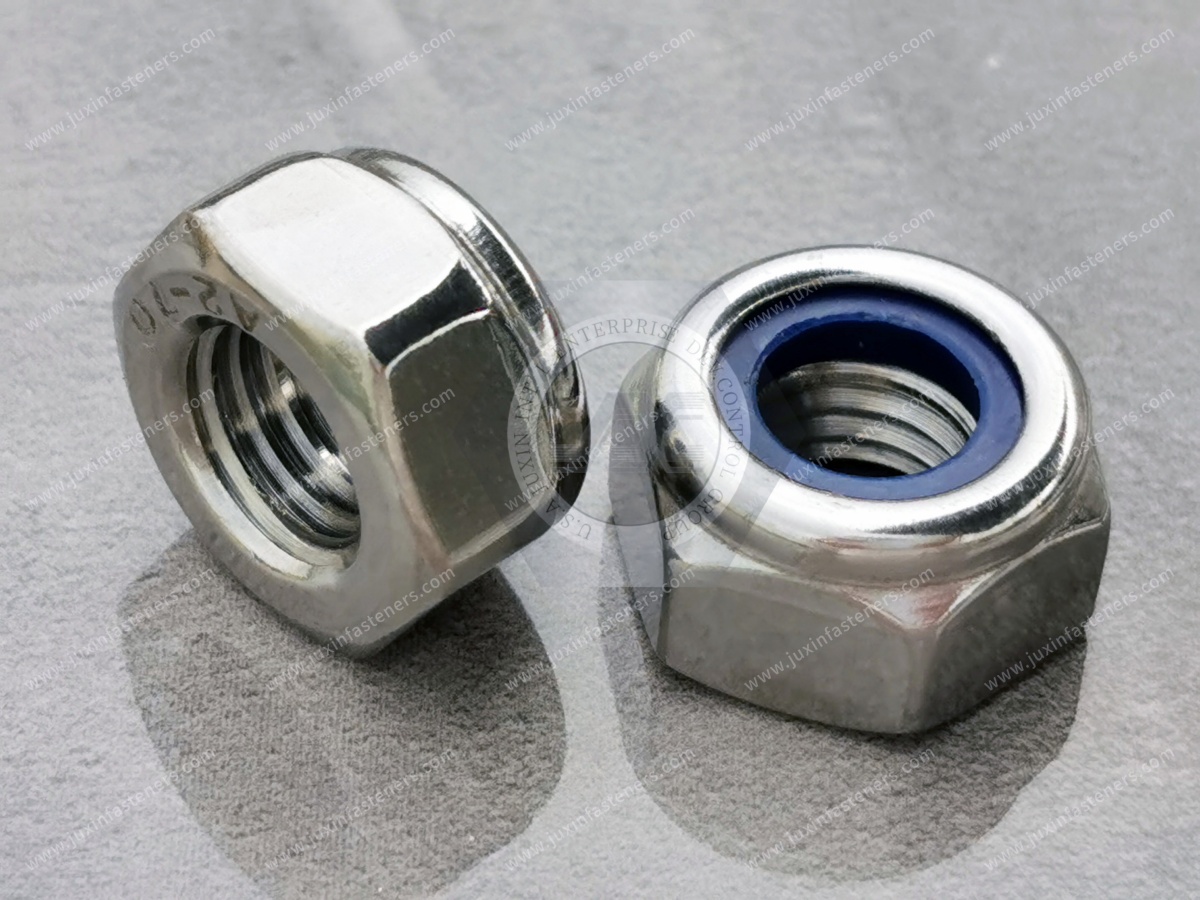
Nylon-insert lock nuts where suitable
Other application-specific locking arrangements
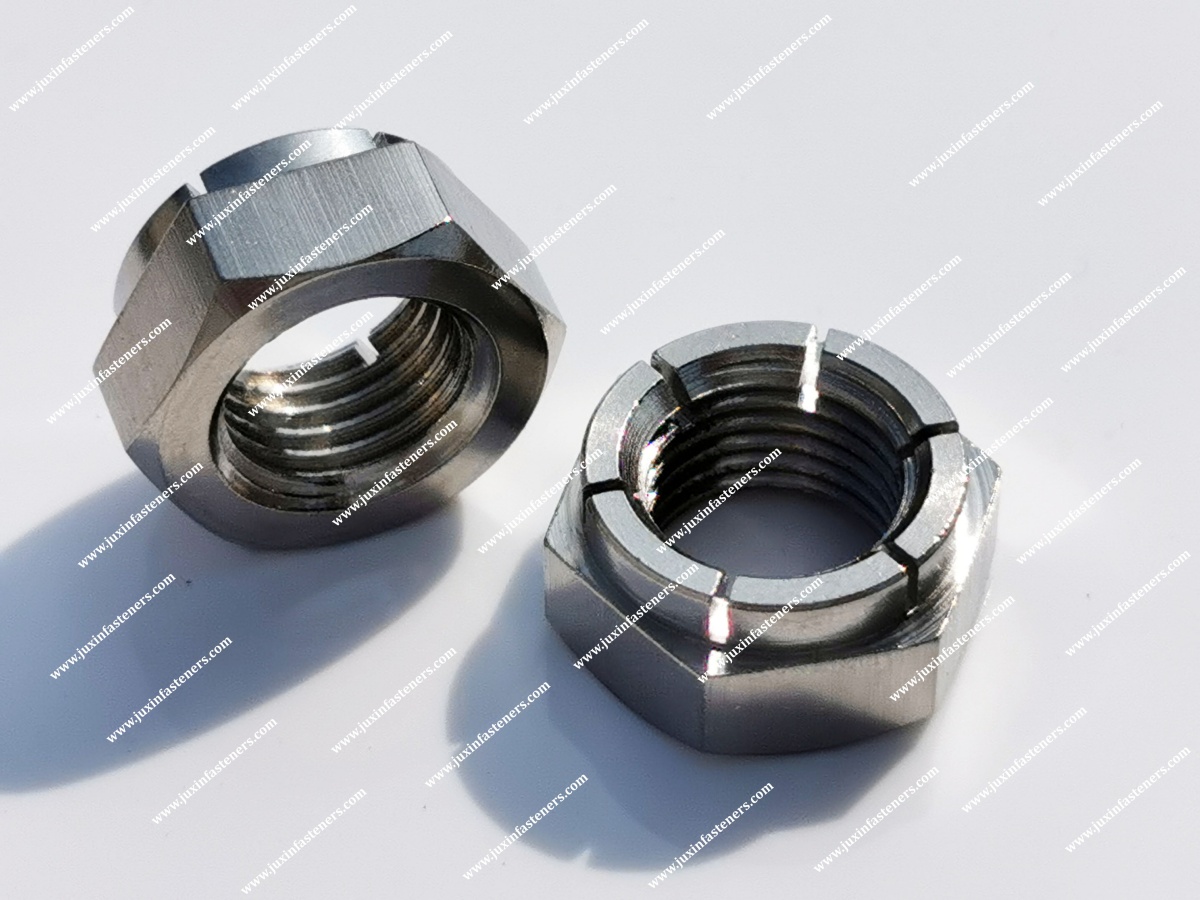
All-Metal Lock Nuts
All-metal prevailing-torque lock nuts use a mechanical locking feature.
Their suitability depends on the specific product, operating conditions and installation requirements.
Nylon-Insert Lock Nuts
Nylon-insert lock nuts provide prevailing torque through an insert.
However, temperature, cleaning chemistry and exposure conditions must be considered.
They should not automatically be selected for high-temperature or chemically aggressive applications.
Engineering insight: Vibration resistance and hygienic suitability are separate requirements.
A lock nut may provide acceptable mechanical locking performance but still be unsuitable for a location requiring specialized cleanable geometry.
Stainless Steel Fastener Strength and Joint Compatibility
Stainless steel fasteners should be selected according to the applicable mechanical property requirements.
For relevant products, ISO 3506 defines stainless steel fastener mechanical properties.
These designations are not directly equivalent to the property classes used for carbon steel bolts under ISO 898-1.
Important engineering considerations include:
Required tensile strength
Joint preload
Thread engagement
Mating material strength
Installation friction
Fatigue loading
Corrosion exposure
Engineering insight: Replacing a carbon steel bolt with a stainless steel bolt of the same nominal size may change the mechanical capacity of the connection.
The substitution should be reviewed against the actual equipment requirements.
Custom Stainless Steel Fasteners for Food Machinery OEMs
Standard catalog fasteners may not satisfy every equipment design.
Drawing-based custom hardware may be required for:
Special screw lengths
Modified head profiles
Custom threaded studs
Precision spacers
Special nuts
Drawing-specific washers
Custom mounting components
Controlled dimensions for automated assembly
JUXIN FASTENERS supports drawing-based inquiry review for industrial fastening components.
Manufacturing feasibility depends on material, geometry, tolerances and production quantity.
Cold Forming
Cold forming may be appropriate for selected stainless steel fastener geometries and production volumes.
Material forming behavior and work hardening must be considered.
CNC Machining
CNC machining may be appropriate for complex geometries, controlled shoulders and drawing-specific features.
Some components may require both forming and secondary machining.
Engineering insight: A custom fastener drawing should identify the surfaces and dimensions that affect mechanical function or cleaning access.
Overly restrictive tolerances on noncritical features can increase manufacturing cost without improving performance.
Passivation and Surface Finishing
Stainless steel components may require cleaning or passivation according to the application.
ASTM A967/A967M is a relevant specification for chemical passivation treatments for stainless steel parts.
Passivation can help remove certain surface contaminants and support an appropriate passive surface condition.
However, passivation does not automatically establish hygienic suitability.
It also does not compensate for unsuitable material selection or poor joint geometry.
Surface Roughness and Cleanability
For hygienically sensitive applications, surface finish may influence cleanability.
The required finish should be defined according to the actual equipment zone and applicable specification.
A general-purpose industrial fastener should not be described as having a certified hygienic surface finish without appropriate evidence.
Manufacturing Efficiency in Food Processing Equipment Assembly
Production managers and manufacturing engineers must consider the complete assembly process.
Installation Accessibility
Fasteners should be accessible for installation, inspection and maintenance.
Poor tool access can increase assembly time and create inconsistent tightening conditions.
Assembly Consistency
Fastener geometry, thread quality and surface condition can affect installation repeatability.
For production equipment, critical characteristics should be identified in the drawing.
Repeated Maintenance
Equipment may require periodic disassembly.
Fastener selection should consider thread damage, galling risk and replacement requirements.
Cleaning Accessibility
Fastener placement should not create unnecessary cleaning difficulties.
A small change in bracket design or screw location may improve maintenance and cleaning access.
Total Assembly Cost
Fastener unit price is only one part of the total cost.
Installation labor, cleaning access, maintenance time, rework and supply continuity should also be considered.
International Standards and Hygienic Design Requirements
Applicable standards depend on the component and equipment application.
| Product or Requirement | Potentially Relevant Standard or Guidance |
|---|---|
| Stainless steel fastener mechanical properties | Applicable parts of ISO 3506 |
| Metric hexagon head bolts | ISO 4014 / ISO 4017 |
| Metric hexagon nuts | ISO 4032 where applicable |
| Hexagon socket head cap screws | ISO 4762 |
| Metric thread specifications | Applicable ISO metric thread standards |
| Inch-series threaded fasteners | Applicable ASME/ANSI standards |
| Stainless steel chemical passivation | ASTM A967/A967M where specified |
| Food machinery hygiene requirements | EN 1672-2 where applicable |
| Hygienic machinery design | ISO 14159 where applicable |
| Hygienic design guidance | Relevant EHEDG guidance where applicable |
| Material inspection documents | EN 10204 where contractually specified |
Specialized sanitary standards, including applicable 3-A requirements, may apply to certain equipment designs.
However, compliance with a general fastener standard does not automatically establish hygienic design compliance.
Likewise, a material inspection certificate is not equivalent to a food-contact approval or sanitary equipment certification.
Metric, UNC, UNF and other thread systems must be treated as separate specifications.
OEM Supplier Qualification and Alternative Sourcing
Food processing and packaging machinery manufacturers may seek alternative suppliers for stainless steel screws, nuts, washers and custom fastening components.
Supplier qualification should evaluate both technical conformity and commercial supply requirements.
| Evaluation Area | Key Questions |
|---|---|
| Material specification | Is the required stainless steel grade correctly identified? |
| Mechanical properties | Does the fastener meet the specified strength requirements? |
| Equipment zone | Is the fastener suitable for its intended location? |
| Cleaning exposure | Is the material compatible with the actual cleaning process? |
| Surface condition | Are any special finishing requirements defined? |
| Installation compatibility | Is the fastener suitable for the intended assembly method? |
| Inspection | Which dimensions and characteristics require verification? |
| Commercial supply | What are the MOQ, annual demand and delivery expectations? |
Material Traceability and Documentation
Some food processing equipment projects require material inspection documentation under EN 10204.
The specific document type should be identified during procurement.
An EN 10204 3.1 inspection certificate should not be assumed for every standard stainless steel fastener.
Where required, documentation availability and traceability requirements must be confirmed before order acceptance.
Alternative Sourcing: Functional Equivalence Matters
Two stainless steel fasteners with the same nominal dimensions may differ in:
Material grade
Mechanical property class
Surface finish
Thread tolerance
Installation friction
Corrosion resistance
Cleaning suitability
Dimensional similarity alone does not establish functional equivalence.
For hygienically sensitive equipment, the OEM should define the required validation and approval procedures.
Request Stainless Steel Fasteners for Food Processing Machinery
JUXIN FASTENERS supports OEM sourcing and drawing-based technical review for industrial stainless steel fasteners used in suitable food processing and packaging machinery applications.
For conveyor systems, packaging equipment, beverage filling machinery and other food processing equipment, please provide:
2D drawings and available 3D models
Fastener type and thread specification
Required stainless steel grade
Mechanical property requirements
Equipment location and hygienic zone
Cleaning chemicals and exposure conditions
Surface treatment or finishing requirements
Inspection and documentation requirements
Prototype quantity and annual forecast
Packaging and delivery requirements
For direct food-contact or aseptic applications, please identify the applicable hygienic design and qualification requirements.
Our team can review the supplied information to discuss suitable standard and custom fastening options and quotation feasibility.
Website: www.juxinfasteners.com
OEM Technical Review & RFQ: info@juxinfasteners.com
Send your drawings and purchasing requirements to discuss stainless steel fastening solutions for your next food processing or packaging machinery project.
Related JUXIN FASTENERS Engineering Solutions
Lock Nuts & Flange Lock Nuts for Food and Agricultural Machinery — vibration-resistant threaded connections for machinery.
Stainless Steel Fasteners for Medical Imaging, Diagnostic & Laboratory Equipment — stainless steel material selection for equipment assemblies.
Marine-Grade Stainless Steel Fasteners & Corrosion-Resistant Hardware for Offshore Equipment — corrosion mechanisms and stainless steel selection.
Custom Cold-Headed Fasteners & Special Formed Parts for Industrial OEMs — drawing-based custom fastener sourcing.
These related topics provide additional guidance on stainless steel hardware, locking fasteners, custom manufacturing and OEM supplier qualification.
Product Packaging
Packaging Standard
At Juxin Fasteners, we apply standardized export packaging to ensure product protection, traceability, and compliance with international logistics requirements.
1. Standard Export Packaging
Unless otherwise specified, all products will be packed according to our factory standard export packaging, which includes:
Moisture-resistant inner protection
Poly bag or small box packing as required
Reinforced export cartons
Clear labeling with part number, specification, batch number, and quantity
Palletizing for sea or air shipment when necessary
Our standard packaging is designed to ensure safe transportation, efficient warehousing, and long-distance international shipping.
2. Customized Packaging Options
We also provide customized packaging solutions according to customer requirements, including but not limited to:
Private labeling
Customized barcodes
Specific carton dimensions
Retail packaging
Special pallet configuration
Customer-specific marking and identification
So that you know, customized packaging may involve additional costs and extended lead time depending on the complexity of the requirements.
3. Compliance & Quality Assurance
All packaging processes are controlled under our ISO 9001 quality management system to ensure consistency, traceability, and product integrity throughout the supply chain.
Product Pictures
Contact Us
Tel.:
+86 020 8621 0320
+86 020 3121 6067
E-mail:
Technical Support:
Navigation
SEND INQUIREY