Call Us
+86 136 6007 9809
Call Us
+86 136 6007 9809

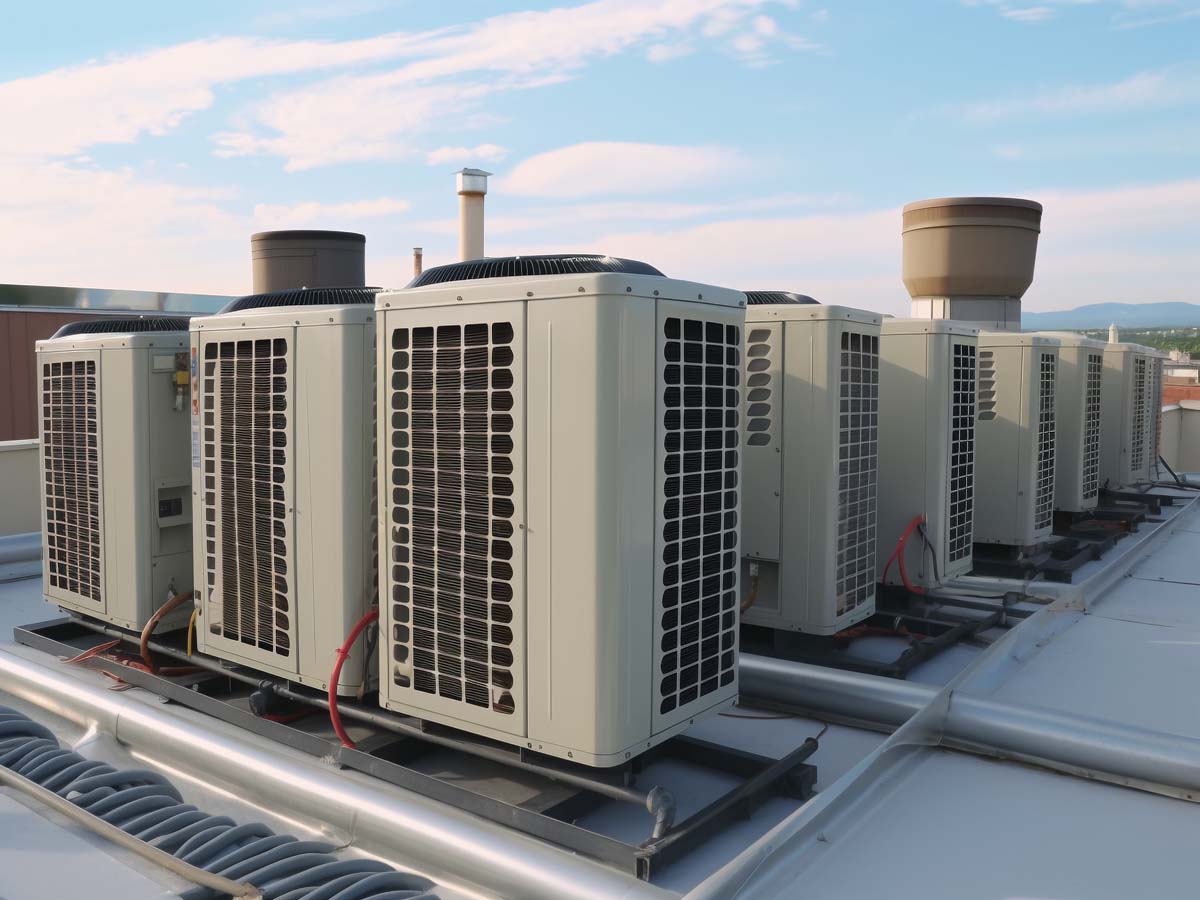
Industrial HVAC equipment operates in environments where moisture, temperature variation, vibration, cleaning chemicals and mixed-material assemblies can all influence fastening performance.
Product Specification
Industrial HVAC equipment operates in environments where moisture, temperature variation, vibration, cleaning chemicals and mixed-material assemblies can all influence fastening performance.
Commercial air handling units (AHUs), rooftop climate control systems, ventilation equipment, chillers, heat pumps,
fan assemblies and HVAC control enclosures may contain galvanized steel, stainless steel, aluminum, coated sheet metal, insulation materials, circuit boards and polymer components within the same assembly.
In these environments, the choice between metallic and plastic hardware is not simply a question of replacing one fastener material with another.
Engineers need to evaluate the fastening function, environmental exposure, mechanical load, temperature cycling, electrical requirements, dimensional stability and interaction between mating materials.
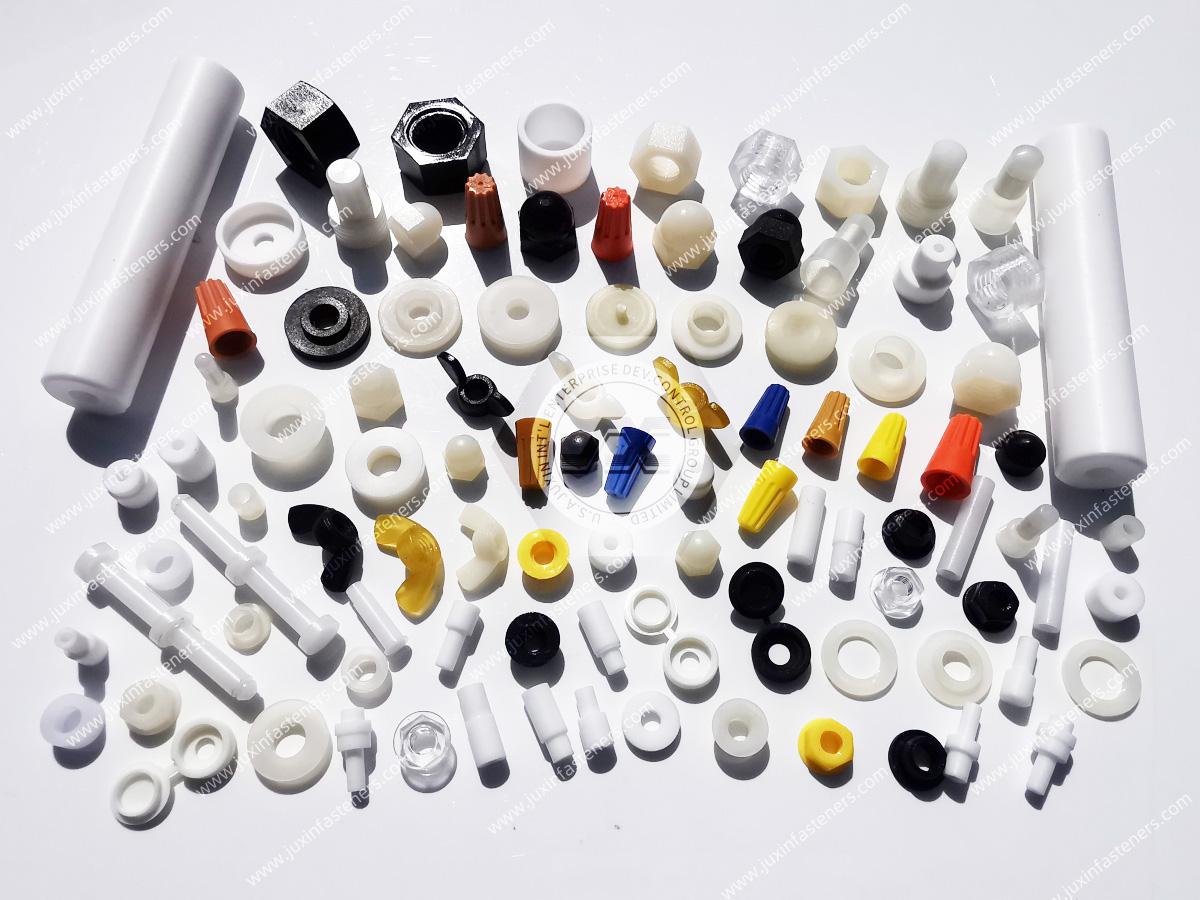
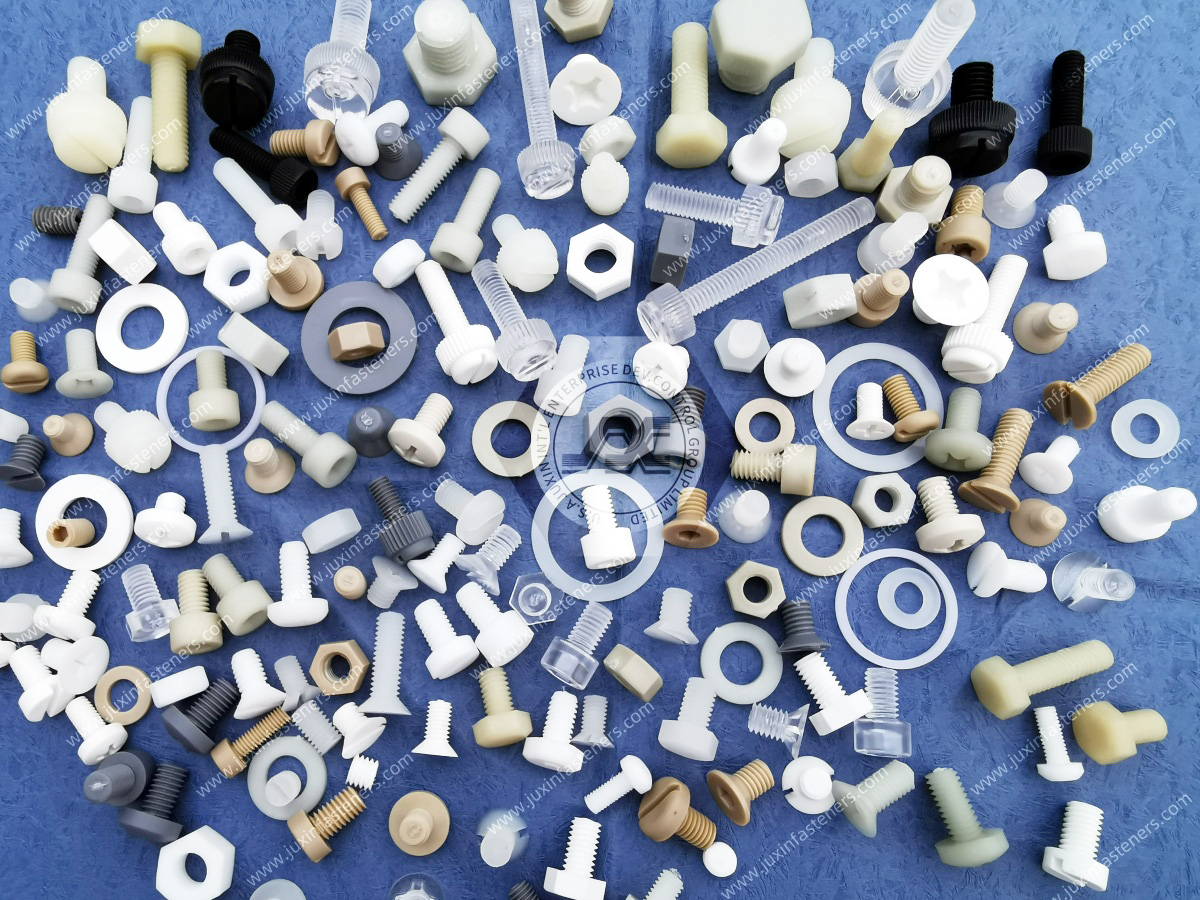
Plastic hardware for HVAC systems can include nylon machine screws, plastic screws, nylon bolts, plastic nuts, nylon hex nuts,
plastic flat washers, insulating washers, shoulder washers, plastic spacers, threaded standoffs and other custom polymer fastening components.
For selected HVAC applications, these components may provide useful advantages such as non-conductive interfaces,
lower density, resistance to many moisture-related corrosion mechanisms and separation between dissimilar materials.
However, polymer performance depends strongly on resin selection, geometry, temperature, moisture exposure, load and installation conditions.
This guide explains how HVAC engineers and procurement teams can evaluate plastic hardware at the component and assembly level,
how to select appropriate polymer families, and what information should be included when sourcing OEM plastic fasteners.
Plastic hardware is worth evaluating when the fastening application involves one or more of the following requirements:
Moisture and condensation exposure: Polymer fasteners can avoid the metallic corrosion mechanisms associated with certain wet environments, provided the selected material is chemically compatible with the application.
Electrical non-conductivity: Plastic screws, nuts, washers and spacers can provide a non-conductive fastening interface where electrical isolation is part of the equipment design.
Material separation: Plastic washers, shoulder washers and spacers can separate metallic components or reduce direct contact between dissimilar materials.
Thermal-interface considerations: Polymer fasteners generally conduct less heat than common metals, so they may reduce the conductive heat path through selected joints. They should not, however, be treated as a complete substitute for the HVAC system's insulation design.
Weight reduction: Plastic hardware has lower density than most metallic fastening materials, which may be useful when many components are used or when moving assemblies are involved.
Surface protection: Polymer contact surfaces may be useful where direct metal-to-metal contact could damage coated, painted or finished components.
Component spacing: Plastic spacers, PCB spacers and threaded standoffs can maintain defined separation between electrical, electronic and mechanical components.
The engineering decision should be based on the complete joint rather than on the fastener material alone.
Condensation is common around cooling coils, evaporator sections, chilled-air pathways, condensate collection areas and other temperature-controlled portions of HVAC equipment.
A metallic fastener exposed to persistent moisture may experience corrosion depending on its material, surface treatment, contaminants and environmental conditions.
When different metals are joined in a conductive electrolyte, galvanic corrosion can also become a design consideration.
Plastic hardware does not participate in metallic galvanic corrosion in the same way as metallic fasteners.
This can make polymer components useful for selected wet or condensation-prone fastening locations.
However, "plastic" does not mean that every polymer is suitable for every wet HVAC environment.
Engineers should still evaluate:
Continuous and intermittent moisture exposure
Condensation frequency
Cleaning agents
Water-treatment chemicals
Refrigerant or oil exposure where applicable
Temperature cycling
Moisture absorption
Dimensional change
Long-term mechanical loading
Compatibility with adjacent materials
For example, nylon can absorb moisture, which may influence dimensions and mechanical behavior.
A component that performs adequately in a dry laboratory environment may require additional evaluation when installed in a continuously humid HVAC enclosure.
Metal is generally a more thermally conductive fastening material than engineering polymers.
This means that a metal screw passing through an insulated panel can create a localized conductive path.
In certain HVAC assemblies, replacing a metallic fastening component with an appropriate polymer component may reduce that localized heat-transfer path.
However, this should be described as reducing or modifying a conductive heat path, not automatically "eliminating thermal bridging."
The overall thermal performance of an HVAC enclosure depends on much more than the fastener:
Panel construction
Insulation thickness and material
Joint geometry
Fastener quantity
Contact area
Metal brackets
Seams and penetrations
Gaskets
Air leakage
Surface temperatures
Internal and external temperature differences
Plastic hardware can therefore be one element within a larger thermal design strategy.
Fans, blowers, motors, compressors and dampers can introduce continuous or intermittent vibration into HVAC assemblies.
Plastic hardware may be useful in selected low-load or moderate-load applications, but engineers should not assume that polymer fasteners automatically prevent loosening or provide vibration damping.
Joint behavior depends on:
Clamp load
Joint stiffness
Thread geometry
Friction
Transverse movement
Fastener geometry
Polymer creep
Stress relaxation
Temperature
Assembly method
Vibration frequency and amplitude
For high-cycle or highly loaded joints, engineers should evaluate whether a polymer fastener, metallic fastener, reinforced assembly, threaded insert or hybrid fastening architecture is more appropriate.
HVAC equipment rarely uses only one type of fastening component. A single equipment platform may contain dozens or hundreds of individual hardware SKUs.
A practical Plastic Hardware strategy therefore considers the complete component family.
Plastic screws, nylon screws, plastic machine screws and nylon machine screws can be considered for enclosure panels, sensor brackets, electrical assemblies,
internal supports and other applications where their mechanical and environmental characteristics are appropriate.
Thread selection may include metric or unified thread systems according to the equipment design and applicable drawing requirements.
Plastic bolts and nylon bolts may be used where larger fastening geometries or through-bolt assemblies are required.
The engineering review should consider:
Bolt diameter
Thread engagement
Joint thickness
Clamping requirement
Installation method
Temperature
Moisture
Long-term loading
Mating nut or threaded insert
For higher mechanical loads, engineers should evaluate whether polymer hardware provides sufficient retention over the intended service conditions.
Plastic nuts, plastic hex nuts, nylon nuts and nylon hex nuts can be paired with polymer or metallic screws and bolts depending on the assembly architecture.
The combination of screw, nut and washer should be evaluated as one joint.
For example:
Nylon machine screw → nylon washer → coated sheet-metal panel → plastic nut
may be appropriate for one enclosure application, while:
Metal bolt → insulating washer → plastic component → compression limiter → metal structure
may be more appropriate where higher clamping loads are required.
Plastic flat washers and nylon insulating washers can distribute contact pressure, protect finished surfaces and provide electrical or material separation.
They are particularly relevant when the fastener itself is metallic but the interface requires an insulating or protective layer.
Washer selection should consider:
Inside diameter
Outside diameter
Thickness
Bearing area
Material
Temperature
Moisture
Compression behavior
Mating surface
Shoulder washers and insulating cup washers can provide more controlled separation than a simple flat washer.
A shoulder washer can isolate a fastener from a mounting hole while also locating the fastener relative to the panel.
Cup-style configurations may be useful when the fastening interface requires additional separation around the fastener head or shaft.
These components can be particularly relevant to HVAC electrical control assemblies, sensors, instrumentation and equipment enclosures.
Plastic spacers, nylon spacers, industrial plastic spacers, PCB spacers and threaded standoffs can create controlled separation between components.
HVAC control systems may contain:
Controller boards
Sensors
Relays
VFD-related electronics
Terminal assemblies
Display modules
Communication modules
Temperature and pressure sensors
For these assemblies, male-to-female standoffs and female-to-female standoffs can be used where the board or component stack-up requires threaded mounting points.
When a plastic housing or molded component requires repeated threaded assembly, direct polymer threads may not always provide the desired durability.
Threaded inserts for plastic can create a reinforced internal-thread interface within a polymer component.
Depending on the housing design and material, engineering teams may evaluate heat-set inserts, ultrasonic inserts, molded-in inserts or other insert technologies.
For HVAC control boxes, electronic housings and polymer structural components, the insert decision should be made together with the boss geometry, hole design, installation process and mating screw.
See the related JUXIN FASTENERS technical resource on Threaded Inserts for Plastic: Industrial Design for additional design considerations.
When a plastic housing, panel or molded component must withstand a defined clamping load, compression limiters may provide a more controlled load path than relying entirely on the polymer wall.
This can be relevant where a bolt passes through a plastic boss or housing and repeated tightening could otherwise place excessive compressive stress on the polymer.
Compression limiters should be evaluated according to:
Axial length
Inner diameter
Outer diameter
Housing geometry
Bolt dimensions
Clamp load
Temperature
Polymer creep
Assembly process
The limiter does not automatically solve every creep or clamping problem. The complete joint still requires engineering validation.
Material selection should begin with the operating environment and joint function rather than choosing a polymer based only on its name.
| Polymer Family | Typical Engineering Considerations | Potential HVAC Relevance | Key Evaluation Points |
|---|---|---|---|
| Nylon / PA6 | Good balance of mechanical performance, weight and electrical non-conductivity | General-purpose internal hardware, spacers, washers and selected fasteners | Moisture absorption, dimensional change, temperature and long-term loading |
| Nylon / PA66 | Often selected where higher mechanical performance than some general-purpose polyamides is required | Fasteners, spacers, nuts, washers and selected equipment components | Resin grade, moisture exposure, temperature, creep and stress relaxation |
| Glass-Filled Nylon | Reinforcement can increase stiffness and dimensional stability compared with unfilled grades | Structural polymer components and selected fastening applications | Fiber content, anisotropy, thread behavior, processing and mating geometry |
| POM / Acetal | Low friction and good dimensional characteristics can be useful in precision mechanisms | Dampers, actuating mechanisms, sliding interfaces and selected hardware | Chemical compatibility, temperature, load and wear conditions |
| PVDF | Useful candidate where chemical resistance is an important design factor | Selected chemical-exposure or demanding fluid-handling environments | Specific chemical concentration, temperature, exposure duration and grade |
| PEEK | High-performance engineering polymer for demanding temperature, chemical or mechanical environments | Specialized HVAC or industrial equipment applications | Cost, processing requirements, temperature, chemical exposure and actual load |
The table is a material-selection framework, not a universal performance ranking.
Actual performance depends on the specific resin grade, formulation, geometry, processing method and operating environment.
Nylon is one of the most familiar engineering polymers for industrial fastening components, but HVAC engineers should pay particular attention to moisture absorption.
Moisture can affect:
Dimensions
Mechanical properties
Thread fit
Stiffness
Stress relaxation
Long-term joint behavior
This does not make nylon unsuitable for HVAC applications.
Instead, it means that the design should account for the actual environmental condition.
For example, a nylon spacer used inside a relatively dry control enclosure may have a different dimensional risk profile from a nylon fastener installed continuously near a condensate-producing cooling section.
Where dimensional stability is especially important, engineers may compare nylon with materials such as POM or other engineering polymers according to the application.
Plastic hardware is particularly worth evaluating when the fastening function involves:
Plastic screws, nuts, washers and spacers can provide non-conductive interfaces in selected electrical and electronic assemblies.
This can be useful around control boards, sensors, wiring components and enclosure-mounted electronics.
The electrical design still needs to address the applicable insulation, creepage, clearance and system-level safety requirements.
Plastic hardware can be considered where moisture exposure creates corrosion concerns for metallic fasteners.
The polymer must still be compatible with the environmental conditions.
Plastic washers, shoulder washers and polymer contact surfaces may help reduce direct metal-to-metal contact with coated or finished panels.
The actual contact pressure and surface condition should still be evaluated.
When large numbers of fasteners are used on moving mechanisms, doors, dampers or actuator assemblies, reducing component mass may be useful.
The benefit depends on the total mass and location of the components rather than simply replacing one metal fastener with one plastic fastener.
Plastic spacers, standoffs, insulating washers and non-conductive fasteners can be useful for mounting control boards, sensors and electronic modules.
Plastic hardware should not be selected simply because an HVAC assembly is exposed to moisture.
Metallic or hybrid fastening may remain preferable where the joint requires:
High clamp load
High tensile or shear capacity
High-temperature mechanical retention
Strong structural attachment
High-cycle dynamic loading
Long-term dimensional stability under substantial load
Resistance to a specific chemical exposure that is incompatible with the selected polymer
Specialized electrical grounding or bonding functions
For these applications, the engineering solution may involve metallic fasteners, reinforced polymer components, threaded inserts, compression limiters, insulating washers or a combination of materials.
The key question is not:
"Can plastic replace metal?"
The better engineering question is:
"Which fastening architecture provides the required mechanical, environmental, electrical and dimensional performance for this specific HVAC joint?"
A common sourcing mistake is to specify the screw independently from the rest of the assembly.
For HVAC equipment, the complete fastening interface may look like:
Fastener → washer → panel → bracket → nut
or:
Fastener → insulating washer → enclosure wall → spacer → PCB → standoff
or:
Bolt → washer → polymer housing → compression limiter → structural support
Each architecture creates different engineering requirements.
For example, replacing a metallic screw with a nylon screw does not automatically solve a thermal or corrosion issue if a large metallic bracket still creates the dominant conductive or corrosive interface.
Likewise, adding a nylon washer does not automatically make an assembly electrically safe if other conductive paths remain.
This system-level view is one of the most important considerations when specifying Plastic Hardware for HVAC equipment.
Plastic hardware may be considered for:
Internal panel mounting
Filter-frame components
Sensor brackets
Control assemblies
Cable-routing hardware
Spacers and standoffs
Selected non-structural enclosure connections
The actual load and environmental exposure should determine the fastening material.
Electrical control assemblies may use:
Nylon machine screws
Plastic screws
Nylon nuts
Insulating washers
Shoulder washers
PCB spacers
Threaded standoffs
Plastic cable-management components
These components can support non-conductive mounting interfaces and controlled component spacing.
Fan and blower environments require particular attention to vibration and dynamic loading.
Plastic hardware may be appropriate for selected covers, guards, sensor mounts or low-load components, while highly loaded structural joints may require metallic or hybrid fastening.
POM and other engineering polymers may be considered for selected mechanical interfaces where dimensional stability, friction and wear behavior are important.
Plastic screws, nuts, spacers and standoffs may also support the surrounding assembly architecture.
Moisture-prone sections may benefit from evaluating polymer hardware where metallic corrosion is a concern.
The polymer must still be checked against cleaning chemicals, water-treatment agents and the expected temperature range.
Outdoor HVAC equipment introduces additional factors such as:
UV exposure
Rain
Condensation
Temperature cycling
Dust
Cleaning chemicals
Wind-induced vibration
Seasonal temperature variation
For these applications, polymer grade and formulation become especially important.
A standard nylon fastener should not automatically be assumed to have the same outdoor durability as a specifically formulated weather-resistant grade.
Modern HVAC equipment increasingly integrates electronics for monitoring, communication, automation and energy management.
These assemblies may include:
Temperature sensors
Pressure sensors
Humidity sensors
Controller boards
Communication modules
Relays
VFD interfaces
Displays
Power-management components
This creates demand for controlled spacing and non-conductive interfaces.
Relevant Plastic Hardware may include:
PCB spacers
Nylon spacers
Threaded standoffs
Male-to-female standoffs
Female-to-female standoffs
Nylon insulating washers
Shoulder washers
Plastic screws
Nylon machine screws
Plastic nuts
Where repeated assembly or higher thread durability is required in a polymer housing, threaded inserts for plastic may also become part of the fastening architecture.
The same Plastic Hardware product family can support other industrial equipment where environmental, electrical, dimensional or material-interface requirements overlap.
Plastic screws, nylon bolts, insulating washers, spacers, standoffs, threaded inserts and compression limiters may be evaluated for selected automotive electronics,
battery-related assemblies and thermal-management components.
See the related JUXIN FASTENERS application solution on Plastic Hardware for EV Battery Packs and Automotive Systems.
Plastic hardware can support selected control-panel, enclosure, sensor and electronic mounting applications where non-conductive interfaces or material separation are required.
See the related Plastic Hardware for Electrical Cabinets & Enclosures solution.
Plastic screws, nylon nuts, spacers, standoffs and other polymer fastening components may be useful for sensors, guards, covers, control systems and selected moving assemblies.
See the related Plastic Hardware for Industrial Machinery & Robotics solution.
Selected polymer hardware can be evaluated for electronic packaging, controlled spacing, chemical exposure and non-conductive mounting applications.
Material and contamination requirements should always be reviewed against the actual equipment process.
Plastic hardware may be considered for selected non-magnetic, non-conductive or corrosion-sensitive equipment assemblies.
The polymer itself should not be assumed to be medical-grade or sterilization-compatible unless the specific material and supply requirements have been qualified.
A strong RFQ allows the supplier to evaluate the actual engineering requirement instead of quoting a component based only on nominal dimensions.
Identify the required component:
Plastic screw
Nylon machine screw
Plastic bolt
Nylon bolt
Plastic nut
Nylon hex nut
Plastic flat washer
Nylon insulating washer
Shoulder washer
Insulating cup washer
Plastic spacer
Nylon spacer
PCB spacer
Threaded standoff
Male-to-female standoff
Female-to-female standoff
Threaded insert
Compression limiter
Custom polymer fastening component
Provide:
Overall dimensions
Thread size
Thread length
Head geometry
Critical tolerances
Hole diameter
Washer dimensions
Standoff height
Material interface
Assembly orientation
Any critical functional dimensions
For custom components, 3D CAD can help the supplier understand the complete assembly relationship.
Specify the required polymer family where already determined.
If the material has not been finalized, provide the engineering requirement instead:
Moisture exposure
Temperature
Chemical exposure
Electrical requirement
Mechanical load
Dimensional stability
UV exposure
Wear requirement
This allows material selection to be evaluated against the application rather than simply matching a familiar polymer name.
HVAC RFQs should clearly identify:
Temperature range
Humidity
Condensation
Outdoor or indoor installation
Cleaning chemicals
Water-treatment chemicals
Refrigerant or oil exposure where applicable
UV exposure
Vibration
Expected service conditions
Specify the applicable thread system:
ISO metric
DIN-related dimensional requirements where applicable
ASME/ANSI Unified Thread Series
UNC
UNF
Other drawing-defined requirements
The supplier should work from the actual drawing rather than assuming one thread system from the application name.
Include:
Mating fastener
Installation method
Required clamp load
Assembly equipment
Repeated assembly requirements
Locking requirements
Washer requirements
Insert requirements
Torque or installation specifications where established by the engineering team
For HVAC OEMs, the opportunity is often larger than one component.
A complete BOM may contain:
Screws
Bolts
Nuts
Washers
Spacers
Standoffs
Inserts
Compression limiters
Custom polymer components
Providing the complete BOM allows procurement teams to evaluate multi-SKU consolidation, packaging, labeling and supply coordination instead of managing every component independently.
The RFQ should identify applicable requirements for:
Dimensional inspection
Material verification
Visual inspection
Thread inspection
Functional inspection
Packaging
Labeling
Traceability
Sampling requirements
Customer-specific quality documentation
Specific quality requirements should be agreed according to the actual program.
Price is only one part of a successful OEM hardware program.
Procurement and supply chain teams should evaluate whether the supplier can support the entire component lifecycle.
Can the supplier review drawings and identify potential issues involving:
Thread design
Material selection
Tolerances
Mating components
Assembly method
Polymer behavior
Environmental exposure
For polymer hardware, material identification matters.
Procurement teams should clarify:
Polymer family
Resin grade
Reinforcement
Color
Material documentation
Lot identification where required
For custom components, supplier evaluation should include:
Production process
Dimensional control
Tooling requirements
Inspection method
Thread verification
Visual criteria
Packaging controls
An HVAC program may begin with prototype quantities and later transition to multiple production SKUs.
A supplier should be able to communicate clearly during:
Drawing review → Prototype → Validation → Production → Repeat supply
A supplier capable of coordinating multiple Plastic Hardware categories can reduce the number of individual sourcing interfaces.
This may include:
Plastic screws + nylon bolts + plastic nuts + nylon washers + spacers + standoffs + threaded inserts + compression limiters
The value is not simply fewer suppliers. It can also mean better BOM coordination, packaging consistency and communication across related components.
Before production release, engineering teams should confirm:
Polymer family and specific grade
Reinforcement, if applicable
Thread standard
Thread dimensions
Critical tolerances
Fastener geometry
Mating component
Joint load
Installation method
Temperature range
Moisture exposure
Condensation exposure
Chemical compatibility
UV exposure where applicable
Creep and stress relaxation considerations
Electrical requirements
Dimensional stability
Surface-contact requirements
Washer or spacer interface
Insert requirements
Compression-limiter requirements
Inspection requirements
Packaging and labeling
This verification process is particularly important when moving from a prototype environment to long-term HVAC production.
Plastic hardware can be useful in selected HVAC applications where engineers need non-conductive interfaces, reduced density, material separation,
moisture-related corrosion resistance or controlled spacing. Suitability depends on the specific polymer, geometry, load and environment.
No material should be described as automatically eliminating thermal bridging.
Polymer fasteners generally provide lower thermal conductivity than common metals and may reduce a localized conductive heat path, but overall thermal performance depends on the complete panel, insulation and joint design.
They can be considered for many applications, but moisture absorption must be evaluated. Nylon can experience dimensional and mechanical changes as moisture content changes, so the specific grade and application conditions matter.
They may be suitable for selected low-load or non-critical components, but vibration and dynamic loading must be evaluated. Highly loaded structural joints may require metallic or hybrid fastening architectures.
Depending on the design, engineers may consider PCB spacers, nylon spacers, threaded standoffs, male-to-female standoffs, female-to-female standoffs, insulating washers and plastic or nylon screws.
Not necessarily. Plastic hardware is application-specific. High-load, high-temperature, highly dynamic or structurally critical joints may require metal or hybrid solutions.
Potential candidates include PA6, PA66, glass-filled nylon, POM/Acetal, PVDF and PEEK.
The correct choice depends on temperature, moisture, chemical exposure, mechanical loading, dimensional requirements and cost considerations.
Yes, plastic hardware can be evaluated for selected aluminum-panel assemblies.
It may provide material separation and a non-conductive interface, but the complete joint still needs to be checked for mechanical load, thermal movement, hole geometry and environmental exposure.
A threaded insert may be considered when a polymer housing requires a more durable internal thread,
especially where repeated assembly or a defined metal-thread interface is required. Boss geometry, installation method, polymer type and screw specification should be evaluated together.
A useful RFQ should include 2D drawings, 3D CAD where available, material requirements, thread specifications, critical tolerances,
environmental conditions, assembly requirements, annual quantities, quality requirements and the complete multi-SKU BOM where applicable.
For HVAC OEMs, plastic hardware selection should be treated as part of the equipment's fastening architecture rather than as an isolated commodity purchase.
The right solution may involve a combination of:
Plastic screws → nylon bolts → plastic nuts → nylon washers → shoulder washers → plastic spacers → threaded standoffs → threaded inserts → compression limiters
The engineering objective is to match each component to its actual mechanical, environmental, electrical and dimensional requirements.
JUXIN FASTENERS provides industrial fastening and custom component solutions for OEM applications,
supporting engineers and procurement teams with drawing-based component evaluation, product-family sourcing and multi-SKU BOM coordination.
For an HVAC project, provide the available 2D drawings, 3D CAD files, material requirements, operating conditions, application details, quality requirements and BOM information.
Contact JUXIN FASTENERS at info@juxinfasteners.com for technical review and OEM sourcing evaluation.
Product Packaging
Packaging Standard
At Juxin Fasteners, we apply standardized export packaging to ensure product protection, traceability, and compliance with international logistics requirements.
1. Standard Export Packaging
Unless otherwise specified, all products will be packed according to our factory standard export packaging, which includes:
Moisture-resistant inner protection
Poly bag or small box packing as required
Reinforced export cartons
Clear labeling with part number, specification, batch number, and quantity
Palletizing for sea or air shipment when necessary
Our standard packaging is designed to ensure safe transportation, efficient warehousing, and long-distance international shipping.
2. Customized Packaging Options
We also provide customized packaging solutions according to customer requirements, including but not limited to:
Private labeling
Customized barcodes
Specific carton dimensions
Retail packaging
Special pallet configuration
Customer-specific marking and identification
So that you know, customized packaging may involve additional costs and extended lead time depending on the complexity of the requirements.
3. Compliance & Quality Assurance
All packaging processes are controlled under our ISO 9001 quality management system to ensure consistency, traceability, and product integrity throughout the supply chain.
Product Pictures
Contact Us
Tel.:
+86 020 8621 0320
+86 020 3121 6067
E-mail:
Technical Support:
Navigation
SEND INQUIREY