Call Us
+86 136 6007 9809
Call Us
+86 136 6007 9809

Industrial OEMs and precision sheet metal fabricators often work with assemblies that combine painted steel, powder-coated panels, galvanized sheet metal, aluminum,
stainless steel, circuit boards, insulation materials and polymer components.
Product Specification
Industrial OEMs and precision sheet metal fabricators often work with assemblies that combine painted steel, powder-coated panels,
galvanized sheet metal, aluminum, stainless steel, circuit boards, insulation materials and polymer components.
In these assemblies, the fastener is not simply a threaded component.
Its geometry and material can influence the condition of the panel finish, electrical interfaces, material contact, component spacing, assembly process and long-term joint behavior.
This is why plastic hardware for sheet metal fabrication can be useful in selected enclosure, chassis and panel applications.
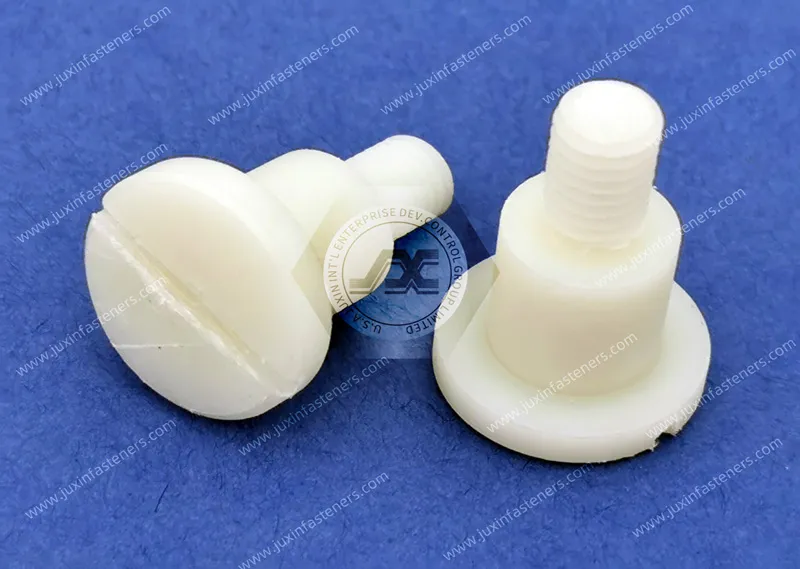
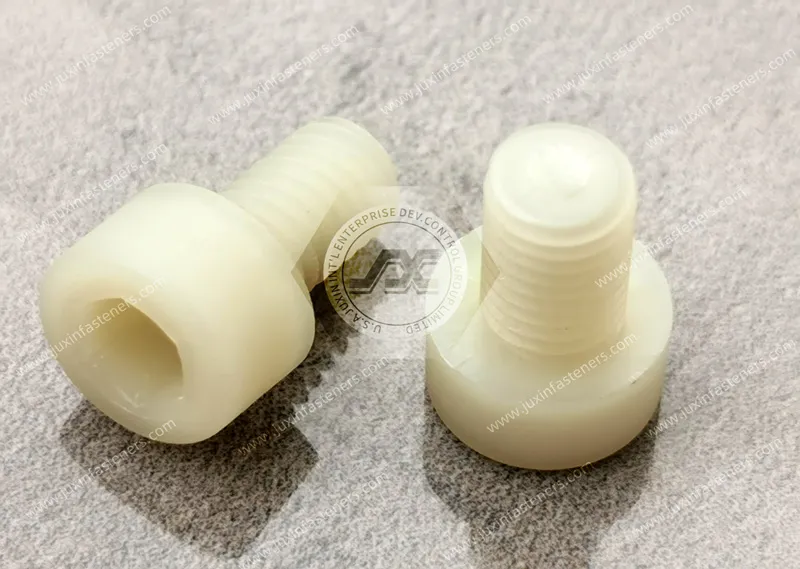
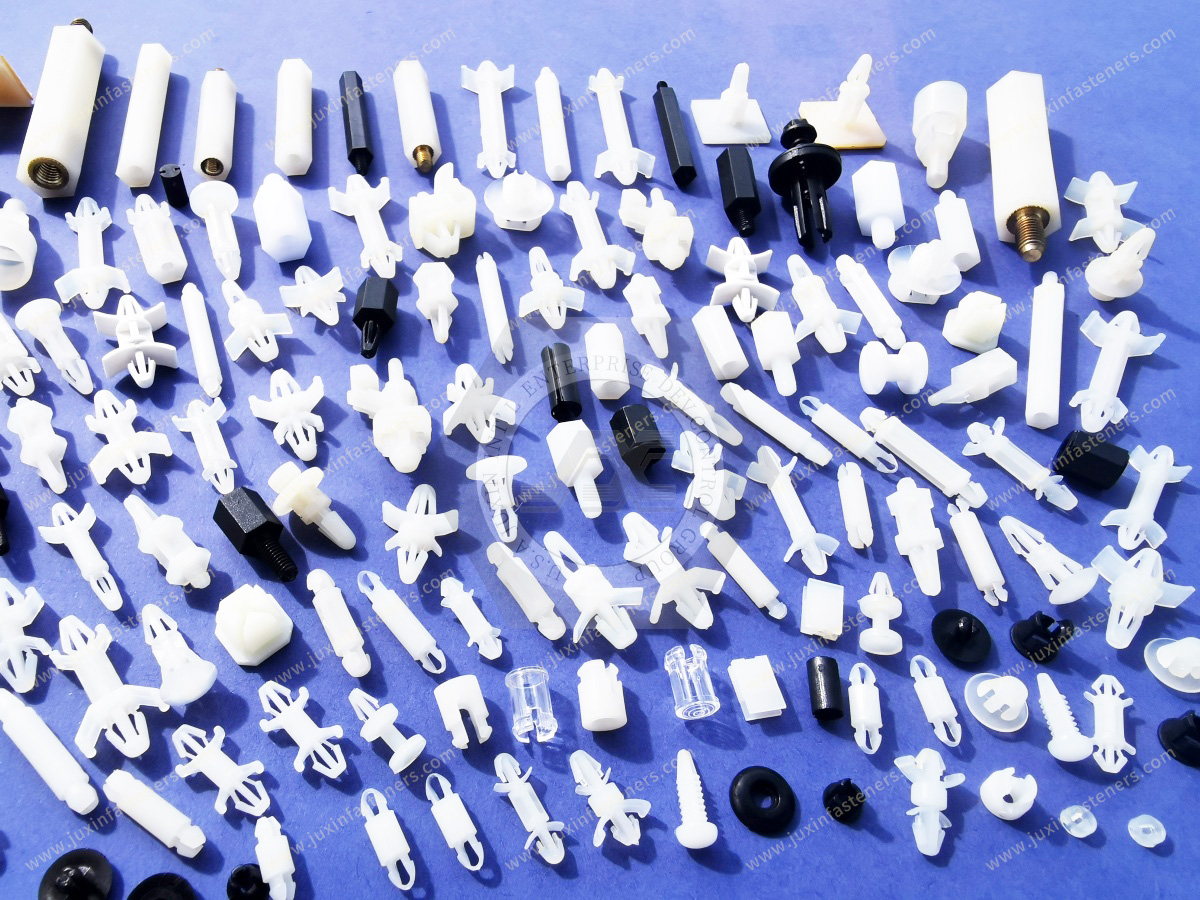
Typical components include plastic screws, nylon screws, plastic machine screws, nylon bolts, plastic nuts, nylon hex nuts, plastic flat washers,
nylon insulating washers, shoulder washers, insulating cup washers, plastic spacers, nylon spacers, threaded standoffs, PCB spacers and other custom polymer fastening components.
The engineering decision should not be based on the assumption that plastic is automatically better than metal.
Instead, engineers should determine where a polymer component provides a useful function within the complete assembly.
For sheet metal applications, those functions may include non-conductive separation, panel-surface protection, material isolation,
controlled component spacing, lower component mass or compatibility with adjacent polymer components.
This guide explains how engineers and procurement teams can evaluate Plastic Hardware for sheet metal fabrication, electrical enclosures, chassis assemblies and industrial equipment housings.
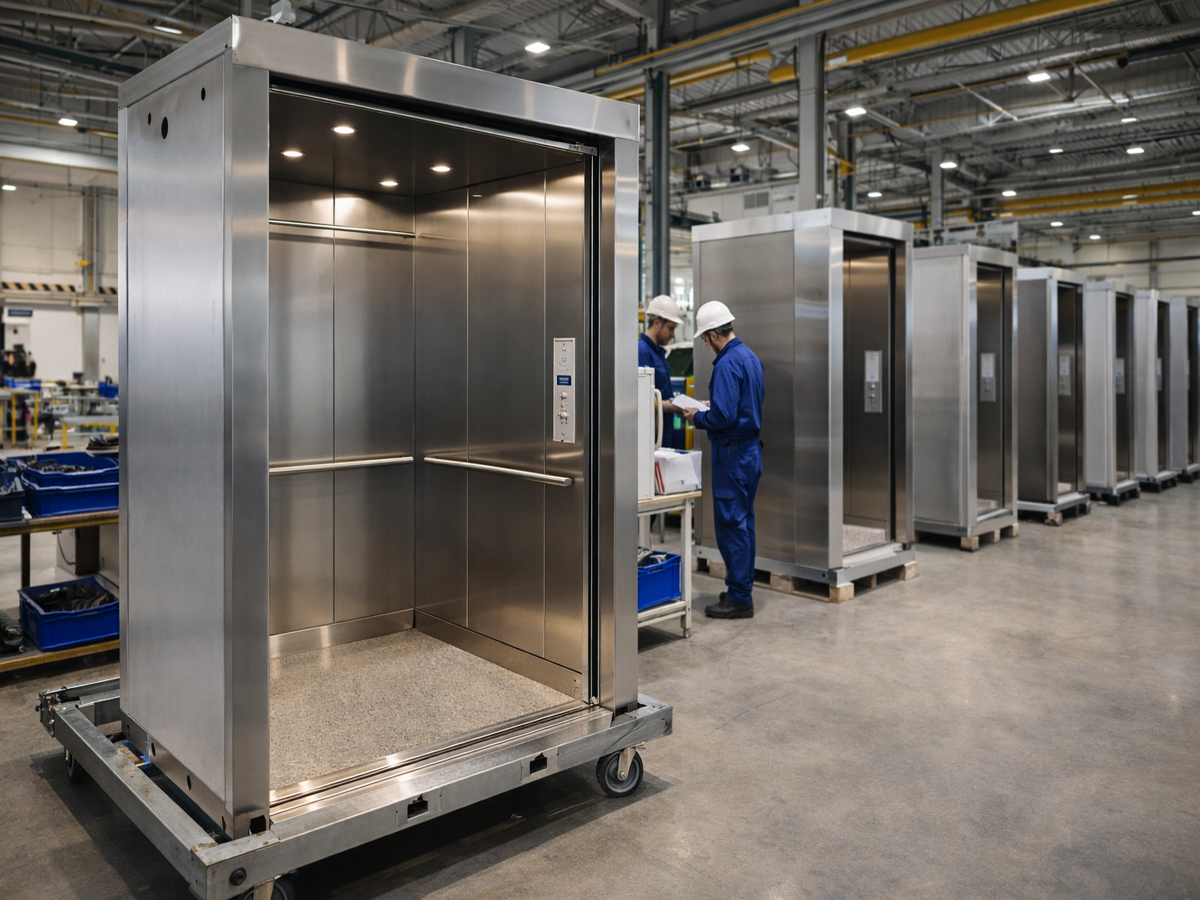
Plastic hardware is worth evaluating when the fastening application has one or more of the following requirements:
Panel finish protection: Plastic contact surfaces may reduce direct metal-to-metal contact with painted, powder-coated or anodized surfaces.
Material isolation: Polymer washers, shoulder washers and spacers can separate dissimilar materials at selected interfaces.
Electrical non-conductivity: Plastic fasteners can provide a non-conductive mounting interface where the equipment design requires electrical separation.
Hole-interface protection: Shoulder washers and insulating components can reduce direct contact between a fastener and the edge of a sheet-metal clearance hole.
Controlled spacing: Plastic spacers and threaded standoffs can maintain defined separation between sheet-metal panels and internal components.
Lower component mass: Large quantities of polymer hardware may reduce assembly mass compared with equivalent metallic components.
Moisture-related corrosion considerations: Polymer components do not undergo metallic red-rust corrosion, although their compatibility with the actual environment still needs to be evaluated.
Integration with electronic assemblies: Plastic screws, washers, spacers and standoffs can support PCB, sensor and control-module mounting.
The most important point is that plastic hardware is an engineering option, not an automatic replacement for metallic fasteners.
Sheet metal enclosures frequently use painted, powder-coated, anodized or otherwise finished surfaces.
During assembly, a metallic screw head, washer or nut can create concentrated contact against the finished surface. Installation torque, surface hardness, edge geometry and assembly movement can influence whether the finish is damaged.
Plastic hardware can provide a softer or non-metallic contact interface in selected applications.
For example:
Plastic screw → plastic flat washer → coated sheet-metal panel → plastic nut
creates a different contact condition from:
Steel screw → steel washer → coated sheet-metal panel → steel nut
However, a plastic washer does not automatically guarantee scratch-free assembly. Surface finish, washer geometry, installation force and component movement still matter.
Punched, stamped, laser-cut or machined sheet-metal holes can have different edge conditions.
Depending on the fabrication process, a clearance hole may contain:
Burrs
Sharp edges
Coating buildup
Surface irregularities
Hole-size variation
Local deformation
These conditions matter when the fastener shank passes through the hole.
A shoulder washer can be useful when the design requires the fastener shaft to remain separated from the sheet-metal hole wall.
This creates an important distinction between a standard flat washer and a shoulder washer:
A flat washer primarily distributes contact under the fastener.
A shoulder washer can also provide radial separation around the fastener shank.
An insulating cup washer can provide an additional insulating or protective geometry around the fastening interface.
The correct component depends on what the hole interface is required to accomplish.
Industrial enclosures frequently combine different metals.
For example:
Aluminum panel + steel bracket
Aluminum chassis + stainless-steel hardware
Galvanized sheet metal + stainless-steel component
Coated steel panel + metallic internal bracket
When dissimilar metals are electrically connected in the presence of a suitable electrolyte, galvanic corrosion can become a consideration.
Plastic hardware and insulating polymer components can interrupt direct electrical contact between selected metallic surfaces.
However, it is more accurate to describe this as isolating a specific metallic interface rather than claiming that one plastic washer "eliminates galvanic corrosion" throughout the assembly.
Other conductive paths may still exist through:
Brackets
Grounding hardware
Cable shields
Hinges
Mounting rails
Adjacent fasteners
Chassis connections
The engineering team therefore needs to identify the actual current and material-contact paths within the complete assembly.
One of the most useful ways to select Plastic Hardware is to start with the interface, not the fastener.
Ask four questions:
Is the contact:
Metal against metal?
Polymer against metal?
Coated metal against metal?
Polymer washer against coated metal?
If yes, determine whether a shoulder washer, insulating bushing or other interface component is needed.
If yes, identify all possible conductive paths rather than looking only at the screw.
This distinction can determine whether a fully polymer fastening system, an insulating interface around a metallic fastener, or a hybrid assembly is more appropriate.
This interface-first approach can prevent a common sourcing mistake: selecting a plastic screw simply because the application is called an "electrical enclosure" without evaluating the complete joint.
Sheet-metal assemblies commonly use many related fastening components. Treating them as a product family can simplify both engineering and procurement.
Plastic screws, nylon screws, plastic machine screws and nylon machine screws can be considered for selected enclosure panels, internal brackets, electronic assemblies, sensors, covers and low-load mounting points.
The engineering review should consider:
Thread size
Thread engagement
Head style
Joint thickness
Clamping requirement
Installation method
Material
Environmental exposure
Mating component
Metric and unified thread requirements can be specified according to the drawing and applicable design standard.
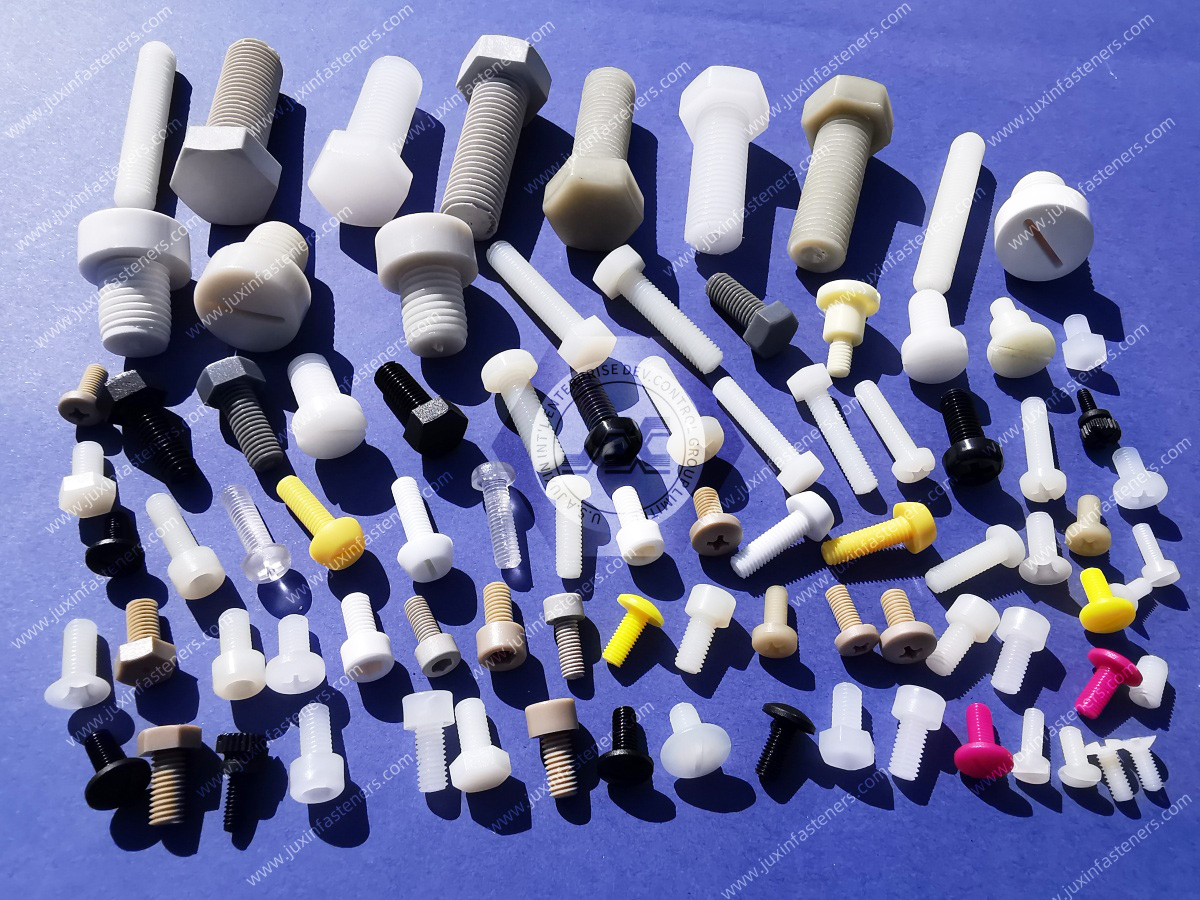
Plastic bolts and nylon bolts can be used where through-bolt geometry is required.
For larger joints, engineers should evaluate:
Bolt diameter
Grip length
Thread engagement
Bearing area
Clamp load
Polymer creep
Temperature
Moisture
Installation method
For highly loaded chassis connections, metallic or hybrid fastening may remain more appropriate.
Plastic nuts, plastic hex nuts, nylon nuts and nylon hex nuts can be paired with plastic or metallic fasteners.
For a removable enclosure panel, a polymer nut can provide a non-metallic mating component.
For a higher-load assembly, however, the design may require a metallic fastener combined with a polymer washer or insulating interface.
Plastic flat washers and nylon insulating washers can serve several different functions:
Load distribution
Surface protection
Electrical separation
Material separation
Clearance-hole protection
Washer dimensions should be evaluated against the fastener head, hole size, panel thickness and bearing surface.
Shoulder washers are particularly useful when the design requires radial isolation between a fastener shank and a sheet-metal hole.
A typical interface may be:
Fastener → shoulder washer → sheet-metal hole
rather than simply placing a flat washer underneath the fastener head.
The shoulder dimension, flange diameter, inside diameter and panel-hole relationship should be controlled in the drawing.
Insulating cup washers can be considered where the design requires additional separation around the fastener head or fastening interface.
They may be useful for electrical enclosures, control panels, instrumentation and electronic chassis where the fastener must remain separated from a conductive panel.
Plastic spacers, nylon spacers, industrial plastic spacers, PCB spacers and threaded standoffs are useful when internal components need a controlled distance from sheet-metal panels.
Typical applications include:
PCBs
Sensors
Displays
Controllers
Terminal components
Communication modules
Power-control electronics
Instrumentation
Male-to-female standoffs and female-to-female standoffs can support different PCB and enclosure stack-up configurations.
Not every enclosure component is made entirely from sheet metal.
Modern industrial equipment often combines sheet-metal chassis structures with molded polymer housings, covers and electronic components.
When a polymer housing requires repeated threaded assembly, threaded inserts for plastic may be considered.
Potential insert technologies include:
Heat-set inserts
Ultrasonic inserts
Molded-in inserts
Expansion inserts
Brass thread inserts
The correct insert depends on:
Polymer type
Boss geometry
Installation process
Thread size
Reassembly requirements
Expected load
Production volume
For mixed sheet-metal and polymer equipment, this creates an important fastening bridge:
Sheet-metal chassis → polymer housing → threaded insert → machine screw
This is one reason Plastic Hardware should be considered as an assembly system rather than as a single SKU.
A compression limiter can be useful when a bolt passes through a polymer housing, bracket or boss and the assembly requires a defined mechanical load path.
Instead of relying entirely on the polymer to sustain the compressive load generated by tightening, the limiter can provide a more controlled load-bearing interface.
Typical considerations include:
Limiter length
Inner diameter
Outer diameter
Bolt size
Housing thickness
Clamp load
Polymer creep
Temperature
Assembly process
Compression limiters are especially relevant where a sheet-metal structure is connected through a polymer component and the joint must maintain a defined mechanical relationship.
There is no single "best" plastic for every sheet-metal application.
Material selection should consider mechanical loading, moisture, temperature, chemical exposure, dimensional stability, electrical requirements and cost.
| Polymer Family | Typical Characteristics to Evaluate | Potential Sheet Metal Applications | Important Engineering Considerations |
|---|---|---|---|
| Nylon / PA6 | Balanced mechanical performance, low density and electrical non-conductivity | General enclosure hardware, spacers, washers and selected fasteners | Moisture absorption, dimensional change, temperature and long-term loading |
| Nylon / PA66 | Useful mechanical performance and common industrial fastening applications | Screws, nuts, washers, spacers and standoffs | Specific resin grade, moisture exposure, creep and stress relaxation |
| Glass-Filled Nylon | Higher stiffness and dimensional stability may be available compared with unfilled grades | Structural polymer components and selected fastening applications | Fiber content, anisotropy, thread behavior and processing |
| POM / Acetal | Rigidity, low friction and useful dimensional characteristics | Latches, sliding interfaces, guides and precision mechanisms | Chemical compatibility, load, wear and temperature |
| PVDF | Candidate for demanding chemical and environmental conditions | Selected industrial equipment and chemical-exposure environments | Actual chemical concentration, temperature, exposure time and grade |
| PEEK | High-performance engineering polymer for demanding environments | Specialized high-temperature or chemically demanding assemblies | Cost, processing, temperature, chemical exposure and actual mechanical requirements |
These are engineering selection categories rather than universal performance rankings.
The specific resin grade and component geometry should always be evaluated against the actual application.
A useful design insight is that the fastening interface has two separate contact zones:
Zone 1: Fastener head / washer → panel surface
Zone 2: Fastener shank → clearance hole
Engineers sometimes solve Zone 1 by adding a flat washer while overlooking Zone 2.
If the design requires electrical isolation or protection of the hole edge, a flat washer alone may not provide the required radial separation.
This is where shoulder washers, insulating bushings or other polymer interface components can become more relevant than simply switching from a metal screw to a plastic screw.
This distinction creates a better product-selection path:
Surface protection problem → flat washer
Radial hole isolation problem → shoulder washer
Component spacing problem → spacer/standoff
Repeated polymer threading problem → threaded insert
Polymer compression problem → compression limiter
Low-load non-conductive fastening problem → plastic screw/nut/bolt
This is a more useful engineering decision tree than treating all Plastic Hardware as interchangeable.
A polymer fastener may be electrically non-conductive, but the complete enclosure assembly can still contain multiple conductive paths.
For example, a plastic screw may be installed next to:
Metal brackets
Cable shields
Grounding straps
Hinges
Mounting rails
Metallic spacers
Other fasteners
Therefore, engineers should identify the intended electrical function:
Is the requirement to isolate one fastener?
One component from the panel?
A complete PCB mounting system?
Or the entire enclosure from a conductive path?
These are different engineering requirements and may require different Plastic Hardware architectures.
Plastic hardware can be considered when the application involves:
Where maintaining the condition of a finished panel is important, polymer washers or fasteners may reduce direct metal contact.
Where components must be mounted to a conductive chassis without creating an unintended conductive fastening interface, plastic screws, insulating washers, shoulder washers and spacers may be useful.
Where aluminum, steel, stainless steel and polymer components are combined, insulating polymer interfaces can be evaluated to control specific contact paths.
Large quantities of screws, nuts, washers and spacers can contribute to total assembly mass. Polymer hardware may provide a useful mass-reduction option where mechanical requirements permit.
Plastic spacers and standoffs are particularly useful when PCBs, sensors and electronic modules need controlled separation from sheet-metal panels.
Plastic hardware should not be selected simply because the enclosure is electrical or because the panel is exposed to moisture.
Metallic or hybrid fastening may remain preferable where the joint requires:
High structural loads
High clamp loads
High-temperature mechanical retention
Significant tensile or shear capacity
Highly dynamic loading
Repeated high-load assembly
Strong grounding or bonding functions
Long-term dimensional stability under substantial load
Mechanical performance outside the selected polymer's capability
A hybrid design can sometimes be more appropriate.
For example:
Metal bolt + nylon insulating washer + polymer spacer
may provide a different combination of mechanical and electrical properties from:
Nylon bolt + nylon nut
The right architecture depends on the function of the joint.
Plastic Hardware can support:
Door and cover mounting
PCB mounting
Sensor brackets
Terminal assemblies
Internal control modules
Cable-routing interfaces
Insulated mounting points
Plastic screws, washers, spacers and standoffs may be considered for selected electronic assemblies, internal panels and component mounting points.
The design should account for load, thermal conditions and service requirements.
Plastic hardware can provide controlled spacing and non-conductive mounting interfaces for:
Controllers
Sensors
Relays
Displays
Communication modules
Terminal assemblies
Plastic fasteners and polymer interface components may be useful for guards, covers, sensors and selected internal assemblies.
Highly loaded structural connections may require metallic or hybrid fastening.
Plastic spacers, standoffs, insulating washers and polymer fasteners can be considered for selected electronic and enclosure assemblies where electrical separation, weight or material compatibility matters.
Plastic Hardware may support selected electronic housings, battery-related components, sensor assemblies and thermal-management equipment where polymer fastening is appropriate to the application.
Selected polymer components may be considered for equipment housings, electronic mounting and material-isolation applications.
Actual contamination, chemical and process requirements should be evaluated for the specific equipment.
Plastic hardware may be useful in selected equipment housings, electronic assemblies and non-magnetic applications.
Medical-device qualification requirements should be assessed separately from the fastener material itself.
A complete RFQ helps the supplier understand the actual engineering requirement rather than quoting a generic plastic fastener.
Identify the required product:
Plastic screws
Nylon machine screws
Plastic bolts
Nylon bolts
Plastic nuts
Nylon hex nuts
Plastic flat washers
Nylon insulating washers
Shoulder washers
Insulating cup washers
Plastic spacers
Nylon spacers
PCB spacers
Threaded standoffs
Male-to-female standoffs
Female-to-female standoffs
Threaded inserts
Compression limiters
Custom polymer fastening components
Provide:
Part dimensions
Thread size
Thread length
Head geometry
Hole diameter
Shoulder dimensions
Spacer height
Critical tolerances
Material interface
Assembly orientation
Functional dimensions
3D CAD is especially useful when the component forms part of a larger enclosure stack-up.
For interface-sensitive components, include:
Panel material
Panel thickness
Surface finish
Coating
Hole size
Hole type
Hole fabrication process
Burr requirements
Adjacent material
Required electrical separation
Where the material has already been selected, identify:
Polymer family
Resin grade
Reinforcement
Color
Surface requirements
Where material selection remains open, provide the operating conditions and engineering requirements instead.
Identify:
Joint load
Clamp load
Thread engagement
Installation method
Repeated assembly requirements
Vibration
Shock
Service access requirements
Include:
Temperature
Humidity
Condensation
Chemical exposure
Cleaning agents
UV exposure where applicable
Outdoor or indoor installation
Long-term loading
Where relevant, define:
Non-conductive interface requirements
Isolation requirements
Grounding/bonding function
Electrical clearance requirements
Creepage requirements
Applicable product or equipment standards
The supplier should not assume that a plastic fastener alone determines the electrical safety of the finished enclosure.
For OEM programs, provide the complete hardware BOM where possible.
This may include:
Plastic screws + nylon bolts + plastic nuts + nylon washers + shoulder washers + spacers + standoffs + threaded inserts + compression limiters
A complete BOM gives procurement teams an opportunity to evaluate multi-SKU sourcing rather than treating every fastener as an isolated purchase.
Include:
Prototype quantity
Annual volume
Forecast
Batch release schedule
Packaging
Labeling
Inspection requirements
Documentation
Traceability requirements where applicable
Delivery expectations
For sheet metal OEM programs, supplier qualification should extend beyond unit price.
The supplier should be able to understand:
Fastener geometry
Sheet-metal interface
Thread requirements
Material selection
Tolerances
Assembly method
Environmental conditions
Procurement teams should consider whether one supplier can support related components such as:
Screws
Bolts
Nuts
Washers
Spacers
Standoffs
Threaded inserts
Compression limiters
Custom polymer components
This can simplify communication when multiple SKUs belong to the same enclosure platform.
For custom Plastic Hardware, sourcing teams should clarify:
Manufacturing process
Dimensional inspection
Thread inspection
Material identification
Visual inspection
Packaging controls
Sampling requirements
Requirements should be agreed according to the specific OEM program.
A strong sourcing process should connect:
Drawing review → Prototype → Engineering evaluation → Production release → Repeat supply
This is especially important for enclosure programs where a fastener change may affect panel holes, assembly tooling or component stack-up.
Before production release, verify:
Plastic material and specific grade
Reinforcement, if applicable
Fastener geometry
Thread standard
Thread dimensions
Thread engagement
Panel thickness
Clearance-hole diameter
Hole edge condition
Coating or surface finish
Fastener-to-panel contact
Fastener-shank-to-hole contact
Washer geometry
Shoulder dimensions
Required electrical separation
Mechanical load
Clamp load
Temperature
Moisture and condensation
Chemical exposure
Creep and stress relaxation
Vibration
Installation method
Repeated assembly requirements
Inspection requirements
Packaging and labeling
This checklist helps prevent a common failure mode: approving the fastener specification while leaving the interface specification undefined.
Plastic hardware can be useful for selected enclosure applications where engineers require non-conductive interfaces,
material separation, panel-surface protection, controlled spacing or lower component mass.
It is not automatically the correct choice for every enclosure joint.
Plastic hardware can electrically isolate selected dissimilar-metal interfaces and therefore may reduce galvanic-corrosion risk at those interfaces.
It does not automatically eliminate galvanic corrosion throughout an enclosure because other conductive paths may remain.
They can be suitable for selected applications, particularly where mechanical loads are compatible with the polymer and the design benefits from non-conductivity, surface protection or material separation.
Highly loaded structural joints may require metallic or hybrid fastening.
A plastic flat washer primarily distributes contact under the fastener head or nut.
A shoulder washer can additionally provide radial separation between the fastener shank and the sheet-metal hole.
The correct choice depends on whether the design needs only bearing-area distribution or also hole-wall isolation.
They can provide an insulating interface around a fastener where the geometry and material are appropriate.
However, complete electrical isolation must be evaluated at the assembly level because other conductive paths may exist.
Potential material families include PA6, PA66, glass-filled nylon, POM/Acetal, PVDF and PEEK.
The appropriate material depends on temperature, moisture, chemical exposure, mechanical load, dimensional requirements and electrical requirements.
Yes, plastic hardware can be evaluated for selected aluminum-panel applications.
Polymer components may provide material separation and non-conductive interfaces, but the complete joint should be reviewed for mechanical loading, thermal movement, hole geometry and environmental exposure.
A threaded insert may be considered when a polymer housing or molded component requires repeated threaded assembly or a reinforced internal thread.
The insert should be selected together with the polymer, boss geometry, installation method and mating screw.
A compression limiter can provide a defined load-bearing path through a polymer component when a bolt is tightened.
It can be useful when the joint should not rely entirely on the polymer to carry the compressive assembly load.
A multi-SKU sourcing strategy can consolidate related products such as plastic screws, nylon bolts, plastic nuts, washers, spacers, standoffs, threaded inserts and compression limiters.
The appropriate supplier scope depends on the actual product requirements and qualification process.
A strong RFQ should include 2D drawings, 3D CAD where available, sheet-metal material and thickness,
hole dimensions, surface finish, polymer requirements, thread specifications, environmental conditions, mechanical requirements, electrical requirements,
annual volume, quality requirements and the complete BOM where applicable.
Plastic Hardware for sheet metal fabrication is not simply a substitute for metal fasteners.
The more useful engineering approach is to match the component to the actual interface:
Plastic screws and nylon machine screws for selected non-conductive fastening applications.
Plastic nuts and nylon hex nuts for compatible mating assemblies.
Plastic flat washers and nylon insulating washers for bearing, surface protection and electrical separation.
Shoulder washers and insulating cup washers for more controlled fastener-to-hole interfaces.
Plastic spacers, nylon spacers and threaded standoffs for component separation and enclosure stack-up.
Male-to-female standoffs and female-to-female standoffs for PCB and electronic mounting architectures.
Threaded inserts for plastic where polymer housings require a reinforced threaded interface.
Compression limiters where a polymer component needs a more controlled clamping-load path.
This product-family approach allows engineers to design the fastening architecture around the actual requirements of the enclosure rather than selecting individual components independently.
JUXIN FASTENERS provides industrial fastening and custom component solutions for OEM applications, supporting drawing-based evaluation, component-family sourcing and multi-SKU BOM coordination.
For a sheet metal enclosure, chassis, control cabinet or equipment housing project, provide your 2D drawings, 3D CAD files,
sheet-metal specifications, hole details, material requirements, environmental conditions, electrical requirements and BOM information.
Contact JUXIN FASTENERS at info@juxinfasteners.com for technical review and OEM sourcing evaluation.
Product Packaging
Packaging Standard
At Juxin Fasteners, we apply standardized export packaging to ensure product protection, traceability, and compliance with international logistics requirements.
1. Standard Export Packaging
Unless otherwise specified, all products will be packed according to our factory standard export packaging, which includes:
Moisture-resistant inner protection
Poly bag or small box packing as required
Reinforced export cartons
Clear labeling with part number, specification, batch number, and quantity
Palletizing for sea or air shipment when necessary
Our standard packaging is designed to ensure safe transportation, efficient warehousing, and long-distance international shipping.
2. Customized Packaging Options
We also provide customized packaging solutions according to customer requirements, including but not limited to:
Private labeling
Customized barcodes
Specific carton dimensions
Retail packaging
Special pallet configuration
Customer-specific marking and identification
So that you know, customized packaging may involve additional costs and extended lead time depending on the complexity of the requirements.
3. Compliance & Quality Assurance
All packaging processes are controlled under our ISO 9001 quality management system to ensure consistency, traceability, and product integrity throughout the supply chain.
Product Pictures
Hot Products
Contact Us
Tel.:
+86 020 8621 0320
+86 020 3121 6067
E-mail:
Technical Support:
Navigation
SEND INQUIREY