Call Us
+86 136 6007 9809
Call Us
+86 136 6007 9809

Product Specification
Industrial machinery and robotics combine mechanical motion, electrical systems, sensors, control electronics and structural components in increasingly compact assemblies.
Automated production equipment, robotic arms, AGVs, high-speed pick-and-place systems, conveyors and machine tools may operate through repeated acceleration, deceleration, vibration and thermal cycling.
In these environments, even relatively small fastening components can influence the design of a moving assembly.
Plastic hardware may be considered where engineers need lower-density fastening components, electrical insulation, separation between dissimilar materials,
compatibility with polymer structures, or reduced metallic content in selected assemblies.
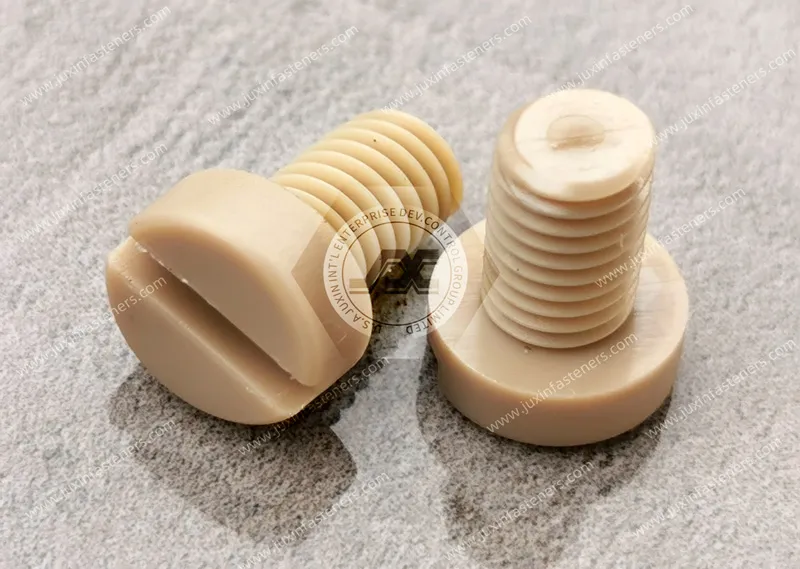
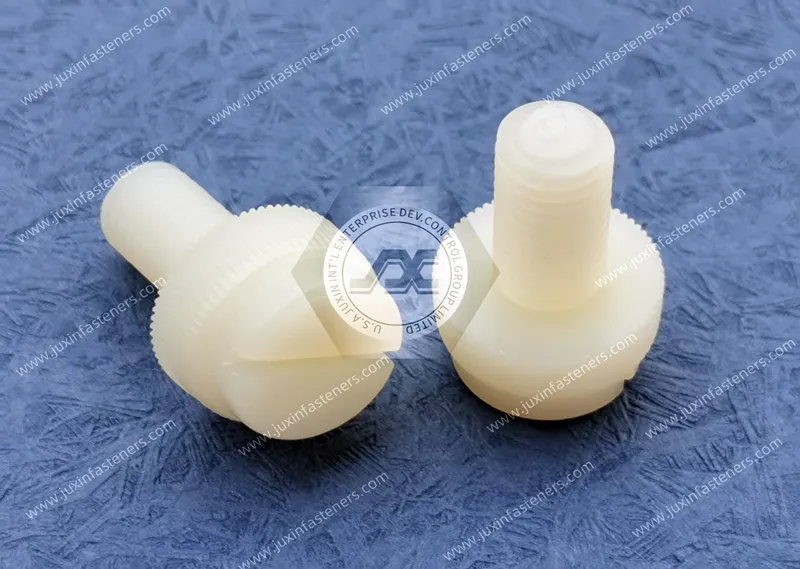
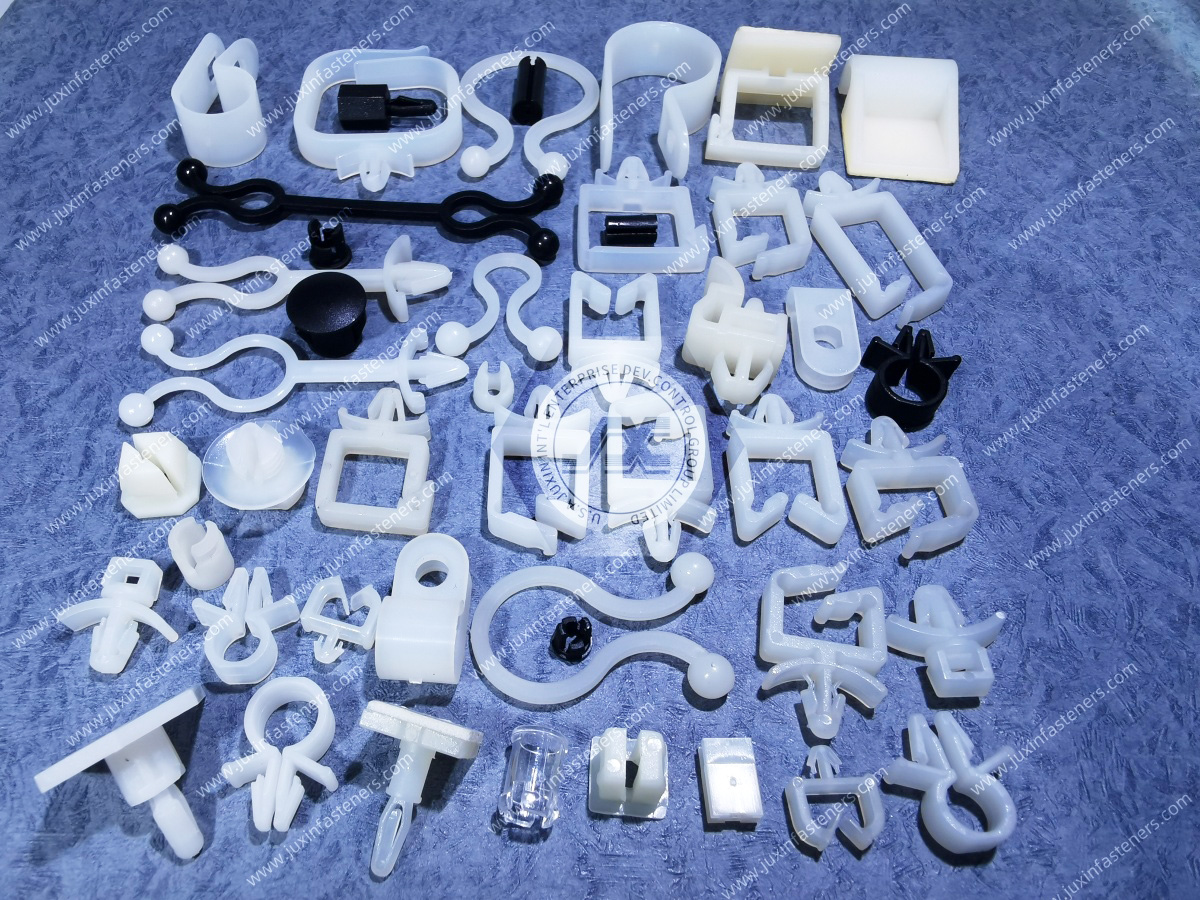
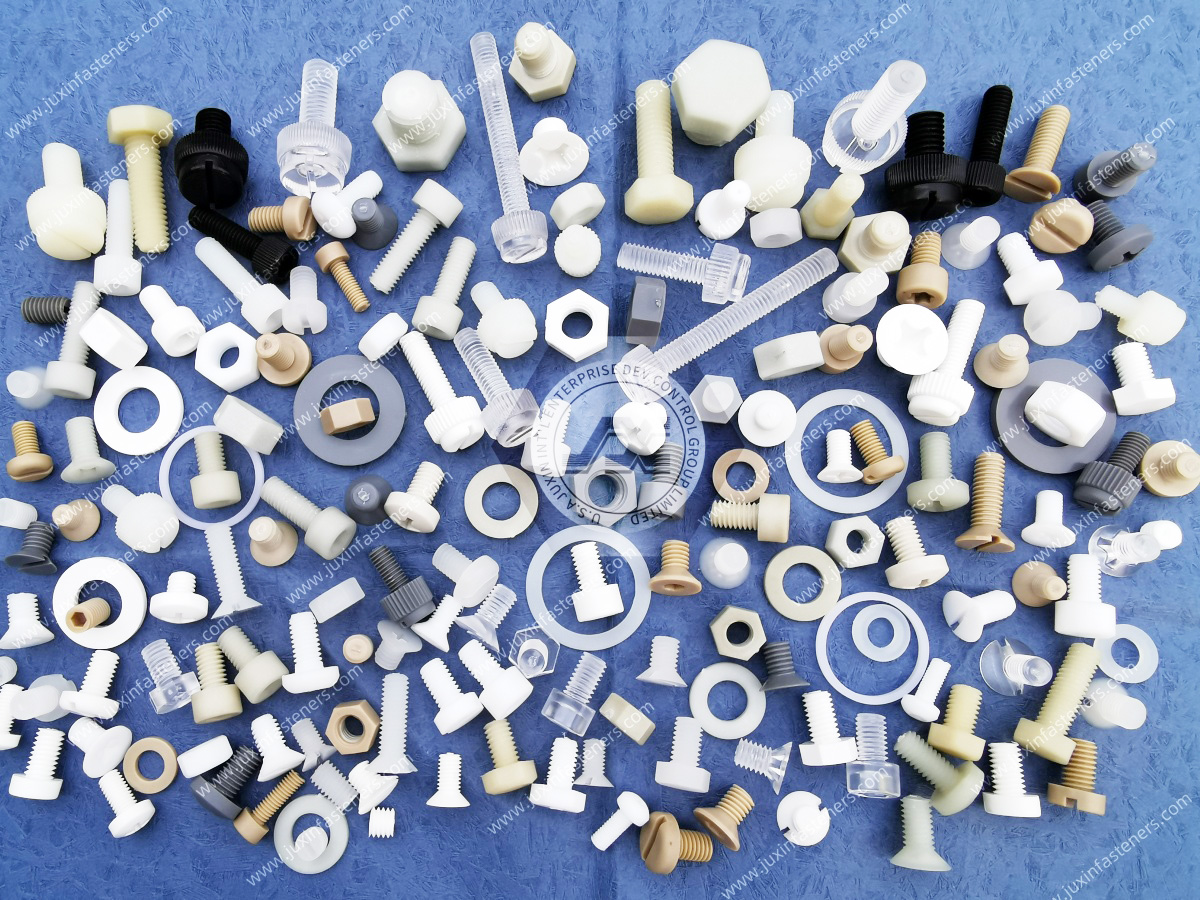
The product family can include plastic screws, nylon screws, plastic machine screws, nylon machine screws, plastic bolts, nylon bolts, plastic nuts, nylon nuts,
plastic hex nuts, nylon hex nuts, plastic flat washers, nylon insulating washers, shoulder washers, cup washers, insulating cup washers, plastic spacers,
nylon spacers, industrial plastic spacers, PCB spacers, threaded standoffs, male-to-female standoffs, female-to-female standoffs, threaded inserts, compression limiters and custom polymer fastening components.
For more demanding environments, engineers may evaluate materials such as PA6, PA66, glass-filled nylon, POM/Acetal, PVDF or PEEK depending on the mechanical, thermal, chemical and dimensional requirements.
JUXIN FASTENERS provides industrial fastening and custom component solutions for OEM applications.
The appropriate plastic hardware should be selected according to the actual joint function, loading, environment, material requirements and assembly process rather than assuming that a polymer fastener is automatically suitable for dynamic machinery.
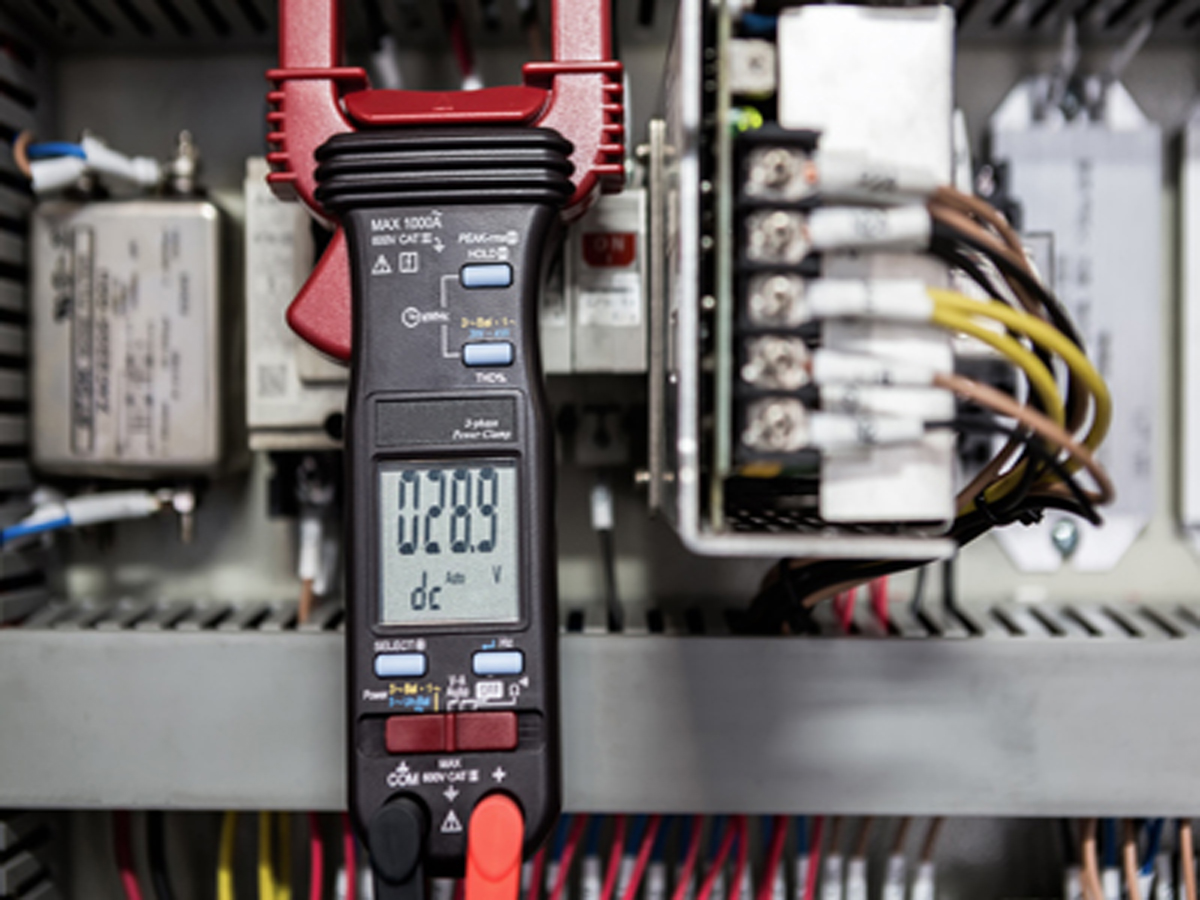
Mechanical and automation engineers may consider plastic hardware when one or more of the following requirements are important:
Lower mass in moving assemblies: Reducing the mass of selected screws, spacers, standoffs or other components can contribute to a lower overall moving assembly mass.
Electrical insulation: Non-conductive hardware can be useful around sensors, control electronics, wiring and selected electrical assemblies.
Material separation: Polymer washers, spacers and fasteners can separate conductive or dissimilar materials at selected interfaces.
Compatibility with polymer structures: Plastic hardware may be appropriate where the mating component is itself plastic or composite.
Corrosion resistance of the polymer component: Polymer hardware does not rust in the same way as conventional steel hardware,
although the complete assembly can still experience environmental degradation.
Surface protection: Plastic washers, spacers and related components can reduce direct metal-to-metal contact at selected interfaces.
Controlled spacing: Spacers and standoffs can establish repeatable distances between boards, brackets, covers and other components.
The important engineering distinction is that plastic hardware does not automatically provide vibration damping, eliminate loosening, or replace metal hardware in highly loaded joints.
The benefit comes from matching the product, polymer, geometry and joint design to the actual application.
Weight becomes particularly important when hardware is mounted on a moving robot arm, end-effector, gantry, carriage or high-speed actuator.
Reducing the mass of individual components may contribute to lower total moving mass.
Potentially relevant locations include:
Robotic end-effectors
Sensor brackets
Vision-system mounts
Lightweight covers
Cable-routing structures
Tooling fixtures
Small electronic housings
Gripper assemblies
However, the fastener is only one part of the moving system.
The engineering impact depends on:
Component mass
Distance from the axis of rotation
Acceleration
Cycle rate
Payload
Structural stiffness
Fastener quantity
Joint loading
Replacing a metallic fastener with a plastic fastener should therefore be evaluated at the assembly level rather than based only on the weight of one component.
Automation equipment can experience repeated vibration and dynamic loads.
Potential sources include:
Servo motors
Gearboxes
Pneumatic actuators
Conveyor systems
High-speed spindles
Robotic motion
Impact during machine cycling
External equipment vibration
Threaded joint behavior depends on the complete fastening system.
Engineers should evaluate:
Thread engagement
Joint stiffness
Clamp load
Fastener geometry
Mating materials
Vibration direction
Repeated load cycles
Creep and stress relaxation
Installation method
A polymer fastener may have different dynamic characteristics from a metallic fastener, but it should not be described as automatically vibration-proof or self-locking.
Polymer materials behave differently from metals under sustained loading.
Under certain temperature and load conditions, polymers may experience:
Creep
Stress relaxation
Dimensional change
Reduced clamp force over time
This matters when a plastic fastener is expected to maintain a high and stable preload.
For this reason, a plastic fastening solution may be more appropriate for:
Low-to-moderate mechanical loads
Enclosure assembly
Sensor mounting
Electrical separation
Spacing applications
Lightweight structures
while heavily loaded structural joints may require a different fastening architecture.
Factory equipment may encounter:
Water
Cleaning agents
Oils
Coolants
Lubricants
Dust
Humidity
Temperature cycling
Polymer selection should therefore be based on the actual exposure.
A plastic fastener may resist corrosion of the polymer itself, but this does not mean that every polymer is compatible with every industrial chemical or cleaning agent.
The correct question is:
Is the selected polymer compatible with the actual chemical, temperature and exposure conditions of the machine?
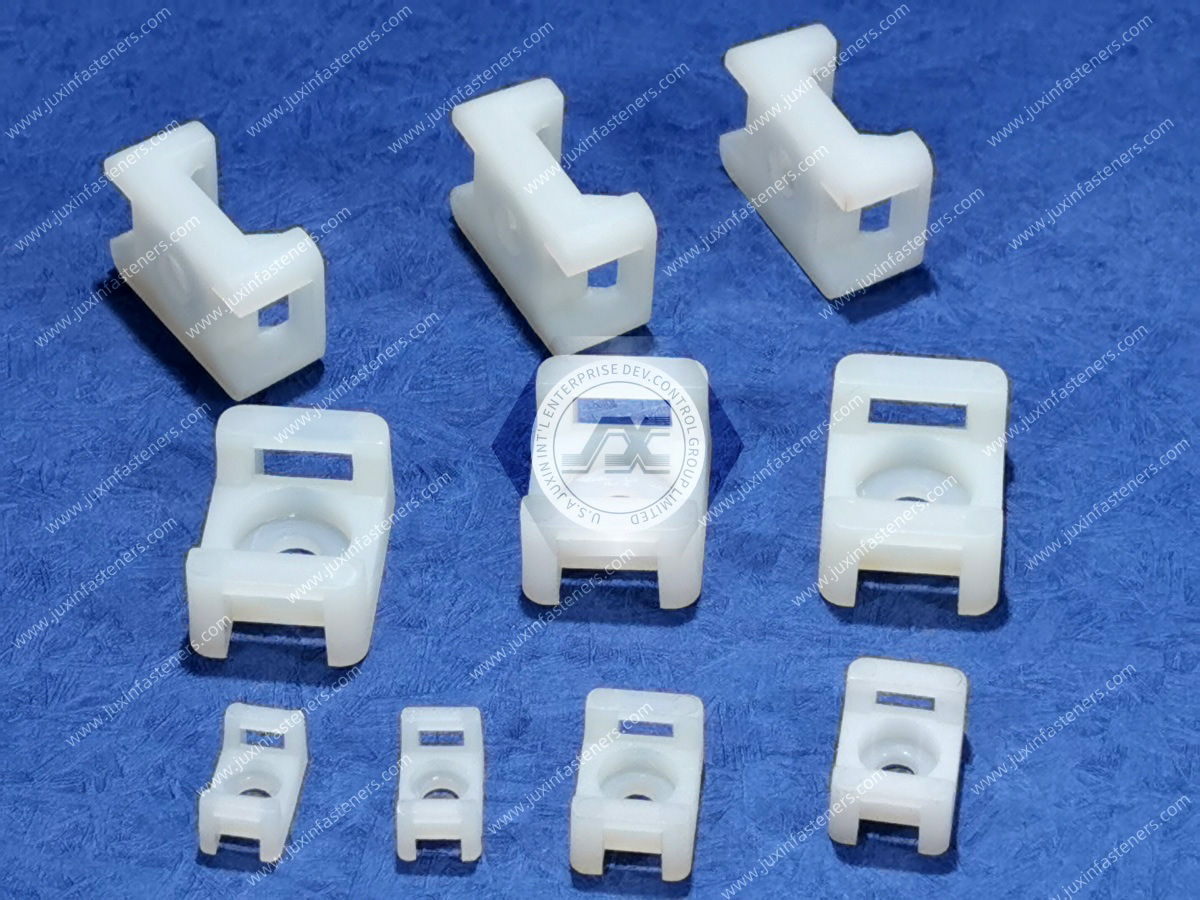
Industrial equipment programs commonly require multiple fastening components.
Plastic screws, nylon screws, plastic machine screws and nylon machine screws can be considered for:
Sensor mounting
Electronic enclosures
Protective covers
Lightweight brackets
Electrical assemblies
Internal machine components
Available configurations may include different head styles, thread sizes and custom geometries depending on the drawing requirement.
Metric applications may reference applicable ISO/DIN thread conventions, while inch-based designs may use ASME/ANSI Unified Thread requirements where appropriate.
Plastic bolts and nylon bolts may be used where larger threaded interfaces are required.
Engineers should consider:
Joint load
Thread engagement
Temperature
Creep
Stress relaxation
Mating nut
Washer configuration
Installation method
The nominal bolt diameter does not by itself establish the suitability of a polymer bolt for a particular structural joint.
Plastic nuts, nylon nuts, plastic hex nuts and nylon hex nuts provide mating threaded components for polymer fastening assemblies.
They may be paired with:
Plastic screws
Nylon screws
Plastic machine screws
Plastic bolts
Nylon bolts
Selected metallic fasteners
For vibrating machinery, thread retention should be evaluated as part of the complete joint.
Plastic flat washers, nylon insulating washers, shoulder washers, cup washers and insulating cup washers can provide:
Load distribution
Electrical separation
Surface protection
Controlled spacing
Isolation between dissimilar materials
The correct washer geometry depends on the mating interface.
A shoulder washer, for example, can provide radial separation around a fastener while a flat washer primarily distributes load beneath the fastener head or nut.
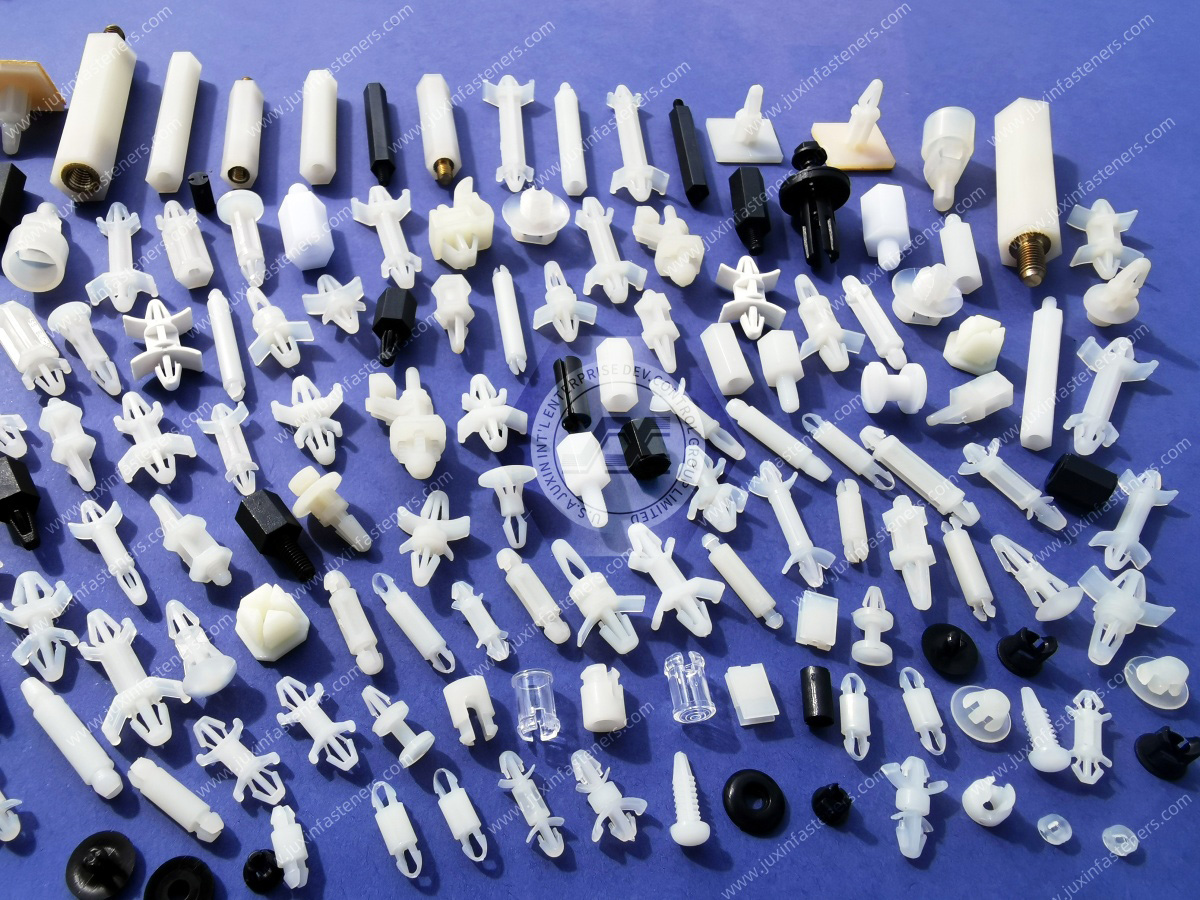
Automation equipment contains many sensors, circuit boards and compact electronic assemblies.
Plastic spacers, nylon spacers, industrial plastic spacers, PCB spacers, threaded standoffs, male-to-female standoffs and female-to-female standoffs may be used for:
PCB mounting
Sensor spacing
Electronic module mounting
Control panels
Cable routing
Bracket spacing
Machine enclosure assemblies
Where a plastic housing requires a more durable internal thread interface or repeated assembly, threaded inserts for plastic may be considered.
Depending on the housing material and production method, engineers may evaluate:
Heat-set inserts
Heat-set brass inserts
Ultrasonic inserts
Molded-in inserts
Expansion inserts
Brass thread inserts
Insert selection should be considered together with the housing material, boss geometry, installation method and required assembly cycle.
When a plastic housing or bracket must accommodate a clamping load without relying entirely on the surrounding polymer, compression limiters may provide a defined load-bearing interface.
They may be relevant to:
Plastic housings
Covers
Brackets
Electronic enclosures
Equipment panels
The limiter length and geometry should be evaluated together with the screw, washer, housing and complete joint stack-up.
Material selection should begin with the operating environment and joint requirements.
| Polymer Family | Potential Characteristics | Possible Machinery Applications | Key Evaluation Factors |
|---|---|---|---|
| PA6 / Nylon | General engineering characteristics and useful electrical insulation; moisture absorption is relevant | Covers, sensors, spacers, fasteners and internal assemblies | Moisture, temperature, creep, chemical exposure and dimensions |
| PA66 / Nylon | Useful mechanical and thermal characteristics in many industrial applications | Machinery fasteners, brackets, spacers and electronic assemblies | Moisture, temperature, loading, stress relaxation and UV where applicable |
| Glass-Filled Nylon | Increased stiffness compared with unfilled nylon in appropriate grades | Structural brackets, machinery components and selected fastening applications | Specific grade, fiber orientation, dimensional stability and thread behavior |
| POM / Acetal | Rigidity, low friction and useful dimensional stability | Guides, positioning components, mechanisms and low-friction interfaces | Chemical exposure, temperature, wear and loading |
| PVDF | Strong chemical and environmental resistance characteristics | Chemical-processing machinery and selected harsh environments | Specific chemical, temperature, exposure duration and mechanical load |
| PEEK | High-performance engineering polymer with strong thermal and mechanical characteristics | Selected high-temperature or demanding equipment components | Grade, temperature, loading, machining requirements and cost |
These are general engineering considerations, not universal performance guarantees.
A specific resin grade and component geometry should be evaluated against the actual machine environment.
Nylon can be a practical candidate when the assembly requires a combination of:
Low density
Electrical non-conductivity
General mechanical performance
Corrosion resistance of the polymer component
Moderate operating temperatures
Compatibility with polymer or composite structures
Potential applications include:
Robot covers
Sensor brackets
Cable-management structures
Small electronic enclosures
Lightweight tooling
End-effector components
For outdoor robotics or UV-exposed machinery, the specific material formulation and environmental requirements should be evaluated rather than assuming standard nylon is suitable.
POM/Acetal may be considered where rigidity, low friction and dimensional stability are useful.
Potential applications include:
Sliding mechanisms
Guides
Positioning systems
Latches
Machine mechanisms
Automation components
However, POM is not automatically suitable for every chemical, temperature or outdoor environment.
The actual application conditions should determine the material choice.
Glass-filled nylon may be evaluated when increased stiffness or dimensional stability is required compared with an unfilled polyamide grade.
Potential applications may include:
Structural brackets
Machinery components
Sensor mounting structures
Automation tooling
Equipment housings
The presence of reinforcement also changes the material's behavior.
Engineers should consider:
Fiber orientation
Thread geometry
Machining or molding method
Dimensional tolerances
Mating surfaces
Moisture exposure
A glass-filled grade should therefore be specified only when its actual characteristics solve a defined engineering requirement.
Plastic hardware should not automatically replace metallic fasteners in heavily loaded machinery.
A different solution may be more appropriate when the joint requires:
High structural preload
High tensile or shear loading
High-temperature performance beyond the polymer's intended range
High wear resistance
Very high fatigue performance
Highly stable preload over long periods
Repeated high-load assembly
A defined electrical grounding path
Significant resistance to thread deformation
Specialized mechanical qualification
In these situations, engineers may consider:
A different engineering polymer
A reinforced plastic component
A metallic fastener
A hybrid fastening architecture
A threaded insert
A compression limiter
The correct decision depends on the joint rather than on whether the machine is classified as “automation.”
A useful engineering distinction is between static weight reduction and moving-system mass reduction.
Removing mass from a stationary machine enclosure may have little effect on machine dynamics.
Removing mass from a robot end-effector, moving carriage or rotating assembly can have a much greater system-level relevance.
Therefore, engineers should prioritize lightweight plastic hardware where:
Fastener mass × quantity × distance from moving axis × motion profile
makes the mass contribution meaningful.
This does not mean every moving fastener should become plastic.
The fastener must still satisfy the required mechanical and environmental conditions.
This creates a practical selection sequence:
Identify moving mass → identify fastener contribution → identify joint load → evaluate polymer → verify joint behavior → validate assembly
rather than simply:
Robot → plastic fastener
Another common sourcing shortcut is:
Vibration → plastic fastener
This is not necessarily correct.
Vibration-induced loosening depends on the joint's mechanical behavior, including:
Joint stiffness
Clamp load
Thread geometry
Friction
Transverse motion
Fastener dimensions
Mating materials
Assembly quality
Load direction
Plastic hardware may be appropriate in a vibrating assembly, but the material should not be described as automatically preventing loosening.
Where retention is critical, engineers should evaluate the complete joint and may need an appropriate locking or reinforced fastening architecture.
Plastic hardware may be considered for selected:
Covers
Sensor mounts
Grippers
Tooling
Cable guides
Lightweight brackets
The main engineering questions are typically mass, joint loading, vibration, clearance and environmental exposure.
Robotic vision systems use cameras, proximity sensors, laser sensors and other electronic components.
Relevant products may include:
Nylon machine screws
Plastic nuts
Nylon washers
Shoulder washers
Plastic spacers
Threaded standoffs
Non-conductive hardware can be useful around selected electronic assemblies.
Automation systems contain PLCs, power supplies, terminal blocks and control electronics.
Plastic hardware may be used for:
PCB mounting
Control-panel spacing
Insulating interfaces
Sensor mounting
Cable routing
Enclosure components
PCB spacers, threaded standoffs, male-to-female standoffs and female-to-female standoffs can help establish controlled spacing.
Automated guided vehicles and mobile robots combine motors, batteries, sensors and control electronics.
Plastic hardware may be considered for selected:
Sensor assemblies
Electronics housings
Cable-management structures
Lightweight covers
Insulating interfaces
For battery and high-voltage applications, electrical and mechanical requirements should be evaluated together.
Conveyors and automated material-handling equipment may require:
Spacers
Washers
Covers
Guards
Sensor brackets
Cable-routing components
POM/Acetal may be considered for selected low-friction mechanical components, while nylon or other polymers may be considered for fastening and spacing functions depending on the environment.
Machine tools may expose components to:
Coolants
Oils
Lubricants
Chips
Repeated vibration
Temperature changes
Polymer compatibility with the actual coolant or chemical environment should be evaluated before selecting plastic hardware.
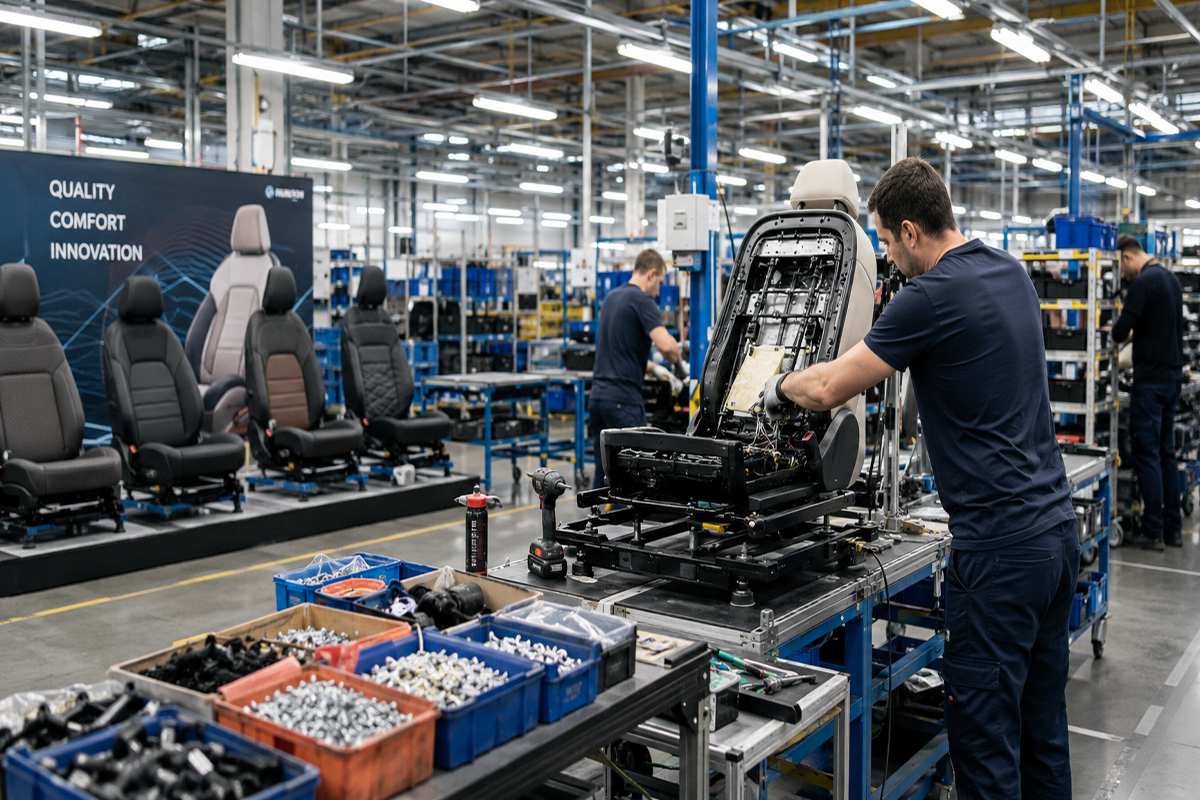
The same Plastic Hardware product architecture can support multiple industrial sectors.
Applications can include:
Sensor mounting
Electronic housings
Battery-related components
Cable routing
Thermal-management brackets
Control modules
Relevant products may include:
Plastic screws
Nylon nuts
Insulating washers
Shoulder washers
Spacers
PCB standoffs
Plastic hardware can be considered for:
Equipment enclosures
Electronic assemblies
Controlled-environment mechanisms
Chemical-handling support structures
PCB mounting
Plastic hardware may be evaluated for:
Equipment housings
Electronic instruments
Sensor assemblies
Laboratory mechanisms
Selected non-magnetic interfaces
Material, cleaning and environmental requirements must be established for the actual equipment.
Plastic screws, washers, spacers and standoffs may be relevant to:
Outdoor equipment
Electronic housings
Antenna-related structures
PCB assemblies
Cable management
RF-sensitive applications require application-specific evaluation of material and fastener geometry.
A detailed RFQ gives the supplier enough information to evaluate the component as part of the machine rather than simply quoting a generic plastic fastener.
Identify the required component:
Plastic screws
Nylon screws
Plastic machine screws
Nylon machine screws
Plastic bolts
Nylon bolts
Plastic nuts
Nylon nuts
Plastic hex nuts
Nylon hex nuts
Plastic flat washers
Nylon insulating washers
Shoulder washers
Cup washers
Insulating cup washers
Plastic spacers
Nylon spacers
PCB spacers
Threaded standoffs
Male-to-female standoffs
Female-to-female standoffs
Threaded inserts
Compression limiters
Custom polymer fastening components
Also identify where the component is used:
Robot arm
End-effector
Sensor assembly
PLC enclosure
Control cabinet
AGV
Conveyor
Machine tool
Automated tooling
Provide:
2D technical drawing
3D CAD file where available
Thread specification
Critical dimensions
Tolerances
Head geometry
Washer requirements
Mating component
Assembly orientation
Metric designs may reference applicable ISO/DIN requirements. Inch-based designs may use ASME/ANSI Unified Thread conventions where appropriate.
Specify:
Polymer family
Resin grade
Filled or unfilled material
Color
Temperature requirement
Chemical exposure
Electrical requirement
Mechanical requirement
UV exposure where applicable
Avoid broad descriptions such as “heavy-duty plastic” when the actual engineering requirement can be specified.
Provide:
Static load
Dynamic load
Vibration environment
Cycle frequency
Acceleration
Assembly frequency
Required joint retention
Temperature
Expected service duration
This information is particularly important for robotic and high-cycle automation applications.
Identify:
Humidity
Wash-down
Coolant exposure
Oil exposure
Cleaning agents
Dust
UV exposure
Temperature cycling
This helps determine whether nylon, POM, PVDF, PEEK or another polymer family should be evaluated.
Procurement teams should also provide:
Prototype quantity
Annual demand
Forecast
Production batch size
Delivery schedule
Packaging
Labeling
Inspection requirements
Lot traceability
Multi-SKU BOM
A single automation platform may use a large number of plastic hardware components.
The BOM may contain:
Plastic machine screws
Nylon machine screws
Plastic bolts
Nylon bolts
Plastic nuts
Nylon hex nuts
Plastic flat washers
Nylon insulating washers
Shoulder washers
Cup washers
Plastic spacers
Nylon spacers
PCB spacers
Threaded standoffs
Male-to-female standoffs
Female-to-female standoffs
Threaded inserts
Compression limiters
Custom polymer components
Providing the complete BOM can allow engineering and procurement teams to evaluate the parts as a coordinated sourcing program.
This can help identify:
Common thread sizes
Common materials
Standard versus custom components
Opportunities for component standardization
Packaging requirements
Inspection requirements
Prototype versus production quantities
For supply chain managers, this can be more valuable than sourcing every low-cost plastic component separately.
Supplier qualification should consider engineering support and supply consistency in addition to unit price.
The supplier should be able to review:
Drawings
CAD files
Thread specifications
Material requirements
Tolerances
Joint interfaces
Environmental conditions
Procurement teams should clarify:
Material identification
Resin grade
Material documentation
Lot control
Special formulation requirements
The quality process should define:
Dimensional inspection
Thread inspection
Visual inspection
Surface requirements
Batch control
Nonconformance handling
For machinery OEMs, a supplier may need to coordinate:
Screws
Bolts
Nuts
Washers
Spacers
Standoffs
Inserts
Compression limiters
Custom polymer components
This supports a more integrated sourcing model across the machine BOM.
Before releasing plastic hardware into a machinery or robotics assembly, engineers should verify:
Correct polymer family
Resin grade
Mechanical loading
Dynamic loading
Temperature
Moisture exposure
Chemical compatibility
Creep
Stress relaxation
Thread engagement
Joint retention
Installation method
Dimensional tolerances
Mating component
Electrical requirements
UV requirements where applicable
Inspection criteria
Packaging
Traceability
For moving assemblies, the fastener should also be evaluated as part of the complete dynamic system.
Plastic hardware may be selected for lower density, electrical non-conductivity, corrosion resistance of the polymer component, material separation, controlled spacing or compatibility with polymer structures.
The actual benefit depends on the machine and joint design.
They can reduce the mass of the fastener itself compared with a heavier metallic alternative. Whether that creates a meaningful system-level benefit depends on the total moving mass, fastener quantity, location and motion profile.
Not automatically.
Vibration-induced loosening depends on the complete joint, including clamp load, joint stiffness, thread geometry, friction, transverse movement and assembly conditions.
A plastic fastener should therefore be evaluated as part of the complete fastening system.
Nylon fasteners may be suitable for selected robotic assemblies where their mechanical, thermal, moisture and chemical characteristics meet the application requirements.
They may be particularly relevant to sensors, covers, electronic assemblies, spacers and lightweight components.
Yes, selected plastic hardware can be considered for high-cycle equipment, but the material and geometry must be evaluated for the actual loading, temperature, cycle frequency, creep, stress relaxation and joint requirements.
Glass-filled nylon can provide increased stiffness and different mechanical characteristics compared with an unfilled grade, but the actual performance depends on the specific resin formulation and component geometry.
It should be selected to address a defined engineering requirement.
It can be considered for selected applications, but coolant, oil, lubricant, temperature and mechanical exposure should be evaluated against the selected polymer.
Yes. Plastic screws, insulating washers, spacers and threaded standoffs may be useful around control electronics where non-conductive interfaces or controlled spacing are required.
JUXIN FASTENERS can review multi-SKU OEM requirements covering screws, bolts, nuts, washers, spacers, standoffs, threaded inserts, compression limiters and custom polymer fastening components based on drawings and technical specifications.
Provide 2D drawings, 3D CAD files where available, material requirements, thread specifications, mechanical and dynamic conditions,
environmental exposure, inspection requirements, annual quantities and the complete multi-SKU BOM.
Plastic hardware can be valuable in industrial machinery and robotics, but the engineering decision should begin with the joint function and operating environment, not simply with the desire to replace metal.
For moving assemblies, the key questions are where the mass is located, what loads the joint carries, how the assembly moves, how often it cycles, and how the polymer will behave over time.
For stationary equipment, electrical assemblies and machine enclosures, the priorities may instead be insulation, spacing, corrosion resistance, surface protection, material compatibility and assembly efficiency.
JUXIN FASTENERS provides industrial fastening and custom component solutions for OEM applications, including plastic screws,
nylon screws, plastic machine screws, plastic bolts, nylon bolts, plastic nuts, nylon nuts, washers, spacers, standoffs, threaded inserts, compression limiters and custom polymer fastening components.
For robotics, factory automation, industrial machinery, AGVs, conveyors, machine tools, control systems and automated production equipment, engineering and procurement teams can provide:
2D technical drawings
3D CAD files
Polymer and resin requirements
Thread specifications
Mechanical and dynamic loading information
Temperature and environmental conditions
Chemical exposure information
Electrical requirements
Inspection requirements
Packaging requirements
Multi-SKU BOMs
Prototype and annual volume requirements
Send your technical requirements to info@juxinfasteners.com for engineering review and OEM sourcing discussion.
A complete application specification allows the appropriate Plastic Hardware product, material and fastening architecture to be evaluated against the actual machinery or robotics requirement.
Product Packaging
Packaging Standard
At Juxin Fasteners, we apply standardized export packaging to ensure product protection, traceability, and compliance with international logistics requirements.
1. Standard Export Packaging
Unless otherwise specified, all products will be packed according to our factory standard export packaging, which includes:
Moisture-resistant inner protection
Poly bag or small box packing as required
Reinforced export cartons
Clear labeling with part number, specification, batch number, and quantity
Palletizing for sea or air shipment when necessary
Our standard packaging is designed to ensure safe transportation, efficient warehousing, and long-distance international shipping.
2. Customized Packaging Options
We also provide customized packaging solutions according to customer requirements, including but not limited to:
Private labeling
Customized barcodes
Specific carton dimensions
Retail packaging
Special pallet configuration
Customer-specific marking and identification
So that you know, customized packaging may involve additional costs and extended lead time depending on the complexity of the requirements.
3. Compliance & Quality Assurance
All packaging processes are controlled under our ISO 9001 quality management system to ensure consistency, traceability, and product integrity throughout the supply chain.
Product Pictures
Contact Us
Tel.:
+86 020 8621 0320
+86 020 3121 6067
E-mail:
Technical Support:
Navigation
SEND INQUIREY