Call Us
+86 136 6007 9809
Call Us
+86 136 6007 9809

When engineers replace metallic hardware with plastic fasteners, one of the most important long-term design considerations is not simply tensile strength,
installation torque, or initial assembly fit. It is the time-dependent mechanical behavior of the polymer.
Product Specification
When engineers replace metallic hardware with plastic fasteners, one of the most important long-term design considerations is not simply tensile strength,
installation torque, or initial assembly fit. It is the time-dependent mechanical behavior of the polymer.
Engineering thermoplastics such as polyamide (PA66), polyoxymethylene/acetal (POM), polycarbonate (PC),
and high-performance polymers such as PEEK exhibit viscoelastic behavior. Under sustained mechanical stress or deformation, their response changes with time, temperature, moisture, geometry, and loading condition.
Two important consequences are creep and stress relaxation.
In practical fastening applications, these effects can influence:
screw elongation;
washer compression;
spacer deformation;
snap-fit retention;
bearing surfaces;
clamp load;
joint movement;
dimensional stability;
long-term fastening reliability.
This does not mean plastic fasteners are inherently unreliable.
It means they must be designed according to polymer behavior rather than evaluated using assumptions developed only for metallic fasteners.
Initial strength ≠ long-term joint retention.
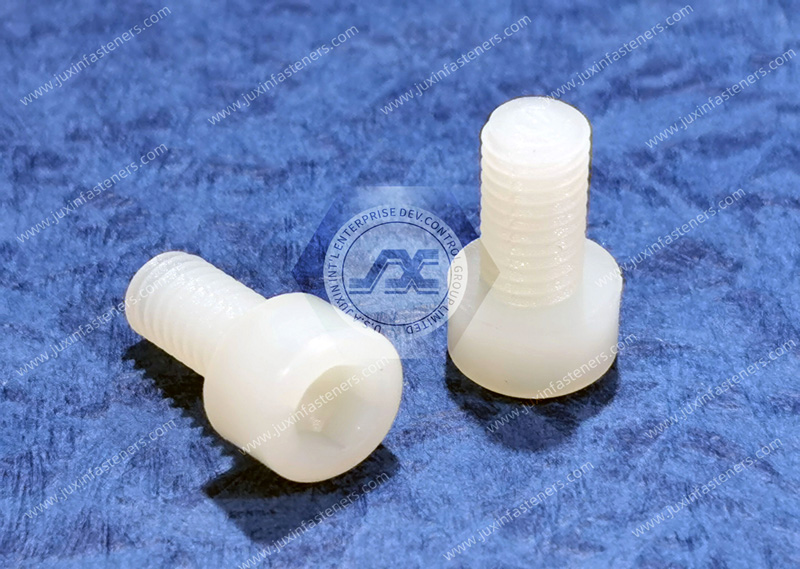
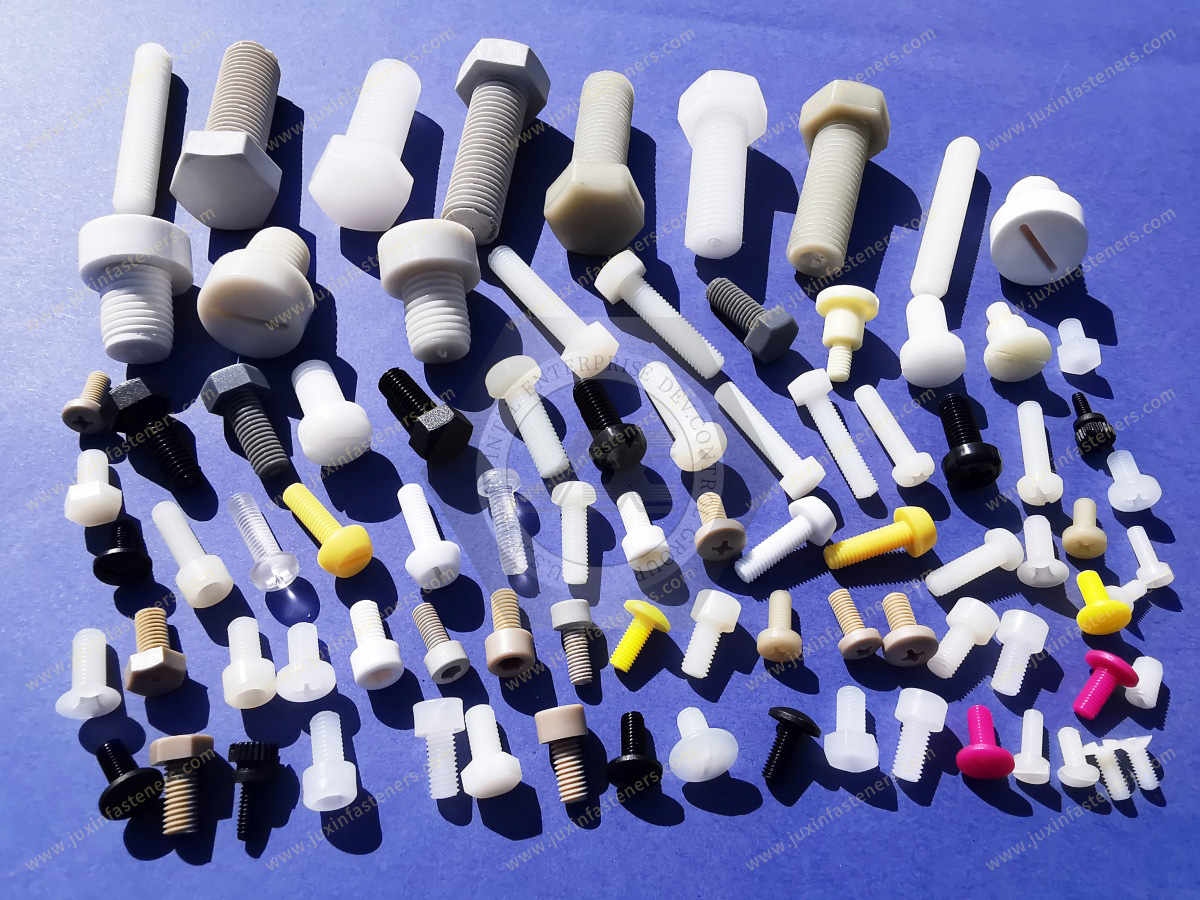
Juxin Fasteners supplies standard and custom plastic fastening components for industrial OEM applications, including nylon machine screws,
plastic nuts, nylon flat washers, plastic spacers and standoffs, PCB hardware, PEEK screws, panel fasteners, snap-fit components, and drawing-based custom molded plastic fasteners.
For new designs and second-source projects, technical evaluation can begin from an existing part number, physical sample,
2D drawing, 3D CAD model, material specification, joint configuration, or application requirement.
Creep is time-dependent deformation under sustained stress.
A polymer component subjected to a continuous load can initially deform elastically and then continue to deform over time even though the applied load has not increased.
For a plastic fastener assembly, creep may occur in:
the screw;
nut;
washer;
spacer;
clamped plastic component;
molded boss;
panel interface;
another polymer element within the load path.
This distinction matters because apparent “fastener relaxation” may actually originate from another plastic component in the joint.
A simplified creep condition can be represented as:
Approximately Constant Stress → Increasing Strain with Time
The actual response depends on:
polymer type;
resin grade;
stress level;
temperature;
moisture;
fiber or mineral reinforcement;
component geometry;
loading mode;
exposure duration.
Therefore, a short-term tensile test alone cannot describe long-term creep behavior.
Stress relaxation describes the reduction in stress required to maintain an approximately fixed deformation over time.
This is particularly important in fastening and snap-fit applications.
For example, a plastic component may initially be deflected during installation and generate a certain retaining or clamping force.
Over time, the polymer chains rearrange and the internal stress can decrease even though the component remains constrained in approximately the same position.
A simplified stress-relaxation condition can be represented as:
Approximately Constant Strain → Decreasing Stress with Time
This behavior can affect:
plastic screws;
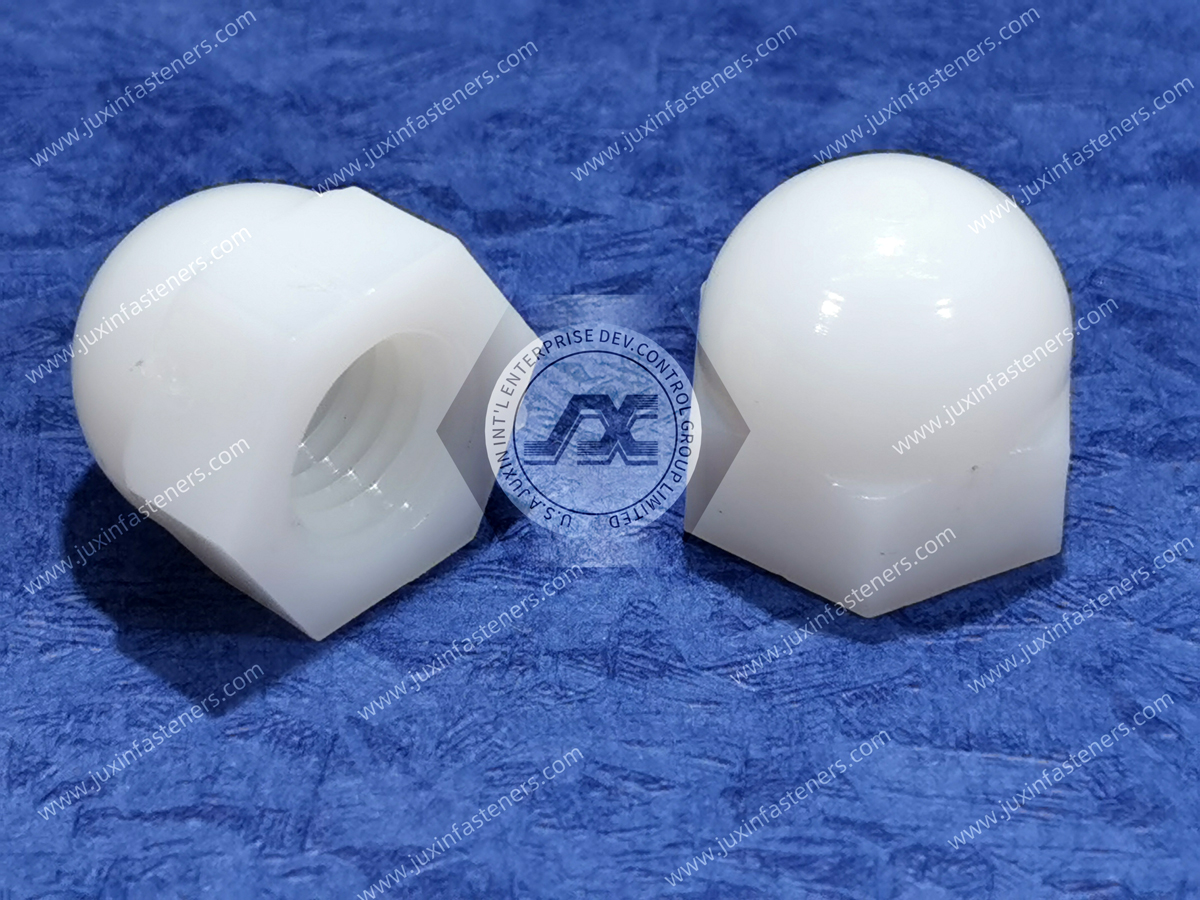
nylon nuts;
snap-fit latches;
cable clamps;
push rivets;
PCB supports;
retaining clips;
compressed washers.
The two mechanisms are frequently discussed together because both result from viscoelastic material behavior.
However, the engineering questions are different.
For creep, the question is:
How much will the component continue to deform under sustained load?
For stress relaxation, the question is:
How much retaining or clamping force will remain while the component stays constrained?
This distinction is important during failure analysis.
A joint can lose retention even when there is no obvious fracture, stripped thread, or visibly damaged fastener.
One of the most important design principles is:
Fastener material ≠ complete joint behavior.
Consider a joint containing:
a nylon screw;
a nylon washer;
a polymer housing;
a metal bracket.
The screw is not the only component capable of creep.
The washer or housing under the screw head may compress over time, reducing joint thickness and therefore reducing preload.
Conversely, a polymer fastener clamping rigid metallic components may experience a different stress distribution.
For failure analysis, engineers should identify the entire load path:
Fastener Head → Washer / Bearing Surface → Clamped Components → Nut / Threaded Interface
Any compliant polymer component within this path may contribute to time-dependent joint behavior.
Plastic material data sheets often include short-term properties such as:
tensile strength;
tensile modulus;
flexural strength;
elongation;
impact strength.
These values are useful, but they should not automatically be interpreted as long-term allowable design values.
A polymer can survive a short-duration mechanical test while exhibiting substantial deformation under a lower sustained load over a much longer period.
Therefore:
Short-term tensile strength ≠ long-term allowable stress.
For sustained-load applications, engineers should evaluate long-term material behavior where relevant data are available.
For critical polymer designs, material suppliers may provide engineering data such as:
creep curves;
creep modulus;
stress-relaxation data;
isochronous stress-strain curves;
temperature-dependent mechanical properties.
These data can provide more useful design information than room-temperature short-term tensile properties alone.
However, published material data still require careful interpretation.
The finished component can differ from standardized test specimens because of:
wall thickness;
molded geometry;
flow orientation;
weld lines;
moisture condition;
fiber orientation in reinforced grades;
residual stress;
actual loading mode.
Material data should therefore support component design rather than substitute for application validation.
Polymer chain mobility generally increases as temperature rises.
As a result, creep and stress relaxation can accelerate significantly at elevated temperature.
This is relevant in:
automotive electronics;
EV battery systems;
BESS enclosures;
AI data center equipment;
power electronics;
industrial automation;
electrical cabinets;
appliances;
outdoor renewable-energy equipment.
A plastic fastener positioned near a heat-generating component may experience a substantially different environment from another fastener in the same enclosure.
Therefore:
Equipment ambient temperature ≠ local fastener temperature.
Thermal design should consider the temperature at the actual fastening location.
The glass transition temperature, or Tg, can provide useful information about polymer molecular behavior.
However, Tg should not be treated as a universal maximum operating temperature or a simple pass/fail limit for creep.
This is particularly important for semi-crystalline engineering thermoplastics.
Long-term mechanical behavior depends on more than a single thermal transition value.
Engineers should instead consider:
actual service temperature;
duration;
stress;
polymer morphology;
resin grade;
moisture;
reinforcement;
component geometry;
required dimensional stability.
Polyamides such as PA66 absorb moisture from their surrounding environment.
Absorbed moisture can act as a plasticizer and alter:
stiffness;
toughness;
dimensions;
snap-fit behavior;
creep response;
stress relaxation.
This means a dry-as-molded nylon component and a moisture-conditioned component may not behave identically.
For fasteners and snap-fit components used in humid or variable environments:
Dry-state mechanical behavior ≠ conditioned in-service behavior.
Moisture should therefore be included in material and application evaluation where it is relevant.
Many industrial assemblies experience repeated heating and cooling rather than one constant temperature.
Examples include:
automotive electronics;
EV battery equipment;
renewable-energy equipment;
outdoor enclosures;
industrial machinery;
AI server and power infrastructure;
power electronics.
Different materials have different coefficients of thermal expansion.
A joint containing plastic, aluminum, steel, copper, PCB laminate, or other materials can therefore experience changing mechanical conditions during thermal cycling.
Potential consequences include:
changing preload;
interface movement;
increased bearing stress;
reduced retention;
repeated stress on threads;
movement at snap-fit interfaces.
Room-temperature torque retention ≠ thermal-cycle retention.
For critical applications, the complete material stack should be considered.
A common misconception is that a screw remains at approximately the same clamp load simply because the installed torque has not visibly changed.
Installation torque is only an indirect method of generating preload.
In polymer fasteners, the resulting clamp load can be influenced by:
thread friction;
under-head friction;
material condition;
temperature;
moisture;
thread geometry;
bearing surface;
installation speed;
mating material;
torque-control accuracy.
After assembly, creep and stress relaxation can further change the joint.
Therefore:
Installation torque ≠ guaranteed retained clamp load.
This is particularly important where engineers are transitioning from metal screws to plastic machine screws.
Metal and plastic fasteners should not automatically use the same torque specification merely because they share the same nominal thread size.
For example, an M4 metal screw and an M4 nylon machine screw have very different:
stiffness;
strength;
thread behavior;
bearing behavior;
torque capability;
long-term relaxation characteristics.
Installation torque should be established according to:
fastener material;
geometry;
mating thread;
bearing surface;
joint function;
environment;
validation testing.
Same thread size ≠ same installation torque.
Some polymer joint failures are not caused by tensile failure of the screw.
Instead, excessive local pressure under the head, nut, or washer can cause the clamped polymer component to creep.
This can reduce joint thickness and therefore reduce clamp load.
One useful strategy is to reduce localized bearing stress by increasing the load-distribution area.
Possible approaches include:
larger head diameter;
flange-head geometry;
flat washers;
larger washer outside diameter;
redesigned boss or bearing surface.
This leads to an important design rule:
More bearing area can reduce local stress, but washer geometry must still match the joint.
A larger washer is not automatically better if it interferes with nearby components, flexes excessively, or changes load distribution in an undesirable way.
Nylon flat washers can provide useful functions including:
load distribution;
surface protection;
electrical separation at selected interfaces;
spacing;
reduction of direct metal-to-surface contact.
However, nylon washers themselves are polymers and can also creep under sustained compression.
Therefore:
Adding a nylon washer does not automatically eliminate preload loss.
If the objective is specifically to preserve clamp load, the complete joint stiffness and washer behavior should be evaluated.
This distinction is important when specifying Nylon Flat Washers for long-term loaded assemblies.
Spring elements may sometimes be used within joint designs to accommodate dimensional changes or maintain load over a working deflection range.
Examples can include appropriately engineered spring elements or disc springs.
However, they should not be treated as a universal cure for polymer creep.
Their effectiveness depends on:
spring rate;
available deflection;
joint stiffness;
preload;
geometry;
temperature;
material compatibility.
The spring element must remain within its intended working range as the polymer joint changes dimension.
Therefore:
Spring element present ≠ creep problem solved.
The complete load-deflection system must be evaluated.
Glass-fiber or mineral reinforcement can significantly change polymer mechanical behavior.
Depending on resin system and formulation, reinforcement may improve:
stiffness;
dimensional stability;
creep resistance;
thermal mechanical performance.
However, reinforced polymers introduce other design considerations.
These can include:
reduced ductility;
different impact behavior;
anisotropy;
fiber orientation effects;
thread behavior;
surface finish;
mold-flow sensitivity.
Therefore:
Higher stiffness ≠ universally better fastener material.
The correct material depends on the required combination of retention, toughness, geometry, assembly method, and environment.
PA66 and POM are both widely used engineering thermoplastics, but they should not be treated as interchangeable.
Potential advantages can include:
good toughness;
strong snap-fit capability;
broad use in molded fasteners;
good fatigue behavior in suitable designs.
Important considerations include:
moisture absorption;
conditioned dimensional change;
temperature-dependent mechanical behavior.
Potential advantages can include:
low moisture absorption;
dimensional stability;
low friction;
good molded precision.
Important considerations include:
application-specific temperature limits;
material compatibility;
flammability requirements;
geometry and impact requirements.
The correct question is not:
“Which material is better?”
It is:
“Which material maintains the required function under this specific load, temperature, moisture, geometry, and service-life condition?”
See our PA66 vs POM Fasteners engineering guide for detailed material selection considerations.
PEEK is a high-performance engineering thermoplastic that can offer strong mechanical retention and thermal performance in demanding environments.
Potential applications can include specialized:
semiconductor equipment;
electrical equipment;
high-temperature machinery;
aerospace equipment;
medical equipment;
electronics manufacturing systems.
However:
PEEK should not automatically be specified simply because creep is a concern.
Material selection should consider:
actual service temperature;
sustained load;
chemical exposure;
electrical requirements;
geometry;
mechanical requirements;
cost;
qualification requirements.
A lower-cost engineering polymer may be completely adequate when the joint is designed correctly.
PEEK becomes valuable where its specific performance characteristics are actually required.
Creep and stress relaxation are not limited to threaded fasteners.
Snap-fit components depend on controlled elastic deformation and retaining force.
Examples include:
snap-in PCB supports;
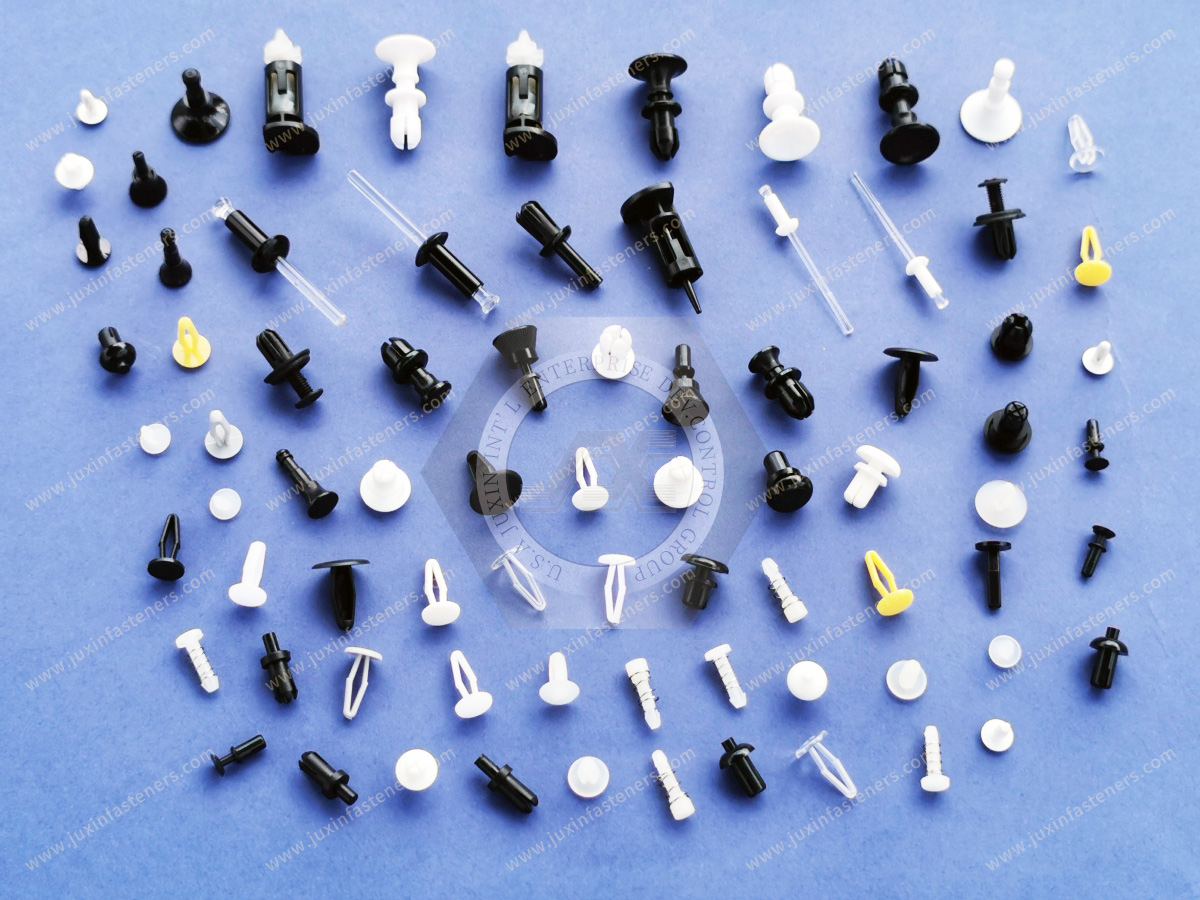
nylon push rivets;
panel fasteners;
cable clips;
snap bushings;
molded latches.
If a snap feature remains continuously deflected, stress relaxation can reduce its retaining force over time.
Engineers should consider:
initial strain;
root radius;
arm length;
material;
temperature;
moisture;
continuous deflection;
insertion frequency.
Successful first installation ≠ guaranteed long-term snap retention.
Plastic spacers and standoffs may experience compressive load from:
PCB assemblies;
covers;
brackets;
mounted electronics;
screw preload.
If the spacer shortens gradually under sustained compression, the joint geometry and preload can change.
Applications should therefore consider:
compressive stress;
spacer length;
cross-sectional area;
temperature;
material;
service duration.
For precision assemblies, dimensional stability can be as important as ultimate compressive strength.
Cable clamps are another important example.
A clamp may be continuously deflected around a cable or wire bundle.
Over time, stress relaxation may reduce the clamping force.
This becomes more important when combined with:
elevated temperature;
vibration;
cable movement;
oversized bundles;
long service duration.
Therefore:
Initial cable grip ≠ long-term harness retention.
The component should be selected for the actual cable range and operating environment.
Applications can include:
wire harness retainers;
electronic module mounting;
battery monitoring hardware;
lightweight panel fasteners;
plastic spacers.
Thermal cycling, vibration, and long service periods can make creep behavior important.
Plastic hardware may support:
server electronics;
cable management;
power distribution equipment;
control electronics;
cooling-related assemblies.
Continuous operating temperatures and sustained loads should be considered.
BESS equipment can contain:
BMS wiring;
control electronics;
power electronics;
internal harnesses;
PCB supports.
Long-term thermal and mechanical conditions can influence polymer retention.
Solar, inverter, wind, and outdoor electrical systems can experience:
thermal cycling;
moisture;
sustained loading;
environmental aging.
These conditions can interact with polymer creep.
Control panels and machinery may use:
cable clips;
PCB supports;
spacers;
bushings;
panel fasteners.
Vibration and local temperature can influence long-term retention.
Plastic fasteners can provide low-weight, non-metallic, and corrosion-resistant assembly options in suitable designs.
Where dimensional stability is critical, creep should be considered during validation.
High-performance polymer fasteners may be considered for specialized aerospace equipment where weight, temperature, chemical exposure, electrical properties, or material requirements justify their use.
Application-specific qualification requirements must always govern final selection.
Possible contributors include:
screw stress relaxation;
washer compression;
clamped polymer creep;
thermal cycling;
excessive initial stress.
A joint can lose functional retention even though the screw remains physically intact.
This is why visual inspection alone may not reveal the underlying issue.
Sustained compression can change:
component spacing;
PCB position;
preload;
alignment.
Continuous deflection combined with temperature and time can reduce restoring force.
A cable retainer can gradually lose grip without cracking or visibly failing.
Excessive installation torque or sustained thread stress can produce localized deformation in polymer threads.
This distinction is particularly important for engineering teams and procurement departments investigating field failures.
Polymer creep is an inherent time-dependent material behavior.
Its presence does not automatically indicate:
defective raw material;
poor molding;
incorrect production;
supplier quality failure.
A failure investigation should instead examine:
material specification;
actual resin grade;
component dimensions;
applied load;
installation torque;
joint geometry;
temperature;
moisture;
service duration;
mating components;
unexpected overload.
This separates normal polymer behavior from actual manufacturing defects.
Several approaches can improve long-term joint performance.
Lowering continuous stress can reduce creep rate.
This may involve:
increasing cross-sectional area;
increasing bearing area;
reducing unnecessary preload;
redistributing load.
Snap-fit and flexible components should not be designed at unnecessarily high continuous strain.
Use appropriate head, flange, washer, or boss geometry to reduce concentrated pressure.
Consider:
temperature;
moisture;
chemical exposure;
service duration;
sustained load.
Do not analyze only the fastener.
Review every compliant component in the load path.
Where long-term retention is important, testing should reflect actual or accelerated service conditions where technically appropriate.
Gemini's original draft suggests maintenance and retorquing as one possible strategy.
This should be treated carefully.
Retorquing is not automatically appropriate for every polymer fastener assembly.
Depending on the joint, retorquing can potentially:
restore some clamp load;
introduce excessive stress;
damage polymer threads;
alter joint geometry.
Therefore, any retorque procedure should be established through application-specific validation rather than used as a universal maintenance rule.
For inaccessible, sealed, or maintenance-free equipment, the preferred approach is generally to design the joint for the required service condition without relying on periodic retorquing.
For critical OEM applications, a structured validation process can be used.
Identify:
fastener type;
fastener size;
material;
mating thread;
washers;
spacers;
clamped materials;
bearing surfaces.
Specify:
installation torque;
target preload if known;
sustained tensile load;
compression;
shear;
vibration;
external mechanical load.
Include:
minimum temperature;
maximum temperature;
thermal cycling;
humidity;
moisture;
chemicals;
service duration.
Determine which components in the joint are polymeric and continuously stressed.
Where available, evaluate:
creep data;
stress-relaxation data;
isochronous curves;
temperature-dependent modulus;
moisture-conditioned properties.
Test the actual or representative joint rather than relying only on raw-material data.
Where appropriate, evaluate dimensional change, retention, or clamp-load behavior under representative environmental conditions.
Accelerated testing should be correlated carefully with the intended service environment rather than assuming that any high-temperature test directly predicts service life.
Replacing an existing plastic fastener requires more than dimensional matching.
Two visually identical components can behave differently if their material or processing differs.
Same dimensions ≠ same long-term mechanical behavior.
Second-source qualification should compare:
component dimensions;
thread geometry;
bearing geometry;
polymer type;
resin grade where specified;
reinforcement;
moisture condition where relevant;
temperature requirements;
sustained load;
installation torque;
mating materials;
application environment.
Juxin Fasteners supports procurement, engineering, supplier-development, and supply-chain teams through a structured sourcing process.
Submit:
supplier part number;
OEM part number;
drawing;
sample;
photographs.
Provide:
fastener size;
mating material;
clamped materials;
load;
installation method;
temperature;
humidity;
expected service environment.
Identify requirements for:
PA66;
POM;
PC;
PEEK;
other specified engineering polymers.
Material availability and project-specific capability should be confirmed during RFQ review.
Provide 2D drawings or 3D models for:
custom geometry;
flange dimensions;
bearing surfaces;
special threads;
spacers;
custom molded components.
Evaluate:
fit;
installation;
torque behavior;
retention;
dimensional stability;
assembly compatibility.
After technical approval, procurement teams can proceed with commercial evaluation and production sourcing.
For efficient engineering review, provide as much of the following information as possible.
product type;
thread size;
length;
head style;
washer or flange requirements;
existing part number.
polymer type;
resin grade if specified;
reinforcement if required;
color;
flame-retardant requirement;
other material requirements.
mating material;
clamped material;
total grip thickness;
bearing surface;
washer configuration;
installation torque.
sustained load;
required retention;
vibration;
shear load where relevant;
dimensional stability requirement.
operating temperature;
thermal cycling;
humidity;
moisture;
chemical exposure;
expected service duration.
sample quantity;
expected annual volume;
production schedule;
RoHS declaration;
REACH declaration;
material documentation;
lot traceability;
inspection requirements.
Creep-sensitive joint design often involves several component families working together.
Related Juxin Fasteners solutions include:
Nylon Machine Screws for non-metallic threaded fastening;
Plastic Nuts for compatible polymer fastening assemblies;
Nylon Flat Washers for load distribution and surface separation;
Plastic Spacers and Standoffs for controlled spacing;
PA66 vs POM Fasteners for engineering material comparison;
PEEK Screws for specialized high-performance applications;
Custom Molded Plastic Fasteners for application-specific geometry and material requirements.
These components should be selected as part of the complete joint rather than evaluated independently.
Juxin Fasteners supports OEM engineering teams, product designers, procurement departments, supplier-development engineers, strategic sourcing teams,
and contract manufacturers requiring standard or custom plastic fastening components.
For applications where creep, stress relaxation, or long-term joint retention is a concern, the sourcing path can begin with:
Existing Part / Drawing / Sample → Joint & Load Review → Environment Review → Material & Geometry Evaluation → Candidate Fastener
→ Sample Validation → Second-Source Qualification → Production RFQ
This approach can support:
new product development;
metal-to-plastic fastener conversion;
long-term retention improvement;
failure analysis;
material substitution;
second-source qualification;
obsolete component replacement;
custom molded plastic fastener development.
Send us your existing supplier part number, OEM part number, drawing, CAD model, physical sample, joint configuration, material requirement,
operating temperature, mechanical load, documentation requirements, and expected annual volume for technical review.
Email: info@juxinfasteners.com
Website: www.juxinfasteners.com
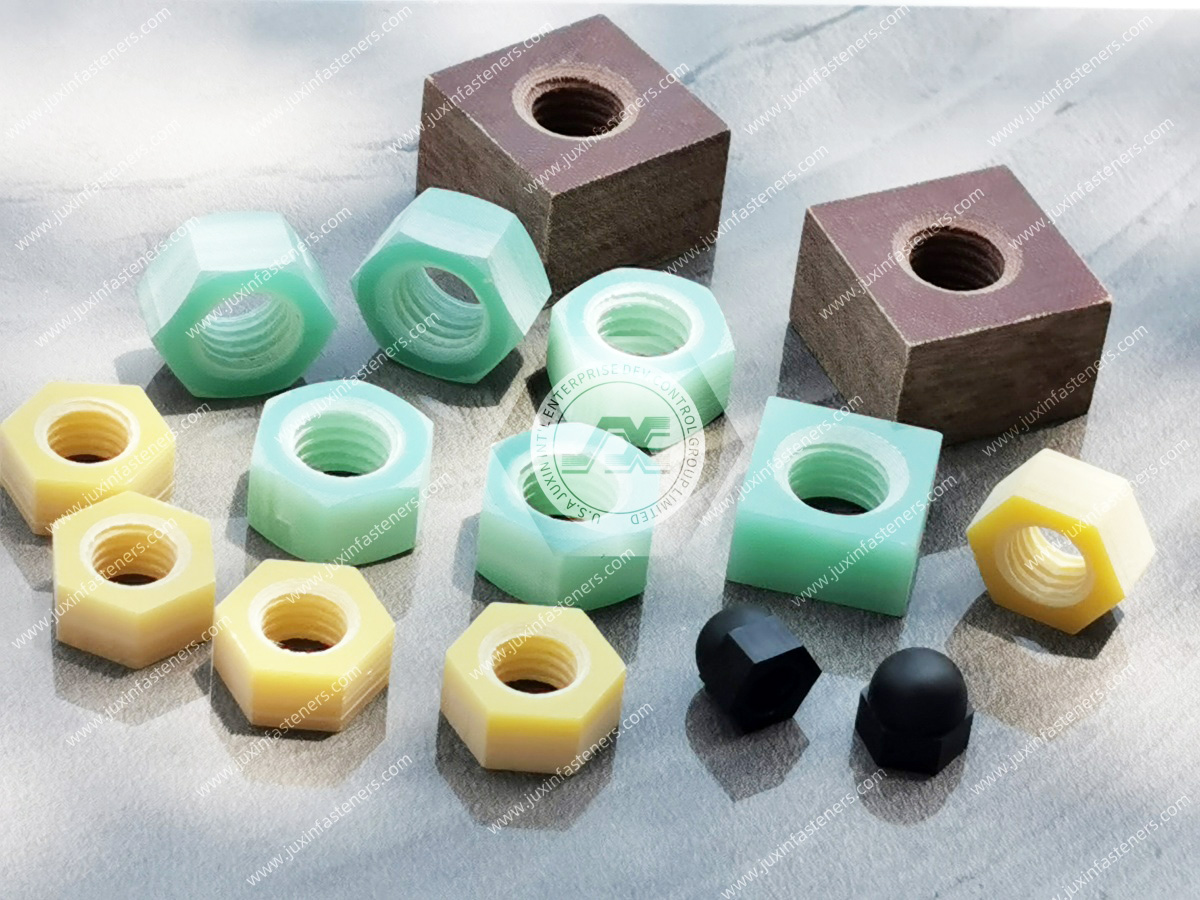
Product Packaging
Packaging Standard
At Juxin Fasteners, we apply standardized export packaging to ensure product protection, traceability, and compliance with international logistics requirements.
1. Standard Export Packaging
Unless otherwise specified, all products will be packed according to our factory standard export packaging, which includes:
Moisture-resistant inner protection
Poly bag or small box packing as required
Reinforced export cartons
Clear labeling with part number, specification, batch number, and quantity
Palletizing for sea or air shipment when necessary
Our standard packaging is designed to ensure safe transportation, efficient warehousing, and long-distance international shipping.
2. Customized Packaging Options
We also provide customized packaging solutions according to customer requirements, including but not limited to:
Private labeling
Customized barcodes
Specific carton dimensions
Retail packaging
Special pallet configuration
Customer-specific marking and identification
So that you know, customized packaging may involve additional costs and extended lead time depending on the complexity of the requirements.
3. Compliance & Quality Assurance
All packaging processes are controlled under our ISO 9001 quality management system to ensure consistency, traceability, and product integrity throughout the supply chain.
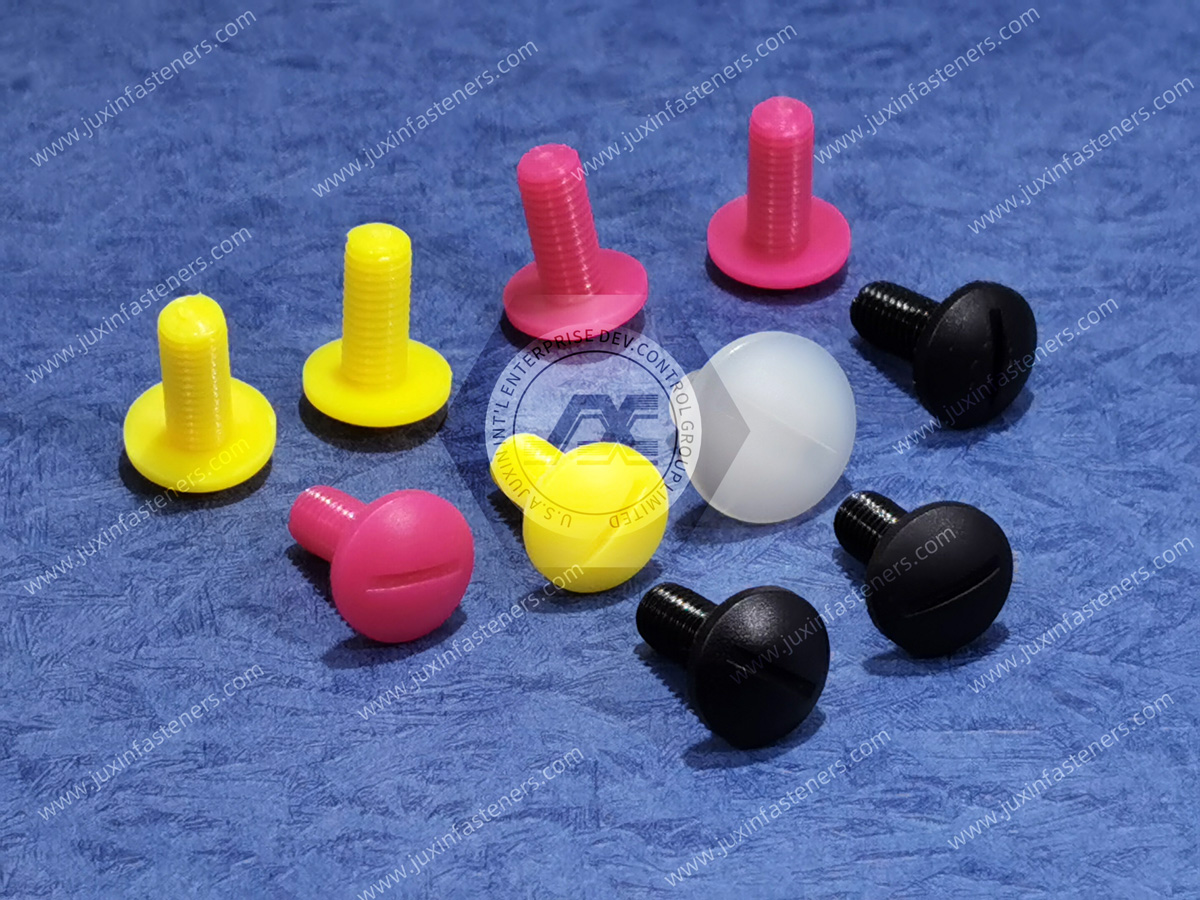
Product Pictures
Contact Us
Tel.:
+86 020 8621 0320
+86 020 3121 6067
E-mail:
Technical Support:
Navigation
SEND INQUIREY