
Call Us
+86 136 6007 9809
Call Us
+86 136 6007 9809

Oct. 19, 2023
ASME B18.21.1 internal tooth lock washers are toothed washers designed with serrations projecting inward around the washer's inside diameter.
They are commonly used beneath screw heads, bolt heads, or nuts where a compact toothed interface is required.
Also called internal star washers, internal toothed lock washers, or internal serrated washers, these components differ from external tooth lock washers primarily in the location of the teeth.
With an internal tooth design, the serrations remain largely within the fastener's bearing area.
This makes the configuration useful where engineers require a relatively compact washer outside diameter or prefer the teeth to remain less exposed around the fastener head.
Typical applications can include:
Electrical equipment
Control cabinets
Instrumentation
Appliances
Automotive electrical assemblies
Small motors
Industrial automation
Electronic equipment
Mechanical brackets
General industrial assemblies
However, an internal tooth lock washer should not automatically be treated as a universal solution for vibration-induced fastener loosening.
Its performance depends on the complete bolted joint, including preload, materials, surface hardness, coatings, friction and external loading.
ASME B18.21.1 is an important reference for lock washers used with inch-series fasteners in North American industrial applications.
For engineers and procurement teams, identifying the applicable standard is important because the description "internal tooth washer" alone may not sufficiently define the required component.
An RFQ or purchasing specification should identify the required standard, size, material and finish rather than relying only on a photograph or generic washer description.
This becomes particularly important when qualifying a second source for an existing OEM assembly.
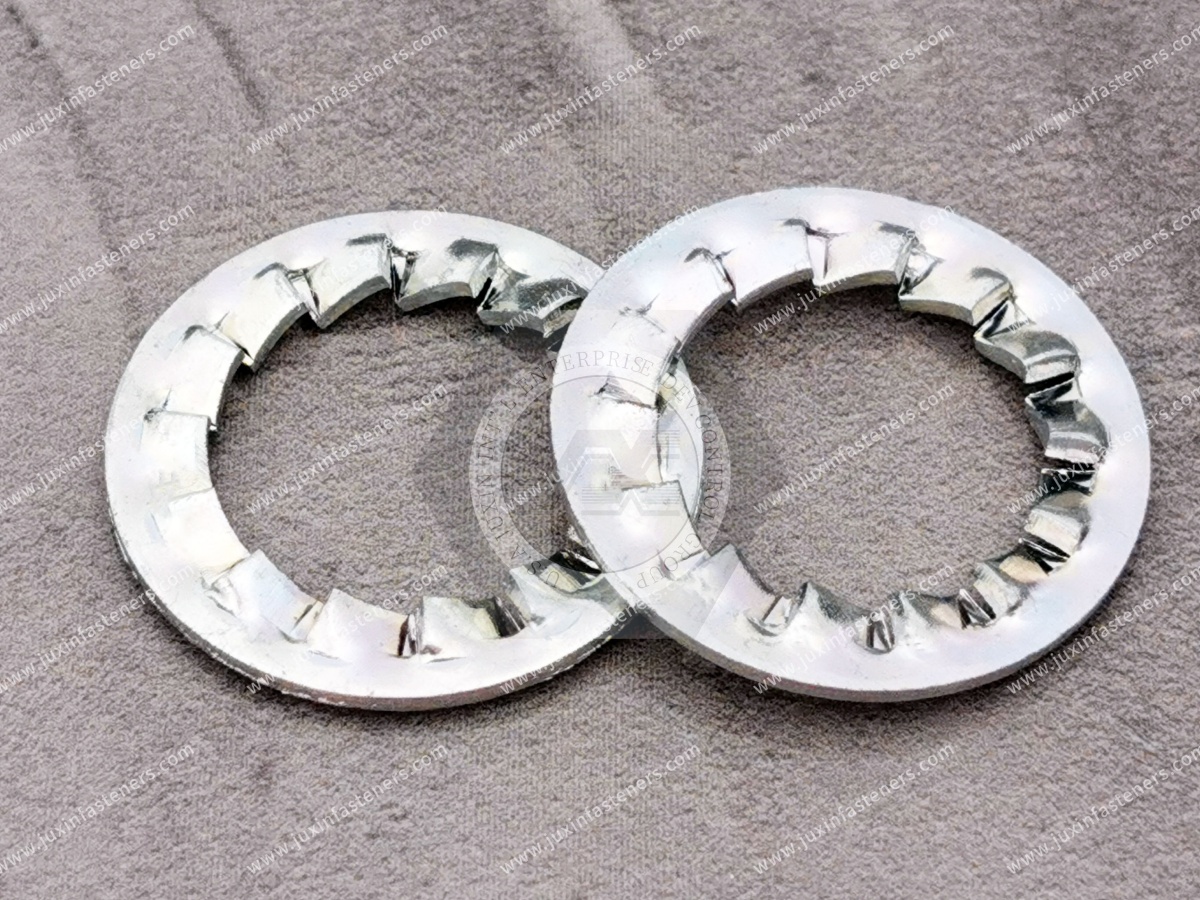
An internal tooth lock washer contains multiple inward-facing teeth around the inside diameter.
During tightening, the washer is compressed beneath the bearing surface of the fastener.
Depending on the joint materials and surface conditions, the teeth may:
Deform during assembly
Create localized contact pressure
Engage the fastener bearing surface
Engage the mating surface
Increase resistance to rotational movement
Penetrate certain surface films or coatings
Create localized metal contact in suitable electrical assemblies
The result is different from the behavior of a conventional flat washer.
A flat washer primarily provides bearing-area and load-distribution functions. A toothed washer introduces localized tooth engagement at the joint interface.
That distinction matters when engineers are deciding which washer belongs in an assembly.
One of the most common engineering searches is:
Internal tooth lock washer vs external tooth lock washer — what is the difference?
Both use serrated teeth, but the geometry changes how the washer interacts with the available bearing area.
The teeth project inward.
This configuration may be useful when:
A compact external washer diameter is preferred
The fastener head provides sufficient coverage
The teeth should remain largely underneath the fastener head or nut
The surrounding assembly has limited radial clearance
A visually cleaner outside profile is desirable
The teeth extend outward around the outside diameter.
This configuration provides tooth contact at a larger effective diameter and can be useful where a broader toothed contact pattern is appropriate.
External tooth washers are also frequently considered in electrical bonding and grounding assemblies where multiple exposed contact points are desirable.
Neither configuration is universally better.
The correct choice depends on:
Fastener head diameter
Washer outside diameter
Available installation space
Mating material
Surface hardness
Coating
Electrical requirements
Joint loading
Required contact pattern
For additional comparison, engineers should also review our External Tooth Lock Washer Solutions.
The primary geometric advantage of an internal tooth washer is not simply "better locking."
It is where the teeth are located.
Because the teeth point inward, the external profile of the washer can remain relatively compact compared with designs where teeth project outward.
This can matter in assemblies involving:
Small screw heads
Closely spaced fasteners
Electrical terminals
Instrument housings
Compact brackets
Control components
Small motors
Electronic equipment
In these applications, available radial space may be as important as the nominal screw size.
This is why washer selection should consider the entire fastener envelope rather than only the thread diameter.
For North American OEM and industrial supply chains, the distinction between metric and inch-series hardware is commercially important.
A purchasing request may specify an inch-series screw together with an ASME B18.21.1 internal tooth lock washer.
Procurement teams should therefore verify:
Applicable standard
Washer style
Nominal fastener size
Material
Finish
Dimensional requirements
Customer drawing requirements
A washer that appears visually similar may not necessarily meet the required dimensional specification.
For supplier qualification, the standard designation should be treated as part of the technical requirement rather than merely a product name.
It can increase rotational resistance in suitable assemblies, but its actual effectiveness depends on the joint.
Fastener loosening can be influenced by:
Initial preload
Transverse joint movement
Joint stiffness
Fastener stiffness
Surface friction
Lubrication
Bearing-surface hardness
Coating
Temperature cycling
Vibration amplitude
External loading
The washer's teeth can provide localized mechanical engagement, but this should not be interpreted as a guarantee against self-loosening in every application.
For safety-critical assemblies or severe transverse-vibration conditions, engineers should evaluate the complete locking strategy and validate the joint under representative operating conditions.
Alternative or additional locking methods may need to be considered depending on the application.
The teeth must interact with the surfaces around them.
That makes surface hardness an important design consideration.
A relatively soft mating surface may allow greater tooth penetration.
A harder surface may produce different engagement behavior.
Engineers should therefore evaluate the relationship between:
Washer Teeth → Fastener Bearing Surface → Mating Surface
Changes to any of these elements can change joint behavior.
For example, replacing a plated carbon steel component with a hardened stainless component may change how the teeth interact with the assembly.
This is why visual similarity alone is not enough when approving a replacement washer.
Coatings influence both friction and tooth engagement.
Common surface conditions can include:
Zinc plating
Zinc-nickel coating
Zinc-flake coating
Black oxide
Phosphate-based finishes
Paint
Powder coating
Conversion coatings
Natural oxide layers
A tooth washer may penetrate certain coatings under sufficient assembly pressure, but the result depends on the coating system.
Coating thickness and mechanical properties can affect:
Tooth engagement
Friction
Surface damage
Corrosion protection
Electrical contact
For this reason, a coating should not be specified only for appearance.
It is part of the functional joint design.
Internal star washers are frequently associated with electrical and electromechanical assemblies because their teeth can create localized contact points.
Potential applications include:
Electrical cabinets
Control panels
Instrumentation
Terminal assemblies
Electrical enclosures
Appliances
Small motors
Power supplies
Automation equipment
Where electrical continuity or bonding is required, engineers must evaluate whether the washer can establish and maintain the required conductive path.
Factors include:
Washer material
Fastener material
Mating material
Surface coating
Contact pressure
Corrosion
Environmental exposure
Assembly torque
A toothed washer by itself does not guarantee an acceptable grounding or bonding connection.
Where electrical safety or compliance depends on the connection, the completed assembly should be tested according to the applicable requirements.
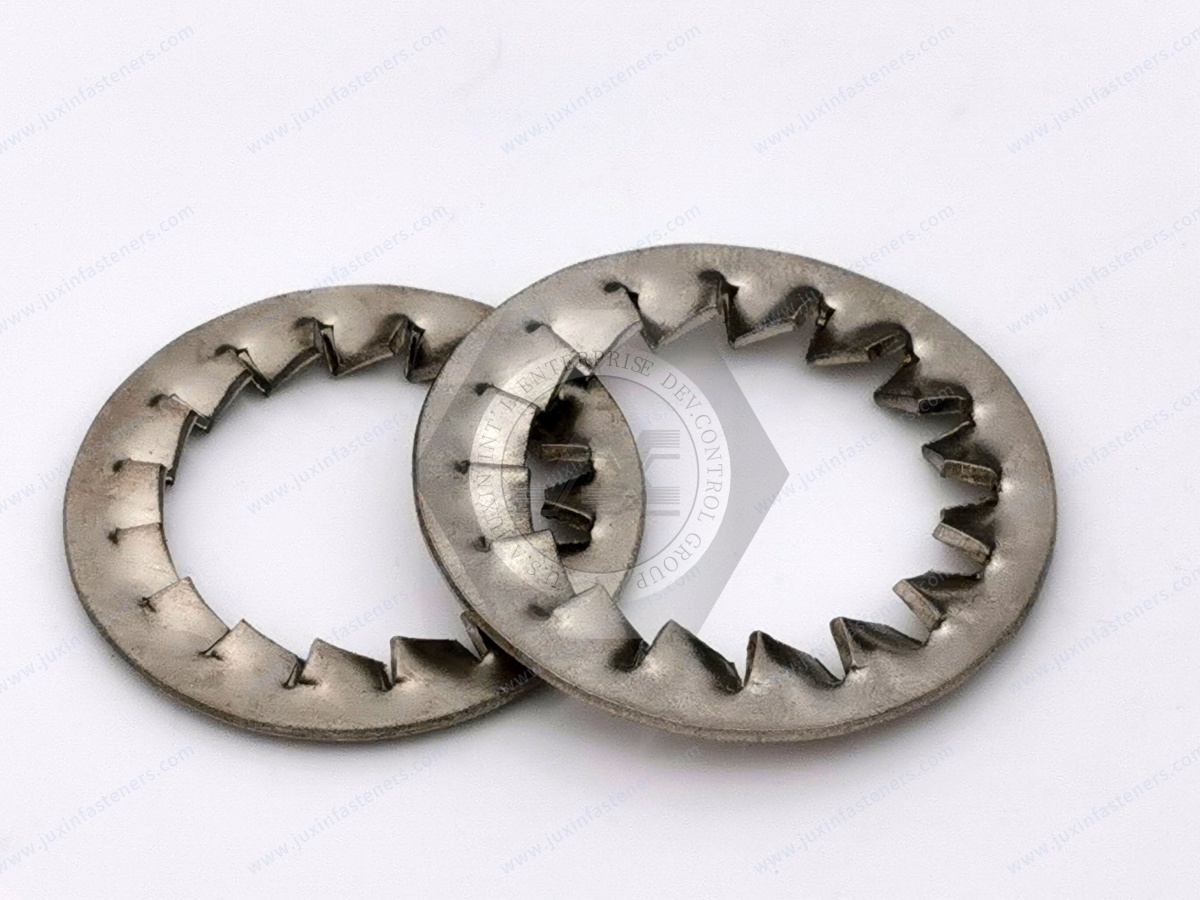
Control cabinets and industrial automation equipment contain numerous small mechanical and electrical connections.
Typical assemblies can involve:
Controllers
Relays
Terminal equipment
Sensors
Power supplies
Mounting brackets
Instrumentation
Electrical enclosures
An internal tooth washer can be useful where a compact toothed interface is required beneath a screw head or nut.
For OEM production, however, consistency becomes important.
Variation in:
Tooth geometry
Washer thickness
Material hardness
Coating thickness
Flatness
Overall dimensions
can influence how the washer behaves during automated or manual assembly.
Procurement should therefore treat small washers as controlled engineering components when their function is important to the finished equipment.
Modern vehicles contain increasing numbers of electronic modules, sensors, actuators, control units and electrical connections.
Potential internal tooth washer applications can include:
Electrical modules
Small motor assemblies
Instrumentation
Brackets
Interior mechanisms
Auxiliary electrical equipment
Enclosures
Control assemblies
EV and hybrid platforms also contain extensive electrical and power-electronics systems.
Where a toothed washer is specified, its suitability should be based on the OEM or Tier supplier drawing, validation requirements and approved joint design.
A generic internal star washer should not be assumed to meet automotive requirements simply because the geometry appears similar.
Internal tooth washers may also be used in industrial machinery for compact mechanical or electrical fastening points.
Examples can include:
Motors
Instrument housings
Sensors
Control components
Machine enclosures
Electrical boxes
Small brackets
Auxiliary equipment
Where equipment is exposed to continuous vibration, the locking method should be validated according to the actual service condition.
Compact geometry can make internal tooth washers particularly relevant to smaller assemblies.
Potential uses include:
Instrument panels
Measuring equipment
Electronic housings
Power supplies
Connector assemblies
Small electromechanical devices
The relatively contained tooth profile can be useful where external radial clearance is limited.
For sensitive electronics, engineers should also evaluate whether tooth penetration, metallic debris, coating damage or surface marking is acceptable.
Material selection should be based on mechanical, environmental and electrical requirements.
Steel internal tooth washers are commonly used where strength, tooth resilience and cost efficiency are important.
Depending on the application, a protective surface finish may be applied for corrosion resistance.
Potential applications include:
Industrial equipment
Electrical assemblies
Appliances
Automotive components
General machinery
Stainless steel may be selected where increased corrosion resistance is required.
Potential environments include:
Outdoor equipment
Food-service equipment
Medical equipment
Marine-related systems
HVAC equipment
Humid industrial environments
The required stainless grade should be specified rather than relying on the generic term "stainless steel."
Some applications may require alternative materials because of:
Electrical conductivity
Corrosion environment
Temperature
Magnetic requirements
Customer specifications
Where materials such as copper alloys or nickel-based alloys are required, the exact grade and functional requirement should be stated on the drawing or RFQ.
Possible surface treatments depend on washer material and customer requirements.
Options may include:
Zinc-based coatings
Zinc-nickel systems
Zinc-flake systems
Black oxide
Phosphate-based finishes
Passivation for appropriate stainless materials
Customer-specified coatings
Selection should consider:
Corrosion resistance
Electrical conductivity
Coating thickness
Tooth geometry
Fastener coating
Mating material
Friction
Environmental exposure
Hydrogen-embrittlement risk where applicable
If the washer forms part of an electrical contact path, coating selection deserves particular attention.
They should not automatically be specified as reusable components.
During installation, the teeth can deform and create localized impressions in the mating surfaces.
After disassembly:
Tooth geometry may have changed
Original contact locations may be disturbed
Coatings may have been penetrated
Friction conditions may change
Electrical contact behavior may change
For critical joints, replacing the washer after disassembly may be appropriate unless reuse has been specifically validated.
This is particularly relevant for controlled electrical or mechanical connections.
Yes.
The tooth geometry is specifically intended to interact with the surfaces around it.
Possible effects include:
Surface impressions
Scratching
Coating penetration
Localized marking
This may be desirable when tooth engagement or electrical contact is required.
It may be undesirable on:
Decorative panels
Painted visible surfaces
Soft materials
Precision cosmetic components
Surfaces where coating integrity must remain intact
The engineer should therefore determine whether controlled surface penetration is acceptable.
A flat washer and an internal tooth washer should not be treated as equivalent components.
A flat washer is primarily used to:
Increase bearing area
Distribute load
Protect the mating surface
Reduce localized indentation
An internal tooth washer is selected primarily for:
Tooth engagement
Increased rotational resistance
Compact serrated contact
Potential electrical contact in appropriate designs
In some joints, both load distribution and locking functions may be required.
The appropriate washer arrangement should be determined from the complete joint design.
Split helical lock washers and internal tooth washers use different geometries and interact with the joint differently.
Selection should consider:
Fastener size
Bearing surface
Available radial space
Surface hardness
Mating material
Required contact behavior
Assembly process
Service conditions
Neither should automatically be treated as universally superior.
A serrated flange nut or serrated flange screw integrates the serrations into the fastener itself.
An internal tooth washer is a separate component.
Integrated serrations may reduce component count.
A separate washer may be preferred when:
Existing fasteners must remain unchanged
Different washer materials are required
Service replacement is needed
Customer drawings specify a separate washer
Electrical contact requirements influence washer selection
The decision should be made at assembly level.
These technologies act at different interfaces.
A thread-locking adhesive acts primarily within the threaded connection.
An internal tooth washer acts primarily at the bearing surfaces.
Selection can depend on:
Assembly speed
Cleanliness requirements
Temperature
Maintenance
Disassembly
Production automation
Storage requirements
Joint validation
For some applications, engineers may evaluate multiple locking strategies before choosing the production solution.
A structured selection process reduces sourcing errors.
Identify whether the application requires:
ASME B18.21.1
Another recognized standard
Customer-specific drawing requirements
Do not substitute standards based only on nominal fastener size.
Specify the exact inch-series fastener size and verify compatibility with:
Washer inside diameter
Fastener shank
Head diameter
Nut bearing surface
Evaluate:
Maximum allowable washer OD
Adjacent components
Recesses
Counterbores
Housing geometry
This is particularly important for compact assemblies.
Specify the required:
Material type
Grade where applicable
Mechanical requirements
Corrosion requirements
State:
Coating type
Finish requirements
Corrosion requirement
Electrical requirements where relevant
Provide information about:
Material
Hardness
Coating
Paint
Surface finish
If anti-loosening or electrical performance is critical, validate the completed joint under representative service conditions.
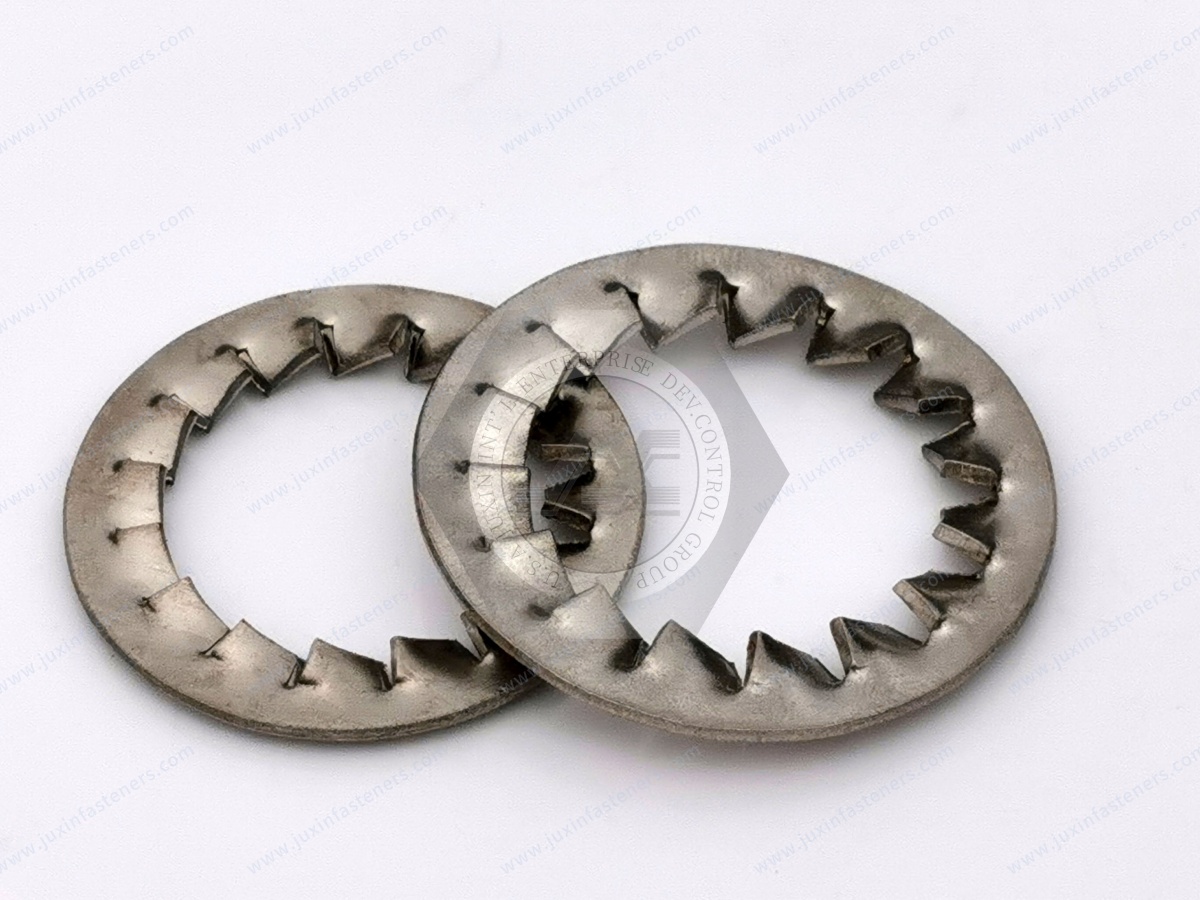
For an ASME B18.21.1 internal tooth lock washer, engineering documentation may need to identify:
Applicable standard
Washer style
Nominal fastener size
Inside diameter
Outside diameter
Thickness
Tooth configuration
Material
Hardness where required
Surface finish
Coating requirement
Corrosion requirement
Dimensional tolerances
Electrical requirements where applicable
Inspection requirements
For custom designs, the customer drawing should control the required geometry.
Standard ASME washers can be appropriate where the assembly is designed around established dimensions.
Custom internal tooth washers may be required when the project involves:
Non-standard inside diameter
Restricted outside diameter
Special tooth geometry
Special thickness
Unique material
Customer-specific hardness
Special coating
Electrical contact requirements
Proprietary assembly geometry
This distinction is important for OEM sourcing.
If the existing component does not conform exactly to a standard, forcing it into a standard designation can create dimensional or functional problems.
A drawing-controlled custom washer may be the more appropriate sourcing route.
For purchasing and supplier development teams, the product description alone is not enough.
A supplier evaluation should consider:
Can the supplier manufacture to the specified ASME requirement?
Is the material controlled?
Is hardness controlled where required?
Is tooth geometry consistent?
Are ID, OD and thickness controlled?
Is the specified finish available?
Can corrosion requirements be supported?
Are coating requirements understood?
Can electrical requirements be reviewed?
Can samples be provided for qualification?
Can production lots be supplied against an approved specification?
These questions become increasingly important for:
OEM production
Tier suppliers
Automotive programs
Electrical equipment
Industrial automation
Long-term supply agreements
Internal tooth lock washers are often sourced as replacement or second-source components.
A useful qualification process is:
Existing Drawing → Standard Verification → Sample Comparison → Material Review → Dimensional Inspection → Finish Review → Assembly Testing → Production Approval
If a drawing is unavailable, an existing sample can help identify the geometry, but critical specifications should still be confirmed before production.
Reverse engineering only the visible dimensions may overlook:
Material
Hardness
Tooth forming condition
Coating
Functional requirements
For OEM supply, these details should be resolved before mass production.
For a faster and more accurate quotation, provide:
ASME B18.21.1 designation
Washer style
Fastener size
Drawing, if available
Inside diameter
Outside diameter
Thickness
Material
Hardness requirement
Surface finish
Coating requirement
Corrosion requirement
Application
Mating material
Electrical requirement, if applicable
Prototype quantity
Production quantity
Estimated annual volume
Documentation requirements
Packaging requirements
For a second-source project, supplying an existing approved sample together with the drawing can improve technical review.
Engineering teams may search for:
ASME B18.21.1 internal tooth lock washer
internal tooth lock washer dimensions
internal star washer
internal tooth vs external tooth washer
how does an internal tooth lock washer work
internal tooth washer for grounding
internal tooth washer material
internal tooth lock washer application
Procurement and supplier-development teams may search for:
ASME B18.21.1 washer manufacturer
internal tooth lock washer supplier
internal star washer manufacturer
stainless steel internal tooth washer supplier
inch internal tooth washer supplier
custom internal tooth lock washer
OEM toothed washer manufacturer
lock washer second source
These are different search journeys.
Engineering is trying to determine whether the washer fits the joint.
Procurement is trying to determine whether the supplier can consistently manufacture and document the required washer.
A useful product page must answer both questions.
For outward-facing serrations and a larger tooth-contact diameter, review our External Tooth Lock Washer Solutions.
For general bearing-load distribution without toothed engagement, review our Flat Washer Solutions.
For elastic axial preload and tolerance compensation, review our Wave Spring Washer Solutions.
For curved elastic preload applications, review our Curved Spring Washer Solutions.
For angular compensation in misaligned bolted joints, review our Spherical Washer Solutions.
For applications requiring an integrated serrated bearing surface, review our Serrated Flange Nut and Serrated Flange Fastener Solutions.
These internal links should be connected according to the engineering problem being solved rather than simply grouping every washer page together.
JUXIN FASTENERS supports industrial sourcing projects involving:
ASME B18.21.1 internal tooth lock washers
Internal star washers
Internal toothed washers
Carbon steel lock washers
Stainless steel internal tooth washers
Inch-series lock washers
Electrical contact washers
Custom serrated washers
Drawing-based washer components
Projects can be reviewed from:
Standard designations
2D drawings
Existing samples
Material specifications
Surface-finish requirements
Application information
For standard products, confirming the applicable specification helps reduce ambiguity.
For custom products, a drawing provides the clearest basis for reviewing geometry, material and surface requirements.
For a new design, the sourcing path can be structured as:
Joint Requirement → ASME/Customer Specification → Fastener Size → Washer Geometry → Material → Hardness → Surface Finish → Prototype → Assembly Validation → Production
For an existing second-source project:
Existing Part + Drawing → Specification Review → Dimensional Comparison → Material/Finish Review → Samples → Customer Validation → Production Approval
This approach is more reliable than selecting an internal star washer from appearance alone.
If you are sourcing ASME B18.21.1 internal tooth lock washers, internal star washers, stainless steel toothed washers,
inch-series lock washers or custom internal tooth washers, send your standard reference, drawing, existing sample or application requirements to JUXIN FASTENERS.
For an efficient RFQ, include:
Standard or drawing
Fastener size
Material
Hardness, if specified
Surface treatment
Mating material
Application
Electrical requirements, if applicable
Corrosion requirement
Prototype quantity
Production quantity
Estimated annual demand
Inspection and documentation requirements
Email: info@juxinfasteners.com
JUXIN FASTENERS can review the engineering and commercial requirements and evaluate a standard or custom internal tooth lock washer solution for OEM and industrial production.
 MORE NEWS
Sep. 27, 2026
Sep. 27, 2026
Sep. 27, 2026
Contact Us
Tel.:
+86 020 8621 0320
+86 020 3121 6067
E-mail:
Technical Support:
Navigation
SEND INQUIREY