
Call Us
+86 136 6007 9809
Call Us
+86 136 6007 9809

Jun. 01, 2024
High-quality automotive body fasteners are essential to the safety, durability, and manufacturing efficiency of modern vehicles. Whether used in passenger cars, electric vehicles (EVs), battery packs, rail transit, aerospace equipment, or industrial machinery, the reliability of every weld stud, weld bolt, and projection weld nut depends on precise welding parameters, strict quality control, and effective defect prevention.
At JUXIN FASTENERS, we manufacture premium weld studs, weld bolts, projection weld nuts, hex weld nuts, square weld nuts, flange weld nuts, self-clinching fasteners, rivet nuts, and custom fastening solutions designed to meet the demanding requirements of global OEMs, Tier 1 suppliers, and industrial manufacturers.
Our engineering team supports customers with fastener selection, welding recommendations, material optimization, and manufacturing solutions to improve production efficiency and long-term product reliability.
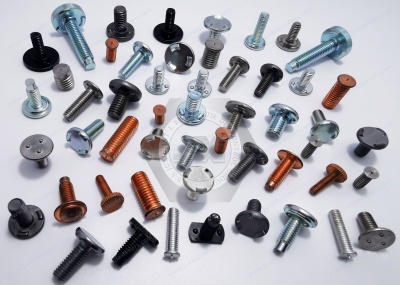
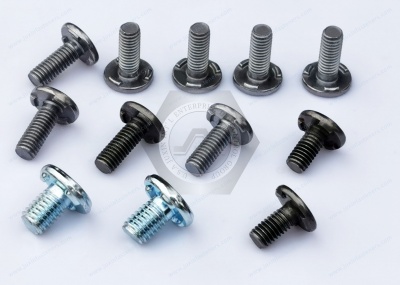
Modern vehicles contain more than 3,000 mechanical fasteners, many of which are permanently welded onto the Body-in-White (BIW) before final assembly.
Proper welding ensures:
High structural strength
Reliable torque performance
Excellent fatigue resistance
Stable electrical grounding
Superior corrosion resistance
Automated production efficiency
Long service life
Poor welding quality can lead to loose joints, thread damage, structural failure, excessive rework, and increased manufacturing costs.
JUXIN FASTENERS supplies a complete range of welding fasteners, including:
Projection Weld Nuts
Weld Studs
Weld Bolts
Hex Weld Nuts
Hex Flange Weld Nuts
Square Weld Nuts
Pilot Projection Weld Nuts
Self-Clinching Fasteners
Rivet Nuts
Custom Weld Fasteners
Available in:
Carbon Steel
Stainless Steel 304
Stainless Steel 316
Alloy Steel
Copper-Coated Steel
Surface finishes include:
Zinc Plating
Zinc Nickel Plating
Geomet®
Dacromet®
Black Oxide
Mechanical Zinc
Custom Protective Coatings
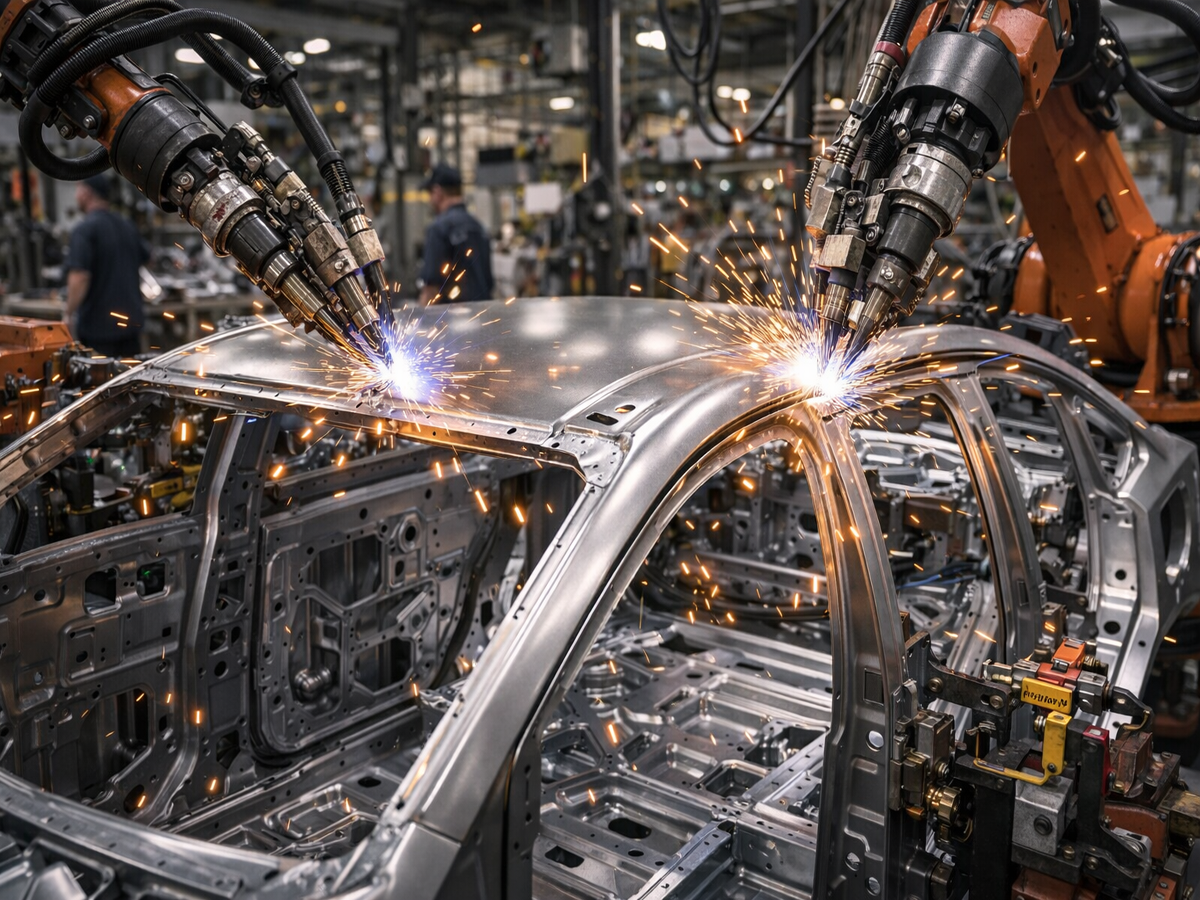
Successful resistance welding depends on balancing several key process variables.
Welding current directly determines heat generation and fusion quality.
Insufficient current may cause:
Incomplete fusion
Weak weld strength
False welding
Excessive current may result in:
Burn-through
Excessive spatter
Thread deformation
Surface damage
Proper welding time ensures complete fusion between the fastener and the workpiece.
Excessively short welding cycles may reduce weld strength, while excessive welding time can overheat the material and reduce dimensional accuracy.
Electrode pressure significantly affects weld consistency.
Correct pressure provides:
Stable electrical contact
Uniform weld nugget formation
Consistent weld quality
Improper pressure may lead to:
Porosity
Incomplete welding
Surface indentation
Distorted components
Before welding, workpiece surfaces should be free from:
Oil
Rust
Oxidation
Scale
Paint
Dust
Metal debris
Proper surface preparation greatly improves weld consistency and reduces production defects.
Quality inspection is essential for maintaining production consistency and meeting OEM quality standards.
The first inspection verifies:
Complete weld formation
Uniform weld appearance
Proper fastener positioning
No excessive weld spatter
Clean threads
No surface cracks
No burn-through
Thread protection is particularly important for ensuring smooth bolt installation during final assembly.
Mechanical testing verifies weld integrity and joint strength.
Common evaluation methods include:
Torque Testing
Pull-Out Testing
Push-Out Testing
Peel Testing
Bend Testing
Rubber Hammer Impact Testing
A commonly used production verification method involves striking the welded bolt at approximately a 45-degree angle with a rubber hammer to evaluate weld integrity. Properly welded fasteners should remain securely attached without cracking at the weld root.
Depending on product requirements, manufacturers may also perform:
Visual Weld Evaluation
Dimensional Inspection
Thread Gauge Inspection
Production Sampling
Automated Camera Inspection
These methods help ensure consistent quality without damaging finished components.
Understanding common welding defects helps reduce production downtime and improve first-pass yield.
| Common Defect | Possible Cause | Recommended Solution |
|---|---|---|
| Weld Spatter | Excessive welding current or poor grounding | Optimize current settings and inspect grounding system |
| Incomplete Fusion | Low current, short weld time, insufficient pressure | Adjust welding parameters and verify electrode condition |
| Porosity | Oil, rust, or contaminated surfaces | Thoroughly clean workpieces before welding |
| Burn-Through | Excessive heat input | Reduce welding current or welding time |
| False Weld | Poor electrical contact or unstable positioning | Improve fixturing and electrode alignment |
| Cracking | Improper cooling or excessive stress | Optimize welding cycle and material selection |
| Thread Damage | Excessive heat or weld spatter | Protect threads and control heat input |
| Misaligned Weld Stud | Welding gun positioning error | Calibrate fixtures and inspect tooling regularly |
Proper process control significantly reduces production defects while improving product consistency and manufacturing efficiency.
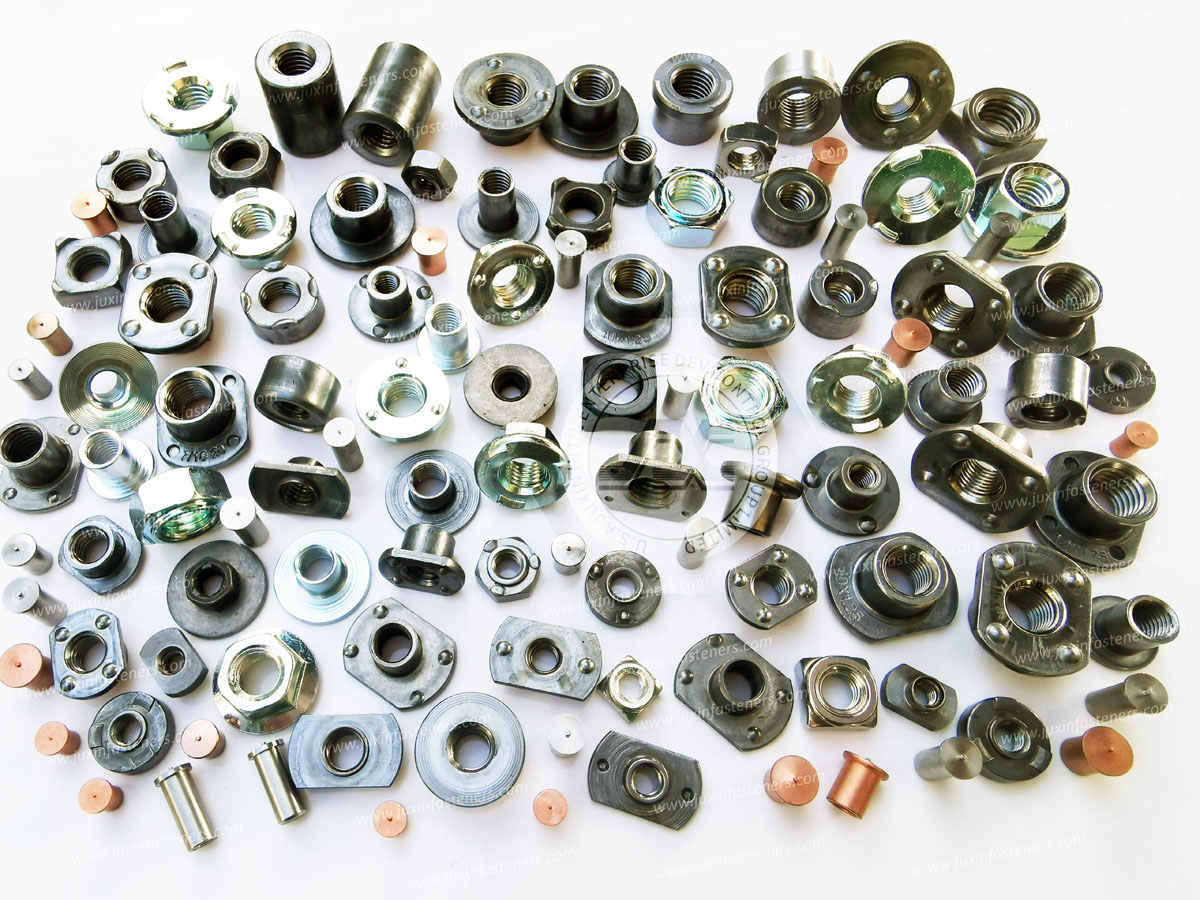
Projection welding is the preferred manufacturing method for automotive weld nuts because it provides strong, repeatable welds while maintaining thread precision.
A typical projection welding system includes:
Welding Frame
Electrode System
Pressure Mechanism
Transformer
Secondary Circuit
Water Cooling System
PLC Control System
Projection welding offers several advantages:
High production efficiency
Excellent weld consistency
Minimal thread distortion
Low heat concentration
Automated production compatibility
Reduced manufacturing cost
After projection welding, every component should undergo comprehensive inspection.
Inspection items include:
Verify:
Complete projection collapse
Uniform weld marks
No cracks
No excessive indentation
No visible defects
Inspect using standard thread gauges to ensure smooth bolt engagement without thread deformation.
Install the corresponding bolt and apply the specified tightening torque.
The weld is considered acceptable when:
The nut remains securely attached.
No rotation or loosening occurs.
The weld maintains full structural integrity.
Consistent weld quality depends on both equipment maintenance and process control.
Recommended practices include:
Select welding parameters according to fastener size and sheet thickness.
Clean workpiece surfaces before welding.
Maintain proper electrode alignment and dressing.
Ensure stable grounding and electrical connections.
Regularly calibrate welding equipment.
Monitor welding current, pressure, and cycle time.
Protect threaded sections from weld spatter.
Perform routine quality inspections throughout production.
Preventive process control is significantly more cost-effective than correcting defects after assembly.
JUXIN FASTENERS' welding fasteners are widely used in demanding industrial applications where reliable threaded connections are essential.
Body-in-White (BIW)
Chassis Systems
Seat Frames
Door Modules
Structural Reinforcements
Battery Pack Enclosures
Battery Trays
Busbar Mounting
Cooling Plates
High-Voltage Components
Passenger Coaches
Metro Systems
High-Speed Rail Vehicles
Lightweight Structural Assemblies
Aircraft Interior Systems
Equipment Mounting
Switchgear
Distribution Panels
Industrial Control Cabinets
Air Handling Units
Commercial Ventilation Systems
Heat Pump Equipment
Diagnostic Instruments
Surgical Equipment
Stainless Steel Enclosures
Excavators
Cranes
Loaders
Earthmoving Equipment
Robot Frames
Industrial Automation Systems
Smart Manufacturing Equipment
Laser-Cut Components
Metal Cabinets
Industrial Enclosures
OEM Fabricated Assemblies
JUXIN FASTENERS is a trusted manufacturer of industrial fasteners and welding fastener solutions for global OEMs and engineering companies.
We offer:
Automotive Fasteners
Projection Weld Nuts
Weld Studs
Weld Bolts
Hex Weld Nuts
Flange Weld Nuts
Square Weld Nuts
Self-Clinching Fasteners
Rivet Nuts
Custom Fasteners
CNC Machined Components
Cold Forged Fasteners
Our capabilities include:
OEM & ODM Manufacturing
Custom Drawing Production
Precision Cold Forming
Stable Global Supply
International Quality Standards
Strict Quality Control
Engineering & Application Support
Fast Worldwide Delivery
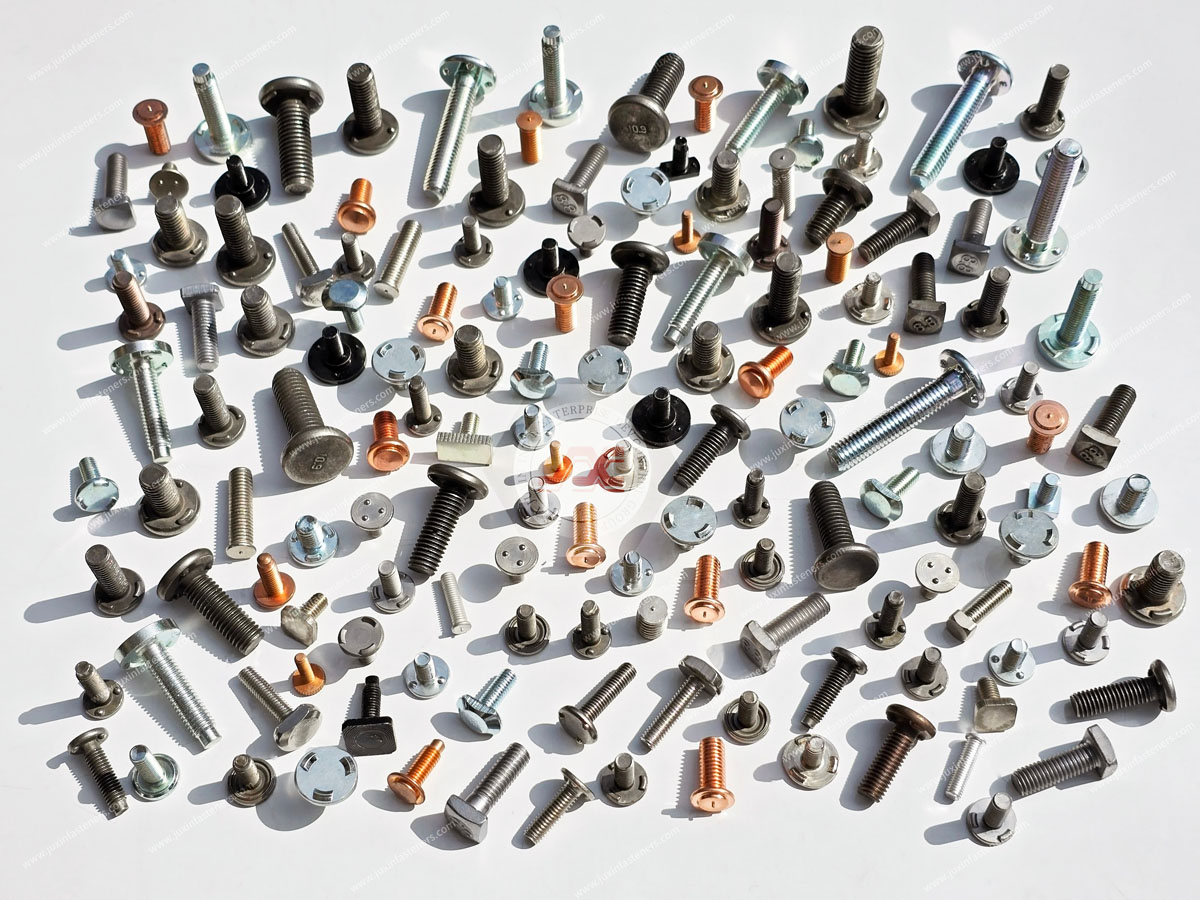
From automotive production lines and EV battery systems to aerospace assemblies and precision sheet metal fabrication, JUXIN FASTENERS delivers high-performance fastening solutions engineered for consistent weld quality, long-term durability, and efficient automated manufacturing.
Our engineering team is ready to support your project with product selection, custom fastener design, welding recommendations, and manufacturing expertise.
Contact Us
Website: www.juxinfasteners.com
Email: info@juxinfasteners.com
 MORE NEWS
Sep. 27, 2026
Sep. 27, 2026
Sep. 27, 2026
Contact Us
Tel.:
+86 020 8621 0320
+86 020 3121 6067
E-mail:
Technical Support:
Navigation
SEND INQUIREY