
Call Us
+86 136 6007 9809
Call Us
+86 136 6007 9809

Sep. 27, 2026
Unthreaded nylon spacers and plastic tubular spacers are used to establish controlled physical separation between circuit boards,
electronic modules, faceplates, brackets, switchgear components, sensors, covers, and equipment chassis.
Unlike threaded standoffs, an unthreaded tubular spacer does not normally provide its own threaded fastening interface. Instead, a screw, bolt, stud, rivet,
or alignment feature passes through the spacer's central bore while the spacer establishes the required distance between mating components.
This apparently simple architecture makes unthreaded spacers useful across electronics, electrical equipment, switchgear, semiconductor equipment,
AI servers, telecommunications, lighting, industrial automation, medical equipment, renewable energy systems, automotive electronics, instrumentation, and other OEM assemblies.
However, spacer selection involves more than specifying a nominal length.
A plastic spacer becomes part of the complete assembly stack and can influence:
component spacing
screw or bolt clearance
alignment
bearing area
compressive load transfer
clamp-load behavior
electrical separation
thermal conduction
thermal expansion
moisture-related dimensional change
creep and stress relaxation
PCB or panel deflection
tolerance accumulation
For this reason, a reliable engineering sequence is:
Required Component Separation → Spacer Length → ID → OD → Fastener → Bearing Interface → Material → Clamp Load → Environment → Tolerance Stack-Up → Validation
Juxin Fasteners supplies standard and custom unthreaded nylon spacers, plastic tubular spacers, spacer sleeves, insulating mounting pillars,
threaded standoffs, PCB supports, nylon washers, nylon screws, and drawing-based molded plastic components for industrial OEM applications.
Engineering and procurement teams can submit an existing manufacturer part number, physical sample, 2D drawing, 3D CAD model,
ID/OD/length requirements, mating fastener information, assembly stack, material specification, or operating conditions for technical and commercial evaluation.
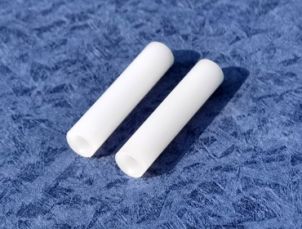
An unthreaded nylon spacer is generally a tubular component with:
an inside diameter
an outside diameter
a defined length
no functional internal thread
The central bore allows a fastener or locating feature to pass through.
The spacer body maintains separation between the surrounding components.
A simplified assembly may be:
Screw Head → Upper Component → Spacer → Lower Component → Nut
or:
Screw → PCB → Spacer → Chassis Thread
The spacer establishes distance while the separate fastener provides retention.
This distinction is fundamental.
Spacer = Controls Distance
Fastener = Creates Retention
In some assemblies, the same component may perform multiple functions, but those functions should be identified explicitly during design.
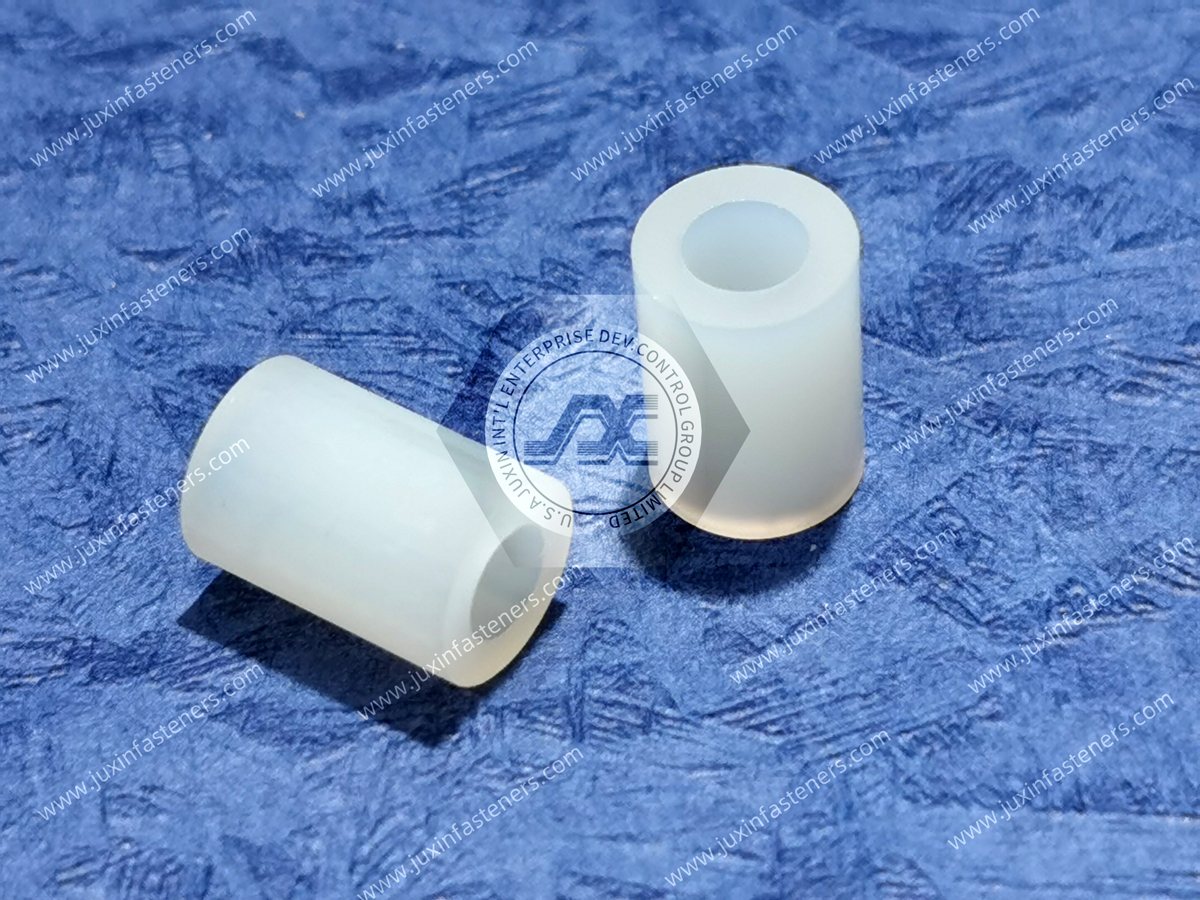
The terms “spacer” and “standoff” are often used interchangeably in commercial searches, but they can describe different fastening architectures.
Provides a through-hole and normally relies on a separate fastener passing through it.
Provides an internal thread, external thread, or male-female threaded configuration and can become part of the fastening system itself.
This distinction matters when selecting:
fastener length
assembly sequence
serviceability
torque path
component stack
tooling access
If a pass-through screw is required, an unthreaded tubular spacer may be the simpler architecture.
If components must be independently attached at each end, a threaded standoff may be more appropriate.
Selecting the correct plastic spacer requires evaluating its geometry together with the assembly stack.
Round tubular spacers use a cylindrical OD with a central through-hole.
They are commonly used for:
PCB spacing
electronic modules
equipment panels
control systems
sensors
brackets
covers
lighting assemblies
Round geometry provides a compact and straightforward spacing solution where no anti-rotation outer profile is required.
Hexagonal outer profiles can provide additional external surfaces for:
manual positioning
tooling
anti-rotation features
assembly handling
However, an unthreaded hex spacer should not automatically be assumed to require wrench tightening.
If the spacer is only a pass-through sleeve, tightening torque is still carried through the complete joint rather than through an internal spacer thread.
Square or rectangular spacer geometries may be used where the assembly requires:
anti-rotation
increased contact area
orientation control
packaging within rectangular equipment geometry
integration with channels or molded pockets
The geometry should follow the actual mechanical interface.
A spacer may incorporate an integral flange at one or both ends.
The flange can provide:
increased bearing area
location
retention
surface separation
assembly orientation
A flange can change the way compressive load is transferred into the mating component and should therefore be included in stack-up calculations.
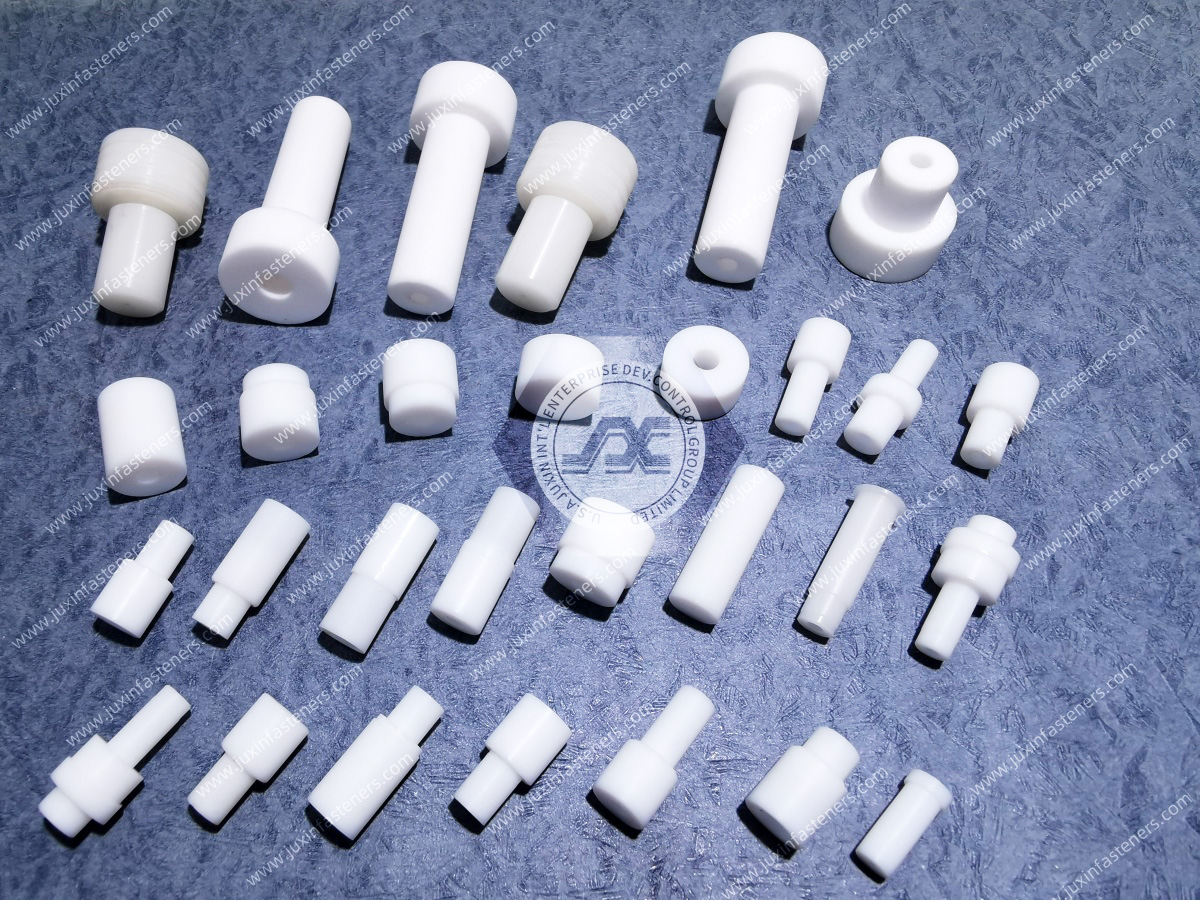
Custom spacers can incorporate multiple diameters or shoulders.
These designs may combine:
spacing
centering
hole location
panel separation
anti-movement functions
Stepped geometry is particularly useful where a standard straight tube does not control the assembly adequately.
A tubular plastic component may be described as a:
spacer
sleeve
bushing
insulating sleeve
mounting pillar
The geometry may appear similar, but the engineering function can differ.
A spacer primarily controls axial distance.
A bushing may primarily support, guide, isolate, or protect a shaft or fastener through a hole.
Therefore:
Part Name Alone ≠ Functional Specification
Engineers and procurement teams should evaluate the actual dimensions and assembly role.
Most unthreaded tubular spacers are fundamentally controlled by:
ID = Inside Diameter
OD = Outside Diameter
L = Length
These three dimensions interact.
Changing one can affect:
wall thickness
stiffness
fastener clearance
bearing area
compressive behavior
packaging space
dimensional tolerance
The spacer ID must accommodate the actual pass-through fastener.
This may include:
machine screw
bolt
threaded stud
rivet
locating pin
The correct ID depends on more than nominal fastener diameter.
Relevant factors can include:
actual shank diameter
fastener tolerance
spacer ID tolerance
coating
alignment
assembly method
thermal expansion
required movement
If the ID is too small, the fastener may bind.
If it is unnecessarily large, the assembly may lose centering accuracy or allow unwanted lateral movement.
An “M4 nylon spacer” does not necessarily require a 4.00 mm bore.
The spacer normally requires clearance around the actual fastener.
Therefore, engineering teams should specify the required ID or mating screw rather than relying only on nominal size descriptions.
The same principle applies to Unified fastener systems.
Spacer OD influences both structural and packaging behavior.
A larger OD can provide:
increased wall thickness
greater bearing area
potentially greater resistance to local compression
However, it also consumes more assembly space.
In dense electronic equipment, excessive OD may interfere with:
PCB components
solder joints
connectors
heat sinks
busbars
cable routes
enclosure walls
adjacent fasteners
Therefore:
Larger OD ≠ Automatically Better Spacer
OD should be selected according to the mechanical load and available envelope.
For a simple tubular spacer:
Wall Thickness ≈ (OD − ID) / 2
Wall thickness influences:
stiffness
local stability
molding behavior
compressive response
resistance to splitting
available bearing area
A thin-wall spacer may be adequate for a lightly loaded electronic assembly but unsuitable for a more highly compressed joint.
The correct geometry depends on material and load.
Spacer length is normally the most functionally visible dimension because it establishes the nominal distance between components.
However:
Spacer Length ≠ Automatically Final Installed Separation
The final installed distance can also depend on:
spacer compression
mating-surface flatness
component thickness
washers
coatings
PCB deflection
fastener preload
dimensional tolerances
temperature
moisture
This distinction becomes important in precision assemblies.
A spacer may have a nominal free-state length before assembly.
After tightening, its effective installed length may change depending on the compressive load and polymer behavior.
For applications where the spacing dimension controls:
connector alignment
optical alignment
board-to-board spacing
sensor position
enclosure clearance
thermal gap
engineers should validate the installed assembly rather than relying only on the free-state spacer dimension.
Consider a simplified electronic assembly:
Top Cover → Washer → PCB → Spacer → Lower PCB → Chassis
The final location of the upper component depends on every dimension in the stack.
A simplified dimensional relationship may be expressed as:
Assembly Stack = Component Thicknesses + Spacer Lengths + Washer Thicknesses + Interface Conditions
Each component also has a tolerance.
If several dimensions accumulate in the same direction, the final assembly can move outside the intended range.
Therefore, spacer tolerance should be evaluated within the complete tolerance stack.
For critical assemblies, engineering teams may evaluate tolerance accumulation using a worst-case or statistical method appropriate to the design and manufacturing process.
The spacer supplier should not determine the customer's complete tolerance strategy.
However, the spacer's:
length tolerance
ID tolerance
OD tolerance
molding variation
environmental dimensional behavior
should be known where these parameters affect the assembly.
In PCB assemblies, a spacer can control board separation, but the final geometry may also be affected by:
PCB thickness
board flatness
screw locations
connector geometry
component height
board deflection
tightening sequence
This becomes increasingly important for large PCBs and multi-point mounting arrays.
When a screw or bolt passes through a spacer and is tightened, the spacer can become part of the compressive load path.
A simplified joint may be:
Screw Head → PCB / Panel → Spacer → Chassis → Threaded Fastener Interface
The spacer therefore experiences compressive stress.
Its ability to maintain the required spacing depends on:
polymer
OD
ID
wall thickness
length
bearing surfaces
applied clamp load
temperature
time
A common mistake is to evaluate the spacer using tightening torque alone.
Torque is an installation input.
The spacer experiences compressive force.
The relationship between torque and resulting clamp load depends on:
thread friction
bearing friction
screw material
thread condition
lubrication
washer interface
joint geometry
Therefore:
Torque Value ≠ Direct Spacer Load Value
Critical applications should be evaluated at the joint level.
If a plastic tubular spacer is subjected to excessive compression, possible failure modes can include:
permanent shortening
local crushing
barrel deformation
wall buckling
splitting
flange deformation
damage to adjacent components
The actual failure mode depends on geometry and material.
Length relative to cross-section can affect spacer stability.
A long, thin-wall spacer may behave differently from a short, thick-wall spacer even if both use the same material.
Long spacers can be more sensitive to:
lateral misalignment
bending
buckling
assembly eccentricity
Therefore, compressive capability cannot be determined from material name alone.
Spacer end faces transfer compressive load into adjacent components.
If the contact area is small, local surface pressure can become significant.
This matters when the spacer bears against:
PCB laminate
plastic housing
thin sheet
composite panel
coated surface
Potential responses can include:
increasing OD
adding an appropriate washer
using a flange
modifying the substrate
reducing clamp load
The best solution depends on the assembly.
A Nylon Flat Washer may be used with a spacer where additional bearing area or surface separation is required.
However, the washer adds another polymer component to the compressed stack.
This can influence:
stack height
compression
creep
tolerance
The washer should therefore be included in the complete joint analysis.
Engineering polymers exhibit time-dependent mechanical behavior.
Under sustained compression, a plastic spacer may experience creep.
A simplified progression is:
Initial Assembly → Compressive Stress → Time + Temperature → Polymer Creep → Change in Spacer Dimension / Joint Condition
The amount depends on:
polymer grade
stress
geometry
temperature
moisture
duration
A plastic spacer should therefore not automatically be treated as dimensionally identical to a metal spacer throughout the life of the equipment.
In a bolted assembly containing polymer components, time-dependent deformation can change the clamp condition.
This does not mean that every nylon-spacer assembly will loosen.
It means engineers should determine whether the application is sensitive to long-term changes.
A lightly loaded PCB spacing application and a highly preloaded structural joint have very different requirements.
Metal spacers generally provide much higher stiffness than common unreinforced engineering polymers.
If the primary requirement is to carry high compressive preload with minimal dimensional change, a metal spacer may be more appropriate.
If the application requires:
low mass
non-metallic separation
electrical separation
selected surface protection
moderate mechanical loading
a polymer spacer may offer advantages.
Material should follow function.
Plastic spacers can create a non-metallic physical separation between components.
This can be useful in:
electronics
electrical equipment
PCB assemblies
instrumentation
switchgear control systems
However:
Plastic Spacer ≠ Complete Electrical Insulation System
A nylon spacer alone does not automatically establish:
creepage distance
clearance distance
dielectric withstand
equipment insulation class
certified electrical safety
The complete system must be evaluated.
This is an important design detail.
A nylon spacer may separate two surfaces, but if a steel or stainless steel screw passes directly through the spacer and contacts conductive components at both ends, an electrical path may still exist.
Therefore:
Non-Metallic Spacer ≠ Automatically Electrically Isolated Fastener
Where radial screw isolation is also required, engineers may need to evaluate:
insulating shoulder washers
insulating bushings
plastic screws
other system-level isolation strategies
This is why the related Nylon Flat Washers & Insulating Shoulder Washers page should be internally linked from this article.
A plastic spacer can separate selected metallic surfaces and therefore modify direct metal-to-metal contact.
However, it should not be described as universally preventing galvanic corrosion.
Other electrical paths can remain through:
screws
brackets
grounding hardware
chassis
conductive fluids
Galvanic-corrosion control requires evaluation of the complete material and environmental system.
Engineering polymers generally conduct less heat than common structural metals.
A plastic spacer may therefore reduce direct conductive heat transfer through the spacer body compared with a metal spacer.
However, the complete assembly may still transfer heat through:
metallic screws
panels
brackets
air
other structural paths
Therefore:
Plastic Spacer ≠ Complete Thermal Isolation System
Thermal performance should be evaluated at the assembly level.
Plastic spacers can have substantially different thermal expansion behavior from:
steel
stainless steel
aluminum
copper
PCB laminates
ceramics
When equipment moves through a broad temperature range, different components expand and contract by different amounts.
This can affect:
spacing
alignment
clamp load
connector position
board stress
Thermal expansion can affect both the spacer length and its diameter.
In a multi-point mounting array, thermal movement can also create lateral constraint if fasteners and holes do not provide adequate accommodation.
Therefore, designers should consider both:
axial stack change
in-plane movement
when dimensional precision is critical.
Material selection should follow the real operating environment.
A useful decision path is:
Load → Dimensional Requirement → Temperature → Moisture → Chemical Exposure → Electrical Requirement → Flame Requirement → Manufacturing Requirement → Material
PA66 is widely used in industrial plastic fastening and spacing components.
Depending on the actual grade, it can offer useful combinations of:
strength
toughness
wear resistance
moldability
electrical properties
However, PA66 should not be described as universally suitable or as the automatic material for every spacer.
The actual grade and application should be confirmed.
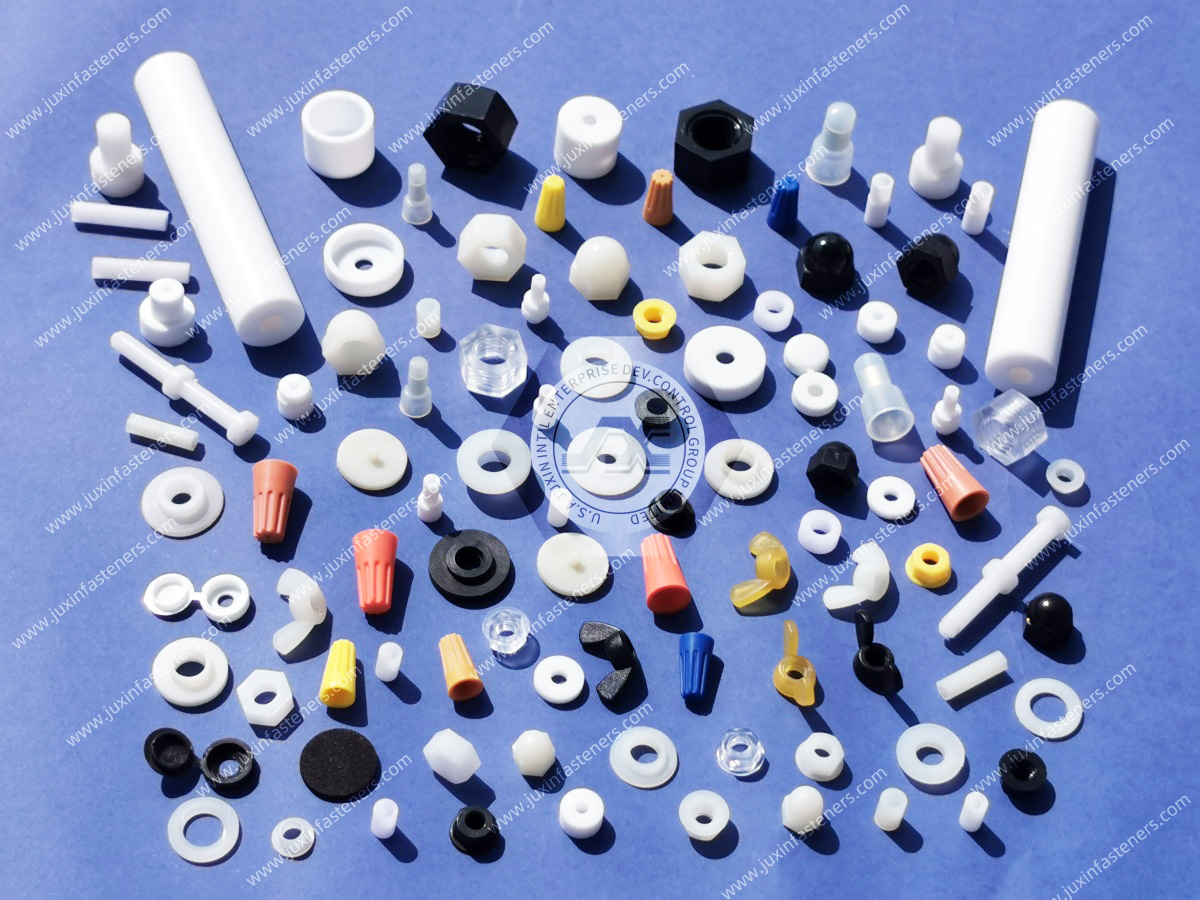
PA6 can also be used for plastic spacer applications.
Its suitability depends on the required:
mechanical performance
moisture behavior
temperature
dimensions
chemical exposure
Both PA6 and PA66 are hygroscopic materials.
Nylon absorbs moisture from the surrounding environment.
Moisture conditioning can influence:
dimensions
stiffness
toughness
compressive behavior
creep
electrical properties
This matters where the spacer controls a precision dimension.
A nylon spacer measured immediately after molding may not behave identically after reaching moisture equilibrium in service.
Therefore, tight-tolerance designs should consider whether the expected environment can materially affect:
length
OD
ID
mechanical behavior
The significance depends on the resin grade, geometry, temperature, humidity, and tolerance requirement.
Glass reinforcement can increase stiffness and modify dimensional behavior.
However, glass-filled nylon should not automatically be described as the correct solution for high compressive preload.
Reinforcement can also affect:
brittleness
impact behavior
anisotropy
molding shrinkage
warpage
surface characteristics
The complete component geometry and application should be evaluated.
POM may be considered where properties such as:
dimensional stability
relatively low moisture absorption
low friction
wear behavior
are important.
However, its suitability must still be reviewed against temperature, chemical exposure, electrical requirements, and other system constraints.
PEEK may be considered for specialized applications involving demanding combinations of:
elevated temperature
chemical exposure
mechanical performance
electrical requirements
Its higher material and manufacturing costs mean that it should be specified where the application justifies those characteristics.
Other polymers may be evaluated for application-specific requirements.
Material selection should not be based on generic statements such as “high temperature plastic” or “chemical resistant plastic.”
The actual grade and environment must be defined.
Plastic spacers may encounter:
oils
lubricants
cleaning chemicals
coolants
solvents
process fluids
humidity
salt-containing environments
Compatibility should be evaluated using:
Polymer Grade + Chemical + Concentration + Temperature + Exposure Time + Mechanical Stress
This is more reliable than assigning universal chemical-resistance labels.
Some electronic and electrical equipment may require polymer components with specific flammability characteristics.
Where applicable, procurement and engineering teams should specify:
required material grade
relevant flammability classification
thickness-related requirements
customer-specific documentation
A generic nylon spacer should not automatically be described as flame retardant.
Likewise:
Nylon ≠ Automatically UL 94 V-0
The actual resin grade and applicable thickness must be verified.
These products are related but solve different engineering problems.
Use when a separate pass-through fastener provides retention and the primary requirement is controlled spacing.
Evaluate when the screw must be separated from the wall of a conductive panel hole.
Use where the spacing component itself must provide a threaded mounting interface.
Use where tool-efficient or screw-free PCB mounting is desired and the board/chassis geometry supports snap retention.
A simplified decision tree is:
Need Controlled Distance + Pass-Through Screw? → Unthreaded Spacer
Need Threaded Mounting at Spacer? → Threaded Standoff
Need Radial Screw-to-Panel Isolation? → Shoulder Washer
Need Tool-Free PCB Retention? → Snap-Fit PCB Support
This distinction helps engineers avoid using the wrong component architecture simply because several products appear visually similar.
| Design Condition | Key Engineering Question | Potential Direction |
|---|---|---|
| PCB spacing | Is exact board separation required? | Define spacer length and full tolerance stack |
| Pass-through screw | What bore clearance is required? | Match ID to actual fastener and assembly tolerance |
| Soft PCB or panel | Is local bearing pressure excessive? | Review OD, flange, or washer |
| High clamp load | Can polymer compression affect spacing? | Review load path and material |
| High humidity | Can nylon conditioning affect dimensions? | Evaluate conditioned-state behavior |
| Wide temperature range | Can differential expansion affect alignment? | Review material CTE and assembly freedom |
| Electrical separation | Does the metal fastener still create a conductive path? | Evaluate complete isolation architecture |
| Dense electronics | Is OD interfering with nearby components? | Optimize OD and wall thickness |
| Precision assembly | Is nominal spacer length sufficient? | Perform tolerance and installed-height review |
| Custom geometry | Are standard ID/OD/length combinations unsuitable? | Drawing-based custom spacer |
This matrix is an engineering starting point rather than a universal specification.
Unthreaded nylon spacers can be used for selected:
PCB mounting
control boards
display modules
electronic enclosures
sensor assemblies
power supplies
instrumentation
Design teams should consider:
board thickness
component clearance
connector alignment
fastener location
board deflection
thermal environment
Potential applications include:
control electronics
auxiliary modules
instrumentation
low-load internal hardware
component separation
Where electrical isolation is a functional requirement, the complete conductive path should be reviewed rather than relying on the spacer alone.
AI servers and high-density computing equipment contain:
large PCBs
accelerator boards
power distribution hardware
cooling structures
cable-management systems
high-density connectors
Plastic spacers may be used in selected electronics and auxiliary assemblies where dimensional control, non-metallic separation, and packaging efficiency are required.
Large boards can make multi-point stack-up and alignment particularly important.
Semiconductor manufacturing, inspection, and test equipment may require specialized plastic spacing components.
Selection can depend on:
dimensional stability
chemical environment
temperature
cleanliness
electrical requirements
customer material specifications
The equipment specification should control material selection.
Plastic tubular spacers may be used in:
LED assemblies
driver modules
housings
control boards
mounting structures
Thermal conditions require particular attention because elevated temperature can affect long-term polymer behavior.
Applications may include:
network hardware
communication modules
rack electronics
PCB assemblies
power equipment
Dense equipment packaging can make OD and installed-height control important.
Potential applications include:
instrumentation
electronic modules
equipment housings
diagnostic hardware
control systems
Cleaning environment, mechanical load, temperature, and equipment-specific material requirements should be defined by the manufacturer.
Plastic spacers may be used in:
sensors
controllers
machine electronics
vision systems
communication modules
instrumentation
Applications may introduce:
vibration
oils
temperature variation
maintenance cycles
which should be considered during material and joint selection.
Potential applications include selected:
inverter electronics
control equipment
monitoring systems
BMS electronics
sensor assemblies
auxiliary hardware
Outdoor or energy-storage environments may add requirements involving moisture, temperature, chemical exposure, UV exposure, or flammability.
Unthreaded plastic spacers can be used in selected:
electronic control units
battery-management electronics
sensor modules
displays
auxiliary electronic hardware
Automotive environments may introduce:
vibration
thermal cycling
humidity
chemicals
customer-specific material requirements
The complete operating environment should therefore be defined during sourcing.
Procurement teams may search for unthreaded nylon spacers because they need to:
replace an existing supplier
qualify a second source
source a discontinued component
reduce supply-chain risk
consolidate plastic hardware suppliers
source a custom spacer
support a new OEM program
A responsible cross-reference should compare more than spacer length.
Depending on the application, compare:
inside diameter
outside diameter
length
ID tolerance
OD tolerance
length tolerance
wall thickness
flange geometry where applicable
material
color
manufacturing method
mating fastener
mating components
operating environment
A “10 mm nylon spacer” is not automatically interchangeable with every other 10 mm spacer.
Two spacers can have the same nominal length but different:
tolerances
ID
OD
material
compression behavior
moisture response
If the application is sensitive to installed spacing, these differences matter.
For second-source sourcing, customers can submit:
current manufacturer
current part number
OEM internal part number
drawing
physical sample
application information
Juxin Fasteners can review dimensional and material requirements to identify a candidate standard component or determine whether a custom part is more appropriate.
Physical samples can help evaluate:
ID
OD
length
end-face geometry
surface condition
color
material characteristics
fit with the mating fastener
assembly behavior
For critical applications, samples should be tested in the customer's actual or representative assembly.
Depending on the application, validation may include:
screw pass-through
fit
installed height
alignment
compression
board or panel position
tightening behavior
environmental conditioning
long-term functional testing
Validation requirements should follow the actual equipment design.
Standard spacer dimensions do not satisfy every OEM assembly.
Custom plastic spacers may be appropriate when the project requires:
non-standard length
non-standard ID
non-standard OD
unusual wall thickness
flange geometry
stepped geometry
anti-rotation profile
integrated locating feature
special material
customer-specific tolerances
Juxin Fasteners can review custom spacer requirements from:
2D engineering drawings
3D CAD models
physical samples
existing manufacturer part numbers
mating-component information
A custom spacer drawing should identify functional dimensions rather than over-constraining non-critical geometry.
Typical critical dimensions can include:
ID
OD
length
flange dimensions
step dimensions
relevant tolerances
The drawing can also specify:
material
color
surface requirements
application-specific notes
required documentation
Depending on:
geometry
polymer
quantity
tolerance
annual volume
tooling economics
different manufacturing approaches may be appropriate.
Simple tubular spacer geometry and complex molded spacer geometry do not necessarily require the same process.
For custom projects, manufacturing strategy should be selected according to engineering and commercial requirements rather than assumed from the product name.
Depending on the project, procurement teams may request:
material identification
resin information
dimensional inspection
lot identification
lot traceability
RoHS documentation
REACH documentation
flammability information where applicable
customer-specific documentation
Required documentation should be defined during the RFQ and confirmed for the actual product.
For efficient technical and commercial evaluation, provide as much of the following as available:
current manufacturer
current part number
OEM internal part number
drawing
physical sample
inside diameter
outside diameter
length
dimensional tolerances
flange dimensions if applicable
step dimensions if applicable
mating screw or bolt
fastener material
mating component materials
required spacing
required clamp function
material
color
operating temperature
humidity / moisture exposure
chemical exposure
electrical requirements
vibration conditions
flammability requirements where applicable
required compliance documentation
sample quantity
order quantity
estimated annual volume
packaging requirements
For precision assemblies, providing the surrounding stack-up dimensions can significantly improve engineering review.
For a new spacer application:
Required Separation → Assembly Stack → Fastener → ID → OD → Length → Material → Load Review → Environmental Review → Tolerance Analysis → Sample → Assembly Validation → Production RFQ
For a PCB application:
Board Geometry → Required PCB Height → Fastener Architecture → Spacer Geometry → Component Clearance
→ Stack-Up → Sample → Board-Level Validation → Production
For a second-source project:
Existing Part → ID / OD / Length Review → Material Review → Mating Hardware Review → Candidate Cross-Reference
→ Physical Sample → Assembly Validation → Supplier Qualification → Production RFQ
For a custom spacer:
2D/3D Drawing + Mating Components → Engineering / DFM Review → Material & Tolerance Review → Manufacturing Strategy → Sample → Customer Validation → Qualification → Production
Unthreaded spacers should be connected internally to other plastic hardware according to the engineering function.
Related Juxin Fasteners solutions include:
Nylon Machine Screws for pass-through or all-polymer fastening assemblies
Nylon Hex Nuts for completing selected non-metallic threaded joints
Nylon Flat Washers for bearing-area distribution and surface separation
Insulating Shoulder Washers where radial screw-to-panel separation is required
Plastic Standoffs where the spacing component must provide a threaded mounting interface
Snap-Fit PCB Supports where tool-free circuit-board retention is preferred
Custom Molded Plastic Fasteners for integrated or non-standard spacer geometries
AI Server Plastic Hardware for high-density electronics and computing infrastructure
The internal-link decision path should follow the assembly problem:
Need spacing with pass-through screw? → Unthreaded Nylon Spacer
Need threaded spacing? → Plastic Standoff
Need face load distribution? → Nylon Flat Washer
Need screw isolation through a metal panel? → Insulating Shoulder Washer
Need snap-in PCB mounting? → Snap-Fit PCB Support
Need non-standard geometry? → Custom Molded Plastic Fasteners
Juxin Fasteners supplies standard and custom unthreaded nylon spacers, plastic tubular spacers, spacer sleeves, mounting pillars,
nylon washers, plastic standoffs, PCB supports, nylon screws, nuts, and other polymer fastening components for industrial OEM applications.
Engineering, procurement, supplier-development, and supply-chain teams can submit:
existing manufacturer part numbers
OEM internal part numbers
physical samples
2D drawings
3D CAD models
ID / OD / length requirements
mating fastener information
assembly stack dimensions
material requirements
operating conditions
estimated annual volume
for technical and commercial evaluation.
For a new spacer application, the key question is not simply:
“What length nylon spacer do I need?”
A better engineering question is:
“What installed distance must be maintained between the components, what fastener passes through the spacer,
what compressive load enters the spacer, and how will material, temperature, moisture, and tolerances affect that distance over time?”
For second-source qualification, matching nominal spacer length is only the beginning.
The more reliable sourcing path is:
ID + OD + Length + Tolerances + Material + Mating Fastener + Load Path + Environment + Assembly Validation
This approach creates a clearer path from engineering search and product selection to sample evaluation, supplier qualification, custom development, and production sourcing.
Email: info@juxinfasteners.com
Website: www.juxinfasteners.com
 MORE NEWS
Sep. 27, 2026
Sep. 27, 2026
Sep. 27, 2026
Contact Us
Tel.:
+86 020 8621 0320
+86 020 3121 6067
E-mail:
Technical Support:
Navigation
SEND INQUIREY