
Call Us
+86 136 6007 9809
Call Us
+86 136 6007 9809

Nov. 06, 2023
High-strength hex head screws and hex bolts are widely used in industrial machinery, automotive equipment, automation systems,
power equipment and drawing-controlled OEM assemblies where a conventional external hex drive must provide reliable mechanical performance.
However, specifying a high-strength hex fastener requires more than writing:
“M10 × 50, Class 10.9.”
Engineers must determine the dimensional standard, threaded or partially threaded configuration, thread pitch, grip length, property class, mating nut, coating, friction condition and installation requirements.
Procurement and supplier-development teams must then convert those engineering requirements into a sourcing specification that clearly defines what can and cannot be substituted.
For metric carbon and alloy steel fasteners, internationally recognized standards such as ISO 4014, ISO 4017 and ISO 898-1 provide an important framework for dimensional and mechanical requirements.
This guide explains how to select high-strength hex head screws, high-strength hex bolts, Class 8.8 hex bolts, Class 10.9 hex bolts and custom hex head fasteners for industrial OEM applications.
A hex head screw is an externally threaded fastener with a six-sided external head designed for tightening with a wrench, socket or powered assembly tool.
Depending on the applicable standard and regional terminology, similar products may be described commercially as:
hex head screws;
hex bolts;
hexagon head screws;
metric hex bolts;
high-strength hex bolts;
or high-tensile hex bolts.
For engineering and procurement purposes, the product name alone is not enough.
The specification should establish:
applicable dimensional standard;
nominal diameter;
overall length;
thread pitch;
thread length;
property class;
material requirements where controlled;
surface treatment;
and mating components.
In everyday industrial purchasing, hex bolt and hex head screw are often used interchangeably.
That does not mean every product carrying those descriptions has identical geometry.
The more reliable sourcing method is to specify the applicable dimensional standard and drawing requirements rather than relying on the commercial name alone.
For metric products, two important standards are:
ISO 4014 — hexagon head bolts with defined partially threaded configurations within its scope;
ISO 4017 — hexagon head screws with full thread configurations within its scope.
This distinction can materially affect the joint.
A supplier should therefore not substitute an ISO 4017 fully threaded product for an ISO 4014 partially threaded product simply because:
diameter + length + property class are identical.
The difference between ISO 4014 and ISO 4017 is particularly important for engineers managing grip length and shear-plane location.
ISO 4014 products use a partially threaded configuration within the applicable dimensional range.
The unthreaded shank can be functionally important when:
the joint requires a defined grip length;
the shear plane is intended to pass through the smooth shank;
locating behavior matters;
or the customer drawing controls thread runout and thread length.
ISO 4017 products use a fully threaded configuration within the applicable scope.
They can be useful where:
full thread engagement is required along the available length;
varying grip conditions exist;
or the assembly architecture specifically calls for a fully threaded fastener.
Neither configuration is inherently superior.
The correct selection depends on the joint.
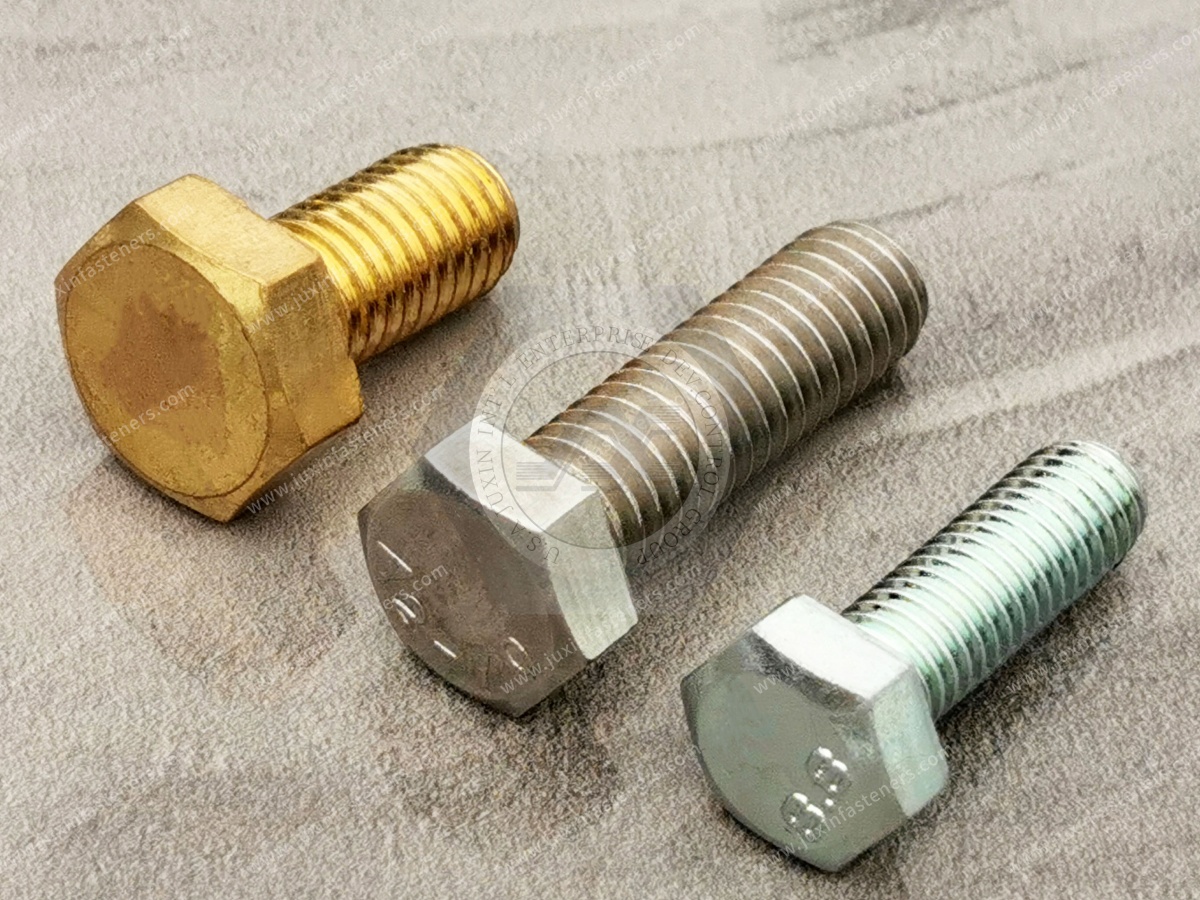
Consider two RFQ descriptions:
M10 × 50 – Class 10.9 – ISO 4014
and
M10 × 50 – Class 10.9 – ISO 4017
They share:
nominal diameter;
nominal length;
and property class.
But they are not automatically interchangeable.
Their threaded and unthreaded geometry can change:
effective grip;
shear-plane location;
thread engagement;
stiffness;
assembly behavior;
and the customer's validated joint configuration.
For supplier-development teams, this creates an important rule:
Fastener interchangeability must be evaluated by standard and geometry, not only diameter, length and strength class.
For applicable metric carbon and alloy steel bolts, screws and studs, ISO 898-1 defines mechanical property classes.
Common high-strength classes include:
8.8;
10.9;
and 12.9 for applicable fastener products.
For conventional high-strength industrial hex head fasteners, Classes 8.8 and 10.9 are particularly common sourcing requirements.
The property class defines mechanical characteristics. It does not define:
head geometry;
thread length;
coating;
corrosion resistance;
locking function;
or application qualification.
These requirements must be specified separately.
Property Class 8.8 has a nominal tensile strength of approximately 800 MPa within the applicable ISO 898-1 framework.
Class 8.8 hex fasteners are widely used in industrial machinery and engineered assemblies where their mechanical properties satisfy the calculated joint requirements.
Potential applications include:
machinery frames;
motors;
pumps;
industrial equipment;
automation systems;
fabricated brackets;
production machinery;
material-handling equipment;
and general OEM mechanical assemblies.
Class 8.8 should not be described simply as a lower-quality version of 10.9.
If the joint has been correctly designed for 8.8, changing to a higher property class may provide no useful benefit and may change other aspects of manufacturing and assembly.
Property Class 10.9 has a nominal tensile strength of approximately 1,000 MPa within the applicable ISO 898-1 framework.
Class 10.9 may be specified where the joint requires higher mechanical properties.
Potential applications can include:
high-load machinery;
vehicle equipment;
drivetrain-related assemblies;
heavy-duty brackets;
industrial production equipment;
hydraulic equipment mounting;
power equipment;
and drawing-controlled OEM assemblies.
However:
10.9 does not automatically mean safety-critical.
Safety classification depends on the actual product application, engineering design, customer specification, validation and quality requirements.
A generic Class 10.9 hex bolt should therefore never be marketed as automatically approved for a safety-critical automotive or structural joint.
| Engineering Factor | Class 8.8 | Class 10.9 |
|---|---|---|
| Nominal Tensile Strength | ~800 MPa | ~1,000 MPa |
| Typical Selection | General high-strength engineered joints | Higher-load engineered joints |
| Preload Capability | Application-dependent | Higher potential within appropriate joint design |
| Heat Treatment | According to applicable mechanical requirements | Requires controlled processing to achieve applicable properties |
| Coating Review | Required | Particularly important for high-strength applications |
| Mating Nut | Must be compatible | Must be compatible |
| Installation | Joint-specific | Joint-specific |
| Automatic Anti-Loosening? | No | No |
The selection should follow joint requirements rather than the assumption that the highest property class is automatically preferable.
Class 12.9 provides higher mechanical properties and is commonly encountered in selected high-strength fastener applications.
However, a higher property class can also require greater attention to:
hydrogen embrittlement;
surface damage;
notch sensitivity;
coating process;
installation control;
and environmental exposure.
If the application genuinely requires Class 12.9, it should be specified according to the applicable product standard and engineering requirements.
A buyer should not upgrade from 10.9 to 12.9 solely because the number is higher.
Recommended Internal Link: High-Strength Bolts → relevant JUXIN FASTENERS engineering guide
High-strength carbon and alloy steel fasteners can be produced using suitable steels selected according to:
property class;
fastener diameter;
geometry;
hardenability;
heat-treatment response;
manufacturing process;
coating;
and customer requirements.
Not every Class 8.8 or 10.9 bolt must use one universal raw-material grade.
This creates an important distinction for OEM drawings.
The drawing controls:
property class;
dimensions;
thread;
coating;
and functional performance.
The manufacturer may have flexibility to select an appropriate material capable of meeting those requirements.
The drawing additionally controls a specific material grade or chemistry.
This may be necessary for validated OEM applications, specific heat-treatment requirements or other technical reasons.
Procurement should understand which requirement applies before restricting the supply base.
For many high-strength steel hex fasteners, final mechanical properties depend strongly on controlled heat treatment.
Important characteristics can include:
tensile strength;
yield or proof-related properties;
hardness;
toughness;
microstructure;
and decarburization control.
The engineering objective is not maximum hardness.
It is the correct combination of properties required by the applicable fastener specification.
Thread pitch affects more than installation speed.
Engineers may need to evaluate:
tensile stress area;
thread engagement;
adjustment resolution;
stripping behavior;
available mating material;
fatigue considerations;
manufacturing availability;
and assembly process.
Coarse metric threads are commonly selected for general industrial fastening.
Potential advantages include:
widespread availability;
faster axial travel during installation;
robust general-purpose assembly;
and practical engagement in many industrial materials.
Fine threads provide a different thread geometry and greater tensile stress area for the same nominal diameter in certain comparisons.
They may be useful where:
fine adjustment is required;
joint geometry benefits from the selected pitch;
a particular tensile-area requirement exists;
or an OEM drawing specifies the fine pitch.
However, fine threads should not automatically be described as “anti-loosening.”
Loosening behavior depends on the complete joint.
A common oversimplification is:
Fine thread = better vibration resistance = no locking system required.
That conclusion is not reliable.
Self-loosening can depend on:
transverse movement;
preload;
joint stiffness;
friction;
settlement;
vibration amplitude;
and bearing-interface behavior.
If an application requires resistance to unintended rotation, engineers should evaluate a validated locking strategy separately.
Possible solutions may include:
prevailing-torque lock nuts;
all-metal lock nuts;
nylon insert lock nuts where suitable;
mechanical locking systems;
or another application-specific method.
Recommended Internal Link: Lock Nuts → relevant JUXIN FASTENERS page
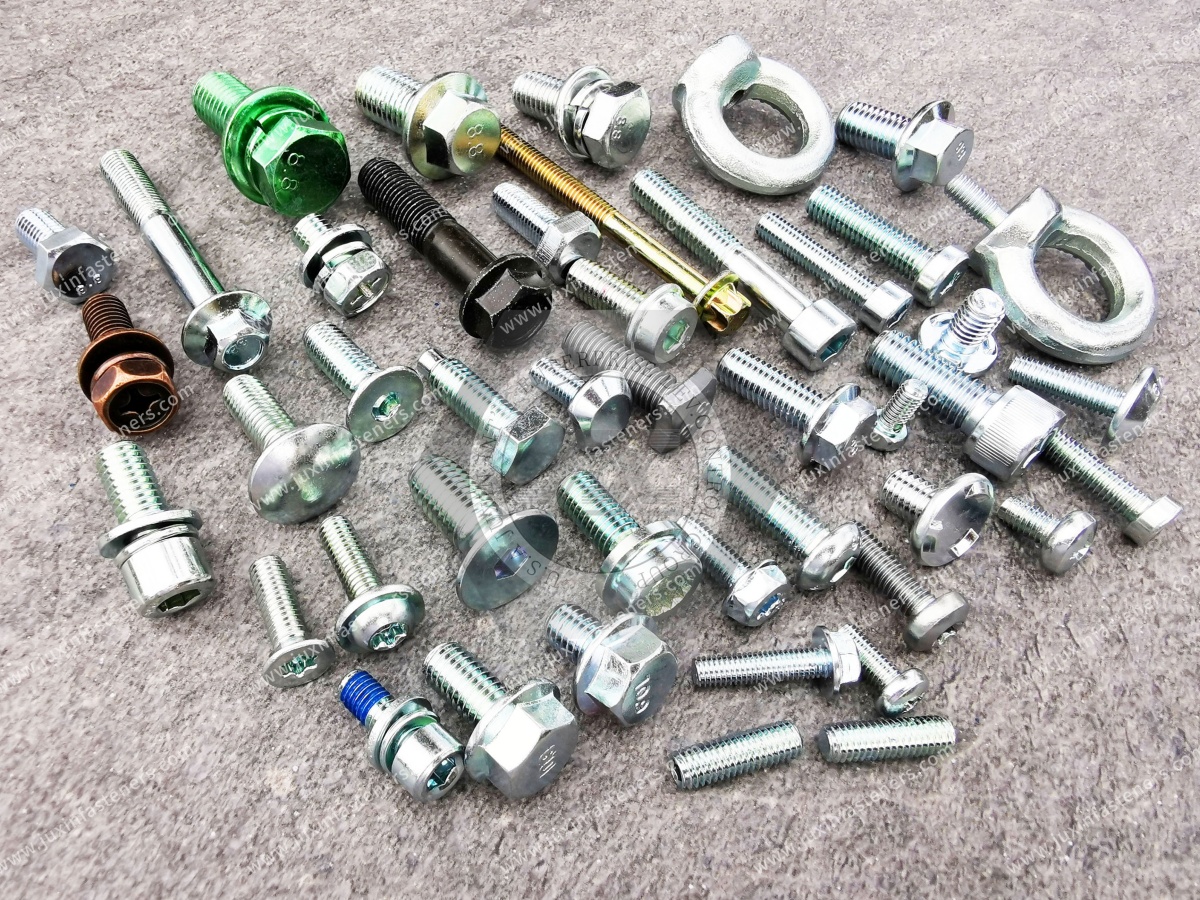
The amount of thread along the bolt length can directly affect joint behavior.
A partially threaded bolt provides a smooth shank through part of the grip.
A fully threaded screw places thread geometry through most or all of the available shank.
Important engineering questions include:
Where is the shear plane?
What is the required grip length?
Is locating accuracy important?
Does the joint experience bending?
How much thread engagement is required?
Where will thread runout fall relative to the clamped components?
These questions should be answered before selecting ISO 4014 or ISO 4017.
For many commodity fasteners, thread length is treated as a standard dimensional feature.
For an OEM joint, however, the location where full thread transitions into the unthreaded shank can become functionally important.
If the thread runout falls:
inside a shear plane;
directly at a critical interface;
or where a component is intended to locate on the smooth shank,
joint behavior can differ from the intended design.
For special or drawing-controlled hex bolts, engineers should therefore define the required grip length and thread length, not only overall bolt length.
A high-strength hex bolt must be used with a suitable mating nut.
Important parameters include:
thread diameter;
pitch;
thread tolerance;
bolt property class;
nut property class;
effective engagement;
material;
coating;
and installation method.
For applicable metric carbon and alloy steel nuts, ISO 898-2 provides mechanical-property requirements.
An RFQ that specifies:
M12 × 70 Class 10.9 bolt + nut
may still be incomplete.
The mating nut standard and required mechanical properties should be identified.
Recommended Internal Link: Hex Nuts → relevant JUXIN FASTENERS engineering guide
Recommended Internal Link: High-Strength Bolts and Nuts → relevant JUXIN FASTENERS engineering guide
A high-strength hex bolt is often installed using torque-controlled equipment, but torque itself is not the final joint objective.
Tightening creates bolt tension and clamp load.
The relationship between applied torque and achieved preload is strongly influenced by friction at:
the threads;
the underside of the bolt head;
and the nut bearing interface.
Therefore, the same Class 10.9 bolt tightened to the same nominal torque can produce different preload when:
coating changes;
lubrication changes;
surface condition changes;
mating nut changes;
or bearing conditions change.
For controlled OEM assembly, the tightening specification and fastener surface condition must be considered together.
Zinc-based finishes are widely used on carbon and alloy steel fasteners where corrosion protection is required.
However, high-strength fasteners require careful process selection.
The engineering review should consider:
required corrosion resistance;
coating thickness;
thread fit;
friction;
hydrogen introduction risk;
post-treatment requirements where applicable;
and customer specification.
A finish that is suitable for a lower-strength commodity screw should not automatically be transferred to a higher-strength bolt.
Zinc-nickel coating systems are used in various OEM applications where enhanced corrosion performance is required.
They may be relevant to:
automotive components;
transportation equipment;
outdoor machinery;
industrial equipment;
and corrosion-exposed assemblies.
But zinc-nickel is not one universal specification.
The RFQ should define the applicable requirements for:
coating system;
thickness;
passivation or topcoat where applicable;
corrosion performance;
friction;
appearance if controlled;
and customer/OEM specification.
Zinc-flake coating systems are widely used in applications requiring corrosion protection without relying on a conventional electrolytic zinc deposit.
Depending on the specific coating system and specification, they may provide useful performance for:
automotive equipment;
transportation systems;
industrial machinery;
construction equipment;
outdoor assemblies;
and high-strength steel fasteners.
The coating should be selected according to the actual technical specification rather than by generic trade-name recognition.
“Dacromet” is a well-known commercial coating name that has historically been used broadly in fastener discussions.
For modern OEM sourcing, however, the more technically useful description is normally the required zinc-flake coating system and performance specification rather than simply requesting “Dacromet.”
This matters because different coating systems can vary in:
corrosion performance;
friction;
coating thickness;
topcoat;
temperature behavior;
appearance;
and process requirements.
A buyer should therefore specify the required performance or approved coating system rather than assuming all zinc-flake coatings are interchangeable.
For high-strength hex fasteners, coating selection can directly influence assembly preload.
If an OEM production line uses a fixed tightening torque and procurement changes from one coating system to another, friction may change.
The result can be:
Same Bolt + Same Torque + Different Coating = Different Preload
This can lead to:
insufficient clamp load;
excessive bolt tension;
joint variation;
or inconsistent assembly performance.
Therefore, coating substitutions should be reviewed by engineering when the assembly process depends on controlled torque.
High-strength steel fasteners require particular attention to hydrogen embrittlement.
Hydrogen can be introduced during certain:
cleaning processes;
acid treatments;
electroplating processes;
manufacturing operations;
or service environments.
A susceptible high-strength bolt under sustained tensile stress can experience delayed brittle fracture.
Risk depends on interacting factors such as:
fastener hardness;
material strength;
hydrogen exposure;
coating process;
residual stress;
applied stress;
geometry;
and service environment.
This is one reason coating selection becomes increasingly important as fastener strength increases.
Neither Class 8.8 nor Class 10.9 creates a locking mechanism.
A joint can loosen because of:
insufficient preload;
transverse movement;
vibration;
settlement;
embedment;
thermal cycling;
or inappropriate joint design.
Increasing the bolt property class alone may not solve the root cause.
If the assembly requires a locking function, specify it separately.
High-strength hex bolts and screws may be used in automotive and transportation assemblies where specified by the applicable OEM drawing.
Potential applications include:
equipment brackets;
chassis-related components;
drivetrain-related assemblies;
suspension-related equipment;
seat structures;
battery-system mounting;
and other mechanical modules.
However, an off-the-shelf Class 10.9 bolt should not automatically be represented as suitable for a safety-critical automotive application.
The actual requirement may involve:
customer-specific dimensions;
controlled material;
coating specification;
friction range;
mechanical testing;
traceability;
documentation;
and supplier qualification.
Recommended Internal Link: Automotive Fasteners → relevant JUXIN FASTENERS page
High-strength hex fasteners are widely used in:
machine frames;
CNC equipment;
motors;
pumps;
gearboxes;
conveyor equipment;
automation systems;
robotic equipment;
industrial fixtures;
and production machinery.
Selection should consider:
static load;
fatigue;
vibration;
grip length;
maintenance;
corrosion;
and installation method.
For automated assembly, dimensional consistency and surface friction can be especially important because fastener variation can affect feeding, tightening and process control.
Hex head screws and bolts are commonly used for mounting and structural connections in:
pumps;
hydraulic equipment;
valve assemblies;
fluid-handling equipment;
and industrial process machinery.
However, a standard hex bolt should not automatically be treated as a pressure-boundary fastener.
Pressure-containing assemblies may require application-specific material, temperature, pressure and code requirements.
Those requirements must be defined separately from the generic bolt property class.
Potential applications include:
power-conversion equipment;
industrial electrical equipment;
energy-storage systems;
renewable-energy equipment;
motor assemblies;
support structures;
and power-distribution equipment.
Outdoor or demanding environments may require additional corrosion protection.
Mechanical strength, coating and environmental resistance should therefore be specified together.
A Class 8.8 or 10.9 hex head bolt is not automatically a structural bolting assembly.
Structural steel projects can require dedicated systems governing:
bolt geometry;
nut and washer combinations;
preload;
installation;
inspection;
marking;
and assembly performance.
European structural applications may involve applicable systems such as EN 14399 or EN 15048, depending on joint design.
North American projects may use applicable ASTM structural bolting specifications together with structural design and installation requirements.
If the application is structural, procurement should identify the complete required bolting system rather than sourcing a generic ISO 4014 or ISO 4017 fastener by strength class alone.
Before specifying a high-strength hex head screw or bolt, confirm:
What is the joint function?
What loads act on the joint?
Is fatigue significant?
Is vibration present?
What bolt diameter is required?
What overall length is required?
What grip length is required?
Is full or partial thread required?
Where does the shear plane fall?
What thread pitch is required?
Which dimensional standard applies?
Is ISO 4014 or ISO 4017 appropriate?
What property class is required?
What mating nut is required?
Is a washer required?
What material requirements apply?
What coating is required?
What corrosion environment exists?
What friction condition is required?
Could hydrogen embrittlement be a concern?
What tightening method is used?
Is a locking function required?
Is the joint qualification-controlled?
What inspection and documentation are required?
For efficient sourcing of hex head screws, high-strength hex bolts, Class 8.8 bolts, Class 10.9 bolts or custom hex fasteners, provide as much of the following information as applicable:
applicable ISO, DIN, EN, ASME, ASTM or SAE standard;
customer drawing;
nominal diameter;
overall length;
grip length;
thread length;
thread pitch;
thread tolerance/class;
full or partial thread requirement;
bolt property class;
mating nut specification;
washer specification;
material requirement if controlled;
heat-treatment requirement if separately controlled;
coating or surface treatment;
corrosion requirement;
friction requirement where applicable;
tightening requirement;
quantity per order;
estimated annual demand;
application;
operating environment;
inspection requirements;
documentation requirements;
marking requirements;
traceability requirements where applicable;
and packaging requirements.
Two black, silver or zinc-flake-coated hex bolts may look nearly identical while having different:
property classes;
thread pitches;
thread lengths;
materials;
coating systems;
friction characteristics;
hardness;
and application approvals.
Visual similarity is therefore not evidence of technical interchangeability.
For supplier changes or cost-reduction projects, procurement should compare:
Drawing + Standard + Geometry + Mechanical Properties + Coating + Friction + Mating Components + Documentation
rather than relying on product appearance or a short commercial description.
A standardized ISO or DIN fastener is normally preferable when it satisfies the required:
head geometry;
diameter;
length;
thread;
thread length;
property class;
and surface finish.
Standardization can improve:
availability;
sourcing flexibility;
inspection;
inventory management;
replacement;
and multi-supplier procurement.
A custom hex head fastener may be justified when the application requires:
special head dimensions;
non-standard overall length;
controlled grip length;
special thread length;
reduced or enlarged head;
shoulder geometry;
special tip or tail;
anti-rotation features;
captive washer arrangement;
application-specific coating;
or another drawing-controlled feature.
For custom high-strength fasteners, manufacturing feasibility should be reviewed together with forming, machining, heat treatment and surface finishing.
JUXIN FASTENERS supplies industrial fasteners for B2B, OEM and drawing-controlled sourcing requirements.
Our relevant product scope includes:
hex head screws;
high-strength hex bolts;
Class 8.8 bolts;
Class 10.9 bolts;
flange bolts;
special bolts;
automotive fasteners;
stainless steel fasteners;
high-strength nuts;
lock nuts;
weld fasteners;
and custom made-to-drawing fastening components.
For standard hex head fasteners, requirements can be reviewed against the applicable international standard, thread, property class, material requirement and surface treatment.
For custom bolts and screws, feasibility depends on:
drawing geometry;
dimensions;
thread specification;
property class;
material;
heat treatment;
tolerance;
coating;
quantity;
and application.
Customers can submit a 2D drawing, technical specification or sample information for technical review.
Depending on the project, review may include:
ISO/DIN standard selection;
fully threaded vs. partially threaded configuration;
grip and thread length;
property class;
material requirements;
bolt and nut compatibility;
manufacturing feasibility;
heat treatment;
coating;
critical dimensions;
inspection;
and production-volume requirements.
Recommended Internal Link: High-Strength Bolts → relevant JUXIN FASTENERS engineering guide
For broader selection of Classes 8.8, 10.9 and 12.9, materials, coatings, failure risks and high-strength bolt engineering.
Recommended Internal Link: High-Strength Bolts and Nuts → relevant JUXIN FASTENERS engineering guide
For complete bolted-joint design, preload and bolt/nut compatibility.
Recommended Internal Link: Hex Nuts → relevant JUXIN FASTENERS engineering guide
For mating nut standards, materials and mechanical-property selection.
Recommended Internal Link: Lock Nuts → relevant JUXIN FASTENERS page
For applications requiring resistance to unintended rotational loosening.
Recommended Internal Link: Automotive Fasteners → relevant JUXIN FASTENERS page
For drawing-controlled automotive and transportation fastening requirements.
Recommended Internal Link: Custom Fasteners → relevant JUXIN FASTENERS page
For special hex bolt geometry, controlled grip lengths and made-to-drawing OEM components.
If your project requires hex head screws, high-strength hex bolts, Class 8.8 bolts, Class 10.9 bolts, ISO 4014 hex bolts, ISO 4017 hex head screws,
zinc-flake coated bolts or custom made-to-drawing fasteners, send JUXIN FASTENERS your drawing or technical specification for review.
For faster engineering and commercial evaluation, include:
Standard + diameter + overall length + grip/thread length + thread pitch + property class + mating nut + material requirements
+ coating + friction requirement where applicable + quantity + annual demand + application + inspection/documentation requirements.
For non-standard OEM fasteners, a controlled 2D drawing is normally the most effective starting point for reviewing functional geometry,
critical dimensions, tolerances and manufacturing feasibility.
JUXIN FASTENERS
B2B Industrial Fasteners | OEM & Custom Fastening Components
Website: www.juxinfasteners.com
Email: info@juxinfasteners.com
 MORE NEWS


Oct. 13, 2026
Contact Us
Tel.:
+86 020 8621 0320
+86 020 3121 6067
E-mail:
Technical Support:
Navigation
SEND INQUIREY