
Call Us
+86 136 6007 9809
Call Us
+86 136 6007 9809

Apr. 21, 2026
How to Prevent Incomplete Welds in Stud Welding
Engineering Solutions Using Flanged CD Weld Studs (Inch / Metric)
In high-precision manufacturing industries such as rail transit, automotive, and power equipment, stud welding is widely recognized as a fast, efficient, and reliable joining method. However, one persistent issue continues to affect production quality and operational safety:
Incomplete stud welds (cold welds)
A single incomplete weld can result in reduced joint strength, unstable electrical conductivity, assembly failure, or even structural risk. For OEM manufacturers and procurement engineers, this is not just a welding issue—it is a cost, quality, and reliability challenge.
This article provides a practical, engineering-focused solution to eliminate incomplete welds by combining process optimization with high-quality Flanged CD Weld Studs (Inch / Metric).
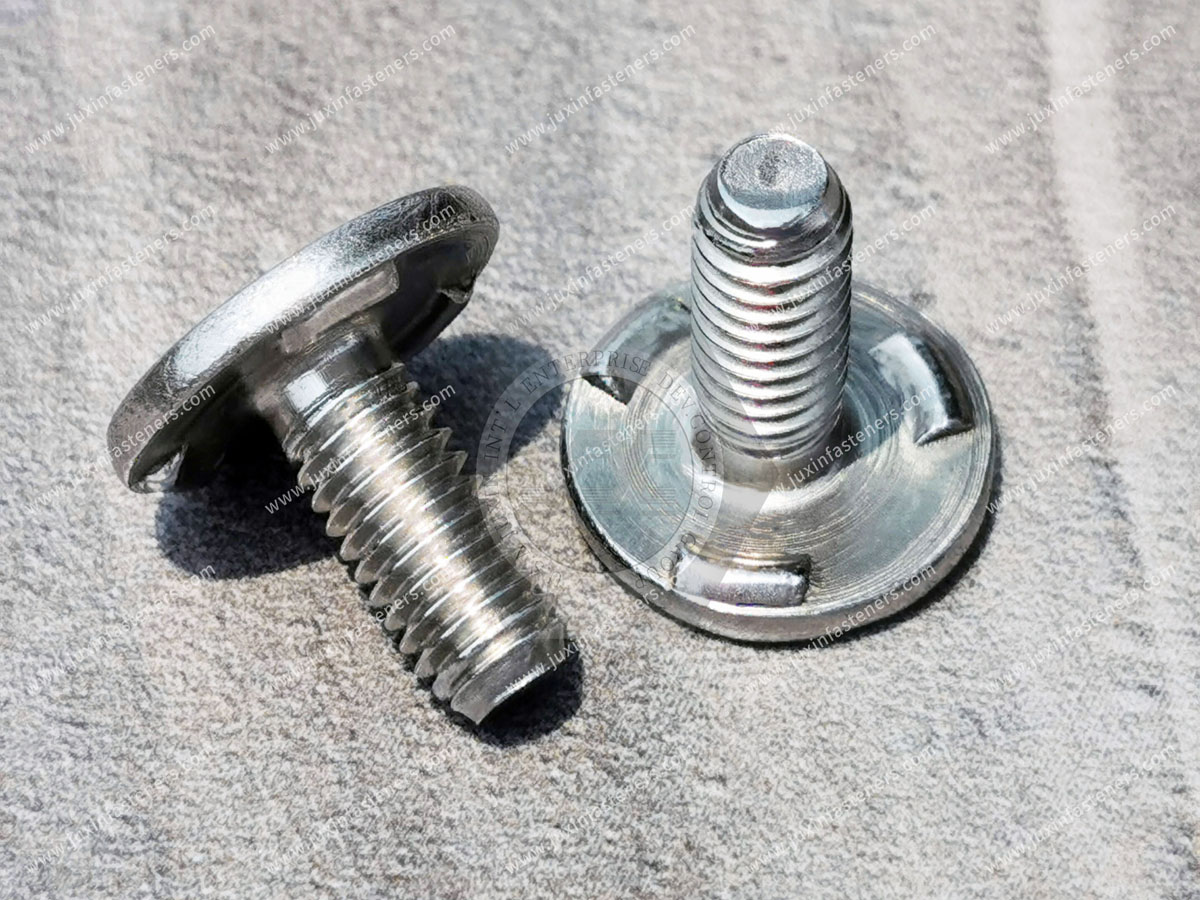
What Is an Incomplete Stud Weld?
An incomplete weld occurs when the stud fails to form a proper metallurgical bond with the base material. Common symptoms include:
Low pull-out strength
Poor fusion or partial bonding
Electrical resistance instability
Visible gaps or weak weld zones
Why Incomplete Welds Occur in Stud Welding
1. Incorrect Welding Parameters
Improper settings in:
Welding current
Voltage
Welding time
can result in:
Insufficient energy → weak bonding
Excessive energy → burn-off or deformation
2. Poor Quality Weld Studs or Materials
Low-quality or inconsistent studs can directly lead to weld failure:
Oxidized surfaces
Poor conductivity
Dimensional inconsistency (affecting arc stability)
This is why high-quality Flanged CD Weld Studs with controlled material composition and copper coating are critical.
3. Surface Contamination
Oil, rust, or oxide layers on:
Studs
Base materials
can prevent proper fusion.
4. Equipment Instability
Unstable power output
Insufficient clamping force
Worn welding guns
All lead to inconsistent weld quality.
5. Process & Positioning Errors
Stud misalignment
Movement during welding
Poor fixture design
These issues are common in manual or semi-automated setups.
6. Environmental Factors
High humidity
Airflow interference
Outdoor welding conditions
These factors affect arc stability and weld integrity.
Proven Engineering Solutions to Eliminate Incomplete Welds
1. Optimize Welding Parameters for CD Stud Welding
For Capacitor Discharge (CD) Stud Welding, precision is everything.
Adjust current and voltage based on:
Material type (steel, stainless steel, aluminum)
Thickness of substrate
Optimize welding time (milliseconds range)
Use trial welds to define parameter windows
CD welding provides low heat input and high repeatability, making it ideal for thin materials.
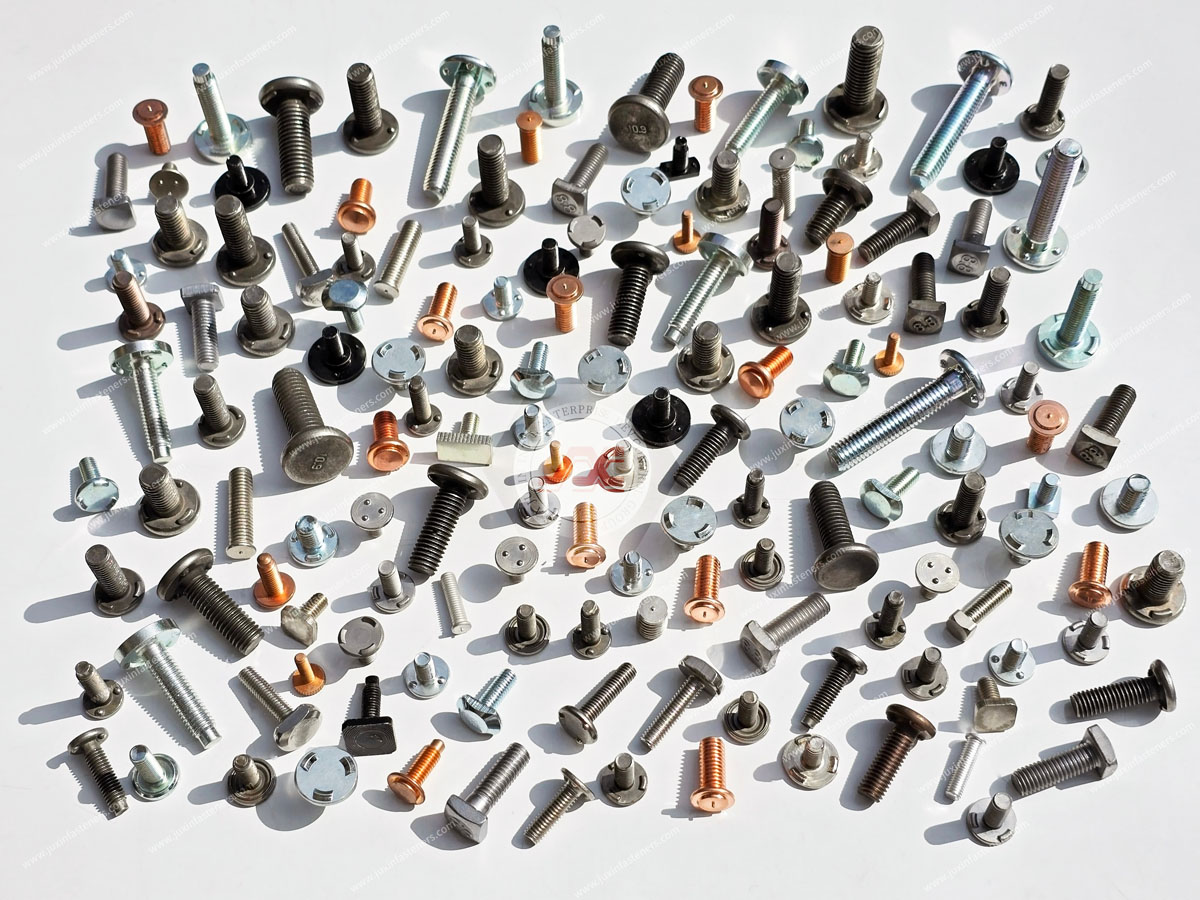
2. Use High-Quality Flanged CD Weld Studs (Inch / Metric)
The choice of stud directly determines the success of welding.
Product Advantages:
Copper-coated mild steel weld studs → enhanced conductivity
Stainless steel weld studs → corrosion resistance
Aluminum/brass studs → lightweight applications
Flanged head design → improved weld stability and load distribution
Available in:
Inch CD weld studs
Metric CD weld studs
External/internal thread or unthreaded options
Consistent geometry ensures:
Stable arc initiation
Uniform energy distribution
Reduced risk of cold welds
3. Ensure Proper Surface Preparation
Before welding:
Remove oil, rust, and oxidation
Clean using mechanical or chemical methods
Ensure metal-to-metal contact
Clean surfaces = strong metallurgical bonding
4. Maintain and Calibrate Welding Equipment
Regular inspection of:
Welding guns
Power supply stability
Clamping force
Calibrate equipment periodically
Replace worn components immediately
Stable equipment = consistent weld energy
5. Improve Process Control & Automation
Robotic & Automated Stud Welding Systems
CNC or robotic welding arms
Laser positioning systems
Automatic stud feeding
Benefits:
Eliminates human error
Ensures consistent positioning
Improves repeatability
6. Use Fixtures & Positioning Tools
Dedicated welding fixtures
Anti-movement positioning systems
Prevents:
Stud shifting
Misalignment
Incomplete fusion
7. Control the Welding Environment
Avoid high humidity and airflow
Use shielding (especially for sensitive materials)
Implement protective measures in outdoor conditions
Quality Control Strategy: Prevent Before It Happens
1. Pre-Welding Control
Material inspection (studs & base metal)
Trial welding & parameter validation
Operator training
2. In-Process Monitoring
Real-time monitoring of:
Current
Voltage
Welding time
Data recording for traceability
Advanced factories use:
Infrared monitoring
Digital welding systems
3. Post-Weld Inspection
Visual inspection
Bend testing
Ultrasonic or X-ray testing
Ensures weld integrity and reliability
Real-World Application Improvements
Automotive Industry Case
Problem: Weak welds due to low current
Solution:
Increased welding current
Operator retraining
Result: Significant reduction in incomplete welds
Shipbuilding Industry Case
Problem: Stud movement during welding
Solution:
Installation of precision fixtures
Result: Stable positioning, improved weld quality
Power Equipment Manufacturing
Problem: Oxidation affecting weld contact
Solution:
Improved surface cleaning process
Result: Reliable electrical and mechanical performance
Why Flanged CD Weld Studs Are the Best Choice for Quality Control
Compared to traditional studs, Flanged CD Weld Studs (Inch / Metric) offer:
Faster welding cycles
Lower heat distortion
Higher consistency in automated systems
Better weld integrity on thin and coated materials
For engineers and procurement teams, this means:
Lower defect rates
Reduced downtime
Higher production efficiency
Long-term reliability
Conclusion
Incomplete stud welds are not random—they are predictable and preventable.
By combining:
Optimized stud welding parameters
High-quality Flanged CD Weld Studs
Strict process control and automation
manufacturers can achieve:
Consistent weld strength
High production efficiency
Zero-defect quality goals
Looking for Reliable Stud Welding Solutions?
We provide:
Flanged CD Weld Studs (Inch / Metric)
Full material options: stainless steel, mild steel, aluminum, brass
Strict quality control for automated feeding systems
Engineering support for OEM and industrial applications
Previous: Carbon Steel DIN 34817 Weld Studs
 MORE NEWS
Sep. 27, 2026
Sep. 27, 2026
Sep. 27, 2026
Contact Us
Tel.:
+86 020 8621 0320
+86 020 3121 6067
E-mail:
Technical Support:
Navigation
SEND INQUIREY