
Call Us
+86 136 6007 9809
Call Us
+86 136 6007 9809

Apr. 21, 2026
DIN 34817 Weld Studs
High-Performance Stud Welding Solutions for Automotive Manufacturing
In today’s automotive manufacturing environment, welding consistency, structural reliability, and production efficiency are critical to maintaining a competitive advantage. Among various fastening technologies, stud welding has become a preferred solution for achieving high-strength, permanent joints in body structures, chassis systems, and functional assemblies.
However, the performance of the welding process is directly influenced by both process control and stud design. This is where DIN 34817 Weld Studs play a crucial role—offering standardized geometry, stable welding performance, and compatibility with automated production systems.
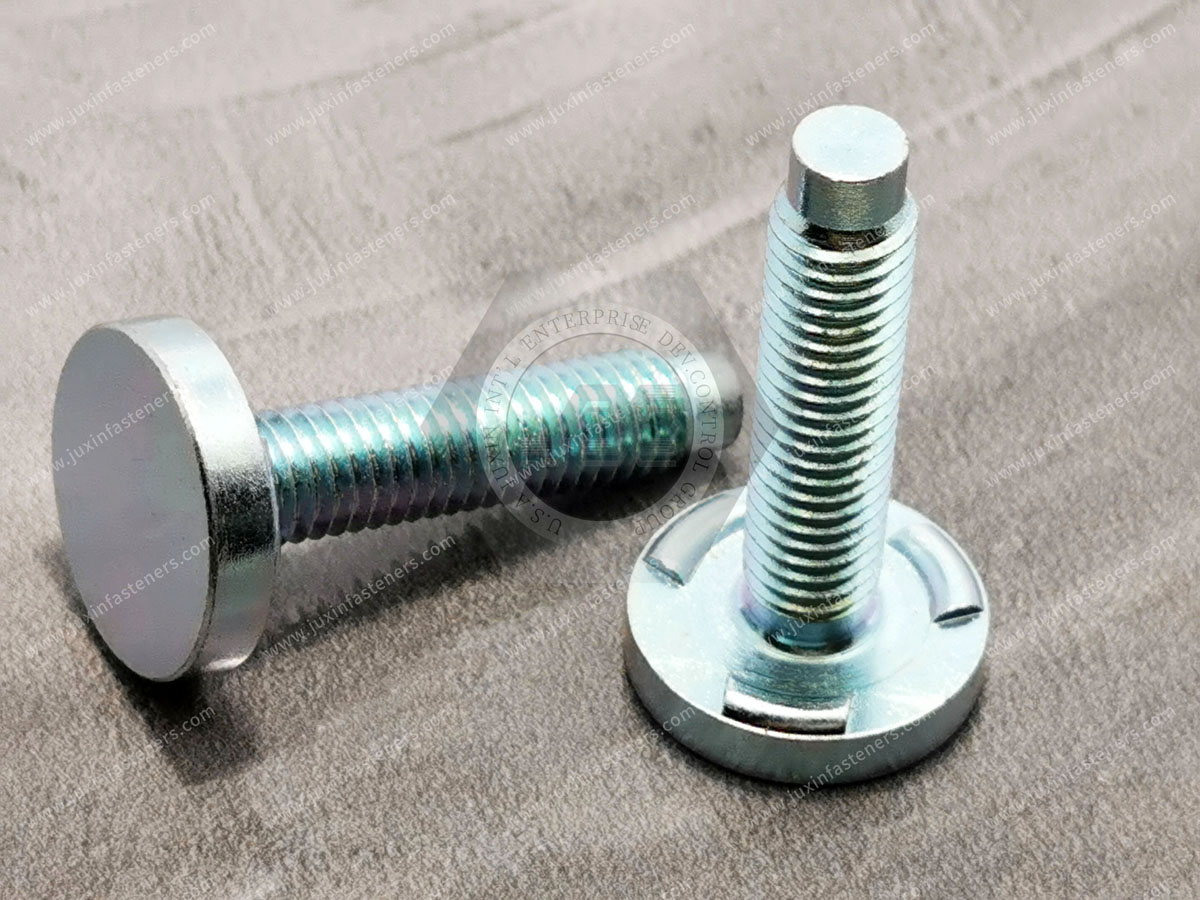
What Are DIN 34817 Weld Studs?
DIN 34817 Weld Studs are standardized arc weld studs widely used in automotive and industrial manufacturing. Designed according to German DIN standards, these studs ensure:
Precise dimensional tolerances
Consistent welding performance
Compatibility with arc stud welding systems
High mechanical strength and reliability
Key Product Features
Manufactured in carbon steel or stainless steel
Optimized for arc stud welding processes
Suitable for automotive body structures and load-bearing components
Designed for high-strength welding applications (thicker materials)
Excellent performance in robotic and automated welding lines
SEO Keywords integrated:
DIN 34817 Weld Studs, Arc Weld Studs, Automotive Weld Studs, High Strength Weld Studs, Stud Welding Fasteners
Stud Welding Process in Automotive Manufacturing
1. Basic Principle of Stud Welding
Stud welding is a specialized arc welding process in which a stud is welded to a workpiece by:
Bringing the stud into contact with the base material
Lifting the stud to create an electric arc
Melting both surfaces to form a molten pool
Forcing the stud back into the molten metal under pressure
Creating a strong metallurgical bond
This process enables:
Fast cycle times
No need for filler materials
High repeatability in automated systems
2. Arc Stud Welding vs. Capacitor Discharge (CD) Welding
Process Type | Arc Duration | Application | Key Advantage |
Arc Stud Welding | 0.1 – 1 second | Thick materials (8–25 mm) | Deep penetration, high strength |
CD Stud Welding | 1 – 15 milliseconds | Thin sheets | Low heat input, no distortion |
DIN 34817 Weld Studs are primarily used in arc stud welding, where high strength and deep fusion are required.
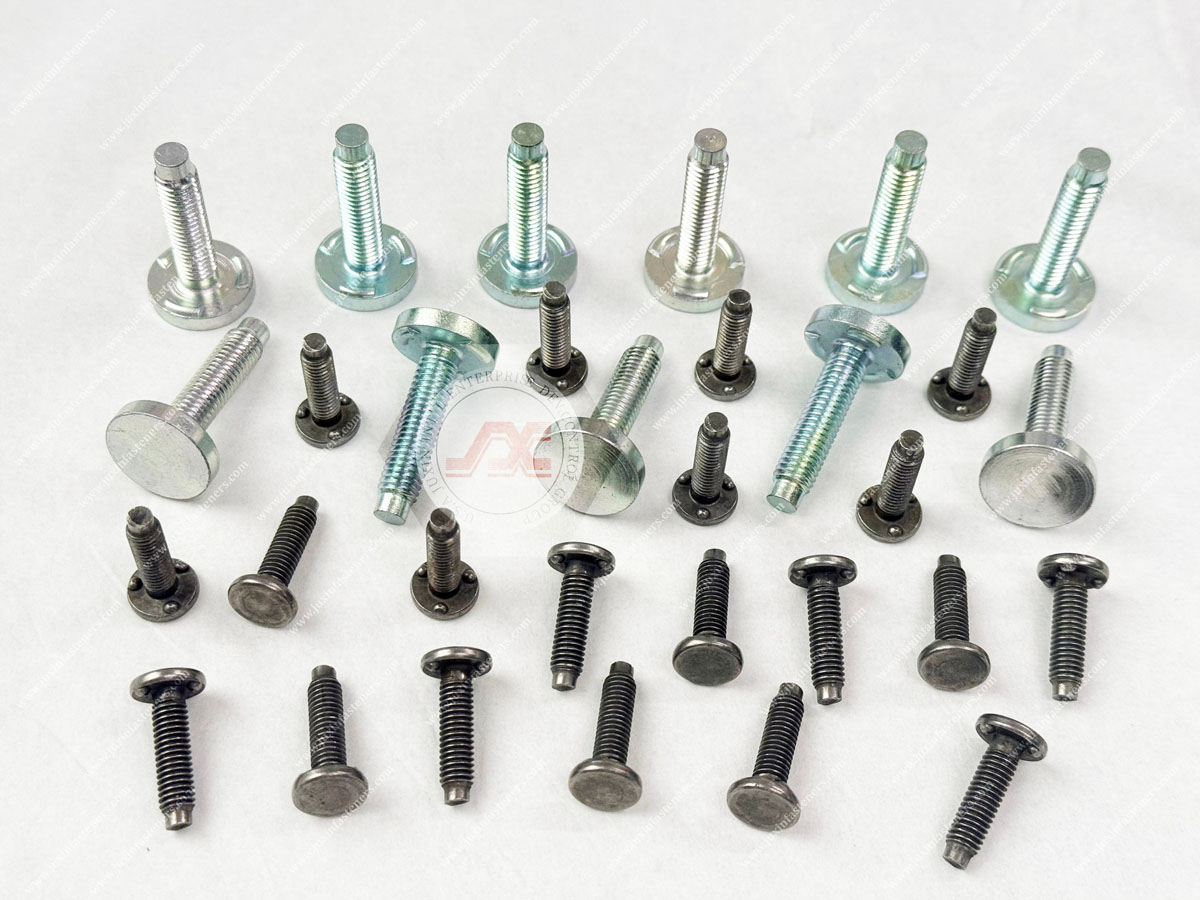
Why DIN 34817 Weld Studs Are Critical in Automotive Applications
1. High Structural Strength
Automotive components such as:
Body-in-white (BIW) structures
Chassis reinforcements
Suspension mounting points
require reliable load-bearing connections.
DIN 34817 studs ensure:
Deep weld penetration
Strong metallurgical bonding
High fatigue resistance
2. Compatibility with Automated Welding Systems
Modern automotive production lines rely heavily on:
Robotic welding systems
CNC-controlled processes
High-speed assembly lines
DIN 34817 weld studs are designed for:
Stable arc initiation
Consistent geometry for auto-feeding systems
Reduced misalignment risk
3. Standardization for Global OEM Requirements
Using DIN-standard weld studs ensures:
Compatibility with international specifications
Easier sourcing for procurement teams
Reduced engineering validation time
Key Process Parameters for Optimal Stud Welding Performance
In arc stud welding, weld quality is determined by precise parameter control:
Critical Parameters Include:
Welding current
Arc voltage
Welding time
Stud lift height
Plunge speed
Stud protrusion length
Energy Control in Stud Welding
For capacitor discharge processes (when applicable), welding energy follows:
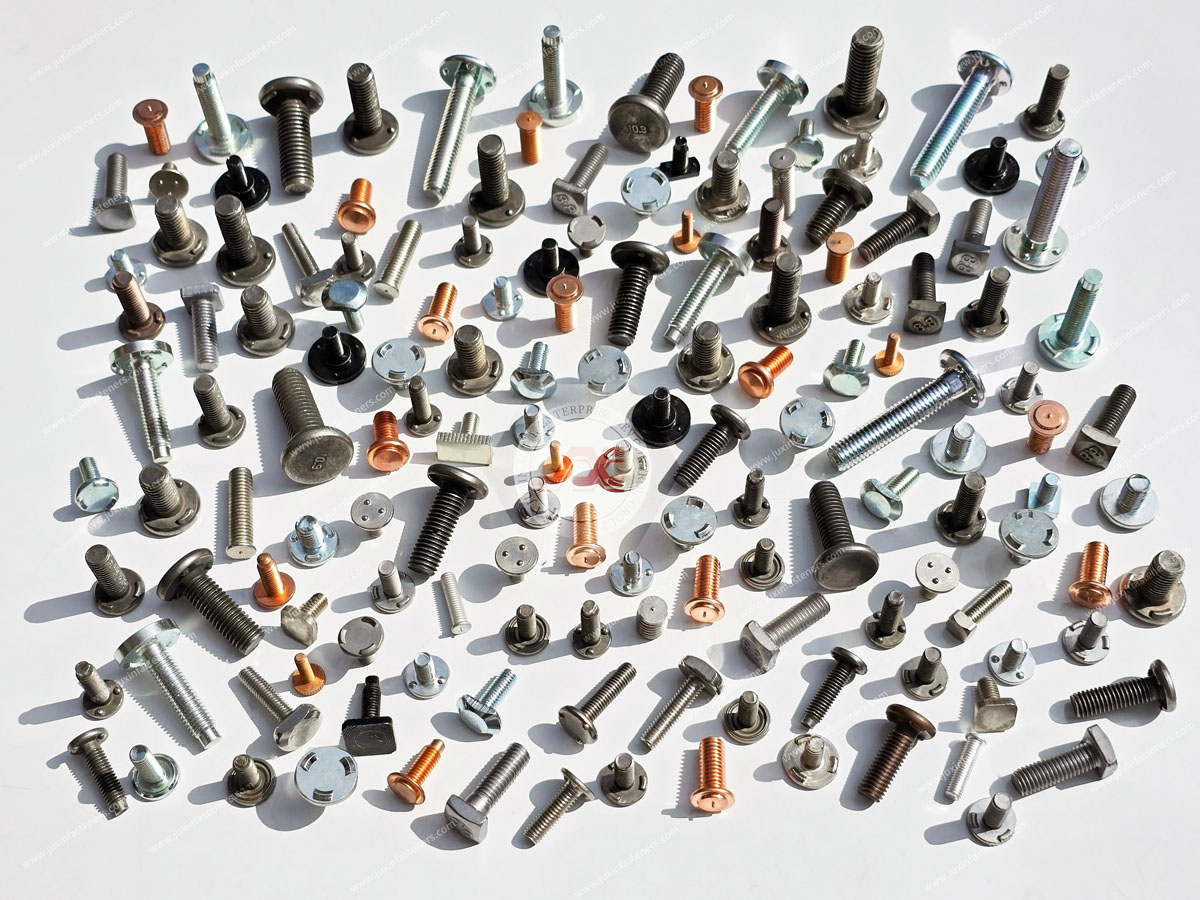

Where:
E = Energy (J)
C = Capacitance (F)
U = Voltage (V)
Although DIN 34817 Weld Studs are mainly used in arc welding, understanding energy control is essential when hybrid processes are applied.
Common Welding Issues and Engineering Solutions
Problem 1: Incomplete Fusion
Cause:
Insufficient current or welding time
Solution:
Increase welding energy
Optimize arc duration
Problem 2: Stud Misalignment
Cause:
Poor positioning or unstable welding gun
Solution:
Use precision fixtures
Ensure perpendicular alignment
Problem 3: Excessive Burn-Through
Cause:
Overheating due to excessive welding time
Solution:
Reduce welding duration
Adjust current settings
Problem 4: Equipment Instability
Cause:
Worn welding gun or poor grounding
Solution:
Regular maintenance
Ensure stable electrical connections
Best Practices for Welding DIN 34817 Weld Studs
1. Surface Preparation
Remove oil, rust, and coatings
Ensure clean metal contact
Light rust is acceptable but not ideal
2. Proper Positioning
Maintain perpendicular alignment
Use dedicated fixtures for high precision
3. Correct Polarity Selection
DCSP (Direct Current Straight Polarity) → Carbon steel
DCRP (Direct Current Reverse Polarity) → Non-ferrous materials
4. Stable Welding Operation
Do not move the welding gun during operation
Maintain consistent lift height and plunge speed
Avoid premature lifting after welding
Equipment Selection for Automotive Stud Welding
Arc Stud Welding Systems
High-power rectifier-based systems
Suitable for DIN 34817 Weld Studs
Ideal for thick structural components
Capacitor Discharge (CD) Systems
Used for thin materials
Not the primary choice for DIN 34817 but useful in hybrid production lines
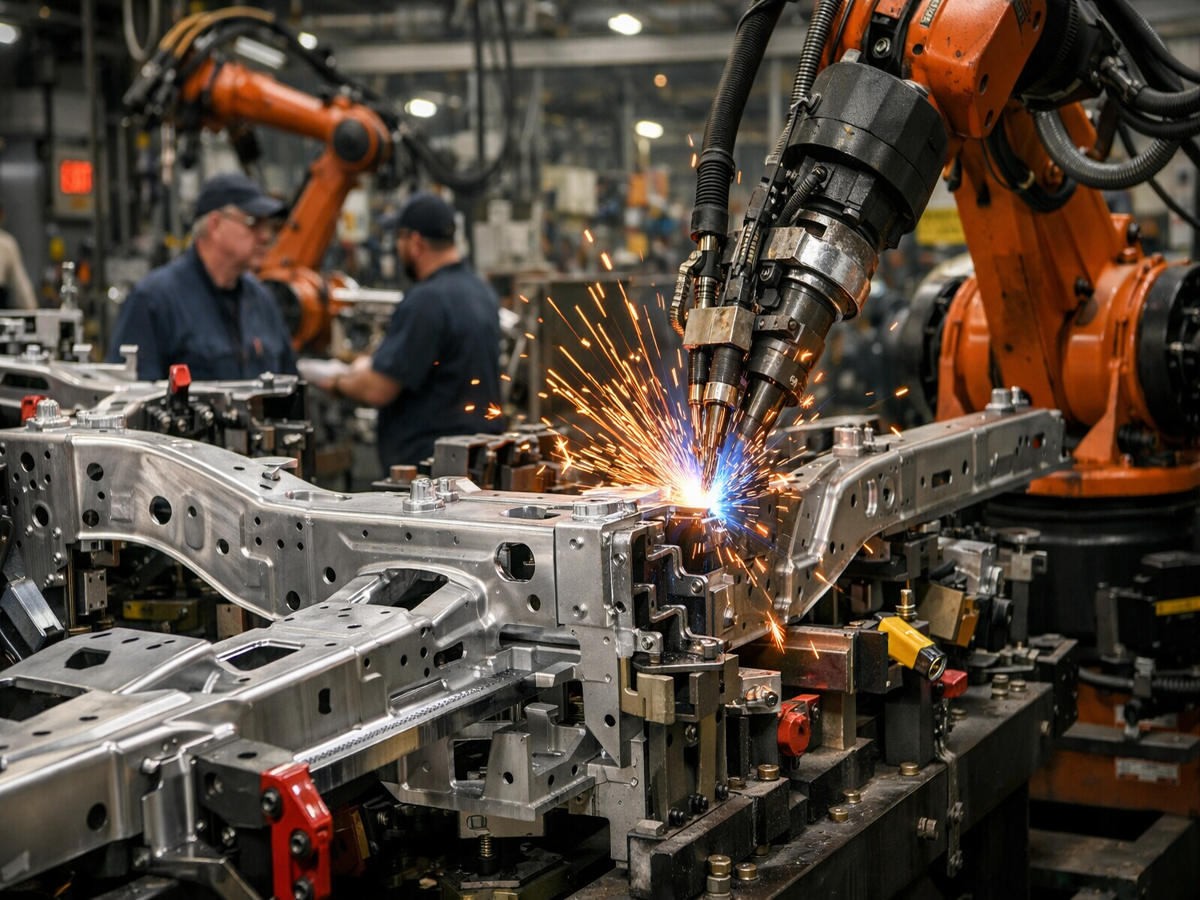
Quality Control Strategy for OEM Manufacturing
1. Pre-Welding Control
Material inspection
Equipment calibration
Parameter validation
2. In-Process Monitoring
Real-time tracking of:
Current
Voltage
Welding time
3. Post-Weld Inspection
Visual inspection
Bend testing
Ultrasonic or X-ray testing
Ensures zero-defect production goals
Why Choose Our DIN 34817 Weld Studs?
With extensive experience in industrial fastener manufacturing, we provide:
High-precision DIN 34817 Weld Studs
Strict dimensional and material control
Stable performance in automated welding systems
Full inspection to ensure consistent quality (not mixed batches)
Engineering support for automotive OEM projects
Conclusion
DIN 34817 Weld Studs are a critical component in achieving:
High-strength structural connections
Stable and repeatable welding processes
Efficient automated production
By combining standardized weld studs, optimized welding parameters, and strict process control, manufacturers can significantly improve:
Weld quality
Production efficiency
Product reliability
Looking for Reliable Automotive Weld Stud Solutions?
We support OEM manufacturers, engineers, and procurement teams with:
DIN 34817 Weld Studs
Custom stud welding solutions
Technical guidance for process optimization
 MORE NEWS
Sep. 27, 2026
Sep. 27, 2026
Sep. 27, 2026
Contact Us
Tel.:
+86 020 8621 0320
+86 020 3121 6067
E-mail:
Technical Support:
Navigation
SEND INQUIREY