
Call Us
+86 136 6007 9809
Call Us
+86 136 6007 9809

Jan. 13, 2024
With the rapid development of urban transportation systems, rail transit vehicles are facing increasing requirements for lightweight design, structural safety, durability, and energy efficiency. As a key structural material, aluminum alloy has become widely used in modern rail vehicles due to its excellent strength-to-weight ratio, corrosion resistance, and design flexibility.
However, the lightweight design of aluminum alloy car bodies also creates new challenges for joining technology. Traditional welding methods may cause thermal deformation, residual stress, and surface quality problems, especially when connecting thin aluminum panels and complex structures.
To overcome these challenges, advanced riveting technology and high-performance rail vehicle fasteners have become reliable solutions for aluminum alloy body manufacturing.
Juxin Fasteners provides customized blind rivet nuts, blind rivets, stainless steel rivet nuts, and lightweight fastening solutions for rail transit applications, helping manufacturers achieve strong, reliable, and lightweight structural connections.
Aluminum alloy offers significant advantages compared with traditional steel structures:
Lightweight construction reduces vehicle energy consumption
High corrosion resistance improves service life
Excellent mechanical strength ensures structural safety
Flexible forming capability supports complex vehicle designs
However, aluminum alloy welding can introduce several manufacturing challenges:
Welding deformation caused by heat input
Reduced material strength in the heat-affected zone
Surface grinding requirements after welding
Difficulty connecting different materials
Increased production requirements for skilled operators
Compared with welding, mechanical riveting connections provide several advantages:
✓ No welding deformation
✓ No thermal damage to aluminum materials
✓ Stable connection performance
✓ Suitable for thin-wall structures
✓ Compatible with different materials
✓ Improved production efficiency
Therefore, riveting process solutions for aluminum alloy rail vehicle bodies have become increasingly important in modern railway manufacturing.
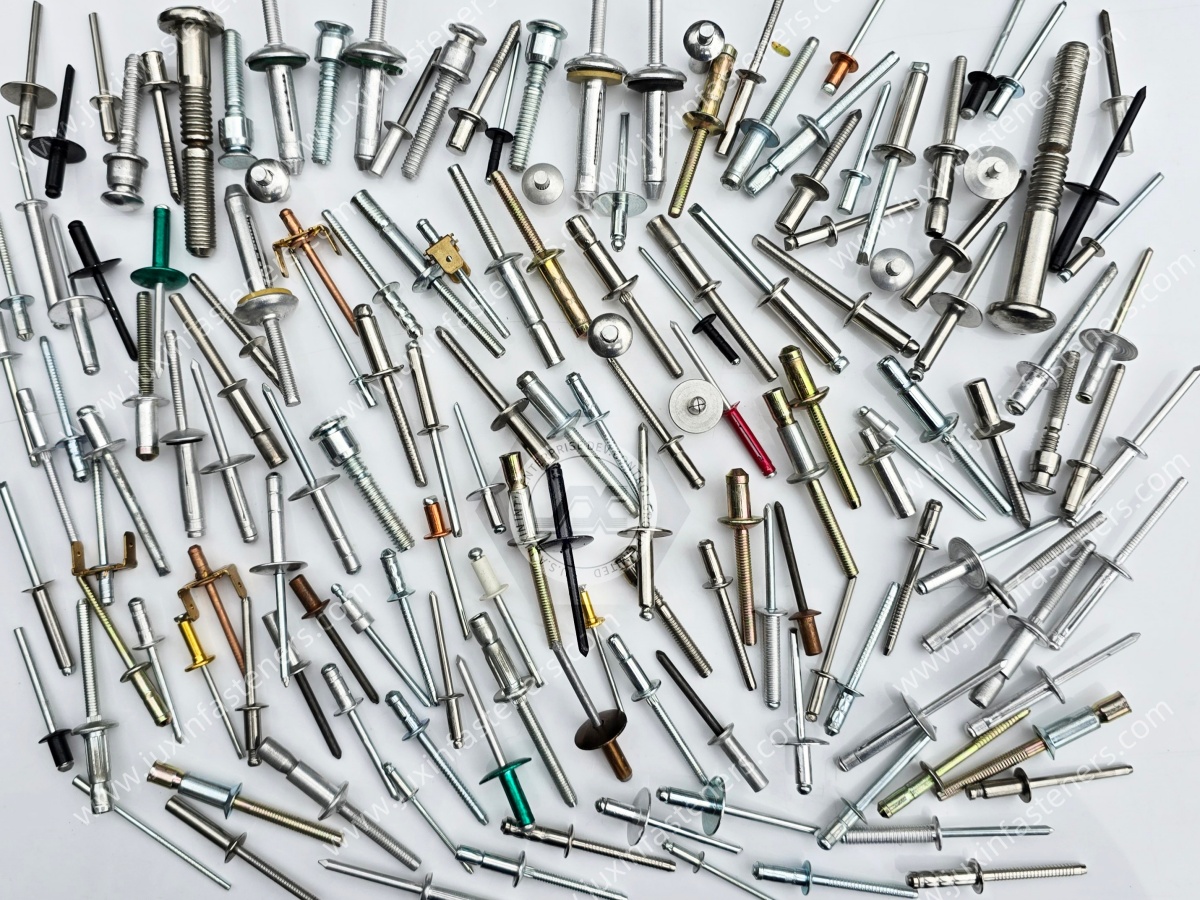
For aluminum alloy rail vehicle structures, Juxin Fasteners provides a complete range of fastening components, including:
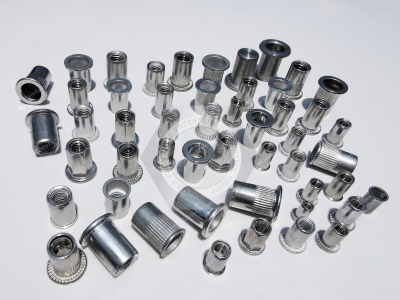
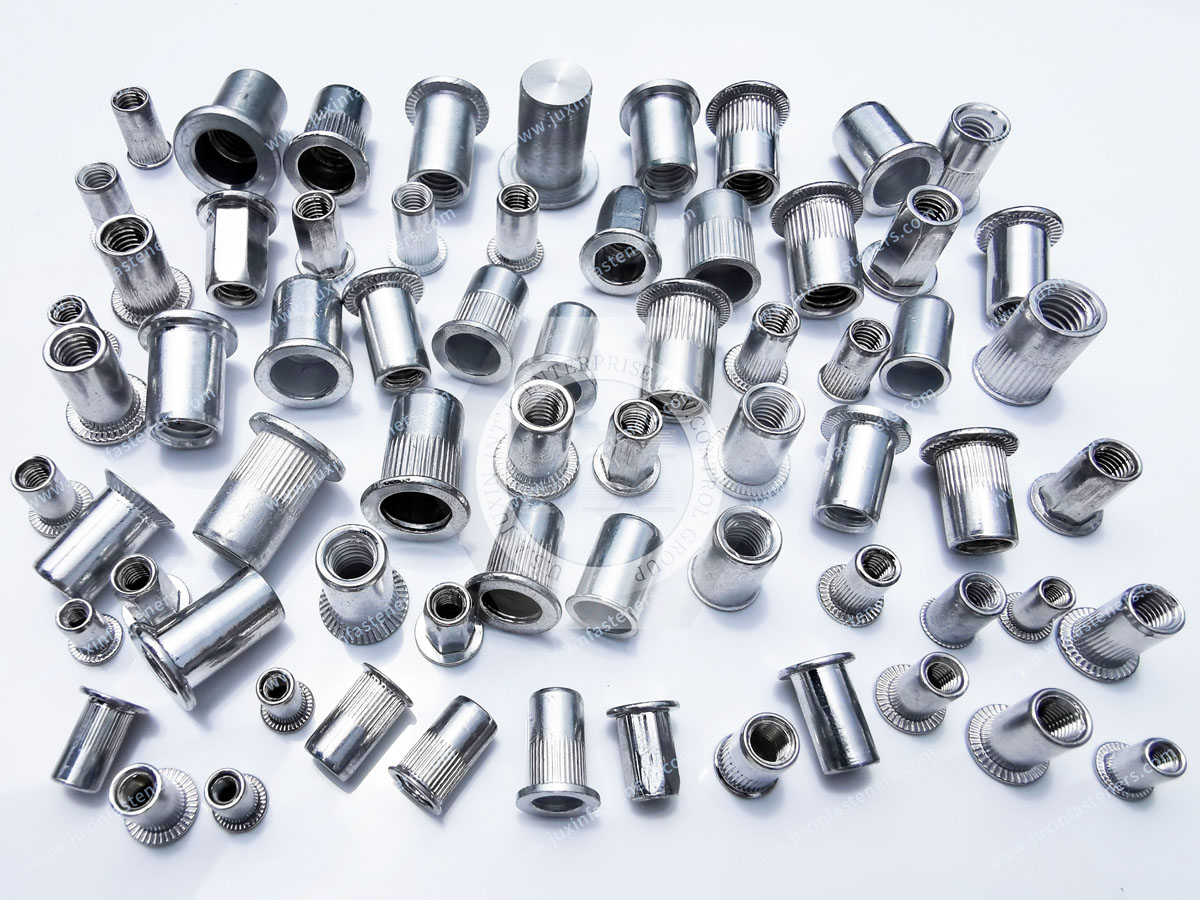
Blind rivet nuts, also known as threaded inserts, are widely used when only one side of the structure is accessible.
They provide a reliable internal thread connection without requiring welding nuts or backside access.
Typical applications include:
Aluminum alloy body panels
Interior equipment mounting brackets
Electrical cabinet installation
Passenger equipment assemblies
Railway equipment modules
Stainless steel low-profile rivet nuts provide excellent corrosion resistance and mechanical stability.
Features:
High corrosion resistance
Suitable for harsh railway environments
Low installation height
Strong thread reliability
Suitable for limited installation space
These rivet nuts are ideal for rail transit applications requiring long service life and reliable fastening performance.
For applications requiring protection against moisture and environmental contamination, closed-end rivet nuts provide excellent sealing performance.
Advantages:
Prevent leakage through threaded areas
Protect internal components from contamination
Improve corrosion resistance
Suitable for outdoor railway applications
Typical applications:
Exterior rail vehicle structures
Waterproof equipment mounting
Aluminum body sealing areas
Weight reduction is a major goal in modern rail vehicle design.
Aluminum rivet nuts offer:
Approximately one-third the weight of steel rivet nuts
Excellent corrosion resistance
Lightweight fastening performance
Reduced overall vehicle weight
They are suitable for:
Aluminum alloy body panels
Interior structures
Lightweight equipment mounting systems
Blind rivets are widely used in rail transit manufacturing because they allow one-sided installation.
They are especially suitable for:
Closed structural sections
Thin aluminum sheets
Difficult-to-access areas
Lightweight assemblies
Aluminum blind rivets provide:
Lightweight performance
Non-magnetic characteristics
Good corrosion resistance
Reduced structural weight
They are commonly used for aluminum alloy body assemblies and interior rail vehicle components.
For higher strength and corrosion resistance requirements, stainless steel blind rivets provide:
Excellent mechanical strength
Superior corrosion resistance
Long-term durability
Stable performance under vibration environments
Applications include:
Rail vehicle exterior structures
Equipment mounting systems
High-strength aluminum connections
Large diameter blind rivets provide increased bearing area and improved holding strength.
Advantages:
Better load distribution
Suitable for thin materials
Improved resistance against pull-through
Reliable fastening for lightweight structures
They are commonly used in:
Aluminum panels
Composite structures
Thin-wall rail vehicle components
A reliable riveting process requires strict control of every manufacturing stage.
Precision holes are created in aluminum alloy panels according to engineering specifications.
Important factors:
Hole diameter accuracy
Surface quality
Position tolerance
The drilled holes are processed to remove burrs and ensure proper rivet installation.
This improves:
Rivet fitting accuracy
Connection strength
Structural reliability
The rivet or rivet nut is installed using professional riveting equipment.
The installation process creates:
Permanent mechanical locking
Uniform clamping force
Reliable structural connection
After riveting, inspection is performed to verify:
Connection strength
Installation quality
Dimensional accuracy
Structural integrity
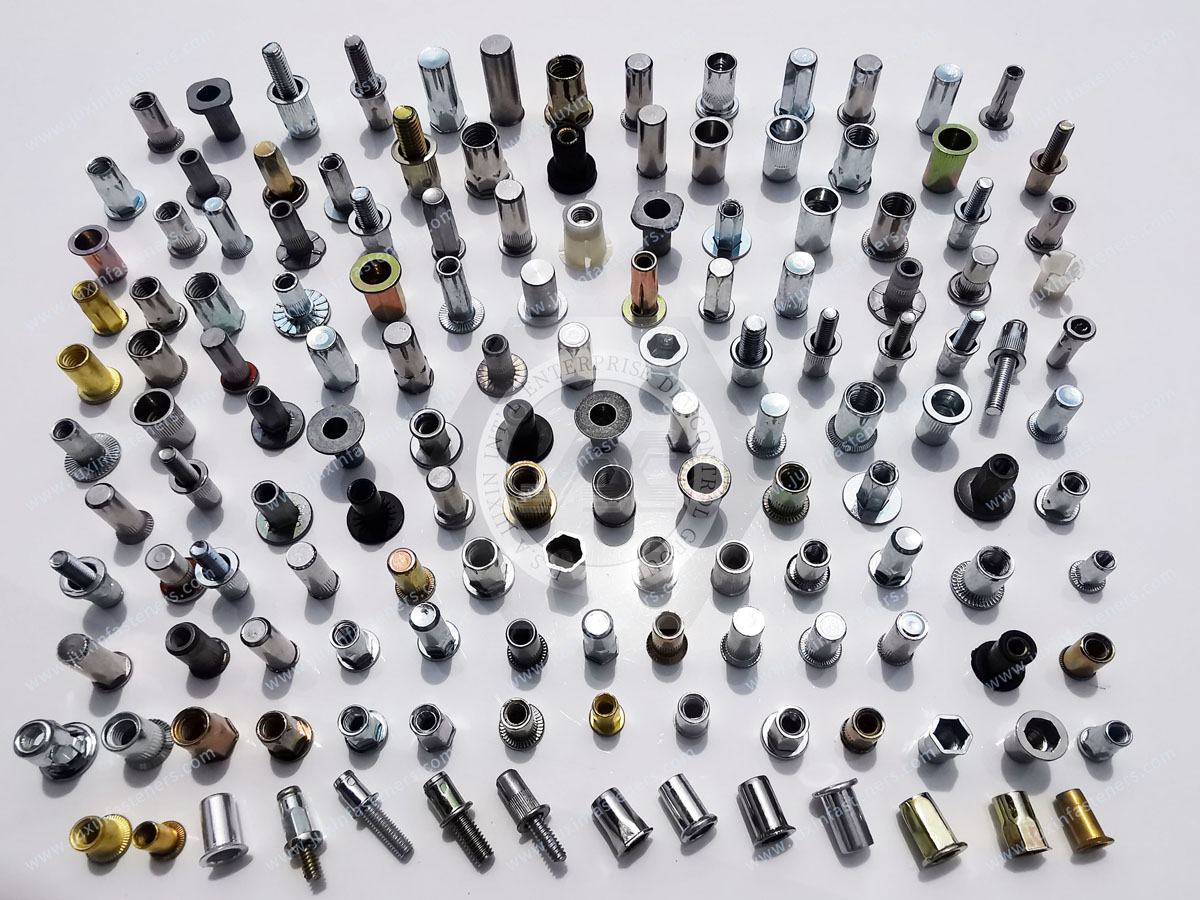
Selecting the correct fastener material is essential.
Common options include:
Aluminum fasteners for lightweight structures
Stainless steel fasteners for corrosion resistance
Carbon steel fasteners for high-strength applications
Proper riveting layout ensures:
Uniform load distribution
Improved fatigue resistance
Higher structural stability
Rail vehicles operate in demanding environments.
Fastener surface treatments such as:
Zinc plating
Zinc nickel coating
Passivation
Special anti-corrosion coatings
help extend service life.
With the continuous development of high-speed rail and urban transportation, riveting technology is moving toward:
Automation improves:
Production efficiency
Installation consistency
Manufacturing reliability
Future rail vehicles will require:
Higher strength-to-weight ratios
Advanced aluminum fasteners
Composite material connection solutions
Riveting technology reduces:
Welding emissions
Energy consumption
Material waste
making it an important technology for sustainable transportation development.

Juxin Fasteners specializes in manufacturing OEM fastening solutions for global industrial applications, including:
Rail transit equipment
Automotive lightweight structures
Electrical cabinets
Aluminum alloy assemblies
Industrial equipment
Our products include:
✓ Blind Rivet Nuts
✓ Stainless Steel Rivet Nuts
✓ Aluminum Rivet Nuts
✓ Blind Rivets
✓ Customized Riveting Fasteners
✓ OEM Non-standard Fasteners
With professional engineering support and customized manufacturing capability, Juxin Fasteners helps customers develop reliable fastening solutions for demanding industrial applications.
If you are looking for high-quality rail transit rivet fasteners, blind rivet nuts, or customized aluminum alloy fastening solutions, please contact our engineering team.
Email: info@juxinfasteners.com
Website: https://www.juxinfasteners.com
 MORE NEWS
Sep. 27, 2026
Sep. 27, 2026
Sep. 27, 2026
Contact Us
Tel.:
+86 020 8621 0320
+86 020 3121 6067
E-mail:
Technical Support:
Navigation
SEND INQUIREY